FIG.1
On July 18, 2025, we held “ASIBA ATLAS #03 Creative Means More” for our partner companies and everyone else participating in ASIBA.We held the event in the café space on the 8th floor of Toda Construction’s new headquarters building, “TODA BUILDING,” and welcomed a total of 30 attendees (excluding the 10 members of the 3rd cohort).
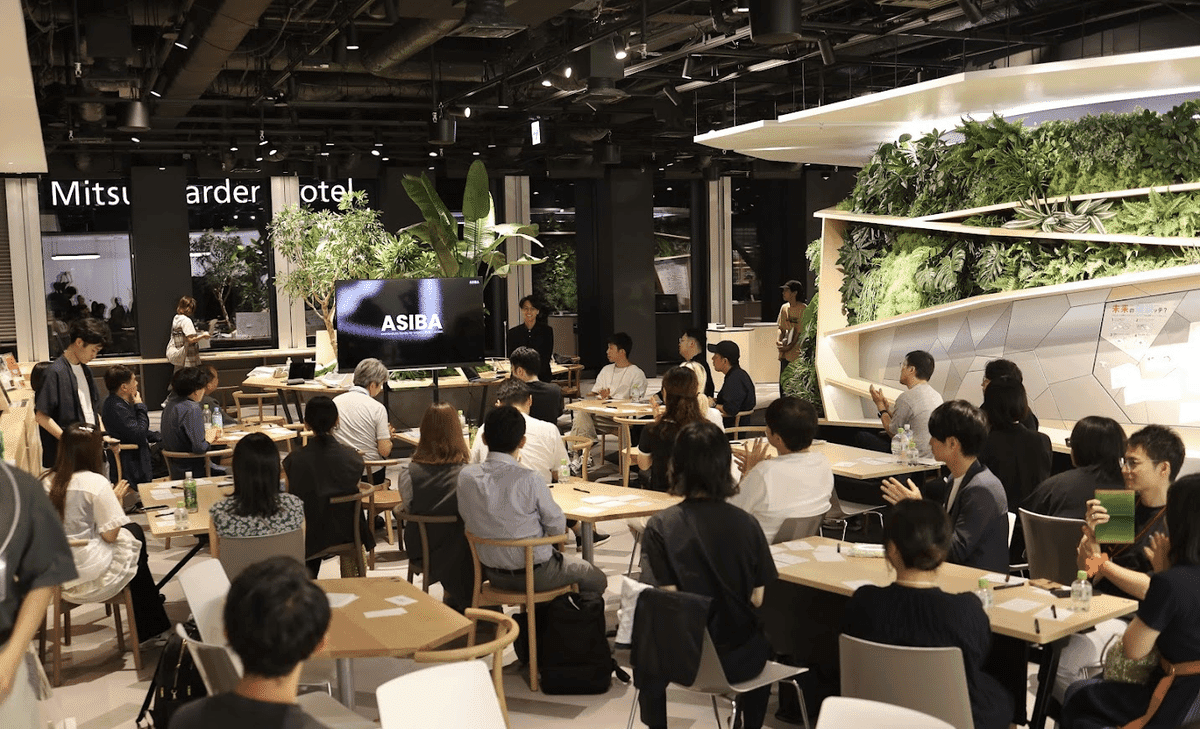
FIG.2
The theme of this event was “Creative Means More — Beyond Creativity.” We explored ASIBA’s long-standing concept of “Creative Entrepreneurship” together as a group, moving back and forth between the abstract and the concrete, and between input and output.
“Creative Means More” — Beyond Creativity
Is it possible to bring about social change from the fields of architecture, design, and art? Since last year, ASIBA has been exploring the potential for individual creativity to transform society, centered on the concept of “Creative Entrepreneurship.” Through our practical efforts to date, we feel that the contours of this vision are gradually coming into focus. However, to spark a wave of social change and realize a society truly brimming with creativity, dialogue and co-creation among people from diverse perspectives are essential. We envision this edition of ASIBA ATLAS #03 not merely as a presentation of results or a networking event, but as a creative space where we can overlay the visions of the society that each of you, as ASIBA participants, aspire to, and together explore the possibilities of “Creative Entrepreneurship.” Please join us in exploring the rich possibilities of what creativity can bring to society and what values and culture we can pass on to the next generation.
“Creative” and “Entrepreneurship” are distinct from one another, both as fields and in nature.For about half a year now, we have sensed the necessity and potential of a mindset that synthesizes and multiplies these two concepts in today’s world, where social issues are becoming increasingly complex and diverse. Through various initiatives—such as our incubation programs—and our own business operations, we have been reflecting on what this approach might look like.
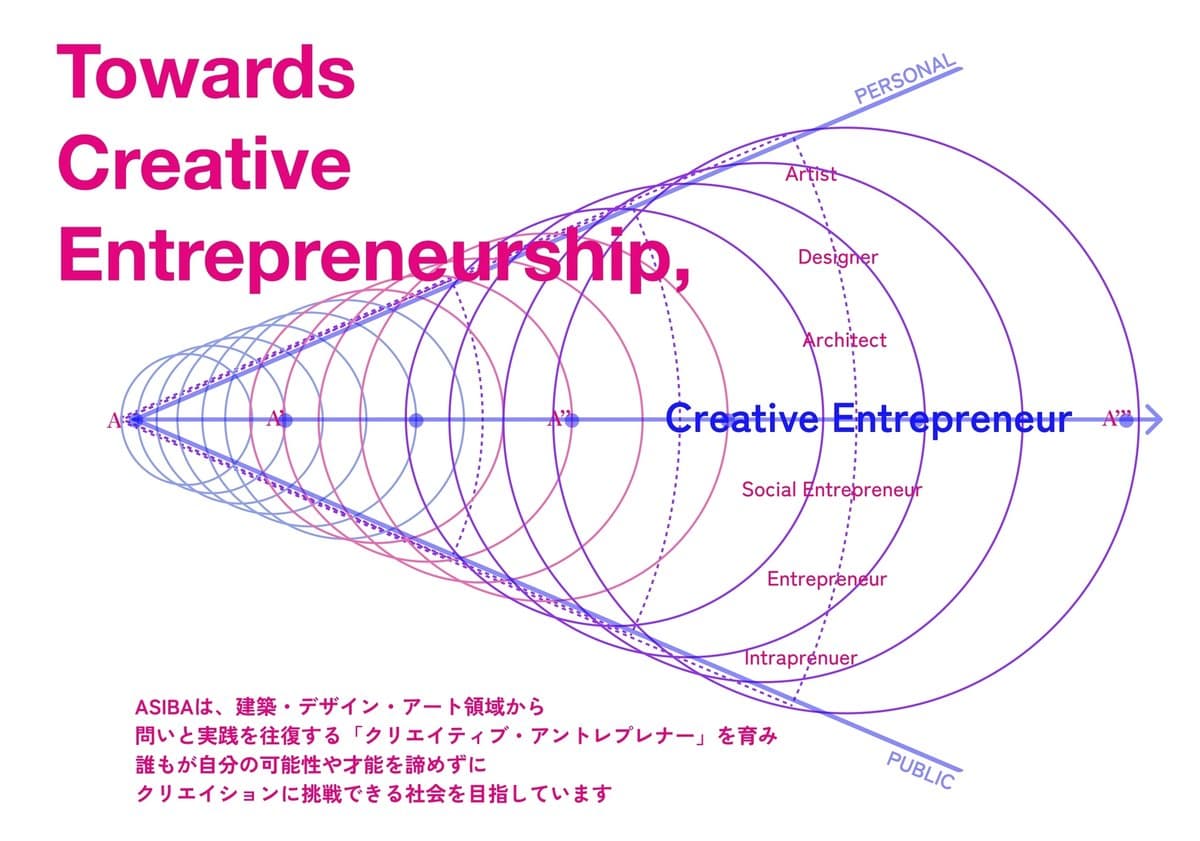
FIG.3
That said, when we really dig deep and ask, “What exactly is ‘Creative Entrepreneurship’? How is it defined?” we at ASIBA realize there is still much we do not fully understand.Furthermore, we do not view “Creative Entrepreneurship” as an entirely new concept or phenomenon. Rather, we wish to give the name “Creative Entrepreneurship” (or “Clean,” as it is informally known) to the shared mindset and attitude found in the countless projects that many pioneers have undertaken to gradually change society, and to build this into a solid movement.
That is precisely why we have positioned this event as a forum where we can share our vision of “Creative Entrepreneurship” with our partners—who are active as professionals in various fields—and work together to explore its meaning and concrete form. Specifically, the process is as follows:
■ ASIBA Pitch ① Towards Creative Entrepreneurship: Share the background and significance of “Creative Entrepreneurship” as envisioned by
ASIBA, and present a starting point for our discussion.■ Workshop: 30 Questions on Creative Entrepreneurship—Using specific
questions as a starting point, we will define the concept’s contours from diverse perspectives and co-create the concept.■ ASIBA Creative Incubation Program: 3rd Cohort Selection Pitch—Four projects will be presented as concrete examples of putting the abstract
concept into practice.■ ASIBA Pitch ② ASIBA Future Prospect:
ASIBA will demonstrate how it itself, as a “Creative Entrepreneur,” engages with society.
For this event, we are using the café space on the 8th floor of “TODA BUILDING,” the new headquarters of Toda Construction. TODA BUILDING is located along Chuo-dori, a 7-minute walk from Tokyo Station, and is a facility designed around the concept of “connecting people and the city.”In addition to the ground-level plaza, the building features public art exhibitions, a gallery complex, and a museum on floors 1 through 6, while office floors are located on the 8th floor and above, making it a hub for arts and culture where art and business intersect.
The 8th floor houses the Toda Construction Group’s museum, “TODA CREATIVE LAB ‘TODAtte?’,” which showcases the past, present, and future of not only the Toda Construction Group but the construction industry as a whole. For this event, we utilized the café space located at the back of the museum, as well as three conference rooms.By removing all the walls between the three conference rooms and between the conference rooms and the café area, we created a large yet inspiring space.
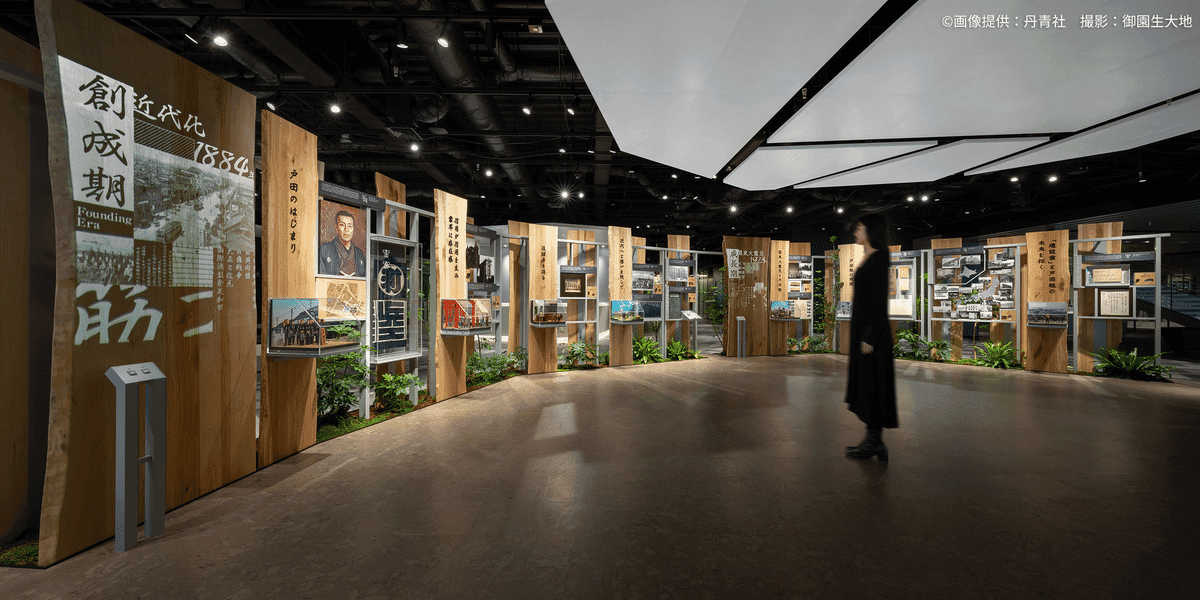
FIG.4
From here, we’ll walk you through the event based on the timeline of the day.
For this event, we produced a zine summarizing ASIBA’s recent activities. We paid special attention to details such as risograph printing, a random layout, and a ring-bound format, and had participants create their own copies on the spot just before the event began.
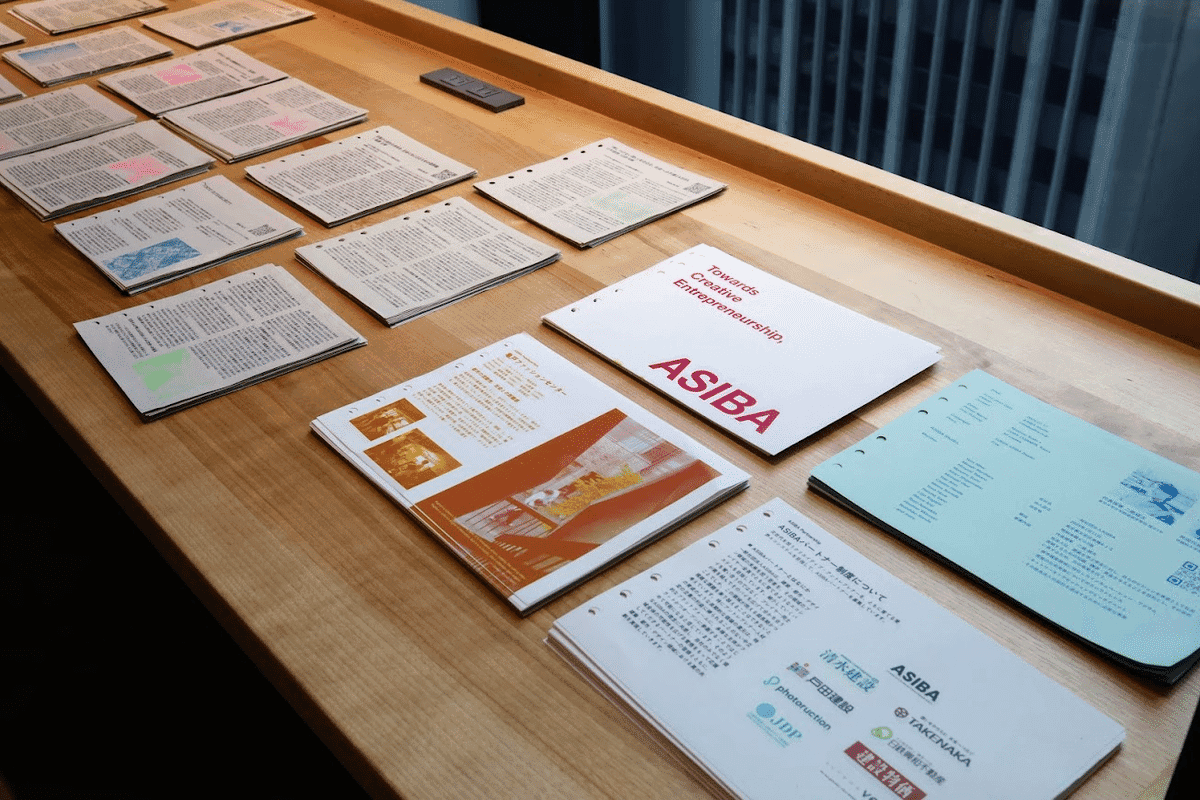
FIG.5
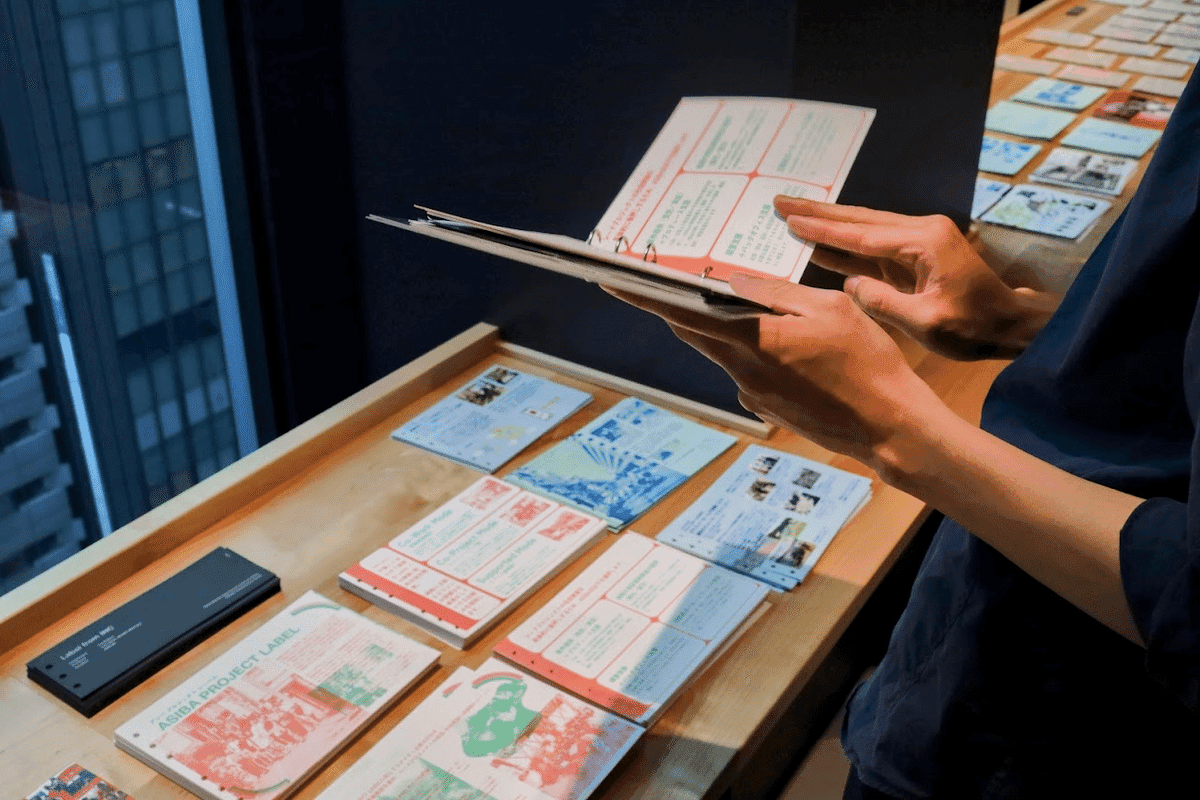
FIG.6

FIG.7
To begin, Co-Representative Morihara shared the background and necessity of “Creative Entrepreneurship,” the theme of the event.
We believe that in today’s world, where challenges are becoming increasingly diverse and complex—to the point where they cannot be fully addressed by the frameworks of society or organizations alone—there is a growing need for practices that respond to social issues by drawing on individual creativity and initiative.We believe that it is precisely within creative fields—such as architecture, design, and art—where such practices have the potential to emerge, and we have been cultivating the groundwork for this through educational programs and business development.
“Creative Entrepreneurship” refers to an attitude of formulating one’s own questions, building connections with society, and presenting new options through concrete actions. It involves breaking down traditional disciplinary boundaries and embracing and affirming activities that defy simple categorization.It means continuing to take on the challenge of “creating” without stifling creativity or individual agency, even within the framework of rational considerations such as economic viability and business growth. It also means regaining society’s trust and expectations in the pursuit of creating something that does not yet exist. The hope expressed was that this term would serve as a rallying cry for realizing such a society.
Details of the pitch will be covered in an article to be published later, so please check that for more information.
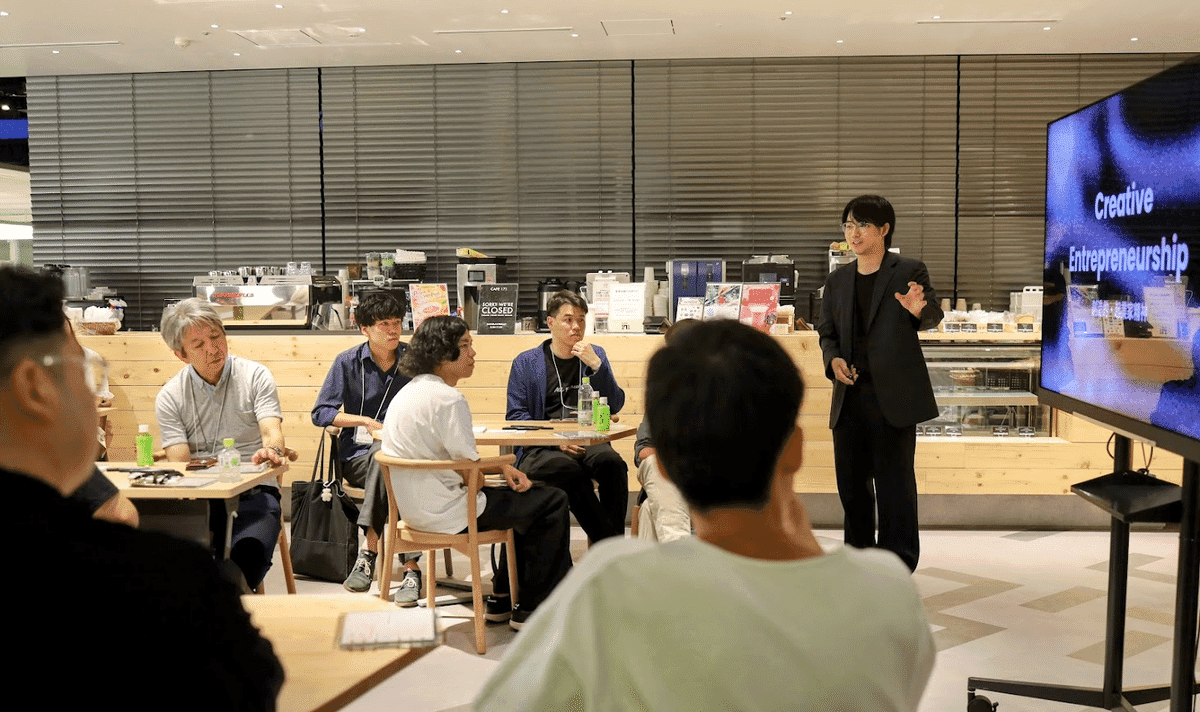
FIG.8
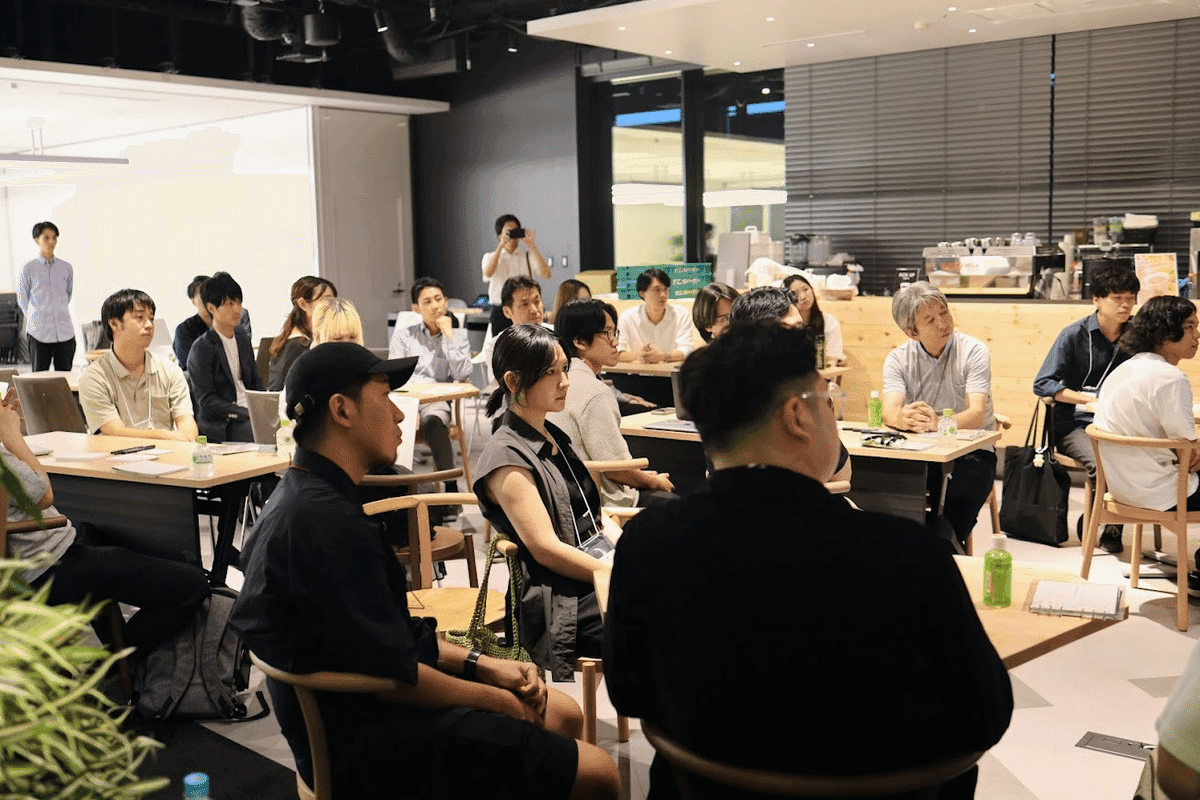
FIG.9
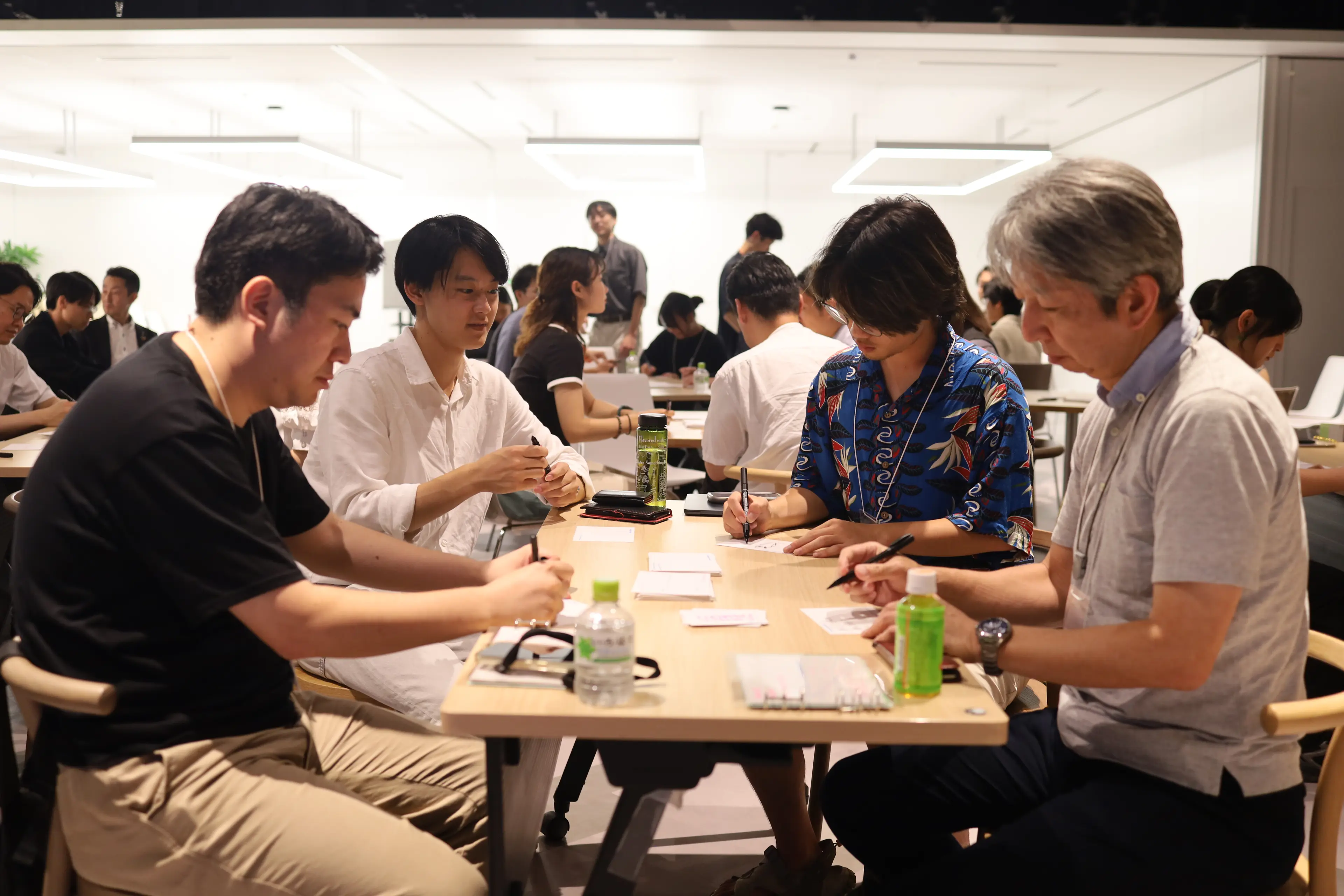
Following an introduction by Morihara, we held a roughly one-hour workshop titled “30 Questions on Creative Entrepreneurship” to transform “Creative Entrepreneurship”—an unfamiliar concept—into “Clean,” a casual term that more people can relate to.
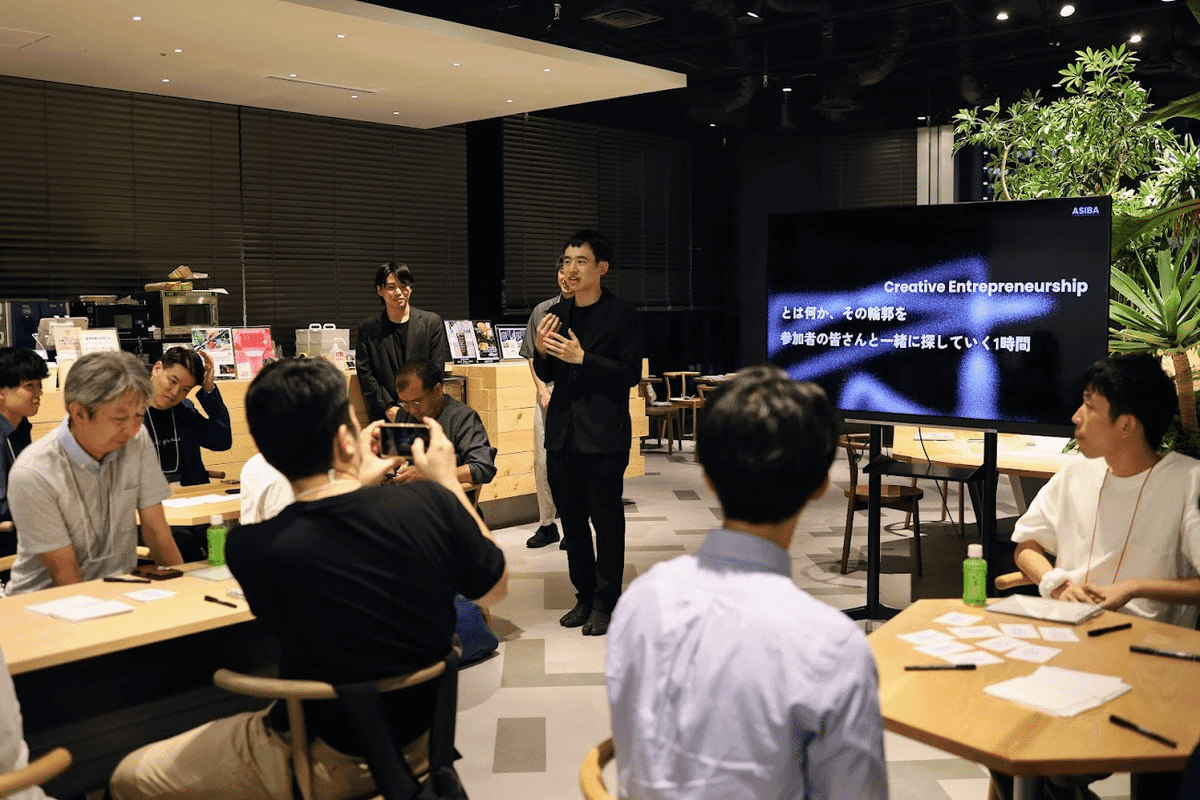
FIG.10
While we can discuss the necessity and importance of “Clearan,” there are still many unknowns regarding its criteria and concrete form—such as what it actually means for creativity and entrepreneurial spirit to coexist. — remain largely unknown. That is precisely why we designed this workshop as a space for all participants to answer and discuss 30 questions about “Clearan,” drawing on the diverse perspectives and experiences of everyone involved with ASIBA to help define its contours.
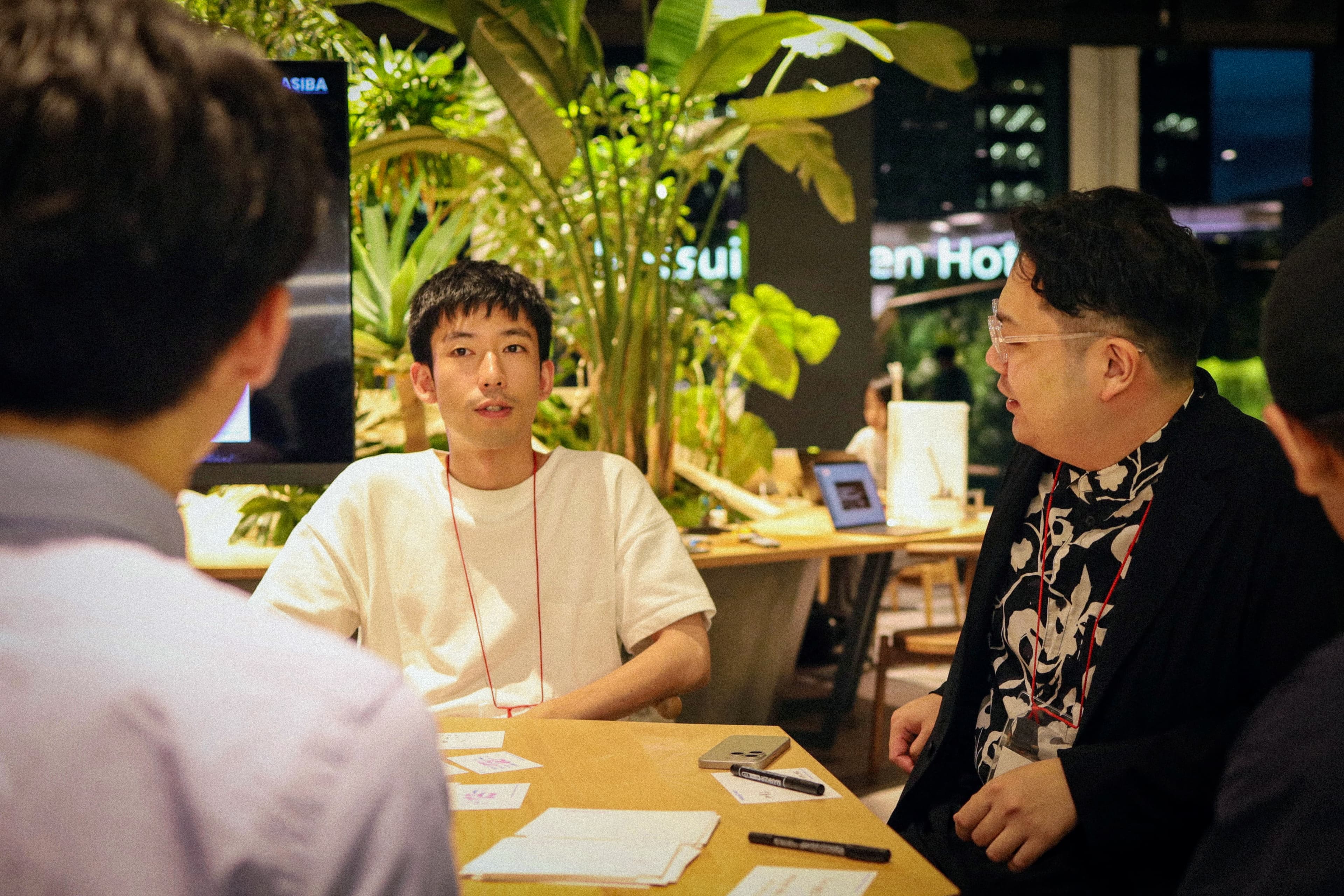
Participants were divided into groups of four. After an icebreaker, they worked individually to answer one question every 90 seconds. After repeating this five times, each group selected the four questions that received the most answers and added “discussion cards” while debating each answer.After the discussion, all participants stood up, found their favorite card sets (question + answer + discussion cards) from other groups, and added their own answers. Finally, after discussing these within their groups, each question resulted in a set of about 10 answer and discussion cards.
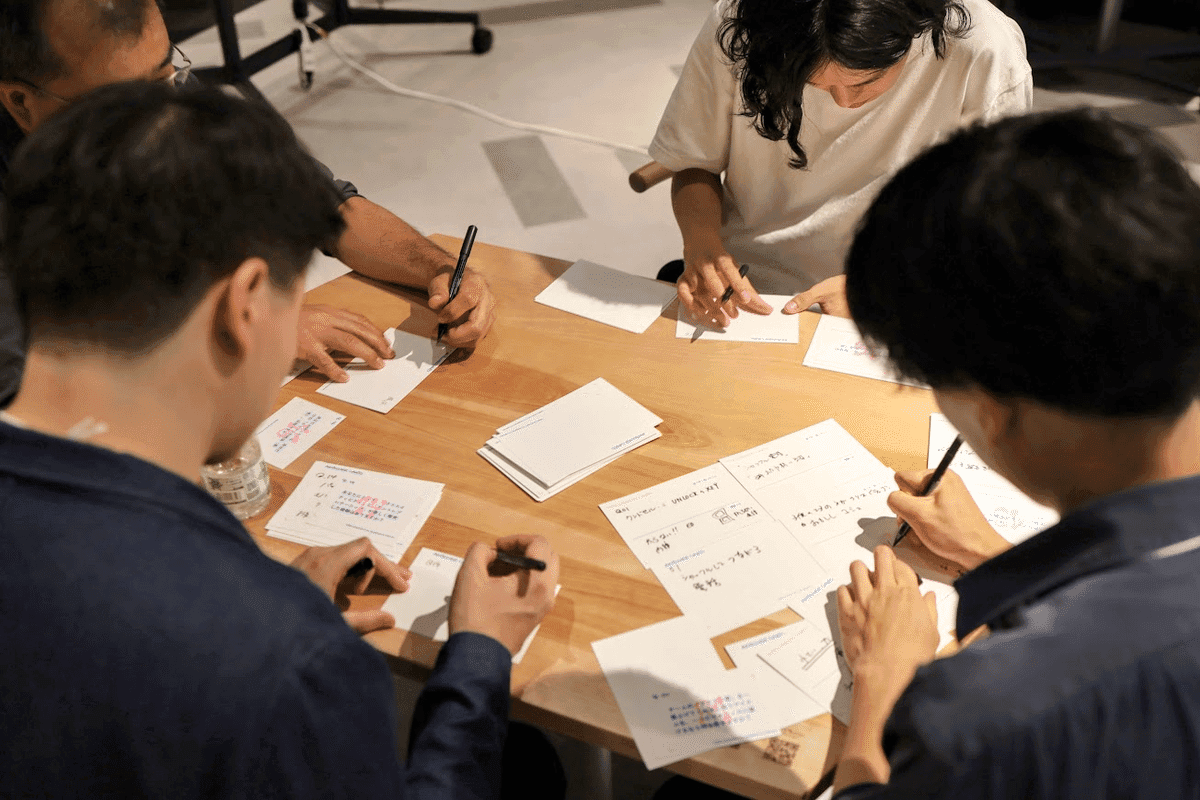
FIG.11
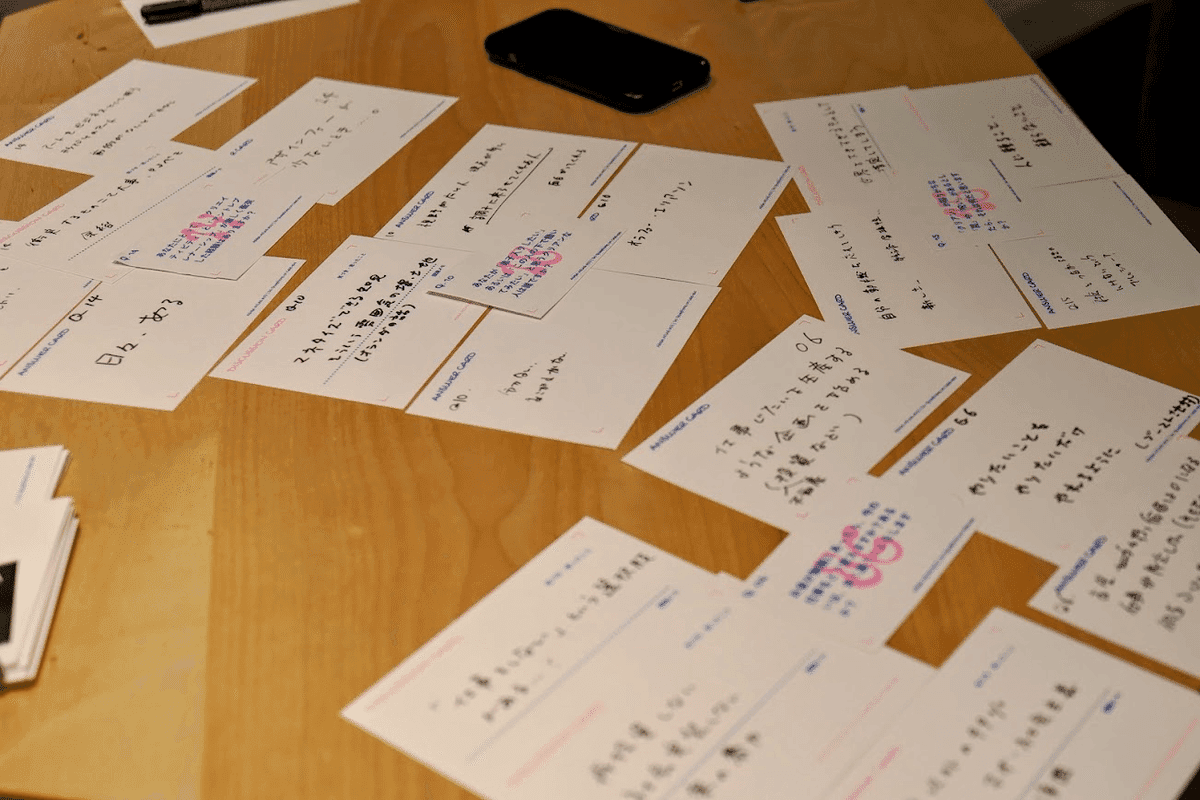
FIG.12
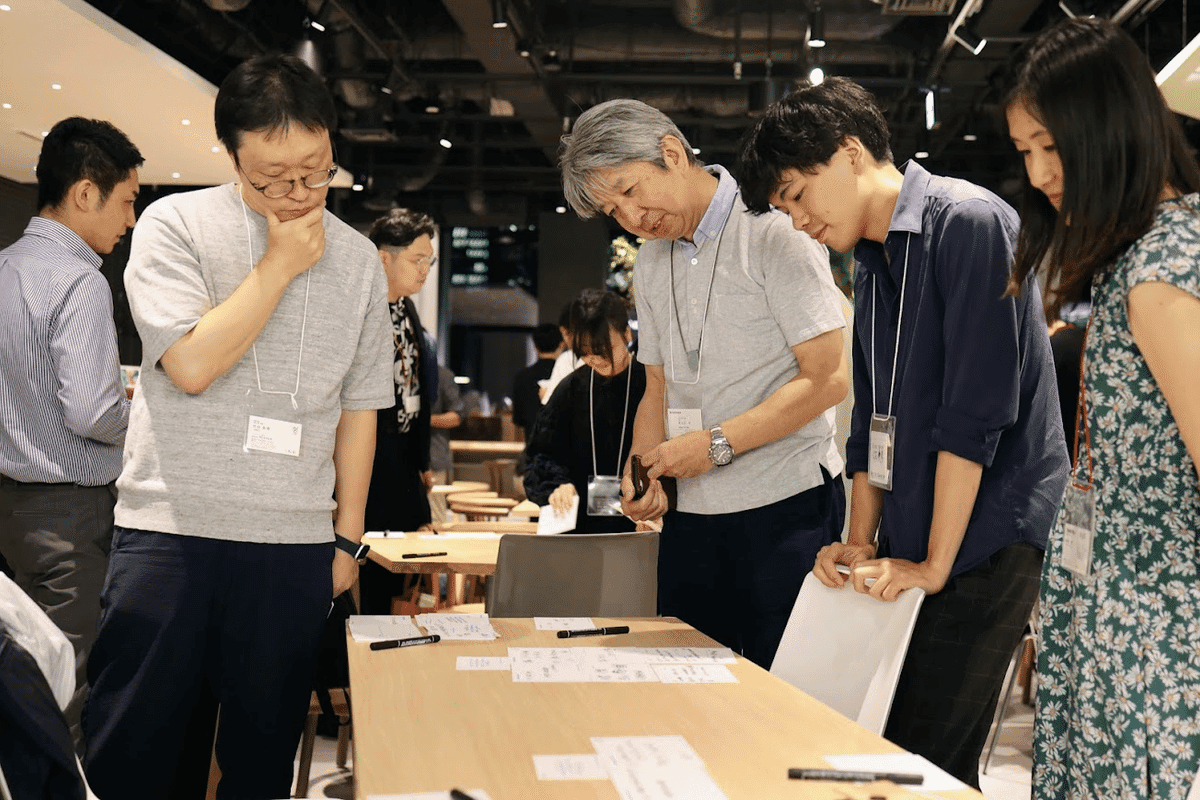
FIG.13
Through the workshop, a common language called “Clearan” emerged while preserving the concepts’ ambiguity and complexity. Above all, it was truly impressive to see all the participants—despite it being a Friday night—enjoying themselves as they racked their brains and engaged in thoughtful discussions.
We plan to share the various “Clearan” answers generated during the workshop, as well as the behind-the-scenes story of the workshop’s design, in a separate article and on the ASIBA Podcast at a later date.
After a 15-minute break, four selected projects from the third cohort of the ASIBA Creative Incubation Program—which had been running for about three months since April—gave their pitches.Having reflected on the concept of “Creative Entrepreneurship” through the ASIBA pitches and workshops held up to this point, the concrete initiatives and visions presented by the third cohort brought the previously abstract term “Clearan” to life as a tangible concept.
The following four teams took the stage:
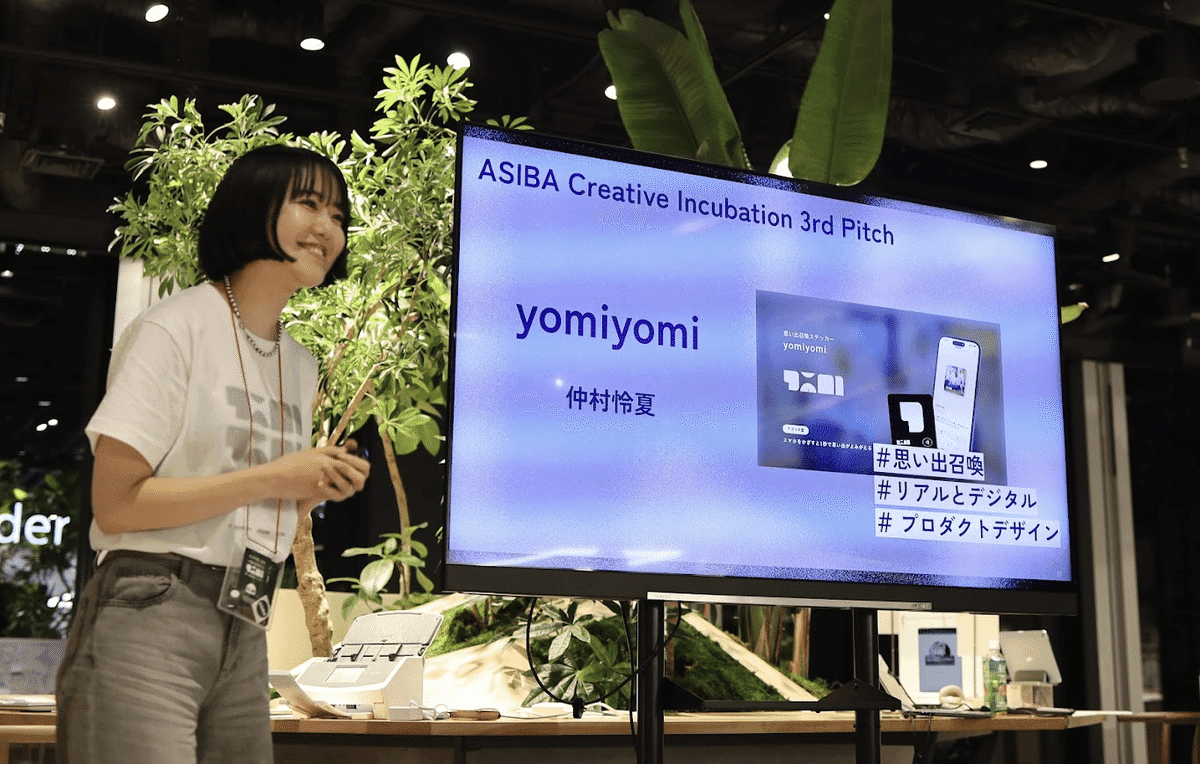
FIG.14
yomiyomi (Reika Nakamura)
: Shifting the sovereignty of memory from people to objects. yomiyomi is a brand aiming for “a world where memories live on through objects.” Its first product is the “Memory Summoning Sticker.” The company develops and sells digital stickers that bring back memories in one second when a smartphone is held over them.Moving forward, the brand plans to go beyond the confines of its products and implement a new way of experiencing memory—one in which “memories reside in objects”—into society, regardless of the form of expression or genre.
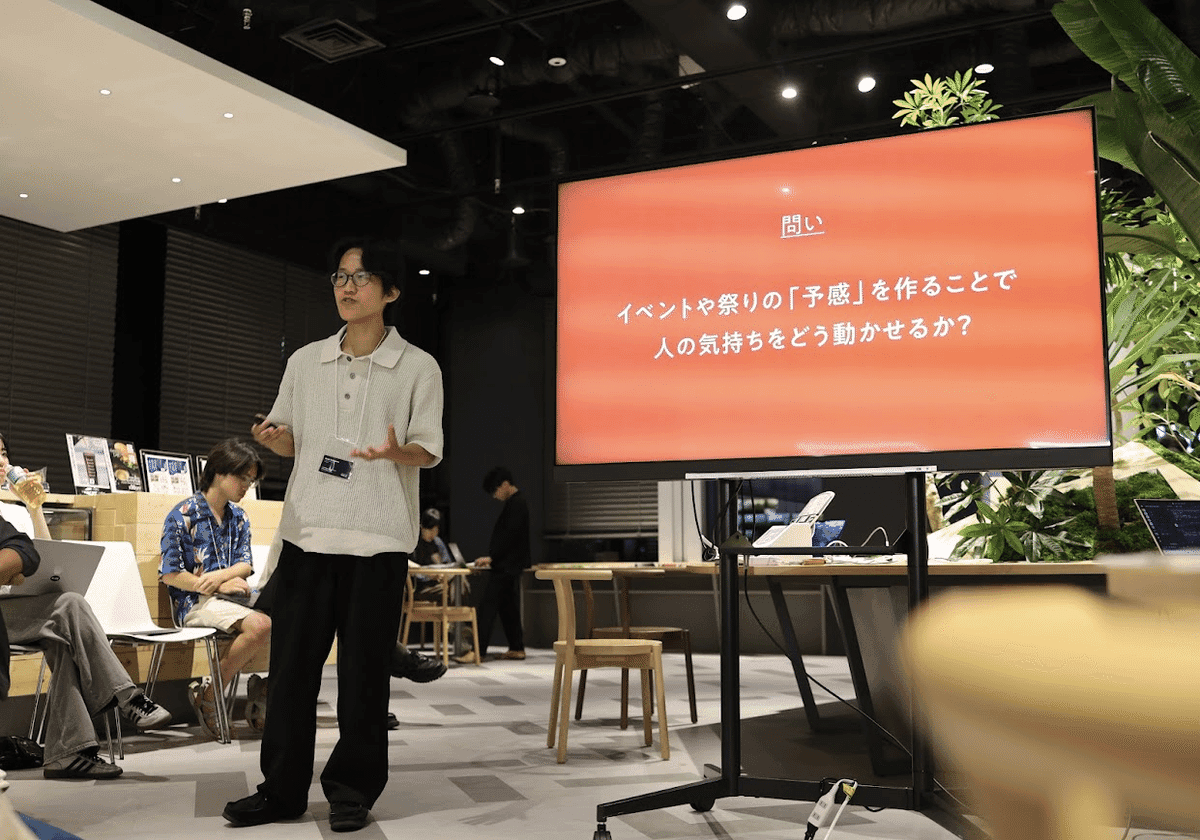
FIG.15
faatto (Naoki Sakagawa)
A project that subtly weaves the extraordinary into everyday scenery to visually create a “sense that something is about to happen.” During festivals and events, it extracts and highlights the unique characteristics of a location or community to slightly heighten people’s senses.This “sense of anticipation” is a mechanism that transcends generations and social standing, serving as a signal that the festival is about to begin. The goal is to foster new traditions from the outside.
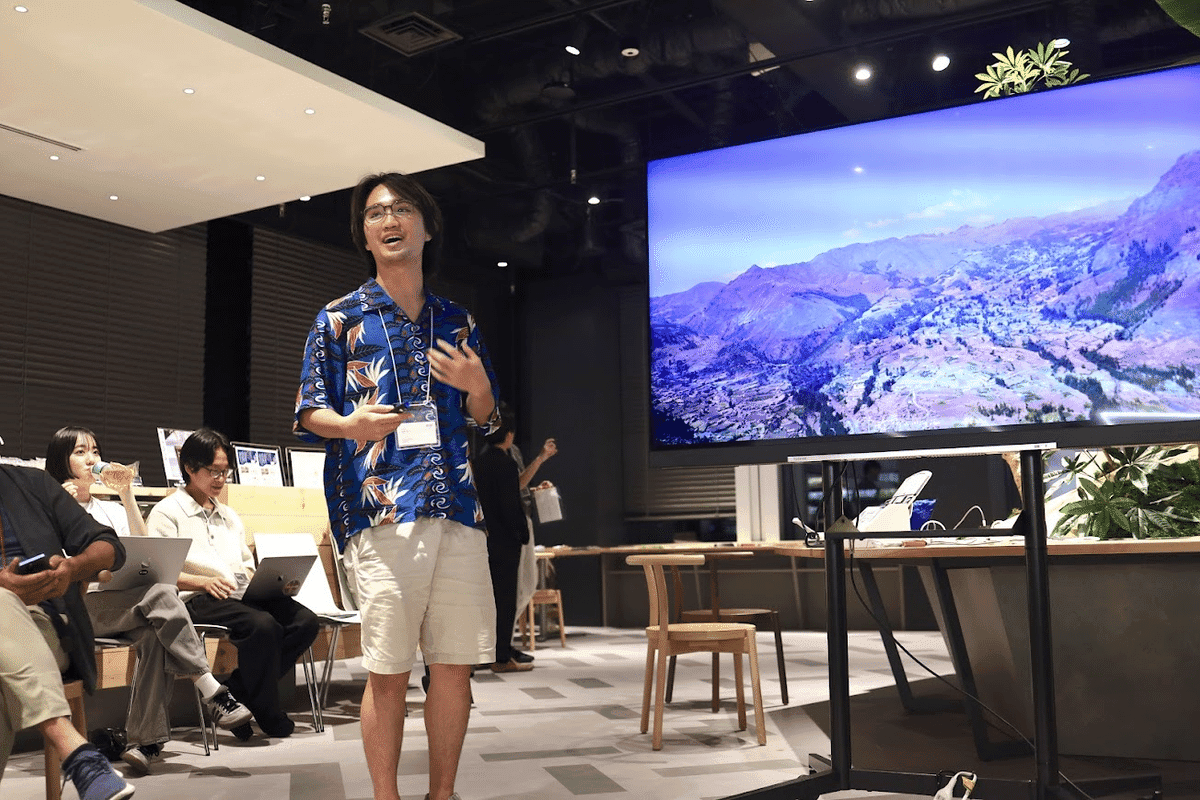
FIG.16
OHHH (Hirano O)
Using urban spaces as a stage, this project engages in “curation” through a variety of approaches, including product design, zine publishing, and exhibition planning. This time, it focuses on the relationship between “salt” and “the city,” exploring its contemporary significance—from its cultural history to new ways of utilizing it.
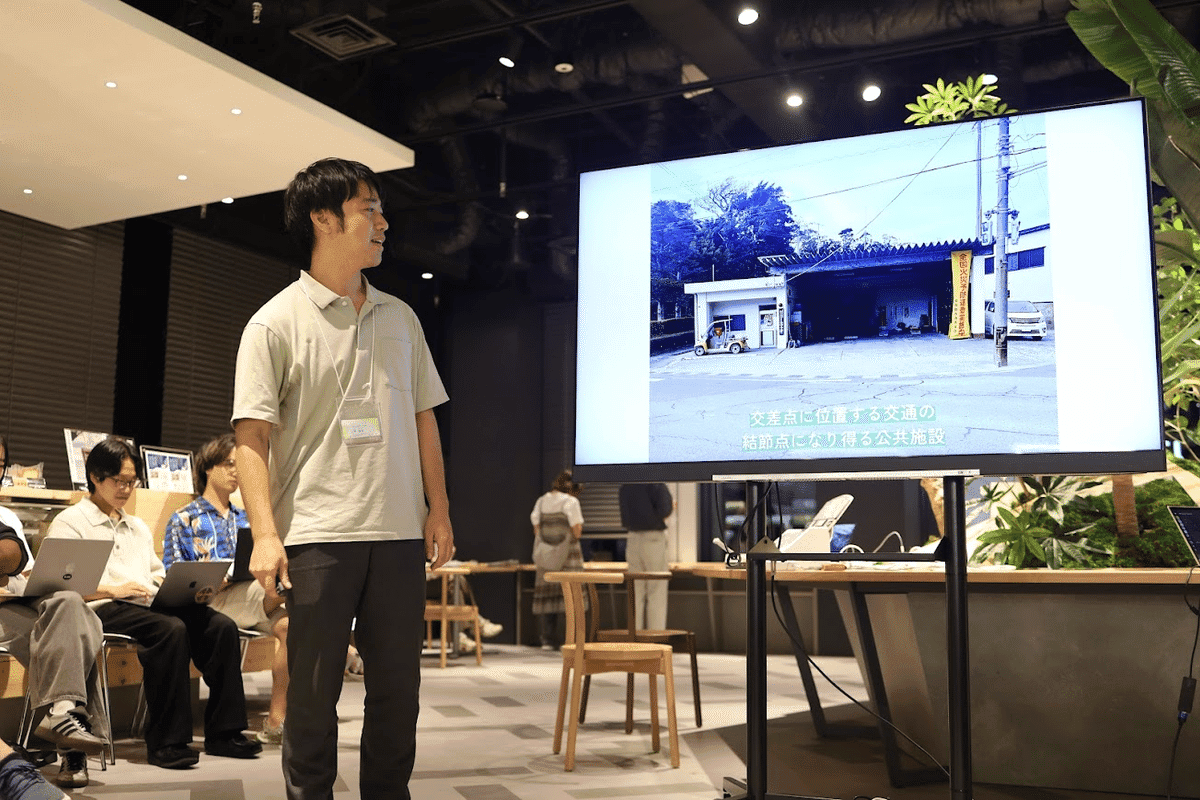
FIG.17
Maki Competition (Yasumasa Masabayashi)
We are launching the “Maki Competition” to discover new possibilities for “underutilized spaces” within local communities. We will present the challenges and potential of underutilized public spaces and facilities as “questions,” and solicit spatial design proposals from experts and young people across the country who resonate with these issues.This is a new, community-engaging competition in which proposals from outside the community stimulate local areas and lead to proactive action by residents. We aim to develop this initiative into a platform that can be implemented in various regions.
At the end of the event, ASIBA Representative Nihei gave a pitch outlining ASIBA’s future business vision.
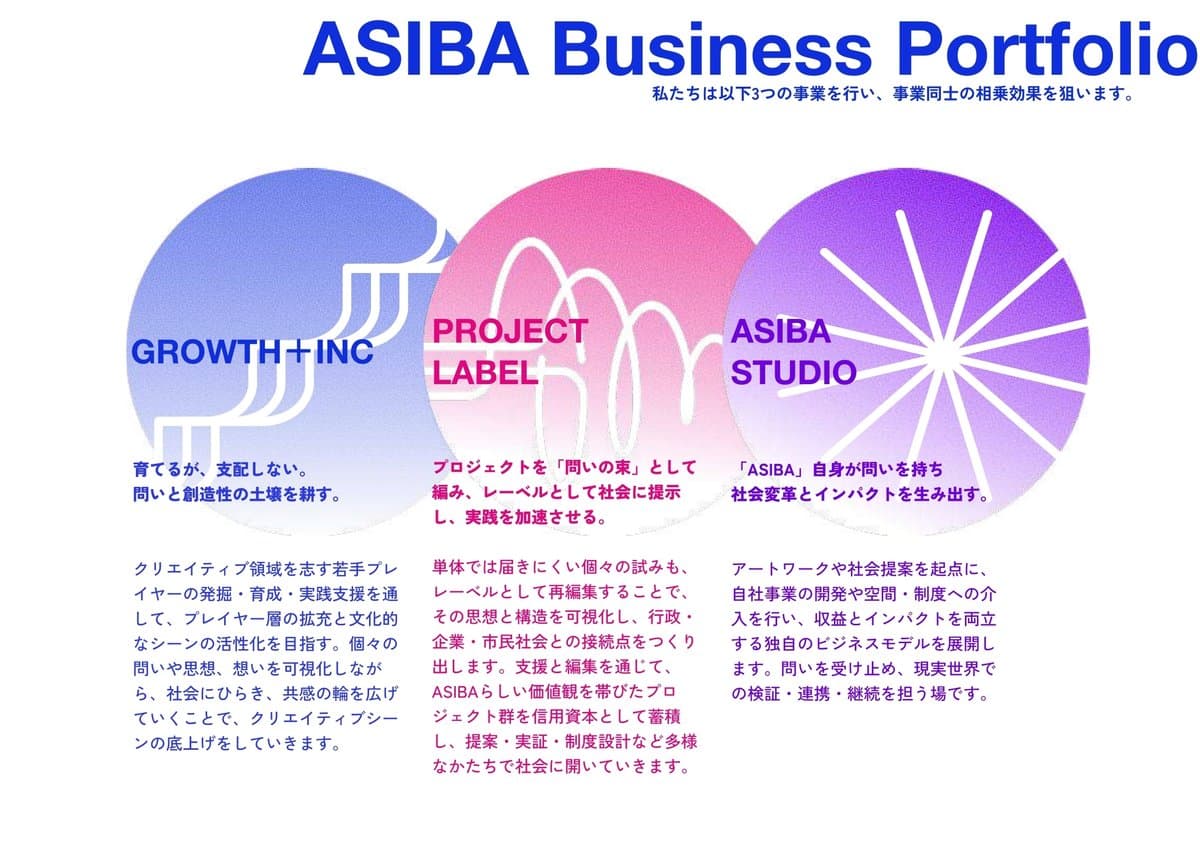
FIG.18
・Nurture, but do not control. “ASIBA INC,” which cultivates the soil for questions and creativity. ・Weave
projects into a “bundle of questions,” present them to society as a label, and accelerate their implementation.“PROJECT LABEL” ・“ASIBA STUDIO,” where
ASIBA itself poses questions to drive social change and create impact
While continuing to center its operations on incubation, ASIBA is relaunching with these three pillars to generate greater impact from the creative sphere.
Nibei’s pitch was not merely a business presentation; it was also a declaration of “What questions will ASIBA itself, as a ‘cleaner,’ pose to society moving forward, and how will it act?”
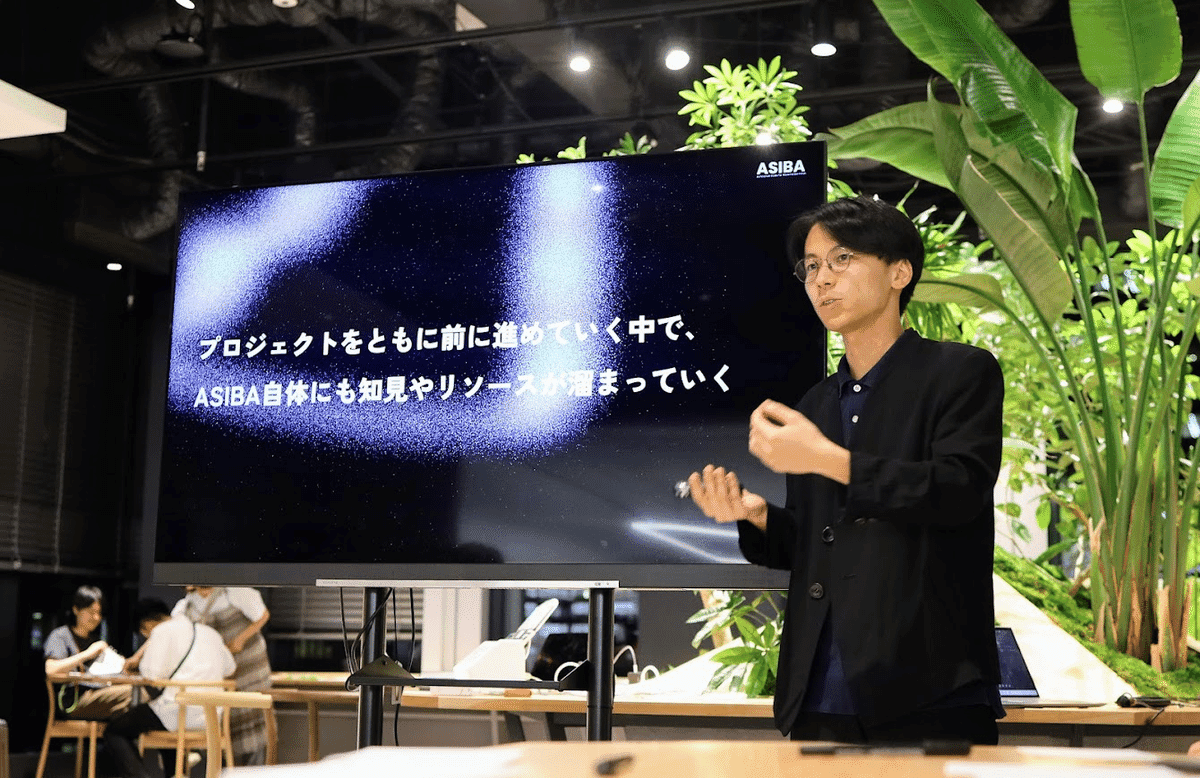
FIG.19
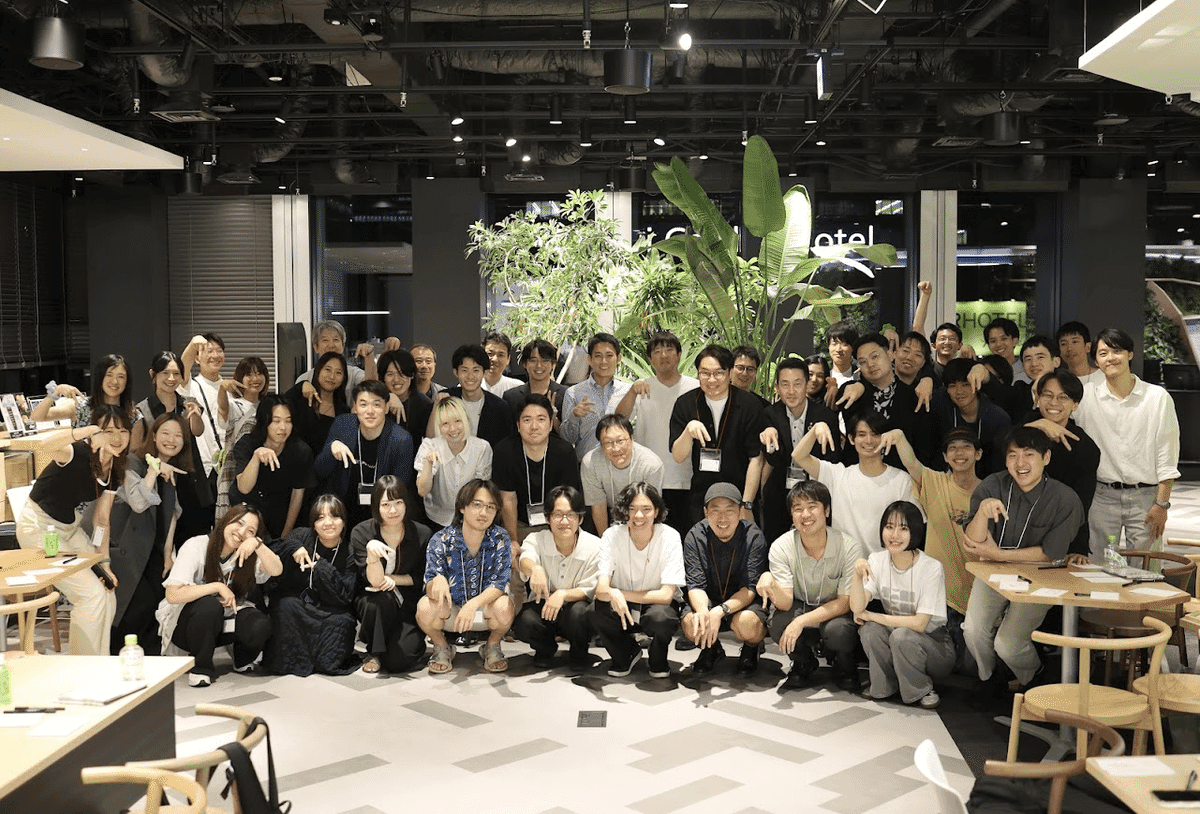
FIG.20
A networking reception was held after the closing ceremony. Although ASIBA partners come from diverse backgrounds, they shared a high degree of common ground in their thinking, and lively conversations ensued.
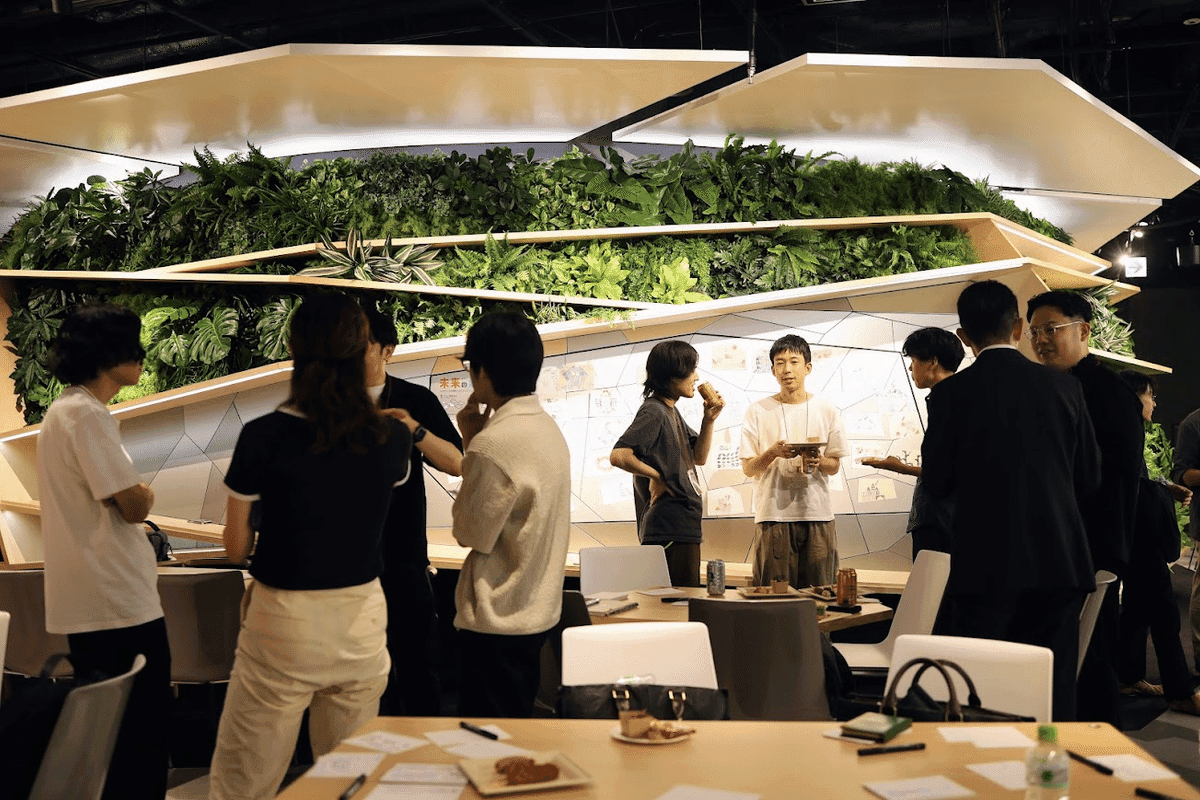
FIG.21
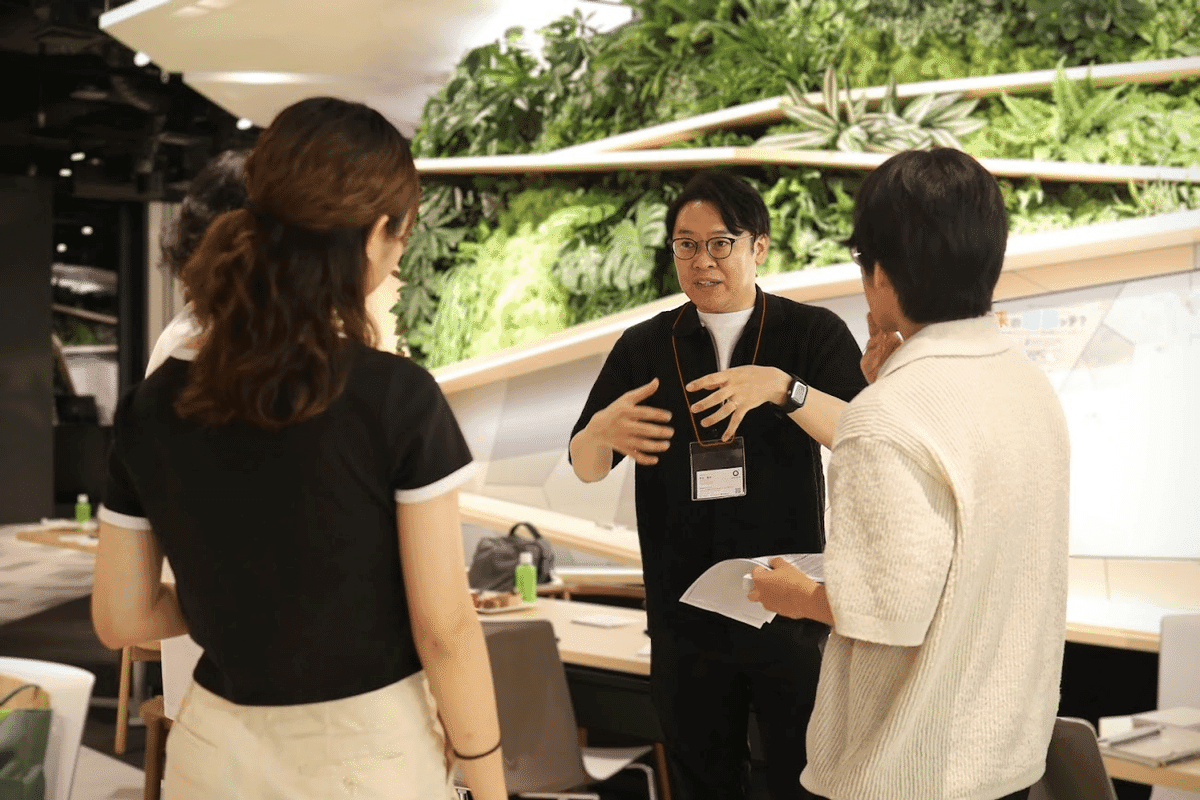
FIG.22
Additionally, booths were set up at the back of the venue where attendees could experience the products from the four projects that were pitched, and many people took the opportunity to try them out.
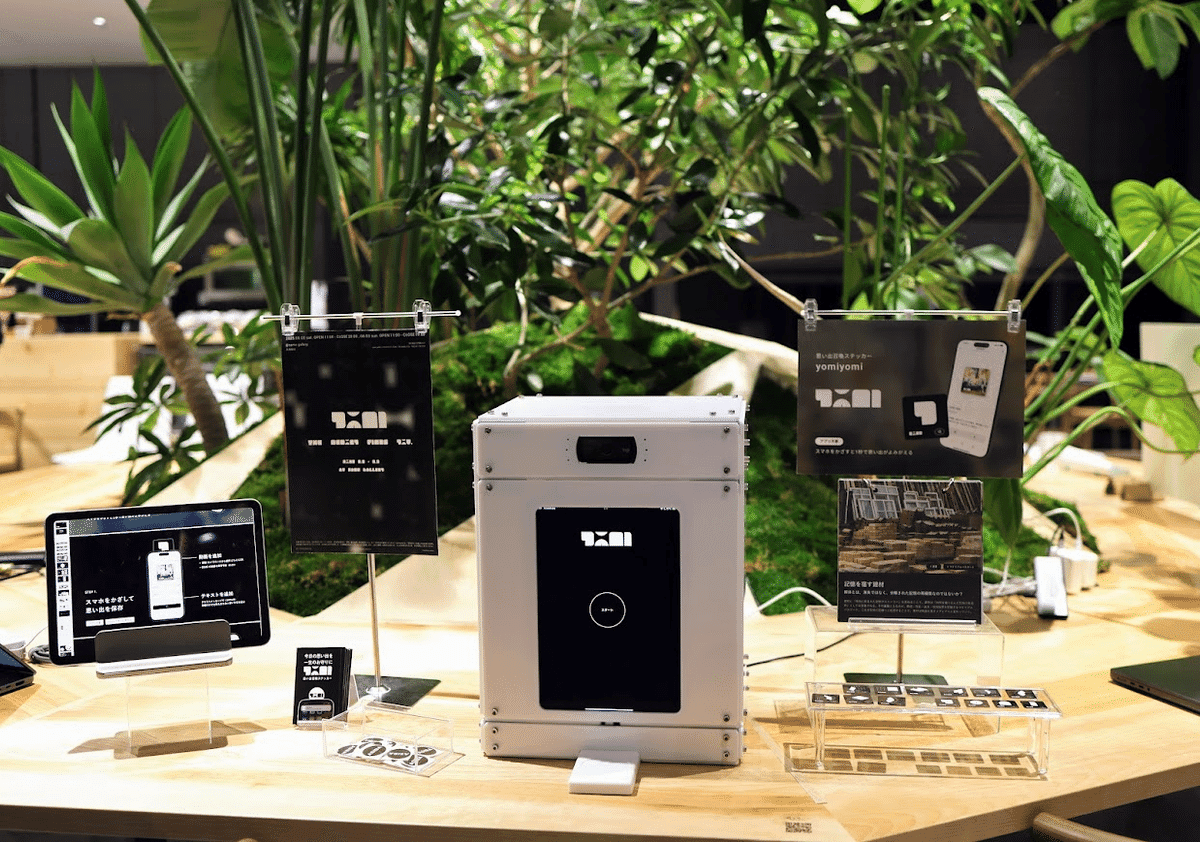
FIG.23
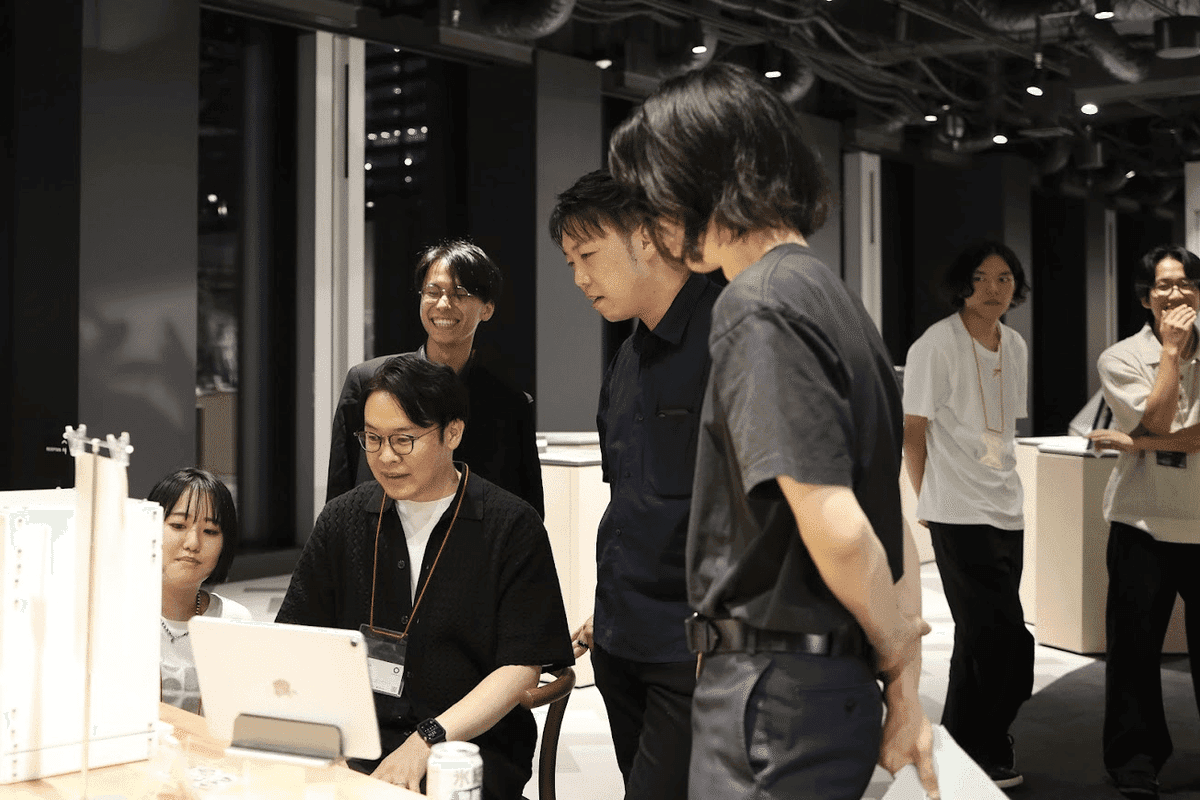
FIG.24
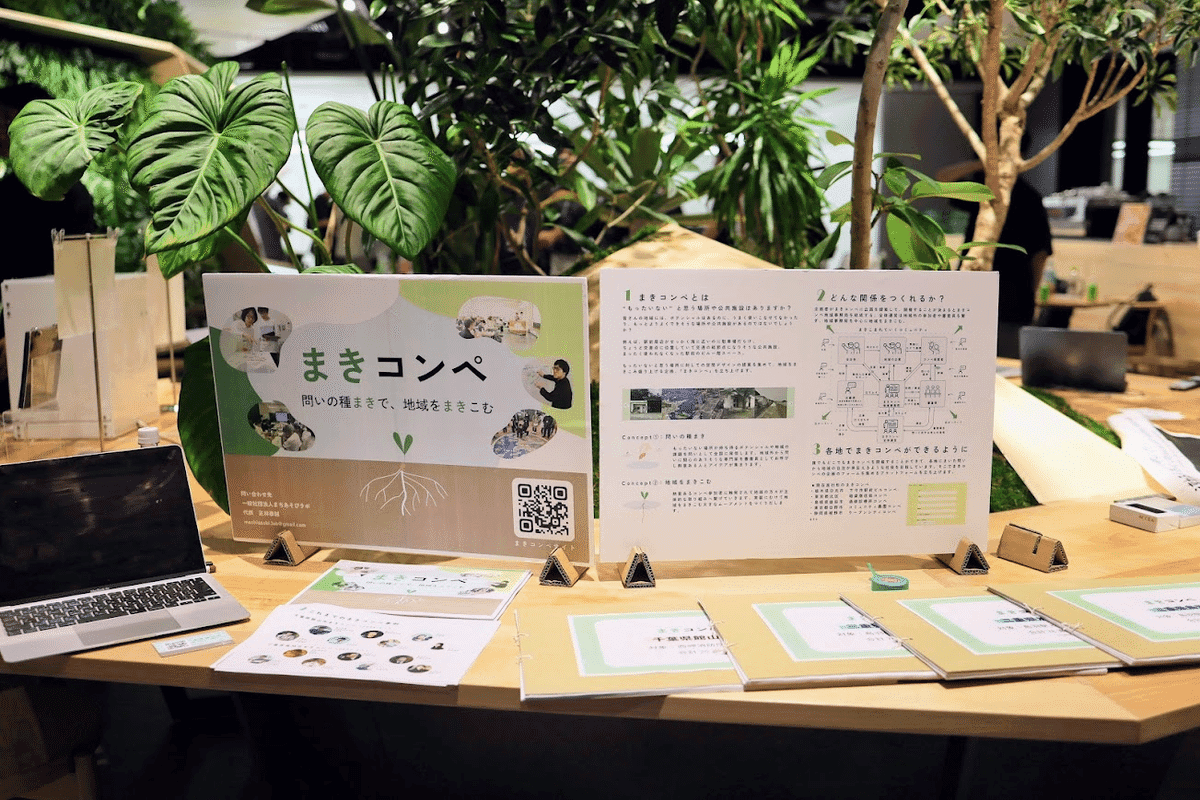
FIG.25
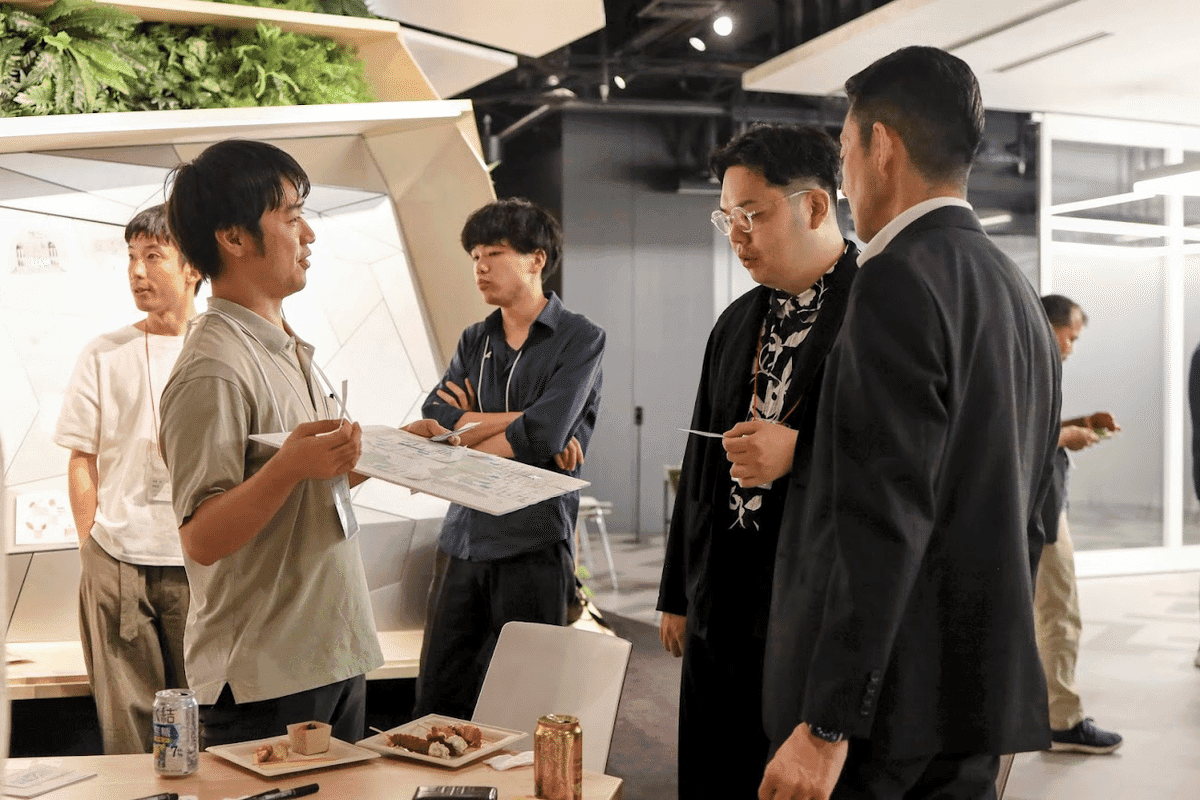
FIG.26
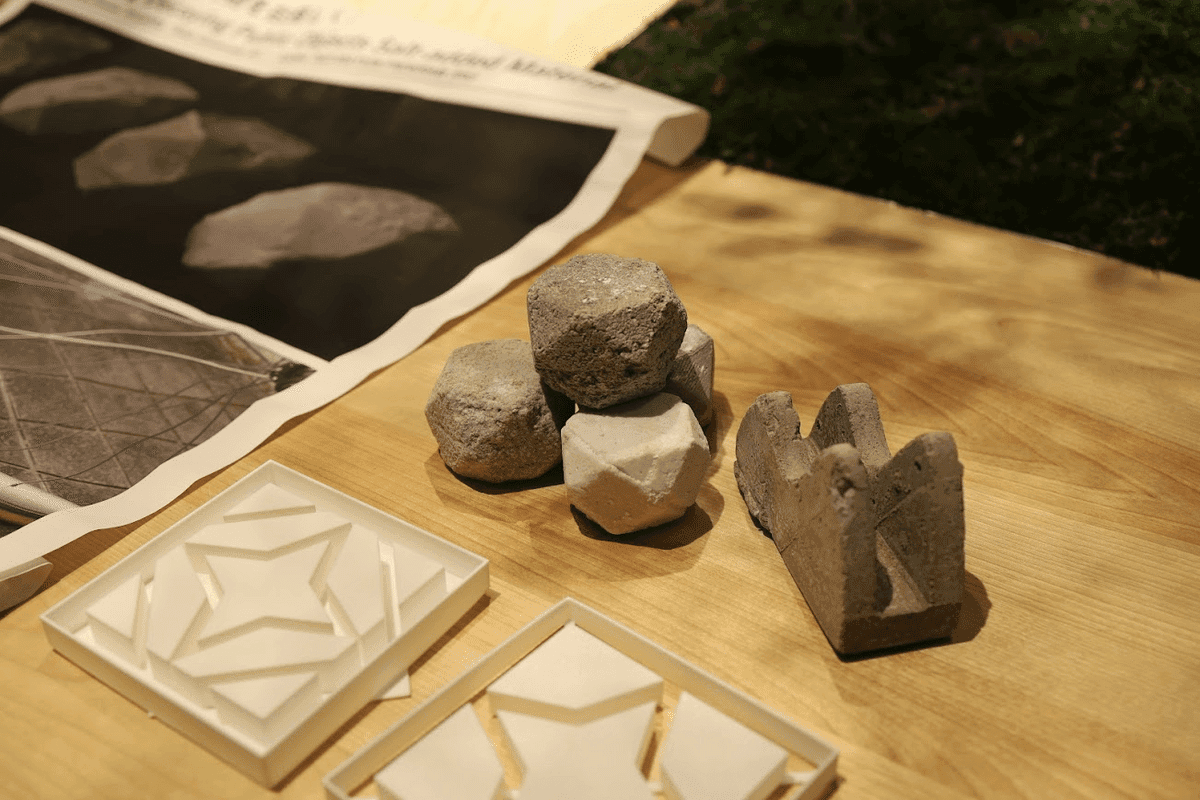
FIG.27
Once again, thank you for participating in “ASIBA ATLAS #03 Creative Means More.” Moving forward, with your continued support, we will continue to spark a wave of social change from the creative sphere and work toward realizing a society where everyone can pursue their potential without giving up.
Event Overview
・Date and Time: July 18, 6:30 PM–10:00 PM
・Venue: TODA BUILDING, 8th Floor
・Attendees: 30 representatives from companies participating
in or collaborating with ASIBA
Schedule
6:15–6:30 PM:
Check-in 6:30 PM–6:45 PM:
ZINE Creation 6:45 PM–6:50 PM: Introduction
6:50 PM–7:00 PM: ASIBA Pitch ① “Towards Creative Entrepreneurship”
7:00 PM–8:05 PM: Workshop“30 Questions on Creative Entrepreneurship”
8:05–8:15 PM: Break 8
:15–8:40 PM:ASIBA Creative Incubation Program, 3rd Cohort: Selected
Pitches 8:40 PM–8:50 PM: ASIBA Pitch ②: ASIBA Future Prospect
8:50 PM–9:00 PM: Closing
9:00 PM–10:00 PM: Networking Reception
Credit
ASIBA ATLAS #3
WORKSHOP TALK


