Creative-LAB. Organizing Team Roundtable #1

FIG.1
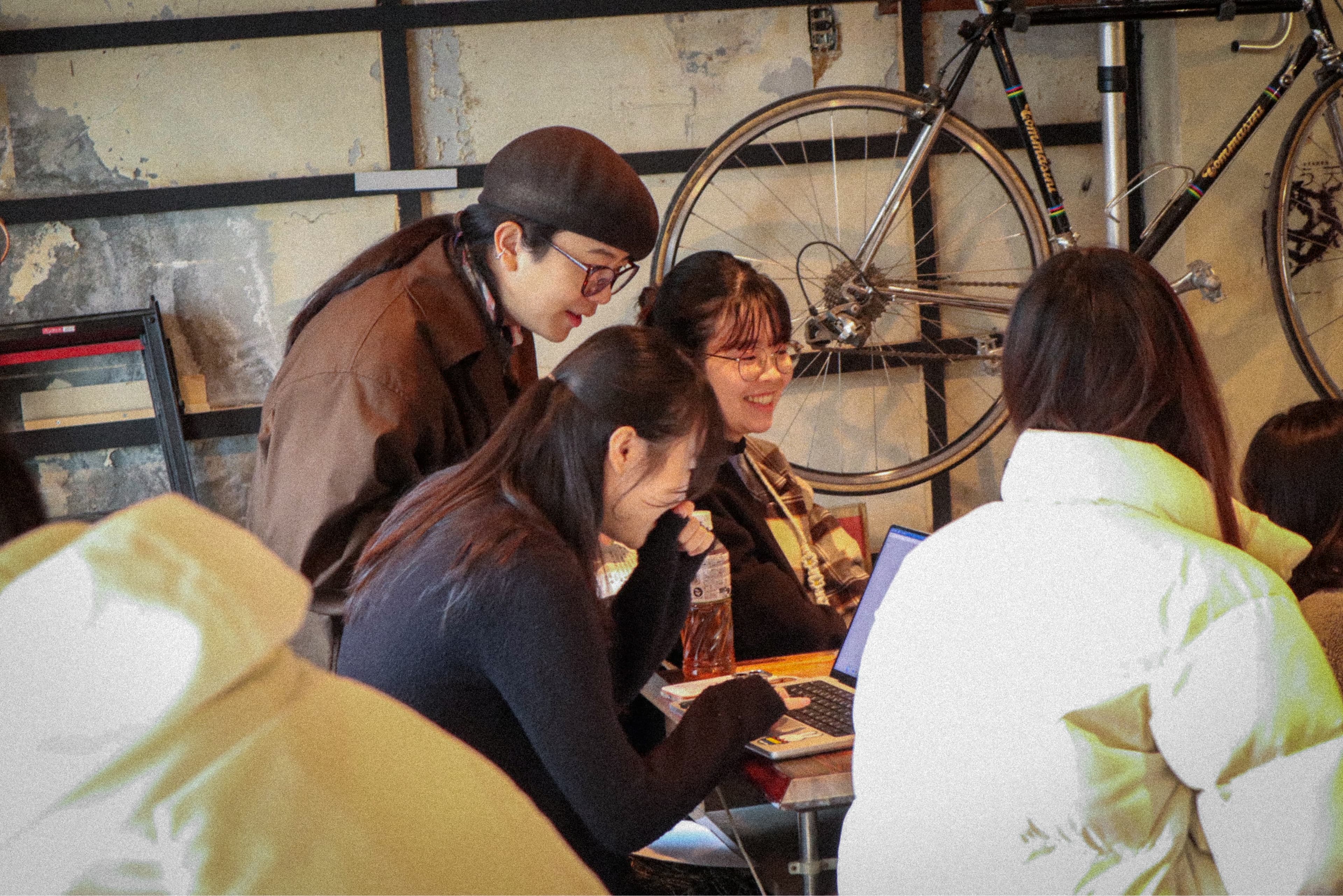
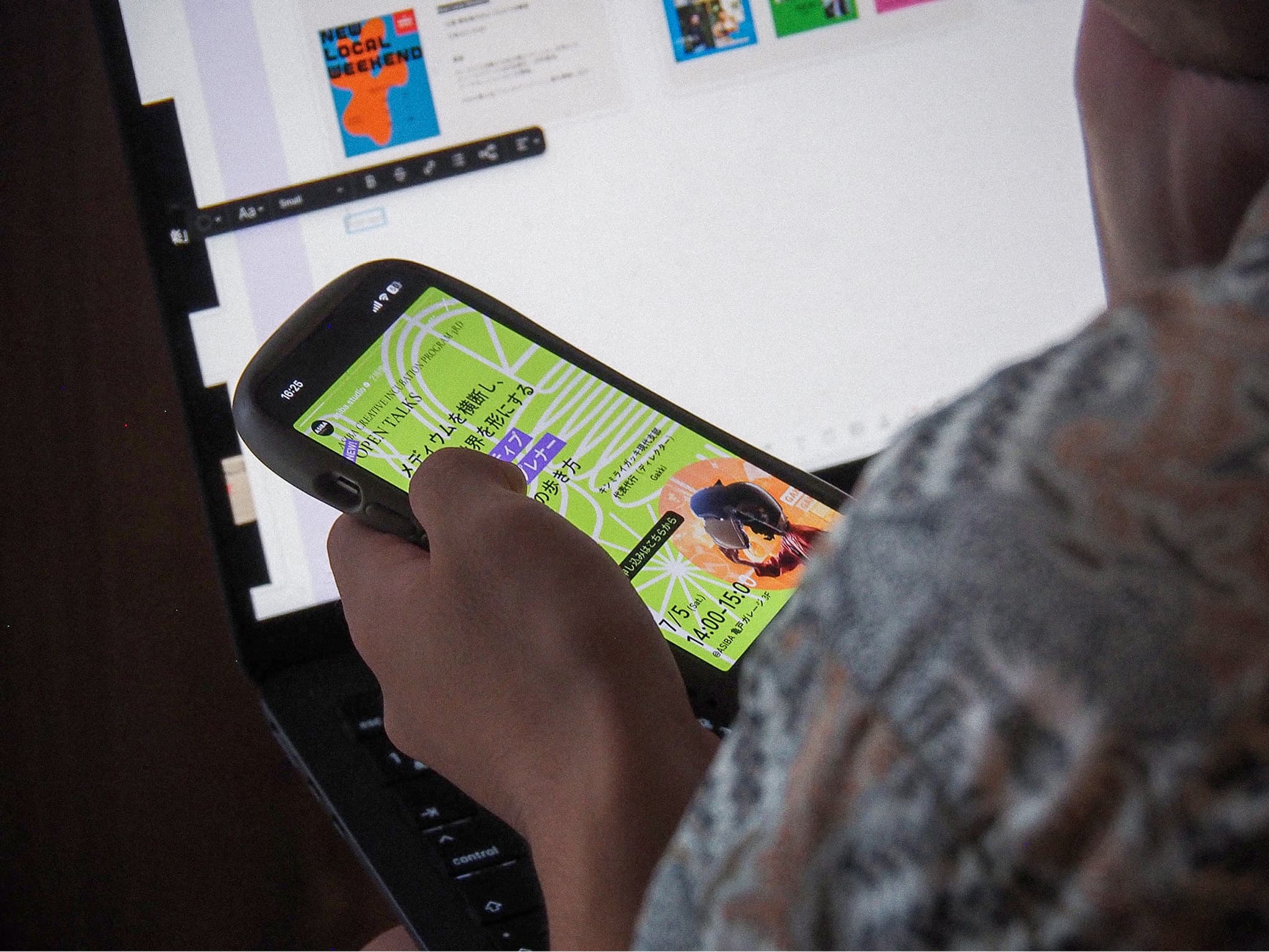
A roundtable discussion among the Creative-LAB. management team to convey the organization’s mission and atmosphere. We discussed the relationship between “creating” and “living.”
#Creative #Lab #Discussion
Masaki Morihara (Co-Representative, ASIBA General Incorporated Association) Graduated from the Department of Architecture at Waseda University. He served as Executive Director of the Japan office of ISEC, an international NPO dedicated to youth leadership development. After gaining experience at several startups, he co-founded ASIBA, a general incorporated association focused on architecture and urban design, in 2024.He is also involved in research at Waseda University’s Institute of Science and Engineering, where he conducts studies on circular architecture and demolition. He has received numerous awards, including the WIRED Creative Hack Special Prize and the Good Design New Hope Award. https://x.com/hamorari3
Nozomi Sudo (Graduate School of Engineering, Department of Architecture, The University of Tokyo) A member of a research laboratory focused on architectural planning using mathematical methods. Currently, she focuses on the practice and exploration of generative AI, working on social implementation and creative activities in the fields of architecture and urban planning. WIRED Creative Hack Special Award / The Architectural Information Society of Japan Competition Challenge 2023 Grand Prize / Morphogenesis Colloquium 2023 Grand Prize
Hiromi Takano (4th-year undergraduate student, Department of Urban Engineering, Faculty of Engineering, University of Tokyo) Participates in a wide range of projects, including collaborative initiatives with Tokyo’s 23 wards. Specializing in housing for young singles, she engages in activities that alternate between research and practical work on studio apartments and shared housing.He studied abroad for one year at UCL in London until June 2023 and visited 42 cities, primarily in Europe.In 2022, he revived TEDxUTokyo—the University of Tokyo’s largest interdisciplinary conference—for the first time in five years. Representative of TEDxUTokyo 2022 / Representative of HCAP Tokyo 15th Cohort / Member of the Japanese National Team for the 16th International Geography Olympiad
Takano: For those interested in Creative-LAB., which kicks off on August 24, I organized this roundtable discussion so you can learn about the vision and passion that drive the ASIBA members who are running the lab. I’ve prepared 10 questions—let’s go through them!
Morihara & Sudo: We’re looking forward to it!
Takano: Alright, here’s the first question. I suspect the theme “Creating Is Living” stems from the “lack of a sense of belonging” and “struggles with being evaluated” that we, as organizers, have experienced through our creative activities—but is that actually the case? Have you ever felt that way?
Morihara: I’ll go first. Even our copywriter has noted that the theme “Creating Is Living” is a bit unconventional compared to other labs, but I believe that making things is also a means of self-expression.I included the word “belonging” because I think some people have had experiences—perhaps in school—where they struggled with communication or didn’t have many friends. I believe that spending time drawing in the corner of a desk or folding origami during those times might be the fundamental impetus for creating things. This applies to college students as well, and it was certainly true for me.
We also discussed where the urge to spontaneously create something or put things together comes from, and while planning the program, we wondered what it would be like to connect that idea to the concept of a “place to belong.”
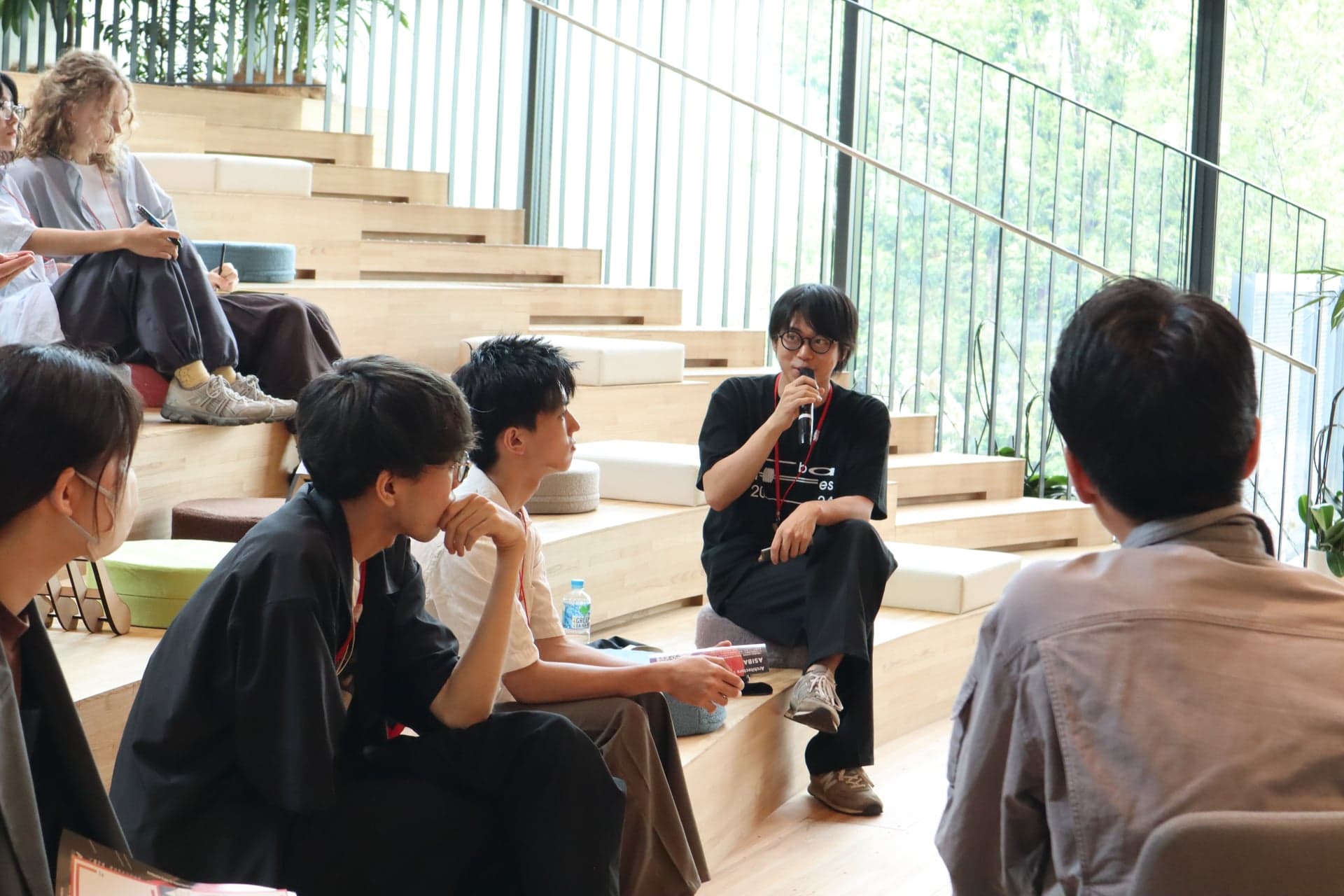
FIG.2
Takano: The original motivation behind adopting the theme “Creating Is Living” stemmed from my awareness that creative professionals often have surprisingly non-creative attitudes toward their careers.While the entrepreneurship field tends to attract exceptional individuals who just go ahead and start a business, creative professionals—because they need to hone their skills—tend to value a sense of apprenticeship, leading to increasingly conservative career paths.In contrast, there are plenty of people who are self-sufficient while doing what they love and who have carved out their own worlds. I wondered if the problem wasn’t simply that people don’t know how to live that way—perhaps because they lack role models or peers to strive alongside. That’s why I wanted to create a lab dedicated to seriously exploring this issue.
In other words, the purpose of the program is to create more opportunities for people to think about how they want to live their lives through the act of “creating.”When we thought about this, we realized that the people who might struggle with these issues are those who feel they don’t belong, those who’ve had experiences of not fitting in with those around them, or those who feel out of place in academic fields where evaluation is based on standardized criteria.
Sudo: That’s incredibly interesting. I feel this is an opportunity to discover what to create and what you love before honing your skills—a space to find your own creative process and core philosophy. Once you’ve identified those to some extent, I think you can focus on training afterward.
Takano: That’s true. It might be similar to the difference between college admissions in the U.S. and Japan. In Japan, the style is to be evaluated based on accumulated academic achievement—it’s closer to the image of a creative career path where you choose your career path only after relentlessly honing your skills.In the U.S., on the other hand, as early as high school, students are evaluated based on the clarity of their goals and the actions they’ve taken so far through various extracurricular activities, and from there, they enter college to focus solely on honing their craft. It’s not a matter of which is better, but I think both options should be available, and I feel that, ideally, everyone should experience both.
Takano: The next question is actually about when we, as the event organizers, felt that “creating” and “living” became strongly intertwined.
Morihara: The moment when “creating” and “living” became connected? That’s a tough one. In my case, “creating” was already a fundamental part of my home environment—there were models scattered around the house, and we had an atmosphere where we’d build our own furniture. So, making things was something I was naturally familiar with from the start.I think that connection to “living” came about when I tentatively decided to pursue architecture as a career at age 16. Back then, there were just too many options, and high school students are told to “become something” even though they don’t know what they want to be yet, so I figured it would be faster to just decide on something. That’s why I chose architecture, and from there I started working part-time at an architectural firm.As I earned a living through architecture, I experienced “living” and “creating” gradually becoming one and the same. Even now, an architectural, spatial way of thinking forms the foundation of my mind, and I think I’m interested in how I can apply that approach to my own life, the insights I’ve discovered, and social issues—and how I can develop those methods further.
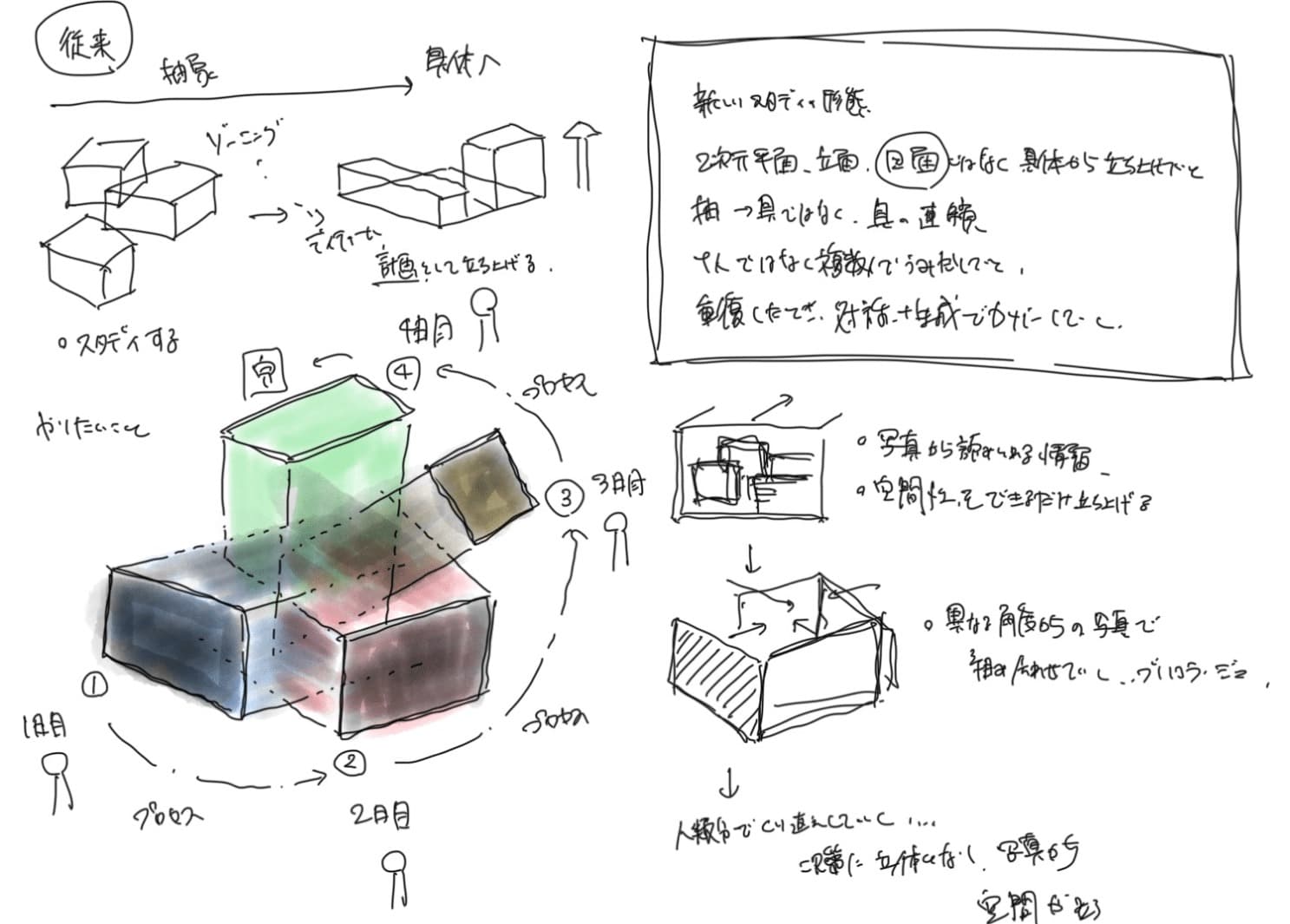
FIG.3
So, as for what brought it all together, I’d say that after tentatively deciding on a career path at 16 and pursuing it to the fullest, I somehow found myself connecting with the spirit of the times, and that’s when I made up my mind. Back then, it really felt just like wanting to become a musician—I had this dream of “I’m going to be an architect.”I still feel that way today, but back then I had this reckless belief that “I can do it,” and I had a strong rebellious spirit—looking down on the guys around me who were spending all their time studying for entrance exams while thinking, “I’m going to hone my various skills.”
Takano: Personally, I think what’s really important is how quickly you can break free from “jobs with a specific title.” While the first steps—becoming a designer, an artist, or an architect—are certainly part of that, the truly great people are those who operate beyond those boundaries or do things that only they can do.Having a “well-established name” can make it seem like you’ve secured a certain position, but I believe there’s greater significance in taking that extra step beyond simply demonstrating your expertise. To truly realize that potential, you inevitably have to cross boundaries or carve out a unique domain that only you can occupy. I think that’s closely tied to having the resolve to do so.
FIG.4
The Graduate School of Information Science and Technology at the University of Tokyo is known for its interdisciplinary nature, but I’ve heard that ultimately, establishing one’s own unique academic field by the time of one’s doctoral dissertation is seen as a kind of goal. I see a similar vision in the way Mr. Morihara lives his life.Even while saying she wants to become an architect, she’s truly crossing boundaries in all sorts of directions. Although the day will come at some point in her life when she produces an architectural output, the architect she’ll be at that moment will surely not be a “so-called architect.”
Takano: What about you, Sudo?
Sudo: I think I’ve probably lived my life without giving it much thought compared to Morihara. I have virtually no memories from my fourth year of undergraduate school—up until I was about 22—and the only thing I was doing was reading voraciously. If we assume that “living” means “learning and accumulating knowledge,” I feel that “creating” is what’s driving that process for me right now.
What I mean is this: First, when putting what you’ve studied into practice, the tendency is to limit yourself to writing it down in a notebook. But by presenting it as a form of expression, the recipient can interpret it in diverse ways, which I feel deepens and broadens my own thinking.Second, creating something actually sparks a desire to study more. It’s like saying, “I have to make this, so I’ll study like crazy to do it.” If we assume that “living” equals “learning,” I feel that this process is driving me forward in that way. It’s as if necessity leads to enjoyment.
Takano: I get the sense that for Mr. Sudo, “learning is living.” It’s as if learning itself is the goal. I mean, most people don’t read books when they’re mentally unwell, but I think it’s amazing that Mr. Sudo continues to learn for enjoyment even in that state. I get the impression that the sicker he gets, the more his skill set expands. It’s mysterious.
Morihara: But when it comes to creating, the main goal isn’t so much about producing something as it is about engaging in your own trial and error within that process—or rather, seeing if there’s something to learn from it. It’s that state itself that feels good, right?
Sudo: Exactly, exactly.
Takano: That’s interesting. I totally get that. For me, on the other hand, I haven’t really been conscious of that process-oriented aspect; if anything, “anger” is my driving force.Whenever I think, “Why isn’t this the way it should be?” I have this incredibly strong personal urge to “change it” or “surely I can change it.” In terms of that sense of “creating” being tied to “living,” I’d say it was when I relaunched TEDxUTokyo (the University of Tokyo version of TED Talks) during my sophomore year of college.During the COVID-19 pandemic, our generation was being restricted more than necessary in so many ways and losing opportunities, so I felt we had to do something to change that. When I thought about how to change things—driven by a sense of unease and anger over why things had to stay this way—it inevitably led me back to “creating.”
FIG.5
Morihara: That’s not about making physical objects, but rather creating organizations or movements, right? When we talk about “creating” or “being creative,” it usually refers to making things, but the act of creating an atmosphere or a system—as Takano mentioned—is definitely a form of “creating” too.
Takano: Exactly. Since I joined ASIBA, I’ve been surrounded by people who make things, so I used to think of myself as someone who doesn’t create. But recently, I’ve finally come to realize that what I’ve been doing is also a form of “creating.” I think changing systems or “hacking” capitalism is incredibly creative in the sense that it creates the very conditions necessary for creativity to exist.
Morihara: Changing the subject a bit, what do you think is the difference between people who create or start something and those who don’t?
Takano: I think the prerequisite is having mental and financial leeway, but on top of that, I think it comes down to having high expectations of oneself. And in my case, anger toward society serves as the driving force. Also, the feeling that “only I can do this” might be important.
In my case, when I launched TEDxTokyo, I happened to be living in a shared house. The older residents were from a generation that barely remembered the early days of TEDx, while I was part of the generation most affected by the pandemic. I’d been in Hongo the whole time, and having been involved in various activities during my first and second years of college, I’d built up a decent network. When all that came together,I think I was able to get started because I had that sense that “only I can do this” and “I’m the one who can do this best.”
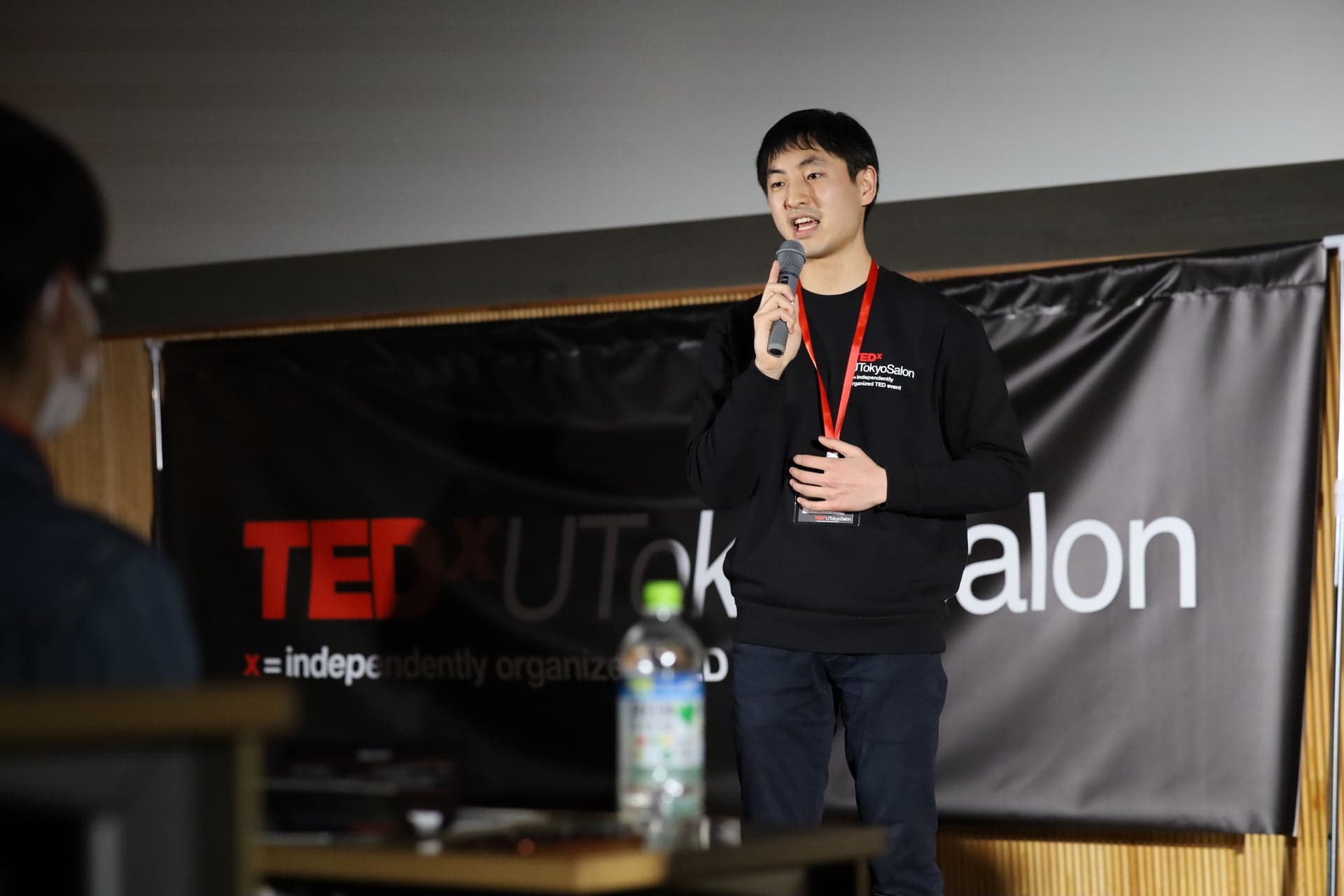
FIG.6
Morihara: I totally agree.I think having all those environmental factors come together—making you feel like “only I can do this”—is a major factor in giving you the resolve to say, “I have to do this.” It also brings a kind of vague sense of invincibility or a high level of self-confidence that makes you think, “I can do this.” There are times when that sense of invincibility and a sense of mission blend together and become one. That’s how it was for me, too.
Credit
Related Works
The Person Pointing at Polaris: Starting from 'Not Eating'
Creative-LAB. Organizing Team Roundtable #2
DIALOGUE
2025.07.30.