Partner Dialogue #1
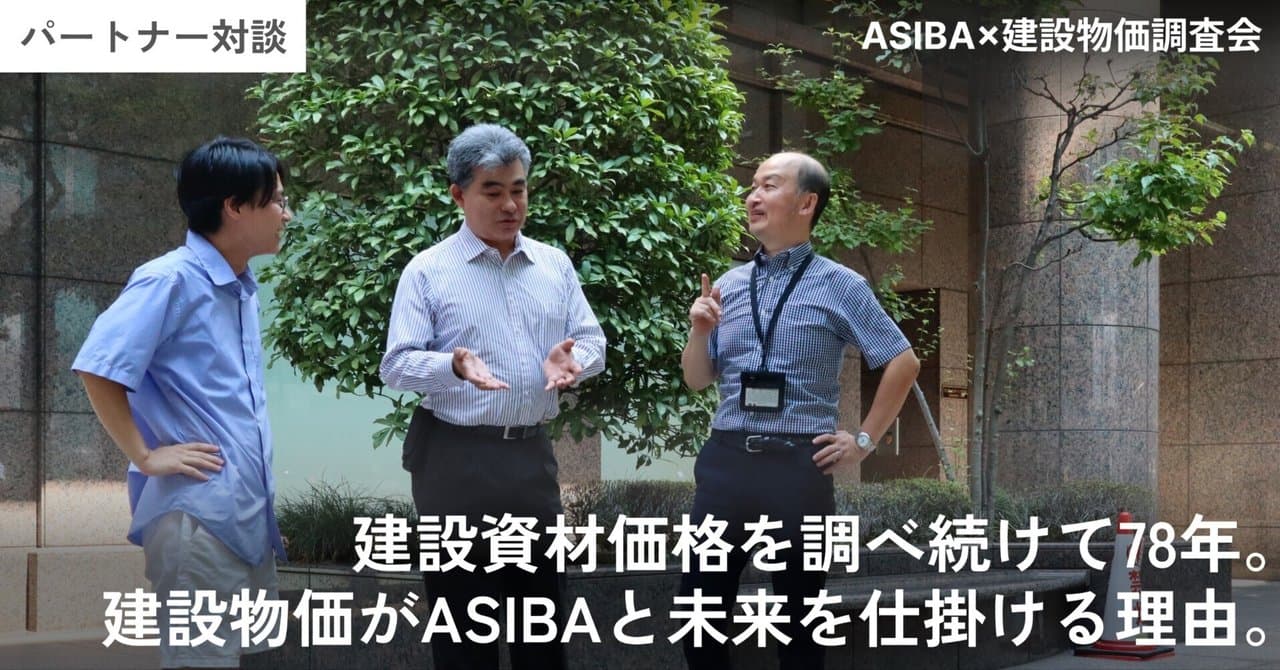
FIG.1
The Construction Price Survey Association is supporting ASIBA’s activities as a corporate partner for fiscal year 2025. Why is this long-established organization—which has been tracking construction material prices since the postwar era—now supporting the activities of students and young people?Masanori Koike of the Construction Price Research Association’s Comprehensive Research Institute, Yoshiyuki Nakamura of the Planning and Development Department, and Yuta Nihei of ASIBA engage in a candid discussion about the reasons behind this support and their thoughts on the construction industry. (Text by Rigo Kagami)
Nibei: Mr. Koike and Mr. Nakamura from the Construction Price Research Association have been supporting ASIBA’s activities since last year. To be honest, at the time, I knew almost nothing about the Construction Price Research Association.
Koike: For students like you, the name “Construction Price Research Association” probably doesn’t ring a bell. But what we do is actually quite simple. As the name suggests, we are a general incorporated foundation that has been researching market prices for construction materials for 78 years, ever since the postwar era. There’s a rule that when the national government or local municipalities award public works contracts, they must always perform cost estimates to calculate a fair construction price. We survey the material price data necessary for that purpose and provide it through our specialized journal, *Construction Prices*—in other words, we’re the “data providers” for public civil engineering projects.
Nibei: I see. How exactly do you conduct these surveys?
Nakamura: We place great importance on human interaction and conduct our surveys using methods that may seem quite old-fashioned at first glance. We have approximately 200 surveyors stationed at 10 locations nationwide, and they conduct monthly interviews and surveys with our survey targets, such as construction companies and manufacturers of construction materials and equipment. Of course, we’re also working to improve efficiency and automation, but not everything can be handled entirely through digital means. The insights that arise specifically from face-to-face conversations, along with the relationships of trust we’ve built with our survey partners over many years, are what underpin our research.
Nibei: Listening to you speak like this, I strongly sense the weight of your long-standing traditions and history. At the same time, considering the new business development initiatives you’re both working on and your decision to join ASIBA as a partner this fiscal year, is your organization aiming for some kind of major transformation?
Nakamura: One major challenge we face is the shortage of young talent in the construction industry. The aging of engineers and skilled workers on construction sites, coupled with the declining employment rate among young people, is becoming more serious every year. Therefore, we are continuing initiatives to spark young people’s interest and foster their development, such as providing free educational materials to technical high schools, conducting workshops, and offering research grants.Our support for ASIBA’s activities stems from this same context. After all, having been nurtured by this industry for 78 years, we feel a strong desire to give something back.
Koike: Our survey business will continue as long as the rule that “cost estimation is required for public works projects” remains in place. However, if that rule were to change, both our survey business and the organization itself could be thrown into uncertainty. That is precisely why we want to expand the areas we can control ourselves. With this in mind, the Comprehensive Research Institute, the department to which I belong, is actively engaged in new business development and external partnerships.
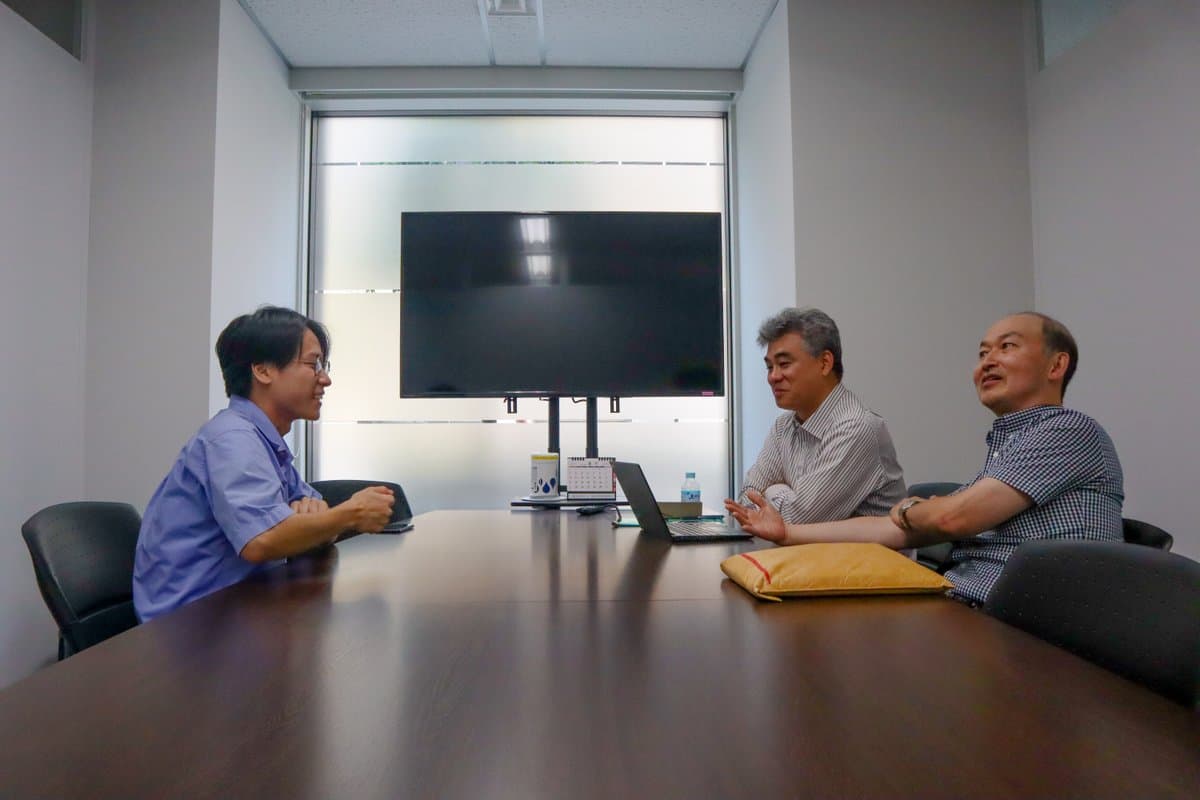
FIG.2
Nibei: Listening to you, I feel there are commonalities between ASIBA’s and Construction Price’s positions. ASIBA’s main business—incubation—is a highly public-spirited activity aimed at creating an environment where young people can continue to take on creative challenges without giving up on their talents or potential.However, when we accompany participants who have completed the program and strive to grow together with them, there inevitably come moments when we have no choice but to shift toward commercial viability. We must be selective about which projects to support, and ASIBA itself needs to generate revenue to ensure its organizational sustainability. In that regard, Construction Price Index is also tackling the development of new businesses while centering its operations on research projects with a strong public interest, isn’t it?How do you manage to balance both?
Nakamura: It really comes down to just the determination to see it through. Koike is in the Comprehensive Research Institute, and I’m in the Planning and Development Department—we’re each doing our absolute best within our respective roles. Of course, since this is a field where we lack both experience and know-how, every day is a continuous process of trial and error.
Nibei: Even so, I think it’s truly amazing that you’ve actually gotten started and are making it a reality.
Koike: It’s just my personality, I guess (laughs).In the research business, it’s crucial to stay firmly on the established track—stability is paramount. That mindset is important, and I believe it’s precisely one of Construction Price Index’s strengths. But that’s exactly why, while firmly safeguarding what needs to be protected, I also want to sow the seeds for the future. Even if we can’t become the frontrunners, we’re undertaking various initiatives with the determination to keep pace with those leading the way.
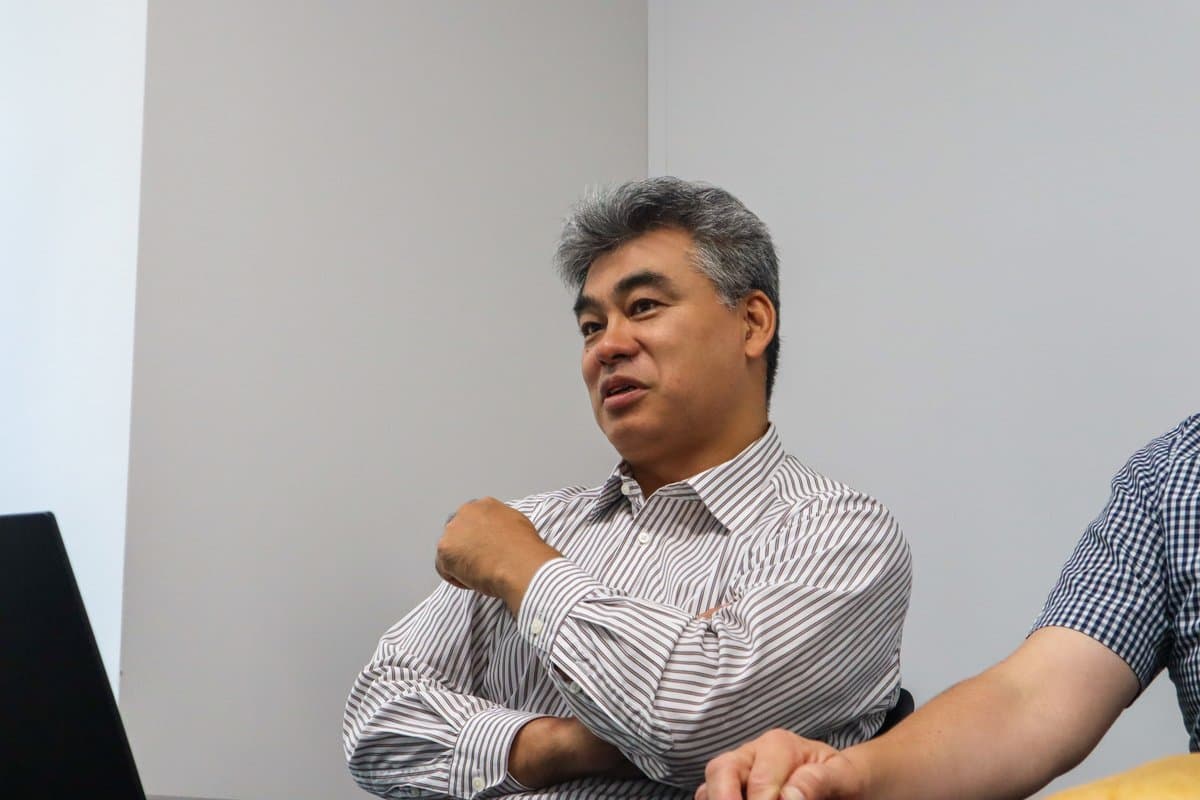
FIG.3
Nibei: Striking a balance between offensive and defensive strategies is crucial for any organization, isn’t it? Could you tell us specifically what the two of you are working on right now?
Koike: I’m focused on utilizing the vast amount of data held by Kensetsu Bokka. One example is the data on building prices that our Comprehensive Research Institute has been collecting and analyzing for over 20 years—it’s virtually unparalleled in the industry in terms of both quantity and quality.The question is how we can prevent this data from lying dormant and instead put it to use to create new value. In fact, by leveraging this survey data and our expertise, we’ve launched a membership-based web service called “JBCI,” which allows users to easily check market rates for construction costs simply by entering statistical information on building prices, as well as the building’s location, use, and scale.It is used not only by local governments but also by a diverse range of stakeholders, including developers, property and casualty insurance companies, and real estate appraisers.
In the Planning and Development Department, we handle a wide range of tasks, from corporate planning and public relations to system development and social contribution initiatives. In particular, we are taking on the challenge of developing various products while maintaining a keen interest in new themes such as BIM/CIM and decarbonization. That said, we are an organization with a 78-year history as a specialized agency for construction material price surveys. There are limits to what we can achieve on our own when launching new businesses. That is precisely why we aim to realize open innovation by building networks with external partners, such as through our membership in the Construction Tech Association.
FIG.4
Koike: It was through the Construction Tech Association—where I was introduced to Mr. Saito of Toda Corporation—that I first encountered ASIBA. Later, I attended ASIBA FES 2024, held at Shimizu Corporation’s “NOVARE: Forest of Learning from the Past to Create the Future,” and to put it simply, I was absolutely thrilled. Not only were everyone there exceptionally talented and working on cutting-edge projects, but more than that, I sensed a strong passion and hope for society. Wanting to share that spirit with our generation, I interviewed them as a special feature of our “Lab for Creating the Future” project—that was my first interaction with the ASIBA team. It’s been over 30 years since I started my career, but I feel that my desire to do work that excites me has actually grown stronger than ever. That sense of excitement is always at the core of my collaboration with the ASIBA team.
FIG.5
Nibei: I think there’s one thing all the partners who support ASIBA have in common. It’s that they aren’t afraid of change—in fact, they strive to be the ones driving it. I believe it’s precisely because we share this positive mindset that we’re able to build such open and meaningful relationships.
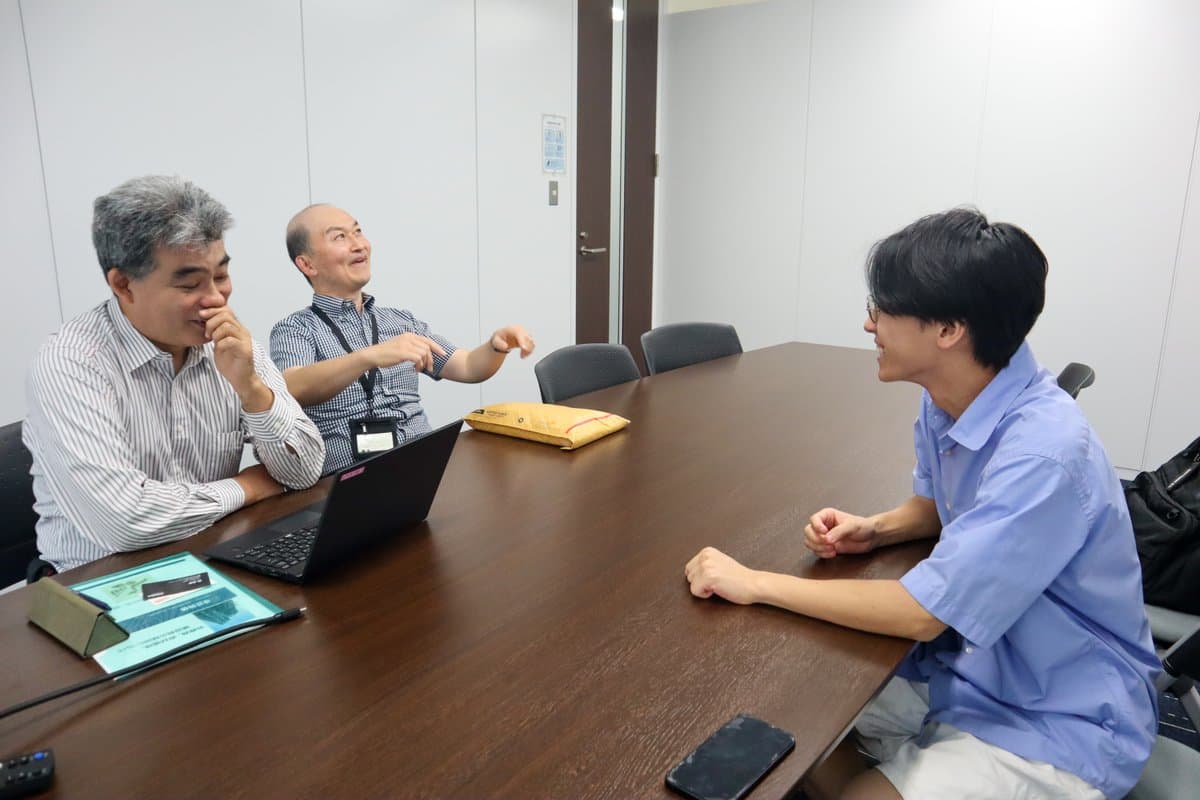
FIG.6
Nakamura: When it comes to sharing that sense of excitement, age really doesn’t matter, does it? In fact, I think an organization becomes stronger when it combines the perspectives of people from different generations and backgrounds. With that in mind, I’m currently actively engaging with people from startups. We’ve already signed NDAs with a few of them, and concrete steps are starting to take shape. Lately, there’s been a rise in startups within the construction industry, too, hasn’t there?
Nibei: That’s true. However, many of the startups emerging now focus on products that solve problems that are already apparent. Problems that can be solved with technology will eventually be solved by someone.We believe what’s truly important lies beyond that—how to uncover issues that no one has yet recognized as problems, or to tap into untapped potential. To achieve this, I feel it’s crucial to further strengthen our collaboration with Construction Price Information while gaining a deeper understanding of the realities on the ground.
Nakamura: From our perspective, we want the younger generation—people like everyone at ASIBA—to keep taking on challenges with free-thinking and creativity. Even seemingly outlandish ideas can sometimes give birth to new value. It’s up to us, the older generation, to figure out how to bring those ideas to life. ASIBA brings unique creativity and drive, while Construction Price offers data, trust, and insights rooted in the field. By combining our respective strengths, I hope we can work together to envision an exciting future.
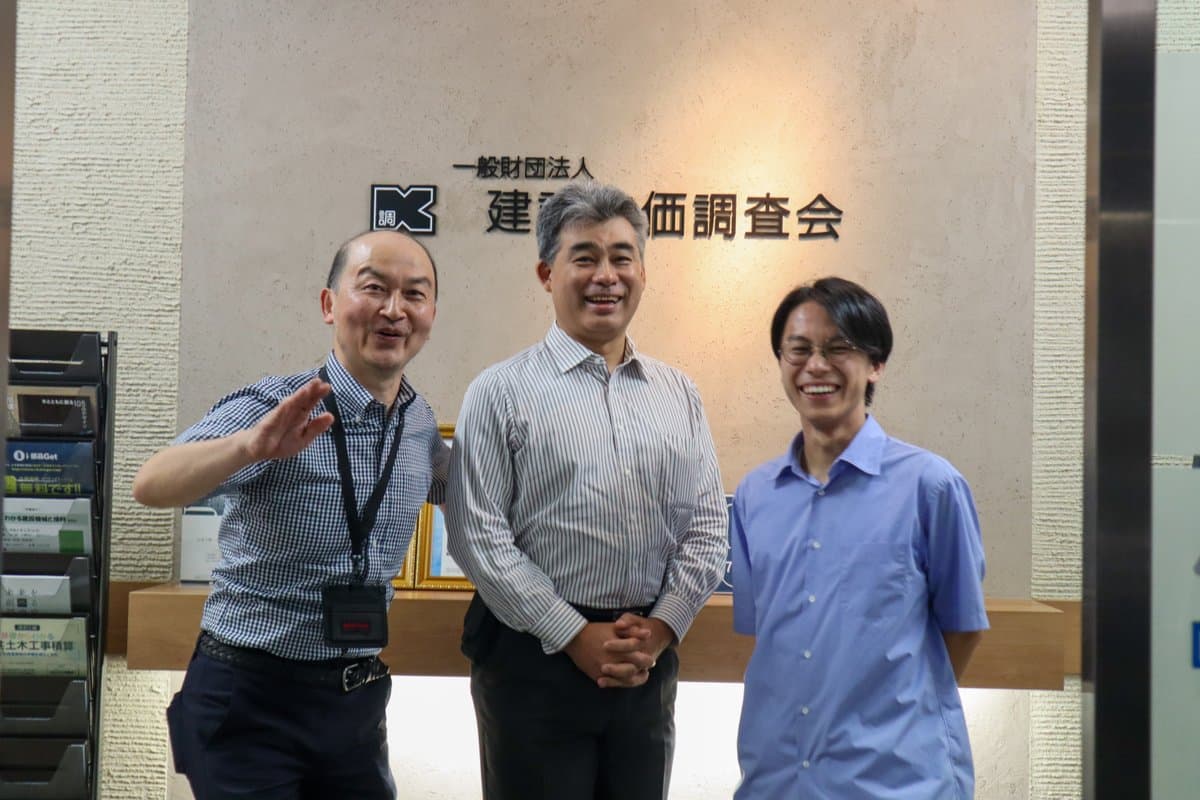
FIG.7
Credit


