FIG.1
“Nessum,” a technology regarded as filling the “gaps” in the IoT society, has used its unique communication method to solve social challenges in various situations where existing technologies struggled to deliver communication.
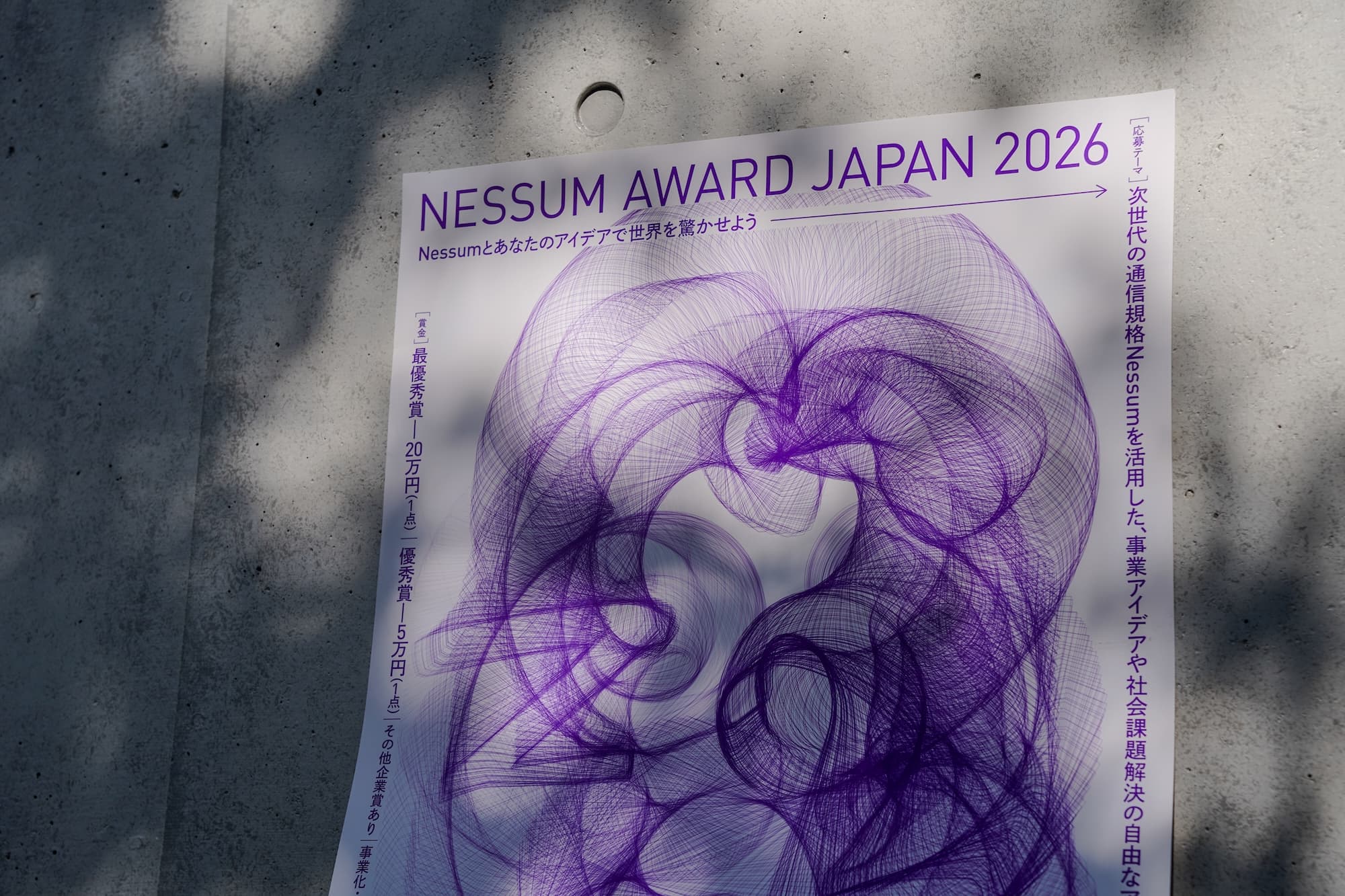
To foster further societal implementation of Nessum, we are co-hosting the Nessum Award JAPAN 2026 with the Nessum Alliance and 100BANCH to solicit creative ideas for new, as-yet-unseen applications, regardless of industry or field.
In this article, we interviewed ASIBA Co-Representative Morihara about why ASIBA is involved in the Nessum Award and the social significance of hosting the event.
Interviewer: What is your impression of the “Nessum” technology, Mr. Morihara?
Morihara: Nessum technology is incredibly unique and fascinating—it’s a technology Japan can be proud of on the global stage, with users all over the world. At the same time, as I listened to the discussions, I realized it’s also a valuable technology built on the accumulated experience and passion of telecommunications professionals, including Mr. Koga, one of the developers at the Nessum Alliance.
However, when trying to convey its true value and appeal, the discussion inevitably tends to become a technical one filled with difficult jargon. ASIBA has been involved in rebranding this technology for the past two years, exploring how to make it a technology that is loved and utilized by more people, transcending its technical complexity.
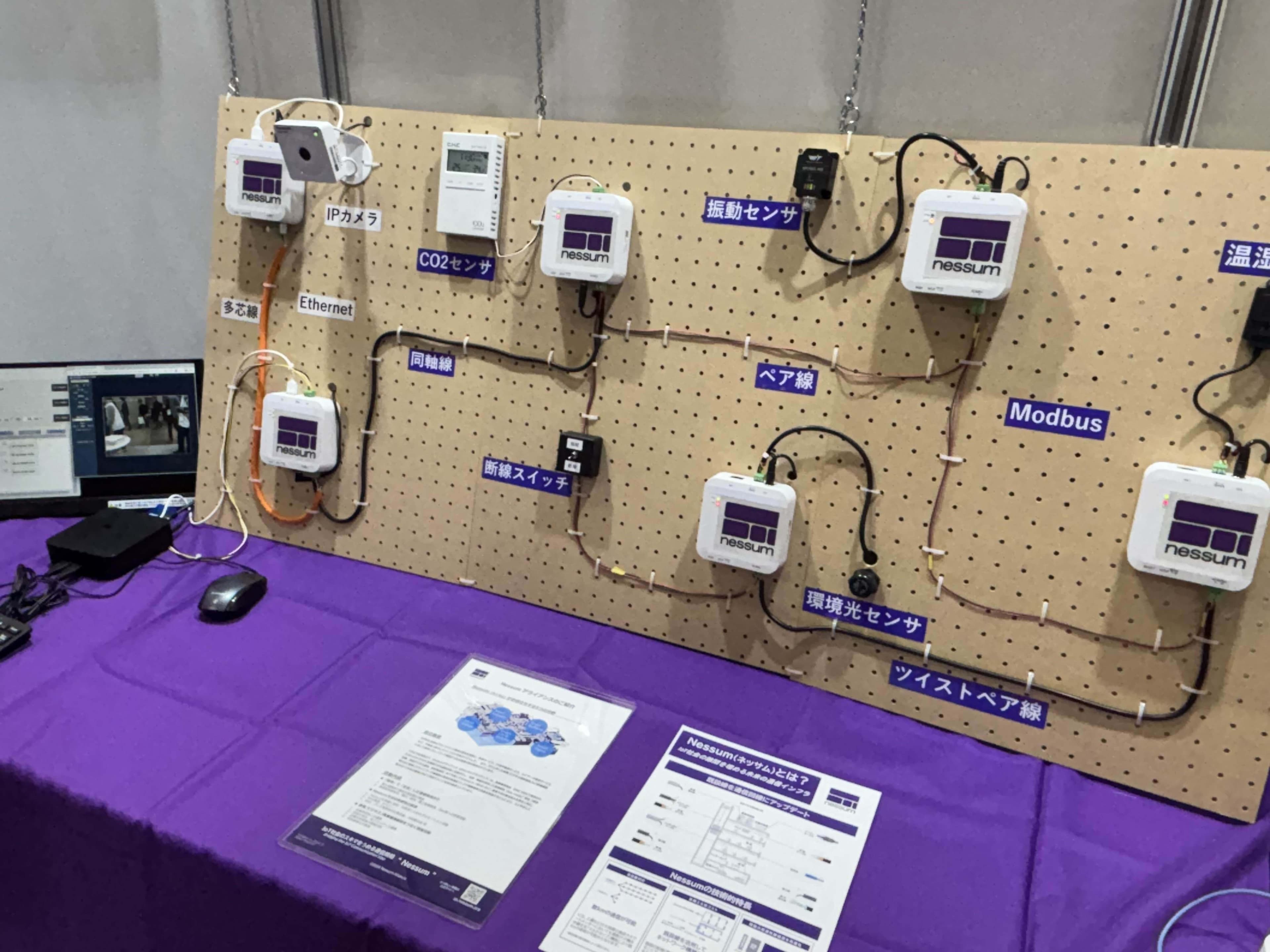
FIG.2
Interviewer: What are your thoughts on the potential you’ve identified during this exploration, as well as the current challenges?
Morihara: Nessum is already being steadily adopted in areas such as smart meters and HVAC (heating, ventilation, and air conditioning) systems; from a technical and marketing perspective, this can be described as a “safe bet” of continuous evolution.
However, if we simply continue along the path of existing developments, there is a risk that we might fail to recognize other significant potential opportunities, or that the market and our market share could eventually dwindle. That is precisely why I believe it would be effective to explore “uses we hadn’t thought of before” and bring about “discontinuous evolution” that transcends existing frameworks.
When I speak with manufacturers who are members of our alliance, I am keenly aware that they are top-tier professionals when it comes to presenting the optimal technical means—that is, “solutions”—to meet “objectives” such as client requests.
On the other hand, I often hear that they find it difficult to demonstrate their strengths in situations where they must set the objective themselves. Unlike the era of high economic growth, when the path forward—aiming for prosperity for all—was clear, I believe that in today’s world, design thinking and innovation—which involve generating new questions and working toward unprecedented goals—are becoming increasingly important.
Interviewer: So, through the Nessum Award, you want to create opportunities for such innovation. What kind of environment do you think is necessary to foster innovation?
Morihara: Nessum itself has a history where the original technology was developed for household use and later adapted for new markets such as commercial and industrial applications.Historically speaking, just as reinforced concrete was born from the serendipitous combination of steel and concrete, much innovation often arises from the interplay of unexpected trends or other technologies.
I believe this challenge—the Nessum Award—can be seen as an effort to create an environment for “designing serendipity.” By inviting applications from people with diverse backgrounds—many of whom may not have even heard of Nessum before—we aim to create a space where emergent ideas and serendipitous combinations can emerge that we ourselves might never have conceived.
Interviewer: ASIBA would also like to support participants who are filled with excitement and passion, thinking, “If I look at this from my own perspective, maybe I can do something like this!”
Morihara: I agree. Of course, innovation inevitably involves risk and failure. I feel that modern society and corporate structures, in their pursuit of certainty and efficiency, have become so structured that it’s difficult to take on challenges that carry the risk of failure. Even the ideas born from this award will likely face various obstacles and difficulties along the way—such as legal regulations and business viability—as we move forward.
However, rather than giving up, it’s essential to create an experimental environment where people can say, “I don’t know if it will work, but I’m not afraid to fail—I’ll just give it a try.”In fact, this award aims to lower the barriers to entry as much as possible and provide a platform for evaluation—creating fertile ground for participants to move their ideas forward. We also offer winners free networking and sponsorship opportunities with the Nessum Alliance to support implementation and commercialization.
As the interviewer, Mr. Morihara, what kind of participants would you like to see?
Morihara: I’d like participants to approach this with a strong passion for their own proposals—a genuine desire to say, “I absolutely want to create this.” In the past, Japan had what were known as “Yami-ken” (literally “shadow labs”), where people would secretly conduct technical development outside of work hours, driven purely by curiosity; it’s said that many groundbreaking technologies capable of changing the world were born from these efforts.
Conversely, I feel that today’s society places too much emphasis on “proper conduct,” creating a stifling environment where innovation is confined to the boundaries of established rules. That’s why I expect participants to take a strong sense of ownership and demonstrate the kind of leadership that can shake up existing social structures.
Credit
Related Works


