Unraveling Creative Entrepreneurs | Interview #1
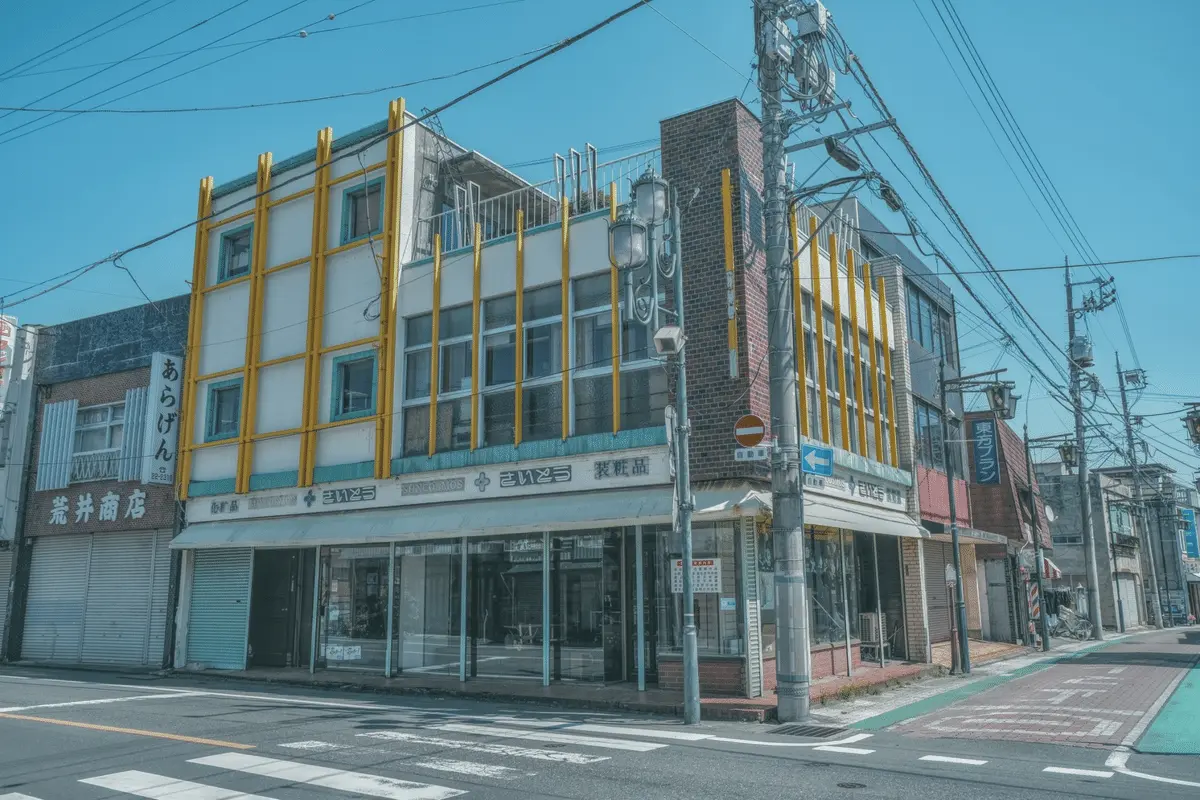
FIG.1
ASIBA defines “creative entrepreneurship” as “the intrinsic creativity and leadership fostered through the process of moving back and forth between questioning and practice.”Architects, designers, artists, artisans, and engineers—who have shaped culture throughout history—have continued to give form to their questions about society and their curiosity about creation, presenting these to the world. In doing so, they have tackled previously unrecognized problems and driven social change.We at ASIBA believe that by increasing the number of young people and initiatives embodying “Creative Entrepreneurship,” we can solve the uncertain and complex problems facing society. In the “Unraveling Creative Entrepreneurs | Interview Series,” we invite young creative entrepreneurs whom ASIBA has identified as promising, and delve deeply into the background of their activities and the specific “questions” and “social issues” they have chosen to address—and why.
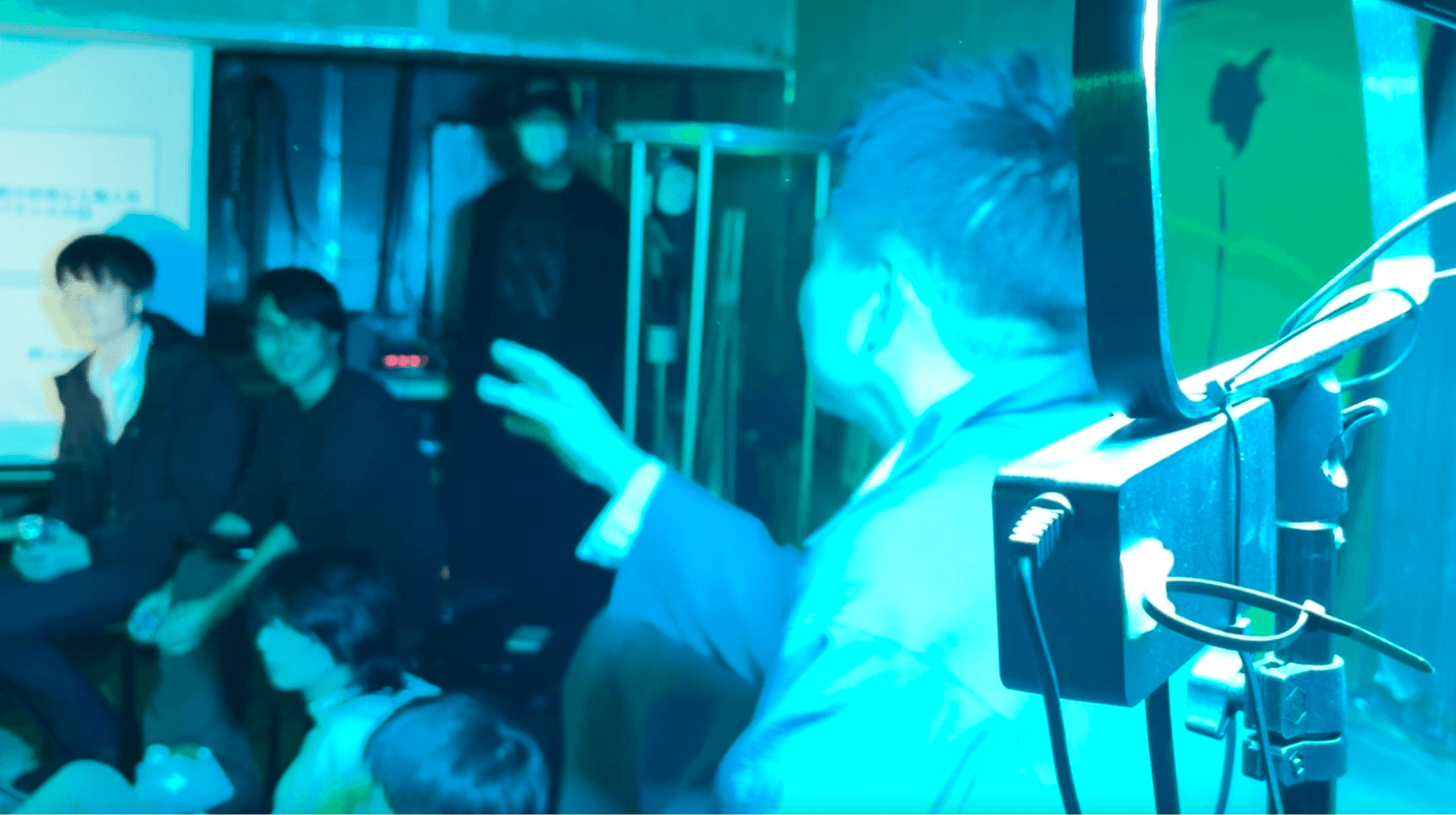
Miki Oka, Department of Design and Information, Musashino Art University; ActivityPub Agency; TDA
, among others. While her background lies in spatial direction for theater and other performances, she enjoys experimenting by combining various skills through a process of bricolage. Recently, she has been hooked on VR.Past works: “Veins District,” “CCC,” “epa!,” “Suido-go,” and others; currently in progress: “LiVS VRMV,” “I Want to Grow on the Radio!,” “Nanaha Haga Performance,” and others
An initiative that seeks to simultaneously address two issues in rural areas—the serious problem of vacant homes and the lack of venues for student artists to express themselves—by holding an arts festival that uses vacant homes as its stage.The image of injecting “oxygen” in the form of “students” into places—such as “vacant homes”—where energy has been depleted and they are no longer used overlaps with the pulmonary veins that carry fresh blood enriched with oxygen; this is why the project was named “Veins District.”
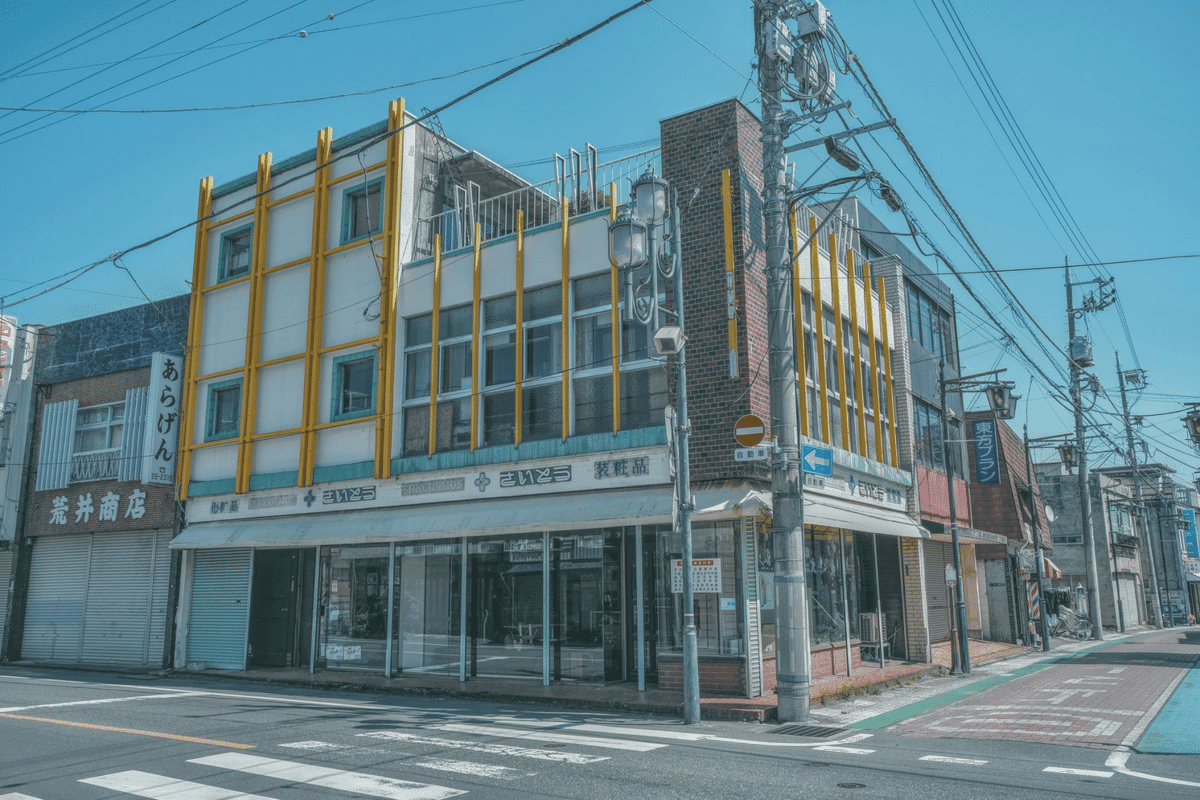
FIG.2
—What prompted you to start this initiative, and what concerns are driving it?
The main reason I started this initiative was meeting Mr. Tajima, who is from Honjo City, while I was involved in organizing the TOHO Cinemas Student Film Festival. At the time, I wanted to work as an artist but was struggling with the lack of exhibition spaces, and Mr. Tajima mentioned that there were vacant houses in his hometown and wondered if we could put them to use.From there, the project began as we explored whether we could align our shared concerns. My initial motivation stemmed largely from a curiosity about vacant houses themselves. I’d see derelict-looking houses along my commute—they were a bit eerie, but they made me want to explore them—and I thought, “Vacant houses are interesting.”However, on the other hand, the issue of vacant homes is serious throughout Japan, and if left unaddressed, it leads to the hollowing out of communities. So I began to think that it wasn’t just a matter of “vacant homes being interesting”—if we put them to proper use, it could create social value and raise awareness about the issue of vacant homes.
Another challenge is the lack of exhibition spaces.If you try to hold an exhibition in Tokyo, renting a gallery costs hundreds of thousands of yen, and since schedules are often fully booked, it’s very difficult to secure a spot. It’s a shame that so many artists are creating great work but lack opportunities to showcase it. So I thought, why not utilize vacant homes in rural areas to create spaces where we can reach people who rarely have the chance to experience art?
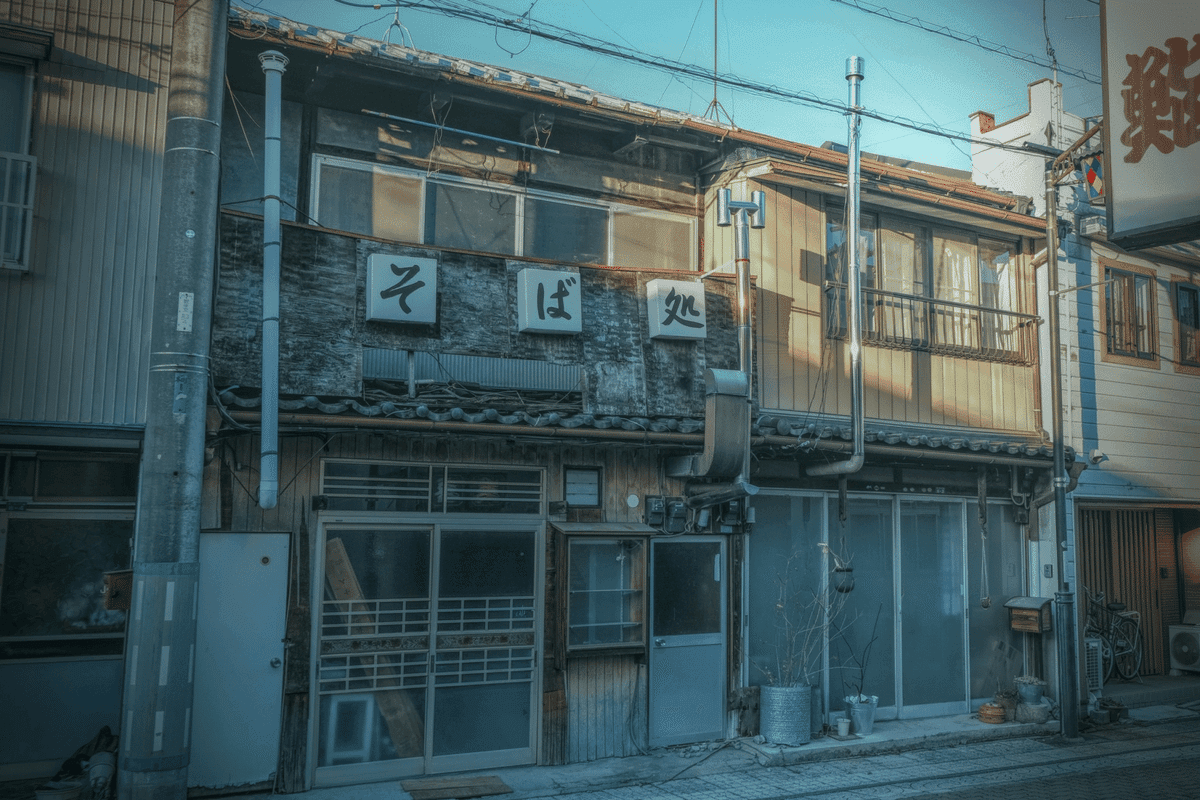
FIG.3
In fact, while galleries in Tokyo generally attract only people who are already interested in art, holding events in regional areas might spark curiosity—people might hear that “something is happening in that vacant house” and decide to check it out, even if they don’t usually engage with art. This would help revitalize the local community and provide artists with a new venue for expression. It was this combination of ideas that got this initiative off the ground.
FIG.4
—What values and philosophies do you hold dear as you continue this work? What experiences gave rise to them?
I wasn’t originally the type to go to art school, but in my senior year of high school, I decided to pursue it. The words of Takaaki Yoshimoto, whom I encountered at that time, still resonate deeply with me. In his book *Kotaro Takamura*, there is a passage that goes like this:
“Of course, if we assume that art can only flourish on the basis of abundant material resources and leisure time, then a poor son who aspires to be an artist has no choice but to take the bourgeois son as his model—even if it means swindling money from his wealthy father.So, must we condemn this father, who thinks, ‘Even if I cannot achieve it myself, at least my son must’? Of course, it is that pitiful mindset that must be condemned. (…) This poor son had to reject his all-too-pitiful father while also standing tall in the face of the bourgeois son.”
I was struggling with whether it was necessary to pursue art—even if I was poor—against my parents’ expectations, so I really related to these words. My parents, too, had that parental desire for me to follow what’s considered a “stable path.” It was a pure parental sentiment, without any malice. Go to a good university, get a job at a good company, start a normal family… that sort of thing.
But isn’t that a bit too naive? Is it really okay to just follow that path? On the other hand, if I chose not to follow that path and went to art school instead, I’d find myself surrounded by wealthy students. So, I’ve been thinking for a long time that I shouldn’t just reject my parents’ expectations, nor should I let myself be swallowed up by the bourgeois approach to art—I should find my own path. At the root of my artistic practice, these struggles have always been present: the challenges of coming from a middle-class background and attending art school; how to strike a balance between my parents’ expectations and my own choices; and what it really means to continue pursuing art… These conflicts form the foundation of my values.
—What was the greatest difficulty you’ve faced so far? How did you overcome that obstacle, and what did you learn from it?
We’ve run into many obstacles. The most difficult of these was building relationships with local residents. For example, when we propose, “Since the number of vacant homes is increasing, why don’t we hold an art festival?”—even though we intend it as part of a solution to the problem—it can sometimes come across as if we’re pointing out, “Your town has a problem, doesn’t it?”
Even when asking the local government for cooperation, it can be difficult for them to accept because it effectively means officially acknowledging the rise in vacant homes.Fortunately, the fact that Tajima-kun was a local was a huge help, but I think there might have been resistance in some areas. Thanks to him acting as a bridge, our initiative was accepted not as something “imposed from the outside,” but as something that “addresses local issues.”
Another challenge was recruiting visual artists and managing their schedules. We needed to gather dozens of artist groups, so we carried out painstaking work—such as sending brochures to art universities in Tokyo and following up with phone calls—to make it happen. On top of that, coordinating the artists’ schedules was also difficult.Many artists have flexible schedules, and their plans can change suddenly, so we had to manage the project’s progress very carefully.
Then there was the crowdfunding campaign to raise funds. This, too, proved more difficult than we had anticipated. People tend to assume, “Since these are students working hard, it should be easy to gather support,” but it wasn’t that simple.
At first, we, too, had hoped that “we might attract support from strangers through crowdfunding,” but in reality, almost all of our backers were acquaintances or people connected to the project. In fact, precisely because the support came from people close to us, we felt pressure to “live up to their expectations.”
—What is the central question driving your work?
This might sound like a very meta discussion, but I suppose it’s the question of whether I truly believe this is a question I want to explore myself. If I don’t truly believe that, I won’t be able to see it through, and it will just feel superficial and unpleasant. Of course, there are more specific questions as well. However, at my core, it’s a question related to my own life.It might sound a bit grandiose to call them “existential questions,” but those are at the root of it all.
In a sense, that might be arrogant. It’s self-centered, and I sometimes feel I should be thinking more about society. But when I think about the concept of a “community,” the smallest unit of that community is myself. I believe it’s important to face that and verify whether the question is truly arising from within me. As I delve deeper into that question, I get the sense that it eventually connects to societal issues.
For example, when I reflect on myself, I often end up thinking about my family, and from there, I sometimes begin to see the structure of society. I wasn’t originally very interested in environmental issues, politics, or urban challenges, but as I delved deeper into my own issues, I naturally became interested in those social problems as well.I feel that unless we are sincerely engaging with the “community” that is ourselves—or failing to do so—our activities themselves will end up spinning their wheels.
—Please tell us about the uniqueness of your work.
First, it’s about my approach. I think what sets me apart from conventional approaches is that, fundamentally, I’m doing things that are “pointless.” In other words, it’s incredibly unproductive. It might seem like there’s productivity in the act of creating something itself. But in reality, what I create doesn’t directly benefit society. Rather, that “pointlessness” has to be sustained by a certain degree of social leeway.For example, in the contemporary art world, people with significant capital buy artworks, right? I believe that art is sustained by the surplus in capitalist society—that is, by the wallets of capitalists. I think this unique aspect of art resonates with our own activities.Our uniqueness lies in our perspective that things which appear unproductive—even if they don’t generate immediate productivity—can, after circulating through the system, actually yield tremendous productivity when viewed in hindsight. Generally speaking, people tend to focus more on productivity and aim to turn a profit, but our consistent creative stance is rooted in the view that this isn’t the be-all and end-all.
—Are there any challenges you’d like to take on in the future, or ideas you’re conceptualizing? If those were to be realized, how do you think they would change society or the nature of cities?
I’d like to do another “Veins Block” project, but I also think it might not be possible. Things that “could only be done at this moment” aren’t reproducible. It was truly made possible by that mysterious energy and atmosphere at the time, so even if we were asked to do the same thing again, I don’t think it would work.
Students have plenty of time, don’t they? But once they start working, their time will gradually become more limited. So I think it would be quite difficult to carry out a project over a long period, like summer vacation. When I think about it that way, I realize that “Veins District” was only possible because we were students.
Looking ahead, personally, I’d like to create a community space in Tokyo. Since “Veins District” tends to host one-off events, I want to build a system where people can gather on a more ongoing basis.I think it would be really interesting to have a space where people keep coming together on a sustainable basis. But when you actually try to run a community like this, there are so many challenges. Communities aren’t easy to build, and plenty of problems will inevitably arise. People might suddenly stop showing up, arguments might break out—all sorts of things can happen. The question is how to navigate those ups and downs.
I think it’s incredibly difficult to build a community that strikes the right balance between the desire to be alone and the desire to be part of a community where everyone gets along and creates things together in a lively atmosphere. But I’m determined to take on that challenge.
Credit
Related Works