Public Partner Dialogue #2
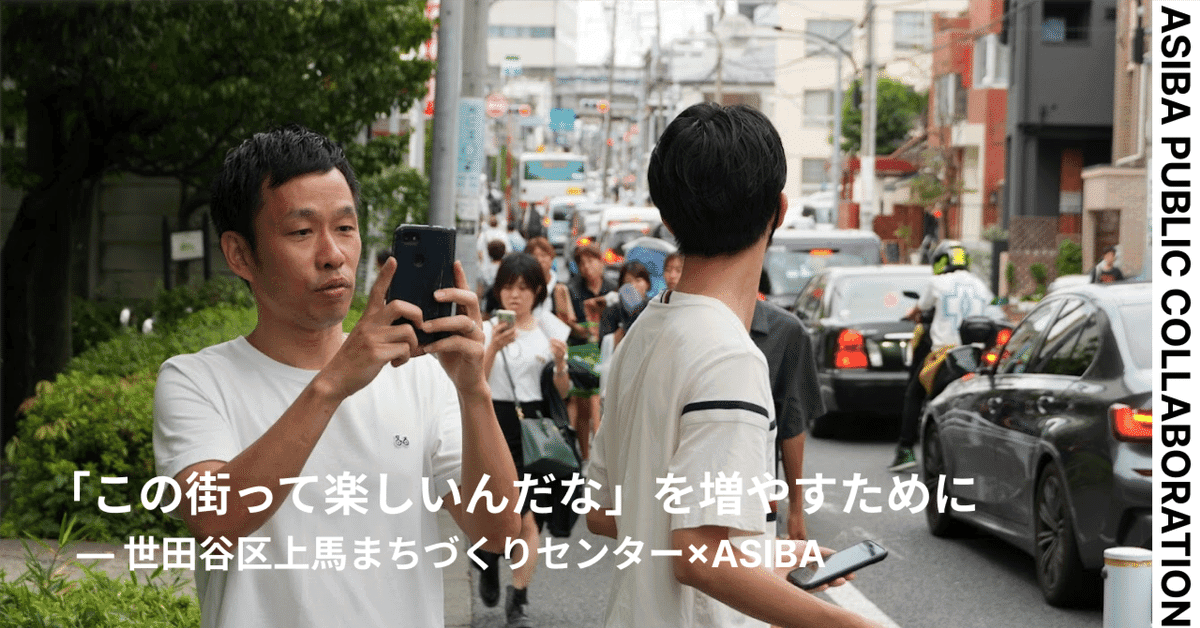
FIG.1
ASIBA has been collaborating with local governments in Tokyo to create an environment where young creators can tackle public issues and to continue exploring the future of urban planning and community development.In Setagaya Ward, ASIBA has been working with the Kamaba Community Development Center—one of the ward’s 28 community development centers (hereinafter “Machi-Sen”)—to rethink the relationship between the local community and young people.
In this article, we look back on a workshop held in October with Ms. Yahata from the Kamiuma Community Development Center and Mr. Yamamoto from the Economic Affairs Division—with whom we are collaborating—and discuss the future of community development in Kamiuma.
Handa: First, could you tell us about the role of the “Community Development Centers,” which are institutions unique to Setagaya Ward?
Yabata: Yes.Setagaya Ward is divided into 28 districts, and there are 28 Community Development Centers. To put it simply, our role is to “support” organizations working to improve their communities. We assist with activities such as neighborhood associations, the healthy development of children, solving local issues, and disaster preparedness drills. We also serve as the most accessible point of contact with the government for local residents.
区内全28地区のまちづくりセンターにお越しください
Handa: Among the 28 locations, are there any features unique to Kamaba?
Yahata: Ring Road No. 7 and National Route 246 run through the Kamaba district. While these major roads and the area around Komazawa University Station are bustling, once you turn onto a side street, you’ll find a peaceful residential neighborhood with plenty of greenery.Although it’s a quiet residential area, various community groups are active here, and I enjoy being able to interact with them every day as part of my work.
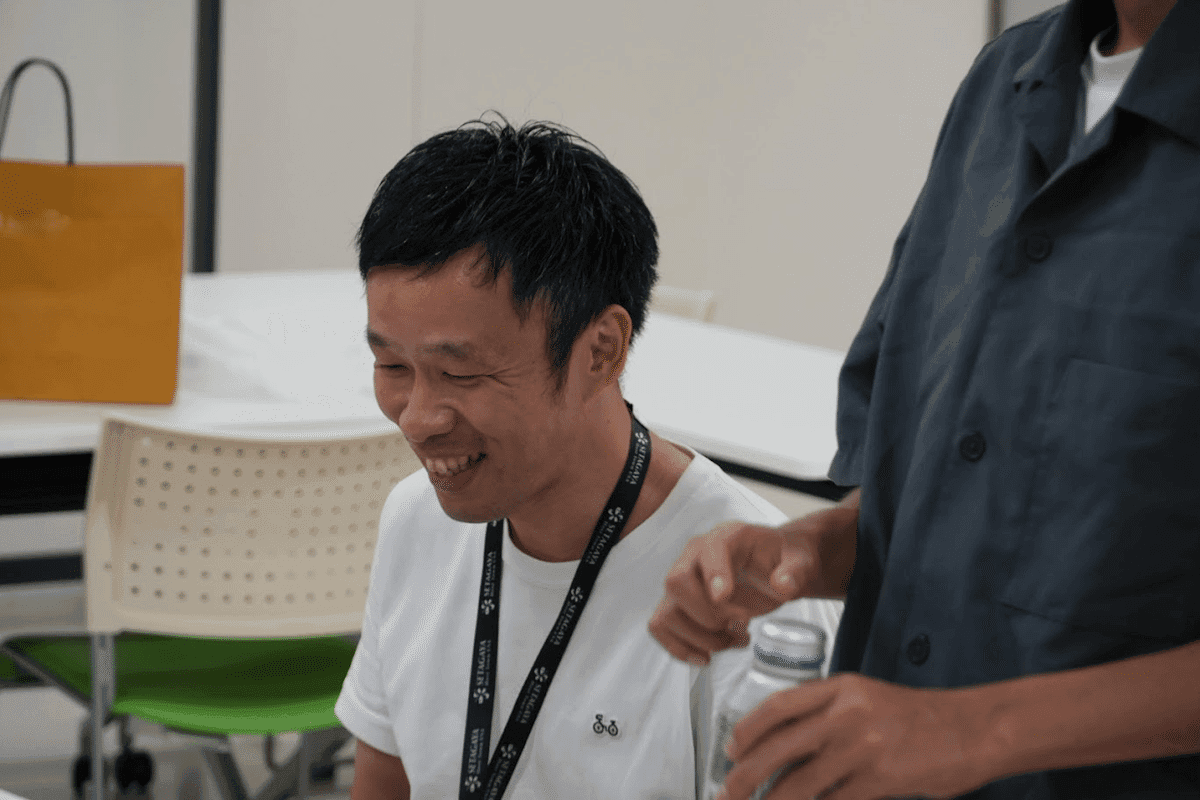
FIG.2
Handa: As someone who interacts most closely with local residents, are there any challenges you’ve identified?
Yahata: I feel that the “shortage of volunteers” among community groups and the “skew in the demographics of those participating in community activities” are key challenges.
For example, we’ve had students from Komazawa University, located in our district, help plan, edit, and write articles for the Kamaba District’s community newsletter, and we’ve had them organize disaster preparedness drills in a game-like format so that everyone—from children to the elderly—can enjoy participating. Little by little,we are working to address the shortage of volunteers and broaden the age range of participants in community activities by drawing on the energy of young people.
上馬まちづくりセンター
Takano: At first, we were discussing this with everyone in the Economic Affairs Division, and the theme that emerged was the relationship between the local community and young people. So, I emailed several community centers to ask about their perceptions of local issues, but Mr. Yahata’s reply was on a completely different level in terms of length (laughs). I was surprised to see his email packed full of insights on the challenges facing Kamiuma.
Yahata: Well, I just couldn’t resist (laughs). It was a proposal from an organization (ASIBA) we don’t usually work with, and above all, the idea of a “workshop targeting young people” was something that directly addressed Kamaba’s current challenges. I was like, “Absolutely, let’s do it!”
Yamamoto: Actually, Section Chief Yahata and I joined the company at the same time. I feel like that’s another connection we share.
Handa: What are your day-to-day thoughts on the difficulty of engaging residents in their 20s and 30s?
Yahata: I’m convinced there are motivated young people right here in the neighborhood—they just lack the right opportunity. Actually, since the facility where Machi-Sen is located is attached to the community center, young people from dance clubs, for example, often come here to practice.Young people also come to the service counter to handle paperwork. But once they’re done, they just head right back home. How do we get them to stick around? “Maybe our flyers are outdated…”—how can we really resonate with their sensibilities? That’s a pressing challenge we face on the ground.
Takano: Among the issues you shared with us, there were many themes where local youth could really make a difference—like disaster and crime prevention in apartment complexes and densely wooded areas, shopping support for the elderly, and securing safe spaces for children.
Yahata: Exactly. Since our traditional approaches aren’t getting through to them, I think we were looking for an approach—like the one ASIBA offers—that incorporates an element of “play,” something you wouldn’t find in typical government thinking.
Takano: On the other hand, we don’t really understand local issues very well. When we use terms like “startup” or “solving social issues,” our attention inevitably gravitates toward large, universal problems. Perhaps that’s true of young people in general these days. That’s precisely why I believe there’s great value in partnering with Machi-Sen, who knows local issues better than anyone else.
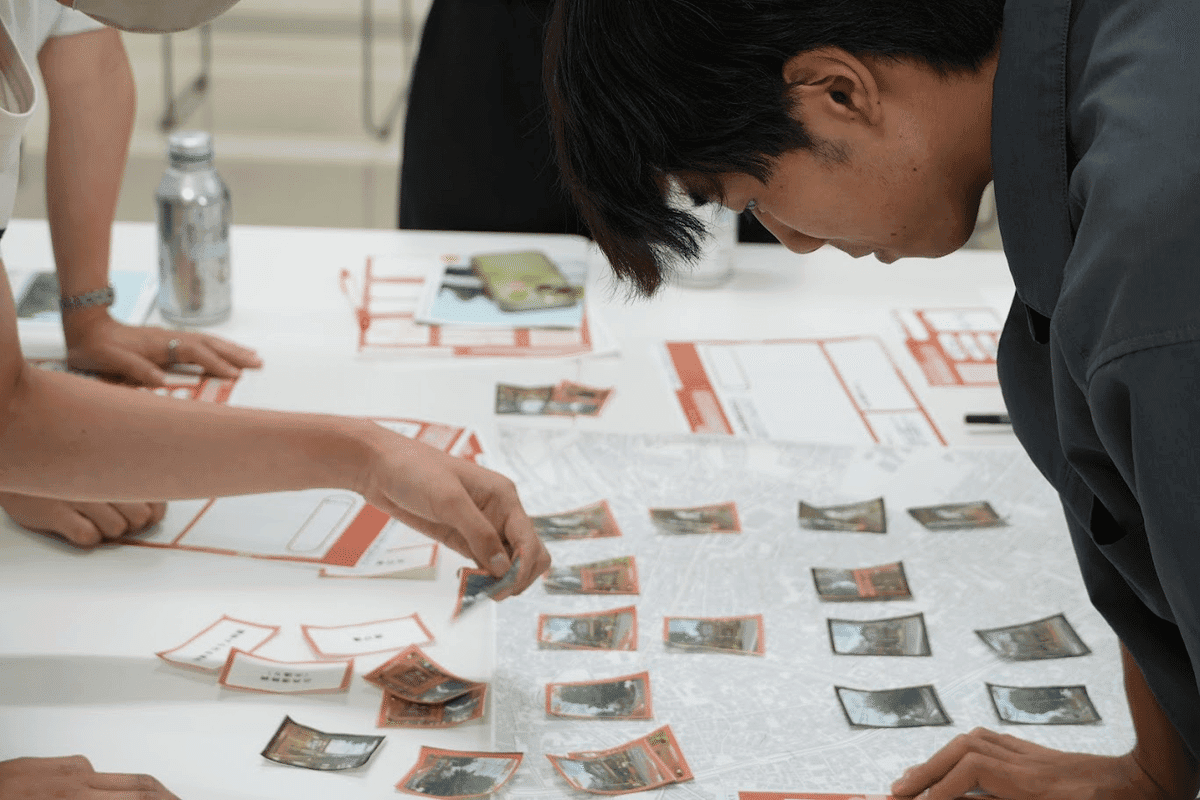
FIG.3
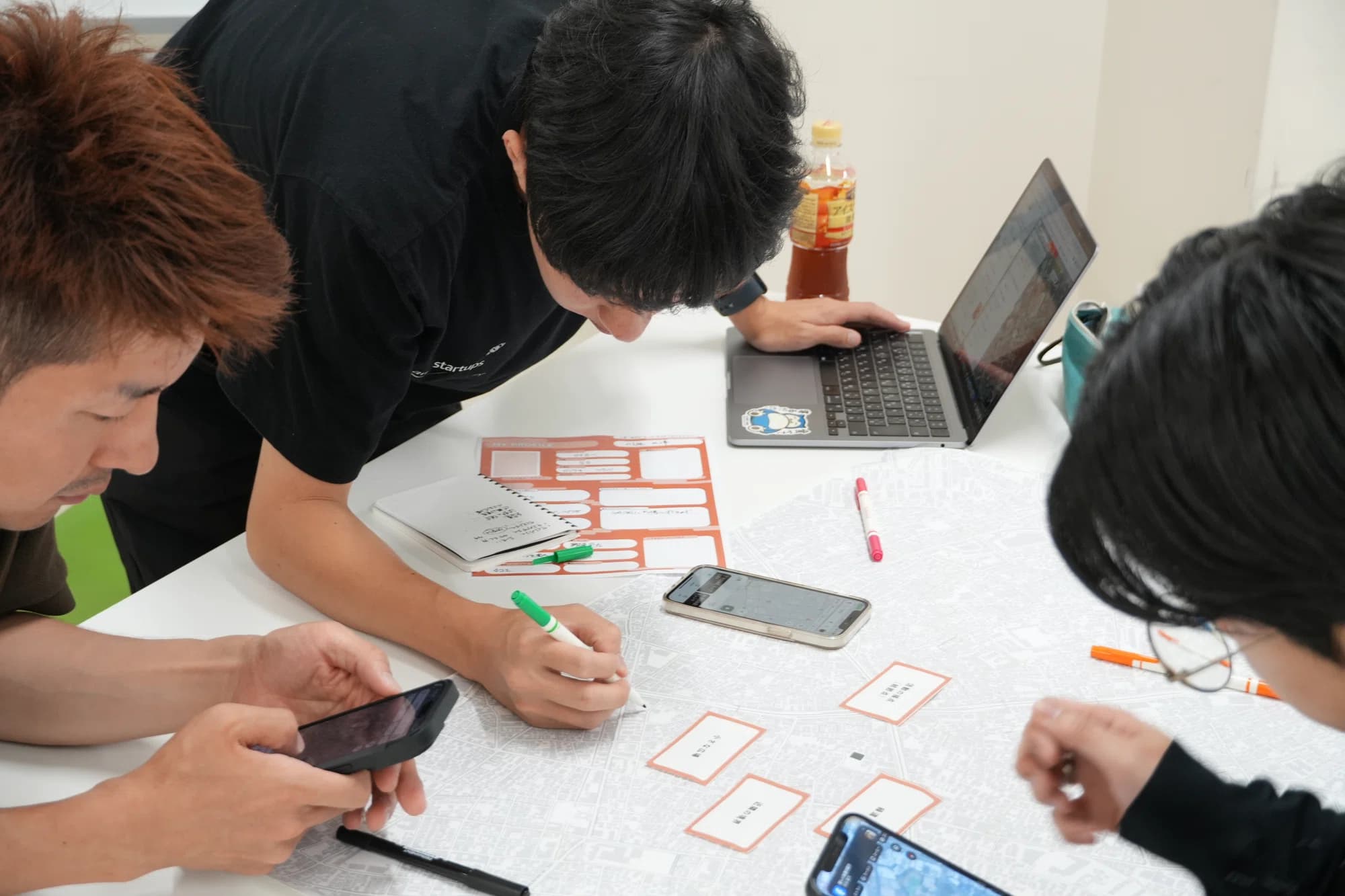
It was in this context that we held a workshop where participants collected images of the town’s scenery along with voice recordings and used image-generating AI to turn them into Hanafuda cards. How did this process appear to you, Mr. Yahata?
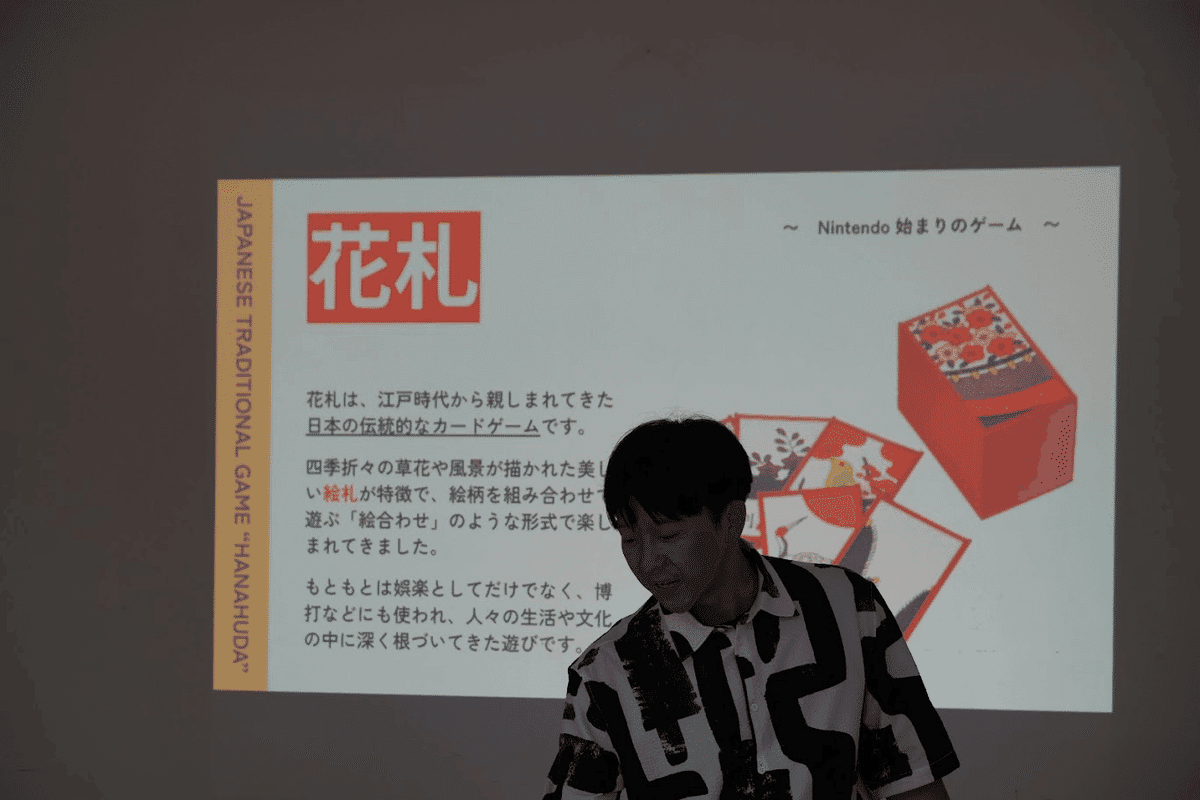
FIG.4
Yahata: I genuinely enjoyed discovering that generative AI—something I’d never worked with before—could achieve such amazing results. But what surprised me even more was the creativity of the young participants.There was a step where we combined elements of the town to create “hands” for the hanafuda cards, but for me, combining two elements was about the limit. However, the participants brought their own unique stories and ended up creating “hands” I never would have imagined.
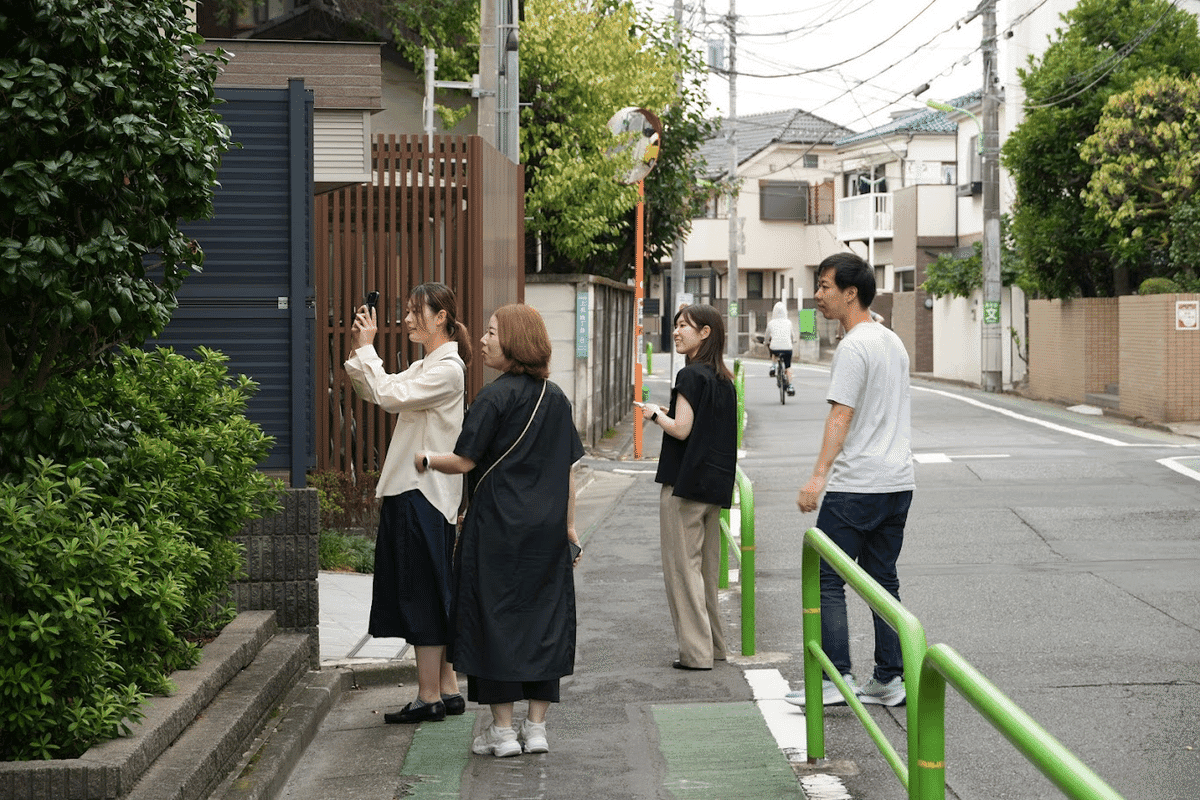
FIG.5
Takano: We were worried that the “hand-building” part might not go well, but afterward, many people told us that was the most fun part—which surprised us, too.
Yahata: I thought, “Wow!” This time, only young people participated, but ideally, we’d like everyone—from young people to seniors—to enjoy it together. However, we also realized that it would still be difficult to have the local seniors participate in this exact activity as it was. I think, like me, they aren’t very familiar with generative AI (laughs).Our next major theme will be activities that can bridge generations—ones that young people can get really into, yet that also resonate with older adults.
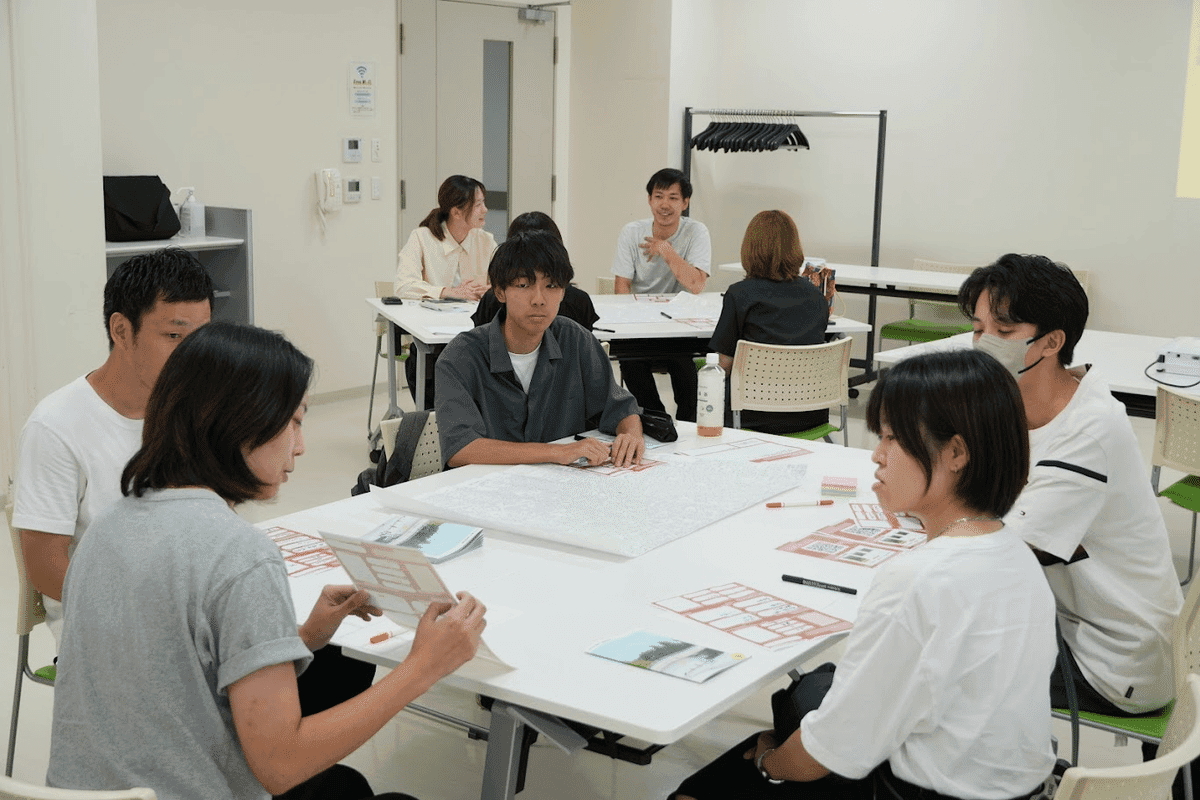
FIG.6
*Yaku: A specific combination of cards in Hanafuda. In this workshop, we gave unique names to “combinations characteristic of Kamiuma.”
Yabata: To be honest… while interacting with everyone, I kept thinking, “You guys use some really difficult words!” (laughs).
Everyone: (Bursts out laughing)
Yahata: At first, even when I looked at the proposal documents and materials, I just thought, “What on earth is this?” (laughs). I’m just not good with technical terms written in katakana. Even when I talk to college students, there are times when I don’t understand what they’re saying (laughs).
But by working on something with people who have perspectives we don’t have or use words we don’t use—and by engaging with their sensibilities even when I don’t fully understand them—I felt like my own rigid way of thinking was starting to loosen up.
Yamamoto: When you spend a lot of time together, you gradually get used to it and start to think, “Oh, so that’s what they’re trying to say.” The act of bridging that sort of language barrier and meeting each other halfway is what really matters, isn’t it?
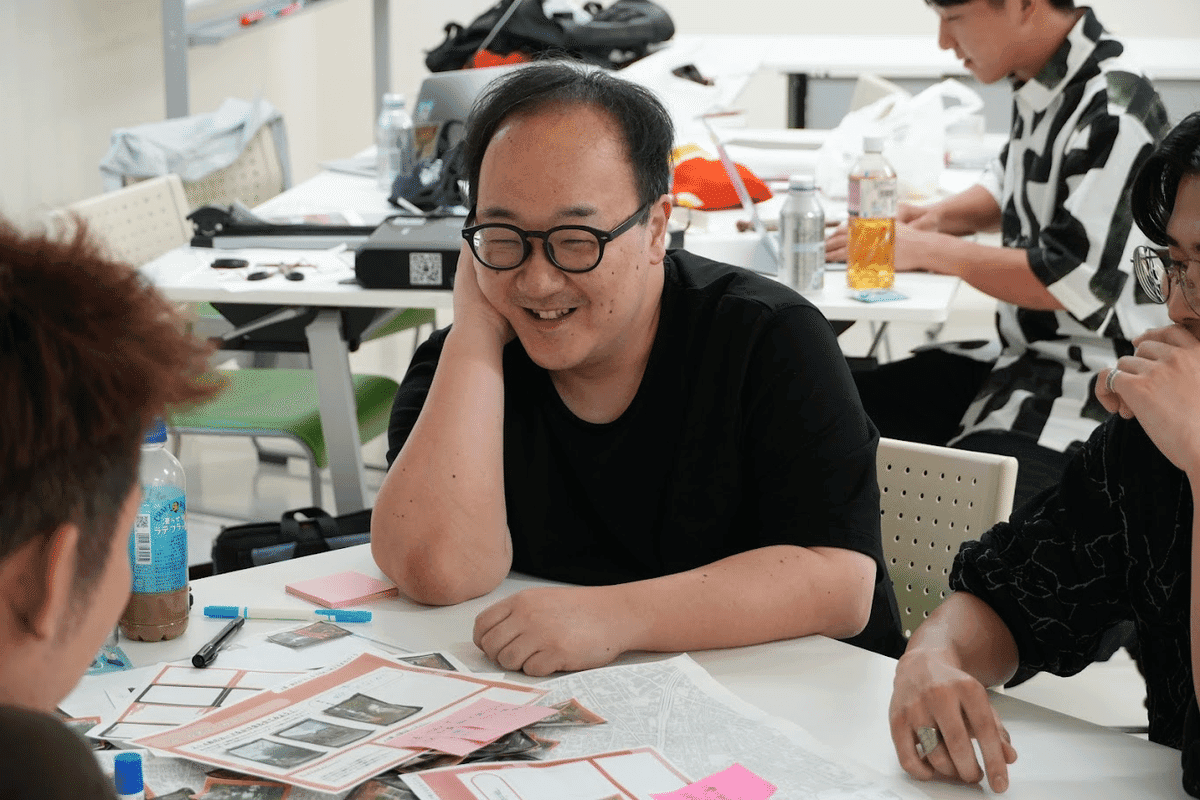
FIG.7
Yahata: Just like this time, I realized there are so many things you just can’t know until you try them. With Machi-Sen, we can collaborate flexibly to revitalize the community, just as we did this time, so I’d like to keep building these connections.There’s a certain rigidity to our current community activities. Of course, the activities we’ve been doing all along are very important, but I’d really like to incorporate new elements so that everyone living in Kamaba can think, “This town is actually fun.”
Handa: In the future, when young people involved with ASIBA think, “I want to try something new in this town,” I’d love for them to use the Kamaba Community Center as their stage. I’d be happy if we could deepen our collaboration in that way.
Yahata: Absolutely! We want people to think, “If I go to the Machi-Sen, I’ll probably be able to do something interesting.” Let’s start with a meeting—or rather, a casual chat (laughs).
This conversation was conducted as part of the ASIBA PUBLIC COLLABORATION initiative.
Credit
2025.11.04.