西山珠生

FIG.1
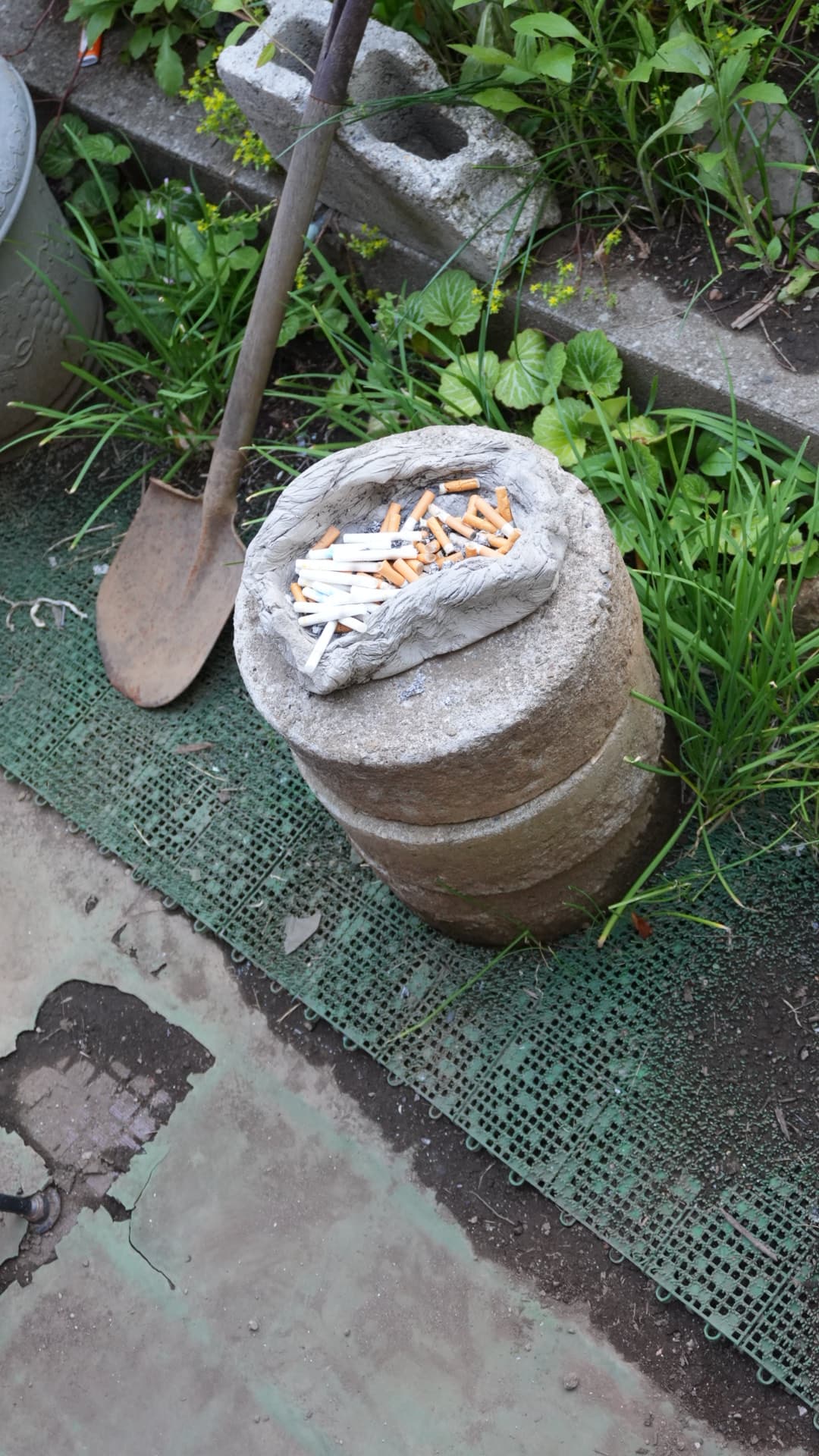
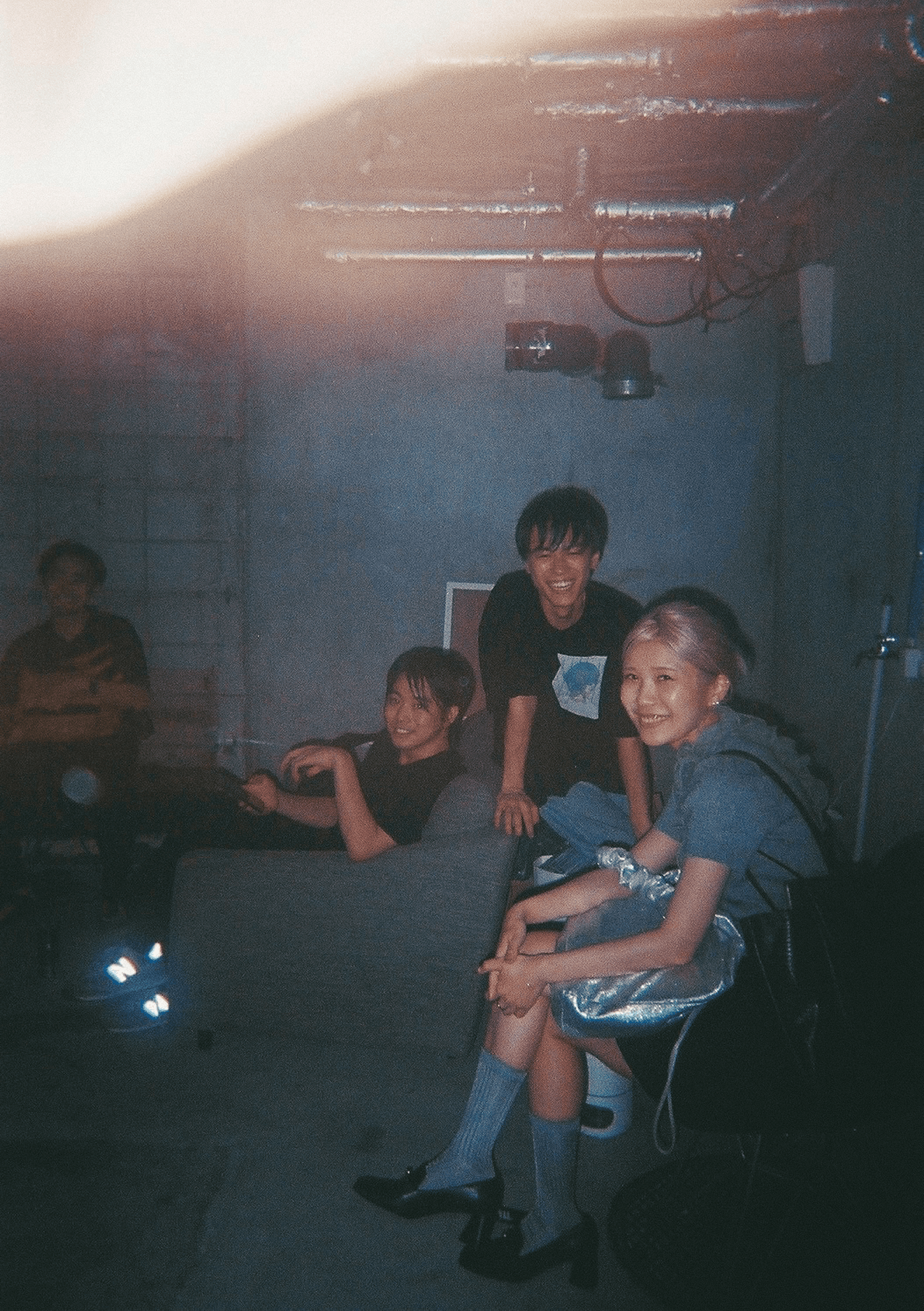
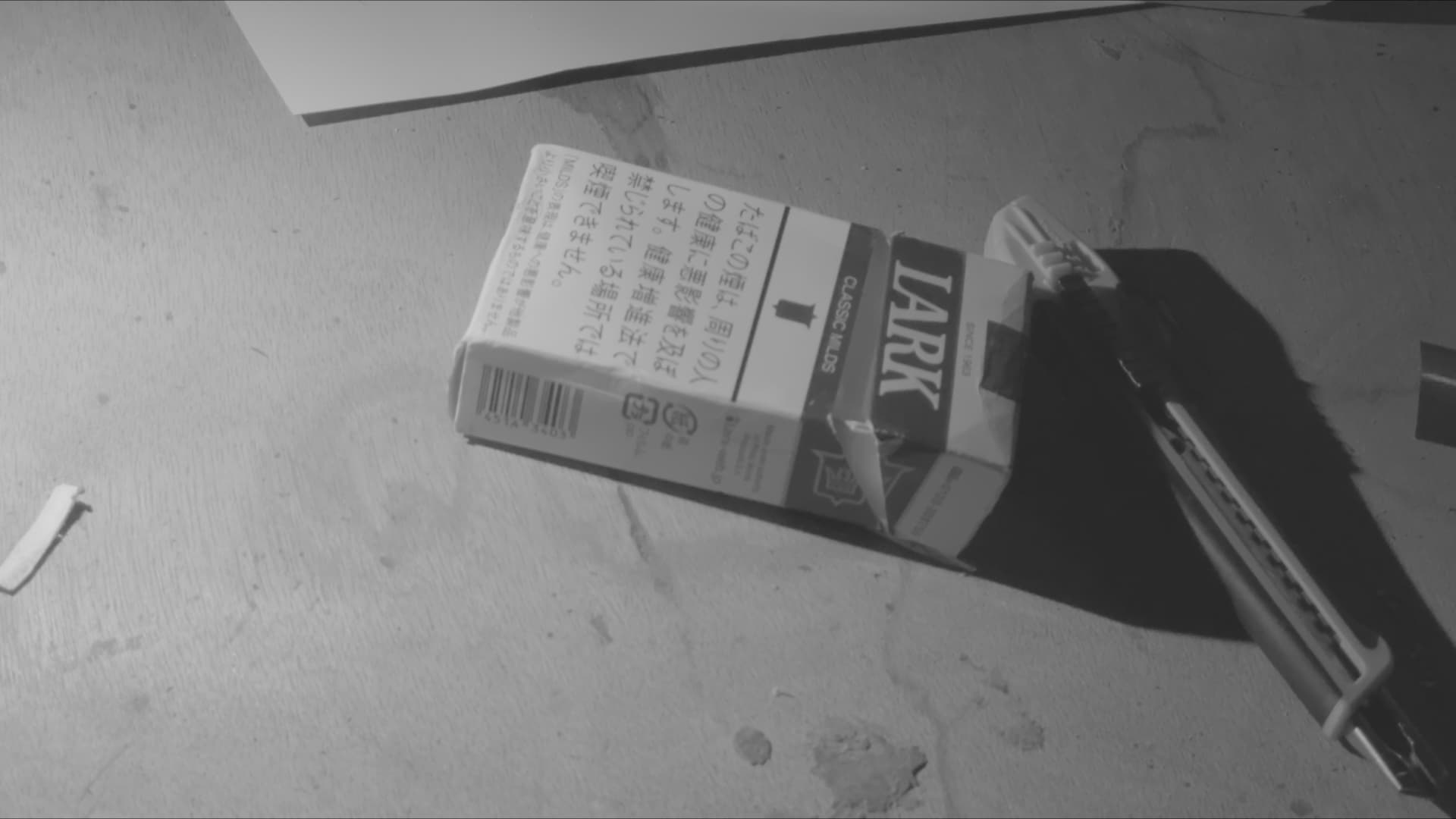
I was invited to a gathering where people discussed “play” with serious expressions. In the room, where the slightly warm air and orange lighting created a cozy atmosphere, a motley assortment of playful objects was scattered about.A shelf of unknown origin, a skinless air conditioner, houseplants, books, art objects and sculptures in progress, unnamed characters, and a cigarette pack being repurposed. ——Is “play” universal to humans, or is it a privilege? I don’t know if I can answer that question, but I’ll try writing about it while toying with my somewhat scattered thoughts.
Play. To play. PLAY. SPIEL. To enjoy oneself, to loiter, to appreciate music and dance, to move about, to have room to breathe—a margin or margin of freedom. In English and German, it also encompasses theater, games, the unfolding of events, and taking on a role. How broad the scope of the word “play” is!
Faced with this theme and question, the following came to mind: *New Street Dog 2*, a performance I saw recently by the performing arts collective “Bastrio,” and, later, the image of the late artist Prince Yutoku Akiyama, who was a great friend of mine in my childhood.What struck me most about *The Stray Dog* was the earth, water, and food being spilled everywhere; the reenactment of the performers’ diaries; the dance choreography and French lectures; the people suddenly running out of the theater; and the lingering scent of life and death.When I think of Mr. Akiyama, what comes to mind is his astonishingly direct gaze toward a 7-year-old child, his numerous parodic performances, and the tin statues that seemed to laugh in the face of authority.
Play is often regarded as the exclusive domain of children. There’s a certain air of that in this inquiry as well.
But adults, too, were once children. They used to play. They’d spend endless time collecting stones from the riverbank. They’d stack building blocks only to knock them down, then have someone else stack them only to knock them down again. They’d pass a pen back and forth endlessly. They’d imitate their friends or pets. They’d go round and round on a quiz about the “Kobusuji Horned Dung Beetle Imposter.”They’d beg to hear the same story over and over until they were told, “That’s enough.” We threw ourselves into our favorite games time and time again—until we suddenly lost interest.I want to say that when we play, there is repetition. What sets this repetition apart from the drab repetition once forced upon us—those kanji drills, arithmetic problems, mopping, calligraphy, marching, and scale practice—is, among other things, that we’re allowed to slip in a little variation wherever we like.I want you to imagine the repetition embedded in playful activities—from the children’s games mentioned above to all kinds of games, right down to parodies as reenactments. Things that are repeated have the scent of play all on their own.
Incidentally, even the tedious exercises mentioned earlier can attain the status of play through simple actions—such as slightly changing the pressure of your stroke or your method of solving a problem, or listening more closely to the sound. When we play, there is a subtle fluctuation, an exaggeration, and a mischievous spirit.
With a margin for slight deviation, we repeat, reenact, and trace the outline over and over. Gradually, the original line wavers and blurs, and an unidentifiable shape begins to emerge. If you keep rubbing the pencil over the same spot, you might even punch a hole in the paper.The image on the crumpled page might be a mirage. And as the seamless boundaries unravel, something in an unexpected shape might even crawl out.
I often introduce myself by saying, “I’m in theater.”
The performing arts are always something of a tightrope walk—it’s difficult to turn a profit, they’re neither essential nor urgent, and in this day and age (or perhaps precisely because of it), they’re an arrogant art form that summons audiences to the performance venue. The theater is a truly mysterious space.Inside that box, my colleagues and I build and tear down worlds, weave and unravel them, and for just a few hours, convincingly stage moments that feel like eternity or a church that has stood for a hundred years.Over and over again, actors recite the same lines and repeat the same scenes. And yet, not a single moment is ever the same. No matter how much time we spend rehearsing or how many resources we use to build the set, it is guaranteed that everything will vanish once the curtain falls.
It is fascinating that, in a certain language, the words for “play” and “theater” are the same.In fact, it is said that theater and play overlap in many ways. Both are temporary phenomena that require a gathering (or simply the presence of people) and incorporate the nature of “white space” and “re-enactment” as key elements. Theater is an act of repetition and re-enactment—and one could say that this is, in essence, play.What makes theater fascinating is that it draws people in, often holding them captive for a certain period of time, to present a performance of play. Watching play is also a simulated experience of play. Furthermore, it is already a classic argument that “gatherings”—such as watching sports or attending political rallies—also contain theatrical elements.
In Shakespeare’s time, the worldview of the “Theater of the World”—which posits that the entire world is a stage and we are merely actors—was said to have been in vogue. Even in the modern era, where God has already stepped down from the seat of the great director, theater remains the perfect language for describing human life, given that we are all performing something or other every day.“The theatrical practice of repetition destroys what is claimed to be the unity or wholeness of culture.[…]. Repetition aids the movement of crossing boundaries.” Repetition possesses a playful quality, and playful repetition contributes to crossing boundaries, piercing holes in them. There, theater already exists, and people are breathing. This sometimes appears to be a threat to a closed, disciplined society.
Let us reexamine the question: Is “play” universal or privileged for human beings? Who could possibly deprive anyone of play? For play is at work in the very act of living—in the sensation of breathing itself.
Right next to us are people who “cannot play”—people who have forgotten how to breathe. The playfulness hidden in the act of moving one’s limbs and making sounds in a playful manner may have fallen victim to the dynamics of a civilization that seeks to turn everything into a privilege.Come to think of it, people sometimes say of other living creatures, “They possess high intelligence and even play at times.” Isn’t that a strange way of putting it? Rather, it is humans who are creating the condition of “not playing.” Every day, society produces people who do not play and people who cannot play.