正林泰誠
FIG.1
“How can we be both public and creative?”
When I was asked that question, the first thing that came to mind was the tools people use every day. To survive, people have organized their living spaces, secured food, and continually devised ways to improve their lives, even if only slightly.For me, tools are the very traces of the trial and error accumulated in daily life. And when I look closely at those traces, I see that “creativity” and “the public” are by no means separate—rather, they are closely intertwined.
I am currently conducting research focused on fishing villages. Among them, Toshijima Island in Toba City, Mie Prefecture, is a place where I discover something new no matter how many times I visit. Here, single-line fishing for Spanish mackerel is thriving, and the rich, fatty “Toro Sawara” (fatty Spanish mackerel), caught during a limited season, is known as the region’s signature fish.When I actually accompany the fishermen on their trips, I find the fishing scene to be surprisingly full of ingenuity. The boats they sail every day, each individual fishing rod, and the entire sequence of actions involved in handling the fish—not a single one of these is ever considered “finished.”The fishermen constantly ask themselves, “Can’t we make this easier to use?” and “Can’t we handle the fish without hurting them more?” and they update their tools and methods accordingly.
What impressed me most was the device used to catch the caught Spanish mackerel on board. The fishermen jokingly called it the “Sawara-ers.” It’s a tool designed to catch the fish in a pocket-like section to prevent it from thrashing about and damaging its flesh. What’s interesting is that this tool isn’t the invention of any one person.When someone makes a small improvement, another fisherman who sees it refines it further. Once a method is found to be easy to use, it naturally spreads throughout the entire fishing community. There are no patents, nor is it commercialized. It is simply tested in the course of daily work; only the best methods survive, and they are then updated by someone else. Through this cumulative process, fishing techniques and tools evolve little by little.I believe this process itself embodies a state that is “both public and creative.” Creativity begins with the individual. However, as it is opened up to others, shared, and further refined, one person’s ingenuity transforms into the collective wisdom of the entire fishing community.
The same can be seen in the sink placed in front of a house.
In cities, household items are stored inside homes, and placing objects on the street is restricted.In fishing villages, however, many homes have sinks set up in the outdoor alleyways. They gut the fish they’ve caught outside before bringing them inside, and wash them right there. This is more hygienic and makes the work easier. At first glance, they look like ordinary sinks you’d find anywhere. But if you look closely, no two are exactly alike.
A cutting board shaped to fit snugly into the sink. A workbench extended to accommodate the filleting of large fish. A sink integrated with a clothesline so that fishing gear and raincoats can be washed and dried right there. Driven by the necessities of daily life, each household has added its own unique touches.What’s even more interesting is that these innovations are placed in the alleyways—semi-public spaces. Neighbors see them every day, think, “That looks handy,” imitate them, and then add their own twists. In other words, the very process of improving daily life is open to others.When we hear the word “creative,” we tend to imagine some special talent or a novel idea that no one else has thought of. However, the creativity we see in fishing villages is much more directly connected to people’s lives and is far more practical.
Making things a little easier to use.
Making things a little more efficient.
Making life a little more comfortable.
As these small improvements accumulate day by day and these innovations are shared with those around them, they become the collective wisdom of the entire community. To me, it is precisely this kind of activity that embodies a state of being both creative and public.
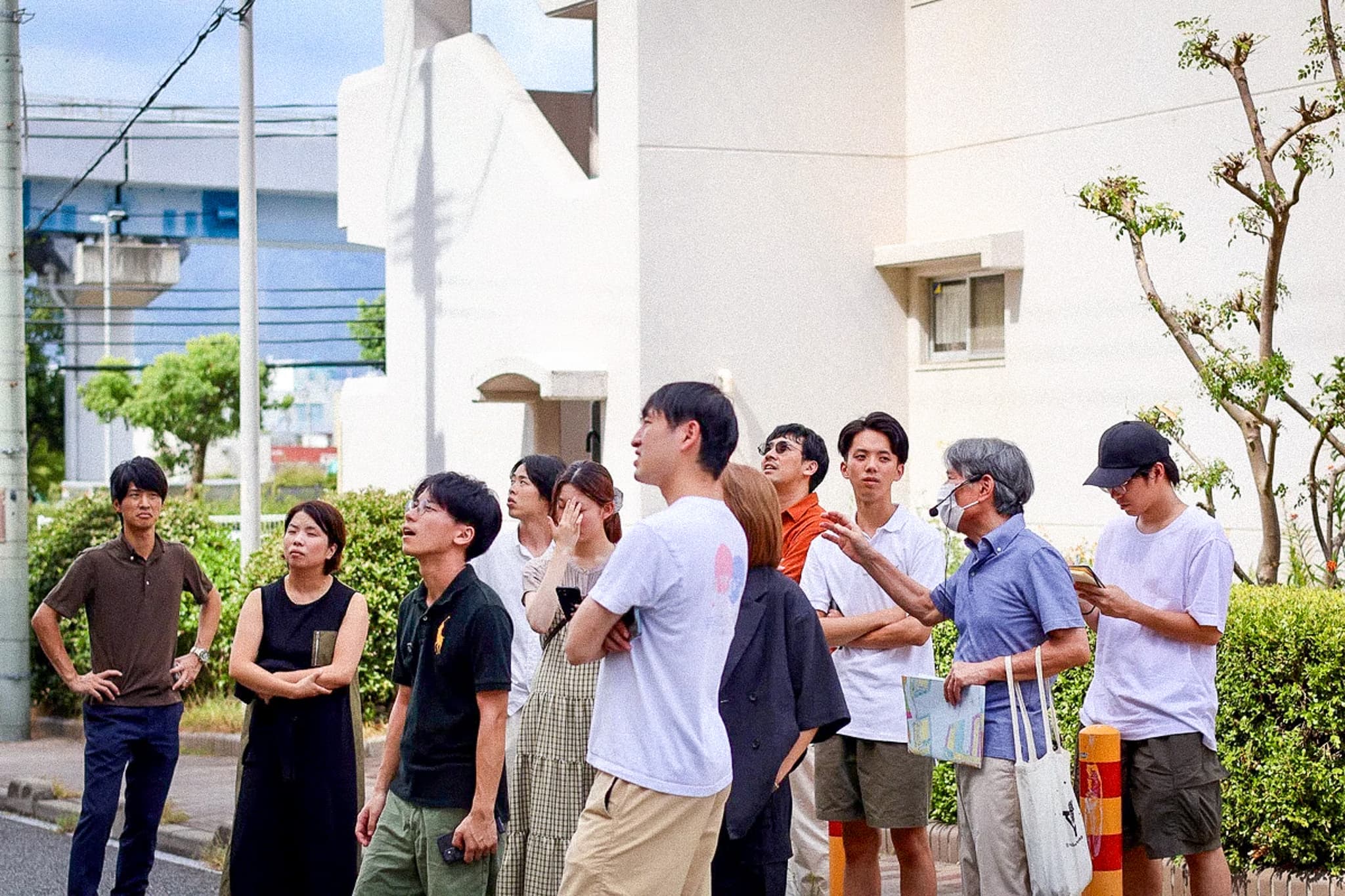
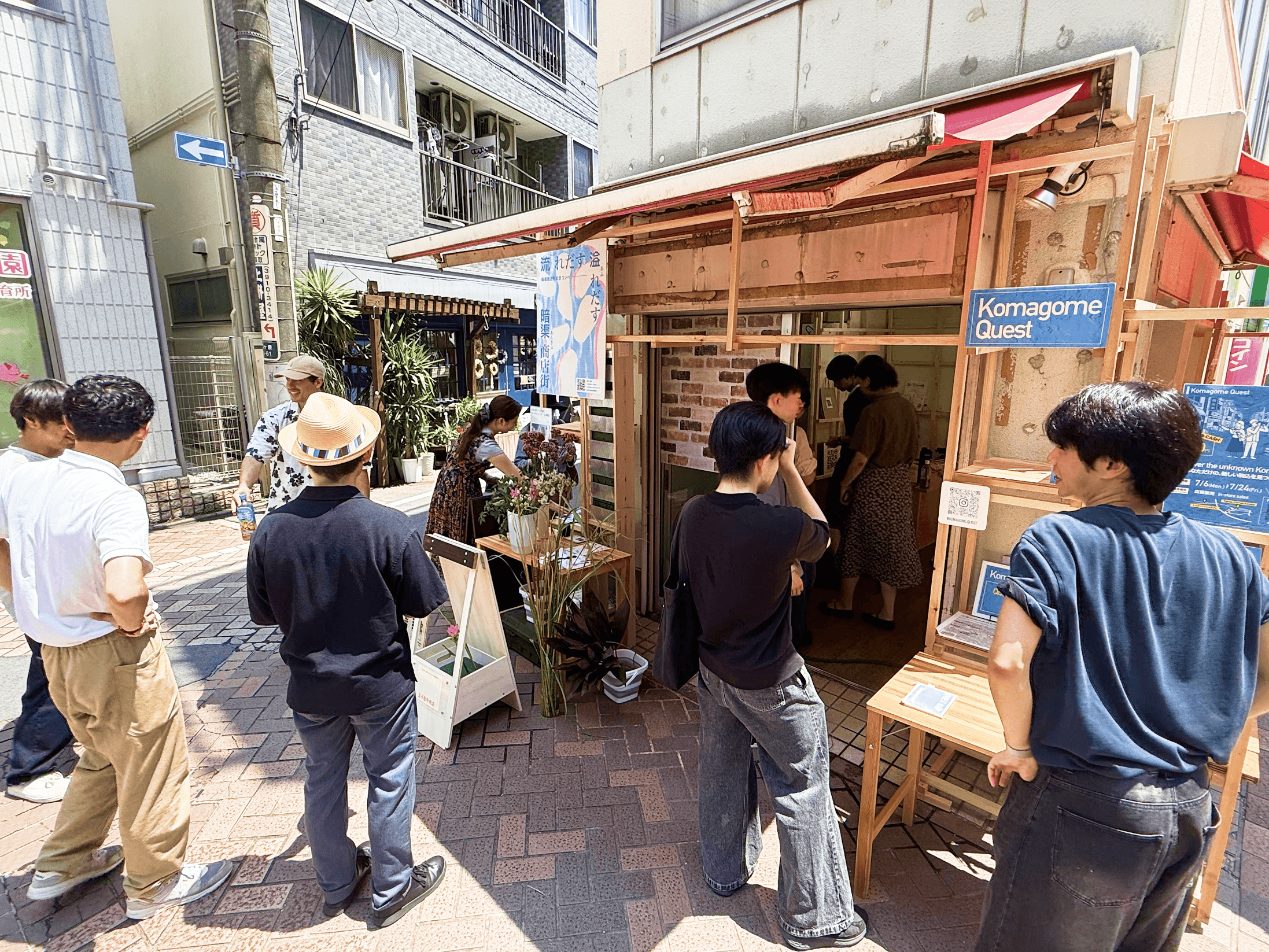
The “Maki Competition” I’m working on is also a project born from this way of thinking. The Maki Competition is not a contest for architectural or design ideas. It begins by immersing oneself in the community, talking with people, observing their daily lives, and deciphering the everyday practices that have been built up over time in that place.Participants overlay their own experiences and sensibilities onto local customs, nurturing small moments of dissonance or discovery—such as “Why is this done this way?” or “I might use it this way”—into concrete proposals. That is precisely why our goal is not merely to select the best proposals. We aim for the proposals to serve as a catalyst for encounters between local residents and participants, sparking dialogue that leads to new practices.Our goal is for these practices to be passed down to others, gradually renewing the community’s daily life. Just as the fishermen of Toshijima gradually update their tools and share their innovations with the entire community, the small practices born within a community are also passed from person to person, growing while gradually taking on new forms. I want to dedicate my life to witnessing such scenes, no matter where they occur.
Credit
ESSAY
2026.07.01.