Youbee: A Reading Circle App @ co-ba ebisu
A tool for community-building that starts from the bottom up
A project developed during ASIBA Creative Incubation 1st. Centered on the question of how a small reading circle might change a community, the team designed both the format of the “Yomikai” (reading session) and an accompanying app. Through a collaboration with Ba&Co, the concept was piloted at the coworking office “co-ba ebisu.” The pilot revealed that community interaction unfolds in three stages — knowing each other's titles, knowing each other's values, and sharing challenges and visions — and that the reading session naturally drew out the second stage.

FIG.1
A Talk Event with Only 4 Attendees (Was Awesome)
At a certain coworking office, the community manager is constantly busy planning events almost every week. Last week it was a networking event, this week a talk event, and next week a board game night. The attendance goal for the talk event was apparently 20 people, so the manager was handing out flyers to everyone who passed through the reception desk.
Certainly, from the perspective of the event organizer, the more attendees, the better. But from the participants’ perspective, an event with only four people can actually be more fulfilling. That’s because the larger the crowd, the less opportunity you have to speak, and the further the discussion drifts from your own interests.
This kind of contradiction is always latent in the concept of a “community manager” . By “managing” top-down initiatives, community-driven autonomy fades into the background, and users are transformed into “managed” participants.
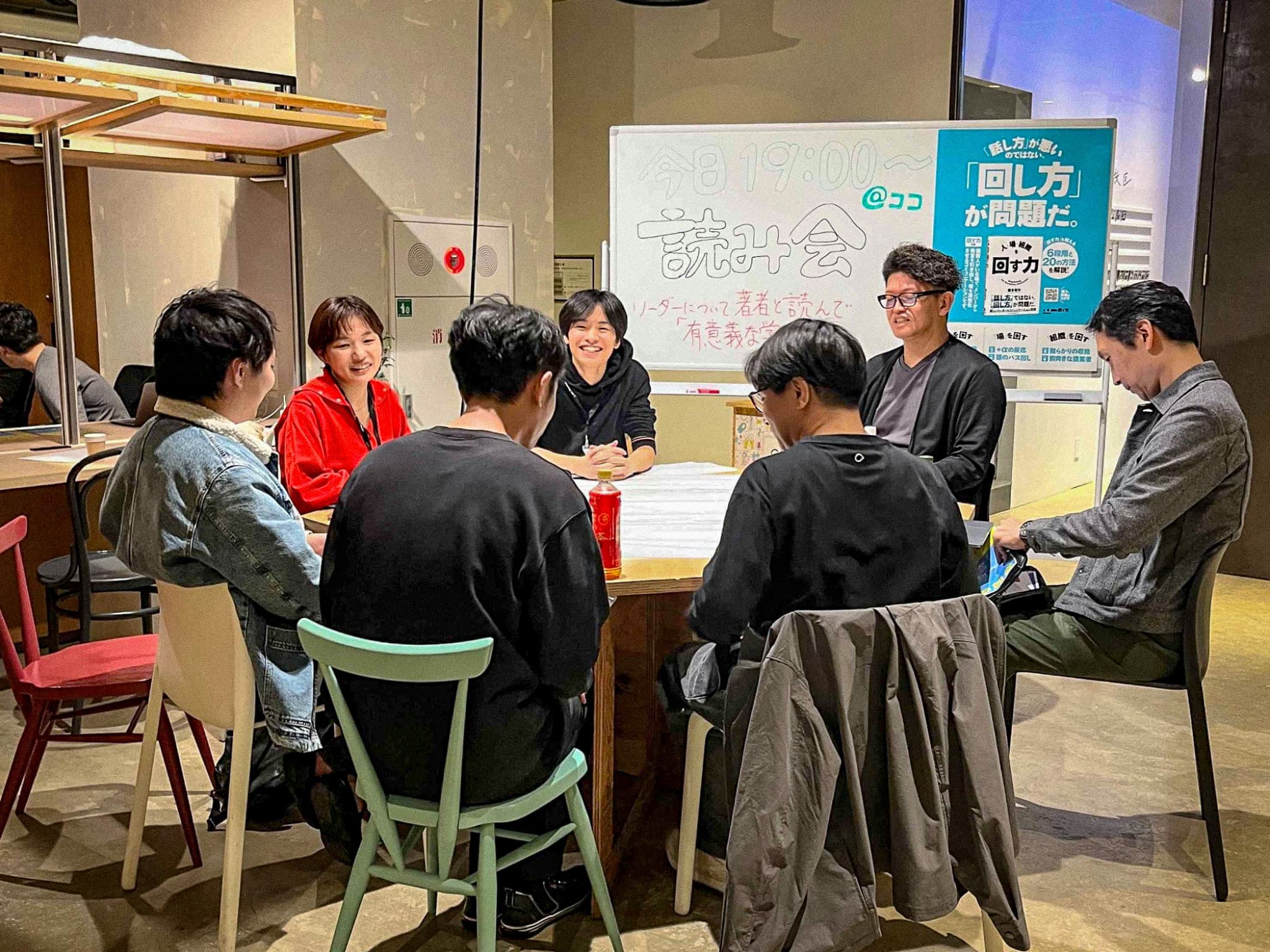
FIG.2
Who defines the contours of a community?
While Youbee promotes “reading circles” —low-barrier book clubs—as its flagship offering, the essence of its service lies in the question of how to revitalize a community by “not managing” it.
After all, a “gathering”—the smallest possible unit—can exist with just one or two people, including oneself. If a situation arises where small gatherings overlap and spring up here and there, it would be fair to call that chain of events a “community,” regardless of the specific framework of membership or affiliation.
The contours of these expanding gatherings are what retrospectively define the contours of the community. As long as each individual continues to shape those contours with a sense of autonomy, there is no need to “manage” the community; in fact, it might be just right to simply help sketch out a part of it together.Youbee serves as a tool that supports this “way of coming together” from behind the scenes, implementing only the minimal, unassuming yet essential features—such as restricting visibility, 3-minute schedule coordination, and venue reservations.
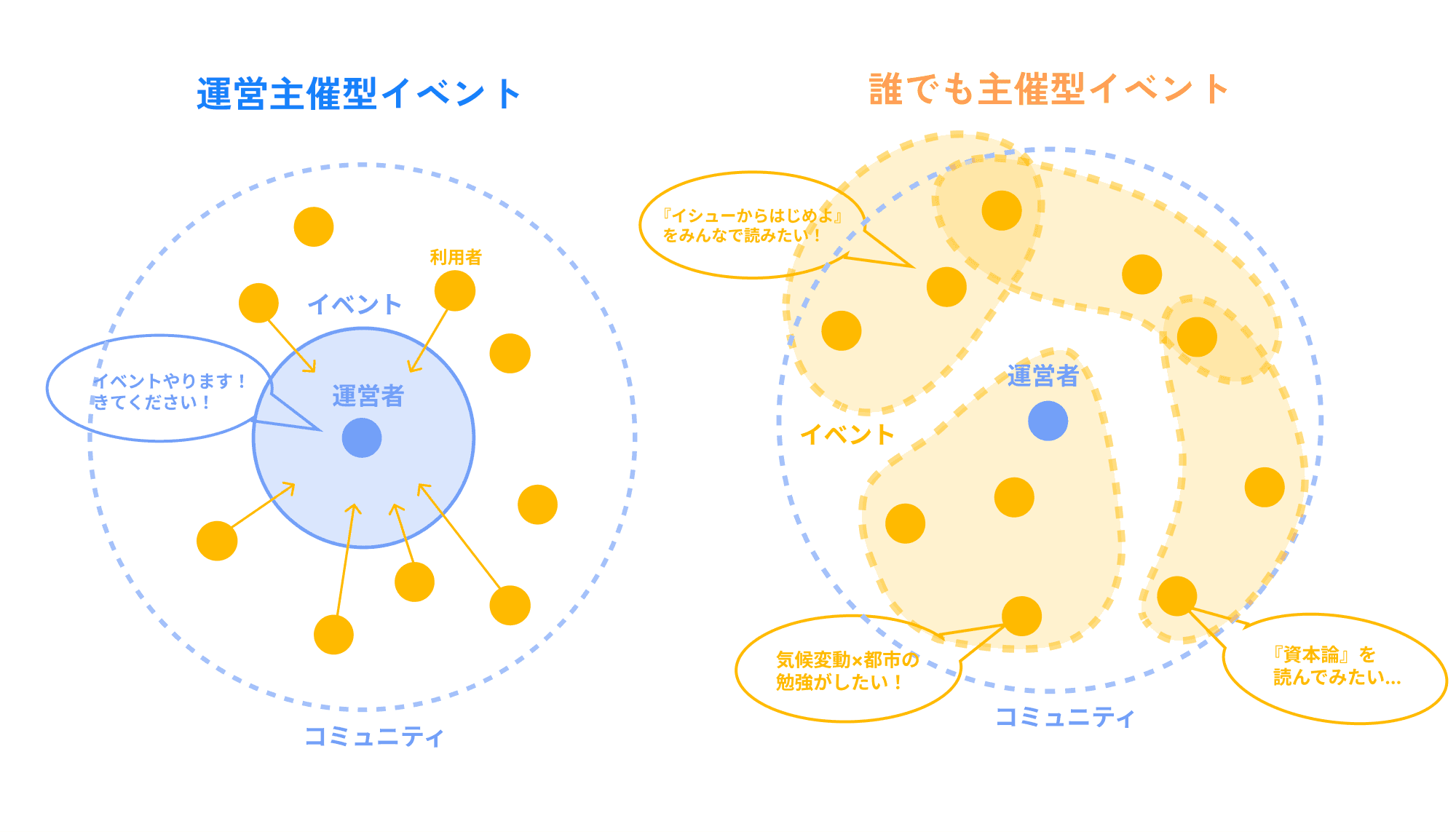
FIG.3
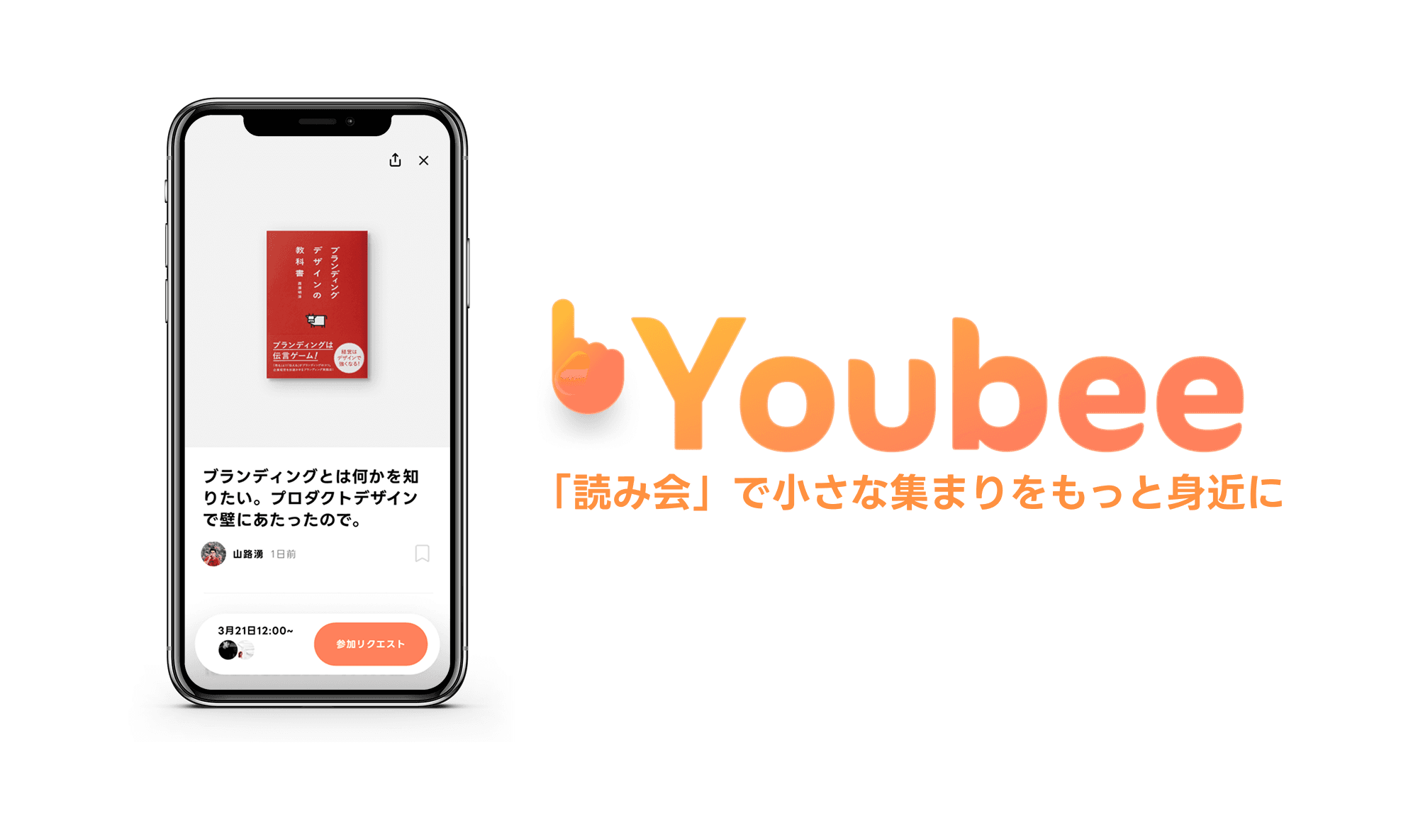
FIG.4
CREDIT
inhouse
League Player
external


