Setagaya Youth Center Proposal
Everyday local infrastructure, built for young people
A proposal submitted for a public request-for-proposals for a youth center, conceived as “everyday local infrastructure for young people.” It aims to be a familiar, everyday place where young people can feel safe as they move forward, pause, or reconsider their path — supporting the process of transitioning into adulthood. By fostering encounters with people and the local community and cultivating a third and fourth set of relationships, the design seeks to nurture opportunities for small challenges and conversations, supporting young people in making their own choices without becoming isolated.
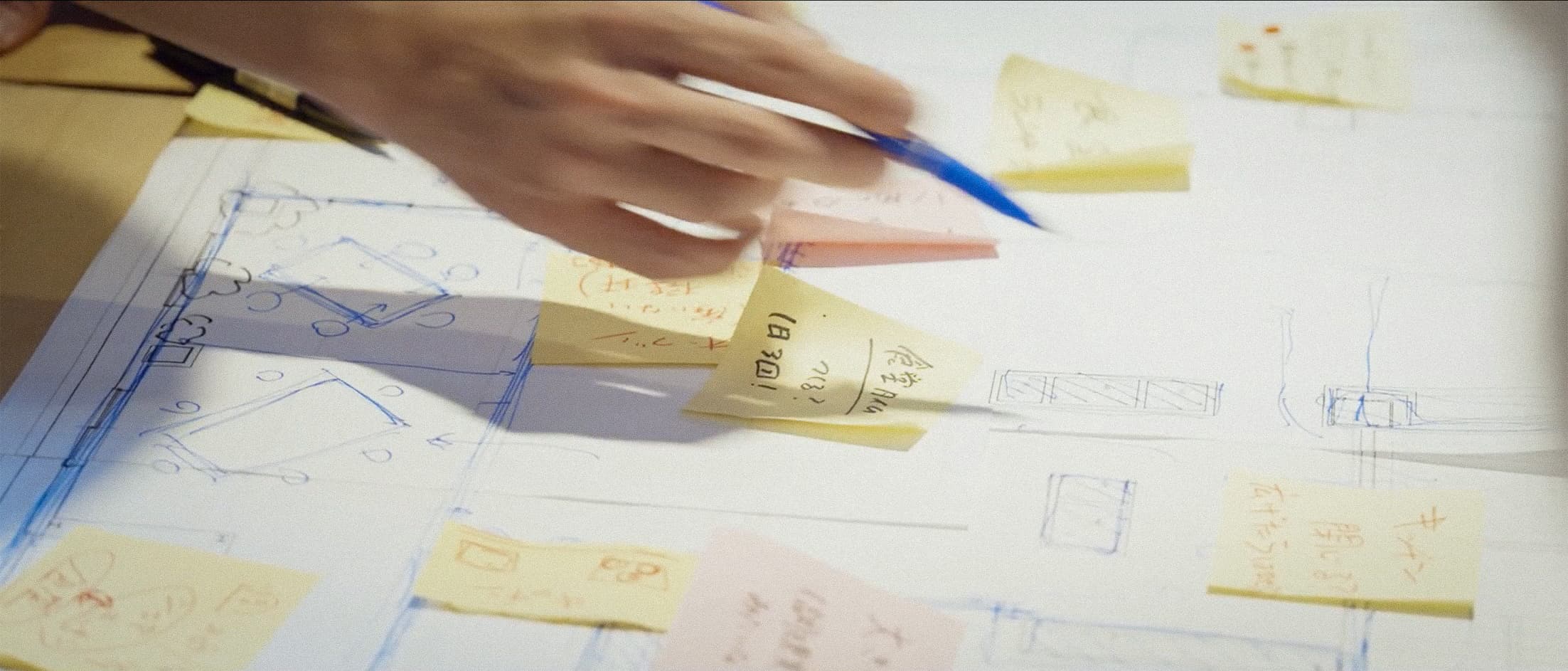
FIG.1
BE-DO! (Be-Do!)
There was a need for a youth center that would serve as an “oasis” for young people and the community. The location was across from Carrot Tower in Sangenjaya, a five-story building housing government offices and a library service desk. We conducted a thorough investigation, drawing on existing examples of youth centers both in Japan and abroad, and even examining macro trends that incorporated broader perspectives and academic viewpoints.Ultimately, we concluded that the most important aspect of this project was to create a space for young people—one that bridges the gap between “Being” (simply being there) and “Doing” (giving things a try) , a space that is often overlooked.
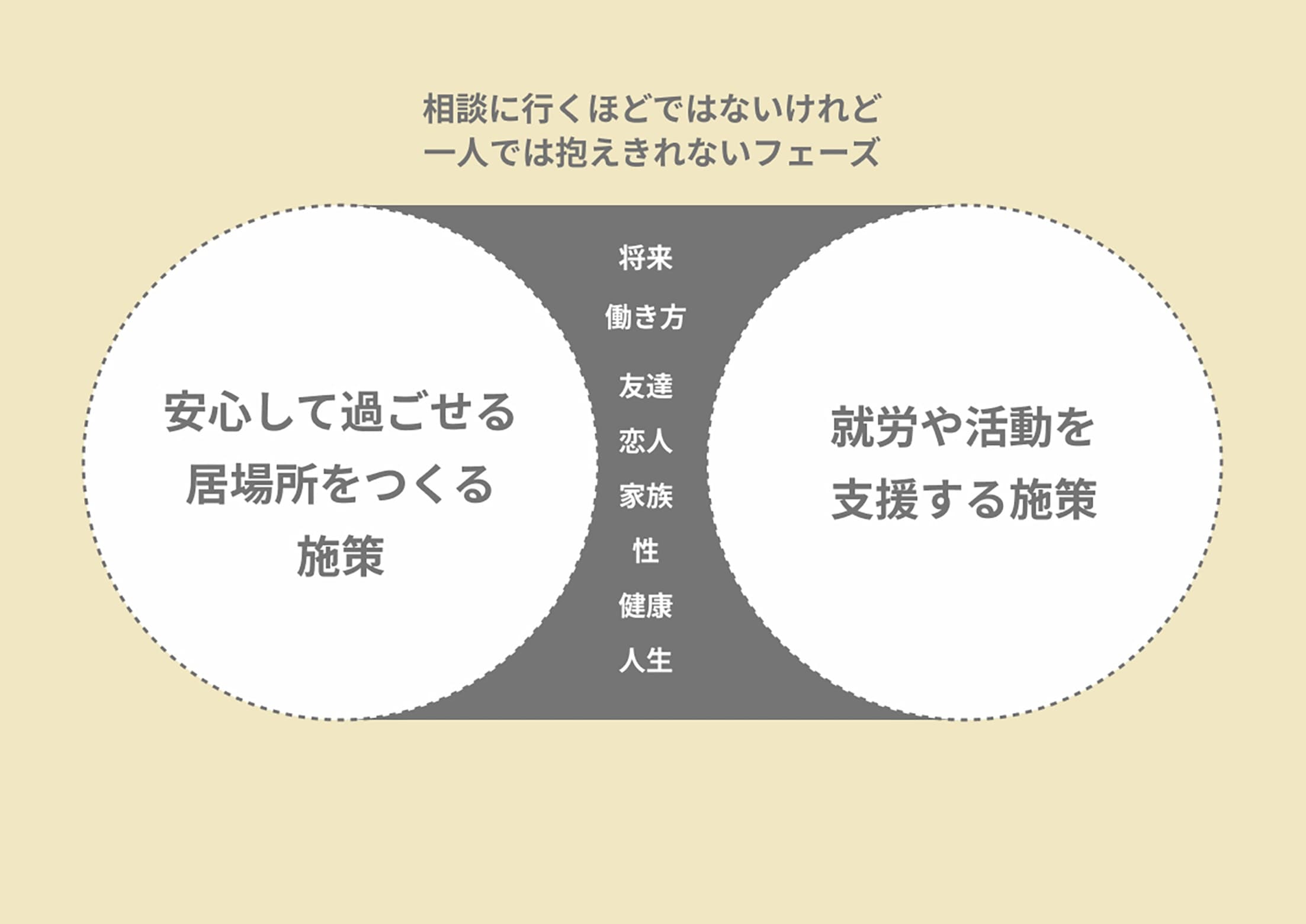
FIG.2
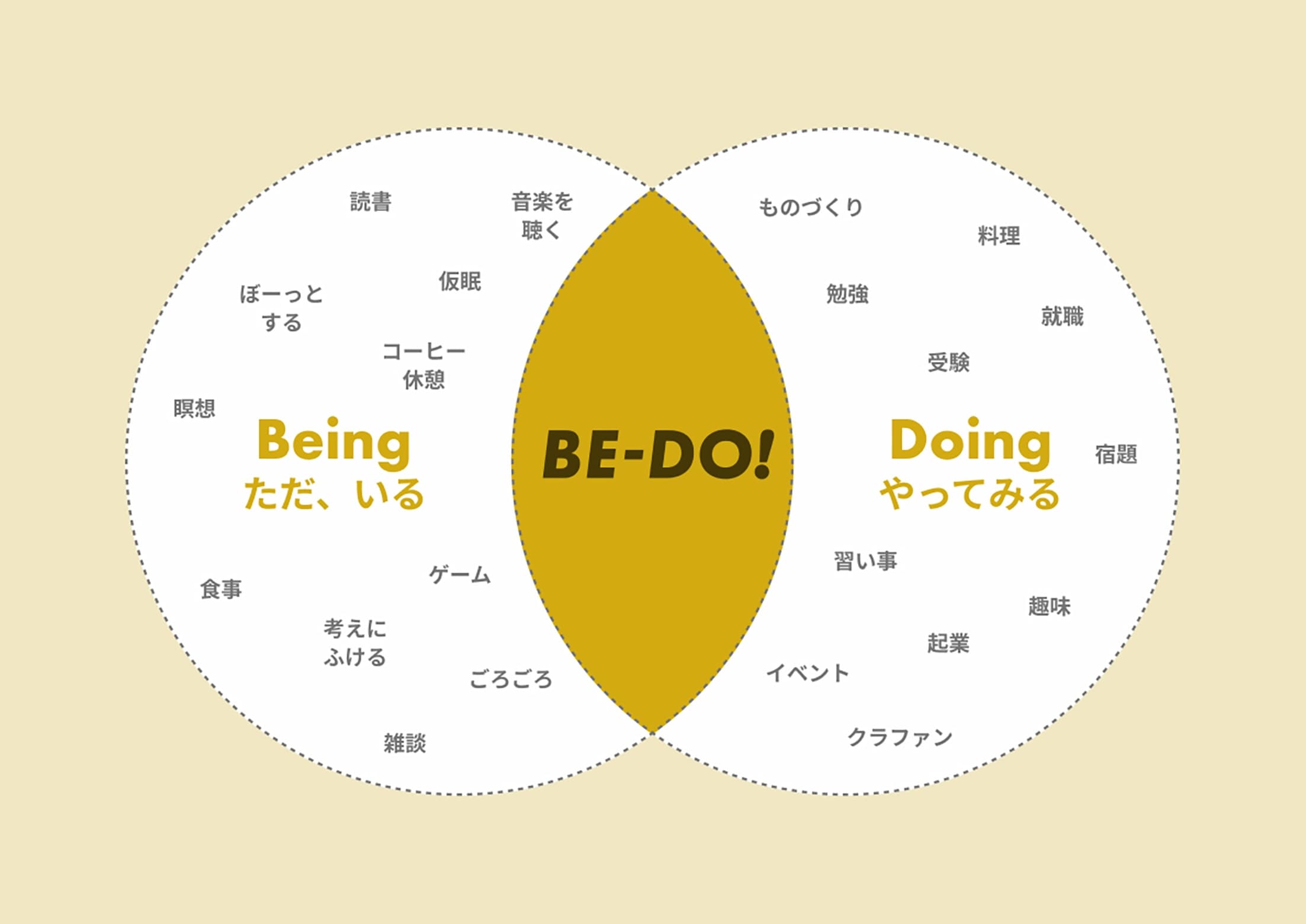
FIG.3
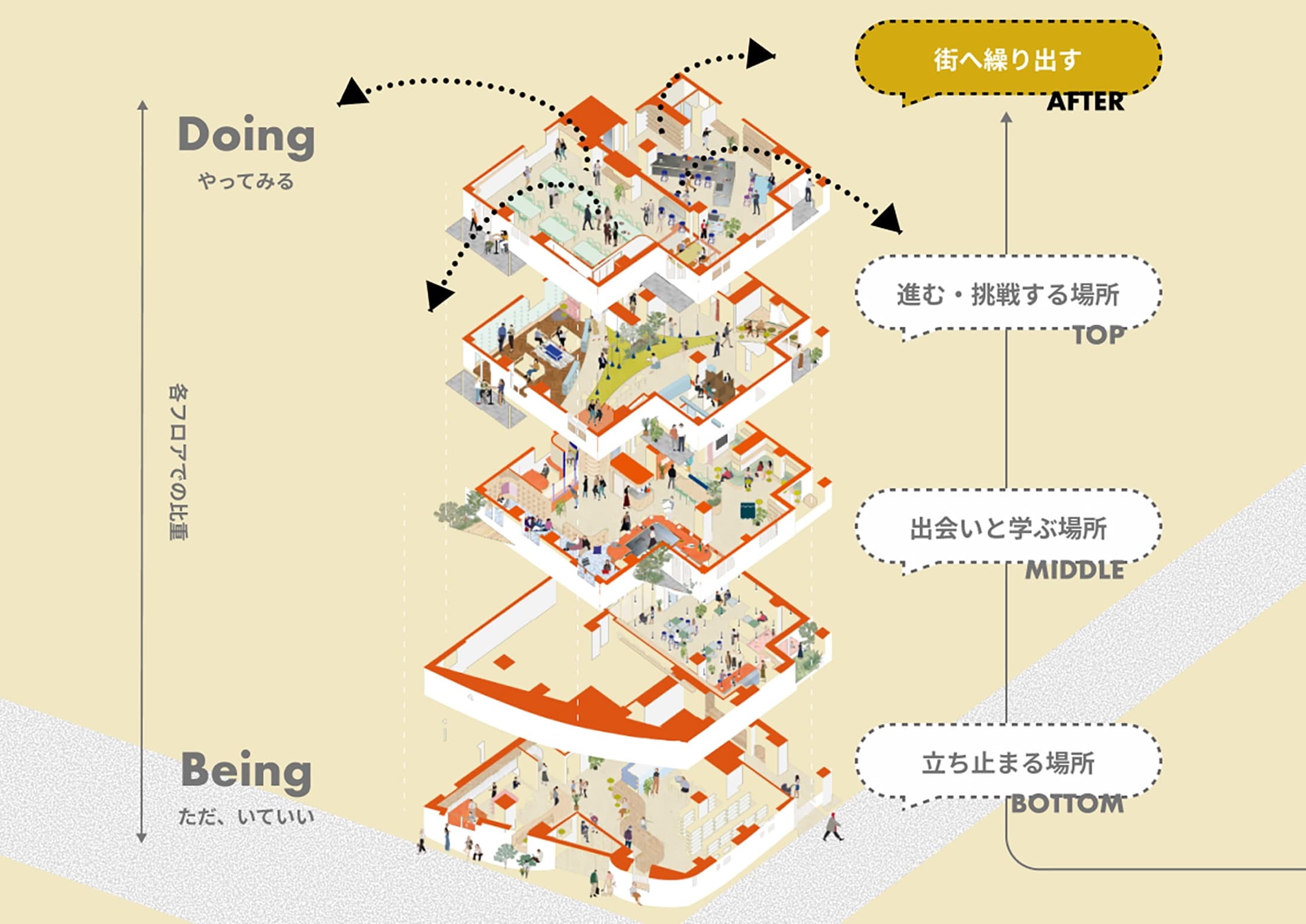
FIG.4
Creating “Folds”
With the goals of allowing young people to choose their own space, avoiding a strict separation between “Being” and “Doing,” and enabling the nature of the space to shift gradually, we decided to create undulations resembling “folds.” While gently dividing the space, events are constantly connected along the lines of these folds.
According to clinical psychologist Hiraoka, “It takes courage just to come to a counseling room. It’s difficult.” Instead, we envisioned a facility where people share meals daily, work at the same table, or participate in club activities together. We aimed to create a space where trust and a sense of security are nurtured through such everyday interactions—and where, as a natural extension of that, people can picture a familiar face they feel comfortable confiding in.
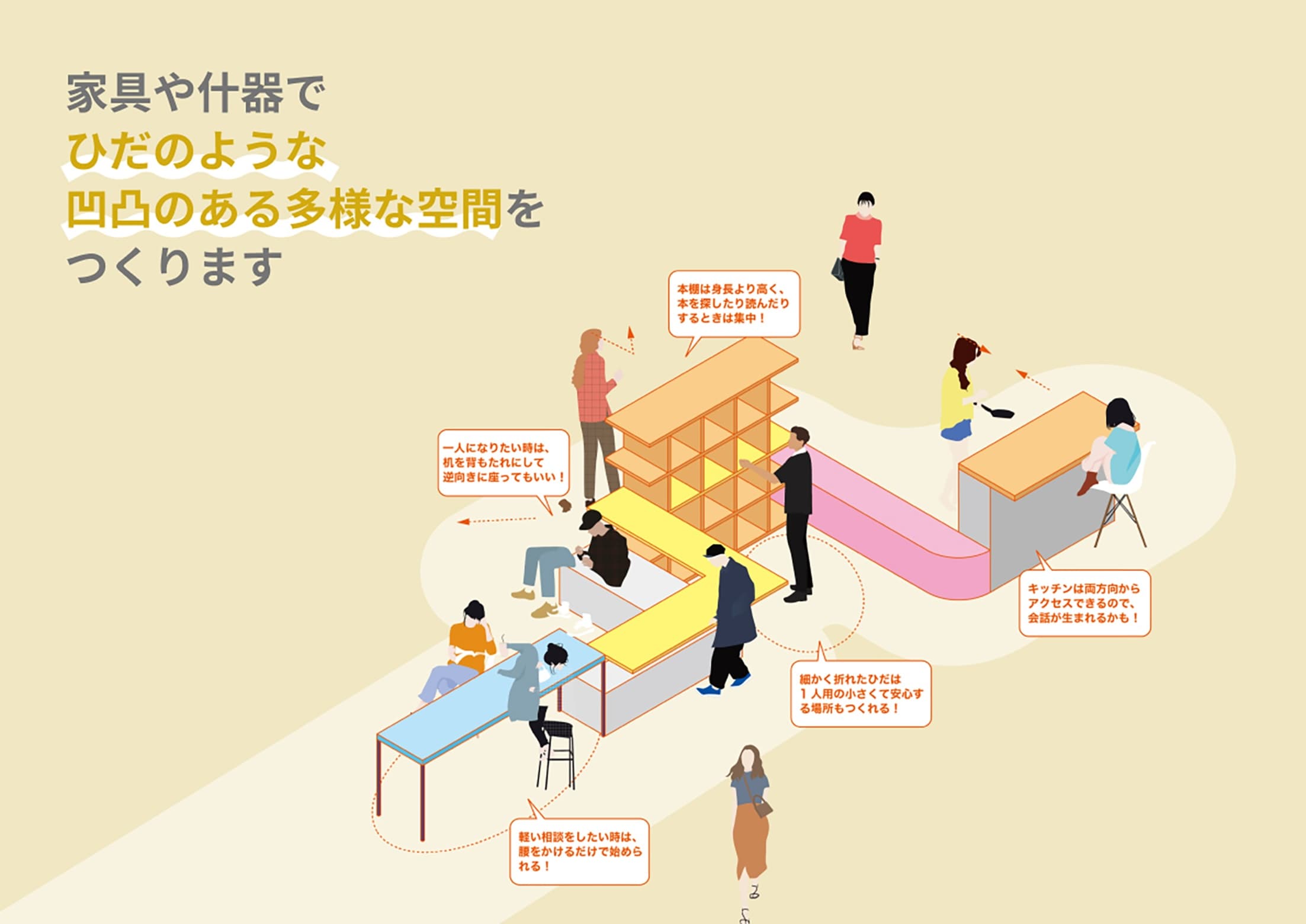
FIG.5
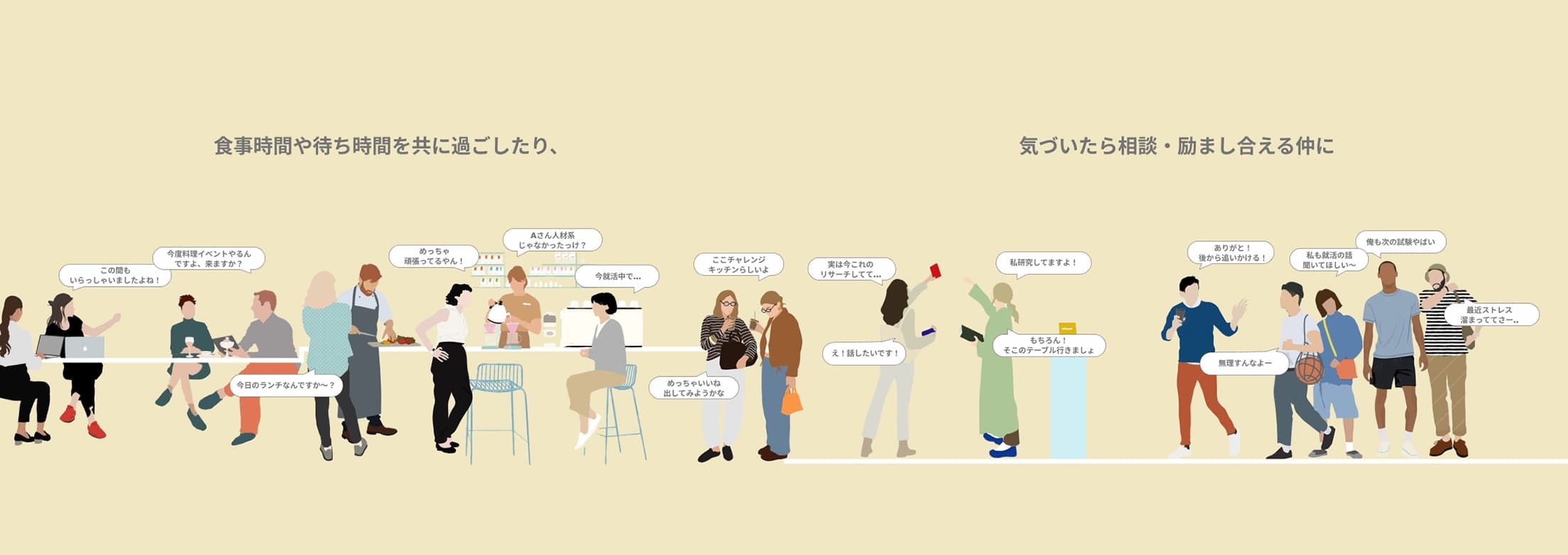
FIG.6
Workshop
This proposal stipulated that, if selected, we would proceed with implementation through a “Youth Council,” gathering input from young people along the way. We were approached precisely because we are young people ourselves, so we decided to take this opportunity to collect and incorporate young people’s voices right from the proposal stage.First, we held workshops within our team; next, we conducted workshops with several young people gathered through ASIBA’s network. After repeated discussions involving large groups, we finalized our proposal.
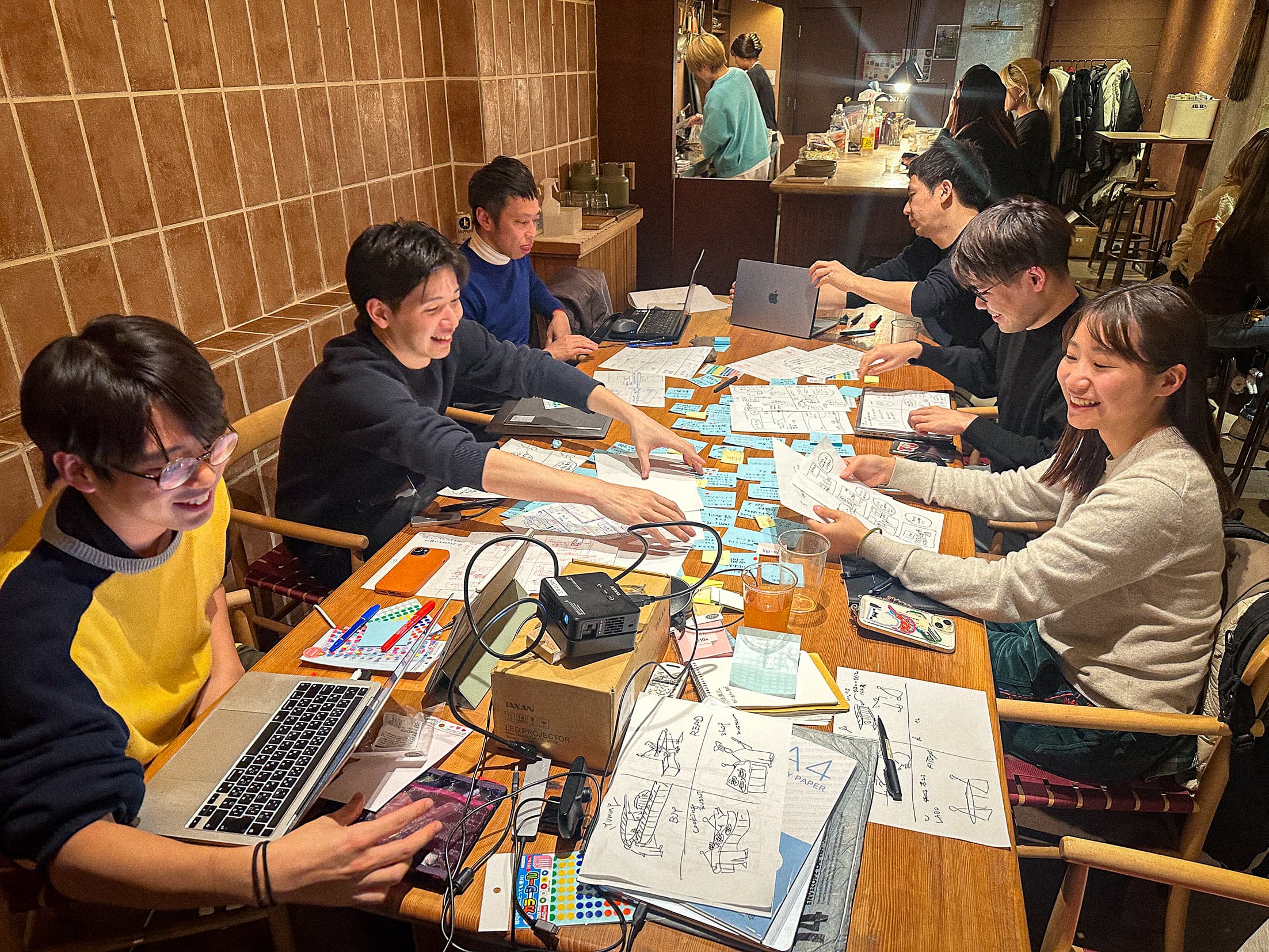
FIG.7
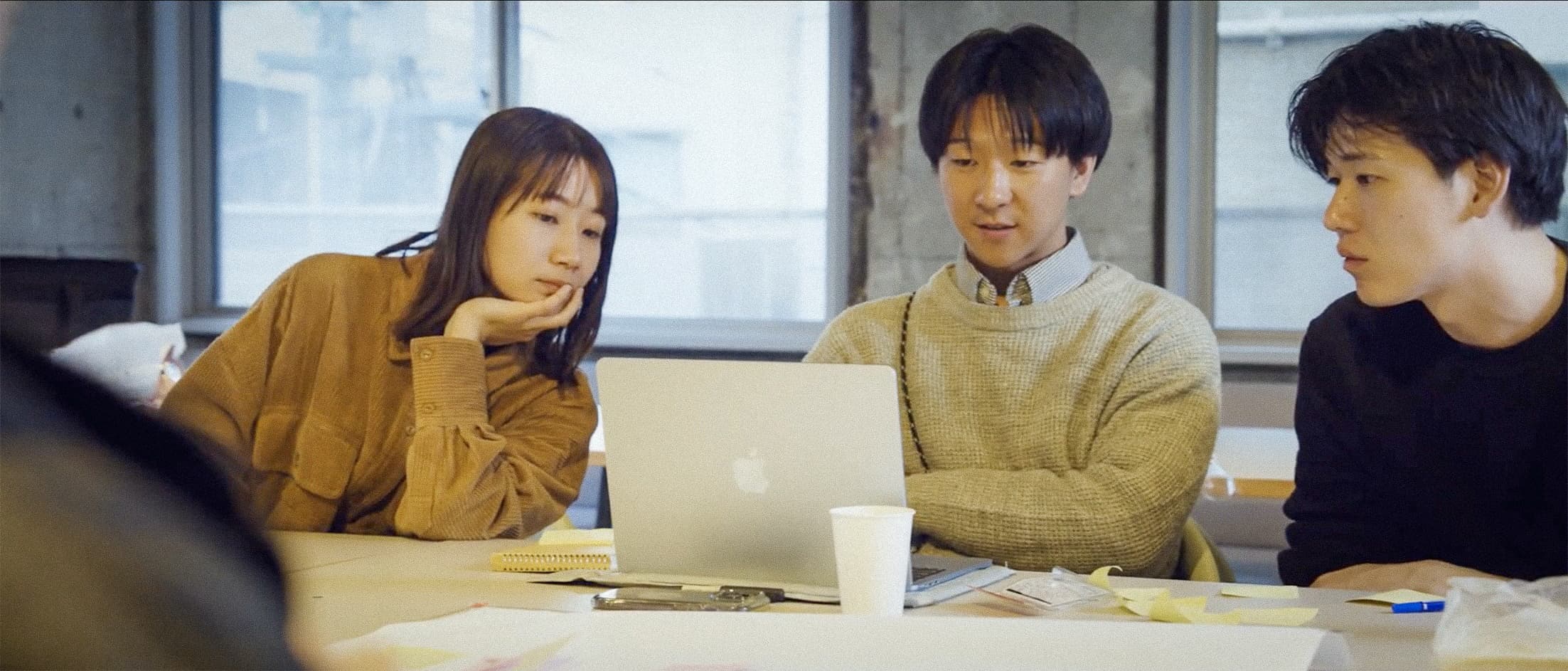
FIG.8
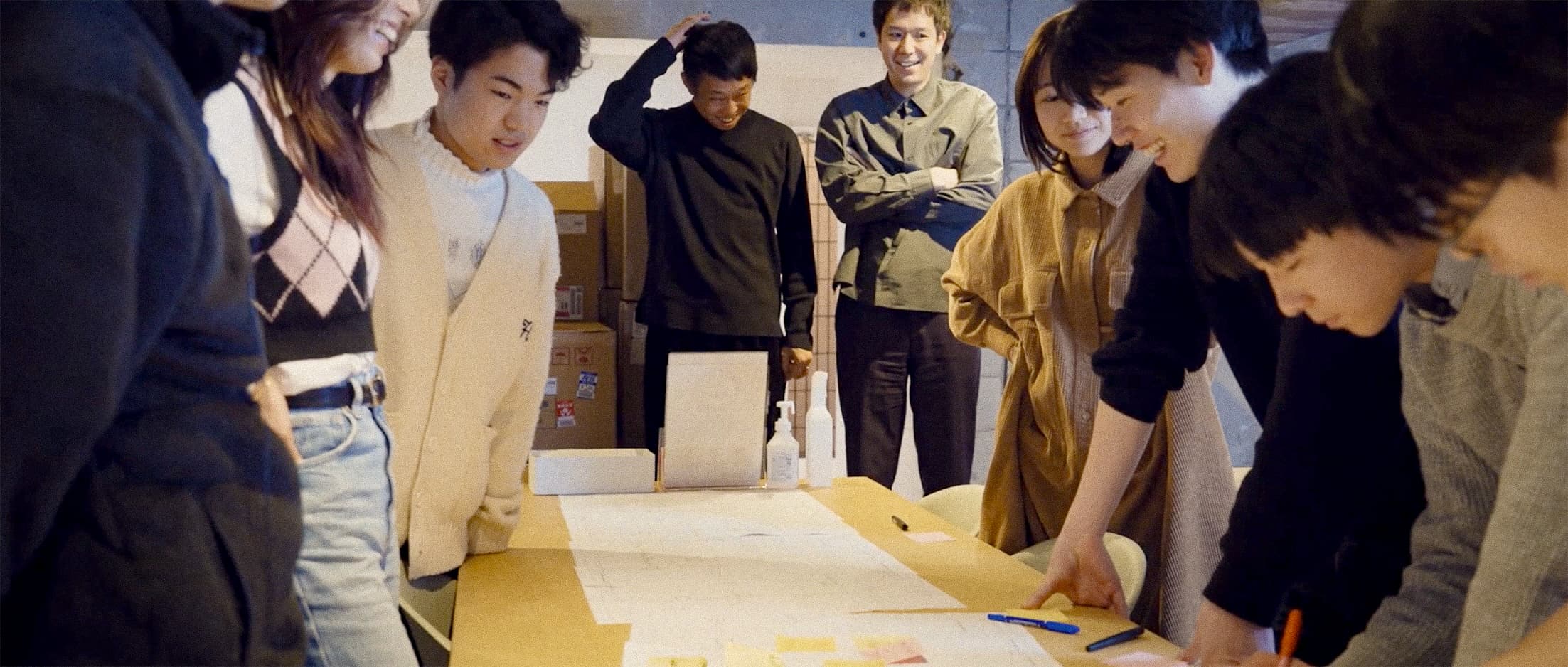
FIG.9
CREDIT
inhouse
collaborator
external


