ASIBA ATLAS 2026 Report #2
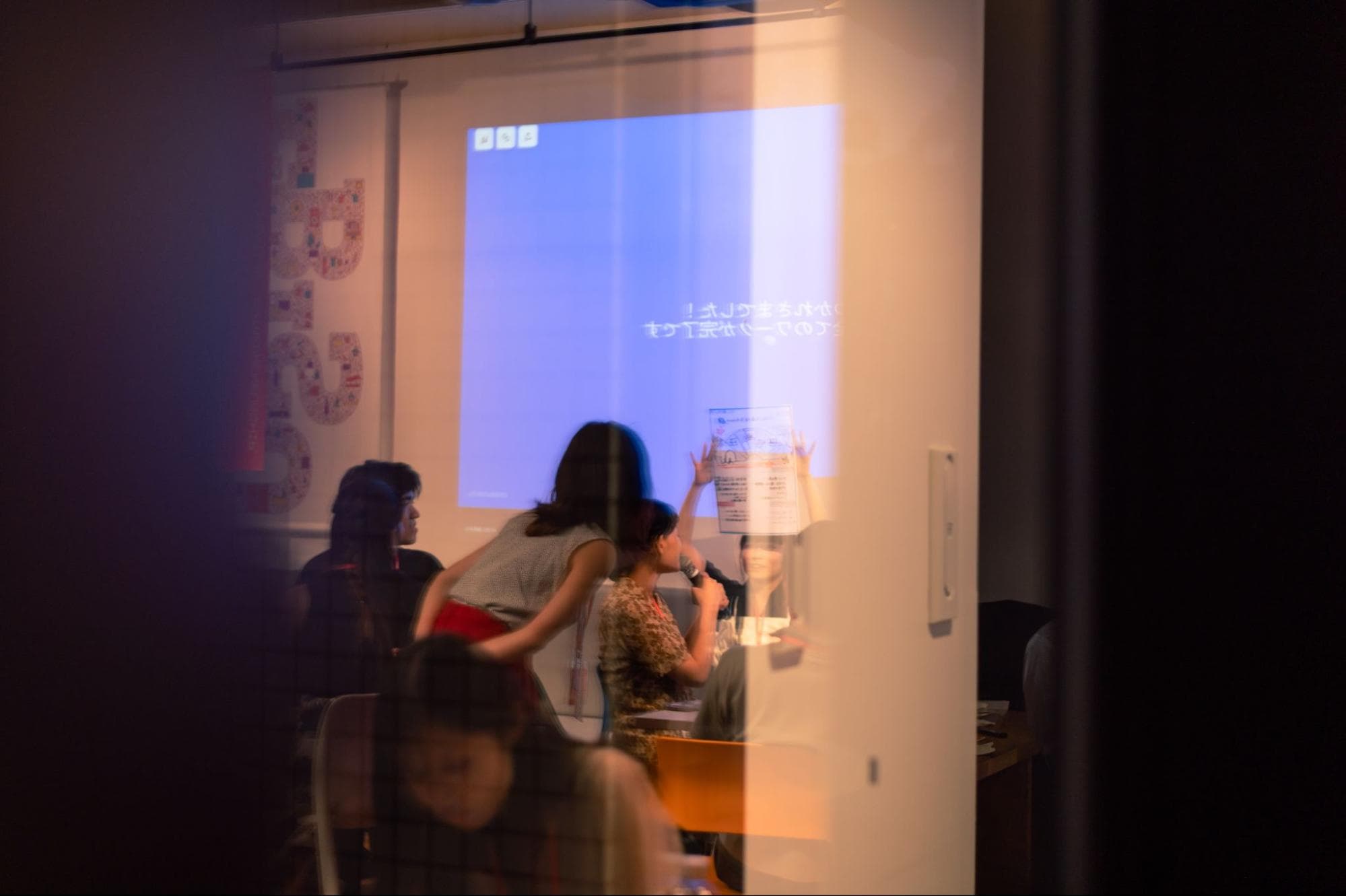
FIG.1
This article is based on a pitch delivered by Co-CEO Masaki Morihara at “ASIBA ATLAS 2026,” held on August 1, 2026, and has been rewritten as an article. (Slides: Masaki Morihara; Text: Rigo Kagami)
Why do people want to create and express new things?
Just like in the workshop mentioned earlier, ASIBA also began with the idea of combining elements such as “architecture,” “startups,” and “social implementation” to explore how we could take on new challenges. It all started four years ago when we rented a room at a university, gathered some friends, and organized an event featuring guest lectures. ASIBA began with this independent initiative.
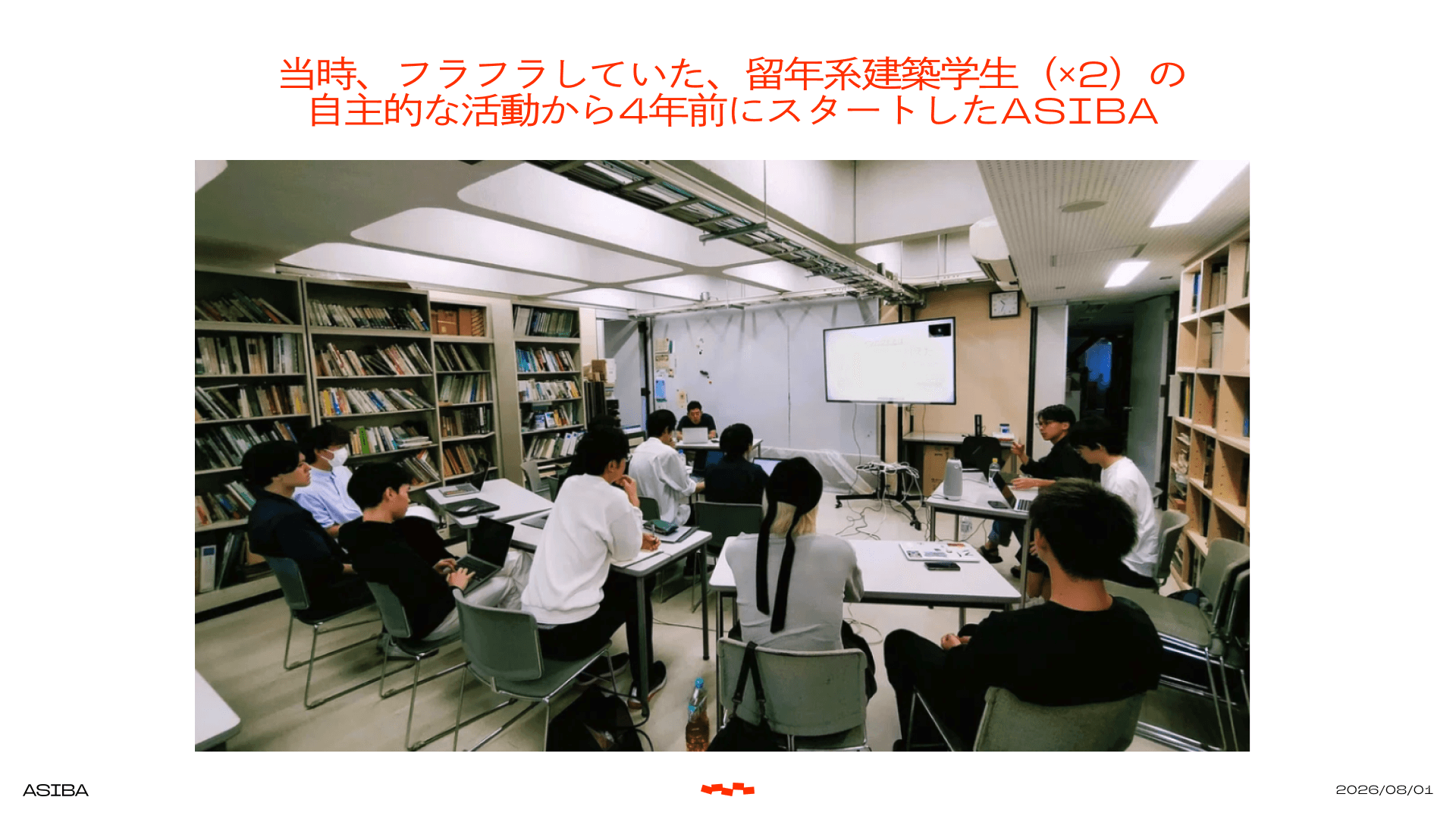
FIG.2
What remains at the core of ASIBA to this day is the desire not to stifle the dreams, hopes, and curiosity of the friends around us.Rather than the clichéd startup image of creating a product and trying to change the world on one’s own, we aim to take on societal challenges with what we’ve created—while sharing both the pain and the joy—with people who are struggling, those who want to take on challenges, and those who wish to change their current circumstances in some way.That, to me, is the form of hope I can wholeheartedly celebrate. And since there are so few places today where you can be true to yourself in that way, we decided, “If that’s the case, let’s create one ourselves.”
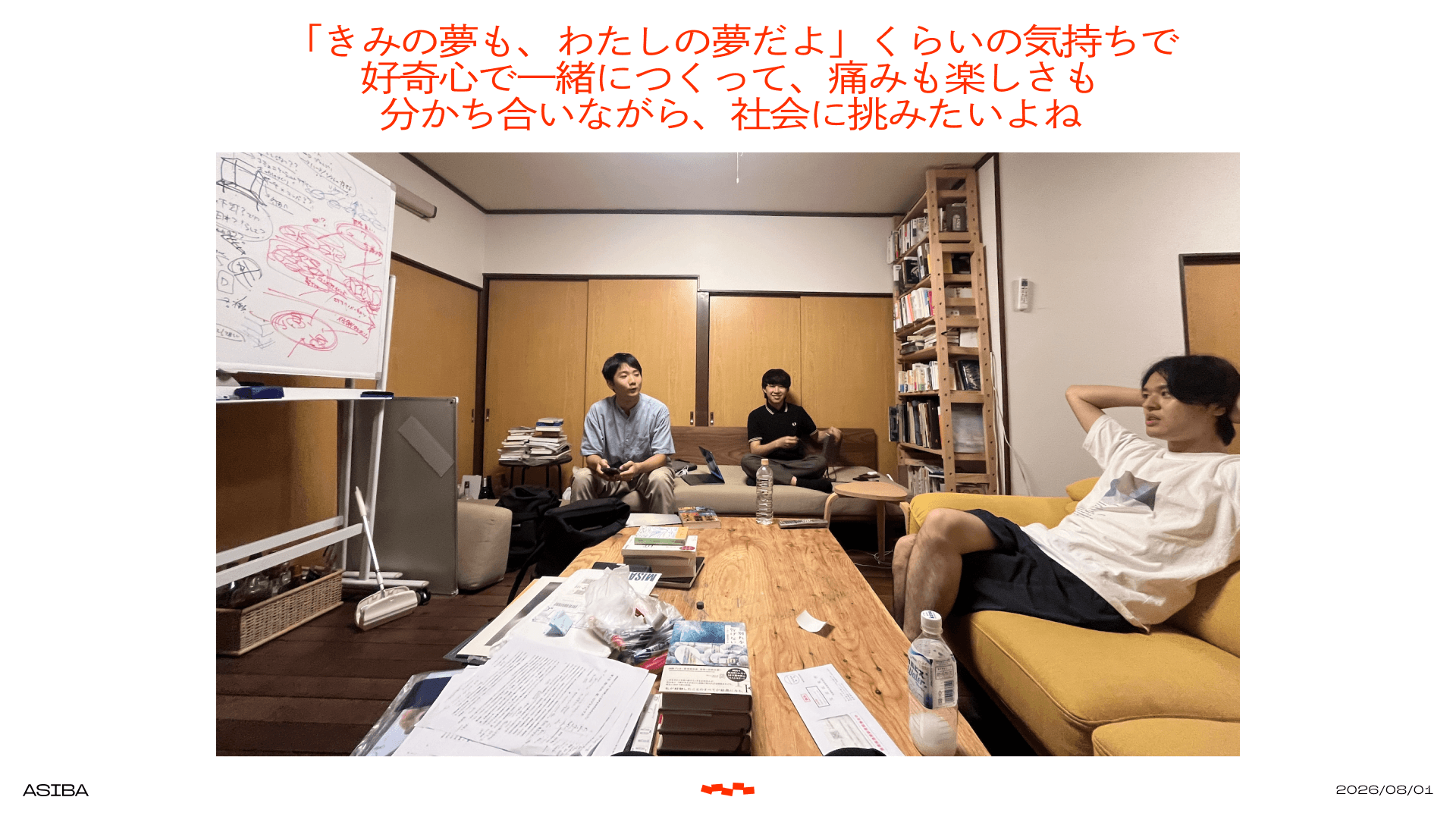
FIG.3
As we continued our activities driven by curiosity, over 80 projects were born in the span of three years—workshops, programs, architecture, graphic design, and installations. Through the many opportunities we were given, we learned how to create points of connection with society. And as we accumulated these practical experiences, ASIBA began to grapple with a single question:“Why do people want to create and express something new?”
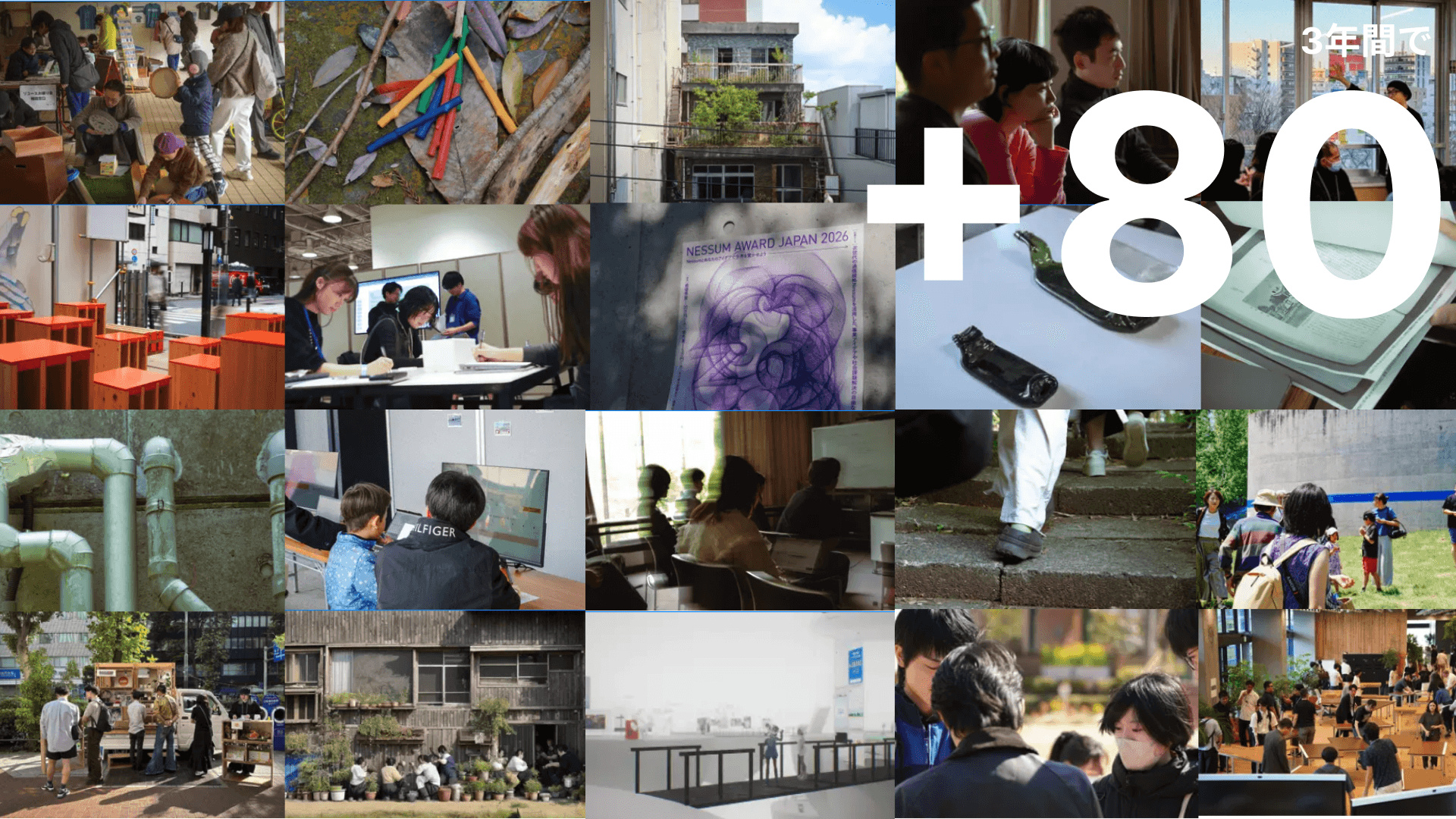
FIG.4
Why is that, exactly? Is it purely because creating is fun? Is it for money or to make a living? Is it because things have to be new?
As ASIBA, the tentative answer we arrived at through group discussion is: “We create in order to gradually share new possibilities for the world and visions of a desirable future with society and others.”
Rather than just talking about it, by creating it together with others, we present a vision of a better future and its possibilities. Even as we recognize that the state of the world isn’t very good these days, we believe that what we can do is share a vision of the future—one we feel is better—through the act of “creating,” and in doing so, gradually shift the world’s course.
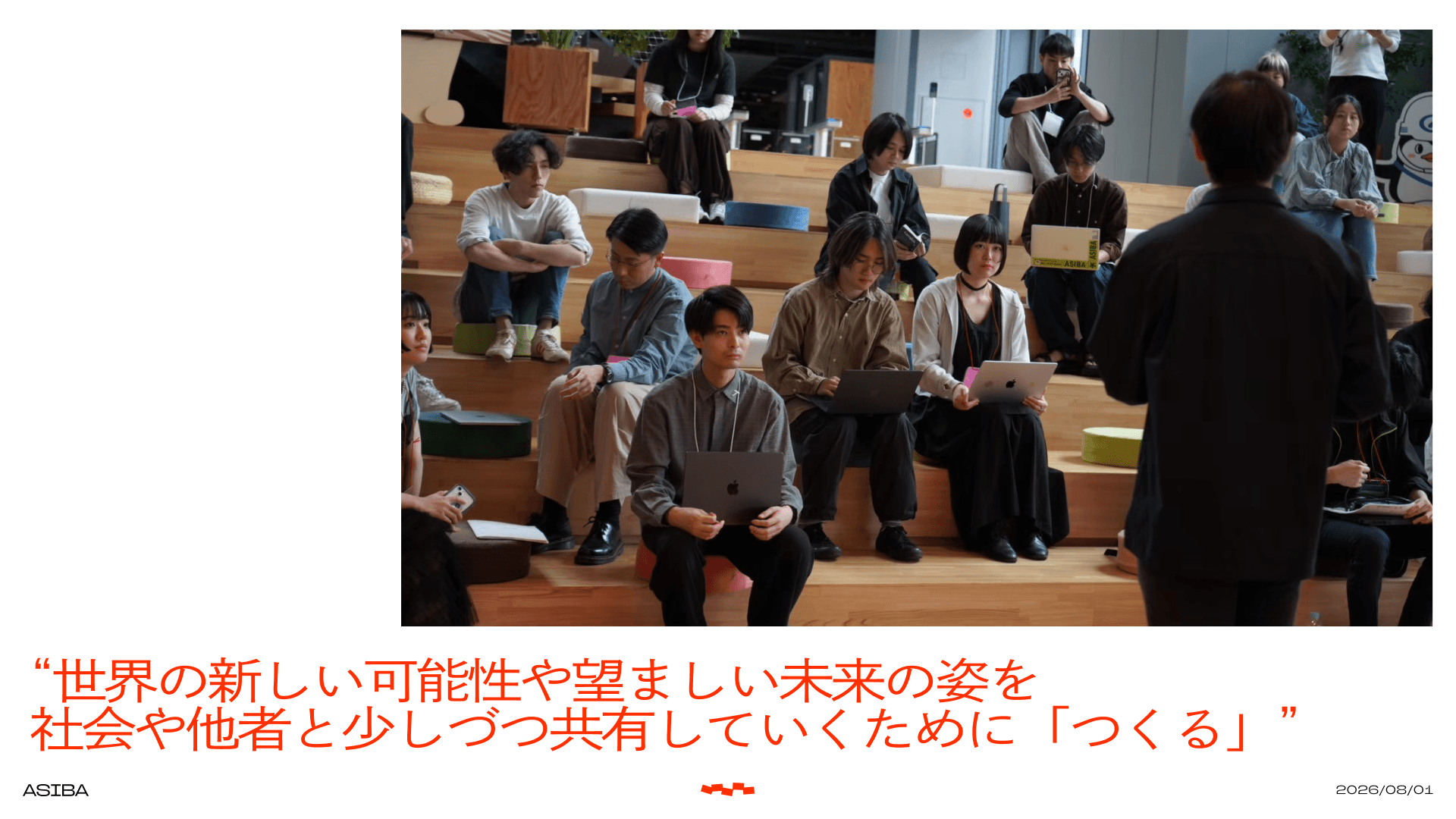
FIG.5
To take on this mission, I’d like to share three initiatives ASIBA will be undertaking moving forward. The first is Creative Production; the second is R&D that creates phenomena through practical application; and the third is an ecosystem where we share both risks and possibilities.
First is Creative Production. Our overarching concern is that, while there is immense creative potential, the societal capacity to embrace that potential is currently surprisingly limited.
Not only in Japan, but when we look to Asia and the world, there are many creative individuals brimming with potential and hope—people who want to create something and, through that, take on societal challenges. Naturally, as ASIBA, we want to support them and help them realize their potential.However, even more than that, we believe our primary mission is to expand the opportunities and fields available within society—that is, to create spaces where creativity and these fields can meet, and to provide opportunities for them to connect.
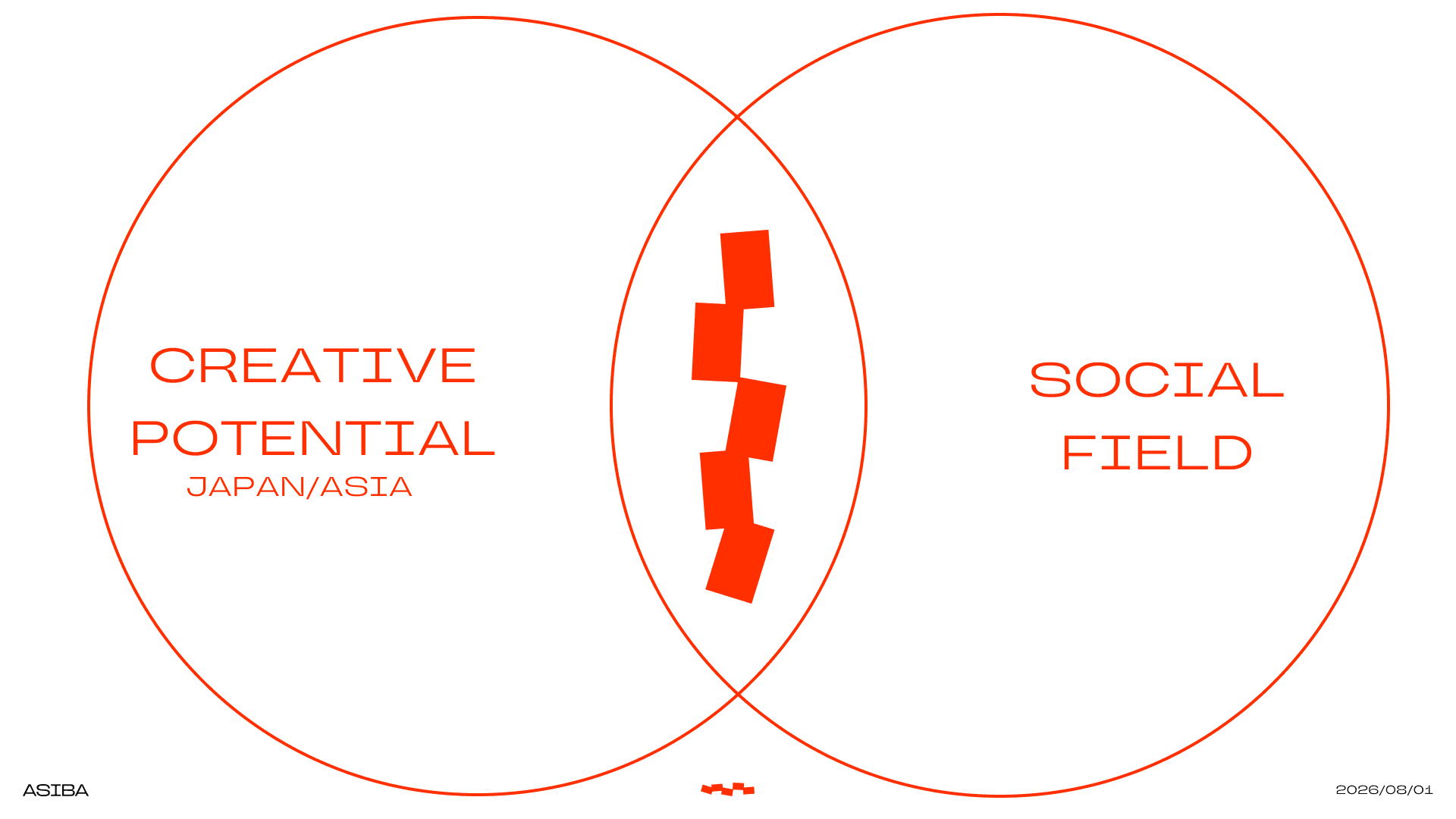
FIG.6
For the past three years, we have independently organized hands-on incubation programs specialized in the creative field: Creative Lab., Local Incubation, and Creative League. While continuing to run these three programs as our core initiatives, we plan to develop even more new programs in the future.
Through these programs, creators are able to connect with high-quality companies, government officials, and various sectors of society.While “matching” might sound too simplistic, the true strength of our incubation lies in helping creators find common ground with society so they can bring their ideas to life. Specifically, we aim to create a world where creators can shine by providing support—such as showcases, early-stage financing, and prototype development—as well as guiding them through commercialization and startup formation with an eye toward business growth.
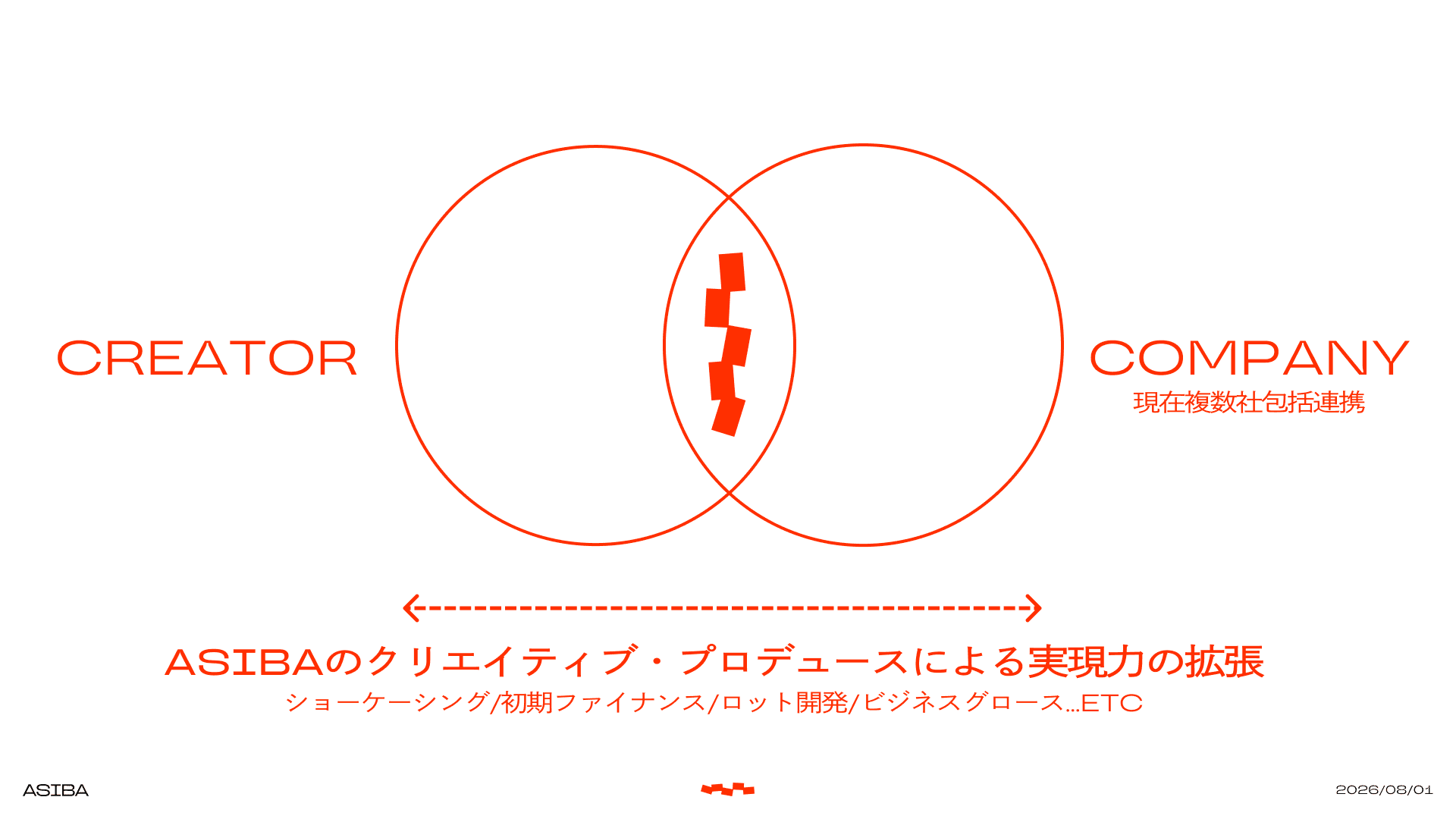
FIG.7
The second pillar is R&D that creates phenomena through practice. In this era of accelerating AI evolution, universal answers may come quickly, but AI cannot judge whether they are actually correct or whether it is appropriate to proceed with them.I believe we are entering an era where we can’t make any decisions or take any risks. In such an environment, to make major decisions, won’t it be necessary to engage in repeated practice and experimentation—using our own bodies, together with friends, and in collaboration with society? “How can we increase the number of the best possible failures we experience through hands-on experience?” I believe this will become a central challenge for humanity moving forward.
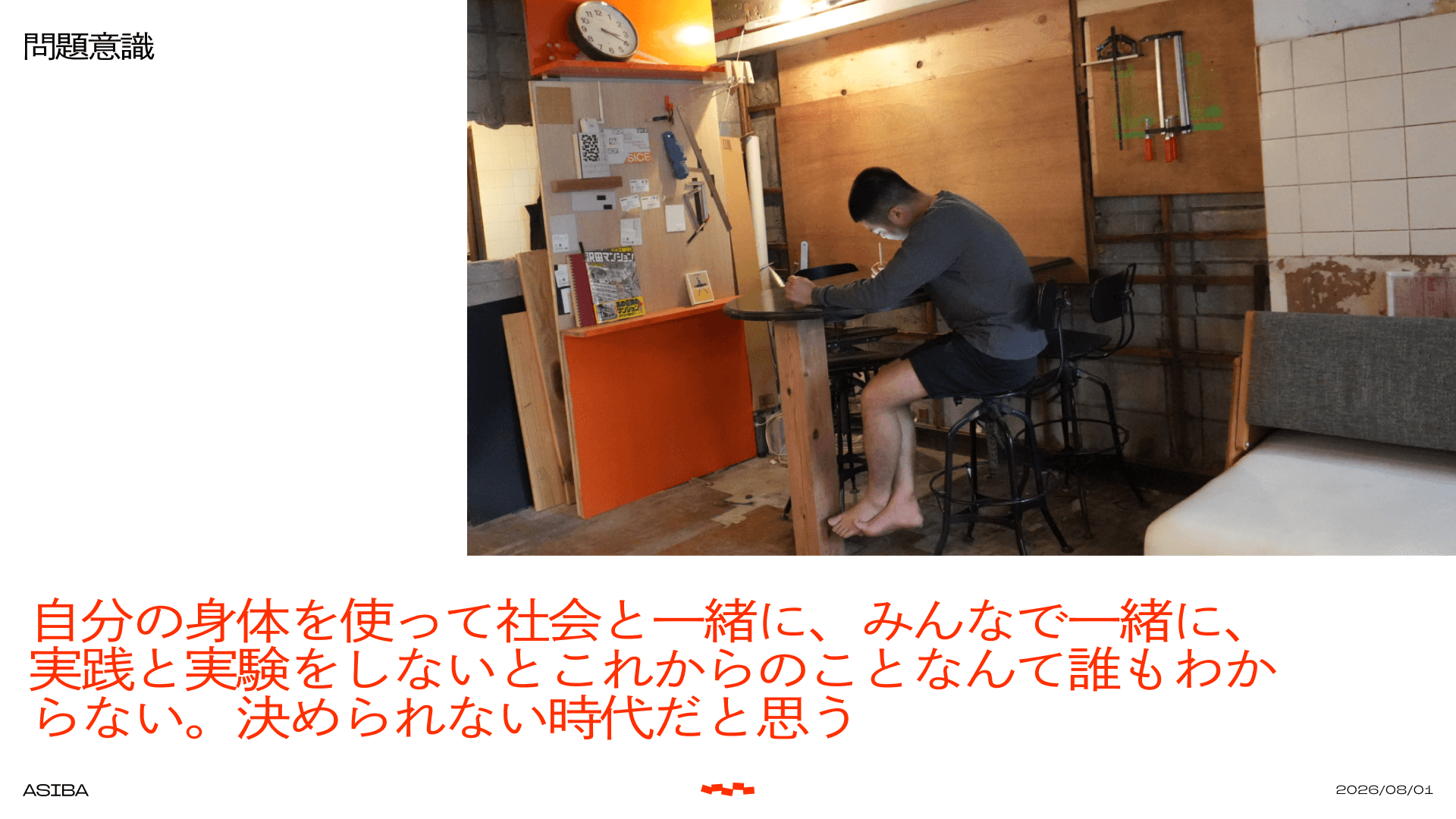
FIG.8
This way of thinking is influenced by my background in architecture. When constructing complex architecture, you use the materials at hand to explore various volumes. By intentionally repeating failures and presenting provisional phenomena on the spot, your body moves, and new ideas are born.
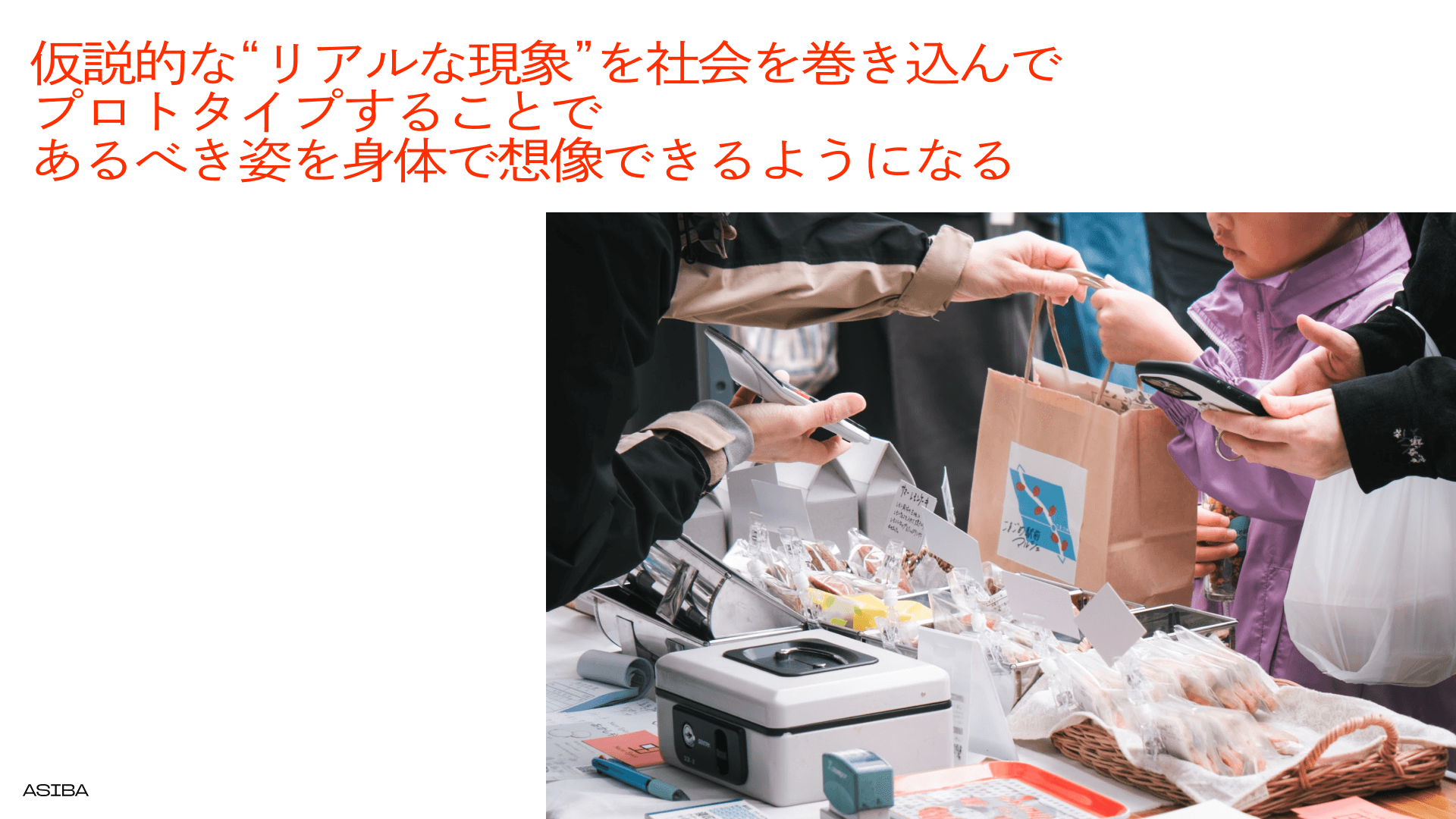
FIG.9
If we view ASIBA as something like an art museum where young artists gather, we are not only in the position of curating those artists but also serve as practical researchers who showcase, produce, and integrate the creations born there into society. I think a scenario where a research institute is next to an art museum—or an art museum is within a research institute—is close to the image of ASIBA’s ecosystem.
FIG.10
Currently, we are conducting joint research and pilot projects with ReLink—a first-cohort incubatee of Public R Real Estate—on the theme of “Creative Demolition of Public Facilities in a Declining Population Society,”and with Kita Ward’s third-cohort participant, Machi Asobi Lab, on “Bottom-Up Sounding for Shopping District Revitalization.” Furthermore, in collaboration with the design firm 6699 (Uzumaki)—which emerged from Creative Lab.—we are advancing an R&D project titled “Designing New Relationships Between Cities and Forests.”Precisely because we live in an era where it’s hard to know what’s “right,” we, too, must immerse ourselves in the practice, grapple with challenges together, and face reality together. We believe that the extent to which we can create profound, fundamental change in this way will be the decisive factor in future creation.
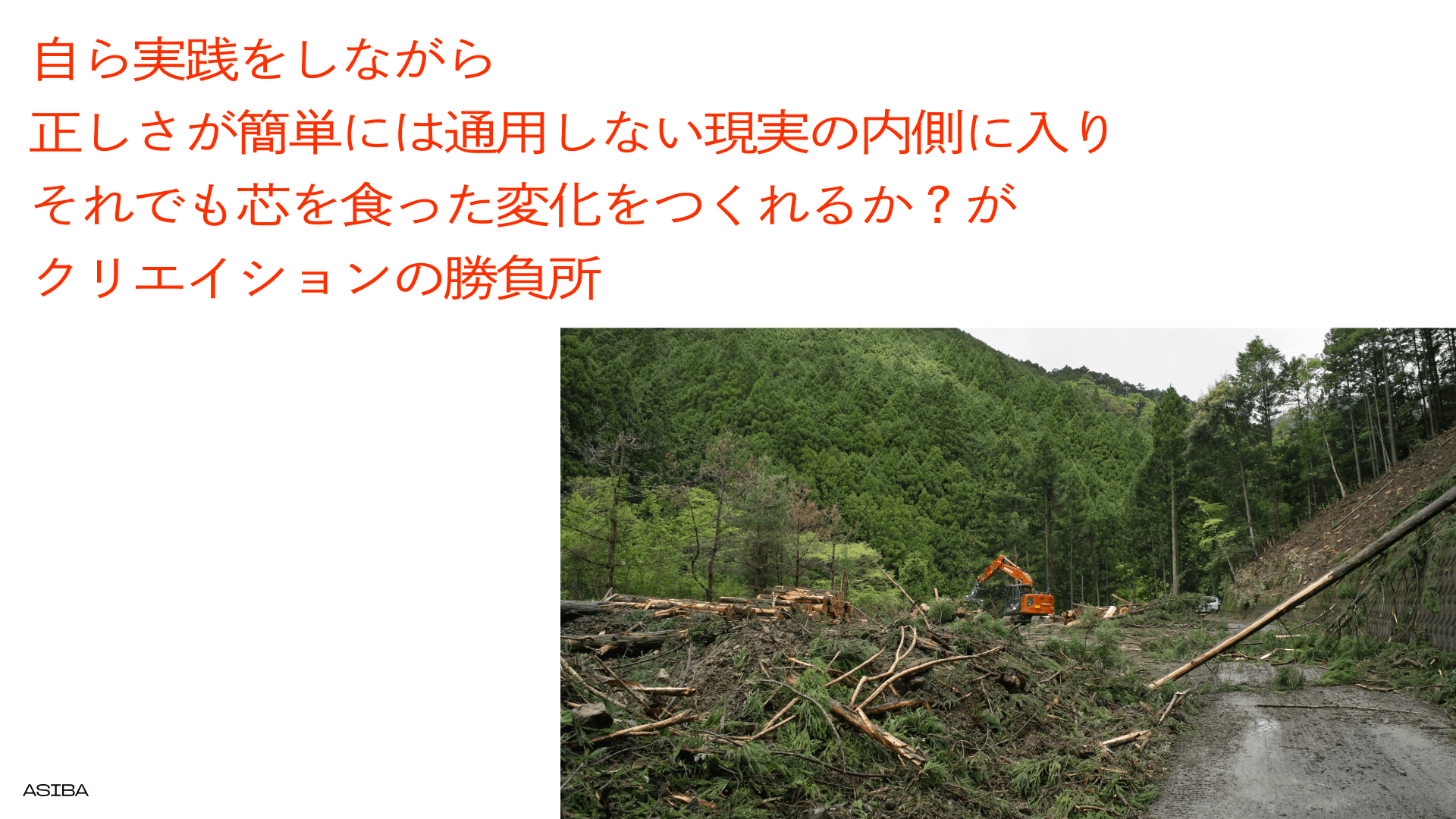
FIG.11
Finally, the third point is an ecosystem for sharing risks and possibilities.
FIG.12
As evident from the savings figures of single-person households aged 29 and under, young people’s financial resources are overwhelmingly low. About 70 percent have no savings, less than 500,000 yen, or less than 1 million yen. On the other hand, however, the market demands new things with almost brutal intensity.It’s as if the message is: “The next generation won’t survive unless they create something new.” But no matter how you look at it, there’s no way they can do that out of their own pocket. Even if someone were told to bet their entire 500,000 yen in savings on something new, who would actually do that?
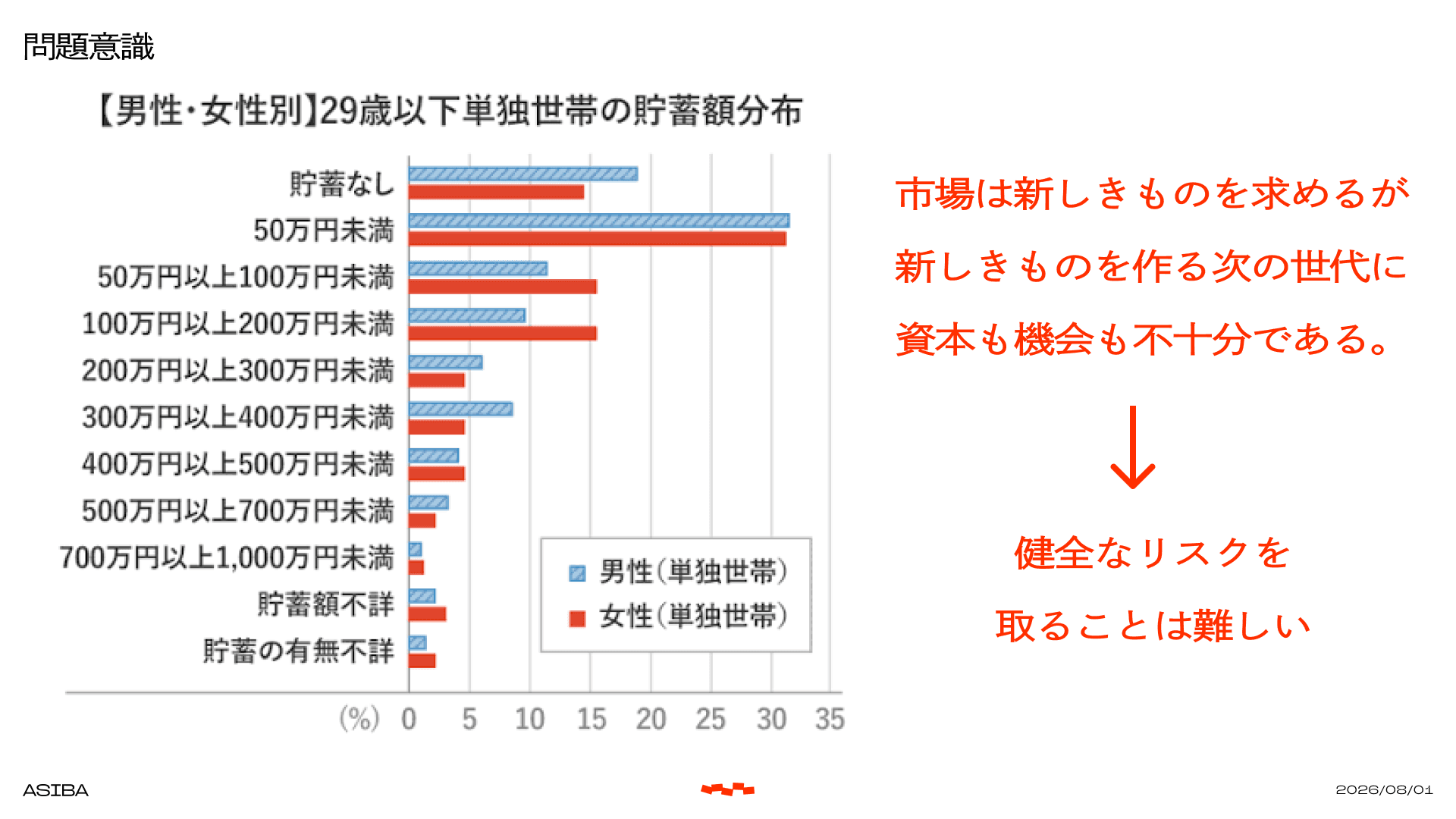
FIG.13
In fact, we’ve undertaken over 80 projects ourselves—some have run at a loss, while others we’ve funded entirely out of our own pockets. I believe that, as a society, we lack both capital and opportunities, making it difficult to take even reasonable risks. That’s why we’re experimenting with a new contractual framework—one that typical architecture or design firms wouldn’t adopt.
This is the “production committee” model. Rather than merely mentoring creators’ ideas, we actively invest funds and resources. We also form business partnerships and enter into procurement contracts with ASIBA’s partner companies to ensure the project reaches at least a minimum production run for real-world implementation. From there, we generate revenue and return the invested amount through revenue sharing.We believe that with a system like this, anyone can bring their ideas to life without having to give up on them.
Currently, the creative industry is fundamentally a contract-based business. As unit prices rise, projects tend to concentrate among those with a proven track record, making it difficult for young talent to break into the field. We believe that by taking on the risk ourselves, ASIBA can gradually change this situation.
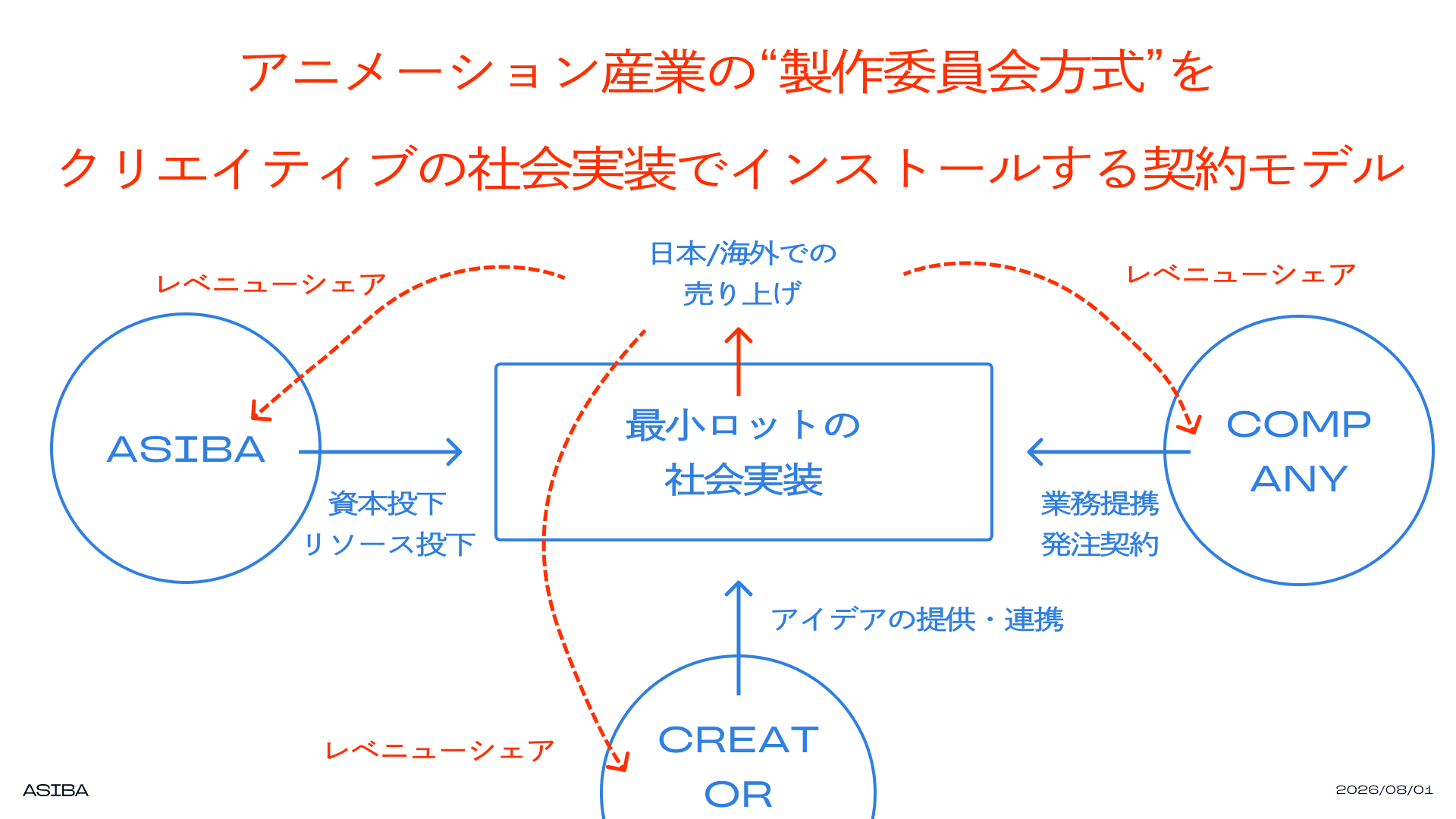
FIG.14
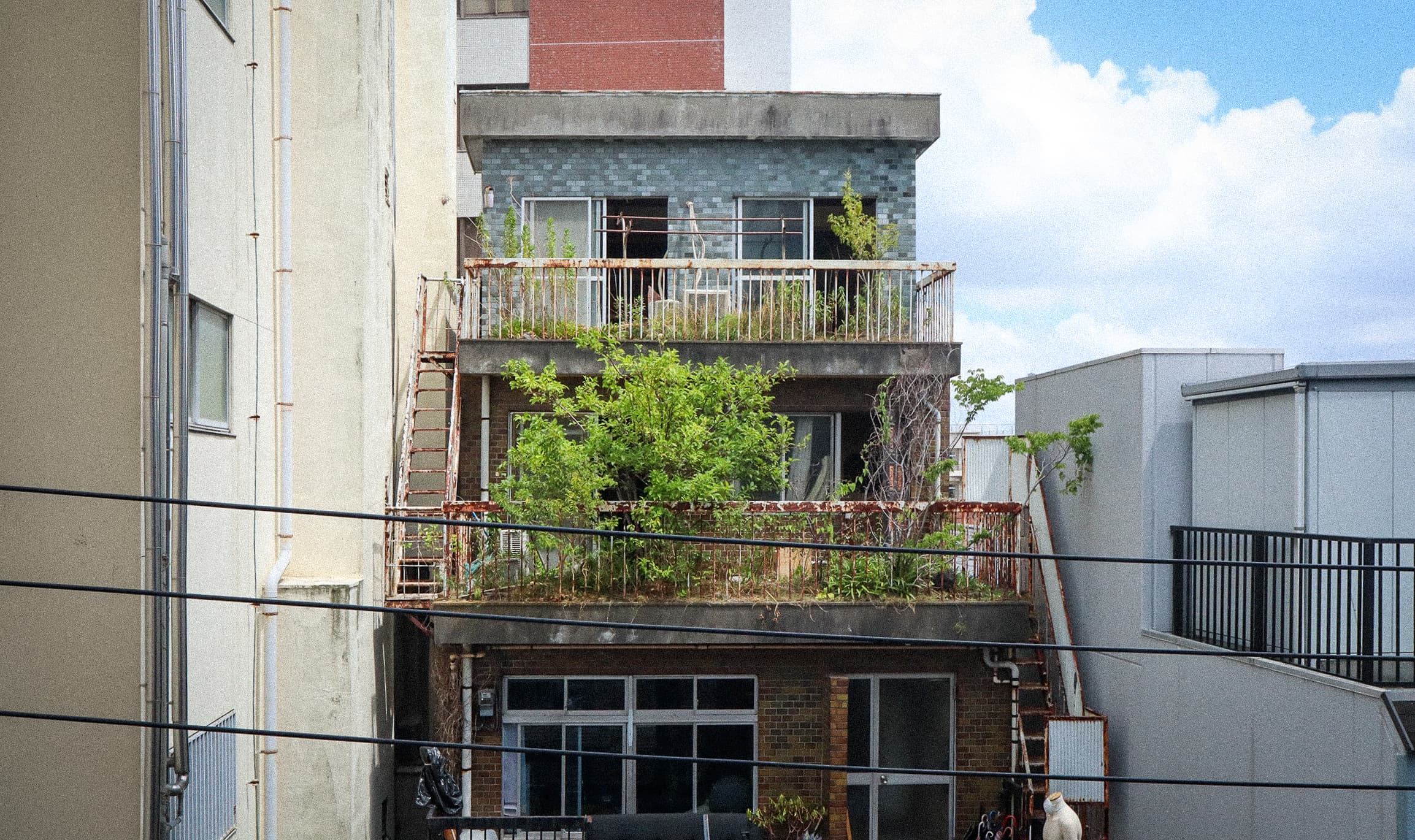
We’re also moving forward with housing support. To help alleviate the burden of rent—a major expense for young creators with limited capital—we’ve launched a program that repurposes older reinforced concrete buildings to provide affordable living spaces where creators can live and work. The first cohort of our residential program, YOHJOH, began in Kameido in April, and we plan to expand it to various locations throughout Tokyo in the future.
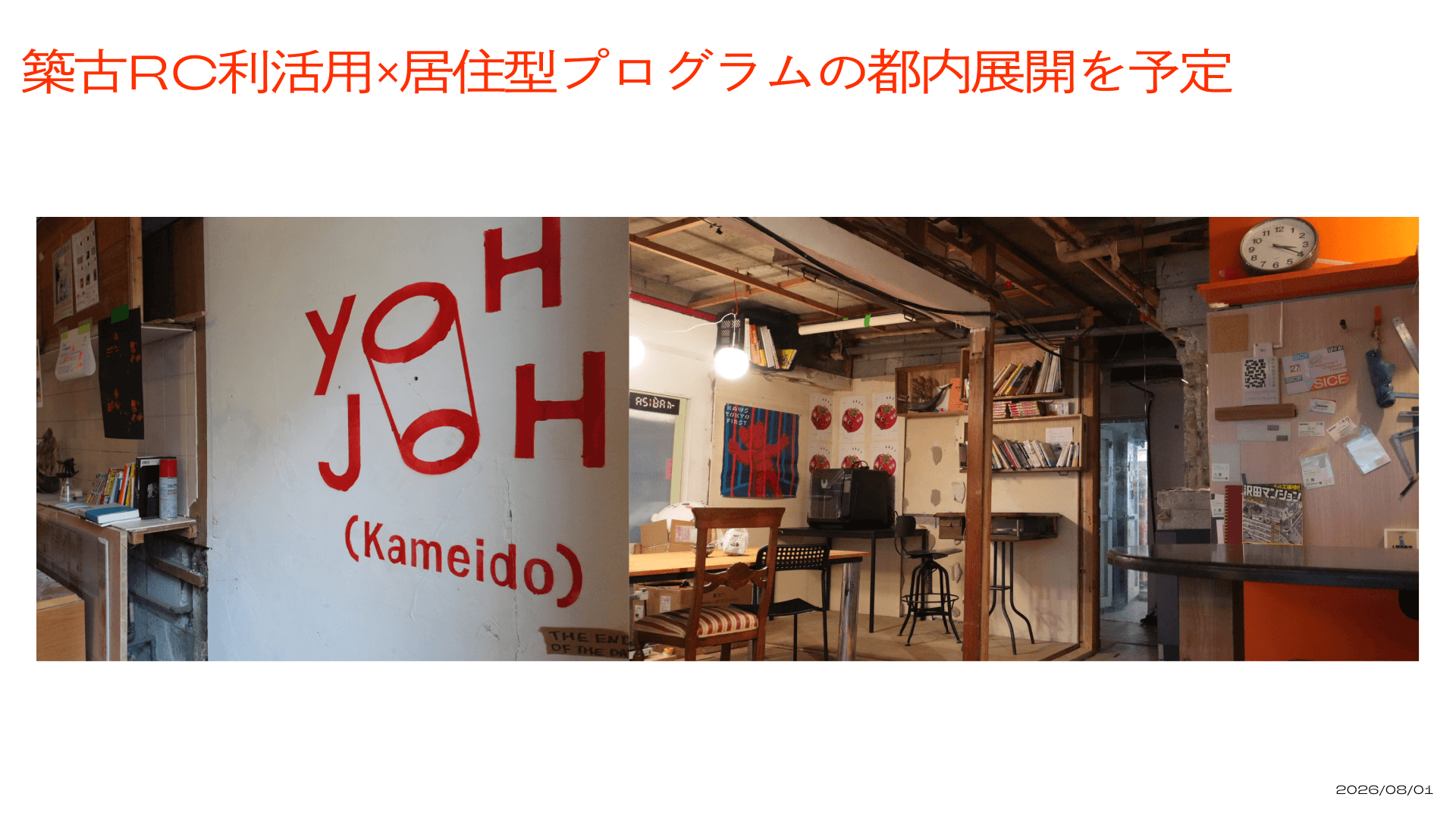
FIG.15
Furthermore, we are placing a strong emphasis on credit acknowledgments.The creative industry operates on a chain-reaction business model, where one project leads to the next. When creators seek new opportunities, we hope that comments like, “They did this kind of work at ASIBA,” or “Their projects at ASIBA were great,” will help them secure future commissions and grants, thereby gradually enhancing their social standing and credibility.
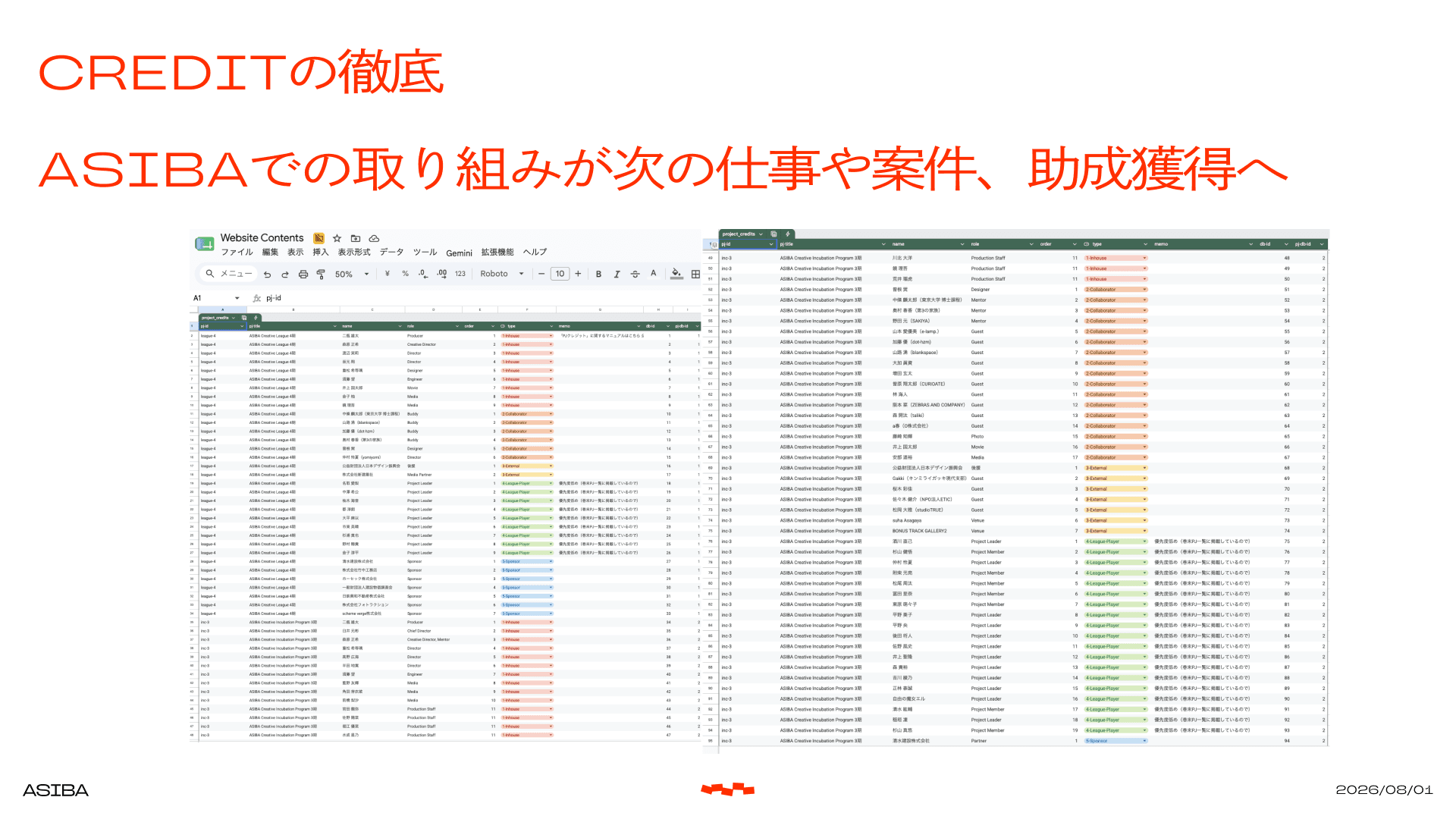
FIG.16
So far, I’ve discussed the three areas ASIBA intends to focus on moving forward.
At the core of it all is the desire not to live in a world where the dreams of the friends right beside us go unfulfilled—while still wanting to make our own dreams come true. You might ask if such a “selfish” goal is even possible, but our aim is to create an environment where we can tackle societal challenges together—by grappling with problems together, creating together, and sharing both the joys and the hardships. For ASIBA, this is our greatest aspiration.
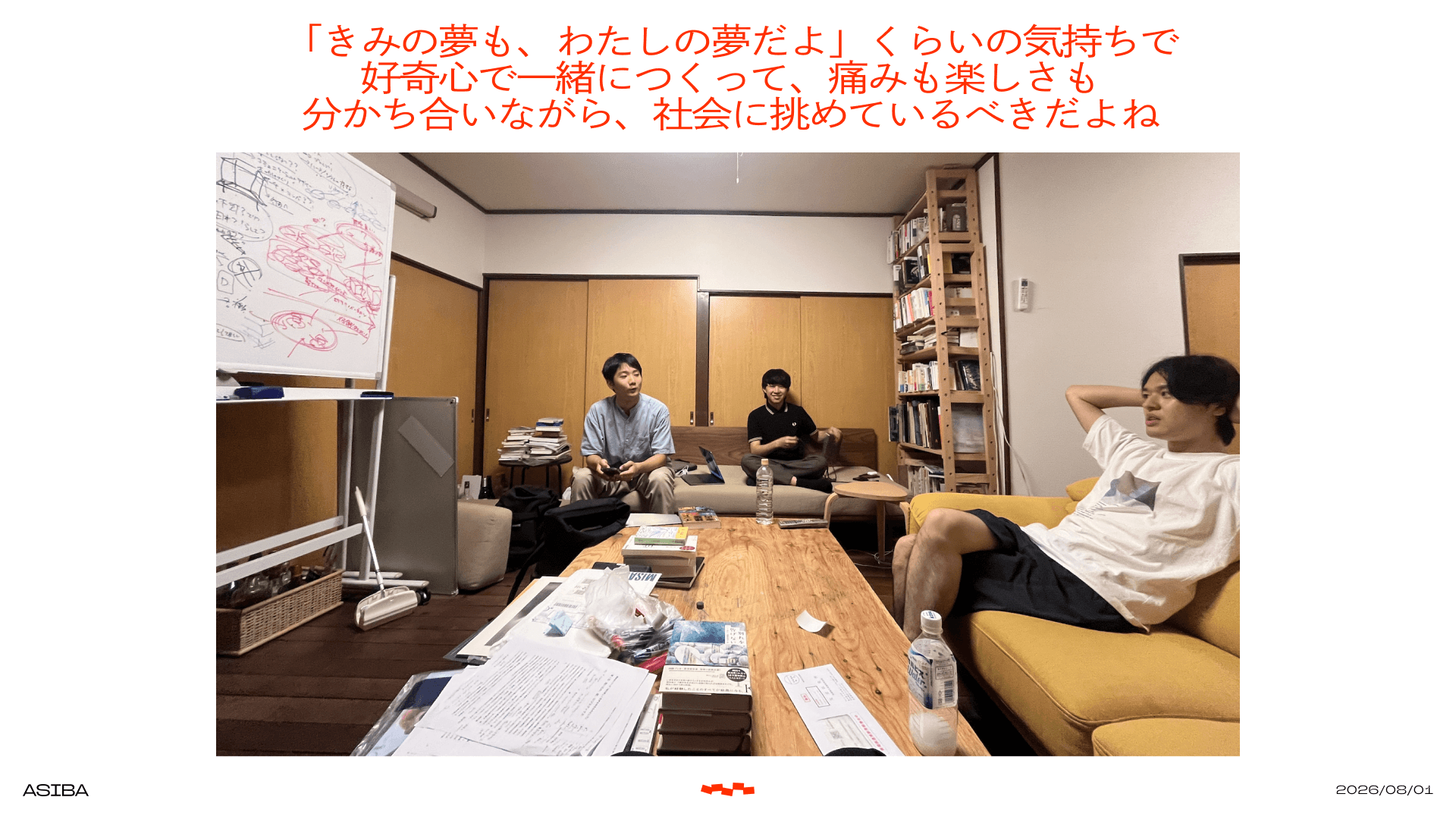
FIG.17
Whether you’ve been with us so far or will join us in the future, I hope you’ll continue your relationship with ASIBA for a long time to come. Thank you for your continued support!
FIG.18
Credit
ASIBA Creative League 4th
PROGRAM