ASIBA ATLAS 2026 Report #1
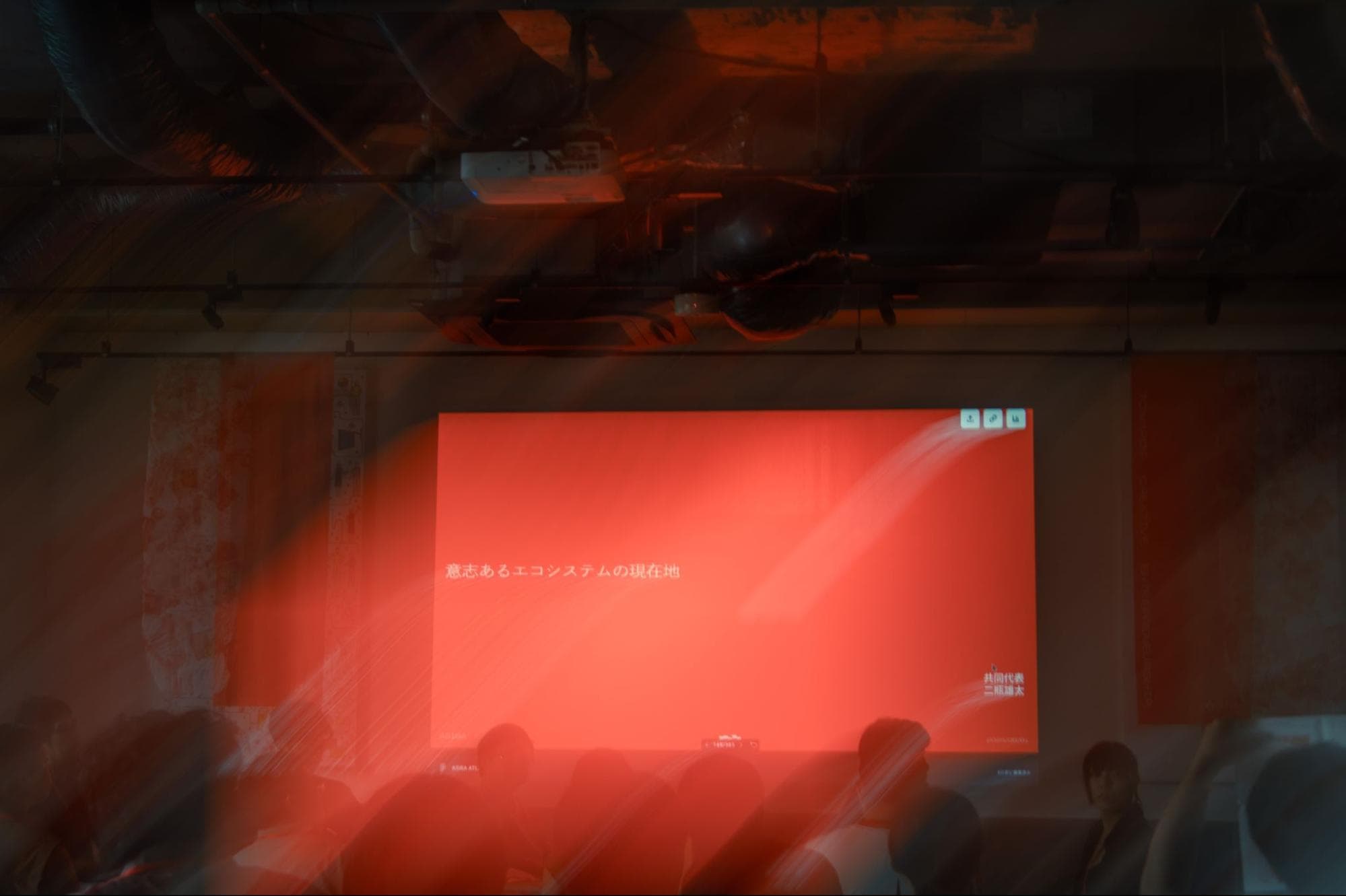
FIG.1
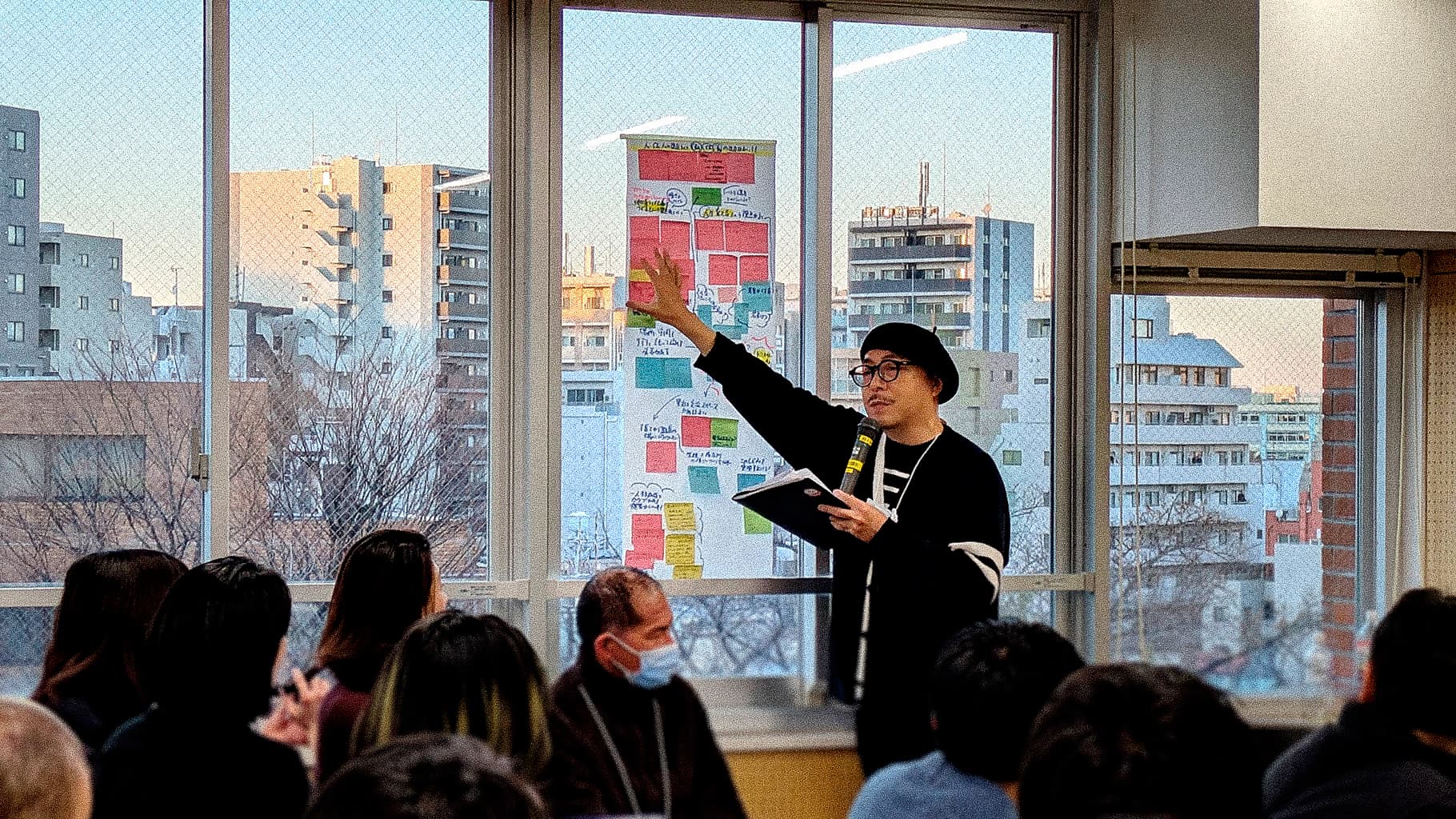
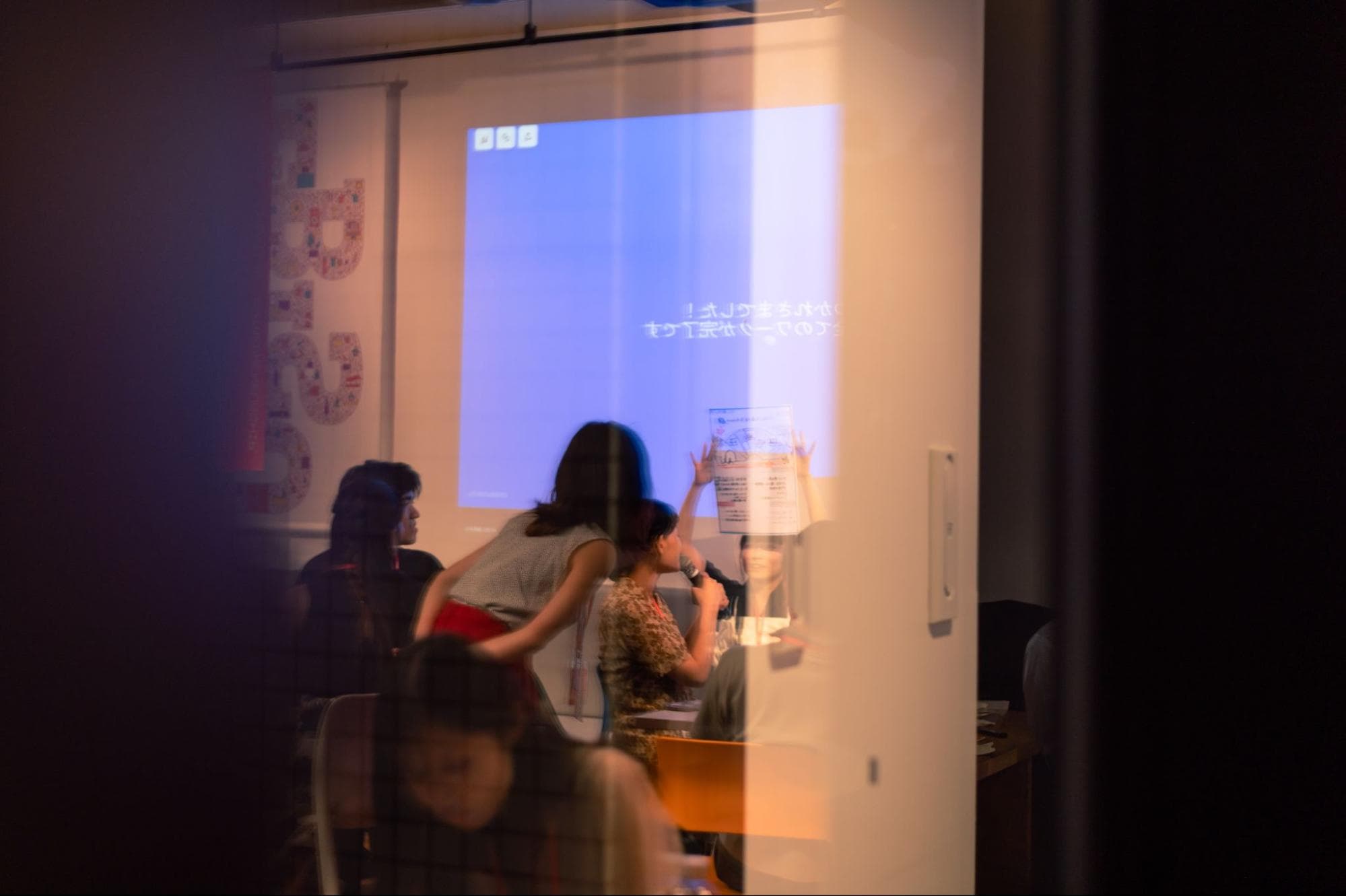
This article is based on the pitch delivered by Representative Director Nihei at “ASIBA ATLAS 2026,” held on August 1, 2026, and has been reorganized into written form. (Slides: Yuta Nihei; Text: Rigo Kagami)
Thank you for joining us today. I’d like to take this opportunity to share with you that ASIBA has rebranded and explain the process that led to this decision.
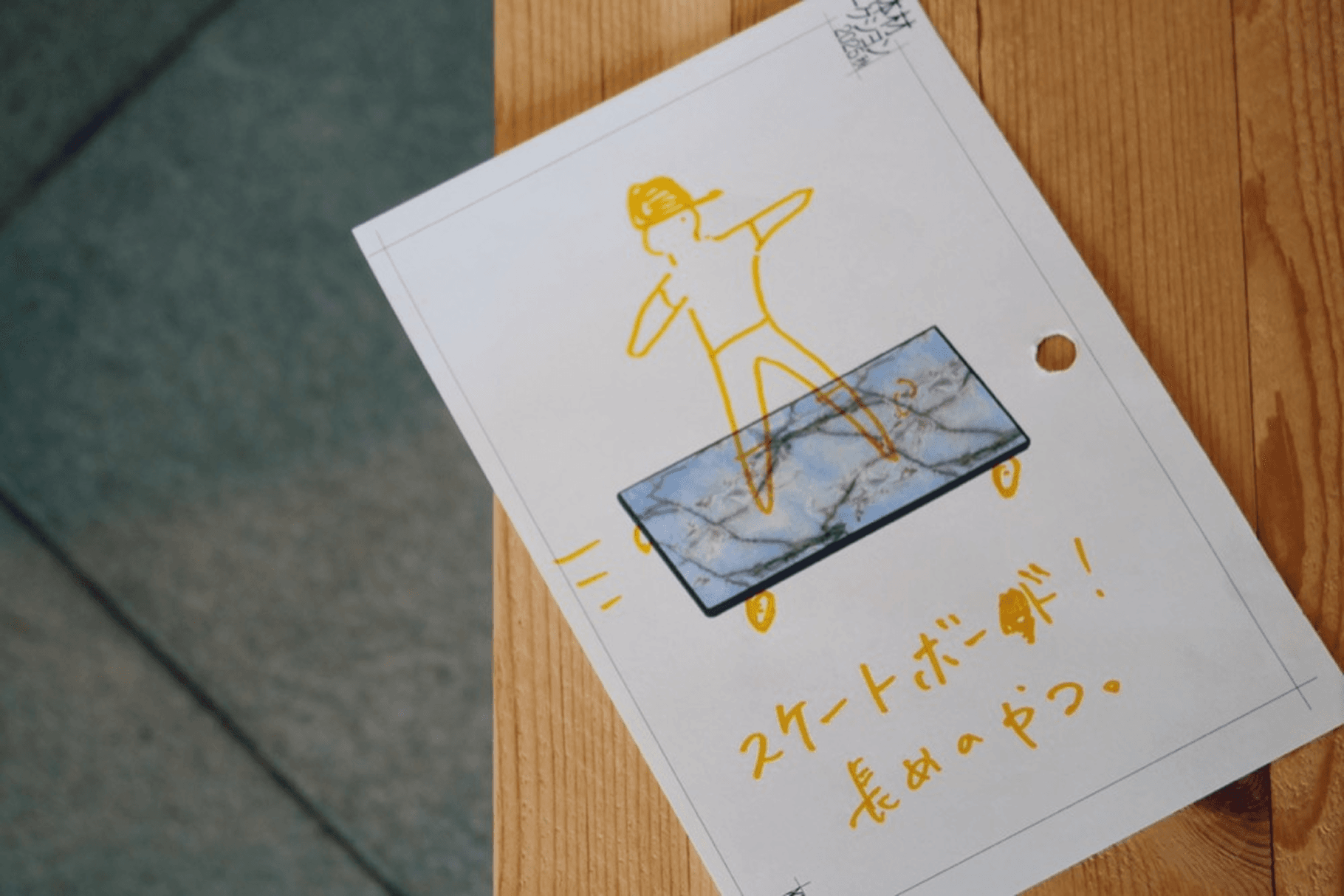
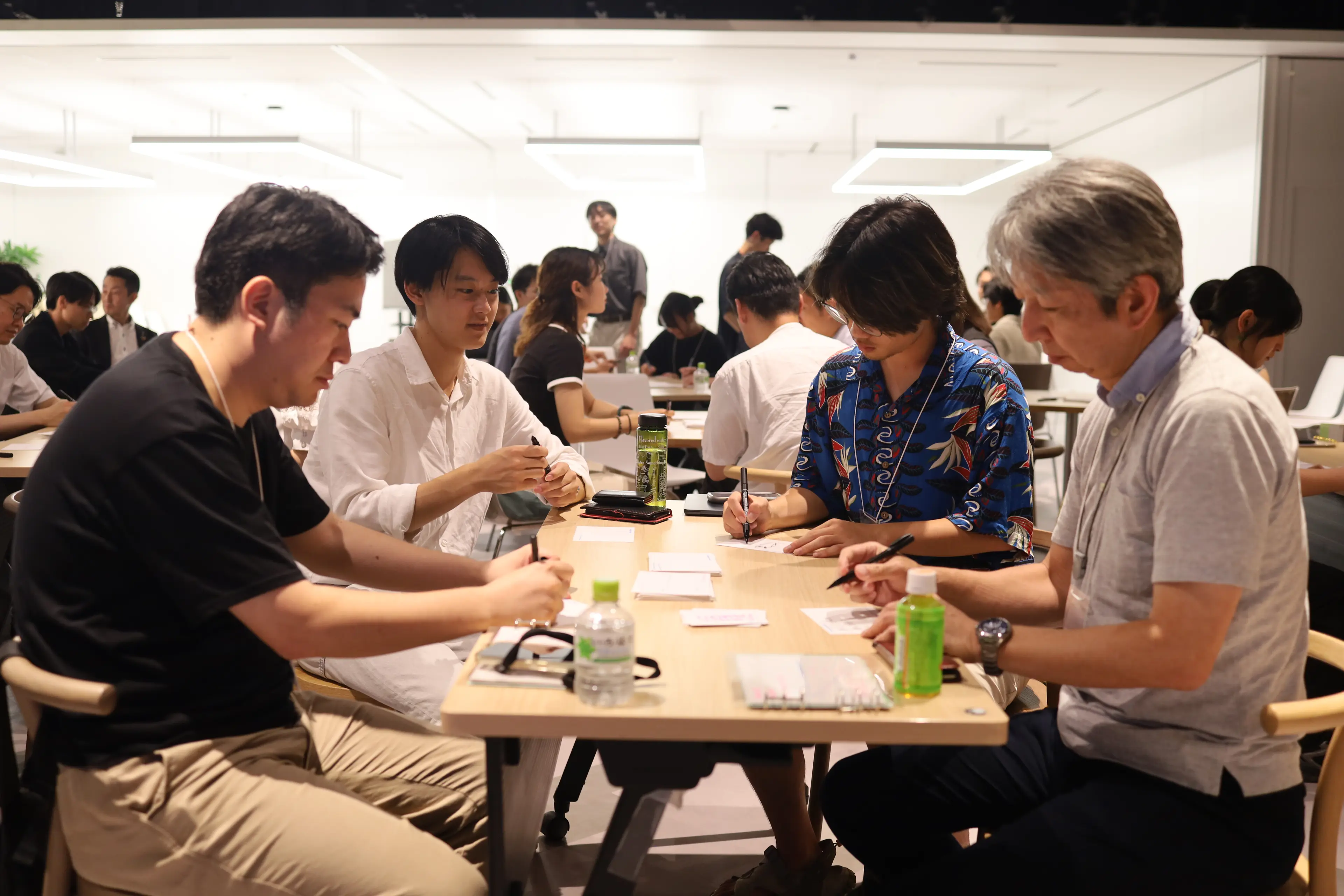
As you entered the venue, we handed out cards to everyone listing four “Agendas”: “Play and People,” “Public and Citizens,” “Technology and Artisans,” and “Provisional and Everyday Life.” A key aspect of this rebranding is that ASIBA has adopted these terms as the “Agendas” it will prioritize moving forward.
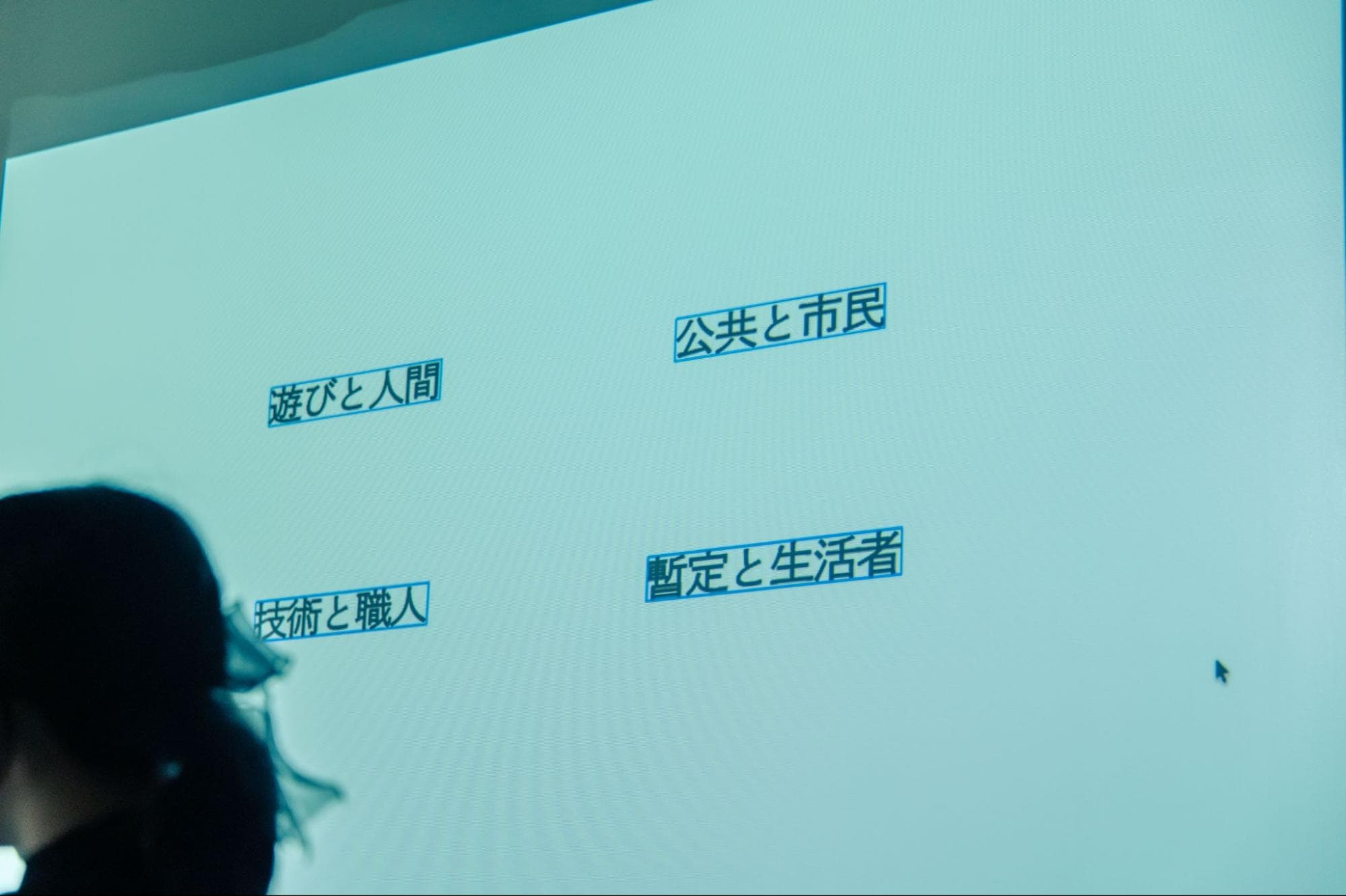
FIG.2
Why did we decide to establish these agendas in the first place? There are several reasons.
One reason is that as the number of projects has increased, it has become difficult to see the organization’s cohesion. Another underlying factor is the realization that ASIBA itself should demonstrate its own independent will and stance.
Previously, we believed that ASIBA’s value lay in serving as a neutral, transparent platform where the participants themselves held the agency. However, as our activities continued, we came to realize that it is meaningful for us to possess our own agency and to point the way forward—to serve as a guiding North Star.
Furthermore, as multiple projects intersect, we strongly feel the need to create new contexts and perspectives. While each individual project is, of course, compelling, we believe ASIBA’s role lies in curating their respective positions and meanings.
Finally, rather than simply continuing with activities that are merely interesting, we believe that beginning our exploration with more profound questions is what defines a project that is truly in the spirit of ASIBA.
I realize this explanation alone may be difficult to grasp, so please allow me to first share the story of how ASIBA arrived at its current position. Through this, I hope you will gain at least some understanding of the background behind why we have arrived at this “agenda” at this moment.
As you know, ASIBA began as an incubation program.
Although we call it an “incubation” program, it actually started simply by gathering projects and like-minded people and rallying them with the call, “Let’s do this together!”
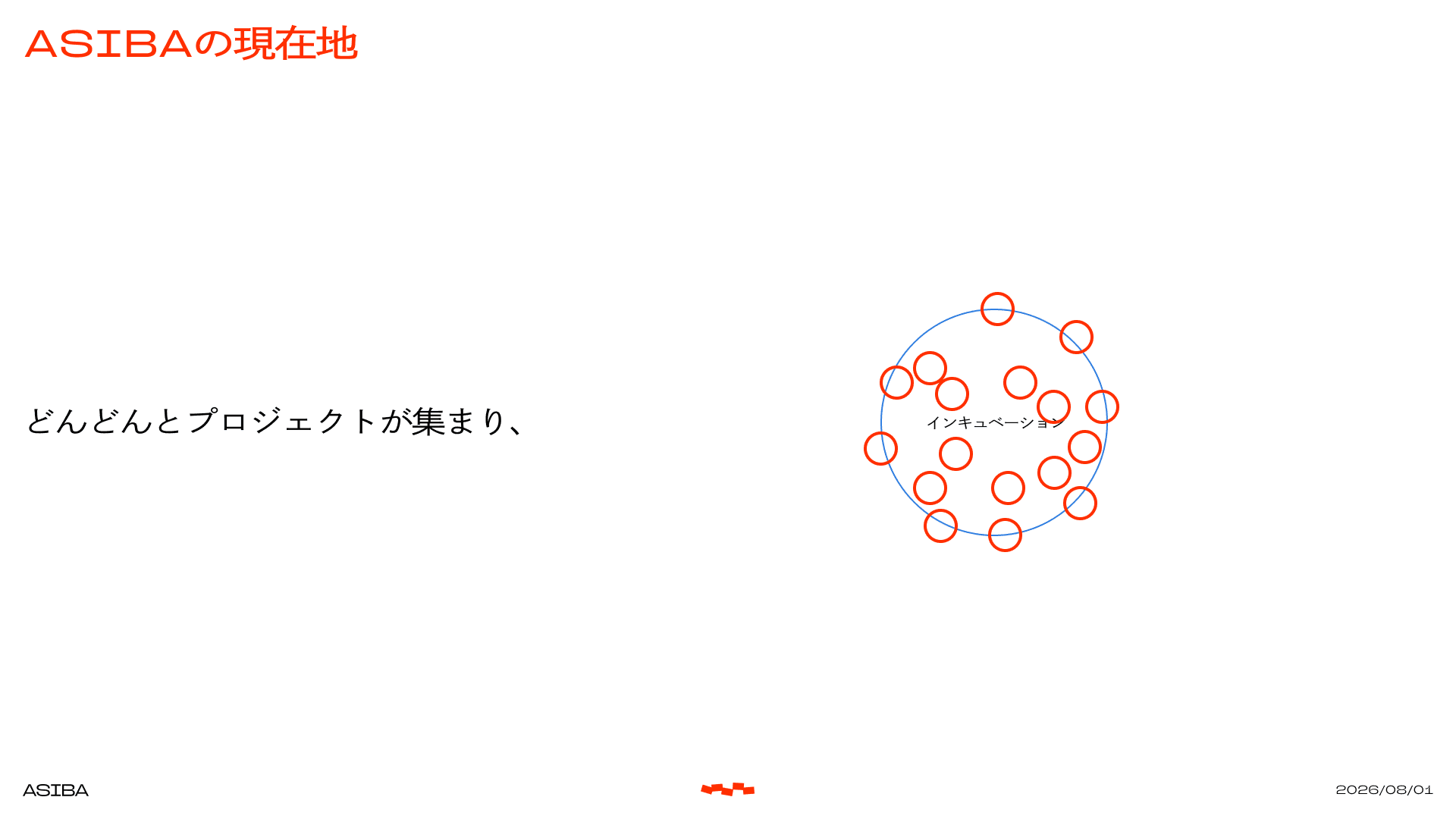
FIG.3
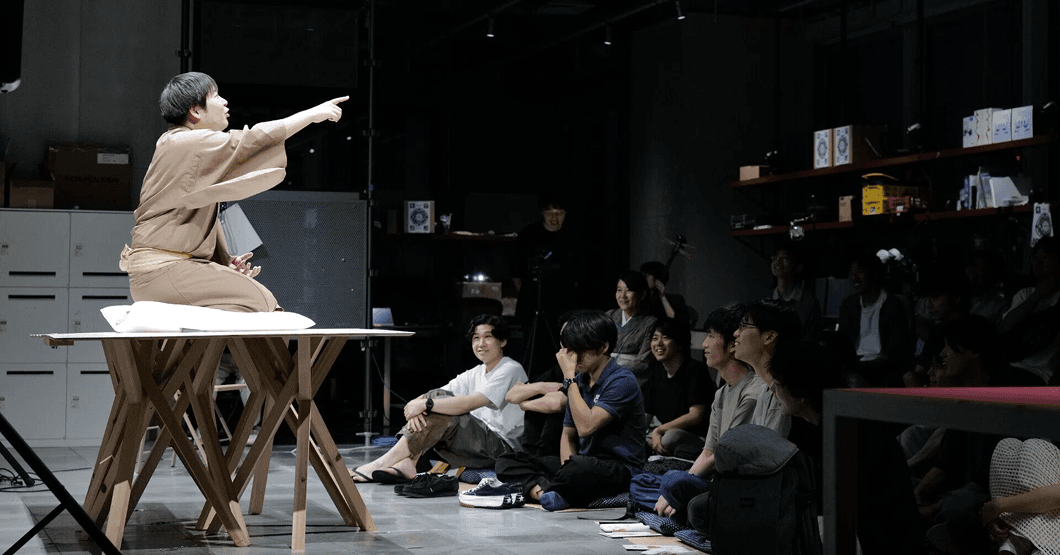
FIG.4
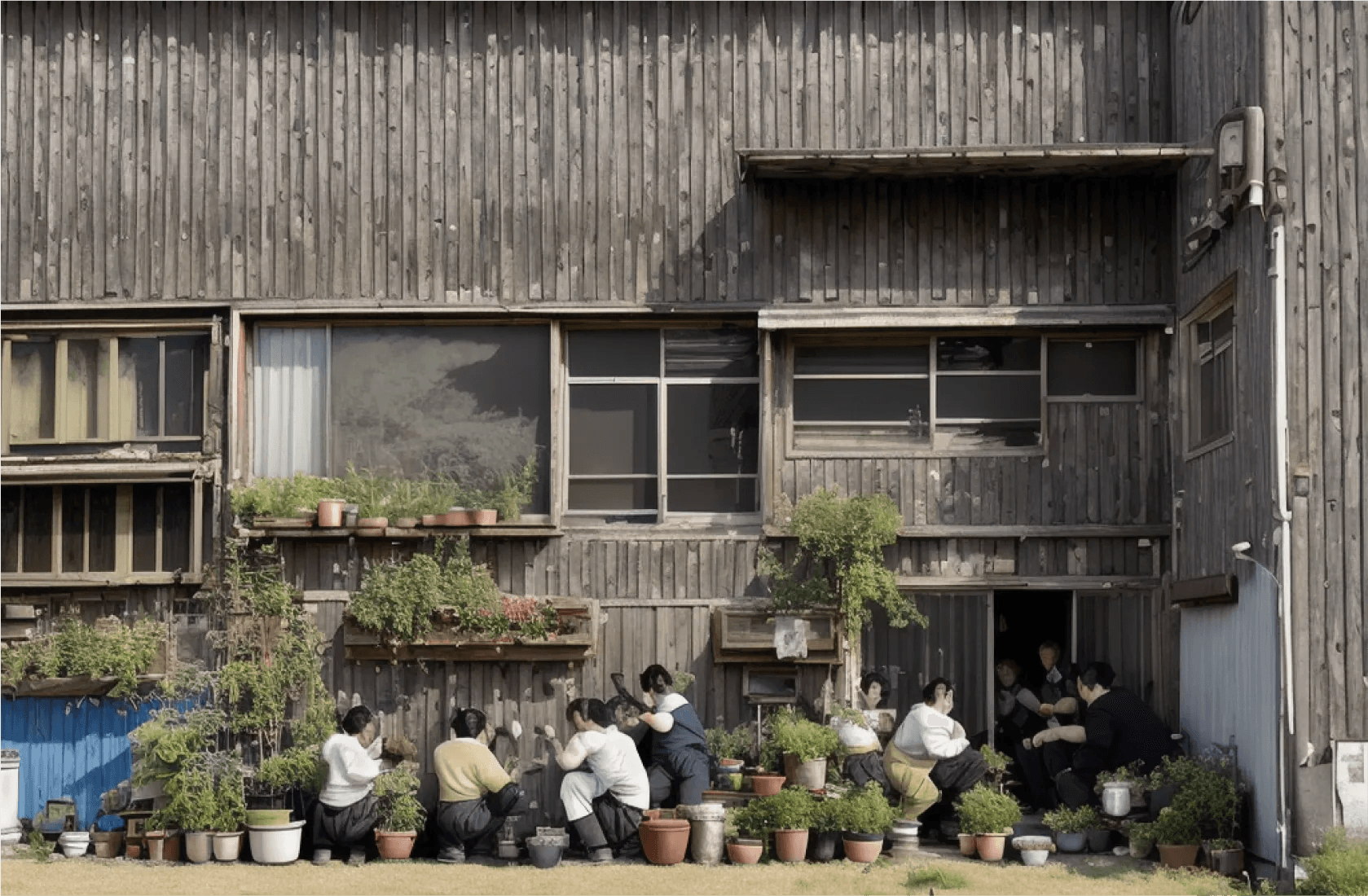
FIG.5
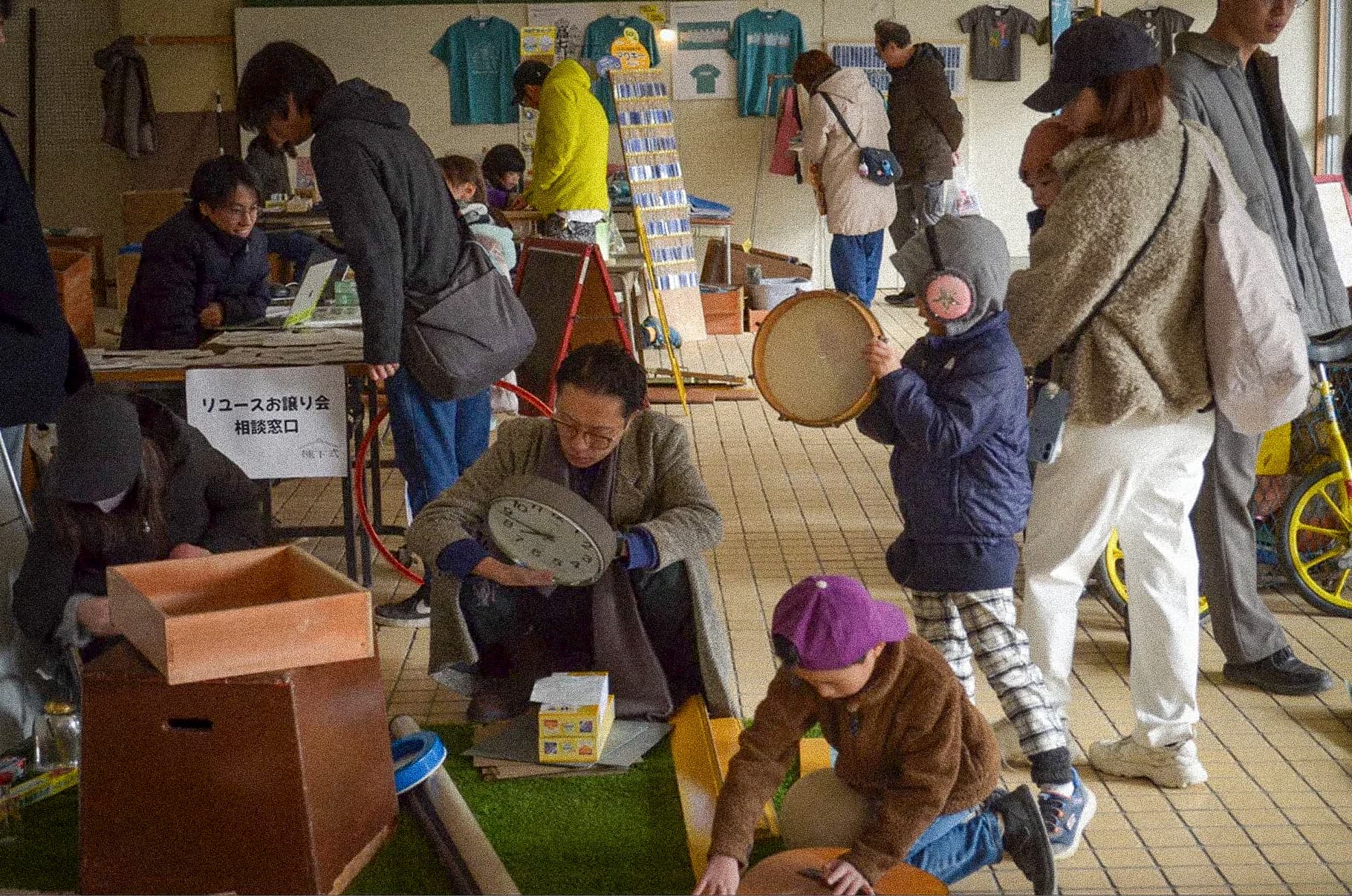
As we moved into the second and third cohorts, the number of projects increased, and the scale of the projects themselves gradually grew. More participants have advanced to phases such as “We’ve released a product,” “We’ve launched a project in collaboration with a local government,” or “We’ve spun off to start our own business.”
As the number of projects grows, new horizons are coming into view. New opportunities are emerging from collaborations between multiple projects.
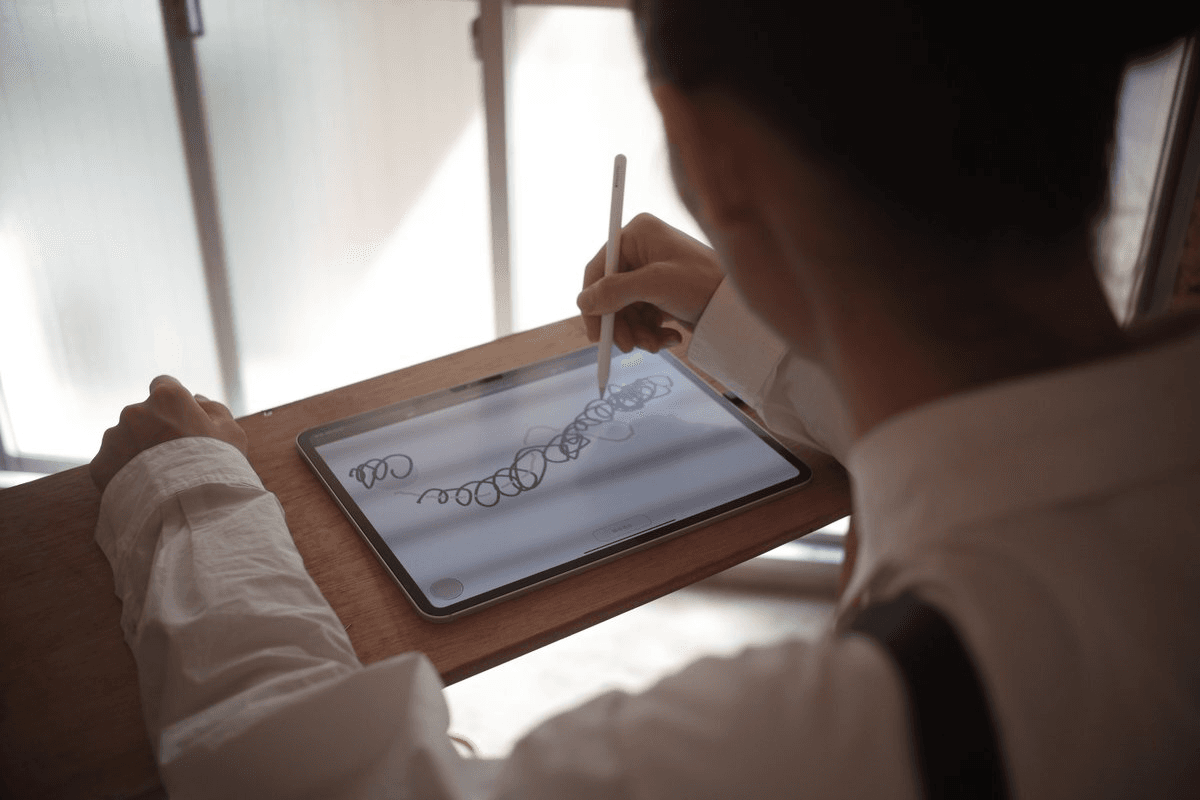
FIG.6
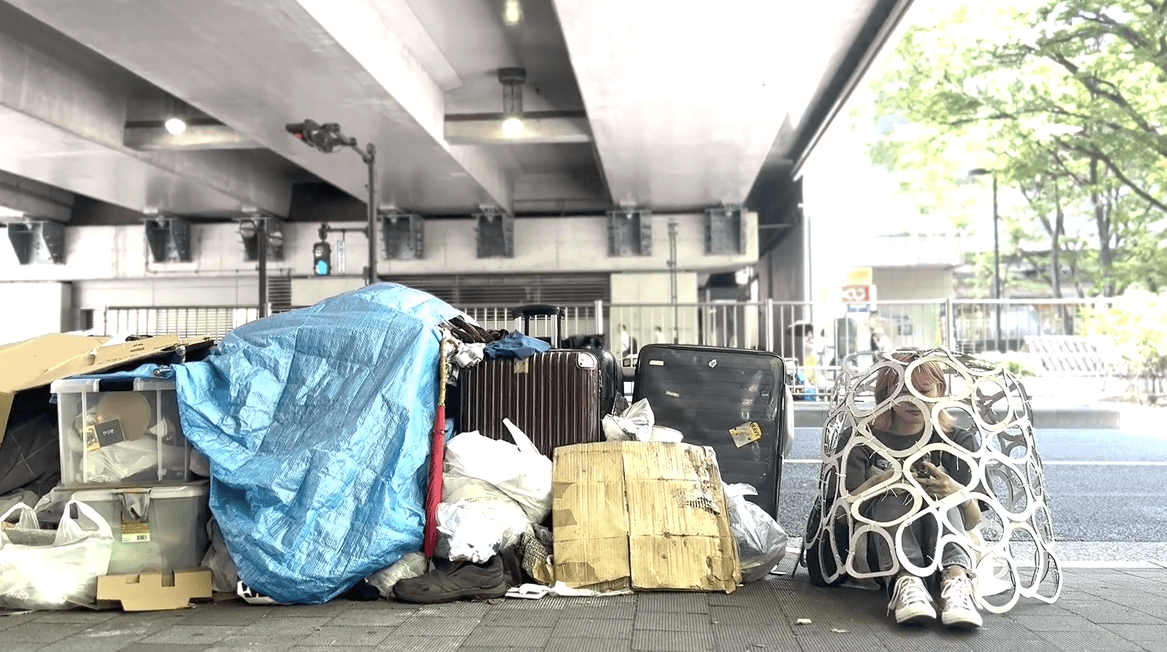
FIG.7

FIG.8

FIG.9
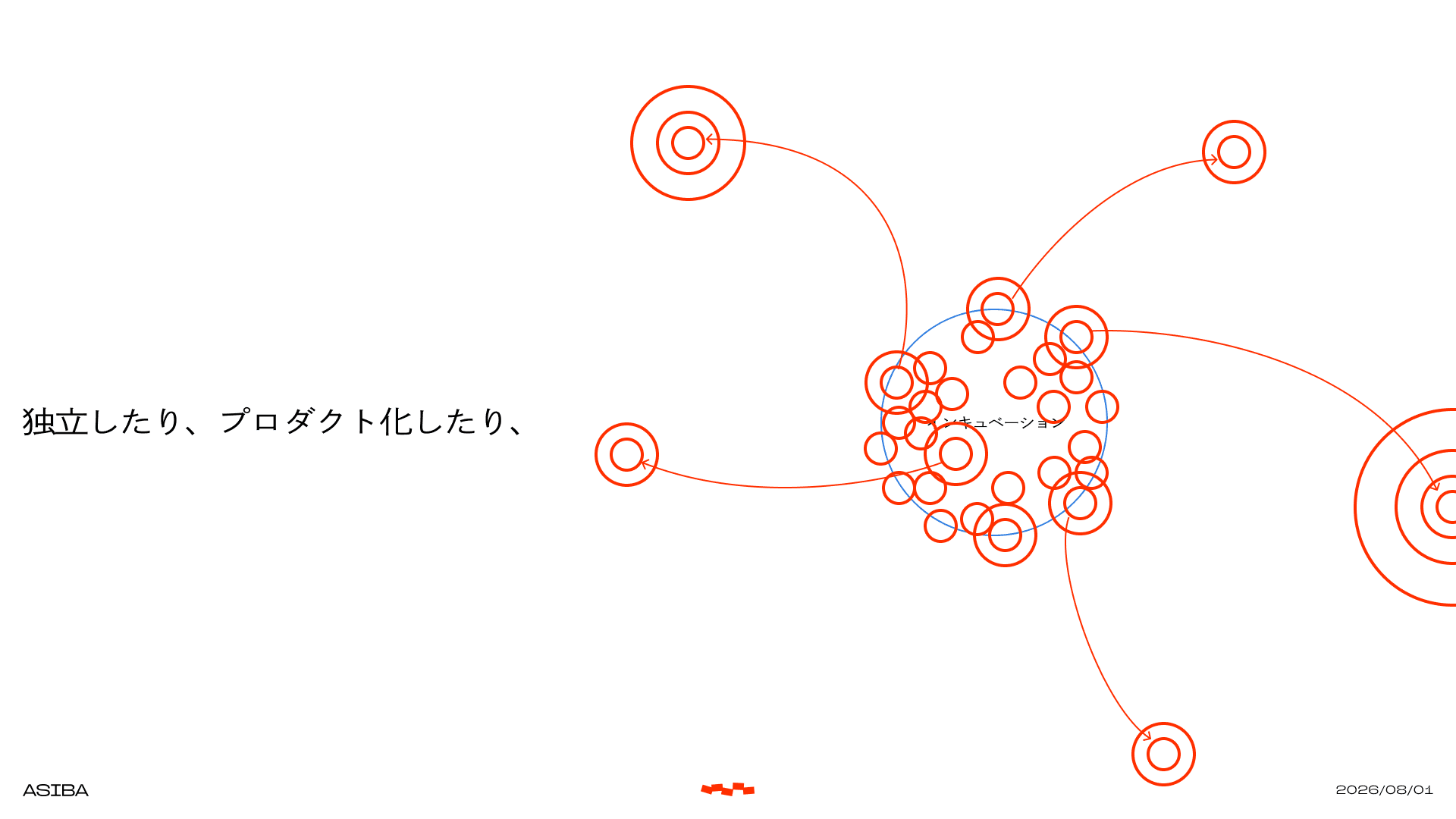
FIG.10
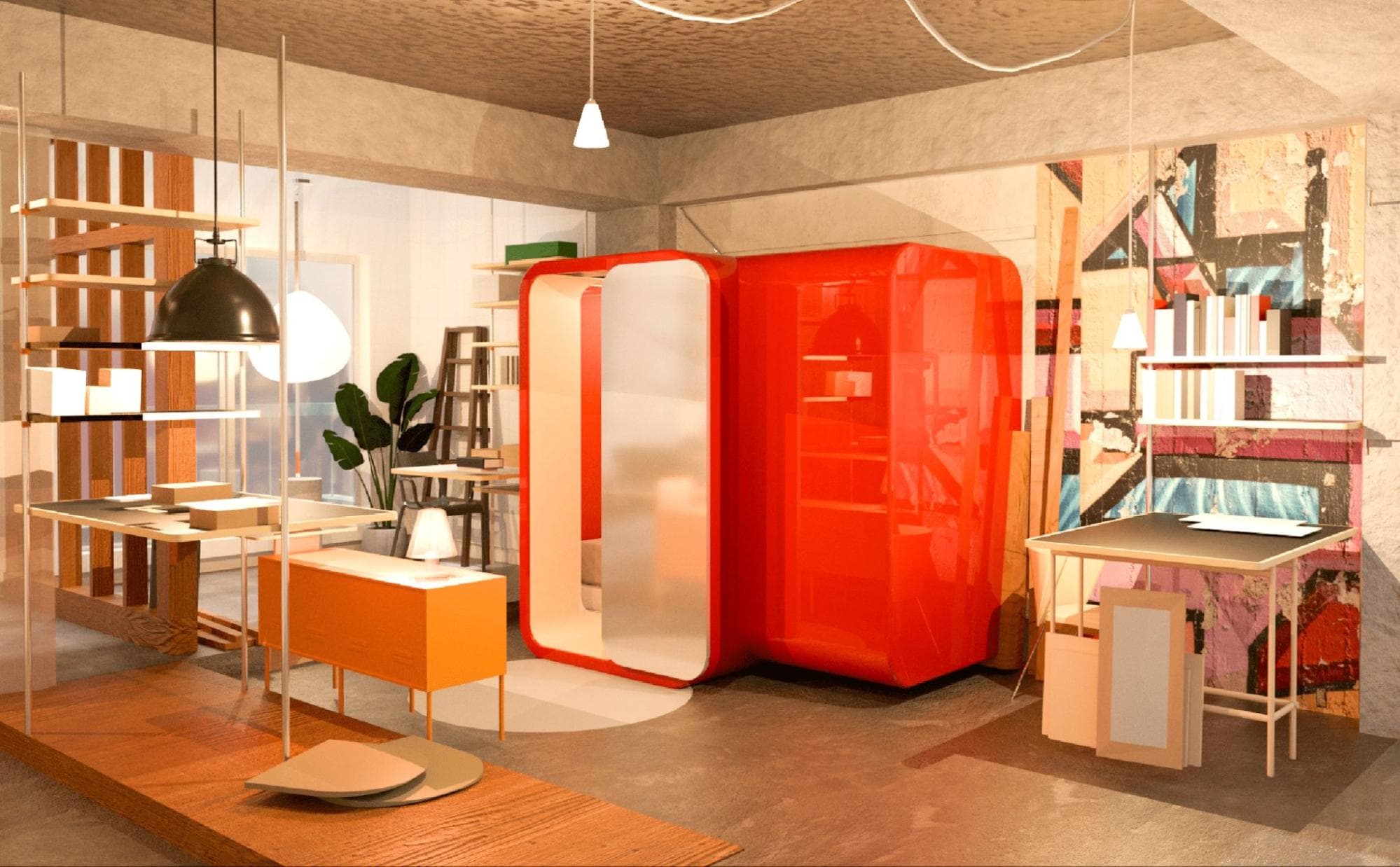
FIG.11

FIG.12
At the same time, we gradually began to encounter barriers that could not be overcome through incubation alone. To supplement their creative capabilities, ASIBA itself has become a production entity, establishing a system to support the participants’ growth through production, media outreach, and collaboration with corporate partners.
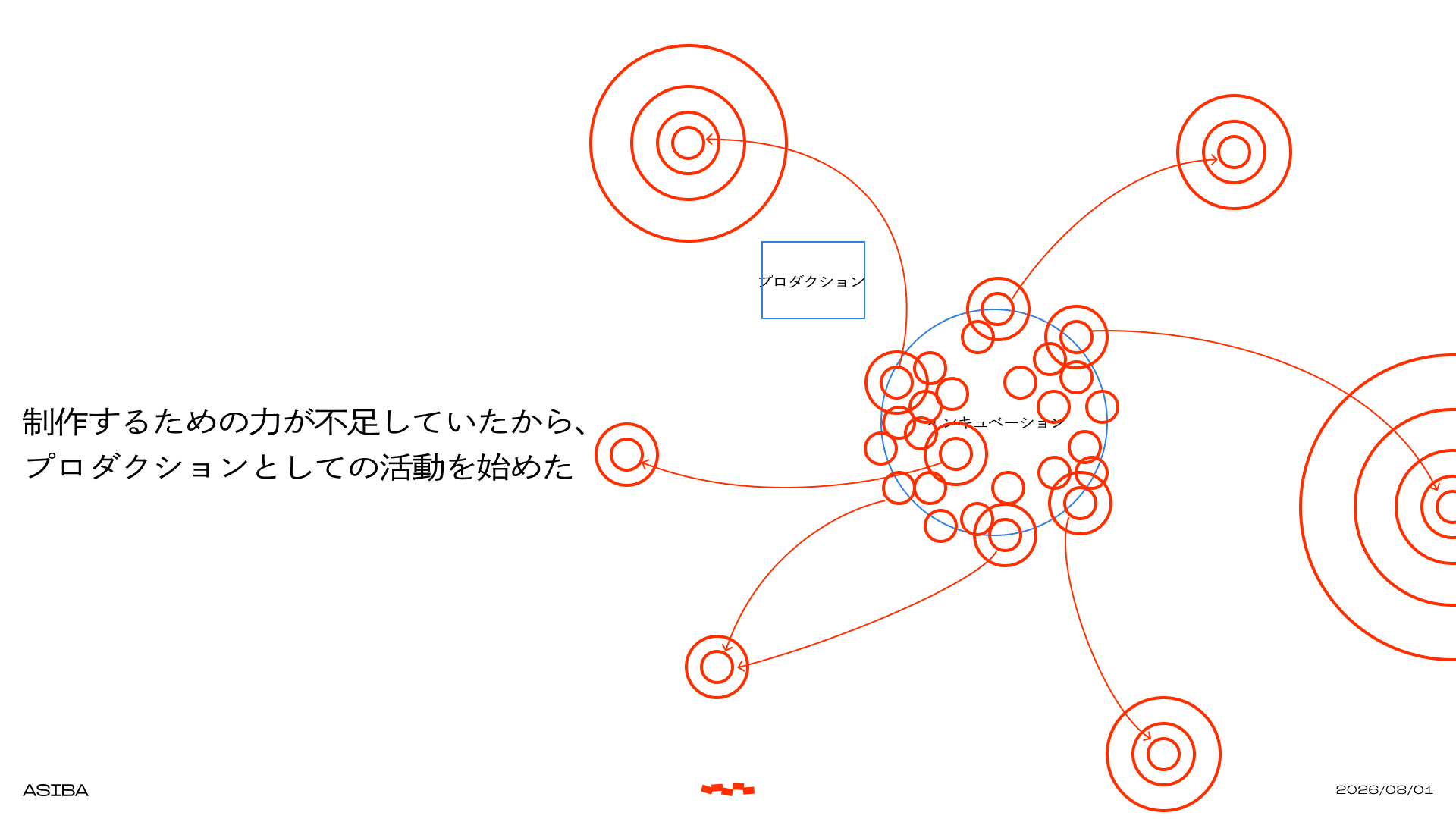
FIG.13
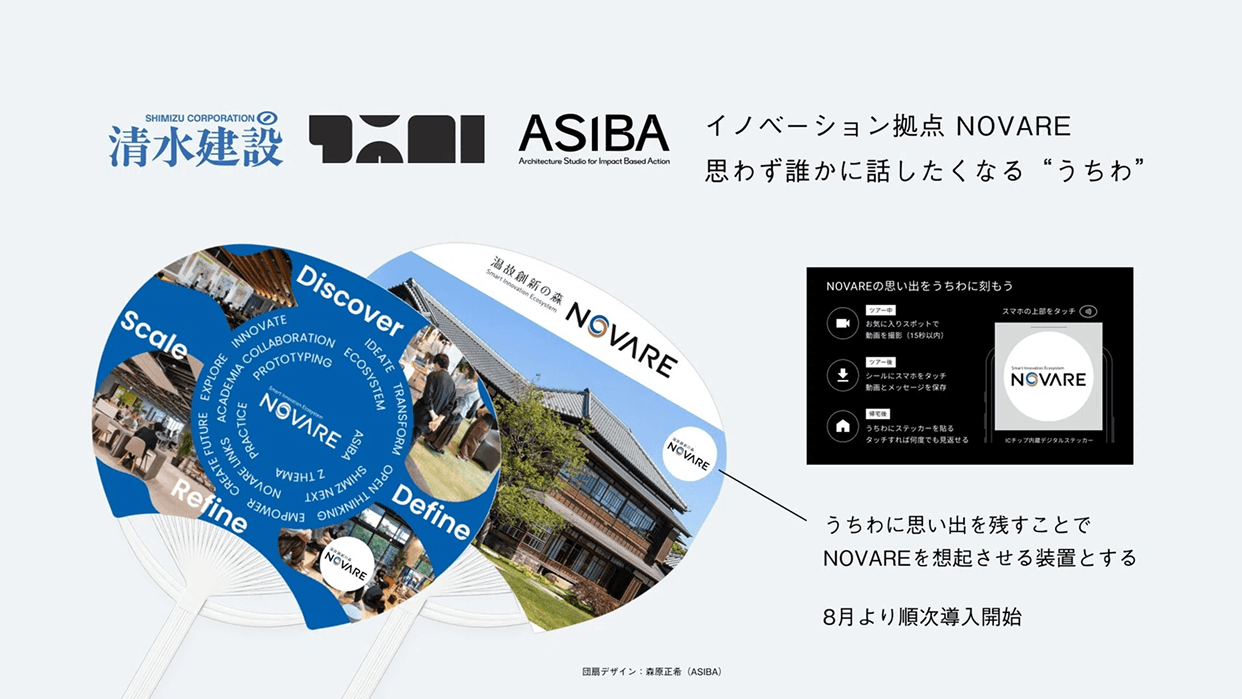
FIG.14
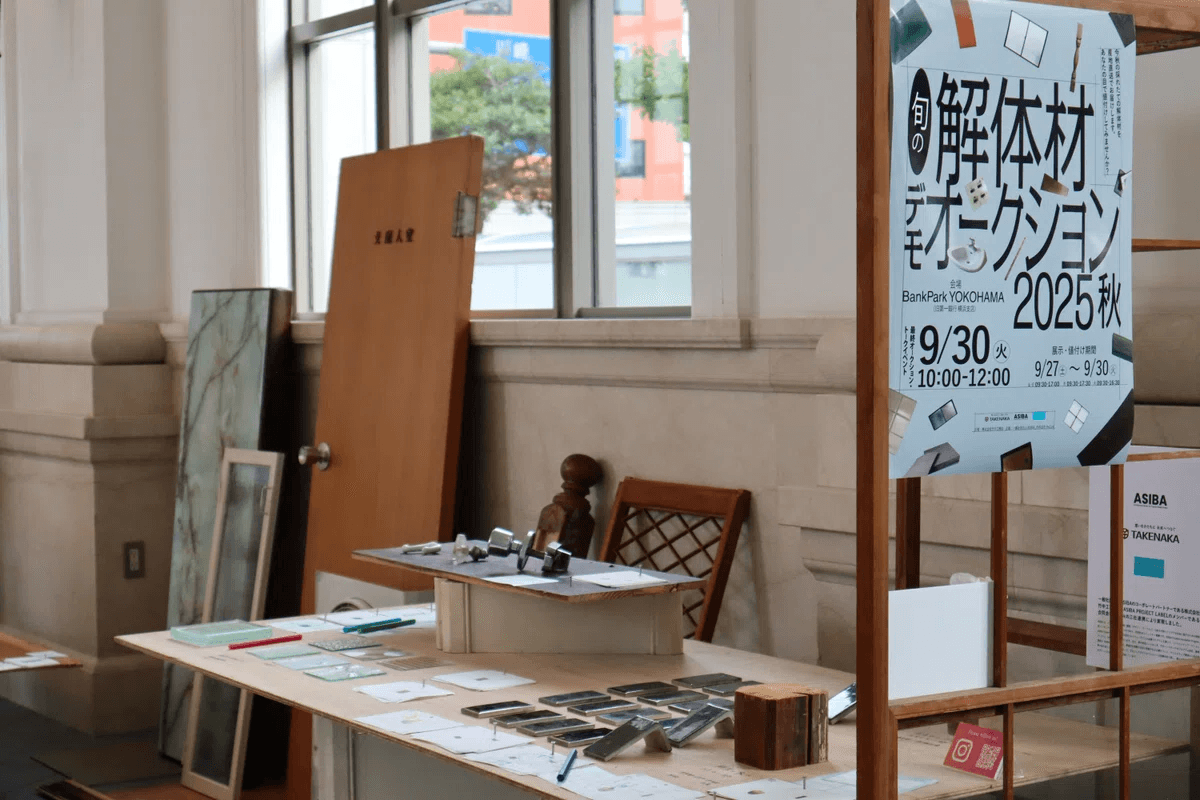
FIG.15
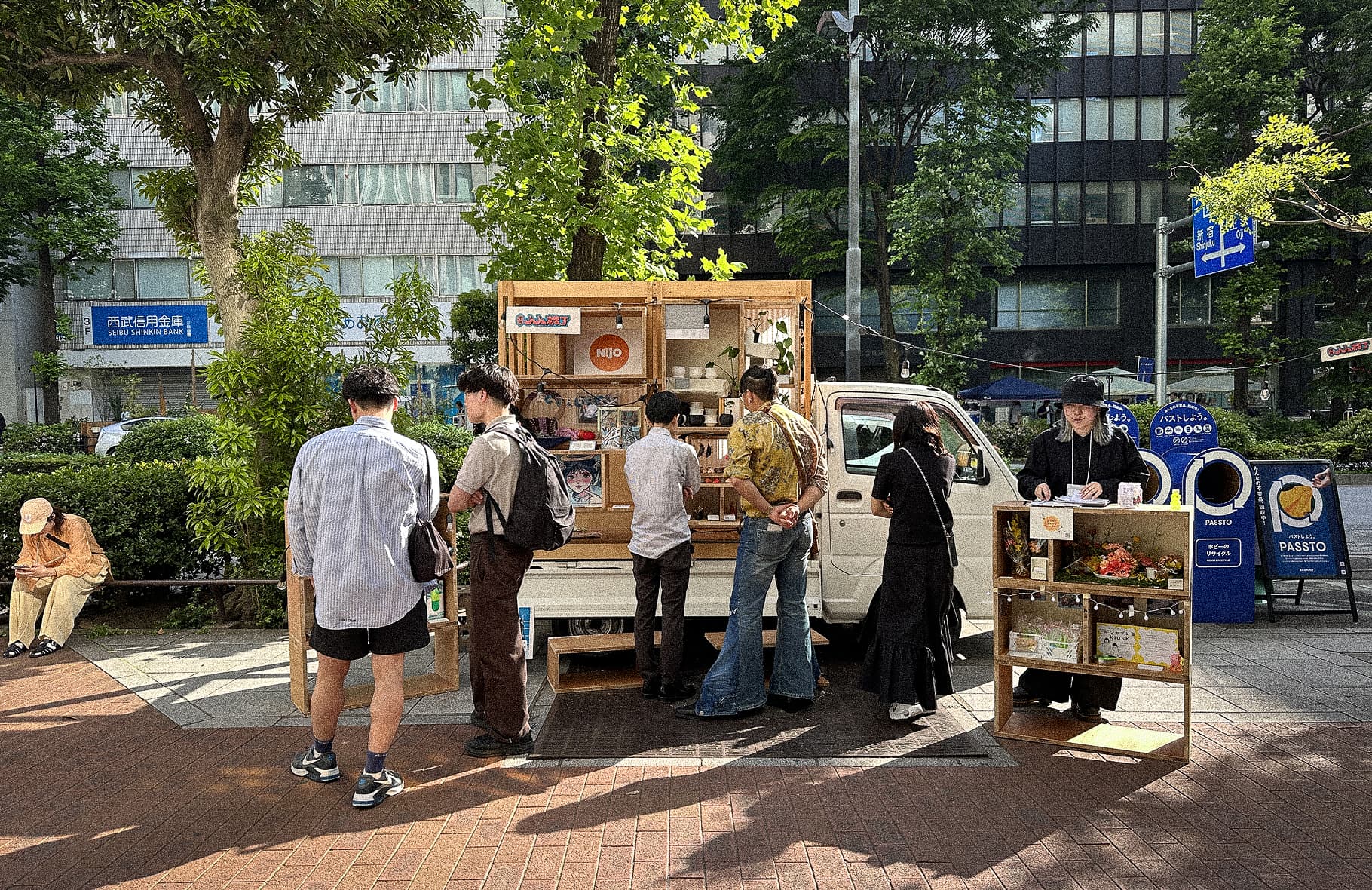
Furthermore, we have come to recognize the need not only to initiate creative endeavors from an individual perspective but also to connect them to a broader public perspective. By launching joint projects with government agencies and local municipalities and expanding our initiatives to the urban scale, we have begun to create projects with greater public significance.
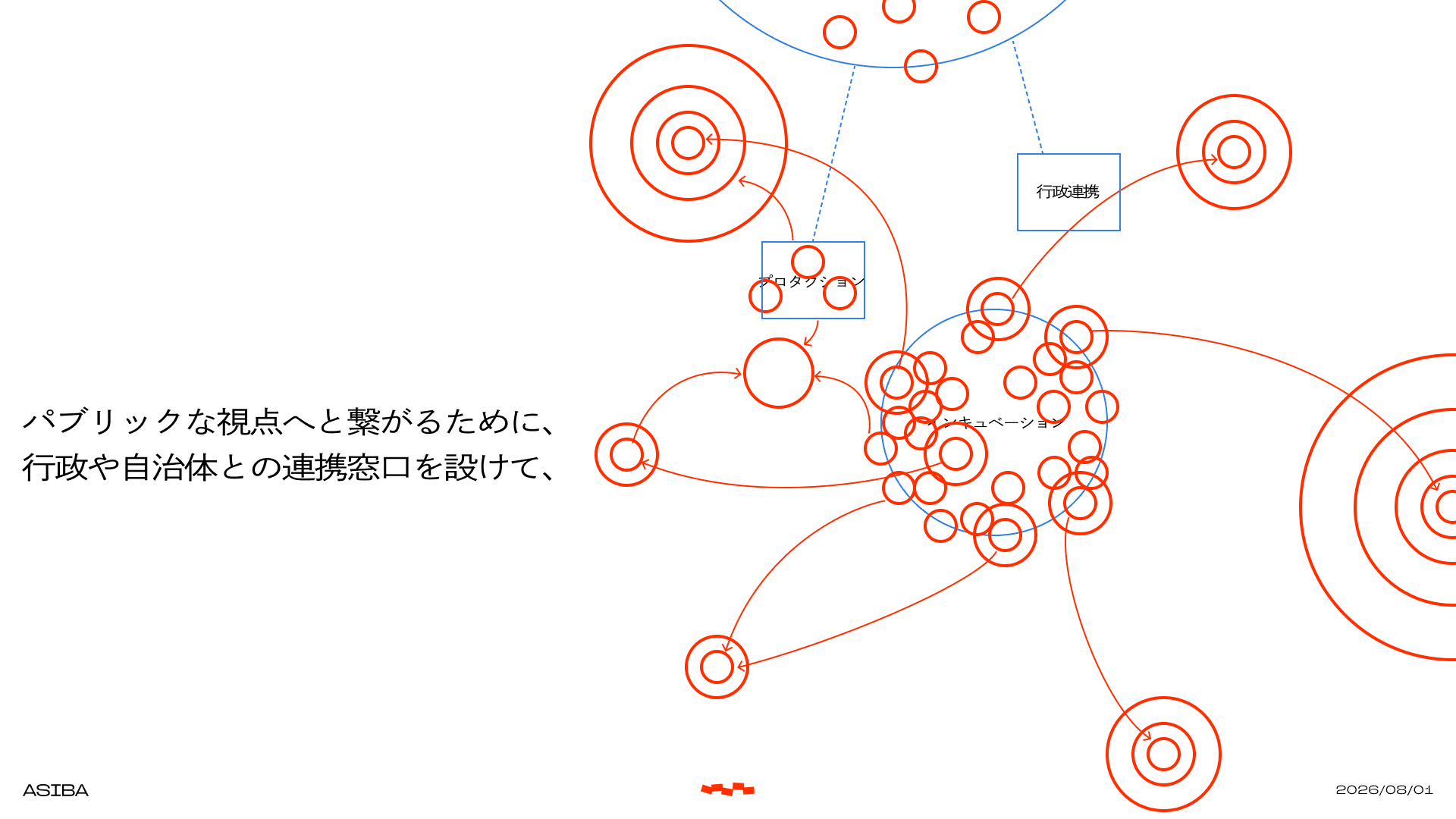
FIG.16
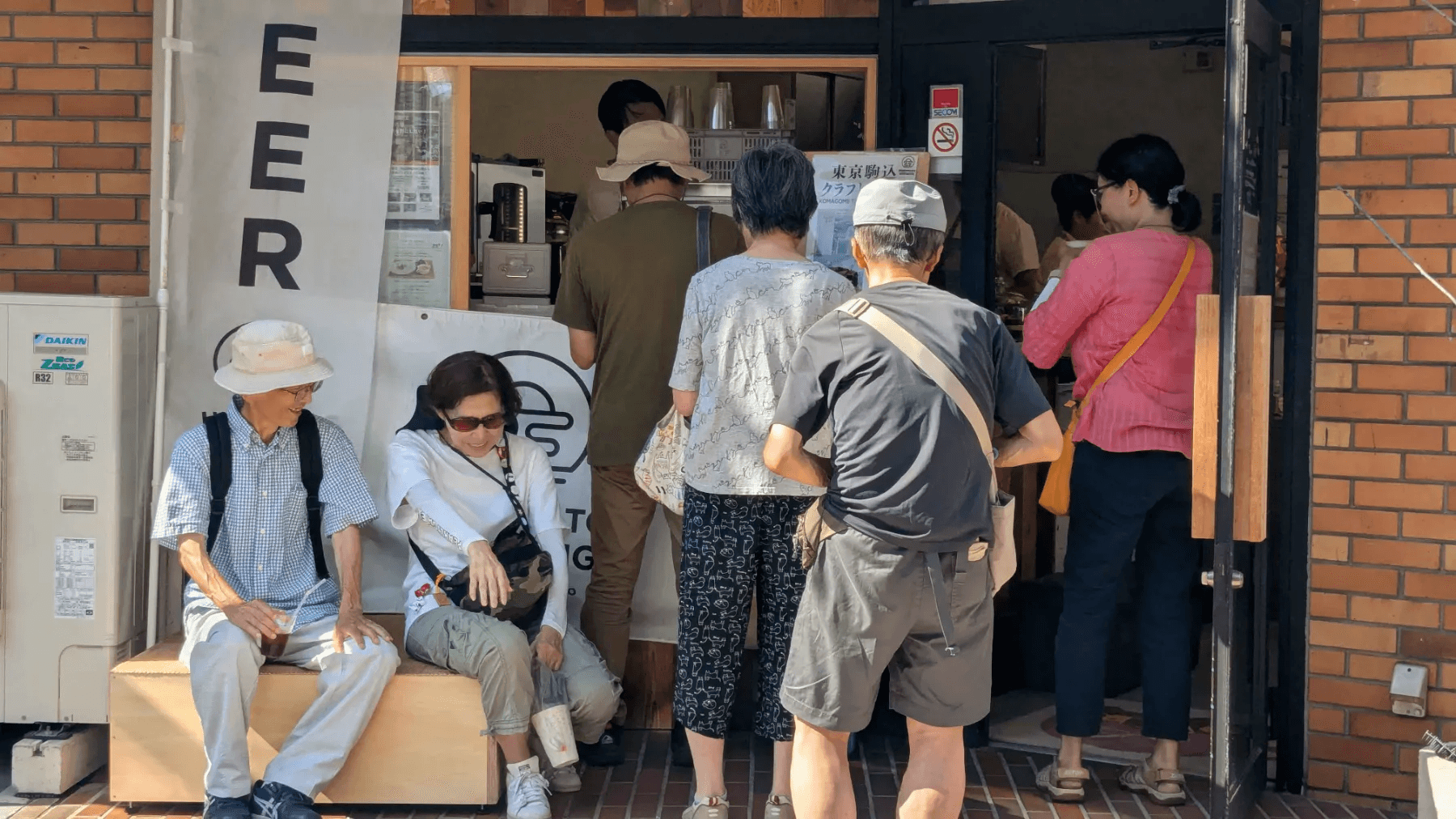
FIG.17
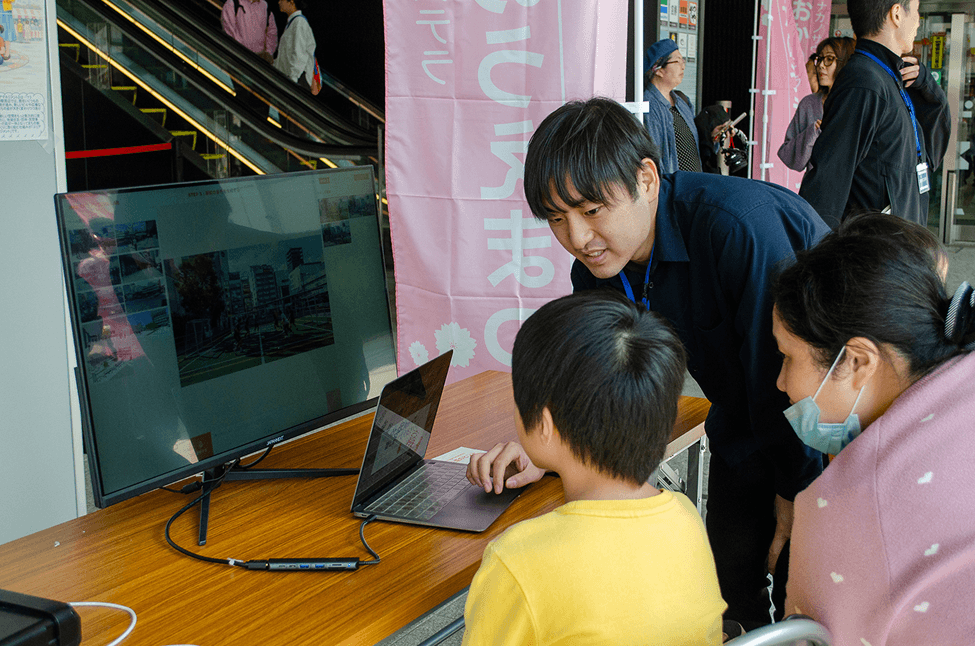
FIG.18
Precisely because these projects are highly innovative, it can be difficult to secure funding through existing financial models. We are experimentally implementing a new funding scheme in which designers, production companies, and clients jointly own intellectual property and share revenue.
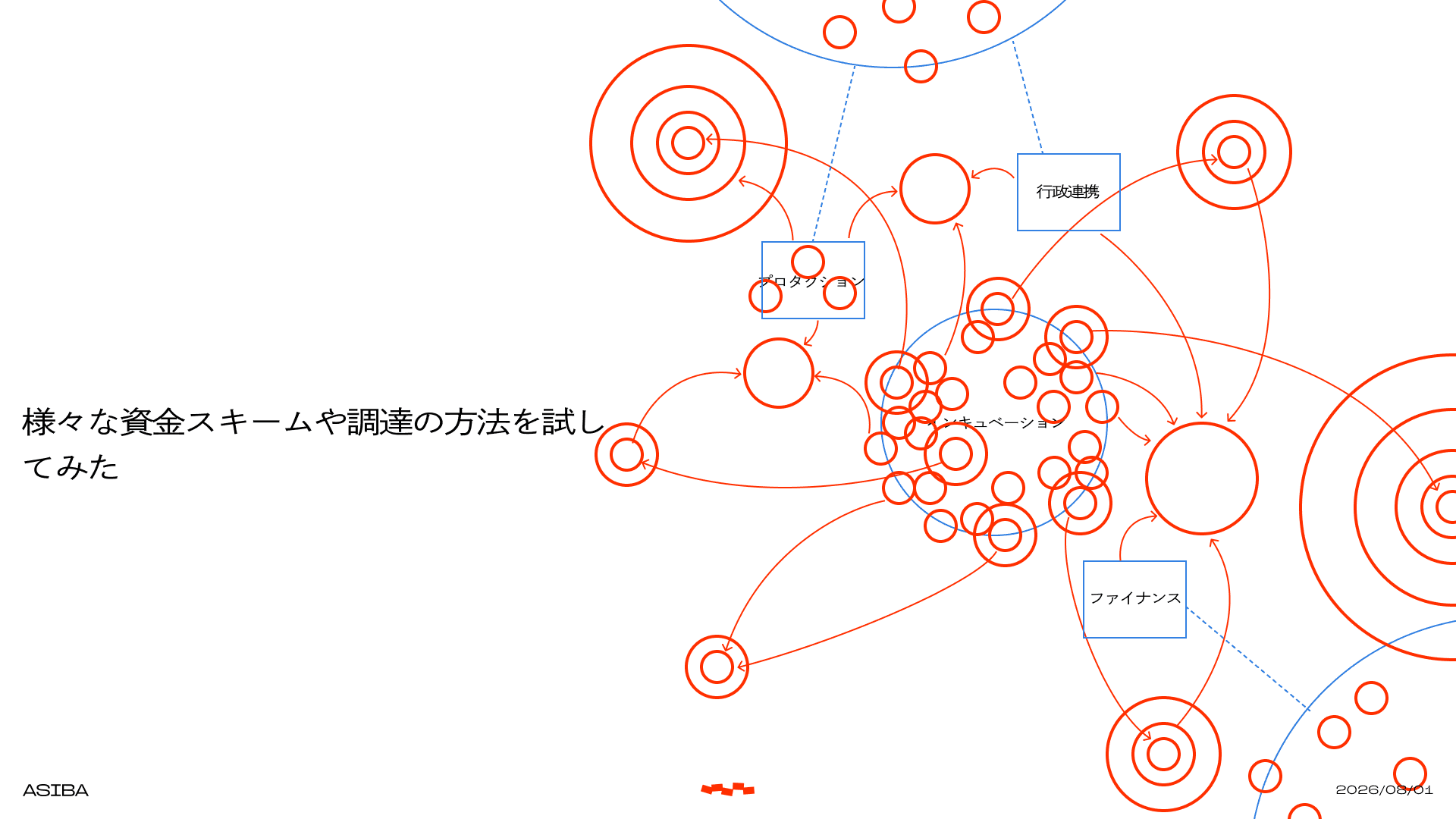
FIG.19

FIG.20
We are testing a revenue-sharing scheme based on the “production committee model.”
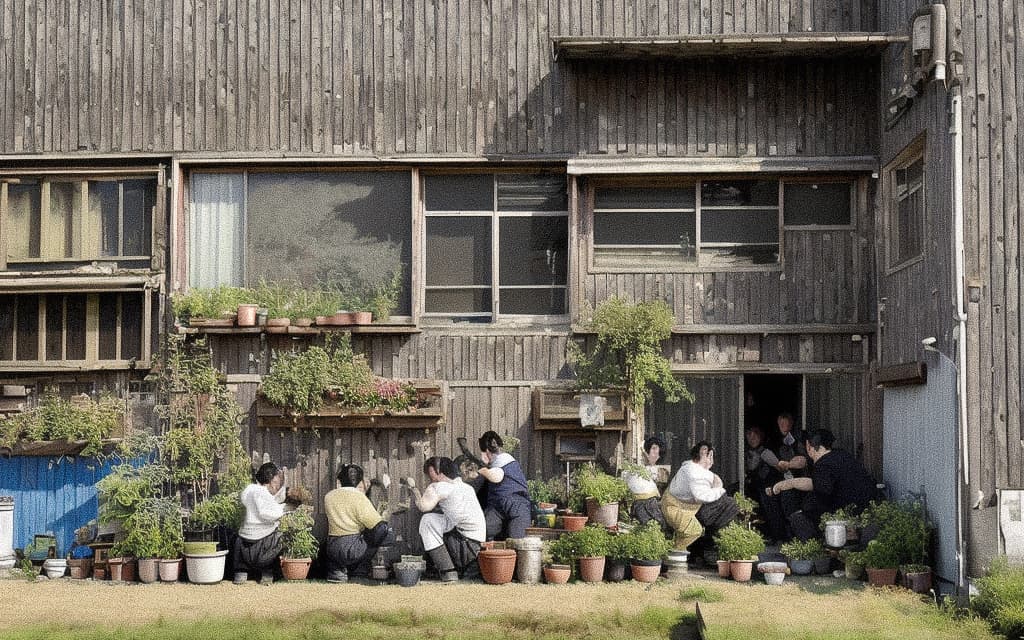
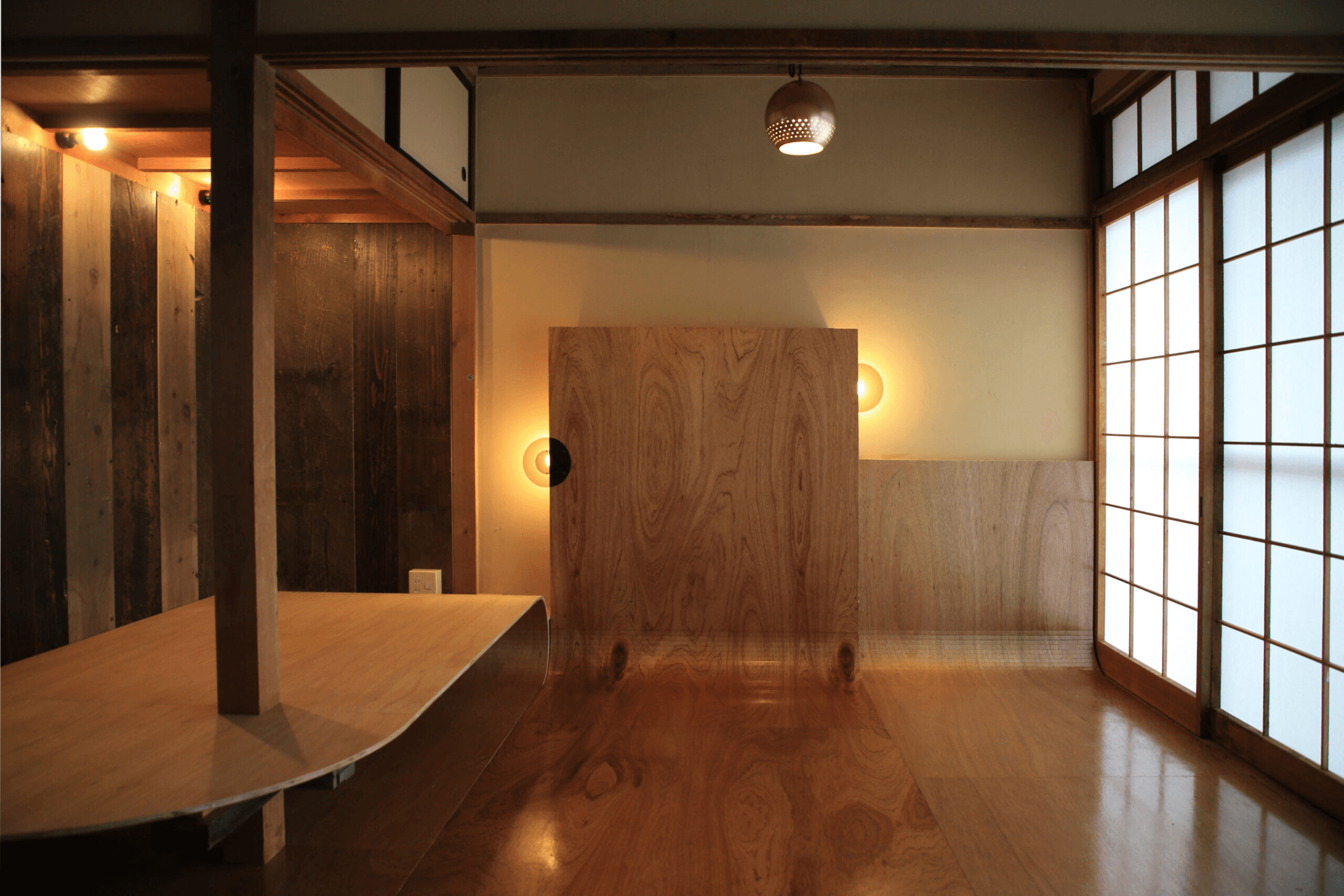
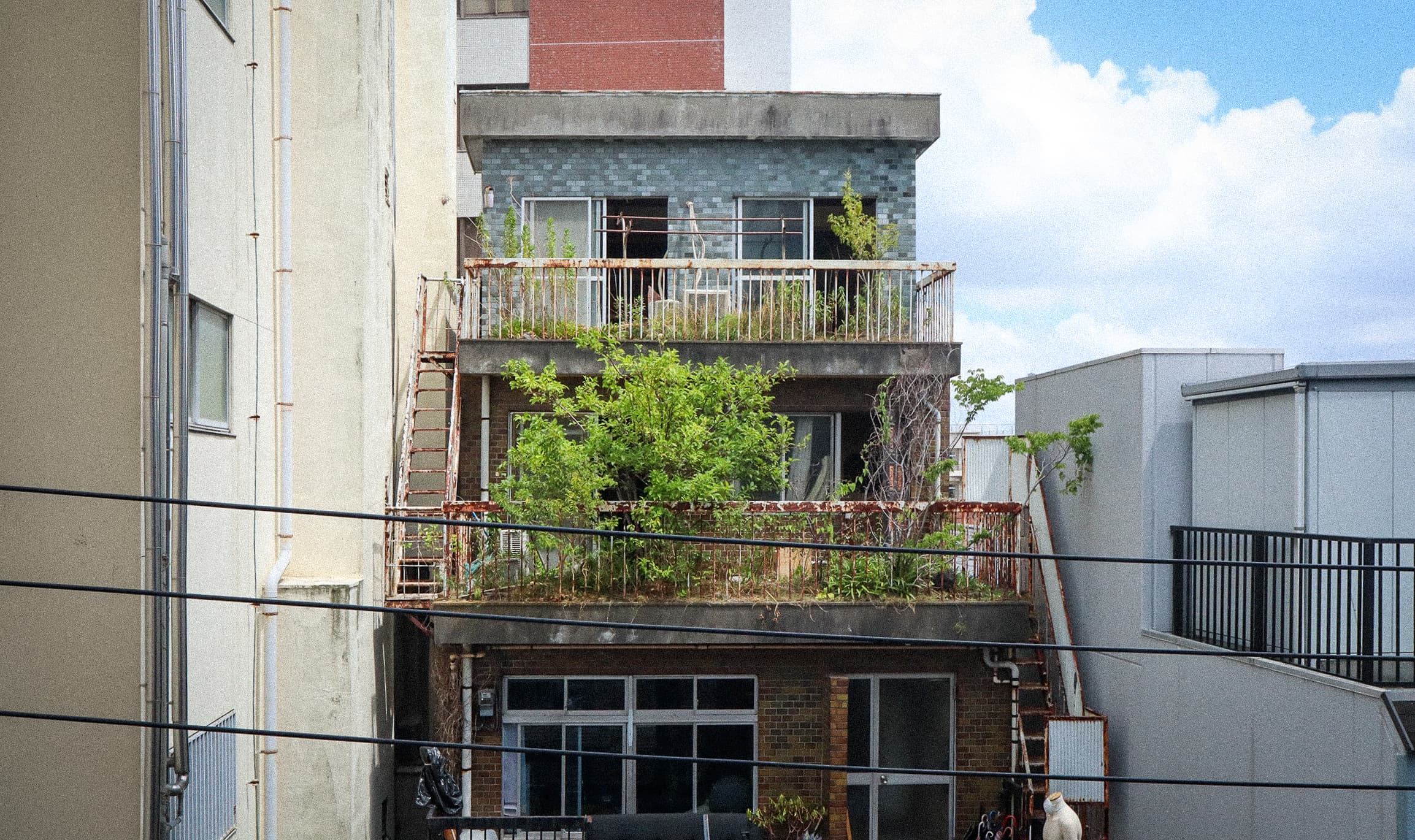
Furthermore, as the number of members and projects has grown, we’ve started hearing requests for “a place to gather.” We’ve opened a residence-style office hub in Kameido by temporarily utilizing a building slated for redevelopment. Once a hub is established, connections are formed, and from those connections, new teams are born. This kind of virtuous cycle, driven by the physical space itself, is taking shape.
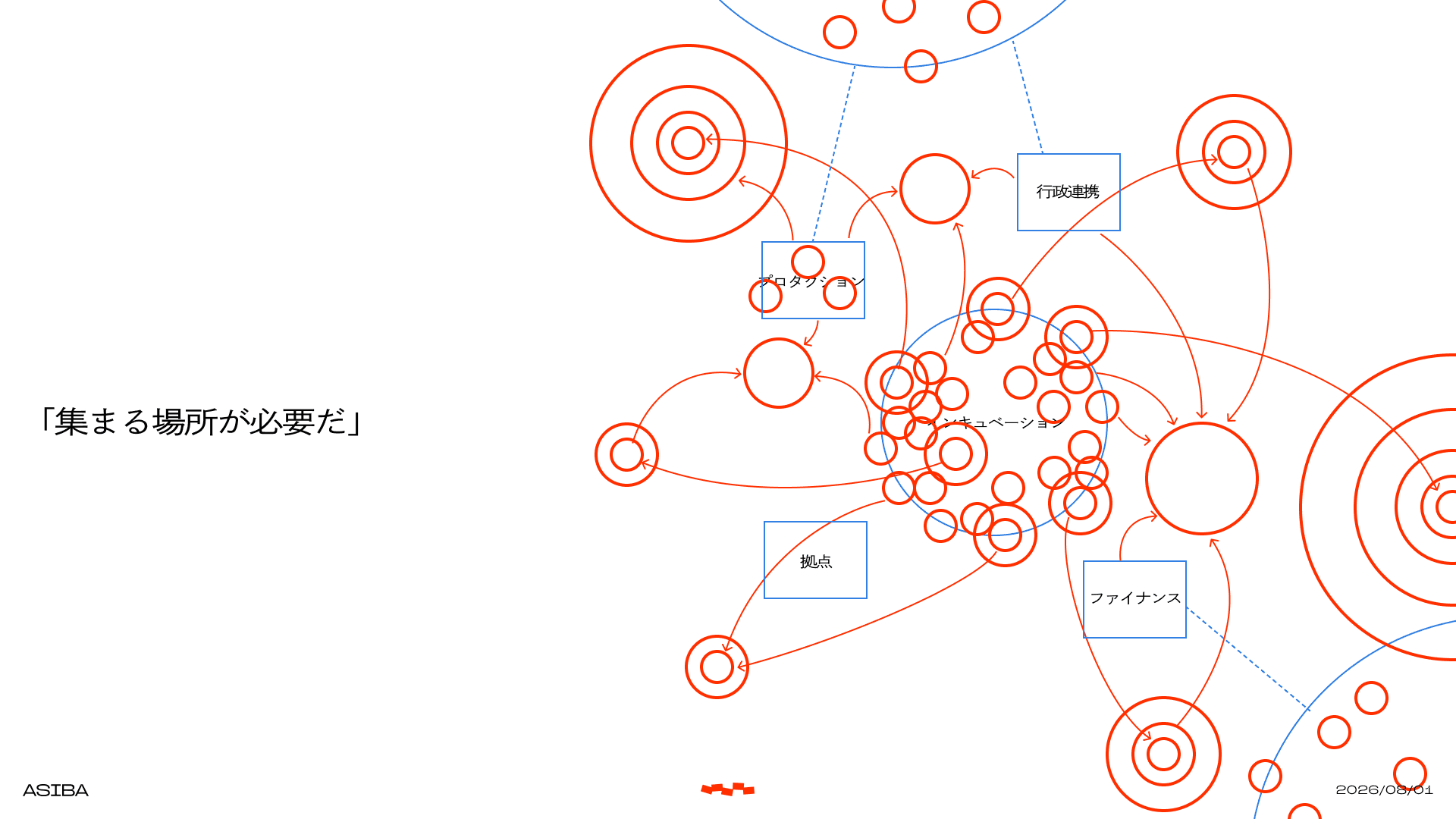
FIG.21
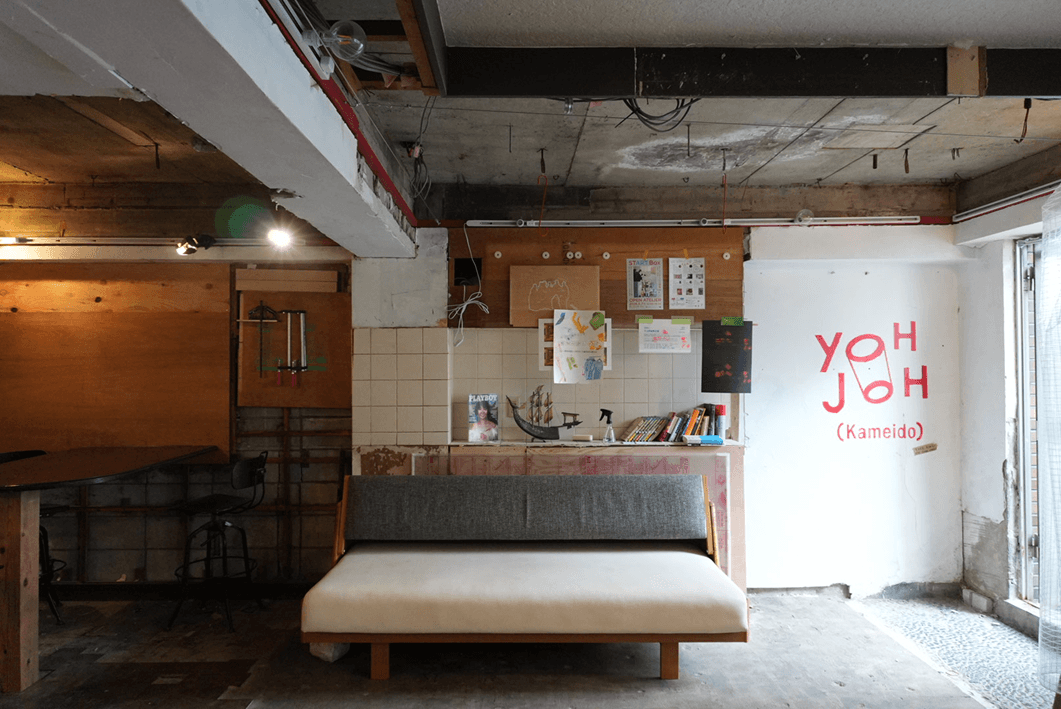
FIG.22
As our activities have expanded to this extent, the need has arisen to objectively evaluate the value of ASIBA’s initiatives and systems. Research activities in collaboration with academia have begun, and we recently published our first academic paper based on ASIBA’s initiatives.
Over the past three years, the number of projects and members involved with ASIBA has continued to grow. Various entities have come together, each exploring new possibilities through hands-on practice. This ecosystem itself represents where ASIBA stands today.
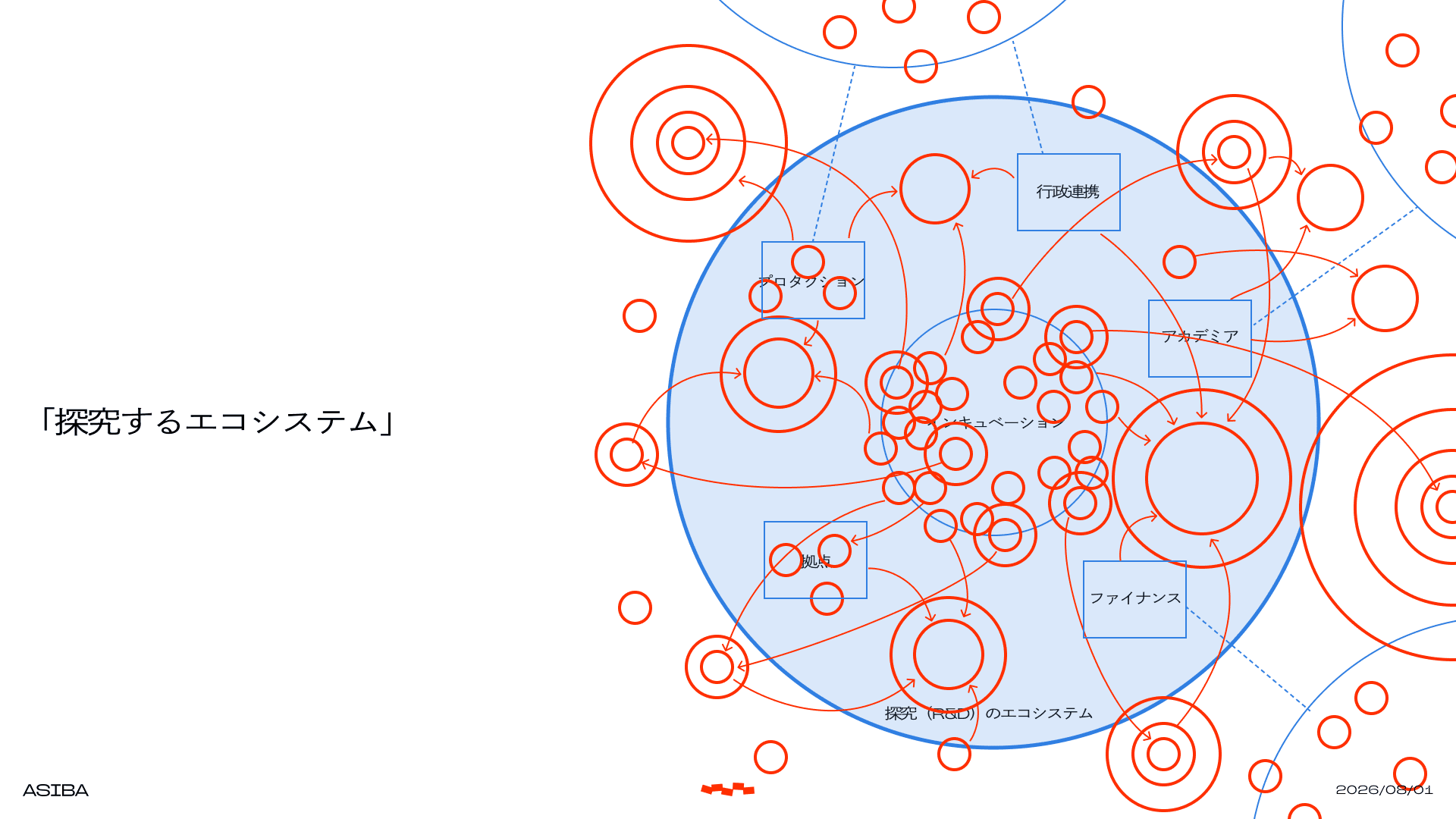
FIG.23
And from among the countless projects that have emerged, we found it necessary to determine the specific focus we would concentrate on. Starting around May, we held “semi-public editorial meetings” internally to discuss perspectives for defining what makes ASIBA unique. The four keywords that emerged as we all read literature and wrote together are precisely the agenda we are presenting to you today.
We created a key visual to visually represent ASIBA’s current position and the process that led us here.Each project and member forms a block, and ASIBA exists as the collective of these blocks. The four agenda items are structured as cross-sections derived from a selection of these blocks. Based on this concept, we have also been working on the production of our research book and website.
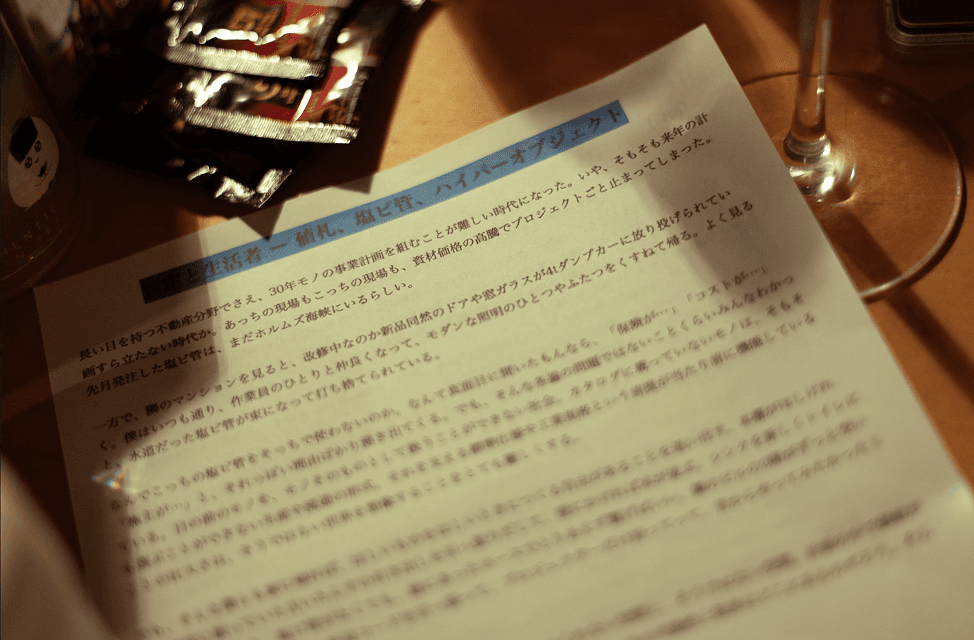
FIG.24

FIG.25
ASIBA has traditionally been described using terms such as “network,” “platform,” and “community.”In this rebranding effort as well, we initially used those terms as a starting point, attempting to conceptualize ASIBA as something like an infinitely expanding plane. However, upon further reflection, ASIBA is by no means a flat entity. To express our unique character and intentions, we believe the term that best fits ASIBA is “ecosystem”—a three-dimensional, sculptural, and organic concept.
We would be delighted if you viewed this rebranding as a declaration that, moving forward, we ourselves will advance as a self-directed ecosystem, guided by our agenda.
FIG.26
Credit
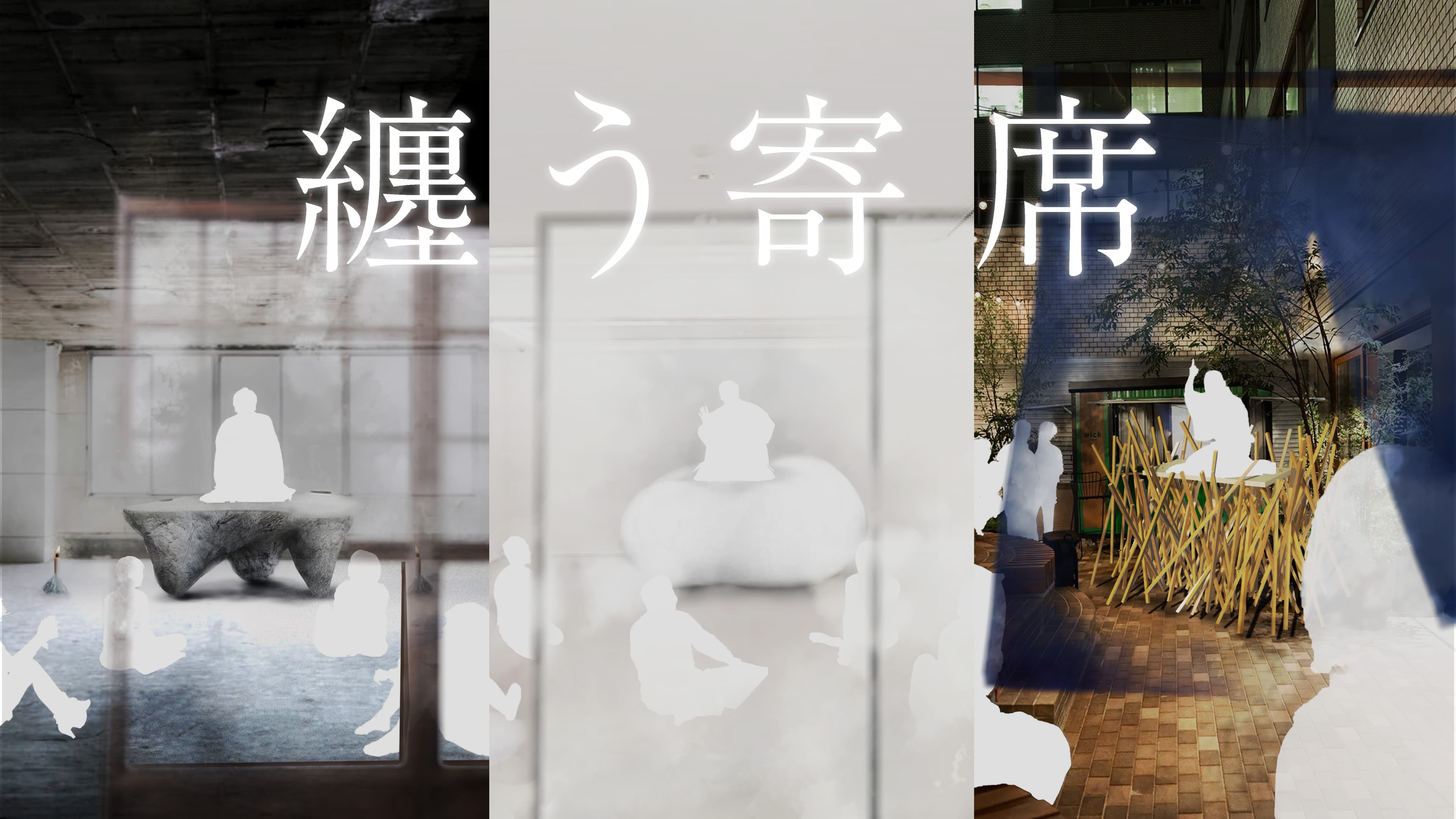 Incubation 1stCreative Incubation 1st
Rakugo Space Ochiba
CREATIVE-WORK
Wataru Nakayama