Partner Dialogue
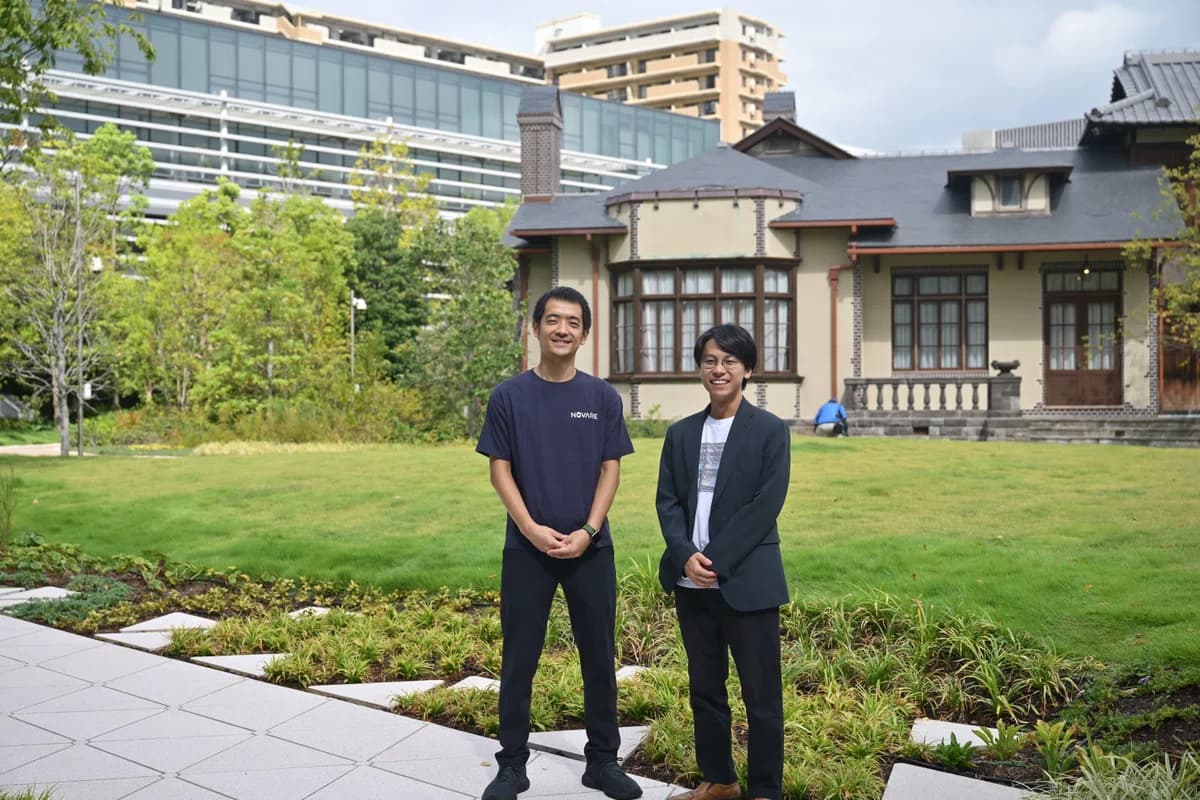
FIG.1
ASIBA and Shimizu Corporation NOVARE have been engaged in various forms of co-creation since ASIBA’s launch in the summer of 2023, right up to the present, when the partnership now encompasses 26 projects.In this interview, Yuta Nihei of ASIBA and Hiroshi Sato of Shimizu Corporation NOVARE engage in a candid conversation about the motivations driving each of them to take on this challenge, including their expectations of one another and their frank opinions.
Nibei: Today, I’m speaking with Hiroshi Sato, who leads the NOVARE projects at Shimizu Corporation. Mr. Sato has been working alongside us as the ASIBA liaison since the early days. First, I’d like to ask about the background of the collaboration between NOVARE and ASIBA—how it all began.
Sato: I’m Hiroshi Sato. I’m currently in charge of project planning for NOVARE at Shimizu Corporation. I originally worked in structural design for about 13 years, but when NOVARE was launched, there was an internal call for project members. Since I had been thinking about taking on a new challenge at that very time, I volunteered to join.
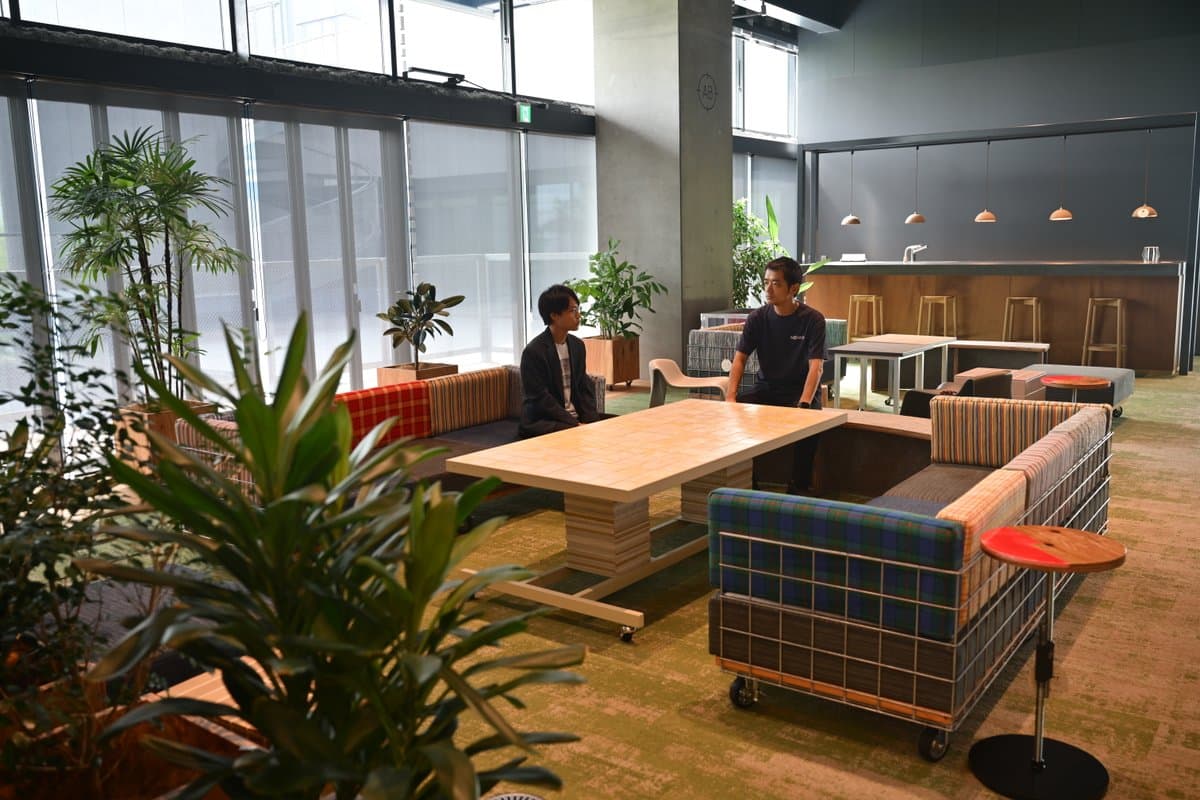
FIG.2
Nibei: When I ask people around you about you, Mr. Sato, they all say in unison that you “freely do what you want to do.” Is that just your natural personality, or did your involvement with NOVARE bring about that change?
Sato: I’ve always been that way. Even when I was doing structural design, there were several projects I made happen by asserting, “I want to do this!” For example, the seismic-isolation structure in Shibaura 1-chome was ultimately realized because I stuck to my guns and followed through on what I had proposed.Shimizu Corporation is often perceived as a conservative company, but in reality, we have a corporate culture that supports taking on new challenges. As part of that, NOVARE promotes flexible thinking and open innovation under the theme of co-creation both inside and outside the company.
Nibei: Actually, when I launched ASIBA last year, I met someone from Shimizu Corporation in a completely unrelated setting—a volunteer activity as a ward resident monitor—and that’s how the discussions with NOVARE began. At the time, I never would have imagined that Shimizu Corporation was so actively engaged in new initiatives.
Nibei: Speaking of taking on challenges, there’s one particularly memorable episode from my time with Mr. Sato, isn’t there? (laughs)
Sato: Oh, you mean that (laughs). Actually, during the first ASIBA conference, we asked everyone to write messages on the NOVARE wall.The blank wall had been left as-is, and I think the design intent was to use it like an idea board, but the space was so pristine that I felt no one would start using it unless someone “dirty” it up a bit. So, on the spot, I took the plunge and asked everyone to write messages on it. However, as it turned out, I got scolded by the facility manager right after (laughs).They even told me not to let anyone scribble on it in the future. But taking that first step is really crucial when you want to change something. Even though I got scolded, I think it opened up a small window of opportunity and helped lay the groundwork for our next challenge.
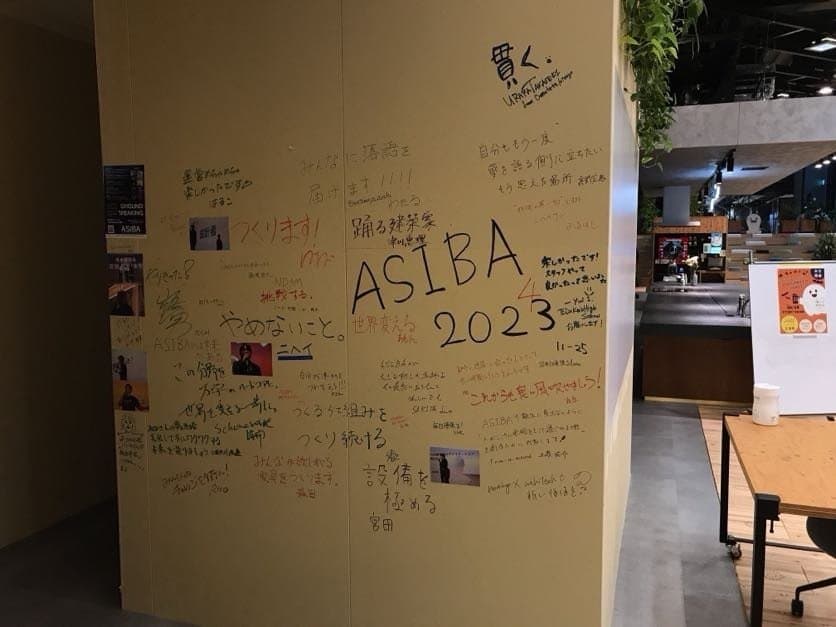
FIG.3
Nibei: When I heard that story, I really related to it. It’s the same with ASIBA—it’s important to just take action first. Even if you’re scared at first, once you actually try it, things often go surprisingly well, and the results—whether good or bad—will inevitably lead to the next step.In the context of incubation, I feel that rather than endlessly mulling over business plans in your head, taking a “hit-or-miss” approach—going out and conducting interviews and giving pitches—will ultimately take you much further.
Sato: That’s right. Every day, I feel that a mindset of taking on challenges that go beyond what’s considered “common sense” is truly important. Both NOVARE and ASIBA share the commonality of venturing into uncharted territory where there are no precedents. I think taking on new challenges requires the boldness to use walls as stepping stones.
Nibori: Even with the ASIBA project, things didn’t go smoothly from the very beginning. Especially during the first year, the biggest challenge was figuring out how to actually bring the system we’d envisioned to life. However, companies and organizations that resonated with ASIBA’s guiding principles—social implementation and sector transformation—gradually came together, and we were able to move the project forward step by step, transcending our respective interests.
Sato: I also felt that growth at NOVARE. At first, there was a strong perception that it was just “an event organized by students,” but with each iteration, I realized that ASIBA’s unique network and its impact on society were growing. In particular, I was personally surprised—as the person in charge—that we were able to hold a large-scale event like ASIBA FES in just our second year.Even within Shimizu Corporation, people were saying, “I never thought those students would be able to pull this off!”
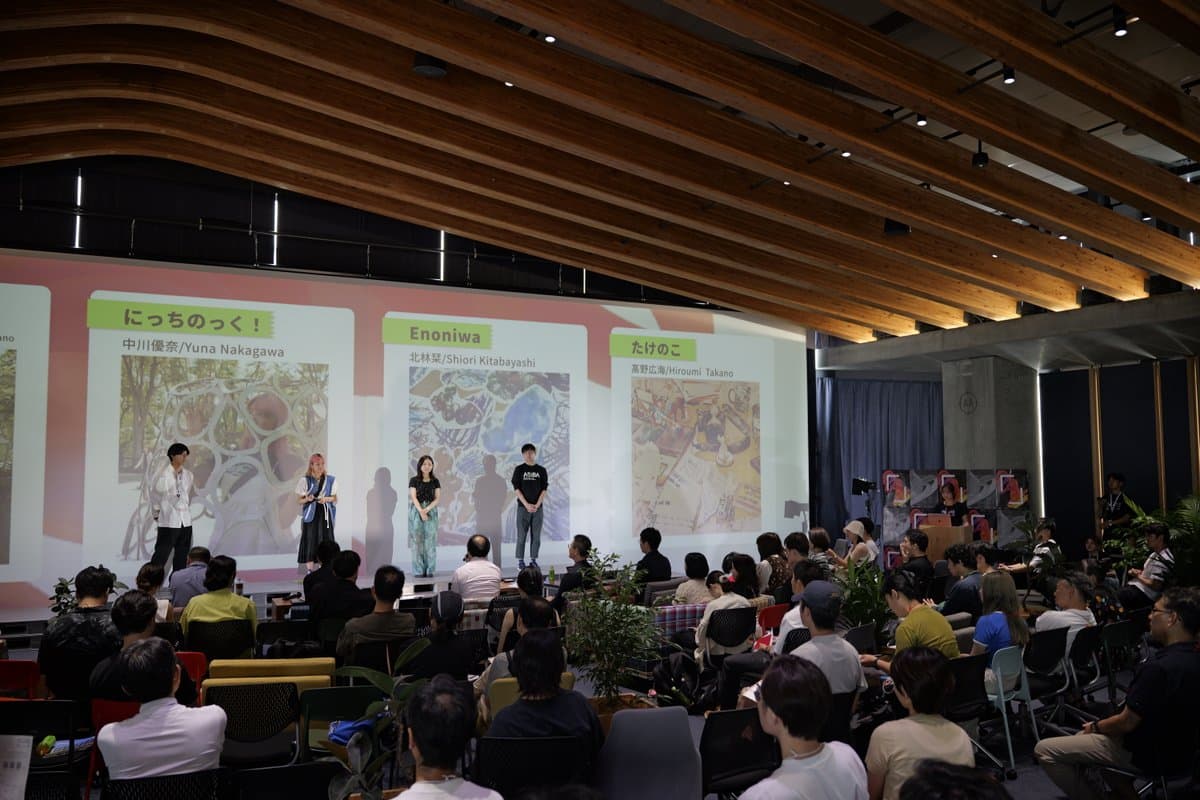
FIG.4
Nibei: Even I didn’t think we could pull off something this big at first (laughs). But by continuing to take on challenges, we gradually gained the empathy and support of those around us, and before we knew it, we were managing numerous projects. I believe this is proof that the “open and flat platform” ASIBA provides isn’t just a utopian ideal, but has become a tangible and attractive space for many companies and people.
Nibei: When I first visited NOVARE, my understanding was that it functioned as an “Dejima”—a place deliberately set apart from headquarters—which allowed it to drive innovation. But now, you’re moving forward while involving headquarters as well. How do you feel about that change?
Sato: It’s true that NOVARE started out as an “Dejima”-like entity, but now it functions as a hub for driving company-wide innovation by involving the headquarters. To that end, it serves as the “eye of the storm,” where internal and external projects naturally converge. ASIBA is one of the projects at the core of that “eye of the storm.”
Nibei: That “eye of the storm” metaphor fits perfectly. I can picture how, with NOVARE and ASIBA at the center, various projects get “spontaneously” drawn into the mix.
Sato: Yes, NOVARE’s strength lies in bringing together diverse projects that stimulate one another and grow together. Student-led projects like ASIBA, in particular, operate with free-thinking approaches without being overly constrained by existing frameworks, which has a positive influence on other projects as well.
FIG.5
Nibei: One of the challenges ASIBA faces moving forward is how to set KPIs and incentives for project progress. I imagine Shimizu Corporation faces similar challenges in promoting innovation—how do you address them?
Sato: That’s true; we’re grappling with the same issue at NOVARE. Even though we’re a spin-off, when advancing new projects within the company, we’re required to deliver concrete results, such as KPIs and profits. However, in the early stages of innovation, it’s often difficult to identify clear benefits right away.
Nibei: At ASIBA, too, projects that initially proceeded with a fairly free-thinking approach began to be required to demonstrate results and meet KPIs as we entered the second and third years. How do we reconcile the students’ free-thinking approach with realistic goals? I suppose that sense of balance is essential for making an impact on society.
Nibei: Finally, could you tell us about the future NOVARE envisions?
Sato: At NOVARE, we hope to continue our collaboration with ASIBA to forge a path toward the future by engaging more companies and projects. Sponsoring ASIBA is not merely about supporting students; it’s also about testing hypotheses for creating a new ecosystem that fosters innovation. Let’s continue to take on these challenges together on a path where there are no clear-cut answers.
Nibei: ASIBA’s projects are not merely experimental platforms; they hold the potential to have a significant impact on society. We would be delighted if you would join us as a sponsor to support their growth and become a partner in creating the future together.
FIG.6
Credit

[Partner Dialogue #2] From Fans to Building Materials: The Journey of a Memory Product Brand Nurtured by the Co-Creation of NOVARE and ASIBA
Partner Dialogue #2
DIALOGUE
2025.11.12.


