Partner Dialogue #4
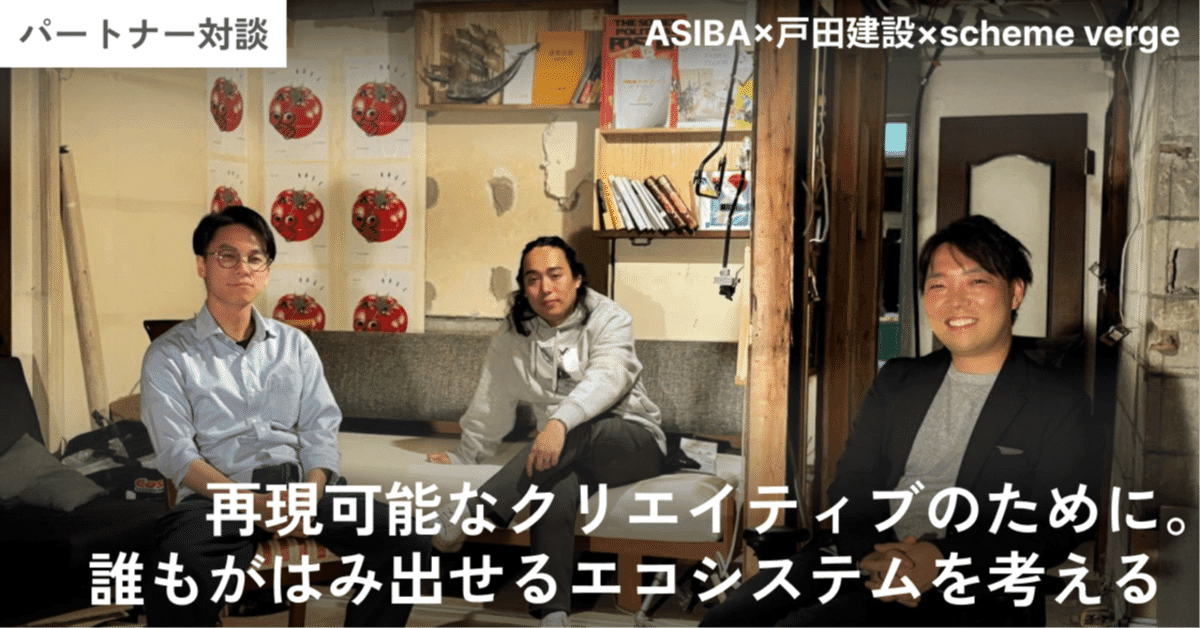
FIG.1
Toda Construction Co., Ltd. and scheme verge Co., Ltd. are supporting ASIBA’s activities as corporate partners for fiscal year 2025. What is creativity in architecture and urban planning, and how can we build the ecosystem that underpins it?Hiroaki Saito of Toda Construction and Tatsuki Shōnan of scheme verge—who have been supporting ASIBA’s activities since before the organization’s founding—join ASIBA’s Yuta Nihei for a candid discussion. (Text by Rigo Kagami)
Nibei: I first spoke with Mr. Saito from Toda Construction in 2023, before ASIBA was even launched. Actually, Mr. Saito was the first adult outside the organization to hear about the ASIBA concept.
Saito: One day, I got a suspicious-sounding email from Mr. Nihei’s advisor saying, “I have a weird student here—could you give him a listen?” (laughs).
He said the student was trying to start a startup but didn’t really know anything yet, so he asked me to at least hear him out. When I actually met him, I thought, “This is actually pretty interesting.”
Nibei: It all started with that one line, “He’s actually pretty interesting.” If he’d just tilted his head and said, “Hmm…” back then, ASIBA would’ve ended right there (laughs).
Mr. Shonan from schem verge was a senior at my university, and since he was one of the few people running a startup, everyone around me was doing an internship at schem verge.As for me, I first met Shonan-san through a mysterious part-time job doing surveying when we were moving to our new office (laughs).
Shonan: “You don’t often find a University of Tokyo student who’s happy to come work a part-time job doing surveying, so I thought, ‘This guy’s amazing’ (laughs).”
On the other hand, Mr. Saito and I were introduced through ASIBA, right?
Saito: That’s right. I’d been in touch with Schem Verge employees for a while, but I finally got to meet them in person at a community event (ASIBA ATLAS #01). We ended up talking nonstop right there at the venue, didn’t we?
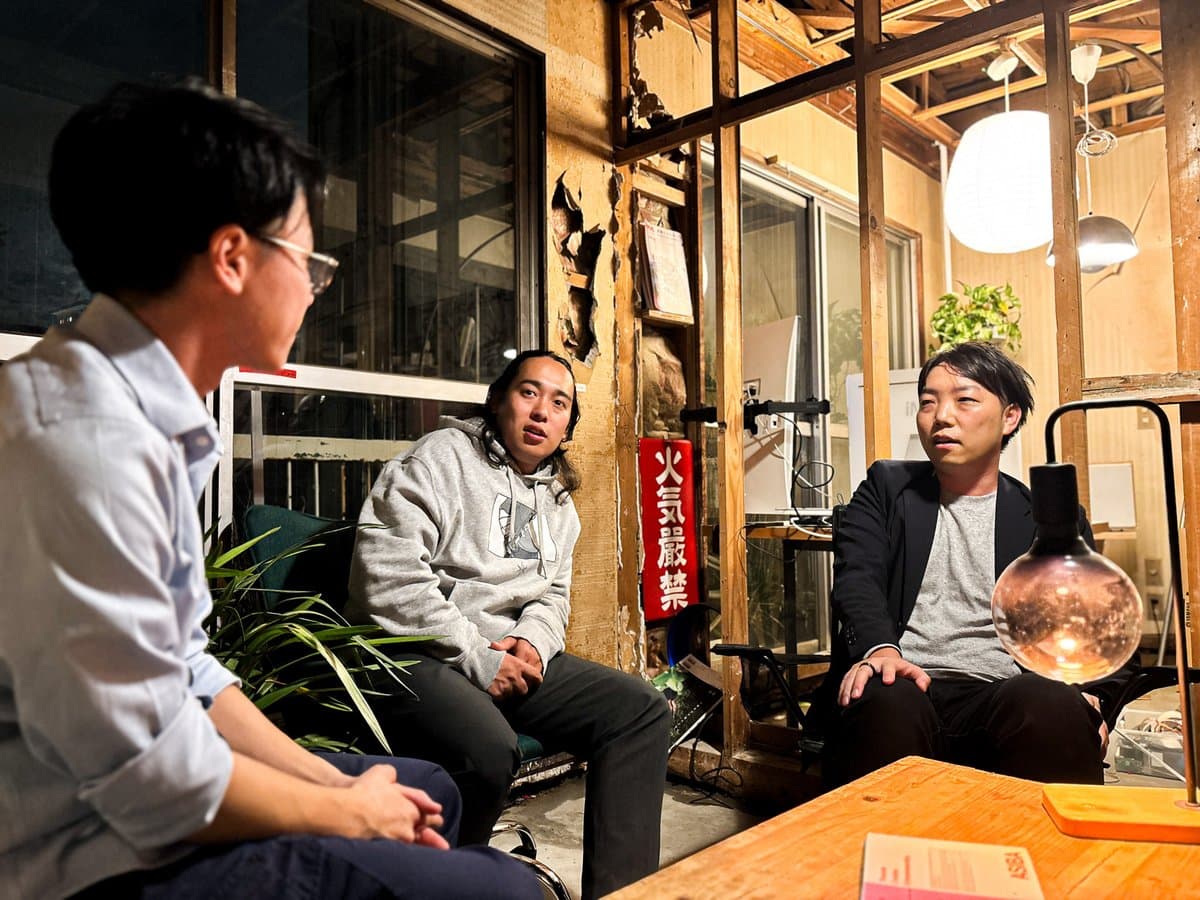
FIG.2
Shonan: I’ve been following ASIBA’s progress for a while now, but how is ASIBA currently viewed by people in Mr. Nihei’s generation?
Nibei: Now that ASIBA itself has started taking on several architecture and design projects, I get the sense that people in the design field are starting to see us as a new option. They realize, “I can lead projects right after graduation—I don’t have to spend 10 years working my way up.”
Mr. Saito: I think this applies to design as well, but in the world of engineering, even if you’ve been doing it for 10 or 20 years, you just can’t beat someone who’s been at it for 40 years.When you’re young, opportunities to express your creativity are
inevitably limited, and I’ve personally felt that frustration many times. That’s exactly why I hope these people can have a space where, even while working as company employees on large-scale projects, they can still contribute their own unique value to the challenges right in front of them.
Nibei: Right now, many of the people involved with ASIBA are students or freelancers, but I’d like to attract more people who fit the mold of a typical 9-to-5 office worker. I feel we need to look beyond a community made up of just a select few and turn our attention to a broader, more universal group of people.
Shonan: From my perspective, everyone gathered at ASIBA seems talented, but I feel that figuring out how to move beyond being a “community of talented people” is a key challenge.
It’s not just about talented people who are already “outside the box”—I think if we can create a process where more ordinary people gradually step outside the box through ASIBA, we’ll have an even greater impact going forward.
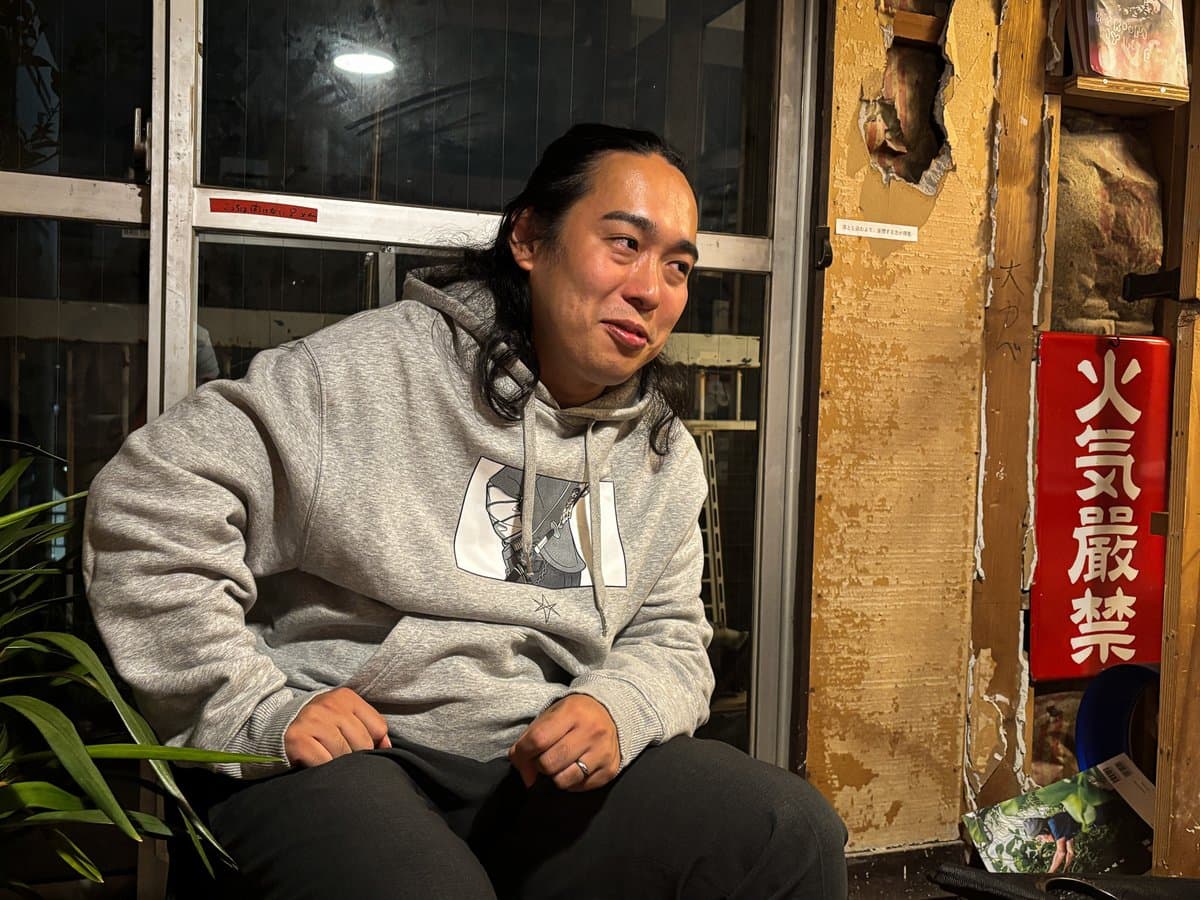
FIG.3
Nibei: I think the cities that scheme verge is working on are shaped precisely by those “ordinary people.” How do you view creativity in the urban context, Shonan-san?
Mr. Shonan: For example, personally, I used to be strongly opposed to demolishing old neighborhoods, but now I don’t necessarily feel that way. That’s because I feel that contemporary Japanese society is, in a sense, hiding behind a prevailing sentiment that “demolishing old neighborhoods is wrong” or “we must listen to residents’ opinions.”
Of course, it’s important to listen to everyone’s opinions, but as a prerequisite, we need to maintain a firm commitment to creating a city that’s creatively vibrant. Don’t you think a city built without that commitment ends up feeling somewhat hollow?
Nibei: It’s certainly true that the word “everyone” often doesn’t actually refer to anything specific. I feel that when people say, “Let’s create something that makes everyone happy,” but everyone is picturing someone other than themselves, the resulting society ends up not reflecting anyone’s true aspirations.
Mr. Saito: Peter Thiel, the founder of PayPal, is said to have remarked at “Y Combinator”—one of the leading startup accelerators in the U.S.—that “great startup ideas often look like bad ideas to most people at first.” In other words, truly valuable, cutting-edge ideas are, by their very nature, unlikely to emerge from companies that operate by consensus.I believe what ASIBA is striving to create is an environment that protects such ideas—which aren’t necessarily embraced by the majority—from societal pressure and allows people to devote themselves wholeheartedly to them.
Nibei: Through our incubation efforts, our goal has been to create an ecosystem for scaling these so-called “unconventional solutions.” However, we still haven’t found an answer to the question of how to scale them—or even whether it’s truly possible to scale them in the first place.
Mr. Saito: I think, quite simply, if we can generate a bigger impact, we’ll be able to overcome that hurdle.Take Mercari, for example—while it’s taken for granted today, when it first launched, the idea of “buying and selling used items online” was accepted by only a very small number of people. But it’s precisely because Mercari created such a strong impact and changed people’s values themselves that it’s become so widespread today.Fashion e-commerce sites followed a similar path: they started their businesses in an era when people thought it was unthinkable to buy clothes or shoes without trying them on, and now they’re commonplace.
If we think with a vision that goes beyond simply scaling within the existing market—one that aims to transform the market itself—I believe ASIBA could actually aim much, much higher.
FIG.4
Shonan: That’s true—it does feel like ASIBA right now is still limited to resisting existing academic norms and market principles. I hope ASIBA’s activities themselves will gain more authority, moving beyond the realm of one-off, interesting initiatives.
Nibei: I see. What exactly do you mean by “authority,” for example?
Mr. Shonan: One aspect would be creating a reproducible system that is recognized as such by anyone who examines it.The foundation of
engineering lies in how we apply metacognition to the design process and structure it in a way that’s repeatable. I think ASIBA will face serious scrutiny going forward on how it can build its activities into a systematic framework while drawing on other theories.
Mr. Saito: In that sense, the term “creative entrepreneurship” that ASIBA promotes is excellent.
Creativity tends to be highly one-off and can be difficult to scale.By combining it with fields like business and engineering—which prioritize reproducibility—I believe there’s potential for them to complement each other; above all, it’s an approach that hasn’t really taken hold until now. Whether entrepreneurship can truly take root in the
creative realm—the hurdles are certainly high—but personally, I feel that taking a bold step in that direction was the right decision.
Nibei: Finally, could you share your thoughts on the future of ASIBA?
Mr. Saito: To launch something new within a large organization, you inevitably need to gain the understanding of many people. What ASIBA is creating is almost the polar opposite of that—an environment where individuals can take on creative challenges based on their own values and the issues they perceive. I believe this is a value that large corporations rarely possess—in other words, a relationship where we can complement each other’s strengths through collaboration.I hope to continue fostering these collaborations while emulating ASIBA’s “guerrilla-style” approach—trying things out
first and figuring things out as we go.
Mr. Shonan: How should I put it? I feel like there are a lot of adults in today’s world who aren’t willing to fight. How do we create new standards
within Japan, and how do we use them to engage with the world? I think we need to confront these questions more seriously.
In that sense, ASIBA’s initiatives certainly have the potential to attract interest not only domestically but also from overseas. And once that cycle begins, I believe it will naturally grow larger and larger as it draws in more and more people. As a sponsor, I would be delighted to continue supporting that process, even in a small way.
FIG.5
Credit
Related Works