Creative-LAB. 2nd Program Report #3
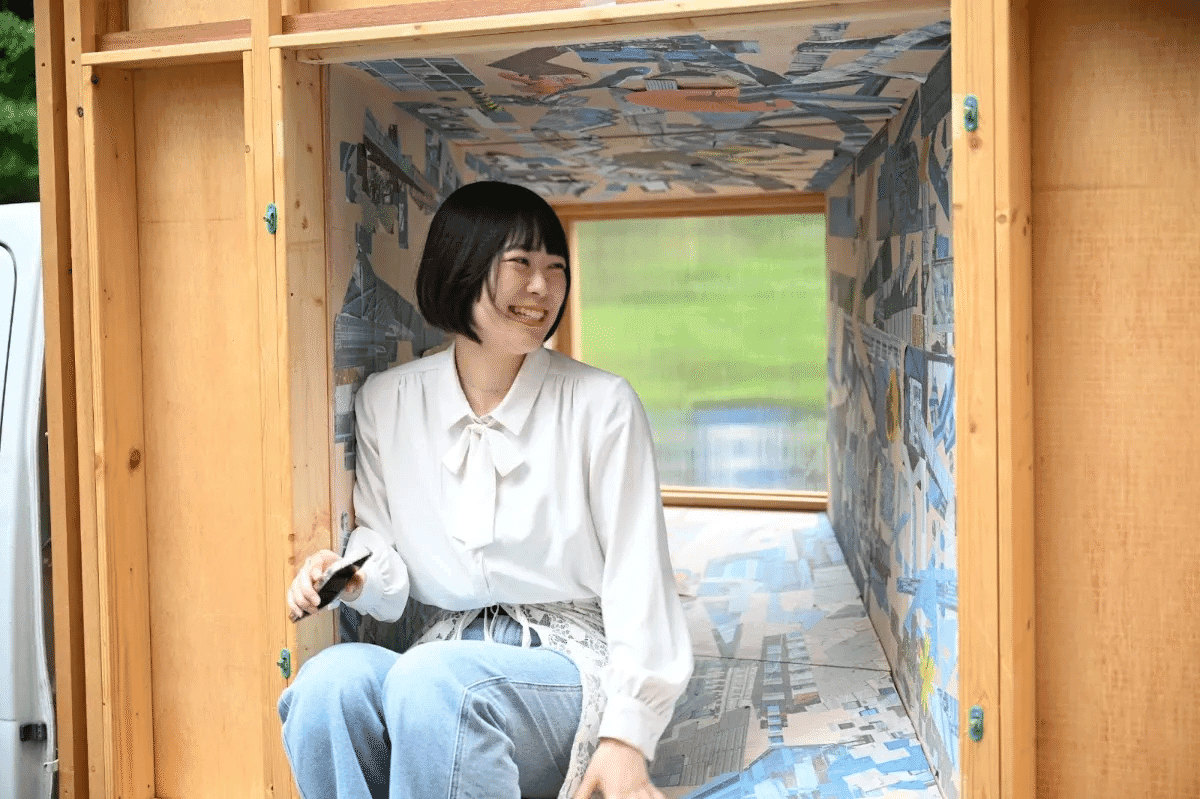
FIG.1
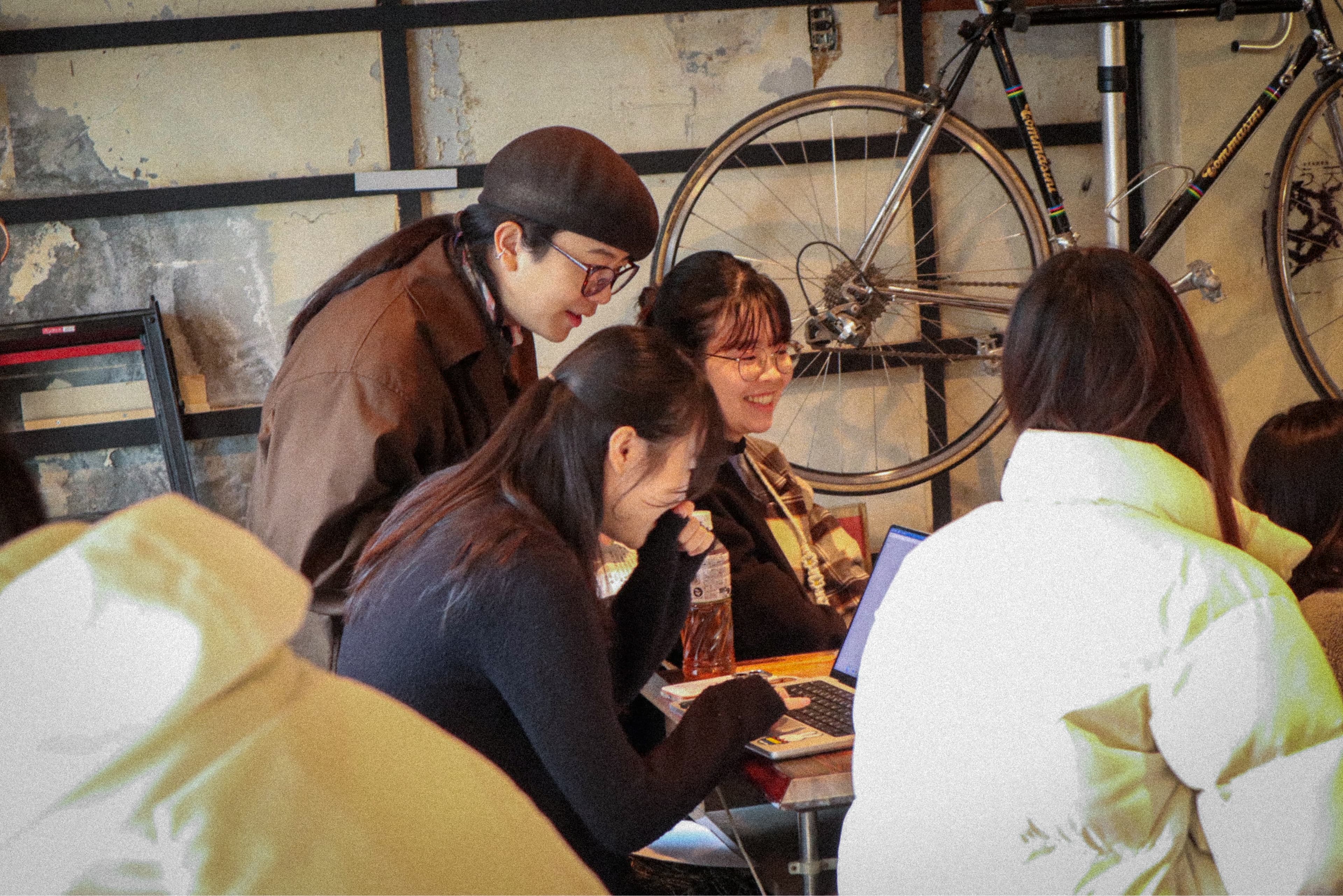
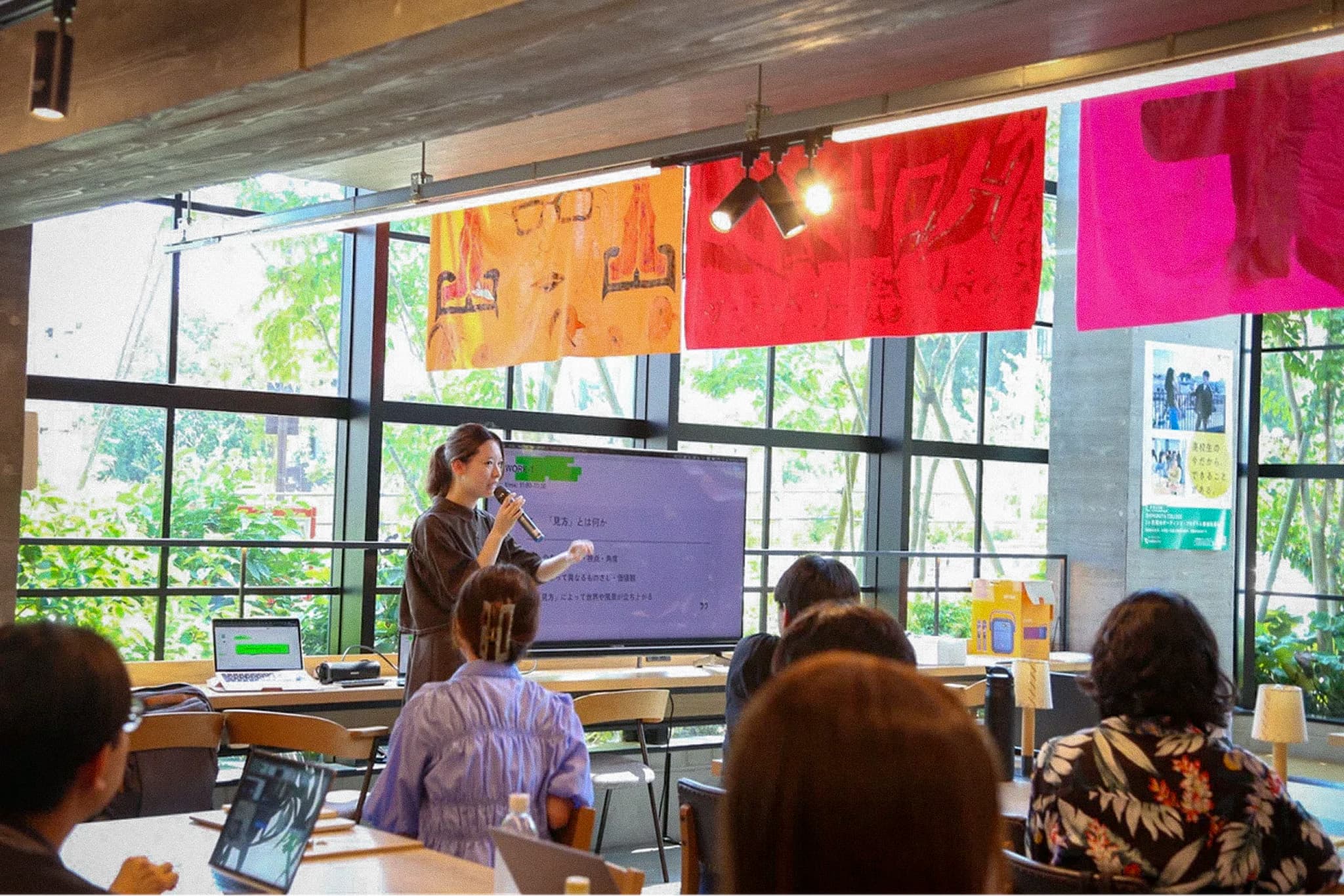
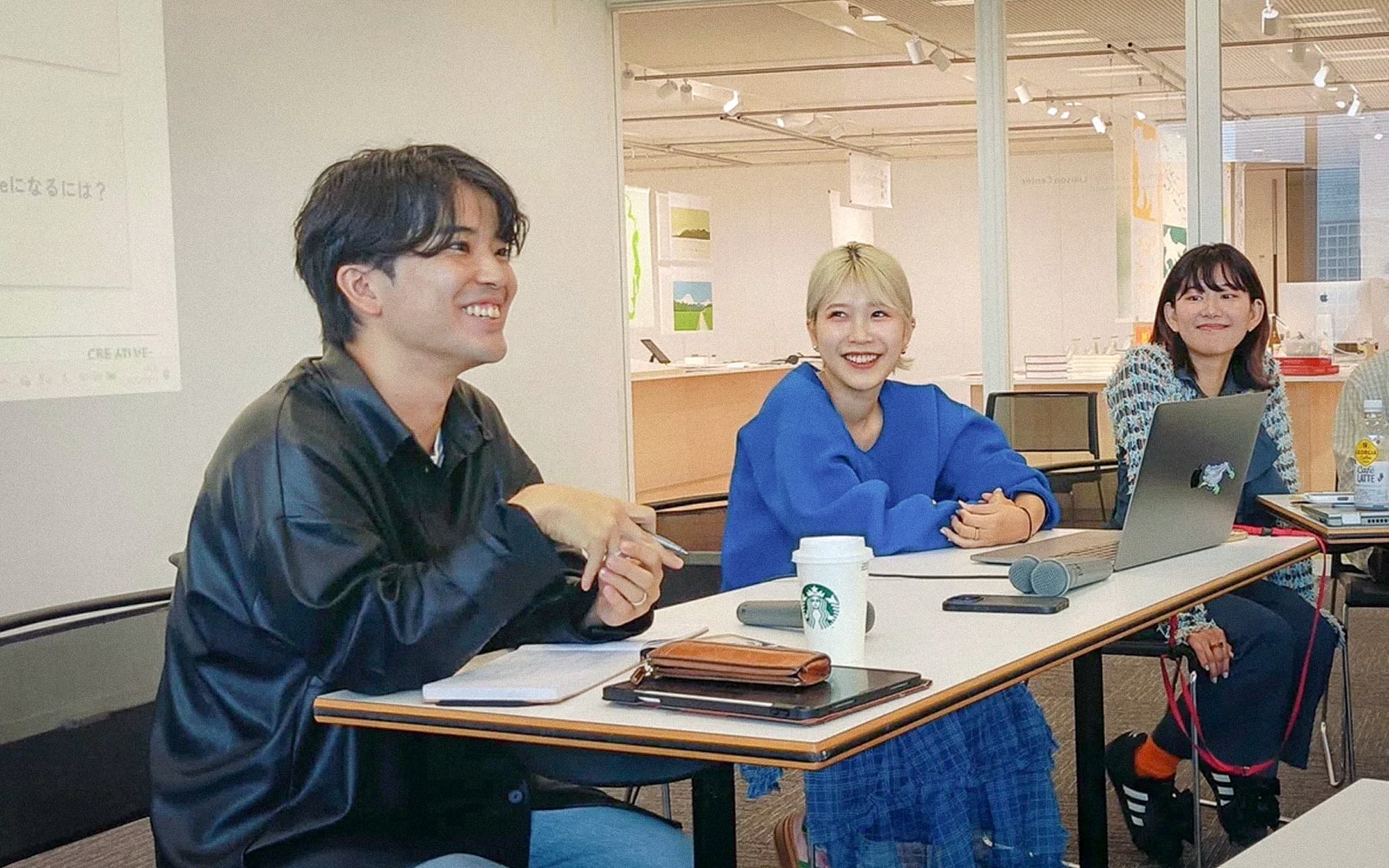
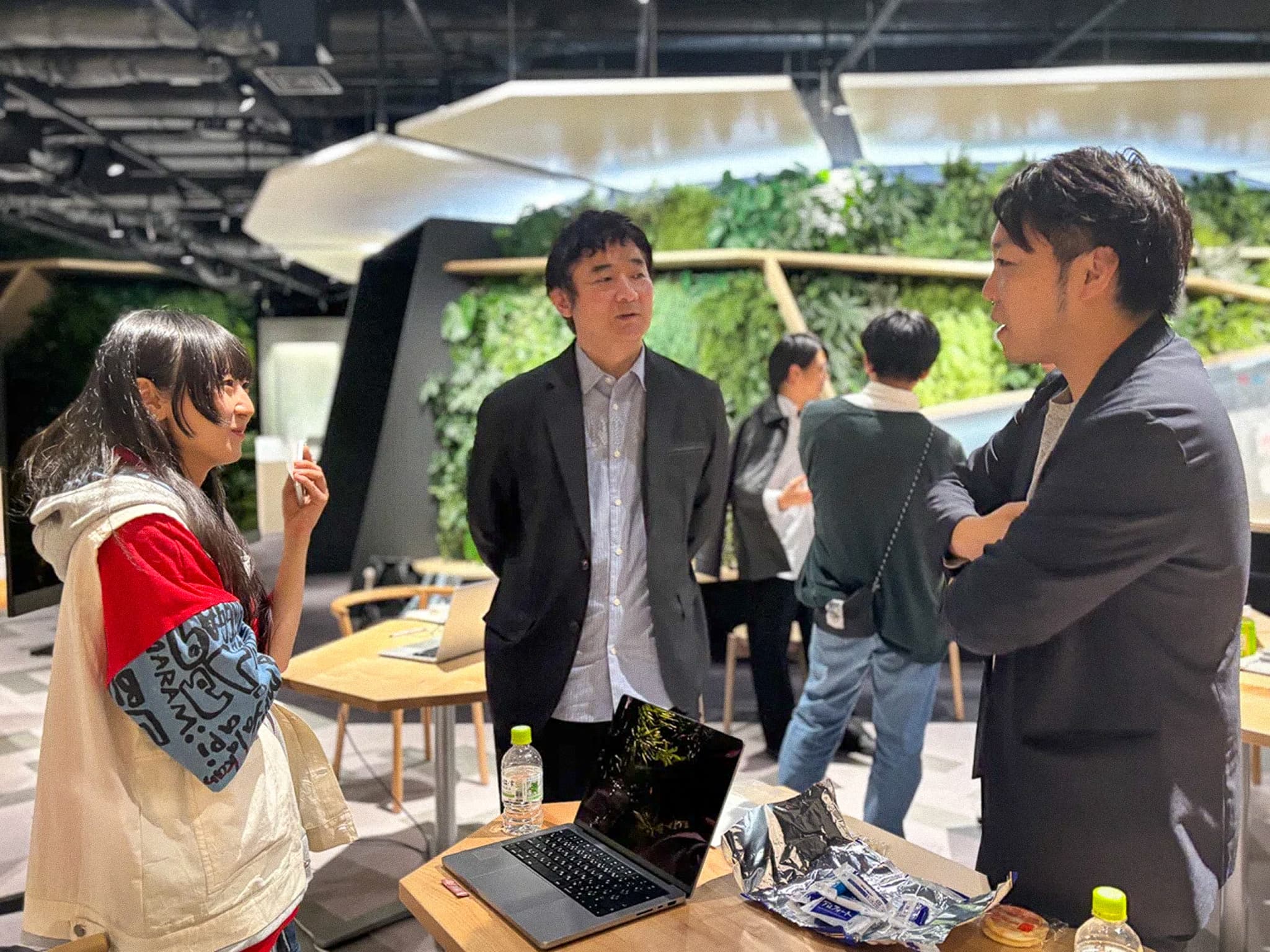
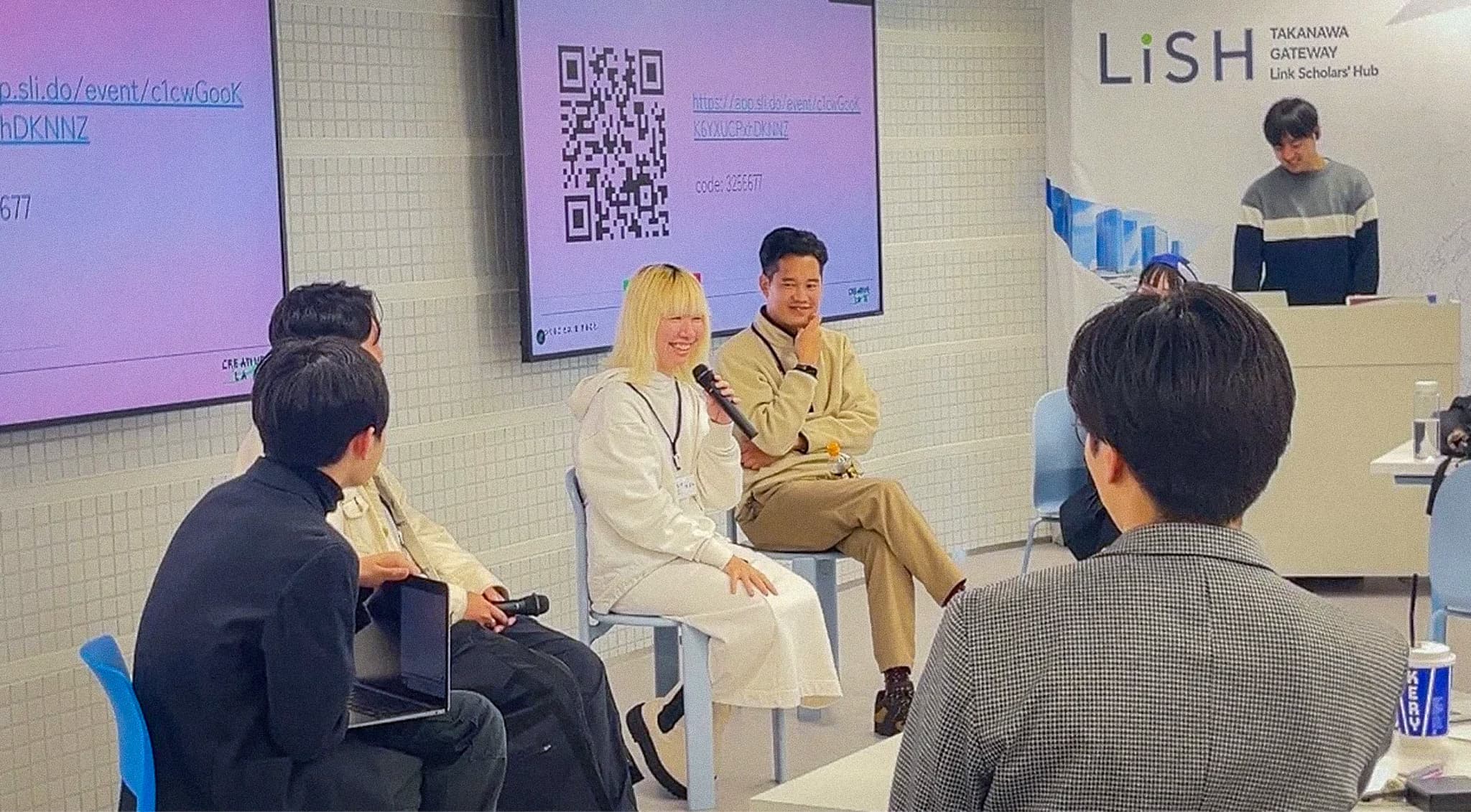
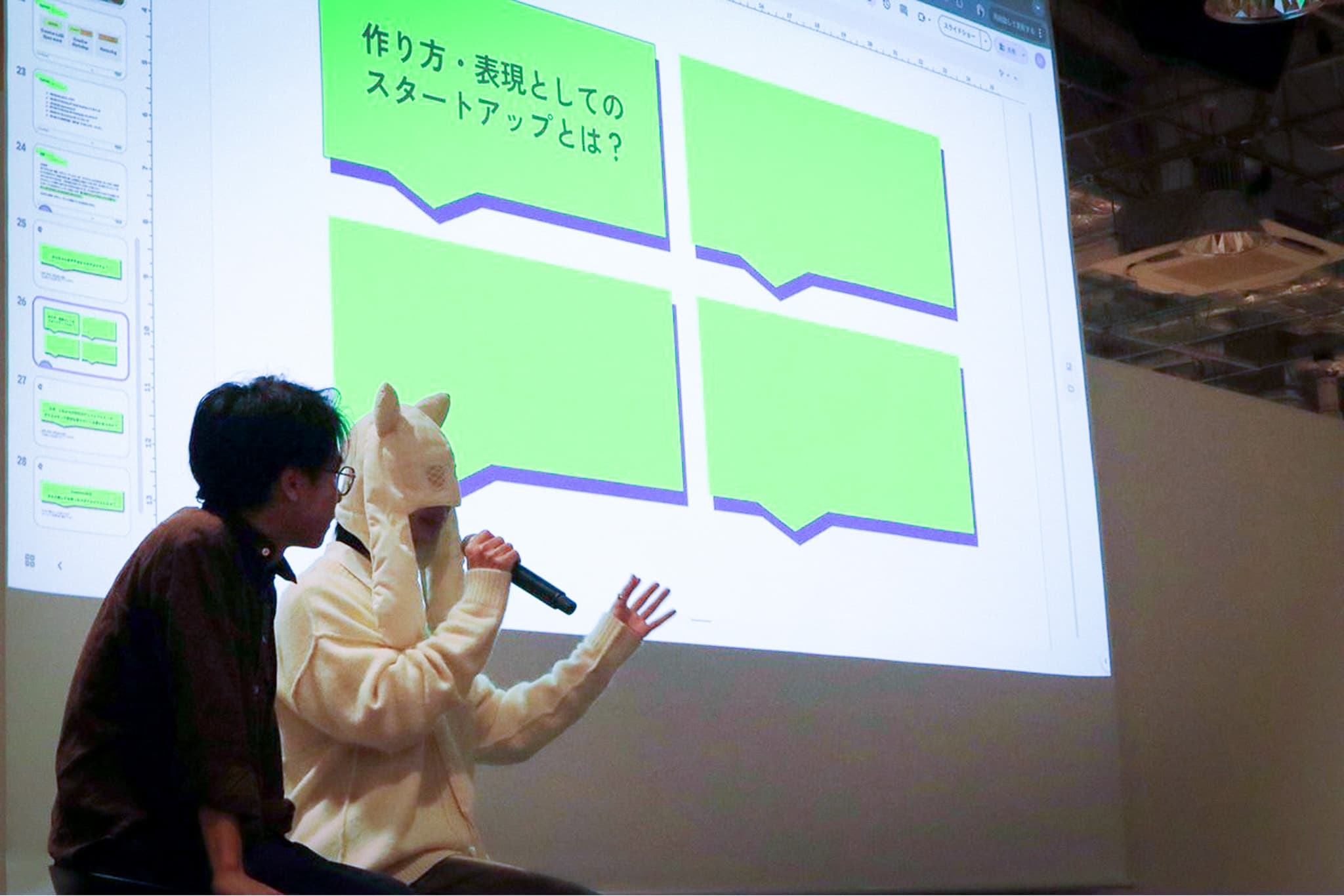
On September 28, we held Creative-LAB. DAY 3 (Open TALK 1). The first half featured a talk session with guest speakers, and the second half consisted of peer mentoring among participants.
The speakers were Reika Nakamura (yomiyomi), who runs a product brand focused on memory; El, the “Witch of Freedom” who liberates the world’s unknown through Experimental Art (“Liberation of the Unknown – Enchanted Music of the Sphere”); and Hiroshi Handa (Nijō Architecture), who creates mobile performance spaces in light trucks.Each of them is a practitioner who has pursued creation across genres, driven by their own impulses.
This talk session was held as a side event of “Creative-LAB.”—a program aimed at fostering entrepreneurs in the creative sector and organized as part of the Tokyo Startup Gateway initiative promoted by the Tokyo Metropolitan Government.
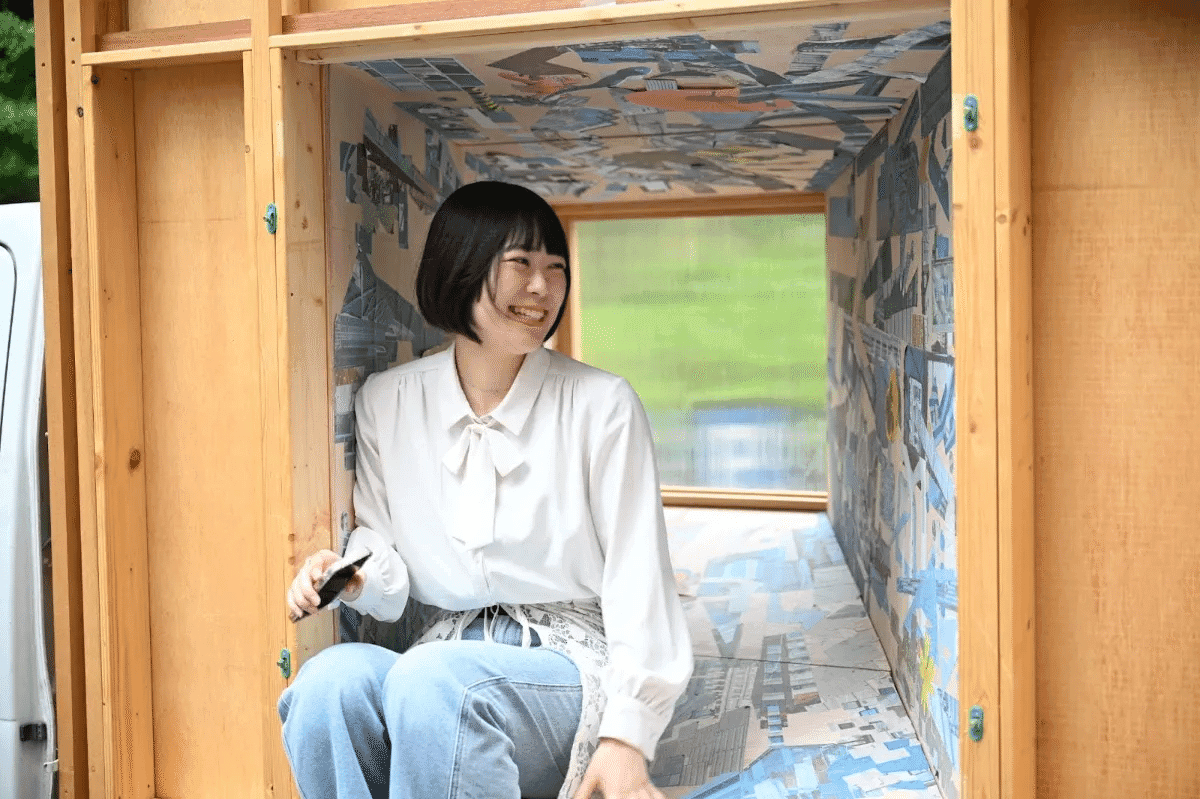
FIG.2
As a modern witch, El creates works based on the theory of the “Music of the Spheres” proposed by the ancient Greek philosopher Pythagoras. These include sound installations that transform footprints into magic circles, as well as exhibits that reinterpret Mercury’s magic circle—where sound is generated when viewers come into contact with the installation.
When she first began creating works as a witch, she spoke of wanting to create new experiences, but in reality, painting was her only means of expression.So she joined ASIBA’s incubation program, and her initial concept was a grand installation in which five giant stones would circle a massive 7m × 7m space, each playing a different musical scale.
However, all I was able to actually build in three months was a mere 35-centimeter disk with five tiny light bulbs mounted on top. This vast gap between ideal and reality—the feeling that even an image meant to be grand was being painted over with something trite—is a common enemy for anyone who creates things, and at the time, I was so terrified of it that I couldn’t bring myself to work.
However, once I actually got to work, I realized that “it is precisely in that discrepancy that one’s true character resides.” The orbiting boulders were a provisional ideal—the limit of my own ignorant imagination—that anyone could easily picture.On the other hand, the work—which I painstakingly squeezed out of myself and, due to my lack of skill, ended up being only 35 cm—embodies a unique individuality and physicality precisely because of that “discrepancy.” I came to keenly realize that the process of bringing a beautiful, perfect image down into the real world is what art truly is, and that it is crucial to keep creating in order to achieve that.
Furthermore, El cited “when you’re in your prime” as the moment when she can best harness her “impulse” in her creative process. Inspiration is “all about passion and freshness”; ideas must not be frozen or smoked.For example, while the passion sparked by the public art piece *Maman* at Roppongi Hills was still fresh, she impulsively carried out a performance in Ueno Park where she swept pedestrians’ footprints with a broom. This work, created on a whim, turned out to be the piece that most purely conveyed the message she wanted to express.
Click here for the series “WHICH’S SCOPE: ASIBA Through a Witch’s Eyes.”
Next to take the stage was Mr. Handa of Nijo Architecture, who introduced his practice of “mobile architecture”—creating small structures on the bed of a light truck and moving them around to generate activities throughout the city.The core of his work is not to build structures tailored to a specific location, but rather to create things based on what he or others want to do, and to enjoy the unexpected events that occur when these creations are deployed in the city.
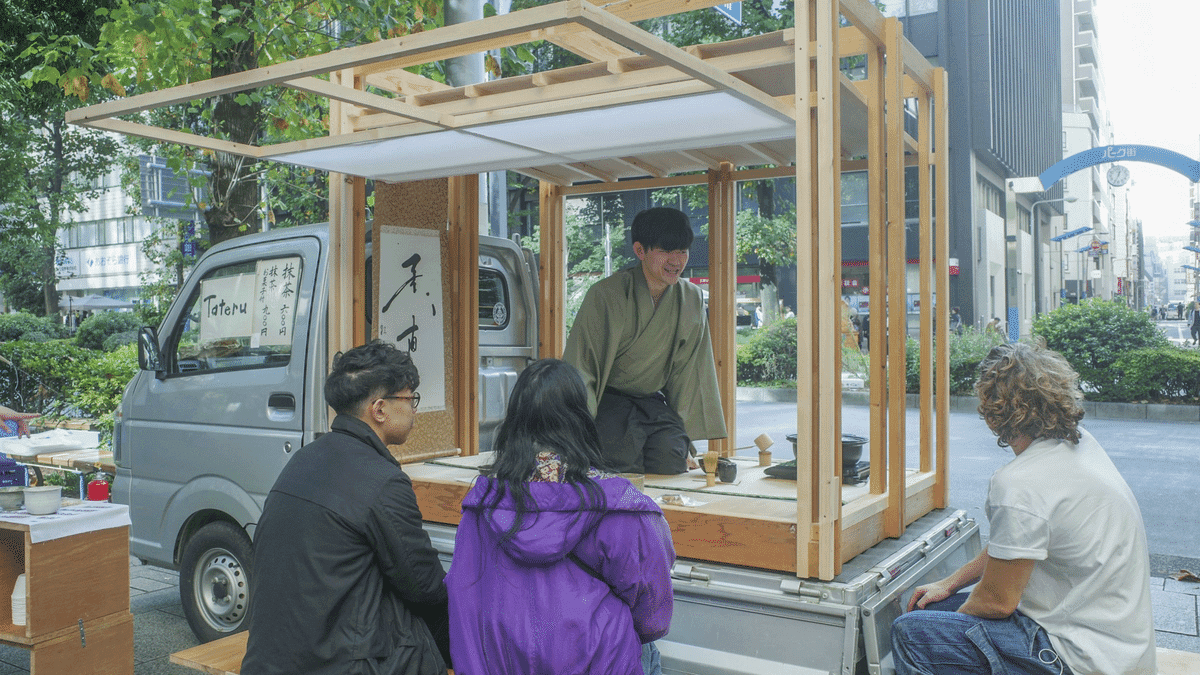
FIG.3
The first example is “Motor Loop,” a collaboration with an artist who creates collages of landscape photographs.To break free from the constraints of traditional gallery exhibitions and fulfill the artist’s desire to “cut out” the landscape itself and exhibit it while on the move, he created an exhibition space on the bed of a light truck. Over two days, they toured just under 20 locations in Tokyo, staging an exhibition that showcased the creative process itself—taking photos on the spot and pasting them directly onto the truck.
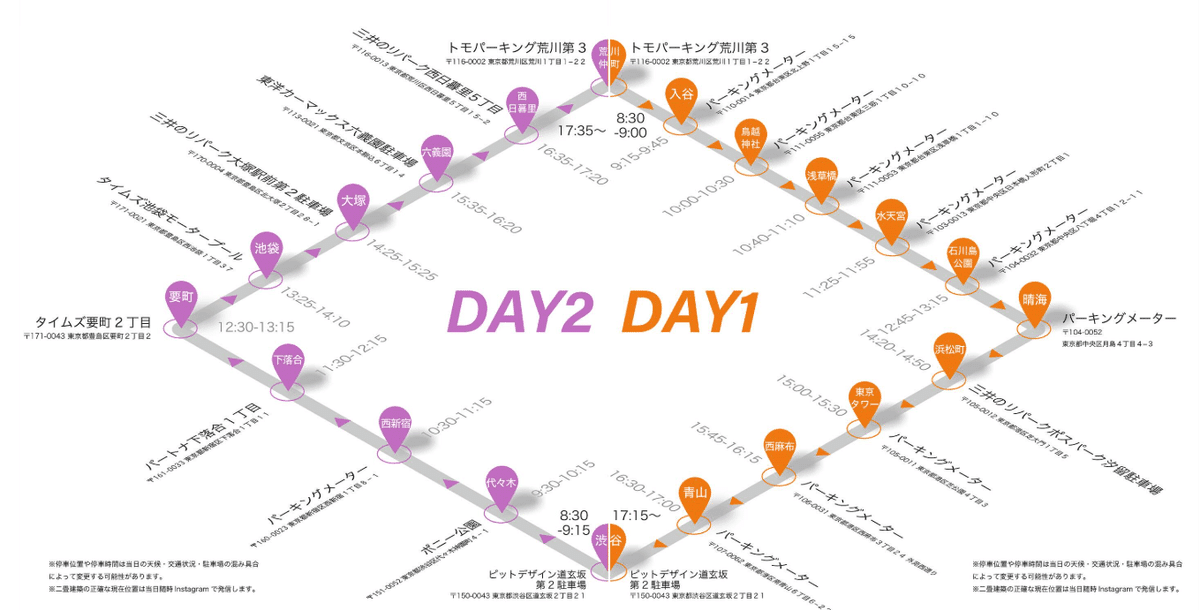
FIG.4
The greatest value of this mobile exhibition lay in the “serendipity” it generated.People who had no intention of engaging with art—such as those checking their cars in a parking lot or children—encountered this space that suddenly appeared and had the opportunity to create the artwork alongside the artist by adding stickers and other elements. It provided new encounters and experiences throughout the city, completely different from the typical purpose of visiting a gallery.
Another example is the “tea room.” In collaboration with a tea ceremony master, we aimed for a spatial design that maximizes the value of an experience focused not on drinking or taste, but on “sharing the atmosphere, setting, space, and time created by the host.”
To that end, we built a tea room on the bed of a light-duty truck and exhibited it at markets in Ikebukuro and elsewhere. By deliberately bringing experiential values—such as “the time spent preparing the tea” and “the act itself”—to the market, we created opportunities for a diverse range of people, including children, to experience the essence of the tea ceremony.
Through experiential architecture—somewhere between a food truck and a market stall, temporary yet inviting active participation—Mr. Handa explores how to bring hard-to-reach cultures and experiences into the heart of the city.
Mr. Nakamura is leading a project called yomiyomi, which aims to create “a world where memories live on through objects.”The first product in the series is the “Memory Summoning Sticker”—a digital sticker with a built-in IC chip that brings memories back to life in just one second simply by holding a smartphone over it. By crossing the boundaries of space, art, and product design, the project proposes a new way of experiencing memory to society: “imbuing objects with memories.”
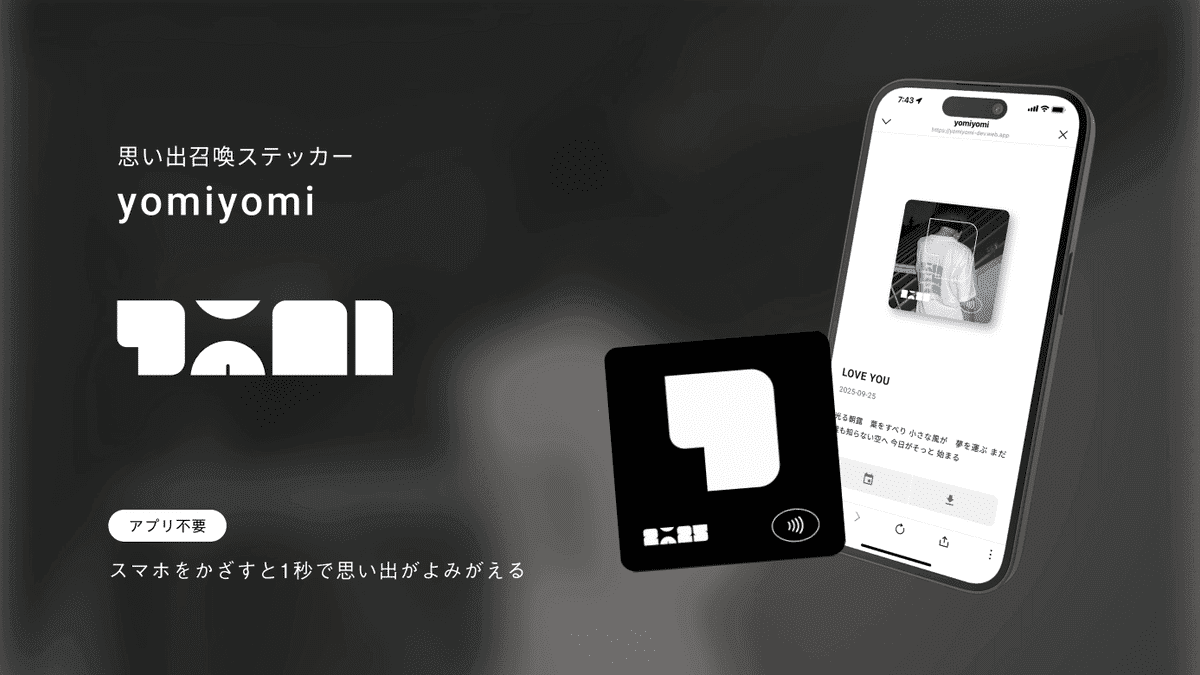
FIG.5
During the talk session, she spoke about a way of life driven by her own fundamental “impulse”—one that transcends societal expectations and judgments. The origin of Nakamura’s work lies in the death of her father, which she experienced at age 19. From the poignant realization that “no one knows when they will die,” a strong impulse arose to create “products that will endure even after my death.”In the past, ideas driven by a desire for social “likes” failed to sustain her passion, and she was unable to see them through. What she truly sought was “a product she could lean on during lonely nights” and, above all, “a product that embodied her own philosophy.”
This strong desire came to fruition in the memory product brand “yomiyomi.” Ms. Nakamura’s challenge is to counter the human tendency to “forget” and change the societal paradigm.The “Memory Summoning Sticker”—which links memories to physical stickers and revives them simply by holding a smartphone over them—is the first step in that transformation.
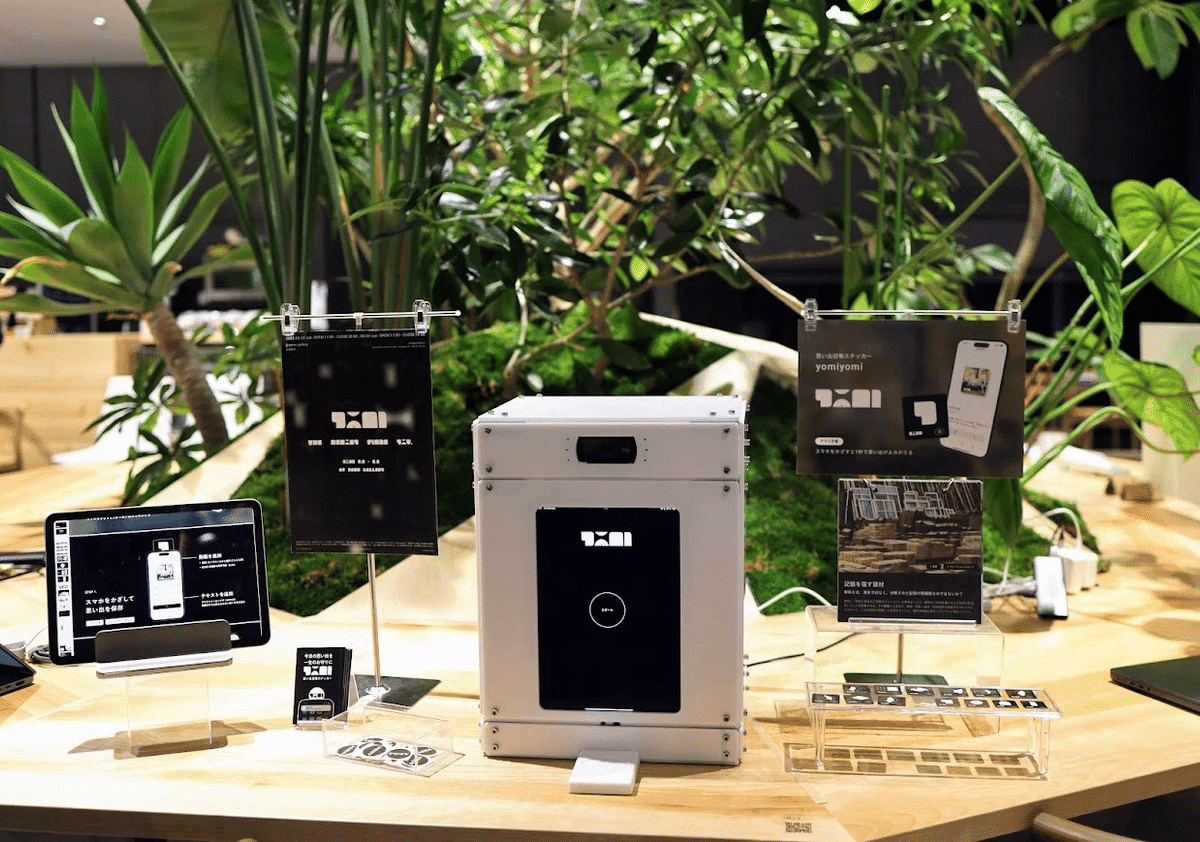
FIG.6
Nakamura says that even in a reality where one cannot survive on aspirations alone, he continues to live “impulse-driven” in order to enjoy his one and only life.While confronting moments when he feels himself slipping into the “dark side,” he maintains pure curiosity and big dreams. With the strong resolve to “believe in my own dreams no matter what happens,” he continues to take on challenges that transcend conventional boundaries.
The second half of the talk session focused on how creators driven by intense impulses confront their big dreams, the realities of society, and the “fear” associated with creation.
Nakamura revealed that, in the process of gathering the people and funds necessary to realize his grand dream, he mastered the skill of distinguishing between his true nature and his public persona.El, on the other hand, explained that rather than expressing her complex ideas directly, she allowed her work itself to function as a “translator” for conveying her message to the world, through which her true feelings and public image gradually became one. It’s clear that both are exploring ways to connect their personal philosophies with society, each through their own distinct approach.
When asked about the fear of presenting her work to the world, El explained that her driving force comes from the resolve that her work “might become an eternal grave” and the conviction that “no matter how immature it may be, this is proof that I have lived.”
Nakamura emphasized the importance of affirming, “I am truly great simply by creating,” as a mindset for continuing to produce work. Furthermore, she explained that to accelerate the cycle of pursuing one’s dreams, it is crucial to prioritize a sense of urgency in taking action—overcoming fear—and noted that “it’s better to face embarrassment as soon as possible.”
In modern society, where rationality and productivity are prioritized, the question of how to affirm “actions that lie outside rationality”—such as magic or the tea ceremony—is a central theme for artists.
Mr. Handa says that in order to affirm one’s own actions, it is important to actively choose and change one’s environment—specifically, “who you spend time with.”In contrast, Mr. El strongly asserts that the “mysterious movements that may even seem wasteful,” as seen in the tea ceremony and magic, and the “time” devoted to them, are precisely the “beauty” that gives rise to a unique individuality—that is, artistic individuality.Furthermore, the unique narratives generated by these seemingly irrational actions ultimately set one apart from others and can even translate into business value.
Mr. Nakamura explains that the greatest source of support in continuing activities that seem to go against the prevailing social currents is “the awareness that you are the author of your own life.” He shared that by becoming the author of the story of your own life—much like a manga writer—you can make decisions without hesitation and free yourself from the struggles of daily life.
This talk event delved deeply into how a creator’s fundamental impulses are “translated” and how the challenges of implementing them in society are overcome.Discoveries such as “individuality lies precisely in the gap between ideal and reality” and the practice of “creating based on what you want to do and enjoying the serendipity of the city” taught us the importance of keeping the “passion” known as impulsiveness alive.For those of us exhausted by modern rationality, the attitude of these three speakers—affirming “irrational movements” and establishing “living proof” with their own hands—was deeply insightful. Through creative activities, changing one’s environment and regaining control of one’s own life—this lecture gave us the courage to do just that.
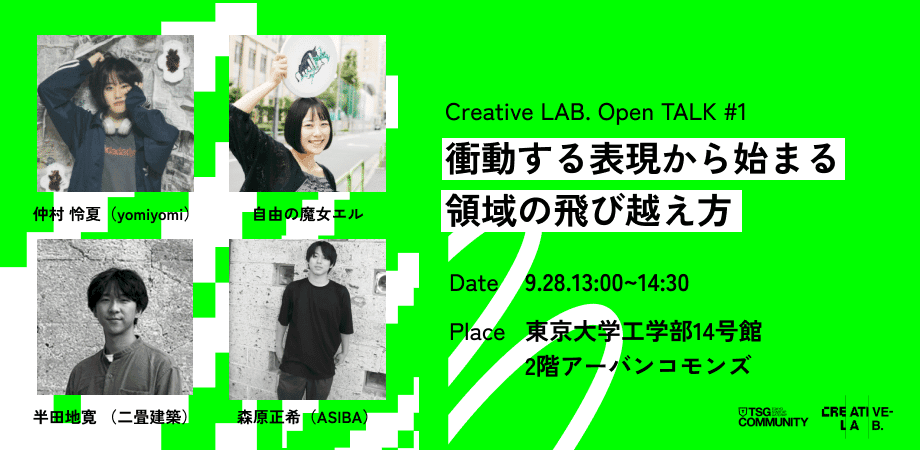
FIG.7
Creative LAB. Open TALK is an interactive talk series featuring guests who, through their own expressive activities and creative work, have broken free from existing frameworks and carved out their own paths of expression and ways of life driven by their own impulses. The theme for this session is “How to Break Boundaries Starting with Impulsive Expression.” The speakers are Reika Nakamura (yomiyomi), who is attempting to bring a new cycle to the nature of memory; El, the “Witch of Freedom” who confronts the world through Experimental Art; and Hiroshi Handa (Nijō Architecture), who has transformed a light truck into a mobile space for expression.Each is a practitioner who has pursued creativity across genres, driven by their own impulses. Through the experiences and questions they share, they will discuss not only “how to create” but also “how to live,” sharing insights, challenges, and techniques for crossing boundaries cultivated in the field of creation.We will reexamine the relationship between design and life, and explore opportunities to discover new models for creators in the coming era. This event is being held as part of “Creative Lab.,” in which ASIBA participates as a planning partner.
<Details>
Date and Time: September 28, 1:00 PM – 2:30 PM
Location: Urban Commons, 2nd Floor, Building 14, Faculty of Engineering, The University of Tokyo
Program: 1:00 PM–2:00 PM: Guest lecture event featuring three speakers 2:00 PM–2:30 PM: Cross-talk session Participation
Fee and Requirements: Guest talks: Free
Credit
Related Works
DAY1 Drawing a Compass
Creative-LAB. 2nd Term Program Report #1
REPORT
2025.10.07.