Creative-LAB. 2nd Term Program Report #4
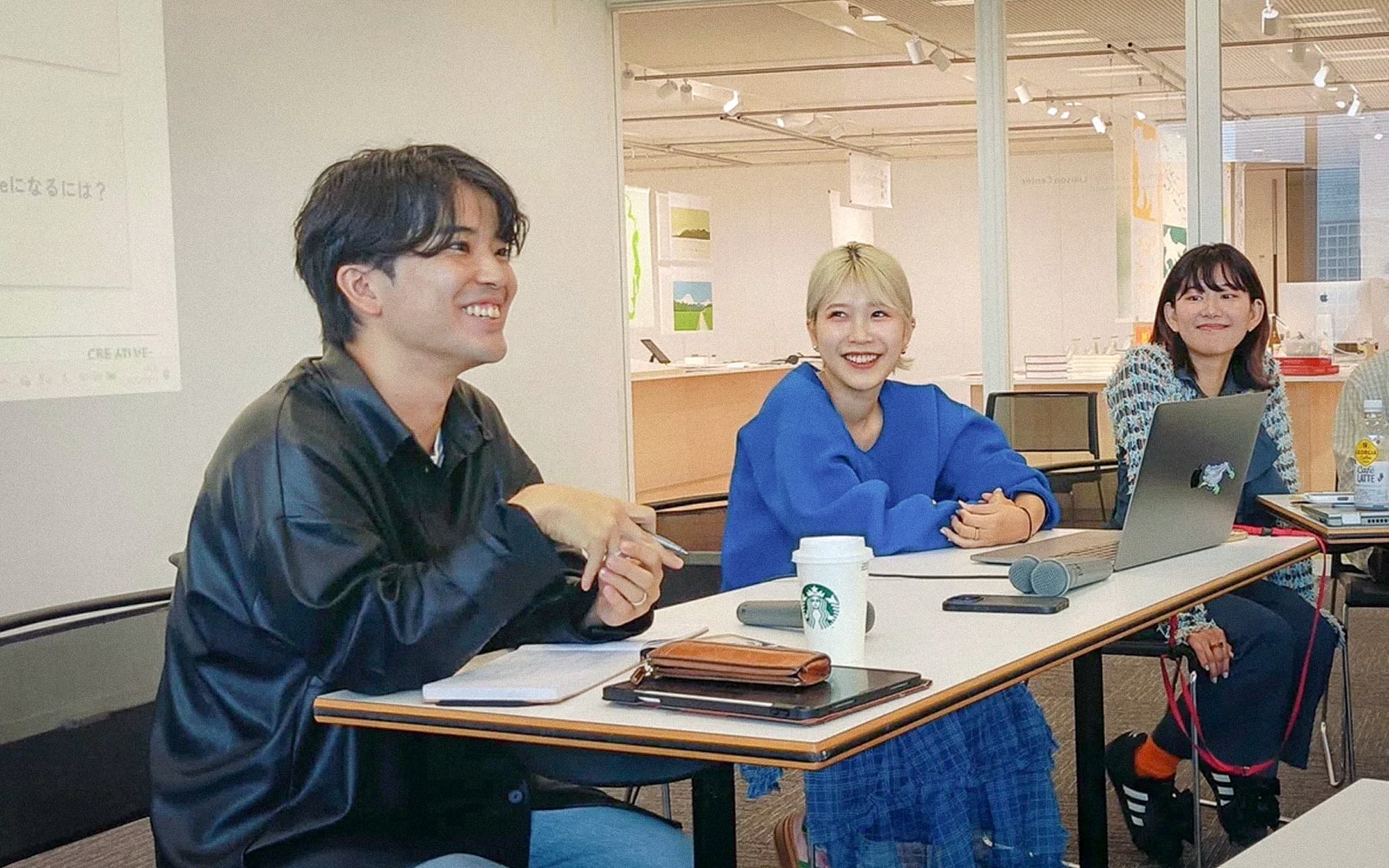
FIG.1
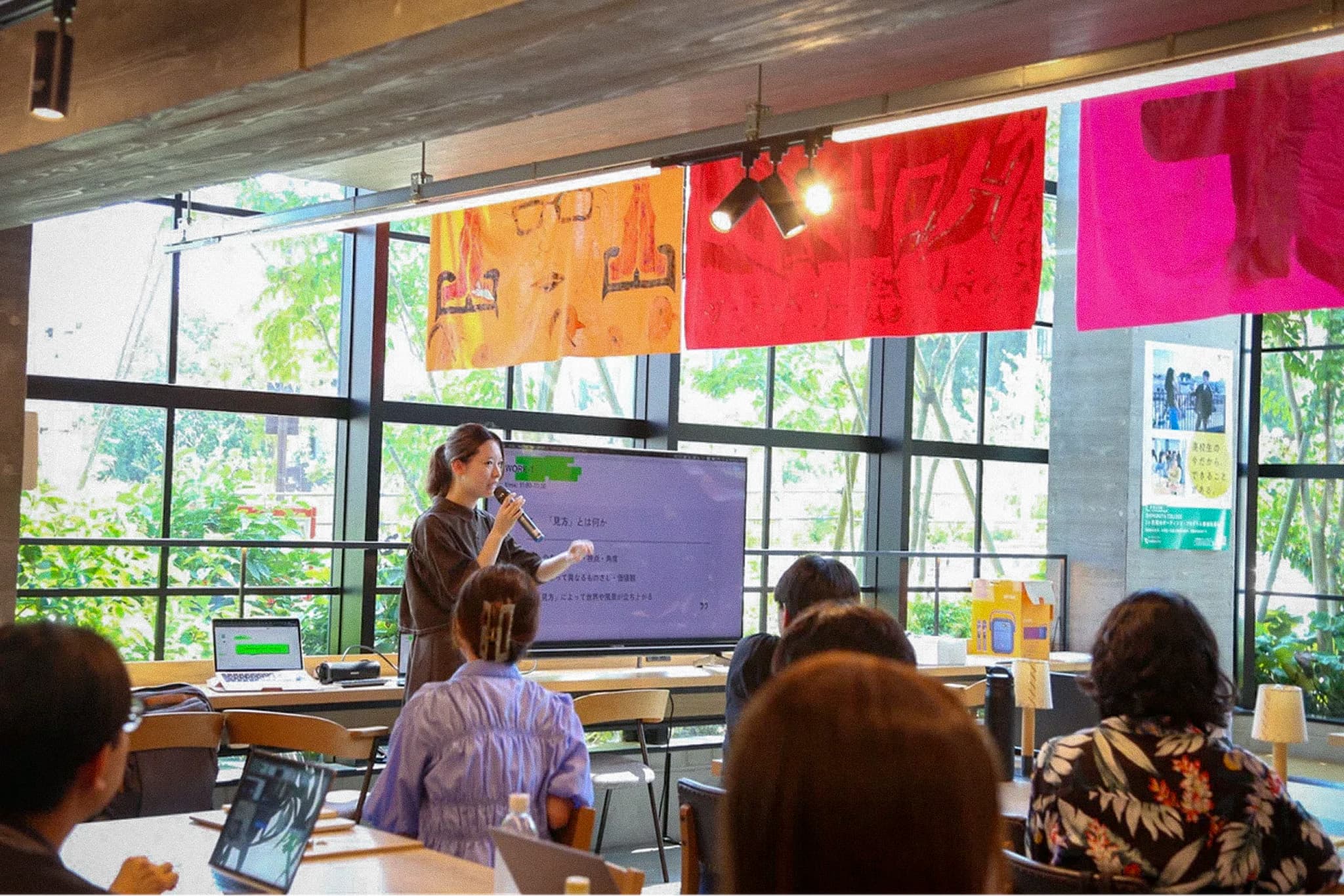
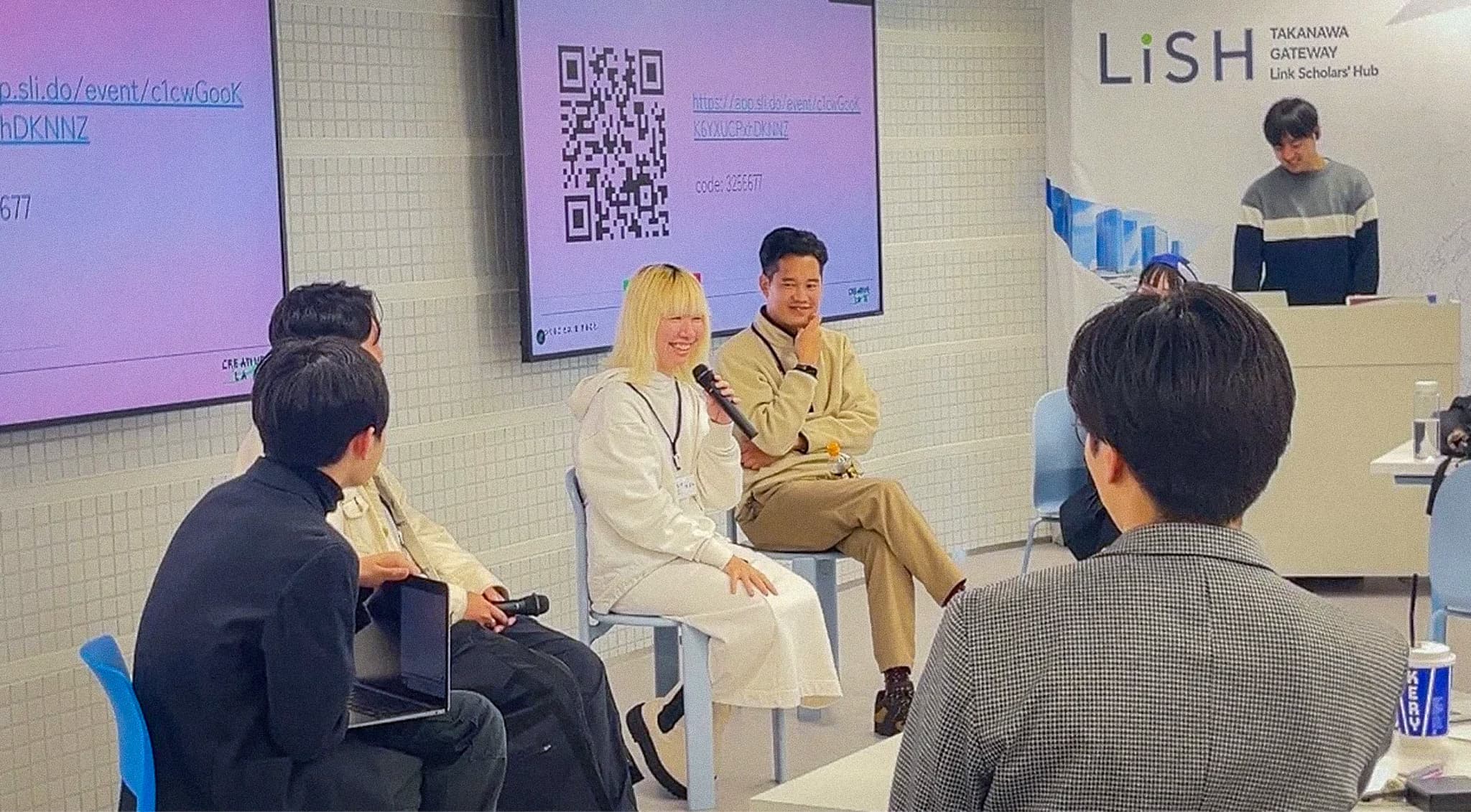
We held Creative-LAB DAY 4 + Open TALK 2 on October 11.
In the first half of the event, during Open TALK, Yuna Nakagawa—who won the GOOD DESIGN NEW HOPE AWARD in 2024—and Yu Kato—who won the award in 2022 and 2023—gave a talk titled “Prototype Junkie.”In the second half, we conducted a prototype review session with lab participants, joined by the lecturers.
This article summarizes some of the content from the first half of the Open TALK.
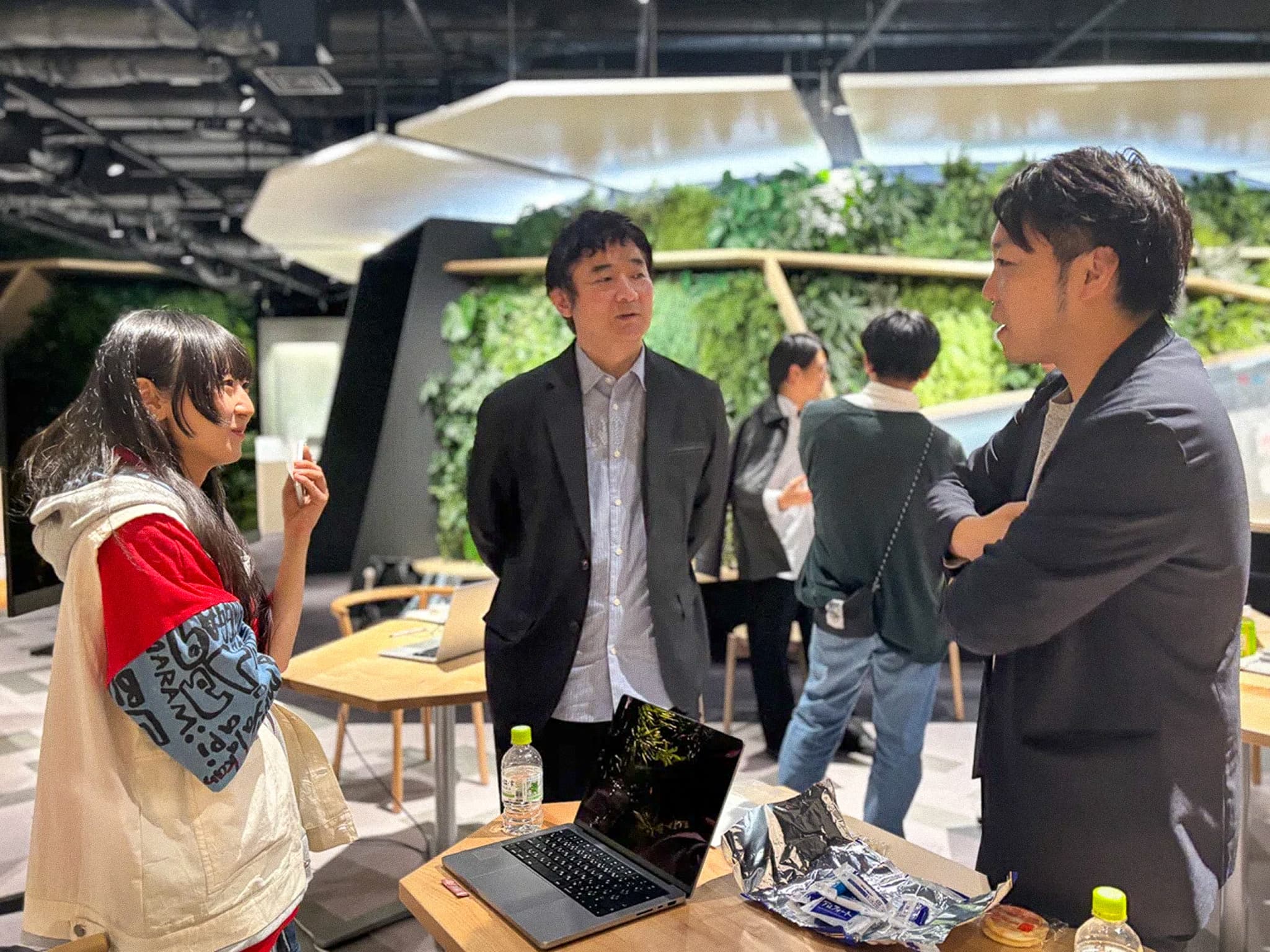
Yuna Nakagawa is a second-year graduate student in architecture and design and a member of the second cohort of the ASIBA Incubation Program. The starting point for her graduation project was a sense of unease regarding the so-called “conventional path.” Building facilities in depopulated areas to connect locals with tourists; proposing green architecture to address environmental issues.She explained that this “old-school” approach to graduation projects—architecture that “raises social issues and aims to solve them”—just didn’t resonate with her. “I thought, ‘There’s no way that’s going to solve anything.’ My journey began when I started thinking about what I could create to break away from those standard graduation project tropes.”
Nakagawa reflects that this “process of posing questions to explore what I truly wanted to do” was her first prototyping. In that process, she prioritized two things.
“Every week, my professor would berate me, saying, ‘I have absolutely no idea what you want to do.’ But I never wavered in my conviction to do what I loved.” The answer she found was in an unexpected place. A restroom stall, an illegally dumped sofa—those “cozy, private spaces where no one disturbs you.” She realized that Shinjuku needed more of these spaces, which felt like “ambiguous secret hideouts.” “Suddenly, an illegally dumped sofa appeared on the vacant lot next to my house. It was trash, and a derelict vacant lot isn’t exactly a nice place either. But the combination of the two somehow created a space that felt like an ambiguous secret hideout.”
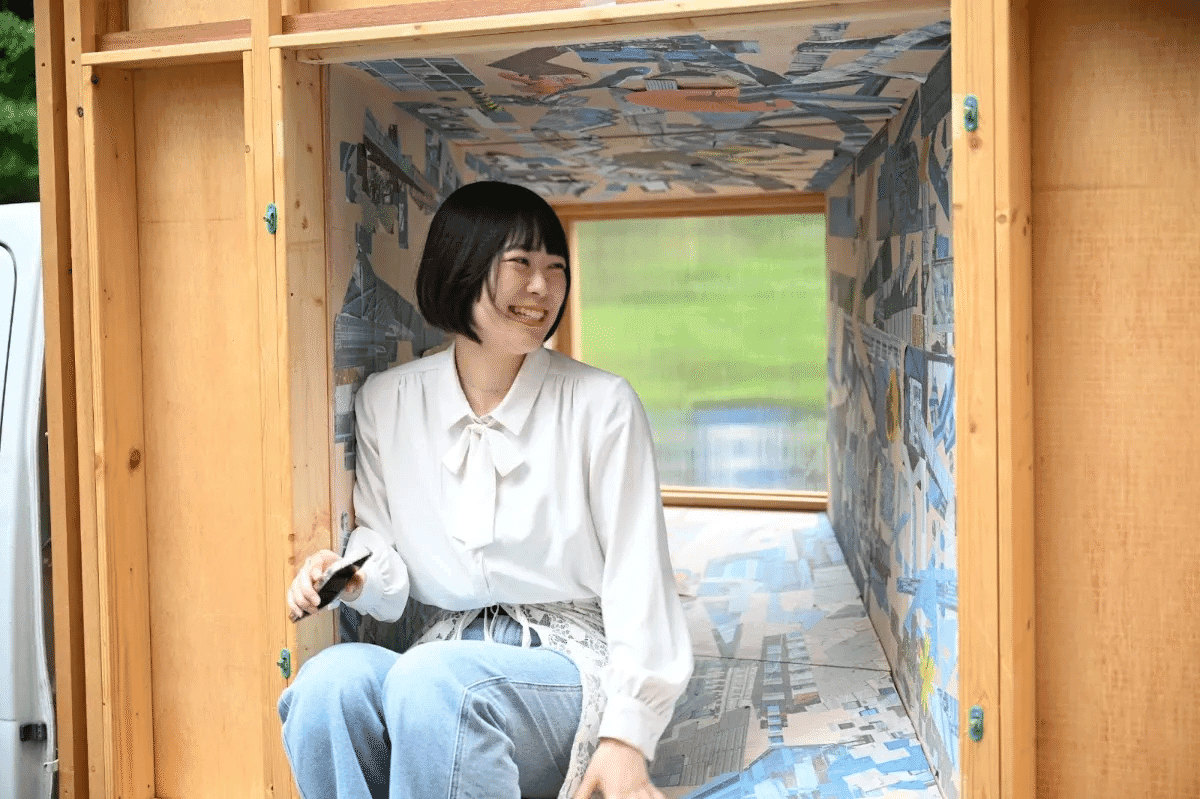
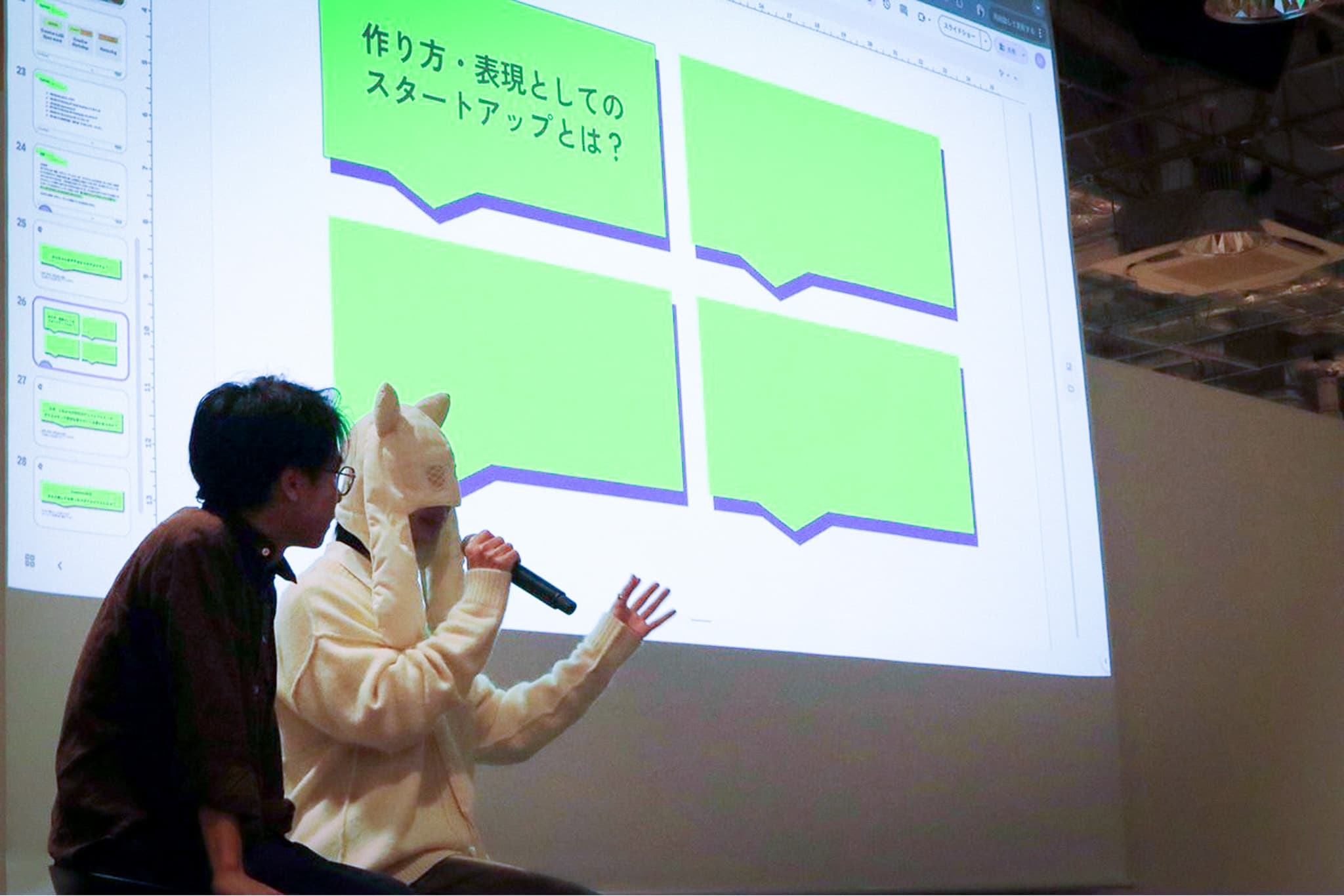
For her graduation project, her proposal had been limited to drawings and perspective renderings. The first thing she tried after entering graduate school was “actually building it.” When she actually wore the trash-can-shaped shelter she’d created while walking through the streets of Shinjuku, she found that people surprisingly didn’t notice it—it blended right in. “This was something I only realized after actually using it, not just making it. I feel that even if you make something and think, ‘Maybe this won’t work,’ trying it out in real life is an important part of prototyping.”
Mr. Kato’s talk took a more technical turn. With a background in information technology, he has expanded his scope of work to include architecture, fashion, and product design. “I’m incredibly curious about what would happen if I actually made something that doesn’t exist in this world. I’m the kind of person who creates driven by that impulse.” When Mr. Kato went to have an engagement ring made, he was struck by how limited the customization options were and how the lead time was as long as five months. That’s how the “Kiyosumi Silvercraft” project began. By combining silver clay with a 3D printer, he created an experience where lines drawn on an iPad are transformed into a ring.
Development took eight months. The two of them handled everything themselves—from the design system and modifying the 3D printer to researching materials. “At first, we couldn’t even find silver clay, so we tried all sorts of materials—plastic, resin, paper clay, pottery clay, tin, and more.” They also built their own compact 3D printer specifically designed for rings, since using an existing 3D printer for clay would have cost as much as 300,000 yen per prototype.
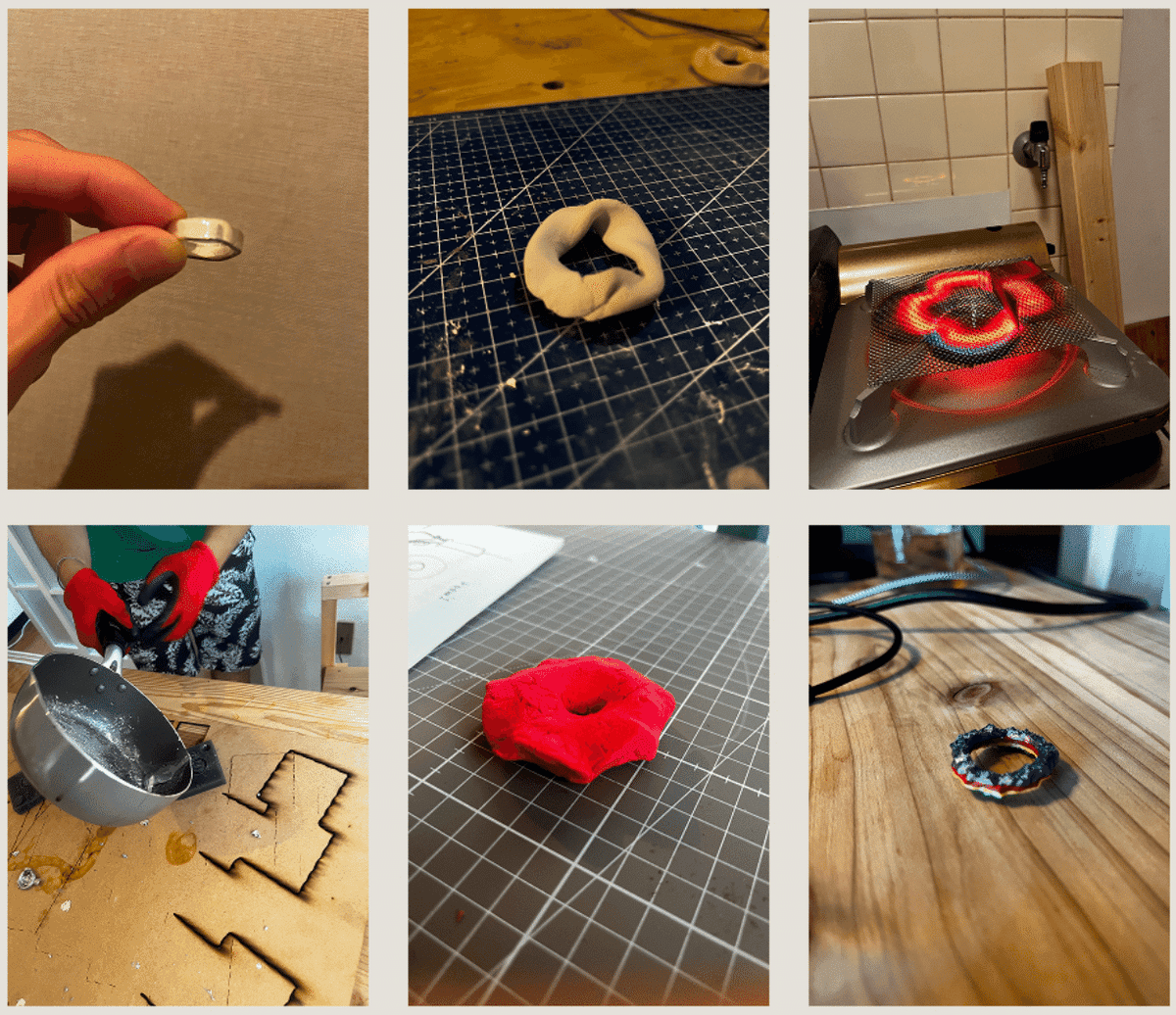
FIG.2
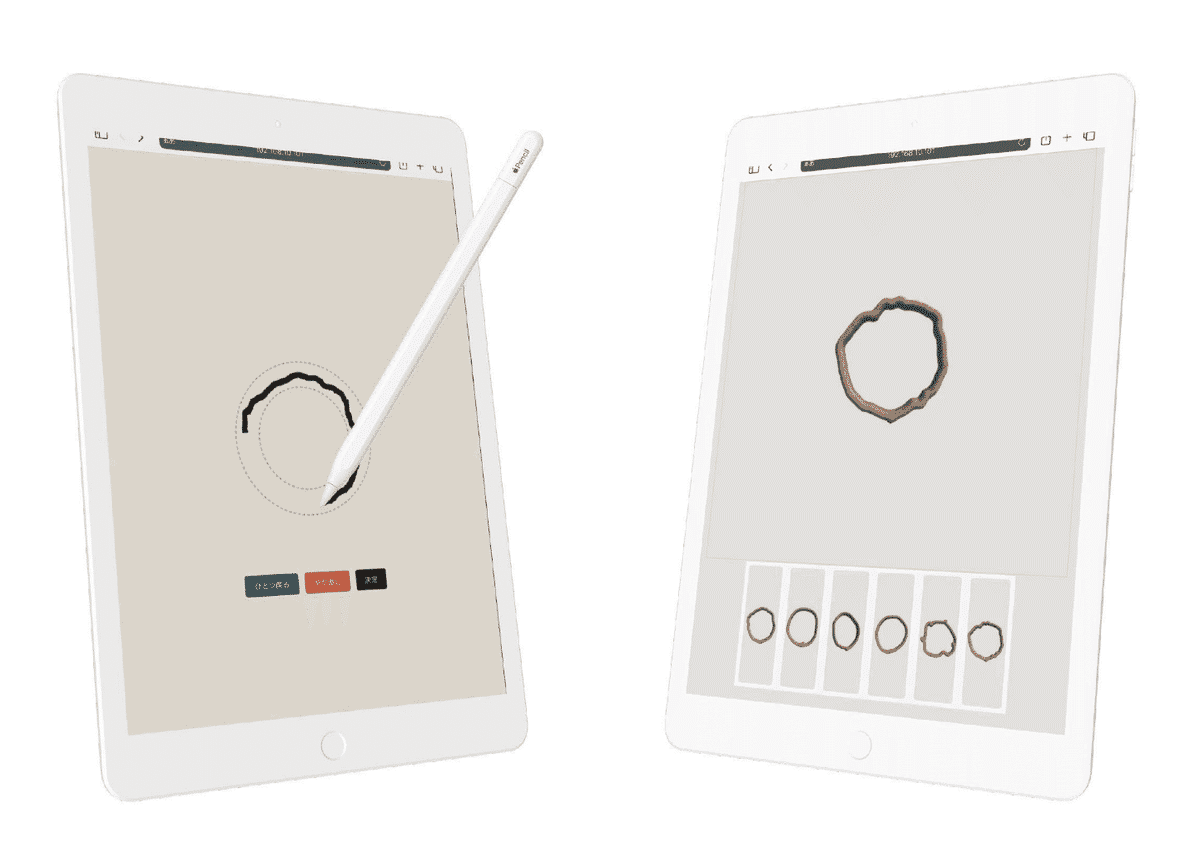
FIG.3
Mr. Kato’s co-founder was someone who loved clay. His father was a clay modeler (a craftsman who makes car models out of clay), so he had been familiar with clay since childhood. Mr. Kato himself was passionate about the objects produced by 3D printers, and “Kiyosumi Silver” was a project that both of them could throw themselves into. “What I’m trying to say here is that to keep your hands moving, you need something you’re passionate about. Passion won’t last just because there’s a market or because you can give a polished presentation.” Here’s a quote he likes that was mentioned: “If you’re serious, build a prototype.” “Having a tangible object is more persuasive than giving a polished presentation over and over again. Often, once you think you’ve gotten your point across in a presentation, you end up feeling satisfied. That’s why I made it a rule to write code on my way home from drinking parties.”
After the lecture, we held a discussion involving the participants.
“How do you narrow down the features?”
Nakagawa: “I’m the type who takes a long time to think things through. I go over every possible scenario in great detail and only take action once I’ve found the best solution.”
Kato: “When I’m still getting used to something, I just do everything at once. I think it’s important to learn from your mistakes. By just cranking out a lot of stuff, I’m the type who gradually figures out—without overthinking it—what the main point is or what works as a prototype.”
“Do you have a goal?”
Nakagawa: “I don’t have anything specific I’m aiming for. I just keep doing whatever I feel like doing right in front of me.”
Kato: “I don’t really have any specific goals either. But I do make sure to create an environment where I can give it my all each time.”
“How do you pivot if you don’t like it?”
Nakagawa: “The moment I thought, ‘This isn’t working,’ I immediately started thinking about something else. I feel like I’ve reached a point where I think, ‘This might be as good as it gets.’”
Kato: “The project—an AI that mimics the city—won an Excellence Award in a competition, but I stopped it because I felt it wouldn’t last more than a year. I realized that, given my temperament, I’m better suited to constantly creating new products rather than building a single system and scaling it up.”
For his graduation project, Nakagawa initially focused on the theme “Differences in Private Life Across Religions,” but he scrapped that idea and switched to the theme “Escape.” Kato is the type who runs multiple projects simultaneously.
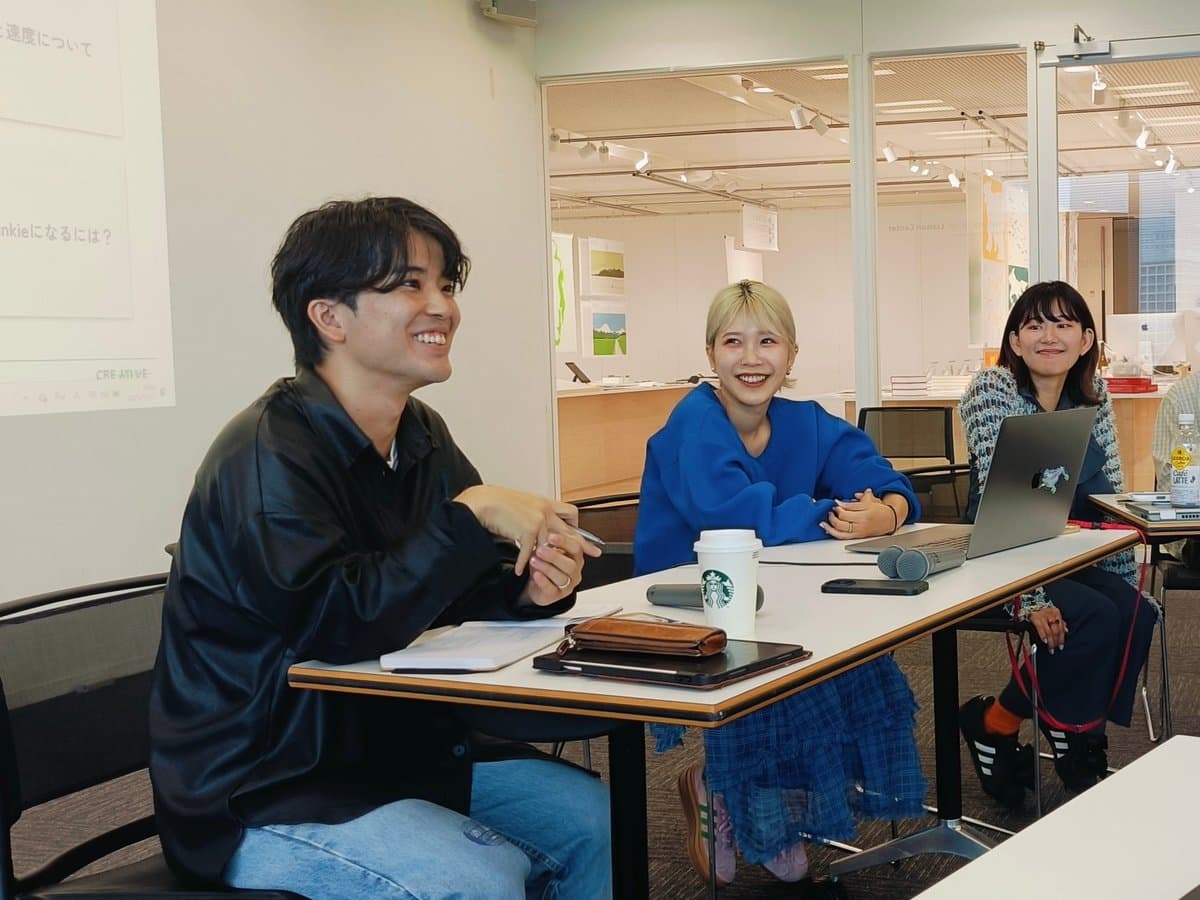
FIG.4
One point that was emphasized repeatedly during our conversation was the importance of “putting your work out there.”
Nakagawa: “I’ll work on something until I’m satisfied, then show it to others and gauge their reactions. If I like it, that’s good enough for me.”
Kato: “Friends I met through Good Design New Hope. Even if our directions are different, if we share the same level of passion, we can build a community of like-minded people who get excited together. When there are more people like that, I feel secure enough to take on new challenges.” However, they noted that it’s important who you show your work to. “I absolutely never consult with people who give overly serious, critical feedback that dampens my motivation. Even if you have the ability, once your motivation drops, it’s all over.”
On the other hand, Kato says it’s also necessary to “cut yourself off from information” when you start creating.
Kato: “It’s important to face yourself. When you belong to a community, I think you tend to get swayed by thoughts like, ‘How should I present this to make it look good?’ The first step is to set that aside and find what truly moves you.” “I write things down, and I also cut myself off from the outside world for a while. I don’t tell anyone. If I do, pride and other factors come into play, and it gets complicated.”
Nakagawa: “I want to do what I want to do, and while everyone around me thinks I’m amazing, talking to people who are aiming for something different won’t get me good advice. It just increases the chances that I’ll lose my focus.”
So, when is the best time to seek help from an expert?
Kato: “I absolutely don’t talk to professionals in the early stages. Professionals will give you the ‘right’ answer, but that doesn’t necessarily mean it’s the right answer for me.” “I don’t reach out until I’m facing a specific, concrete challenge. I often deliberately cut myself off from outside input.” In fact, Mr. Kato reportedly bought his own sewing machine to learn how to sew clothes, modified a 3D printer, and kept experimenting with materials. He says it’s only after that “apprenticeship” that consulting a professional becomes worthwhile. Mr. Kato: “There might even be something cool about taking the long way around. You’re expanding your own knowledge on your own.”
Toward the end of the session, a participant remarked, “If you start making things blindly, you might end up feeling satisfied just because you made something.”
Kato: “It’s important to keep raising the bar for what it takes to feel satisfied with your work. At first, it’s okay to be satisfied just with having made something. But as you keep at it, there comes a moment when mere satisfaction isn’t enough anymore.” Nakagawa: “Prototyping or just giving something a try can lead to the next step or spark new interests. I really hope you’ll all give it a shot—even if you think it might not work out.”
Become a prototyping junkie. It’s not about striving for perfection. It’s a journey to discover what you truly want to do by continuing to create and experiment. Don’t worry about the “right” answer, don’t fear judgment—just create. Then share it with the world. Find like-minded people who share your passion. And then create again. Perhaps true creation is born through this cycle of repetition.
Credit
Related Works
Related Texts
Creative-LAB. 2nd Term Program Report #1
REPORT
2025.10.07.