INC-2nd Cohort Roundtable #1
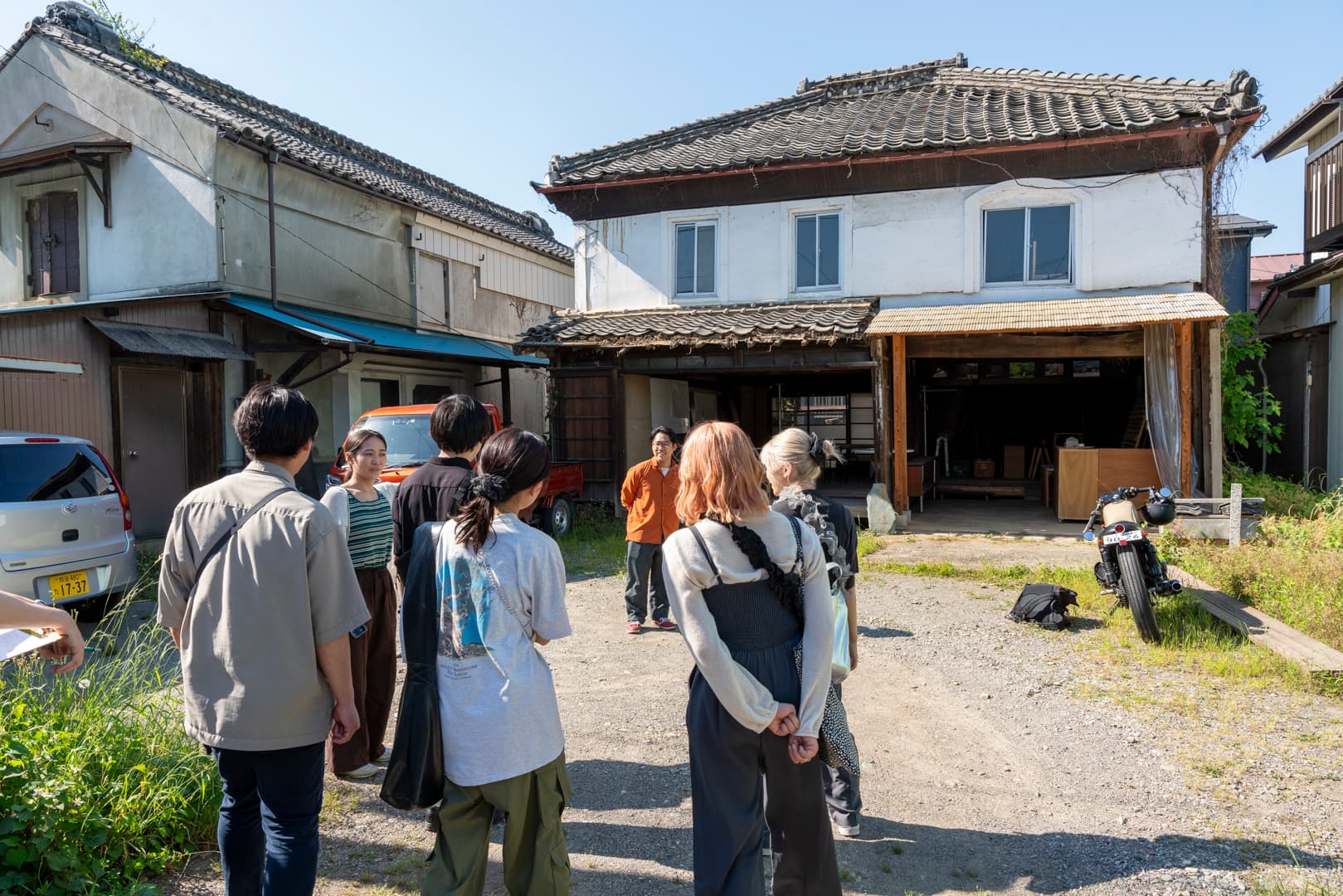
FIG.1
For this session, we held a roundtable discussion featuring three participants from the second cohort of ASIBA. In addition to discussing the projects they are each working on, the discussion aimed to provide deeper insight into their personalities and interests, as all three have “proposals regarding the nature of contemporary cities and housing.”Although each of the three participants has a different perspective, focus, and point of departure—and each is reacting to different issues—they discuss the sense of dissonance felt toward contemporary cities by a generation that experienced the COVID-19 pandemic as teenagers in an unstable modern society, as well as the actions they are taking in response. (This is a two-part series.)
I’m Yutaka Enomoto, a fourth-year undergraduate student at SFC. I’m proposing “Architecture Food Cart,” a project designed to make resident-participation workshops more accessible to the community. “Architecture Food Cart” is a tool designed to facilitate the experience of users working together with their own hands to create architectural spaces, serving as a new form of social connection for people in the community. I have led and participated in workshops myself in the past, but I’ve found it difficult to reach beyond those who were already interested from the start.To expand this initiative more broadly in society, I wanted people who haven’t participated in workshops before to be able to discover the joy and excitement of creating spaces in a more casual way. For many, the biggest hurdle to creating something themselves is that while they’d like to try it, they don’t know where to start. To translate their ideas into the concrete act of building a space, they need someone to support them.
Additionally, during the construction phase, there’s the hurdle of gathering the necessary tools and equipment. Renting a full set can be costly, and you still have to procure consumables like drill bits on your own. And if you buy them, getting a full set of essentials can cost around 300,000 yen.In the city center, this hurdle becomes even higher due to the scarcity of rental locations and limited transportation options. So, I wondered if there was a way to make the design and construction processes themselves more accessible.
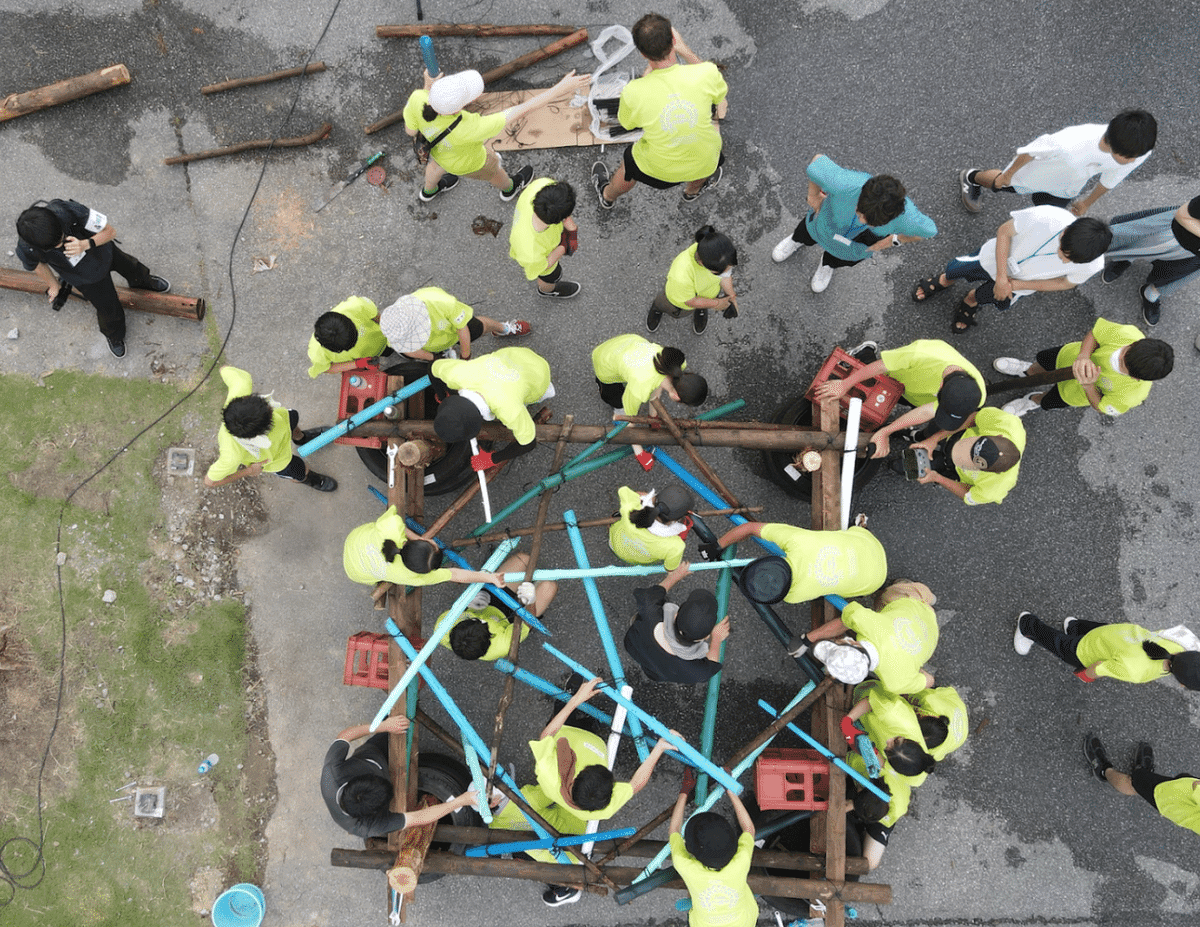
FIG.2
So, we’ve devised a system where we send a mobile cart—containing the minimum set of tools needed for self-building, along with a consultant who can discuss your project ideas—to any location you choose, in the quantities you need. We’re currently working on implementing this. A single food-cart-style cart loaded with tools will be dispatched—along with a consultant—to the space you want to create. The cart contains the bare minimum of tools needed for design, brainstorming, and construction. The idea is that if you need slightly more advanced tools, you can simply rent another cart to cover those needs.
You can rent both the consultant and the cart (tools) for any duration and at any time that suits you, allowing you to adjust the process flexibly according to your own pace and skill level. For example, a consultant might be dispatched first to brainstorm ideas and develop a plan; once the planning phase begins, the cart is brought in so you can create blueprints or hold workshops.Once the actual construction phase begins, they’ll use the tools provided in the cart. As they gradually get the hang of the construction process, they won’t need the consultant anymore, so they’ll just rent the tools—it’s a system designed to help them become increasingly self-reliant. Ultimately, we envision them purchasing the tools themselves, so that by the time they “graduate” from this service, they’ll be fully capable of creating things on their own. We envision operating in public spaces—such as on properties themselves or, ideally, on the streets in front of them—right in the heart of the community. During the brainstorming phase, for example, passersby might offer a quick comment, and the construction itself could function as a community event. We hope not only to create things but also to lower the psychological barrier for local residents to “get involved in the community” and, if possible, foster connections through the construction process.
As for the scale of the projects, for rentals lasting a few days, we’d start with small renovations—such as painting the wall in front of a house or building shelves in a store. For larger projects—like creating a flower bed in front of a train station or renovating a community center—we’d offer rentals lasting several months. This way, everyone can participate, and we can create spaces that are completely open to the community.This is ideal for those who want to create beloved architecture that goes beyond the scope of traditional workshops—architecture that engages people from the very beginning of the building process.
Fukumoto: That’s true. I’ve recently started getting involved in community development in my own neighborhood, but of course, not everyone in the community shows up. I think there was a tendency to kind of ignore that fact and just go ahead with whatever the people who did show up could manage.Of course, I’m sure the organizers are making all kinds of efforts. At least in my neighborhood, there’s a situation where, aside from me and my friends, everyone else is basically 30 or 40 years out of touch.
Takano: I’m curious about two things: what’s the underlying concern driving Enomoto’s participatory architecture, and what’s the significance of getting people who haven’t participated before to join in.Regarding the latter, as is true of community development in general, neighborhood association activities are basically run by older people. While there’s the question of how to involve those who aren’t currently participating, I think it’s ultimately the older generation who are actually doing the hands-on work. What are your thoughts on that?
Enomoto: That’s right. As for the significance of moving forward with this project, I believe that the very act of building the town together will, as a secondary effect, create new points of connection between people. This is something we’ve discovered through the hands-on construction workshops we’ve held so far. There’s a certain number of people who don’t usually attend neighborhood association meetings but show up only during construction, and the fundamental starting point was the idea that we could create connections with those people as well.Another reason is that by planning and carrying out the work ourselves, I think we can lower a certain psychological barrier to getting involved in the town. That’s also part of our awareness of the issue of so-called urban homogenization.
Takano: I’d like to hear a bit more about that. By going through that process together, what exactly changes, and what’s wrong with the way things are now?
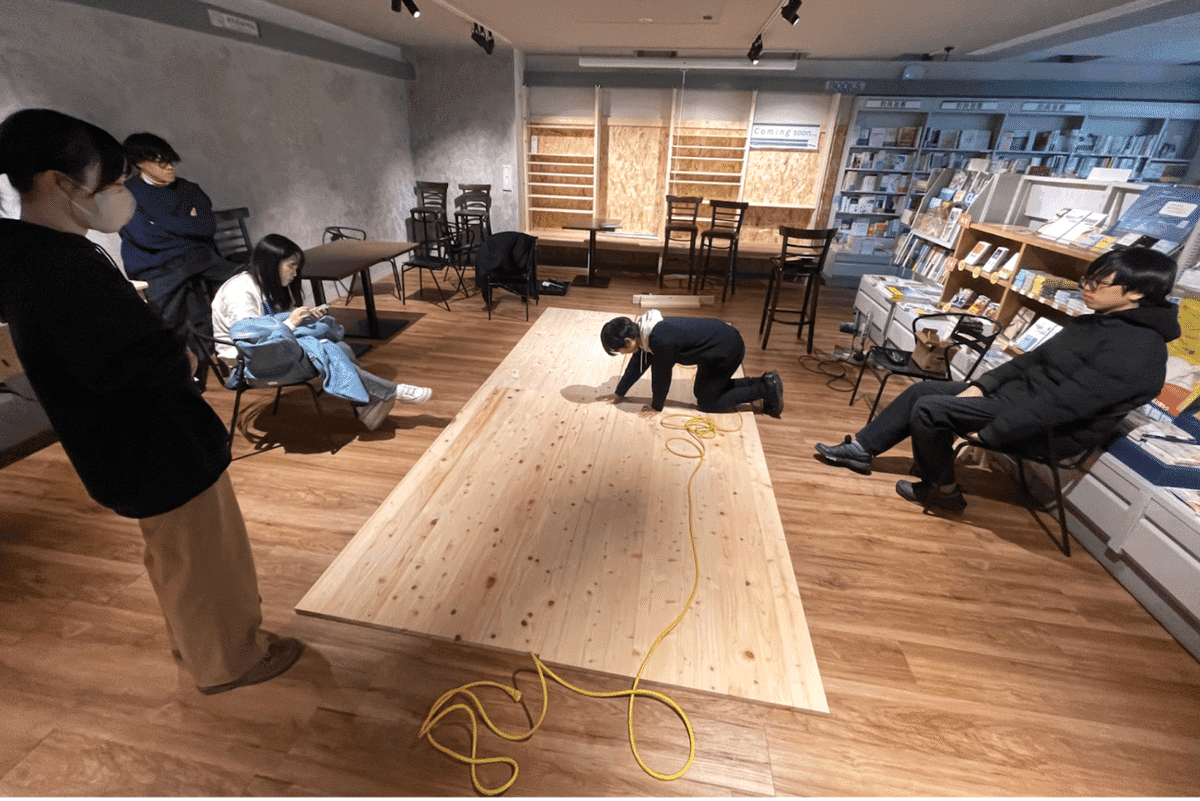
FIG.3
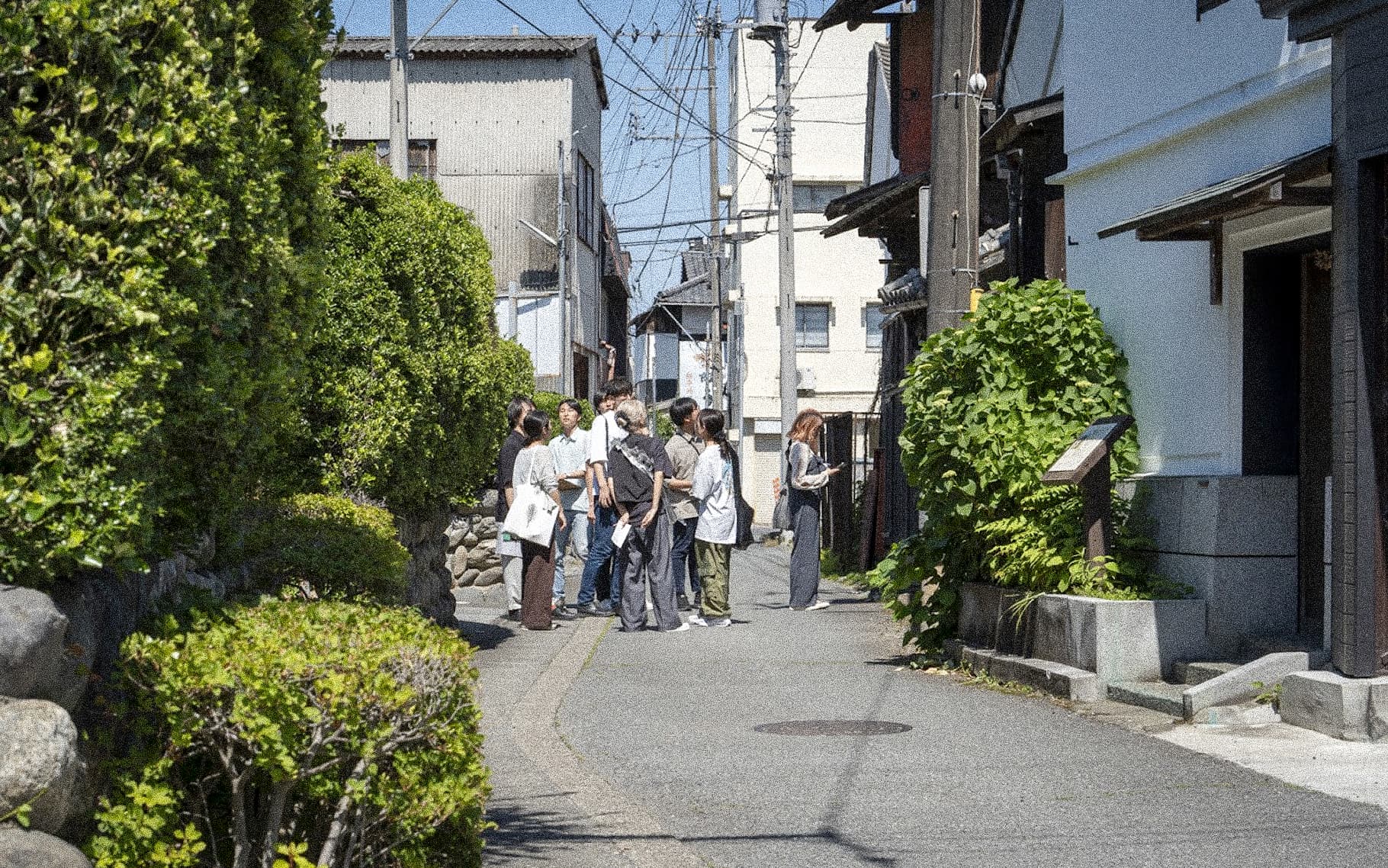
Enomoto: As for what changes—well, for one thing, I think that as residents gain more opportunities to intervene in the physical infrastructure of the neighborhood, their desire to “do it this way” will gradually manifest in the spaces and the neighborhood itself.If you take a walk through the old downtown areas, you’ll see that residents’ everyday concerns—things they feel “we need”—and their solutions often manifest directly as handmade creations.For example, you might see a handmade bridge spanning a small irrigation ditch. Of course, this adds to the richness of the landscape, but I also think it’s quite important as a manifestation of that drive to make even small improvements.
Fukumoto: Mm-hmm. I think there are two key points here: lowering the psychological barrier to taking action in the city “through a kind of hands-on project,” and seeing what happens when that barrier is lowered and action is taken. Personally, I’m particularly interested in the second point—after all, the people who typically come up to us and say, “We’re going to hold a community-building event,” are mostly older adults, aren’t they?I think this is largely because they have a deep attachment to the town. For younger generations, moving to a different neighborhood isn’t uncommon, and—especially in Tokyo—it’s unclear how long they’ll stay where they are now. This touches on the question of what “hometown” even means—in other words, perhaps homogenization has already taken place among those younger people, raising the question: what’s the point of going out of their way to attend a workshop? If we lower that barrier and adopt a mindset of taking action in the town, the town gradually ceases to be a generic noun and becomes a proper noun. I think physical interventions in the town are part of that process.
When families like the Takano family choose where to live—unless they’ve lived there for a long time—they look at a map and consider factors like access to their spouses’ workplaces and the quality of the educational environment, then ask themselves, “Which neighborhoods fit our price range?”In other words, it’s based on the premise of homogeneity—the ability to evaluate every location relatively—and they make the optimal decision by weighing the pros and cons within those conditions. The question then becomes: how do you turn the result of that choice—made by optimizing various conditions—into a sense of attachment?
Fukumoto: In a way, since that approach involves choosing based on numbers, you could compare it to making a choice in the marriage market rather than falling in love freely.It’s like how you fall in love with a city you discovered through that “marriage-hunting” process—you start with the numbers, like “this person has this annual income and is this tall,” but then, as you spend time together, you’re drawn to aspects of their personality that weren’t immediately apparent.
Takano: Yeah (laughs). If we look a bit more at the “creating” side of things, within the broader trend, we’ve moved from a consumer society to an information society, and now there’s a view that we’re heading toward a creative society—in other words, the idea that wealth is defined by how much you can engage in the act of creating.Whereas in the past, what mattered was how much you could consume or how much information you could possess, the paradigm has shifted to the idea that participating in the process of creation leads to a sense of fulfillment.
There’s also the point that, back in the day, everyone used to build things together—for instance, when local construction companies or carpenters rooted in the community were building houses, the residents themselves would actually work together to plaster the walls.This shift represents a return of that involvement—which had been gradually lost as the process was optimized and mass-produced within the “nLDK” system—back to the residents themselves.
Fukumoto: Let’s circle back to the broader theme of resisting homogenization—in that sense, Takano’s “Takeno-ko” project is probably quite similar.
Takano: That’s right. “Bamboo Shoot” tackles the theme of homogenization, and I’m also considering whether we might be hindered by the urban system we’ve created ourselves.To tie this back to what Enomoto was saying earlier, I think the point is that within the trend of how to efficiently and cheaply provide high-quality housing, the joy associated with that process has been lost. I feel that within systems like urban redevelopment and building renewal, the true joy of living in the city—that sense of “why do we live here in the first place?”—is being lost.The meaning of living in the city is diminishing. Certain kinds of public spaces—places where you can just wander in, or where acquaintances keep showing up when you’re there—seem to be turning into closed-off boxes as a result of redevelopment.
FIG.4
In response to this, I believe we can resist or halt this trend by breaking into vacant homes and turning them into shared housing or coworking spaces—creating a lifestyle where people live within those networks. I think this could help us realize a way of life that allows us to live more fully as human beings within the city.
Also, with real estate prices rising steadily, I’m concerned that students might not be able to afford to live in the city center at all in ten years. It’s possible that even if they want to live on their own, they’ll only be able to rent a place in the suburbs, an hour away from campus. I worry that university life in that scenario would become incredibly impoverished.
On a more abstract level, having studied urban planning for a long time, I’ve noticed that when we discuss how architecture or cities “should be,” we tend to focus on overall optimization—discussing concepts like prosperity, livability, and comfort—rather than financial considerations.But the logic that actually drives towns is, fundamentally, nothing more than the capitalist, individual optimization of each landowner—decisions based on what will generate the most profit. I believe cases that don’t involve this kind of individual, capitalist optimization are very rare, and personally, I think how to reconcile these two contradictions is a huge theme.
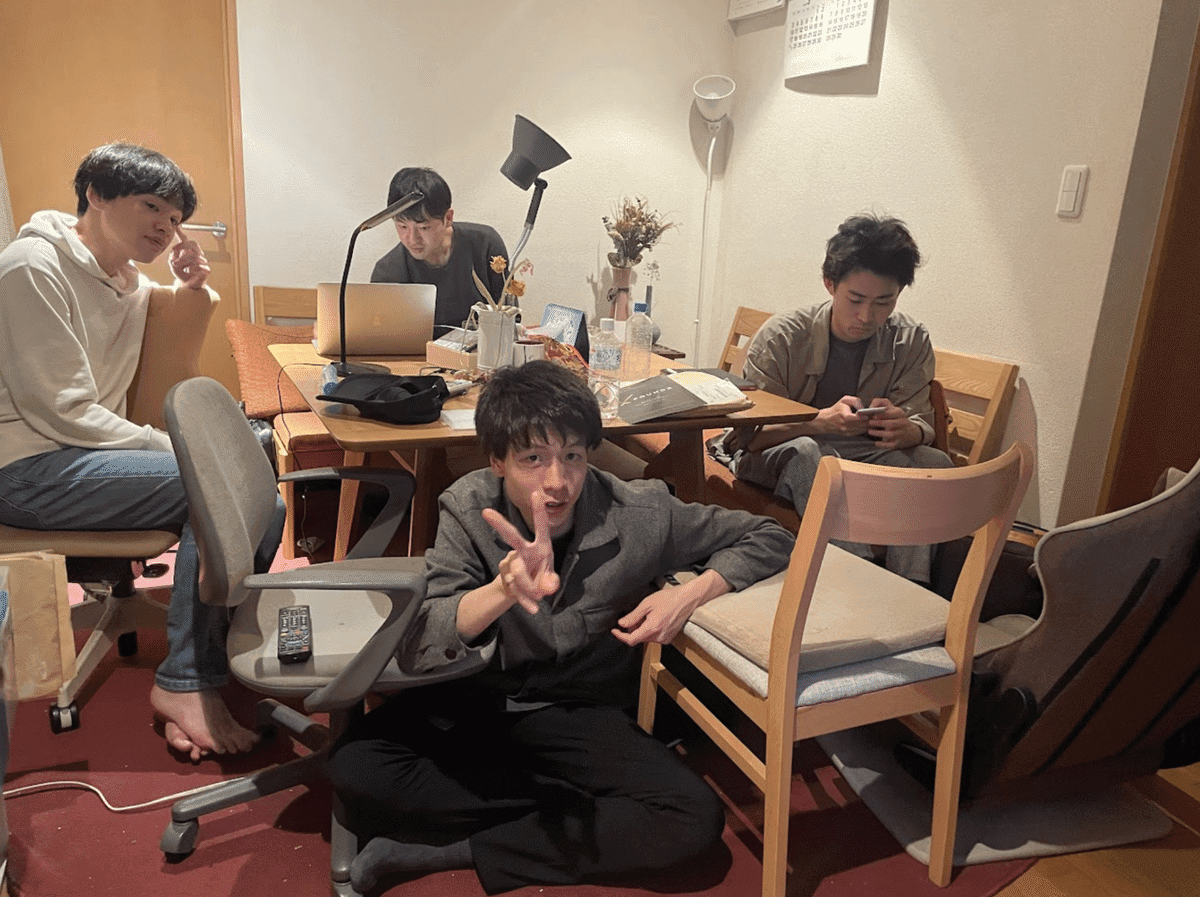
FIG.5
Fukumoto: I thought you were pretty much against redevelopment itself, but that’s not really the case?
Takano: Well, I’m not sure how to put it—it’s not really productive to criticize decision-making within the current system. As I’ve been moving forward with the Takeno Project, I’ve gotten to know a lot of people in the town, but when someone says, “So-and-so is going to build an apartment building there,” I can’t say that’s a bad thing under the current system.I think, “Well, that’s one way of making a decision,” and while I do think there’s a case for changing the system itself before anything else, I’m currently focused on creating something—even if it’s just an individual solution—that can properly mediate between two conflicting conditions, and figuring out how to expand that approach. Lately, though, I’ve been wondering if that approach might be too weak.
Fukumoto: Is this kind of richness—this “breathing room” in daily life—that architecture students talk about a relatively recent development in urban planning? When I look at urban planning from the past, it seems to have focused mainly on more functional, system-wide issues, like how to manage road traffic, and didn’t really address quality of life or lifestyle—what do you think?
Takano: That’s right. Traditionally, Japanese urban planning has definitely been more technically oriented. Eiyo Ishikawa, originally the leading authority on Japanese urban planning, was someone who loved studying entertainment districts and lively, bustling places.Then, when the baton passed to Eika Takayama—the person who established the Department of Urban Engineering at the University of Tokyo—Takayama himself was very interested in urban theory. However, by establishing the methods for developing urban infrastructure and controlling urban density—which were necessary at the time—as “urban planning science,” he set the stage for urban planning to be prioritized as a technical and engineering discipline. To begin with, it’s incredibly difficult to discuss these kinds of issues within a top-down urban planning framework. In the 1990s, the “master plan” approach emerged, and when urban planning was carried out according to a unified strategy, it proved to be difficult after all.Ultimately, whether it’s a “compact city” or something else—it’s essentially a collection of micro-decisions, such as whether to designate a certain area as an urban function guidance zone or whether to reduce traffic lanes to accommodate light rail transit (LRT)—it requires an incredibly tedious process of consensus-building. In that context, I think there’s a growing perspective that grassroots community-building movements might actually be more effective. But that perspective has always existed, and there have always been people working on a bottom-up basis, so if anything, I think it’s becoming clear that a top-down approach simply isn’t working anymore.
Fukumoto: The situation may not have changed that much over the years, but as it’s becoming increasingly clear that top-down approaches are largely ineffective, isn’t it becoming more realistic to adopt a “bamboo shoot”-like approach—gradually securing small areas one by one?
Takano: That’s right. Of course, there are things I can do right now. Ultimately, I want to challenge the system itself, and Mr. Morihara (an ASIBA board member) tells me, “Just go straight for the things you can’t do now and the problems you want to solve,” but I don’t really know how to go about it (laughs).
Enomoto: As “Bamboo,” what kind of roadmap are you drawing up?
Takano: I haven’t really mapped out a long-term roadmap yet. If we’re going to deal with vacant homes, it inevitably requires building personal relationships. It starts with having connections with so-called “key players,” and from there, things might happen casually—like hearing, “I heard that house over there is vacant,” and being able to rent it, or people noticing that students are really working hard in the community and reaching out to us for advice.To begin with, vacant homes exist in the city center precisely because renting them out is such a hassle, and changing that is incredibly difficult. So, we’re dependent on whether homes actually become available, which inevitably slows things down, and it’s hard to make accurate predictions. I think there’s a barrier we’ll have to overcome at some point.I feel that unless we present a roadmap—showing how we can raise funds through revenue sharing or crowdfunding, use those funds in this way, and thereby shorten the process—there’s no point in ASIBA doing this.
Fukumoto: Generally speaking, when you compare a situation where a house is simply vacant to one where more people are living there in a shared house, is the level of resistance to redevelopment completely different?
Takano: I definitely think it’s completely different. The fact that students are living there is one thing, but I also think it’s incredibly important that the space is being utilized within the community and is open to the town.For example, in a neighborhood association I’m currently involved with, they renovated a vacant house so that the first floor is a coworking space and the second floor is a shared house and workspace—and we even hold our neighborhood association meetings on the first floor. The first floor is usually open, so people just drop by to say hello. When that happens, it seems the landlords are much less likely to tear the building down.
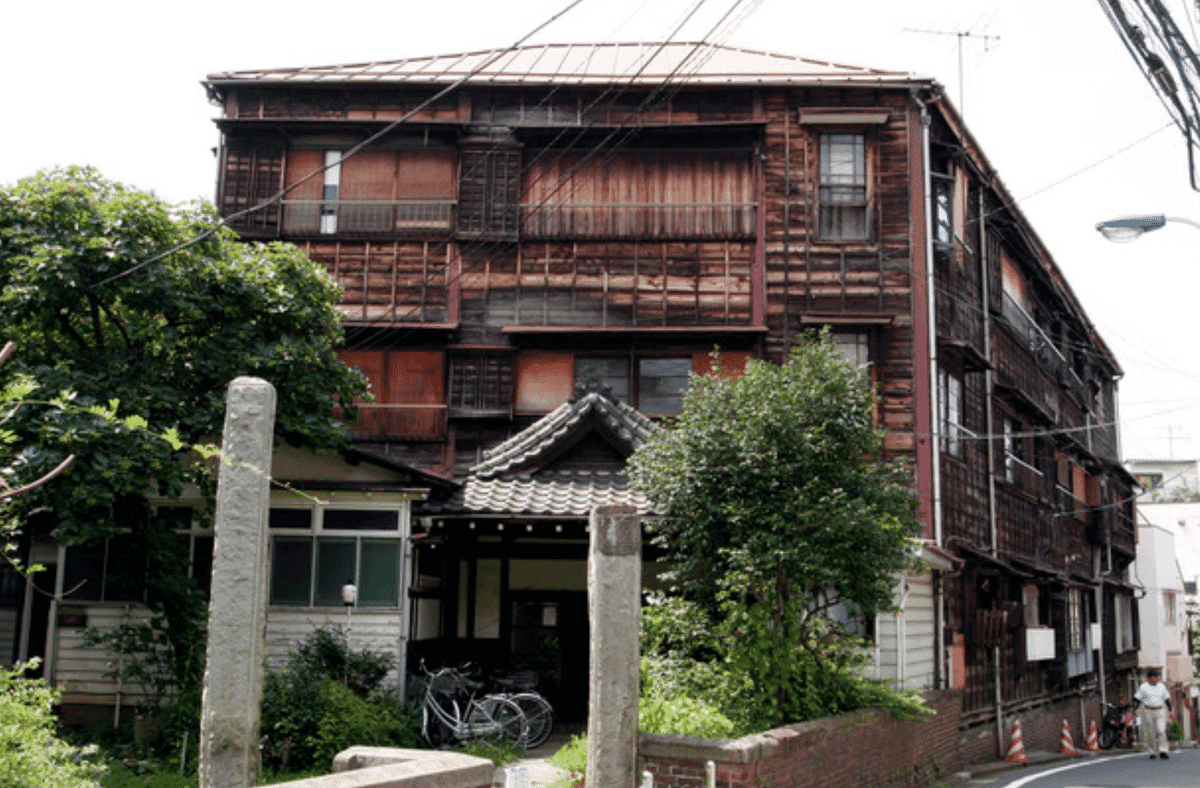
FIG.6
Fukumoto: Generally speaking, I think the trend of shared housing started a little while ago. Amid the broader shift away from patriarchy and so on, people were actively exploring questions like, “What does a new model of family or community look like?”Or, while “sharing” itself certainly has an economic context, I personally like that Takeno-ko adds an extra layer—a context and intention of being rooted in the neighborhood and resisting the status quo. I’m not sure if everyone shares that sense of purpose, though.
Takano: Yeah, that’s true. Right now, of course, there are questions about patriarchy and things like, “Do families really have to live together?”“Why do people live alone?”—and I’m actually planning to write my thesis on studio apartments. In a book I’m reading right now, there’s a discussion suggesting that living in a share house in a building originally designed for sharing is fundamentally different—as an act—from taking a building not originally intended for that purpose and interpreting it in your own way to make it work for shared living. The reason we can’t go with a strategy of building new structures is simply that we don’t have the money—we can’t even afford to buy land (laughs).But if we just build a standard share house, it’s based on the premise of homogeneity, which makes it hard to open up to the neighborhood. On the other hand, taking over a vacant house and turning it into a share house on our own terms should offer more potential. I think that flexibility, that sense of freedom, and that “breathing room”—those are the things that come into play when we move in and make a home out of it ourselves.
Enomoto: That’s true. Living in a “package” designed specifically for a shared house versus making it work in a space that wasn’t originally built that way—not only does the approach to the shared house itself differ, but it also seems to affect the relationship with the neighborhood.
Credit
Related Works

ASIBA 2nd Term: Gen Z's Actions Towards New Urban Living - Part 2
INC-2nd Cohort Roundtable #2
DIALOGUE
2024.06.27.