INC-2nd Cohort Roundtable #2

FIG.1
For this session, we held a roundtable discussion featuring three participants from the second cohort of ASIBA. In addition to discussing their individual projects, the discussion aimed to provide deeper insight into their personalities and interests, as all three have “proposals regarding the nature of contemporary cities and housing.”Although each of the three participants has a different perspective, focus, and the specific issues they are challenging, they discuss the sense of dissonance felt toward contemporary cities by a generation that experienced the COVID-19 pandemic as teenagers in an unstable modern society, as well as the actions they are taking in response. (This is a two-part series.)
Fukumoto: One of the topics I’m working on at ASIBA is the creation of smoking areas. First, as a practical spatial issue, I’m raising the problem that there aren’t enough smoking areas in Tokyo. In 2020, changes to ordinances and laws led to a general ban on indoor smoking and a prohibition on building smoking areas in parks, resulting in an absolute shortage of smoking areas today.In this situation, even when we go to the ward offices to discuss the issue, the administration tells us, “We’d like to increase the number, but we can’t build them here due to ordinances and laws.” There are limits to what the government can do, yet in reality, there simply aren’t enough smoking areas. It’s not just a matter of quantity—there are also places with terrible conditions, such as smoking areas that are nothing more than shipping containers, where the air inside is practically foggy.Smokers end up smoking in those incredibly harsh conditions, or—because they dislike them—they smoke just anywhere and litter the area, which in turn causes a nuisance to those around them.
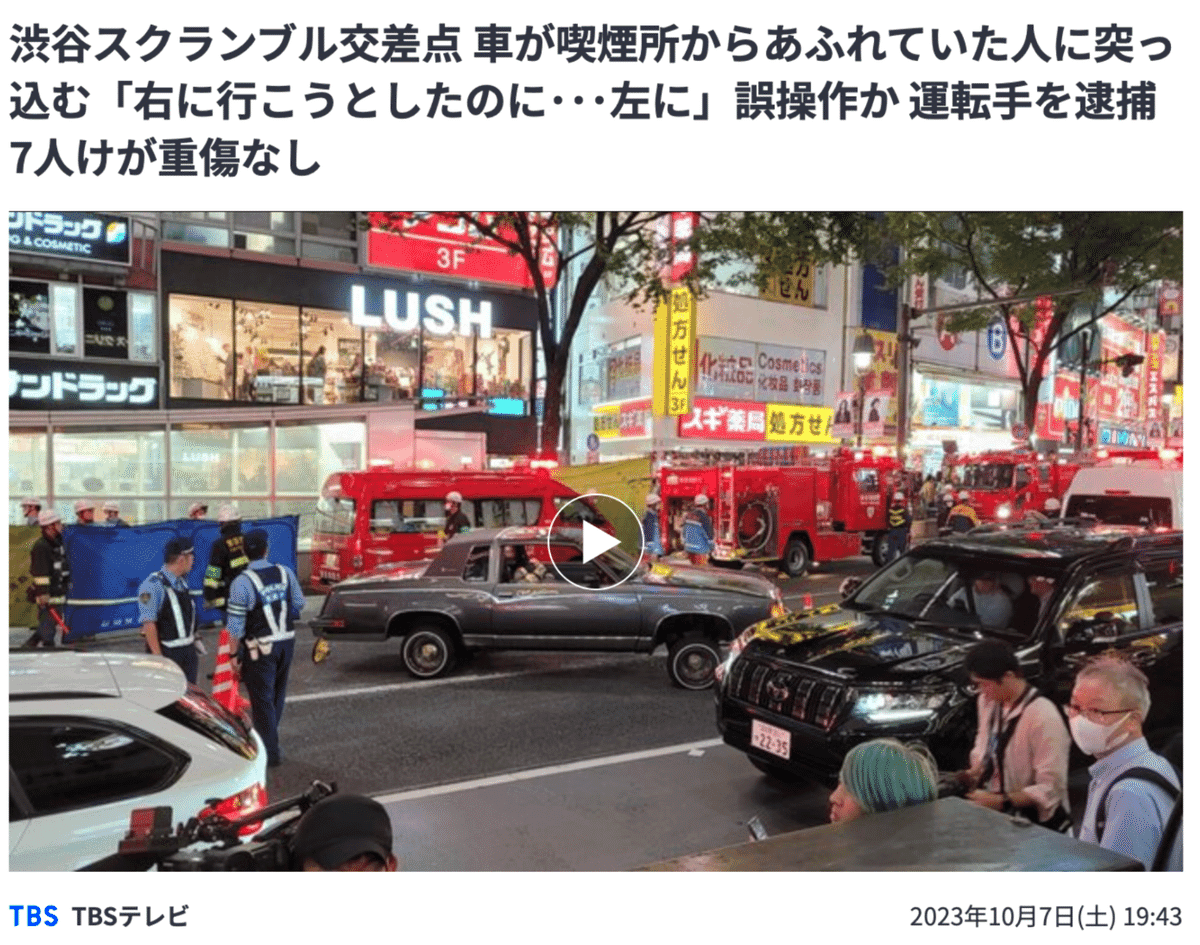
FIG.2
“Isn’t this a problem with how urban space is managed?” and “If there simply aren’t enough smoking areas and the government can’t do anything about it, why doesn’t the private sector step in?”—these are the questions I, as Fukumoto, raised at ASIBA. But on a broader level, what I want to say is: Don’t you think everyone could relax a little?
Another point—and I think this is something everyone else is probably thinking as well—is that certain clear lines are indeed drawn within cities. This is true both mentally and systemically as our society becomes increasingly controlled, and physically through redevelopment and other such projects.Of course, if we’re told “it’s private property, so no,” there’s nothing we can do—but I do wonder if these rigid boundaries aren’t making things a little too tense.
It’s about that spirit of tolerance—like Takano’s—and the idea that boundaries could be a little more ambiguous, don’t you think? Personally, what really caught my attention was realizing that Mr. Fukumoto didn’t major in architecture in college (laughs).
Fukumoto: Right, I majored in Aesthetics and Art Studies in the Faculty of Letters. This is totally off-topic for today’s discussion, but I used to be quite anti-technology. Generally speaking, I think modern Japan isn’t in a so-called “era of growth” anymore—it’s an era of refining technology and services. I believe this is moving in the direction of making those lines we mentioned earlier thicker and darker, and of thoroughly managing and controlling everything.I come across examples fairly often that make me think, “This is totally a highly controlled society,” and at times like that, I can’t help but feel we’re rapidly heading toward the kind of dystopia that people in the past feared in their novels.
To take it a step further, I don’t think this is happening because people want it to be that way. Rather, I think it’s an inevitable consequence of technological development—for example, we’re no longer in an era where we can just keep building things indiscriminately; we have to improve precision, so we have no choice but to pursue these advancements. I was originally in the Science Division I at the University of Tokyo, but back then, I felt that if I continued on to the Faculty of Engineering, I’d just make the world a worse place, so I didn’t want to advance technology(laughs). I don’t think new technology is something where you can just say, “Even if we create it, we don’t have to use it.” Instead, I believe it inherently involves irreversibility—much like how “if you add milk to black tea, you get milk tea, but milk tea doesn’t turn back into black tea.”
Since I’m Fukumoto, I dislike paradigm shifts and wanted to avoid them as much as possible. I suppose there’s a school of thought that suggests we should stem this from the technological side, but I believe that—since the Industrial Revolution, in fact—we’ve kept trying to solve problems created by technology with technology, and as a result, the scale of those problems has just kept getting bigger and bigger.If the scale of these problems just keeps getting bigger and bigger, I felt that we shouldn’t solve them with technology, but rather with language—which is why I went to the Faculty of Letters first. But in an era where the power of language is also waning, I eventually wondered if I really needed to create tangible works after all, so I returned to architecture, which brings me to where I am today.
Takano: It’s a tough one. I think there are two aspects to this. First, quite a few people generally believe in the paradigm that “technology solves problems,” and there are indeed cases where that’s true. For example, the deep-tech startups currently being developed by the University of Tokyo and various other universities claim that by advancing this technology, they can solve the problems of people in need—and many people sympathize with that vision, so funding is pouring in.I completely understand the motivation of the people driving these initiatives and their desire to solve these problems. However, while that applies in specific, localized contexts, when you ask how it looks from a broader perspective, it’s a different story. I certainly think there are discussions about how medical technologies that have developed in this way will eventually lead to issues like bioethics.
That’s one aspect where you can’t really make a blanket statement. And then, of course, isn’t it simply impossible to say, “Let’s stop developing this technology”? There was that milk tea analogy, and for a while there was talk of “let’s pause AI development for six months,” but in the end, it just fizzled out (laughs). We’ve never managed to reach that kind of consensus in human history, so I suppose we have to figure out how to ensure the technology is used solely for the benefit of society.
Fukumoto: That’s right. Ultimately, if we start asking, “Why are we even doing this (developing technology)?” it turns into a much bigger discussion—like international competitiveness—and it becomes something beyond the control of any individual.I mean, it’s not that we should give up thinking about those issues, but rather than jumping straight to that level of discussion, I’d like to focus first on the reality right in front of us: smoking areas are decreasing, and anti-smoking sentiment is growing stronger by the day. I’m not saying we should go back to how it was decades ago—demanding people be allowed to smoke on airplanes or anywhere they please— or “Let people smoke in movie theaters”—but I do believe it’s more important to create spaces where current smokers—myself included—can at least live happily—not that it’s a “right to pursue happiness,” but a basic standard of living—rather than letting my thoughts drift off to abstract concepts like “international competitiveness.” That’s also why I returned to architecture.I simply want to believe a little more in the power of simply having a space.
Takano: It’s more like, “We can actually get things done by building up small things right here, rather than thinking about big ideas and trying to stop them with words,” right?
Fukumoto: There’s also a sense that it’s the only option we have right now. We really have no choice. To get back to the topic a bit, I think many people felt the presence of a surveillance society during the pandemic, and those who contracted COVID-19 right when they started their freshman year of college were undoubtedly the most affected—more than I was. For example, there were many cases where the handover of club activities was cut short and the clubs effectively disappeared, and there were also people who simply couldn’t make friends at first.Back then, I felt there was a trend—not so much from the government, but more from the online community and the media—that made it seem like it was the young people’s fault for going out. I really hated that kind of peer pressure—or rather, the so-called restrictions on personal rights and mutual surveillance.
Takano: I was a freshman back then. Those first one or two years were terrible in every sense. For me, for example, I spent a whole year at a place I thought I wanted to be, only to realize later that it wasn’t actually a good fit for me at all.The world felt incredibly closed off, and there was so much I simply couldn’t see. I think freshman year is supposed to be a time when your world opens up and you choose your place in it, but I had to do that with a very limited amount of information, so I couldn’t really make that choice for myself. Also, I didn’t meet a single person who would have changed the course of my life. I think the COVID-19 pandemic was, structurally speaking, an intergenerational issue. Given that mortality rates vary greatly by age and that young people are the ones transmitting the virus, it might seem reasonable to say that only those at risk should go out—but in reality, it was young people, who were supposedly at no risk, who faced the most restrictions.Since young people weren’t involved in decision-making at all—and even when we spoke up, no one listened—the issues facing college students were neglected until the very end. From elementary school through high school, in-person classes were partially reintroduced fairly early on, but college students were the only ones stuck with online classes the whole time. I still feel a tremendous amount of anger toward society from that period—that sense of being ignored. Ultimately, in Japan—and I’m speaking as someone who attended a private middle-and-high school—I’ve been fortunate enough to never have felt ignored by society until then, but that was the very first time I did.
Enomoto: Yeah. I guess there might have been a mindset on society’s part that, in order to protect the group from the virus, it was unavoidable for college students to make sacrifices. I wonder if the same could be said about smoking areas, too.
Takano: That’s true. Yeah.
Enomoto: It’s like, “For the sake of a healthy and clean city, if smokers could just put up with it for about 20 years, eventually those complaints will die down.”
Fukumoto: I basically think that’s true. In the early days of the pandemic, when we didn’t really understand what was going on—during the debates about whether you’d catch it or not, or whether you’d spread it or not—movement itself was restricted across the board. But when it comes to smoking areas, at least from the government’s perspective, it’s probably fine as long as no complaints come in. Of course, there are all kinds of people; for example, some say things like, “The smell that sticks to your clothes is a third form of secondhand smoke.”—so how to deal with those people is a separate issue. But fundamentally, I believe that if we can create spaces where no petitions or complaints are filed, it will at least make life a little better for smokers who pass through those areas or live nearby.
This isn’t part of some grand discussion about the COVID-19 pandemic, where movement itself was restricted, or the format of university lectures—it’s simply a matter of whether or not a single smoking area exists, a problem that even a small group can handle. I think it was pretty good that we were able to bring it to this point.However, rather than making this a goal in and of itself, my initial aim was ultimately to spark a kind of movement—or, more precisely, a shift in public consciousness. Of course, I’d be thrilled if we could create these spaces, but it feels like a waste to just set up a few and call it a day.
Takano: I think this applies to the entire second cohort of ASIBA, but as members of our generation, we’re seeing grand narratives increasingly fall into disrepair. In response, there’s a general trend—not toward urban planning, but toward “town-making”; not designing large public facilities, but designing small elements of the town; starting with small things that no one can deny and building on them step by step.I, for one, have a strong desire to create small things—small things that no one can reject.
But, of course, that alone won’t change the world. On the other hand, the moment we connect those small things to systems or larger structures, they start getting criticized from all sides. Everyone fears that—and I personally don’t like it either—but if we don’t do that, if we don’t make our voices heard more strongly, the world won’t change. I wonder what everyone else thinks about that.
Fukumoto: The online world has changed drastically before and after the pandemic, and things that were common sense until recently have become considered out of line. When you actually try to take a certain action, it’s bound to clash with someone’s interests, so as a generation, we’re afraid of getting criticized for it.I’ve seen plenty of examples like that. Still, I think this is a generation that understands we can’t keep going like this, so I think it’s a matter of figuring out how to choose our words wisely and move forward despite the fear.
Takano: We’re not used to being criticized or having our views rejected in any sense, are we? Everyone tries all sorts of things, but I suspect the ending is always something like, “In the end, nothing really changed.”
Fukumoto: That’s why, lately, there’s been a growing movement to create more private spaces. For example, I think the initiative to create a community called ASIBA is part of that, and holding festivals at physical venues is also a way of doing that—rather than just putting everything online.Of course, some parts will be shared online, but there are aspects that only festival attendees can truly experience, so I guess the message is, “Please come and check it out.”
Takano: Yeah. In situations like that, it’s ASIBA’s responsibility to create a space where people aren’t rejected from the start—a place where everyone is supported, loved, and encouraged to give it their all while being told it’s okay to fail. But you can’t just stay there forever; you have to step out into the world, and I think everyone needs to make that commitment.
Enomoto: Yeah, I feel like the moment you step out into the world is when you’re really put to the test.
Takano: I guess that first step really happens at the festival.I was talking with Mr. Morihara yesterday, and while pitches like “I’m working on this right now” or “I love this” are fine, we actually need to make something happen—like having a wealthy older guy with 100 million yen show up and invest a million yen on the spot. But nobody can really talk about how to make that happen, can they? Maybe Withvac comes close. Of course, there’s also the option not to do that. For ASIBA, one of our KPIs is increasing the number of people who’ve managed to give shape to what they love despite societal pressures—but if you really hate the way things are right now, you have to step out. Otherwise, you’ll end up like an architect without any actual work to show for it.
Fukumoto: That’s right. If we get a chance, we shouldn’t stop—we should use it as momentum to move forward.
Credit
Related Works
ASIBA 2nd Term: Gen Z's Actions Towards New Urban Living - Part 1
INC-2nd Cohort Roundtable #1
DIALOGUE
2024.06.27.