INC-3rd Term Class Report #2-2

FIG.1
I’m Kagami, an ASIBA Student Supporter! As a member of the organizing team, I’ll be sharing updates on the program and highlights from our third cohort.
The ASIBA Creative Incubation Program, now in its third cohort, is designed for people aged 30 and under working in creative fields. It fosters “creative entrepreneurship that moves back and forth between inquiry and practice” and aims to foster social action.From April 26 to 28, the program held a three-day, two-night kickoff retreat as part of Day 2. On the first day, participants bonded through various interactive activities. On the second day, they shifted into high gear, moving into a more hands-on, practical phase.
The second day of the kickoff retreat began with a slightly different atmosphere than the previous day. First thing in the morning, the organizing team posed two questions to the participants.
Throughout the first day, participants had taken the opportunity to reassess where they currently stood. To deepen their thinking from this point forward, it becomes crucial to find a “framework” that allows them to “swing for the fences”—one that fits them perfectly.Using a way of thinking that fits them, participants delved deeply into the questions. However, relying solely on that approach can eventually lead to limitations. At such times, it becomes crucial to turn your attention to the biases that are holding you back. Examining the biases—such as past success experiences or educational background—that constrain your thinking provides valuable insights for broadening your perspective and expanding the scope of your ideas.ASIBA brings together members from various fields, including architecture, art, and design. Through dialogue, encountering perspectives different from your own should provide the opportunity to transcend your own limitations.
The “Beyond Conference,” scheduled for late May, marks the start of our collaboration with ASIBA partner companies and local governments. To secure cooperation for our projects, it is essential to clearly convey our intentions and vision to others and gain their empathy. However, as things stand now, our message might not be getting across effectively. This harsh reality was also conveyed at the start of the day. To gain empathy in a brief conversation, there’s no alternative but to talk to people and learn through practice how to get your message across. Conversations with participants are also crucial for cultivating the ability to translate your own words into a form that resonates with society, while incorporating feedback.
The goal for the day was to complete “LifeGraph+” and prepare for the evening’s grand presentation. What should we do next? What questions should we ask, and how should we verify them? A highly intense day began, one in which we would rapidly cycle through output, reflection, and reference gathering.
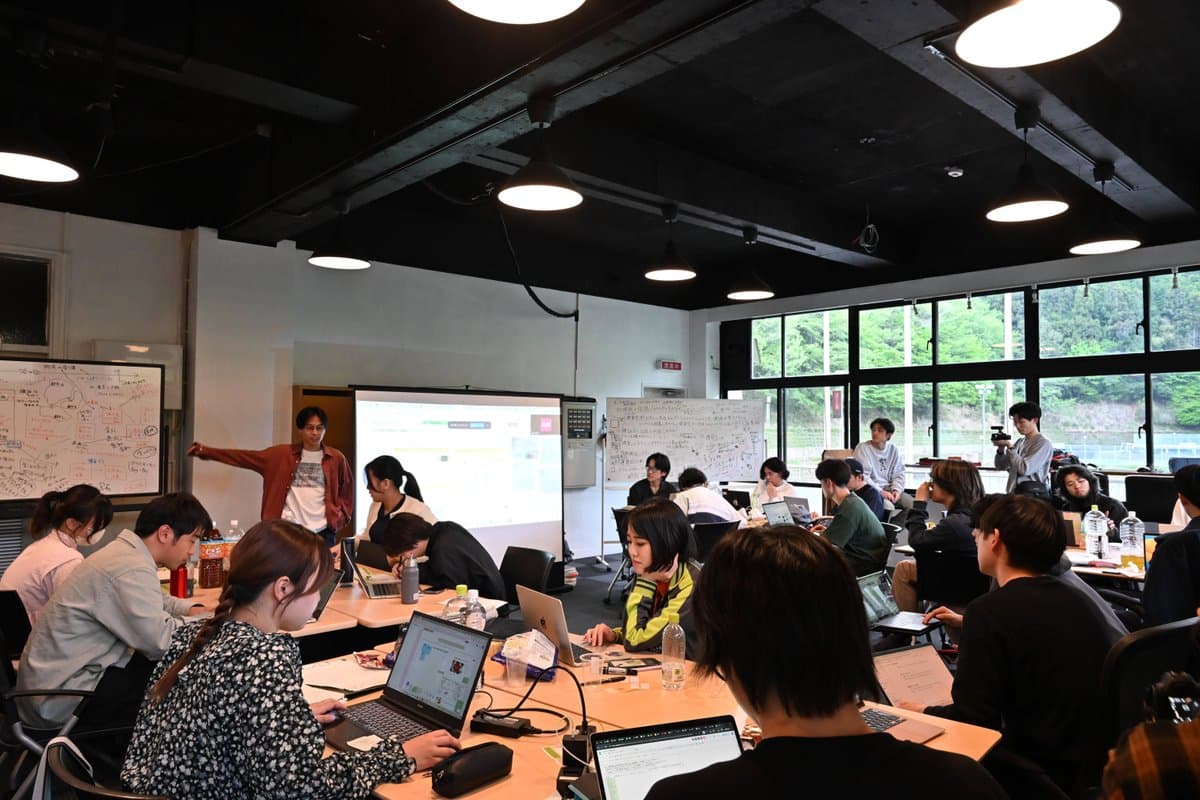
FIG.2
Once the introductory session led by the organizing team concluded, the participants immediately got to work on their respective tasks. Some teams used blackboards and whiteboards to relentlessly jot down ideas. Others restructured their project concepts into stories while drawing manga. While the methods varied, what they all had in common was “taking action first.” Time passed as they kept their hands moving, engaging in a dialogue with their own thoughts.
They shared their ideas with others, tested them on a small scale, and refined them. Taking advantage of the unique environment of a retreat—where there’s always someone nearby—they gradually honed their thinking and communication skills.

FIG.3
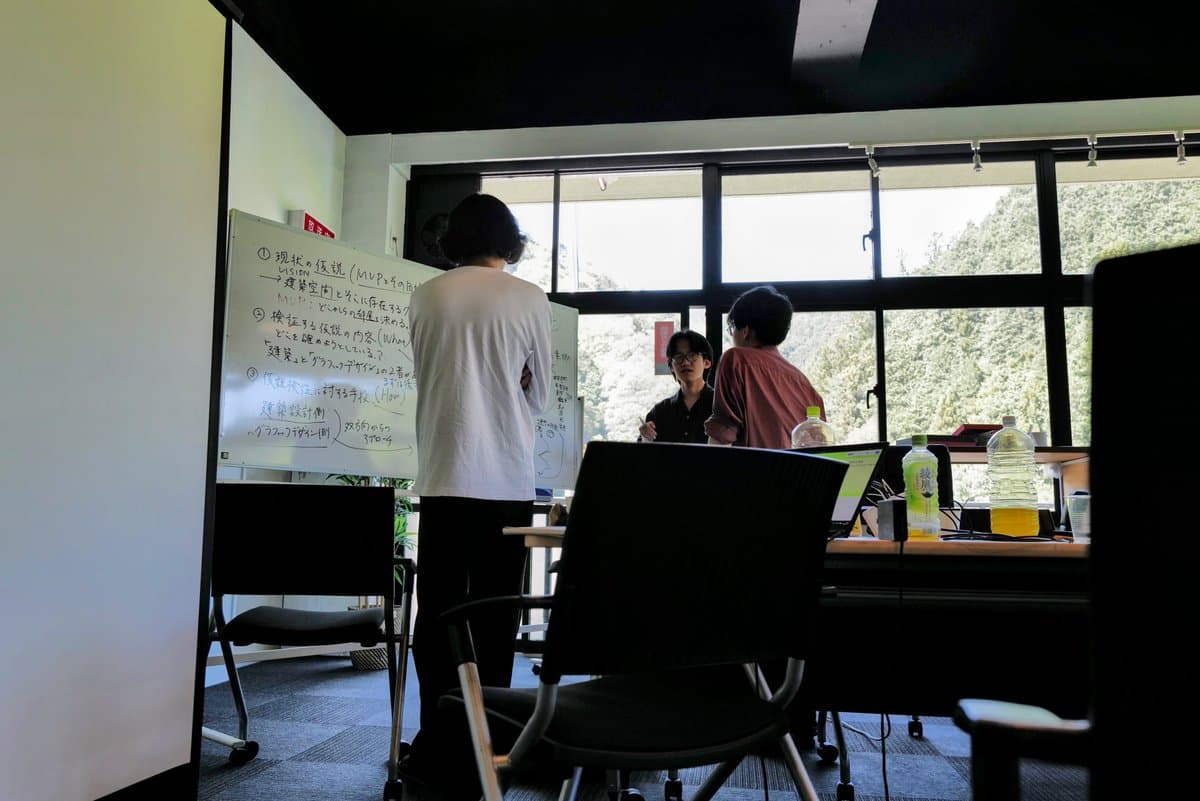
FIG.4
The mentor who took the stage that day was Haruka Okumura, Chairperson (Representative) of the NPO “Third Family.” Drawing on her own experiences, she gave a practical lecture on methods for connecting user feedback to service development. “To create something great, you need the courage to let go of your own preconceptions.”Many participants were inspired by her advice that, while young, one should not fear failure and should use speed as a weapon.
In the afternoon, individual mentoring sessions and one-on-one sessions with the organizing team took place, allowing each participant to grapple with their own challenges within the limited time available. No project ever sails smoothly. Each participant struggled desperately as their assumptions—what they took for granted or believed was “good enough”—were shaken to the core.
To wrap up the long day, a presentation session featuring all participants was held. With 20 minutes allotted per person for both the presentation and Q&A, the event stretched into a marathon session lasting six hours. Participants put into words and shared the “Life Graph+” they had created over the past two days, along with their personal thought processes.
After each presentation, all participants and organizers offered feedback, and the session maintained a high level of energy from start to finish. While pointed questions and critical comments were occasionally exchanged, everyone gained insights that would help their projects take a significant leap forward.
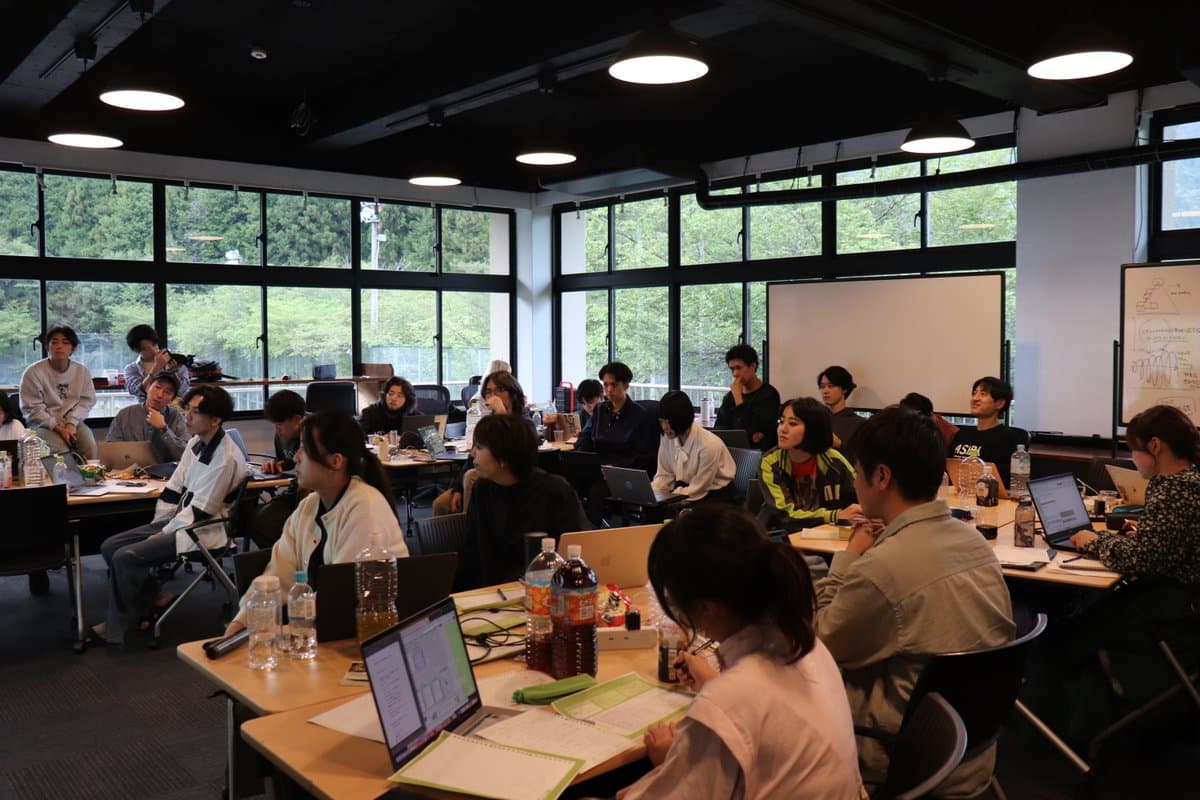
FIG.5
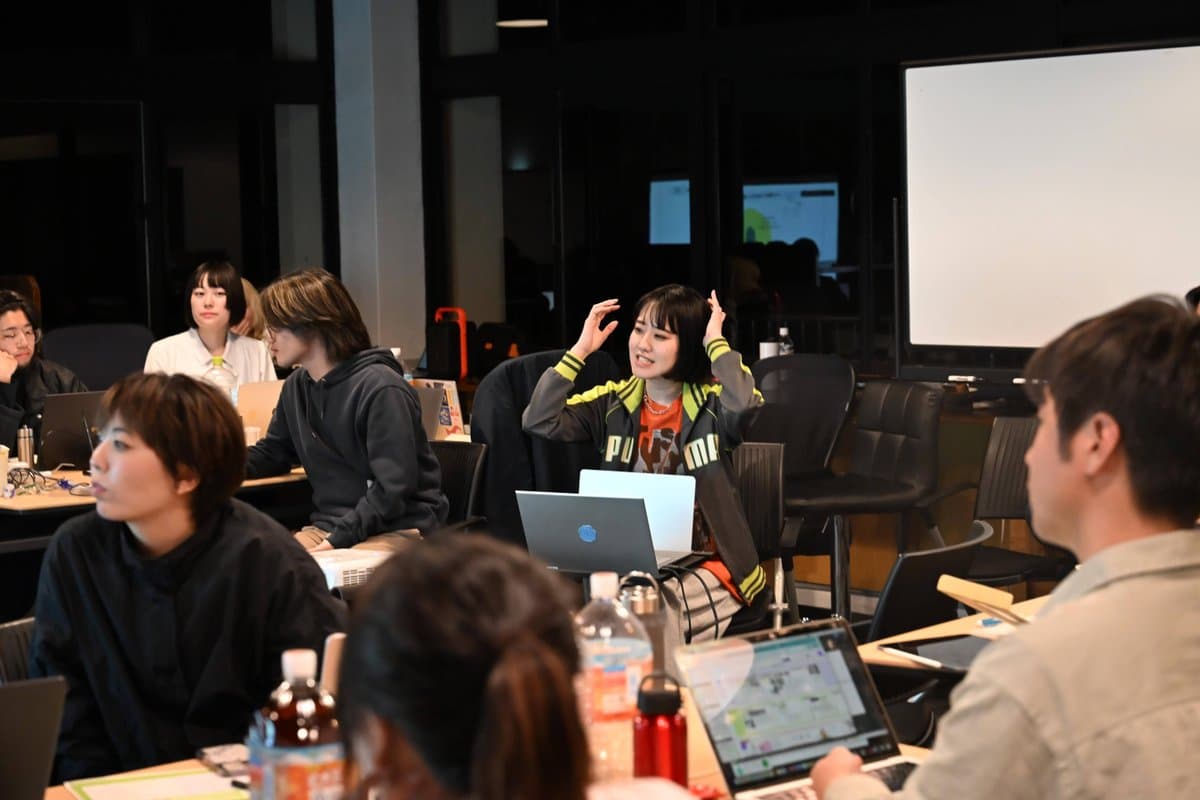
FIG.6
Although the retreat initially felt like a long journey, the second day ended in the blink of an eye. The key is simply to get your hands dirty. When you hit a wall, shift your perspective. Talk, try, and talk again. Through this cycle, the participants moved their projects forward one step at a time.
Credit
Related Works
INC-3rd Term Class Report #1
REPORT
2025.05.03.