INC-3rd Term Class Report #4

FIG.1
I’m Kagami, an ASIBA Student Supporter! As a member of the organizing team, I’ll be sharing updates on the program and highlights from our third cohort.
The ASIBA Creative Incubation Program, now in its third cohort, is designed for individuals aged 30 and under working in creative fields. It fosters “creative entrepreneurship that moves back and forth between inquiry and practice” and aims to foster social impact. On May 24–25, we held Day 4—BEYOND CAMP—at “NOVARE: The Forest of Learning from the Past to Create the Future” in Shiomi, Tokyo. The goal of this BEYOND CAMP was for participants to present their projects in their own words to external partners and mentors and receive multifaceted feedback. For the participants, it was also a crucial opportunity to showcase their vision and begin collaborating with potential testing grounds and partners.
—It’s hard to believe, but we’ve already reached the halfway point of the program. Looking back on the past month and a half, what are your thoughts?
(Mr. Inoue, Torisetsu Project) Compared to the kickoff retreat, I feel the bonds among the third-cohort members have grown stronger, and it’s become much easier to talk with one another. When I look around, I see peers who are hitting the same walls I am. Being able to push each other to improve alongside these fellow cohort members is inspiring, and I’ve received plenty of helpful hints from them. Personally, over the past month and a half, I’ve developed a positive mindset where I’m willing to put anything into practice. By trying to bring my ideas to life as much as possible and having those around me test them out, I can really feel my thinking becoming deeper and deeper.
──I understand you’re already moving forward with pilot tests in workshops and such. Could you tell us about your aspirations for this BEYOND CAMP?
(Mr. Inoue) I feel my understanding of the project has deepened considerably over the past month and a half.The next step is figuring out how to better communicate this to others. I’ve put a lot of effort into creating presentation slides and documentation. In that sense, this BEYOND CAMP is a chance for me to put my skills to the test. I want to see how well I can convey the path we’ve taken so far. I’m going to give it my all.
Day 1 was divided into two sessions: morning and afternoon. In each “BEYOND Session,” the group was split into five teams. We repeated a cycle of 5-minute participant pitches followed by about 10 minutes of discussion, with mentors, third-cohort alumni, and organizing members all mingling and exchanging sharp insights. The guest mentors we invited this time included leaders from a wide range of fields—such as ASIBA partner companies, local governments, and alumni from the first and second cohorts. Most of them were completely unfamiliar with the specific projects. Faced with people from such diverse fields and with no prior experience in their areas, the third-cohort members did their utmost to convey their visions.
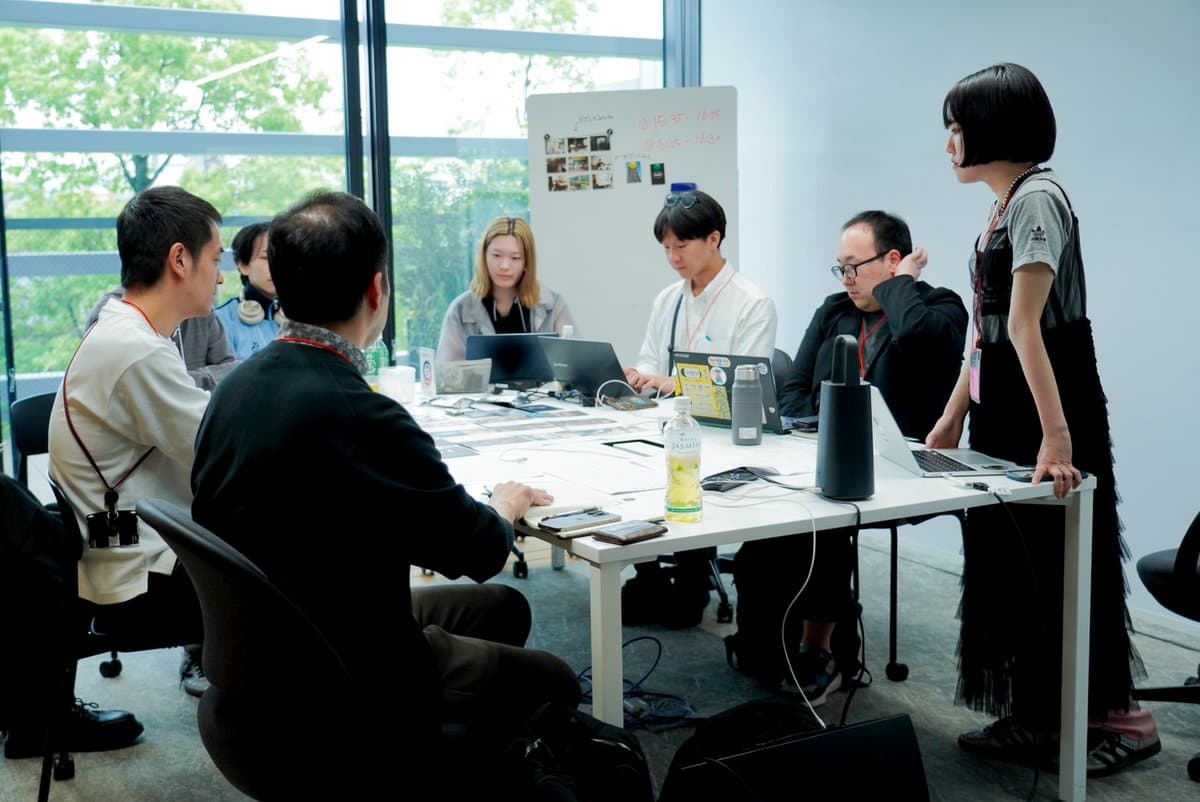
FIG.2
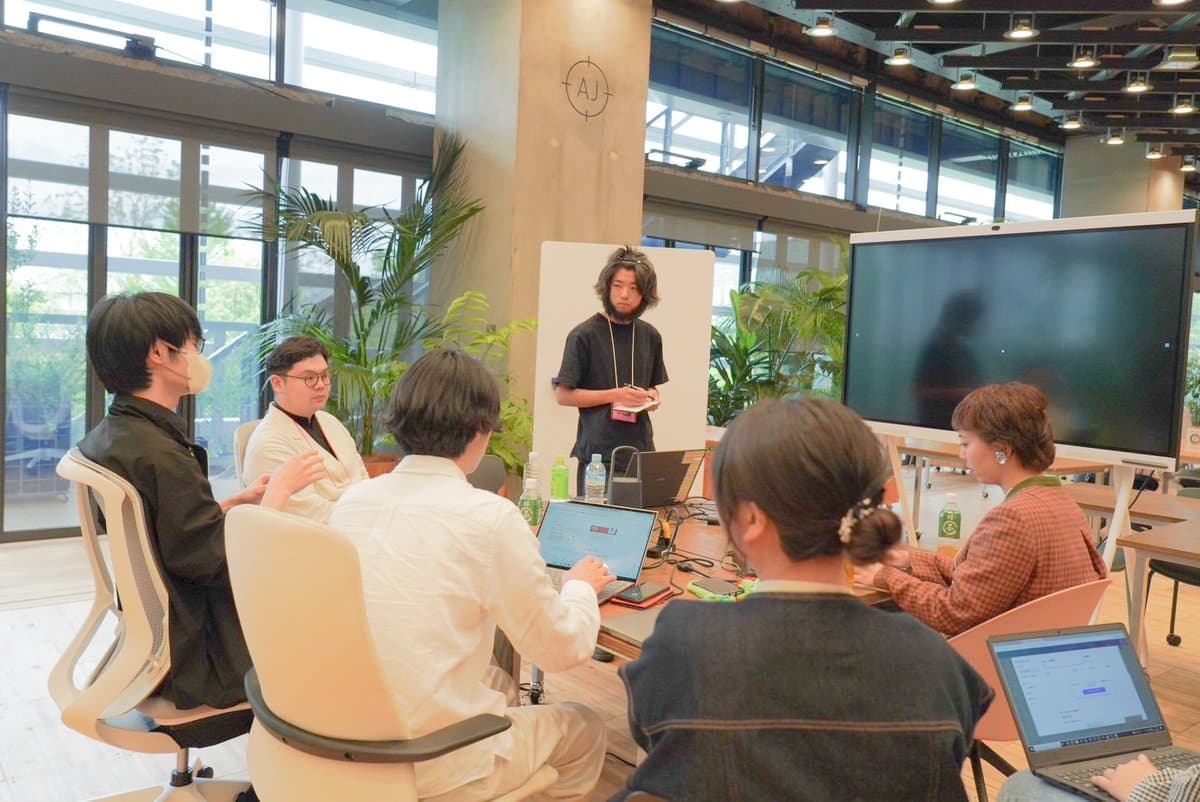
FIG.3
—Every session was intense, but how did you feel after the first day? (Mr. Sakagawa, faatto) As expected, it was challenging to have a dialogue with external participants who didn’t share our context. While they told us that what we’ve done so far and what we want to do is interesting, we weren’t able to fully convey the value or uniqueness of our practical work. Personally, I feel I could have—and should have—explained things more carefully. What we’re doing isn’t a university design project; it’s social implementation. That’s precisely why I realized once again that we need to explain things carefully, starting with why this question is important.
After the lengthy session, the participants came away with a variety of impressions. While the feedback wasn’t all positive, it seemed they gained new insights into how to move their projects forward in society. After the session ended, we split into three groups and stayed at facilities near the venue. In the evening, we held one-on-one sessions between the organizing team and the third-cohort participants, where they grappled with fundamental questions: How can their artistic expression connect with society? And what do they hope to change through that expression?
In preparation for the “Beyond” session on the afternoon of Day 2, participants spent their limited time in the evenings and mornings polishing their pitches. Facing a different group of mentors than on Day 1, they gave it their all to convey their ideas. A networking reception was held after the session, where active exchanges of opinions and interactions continued right until the very end.
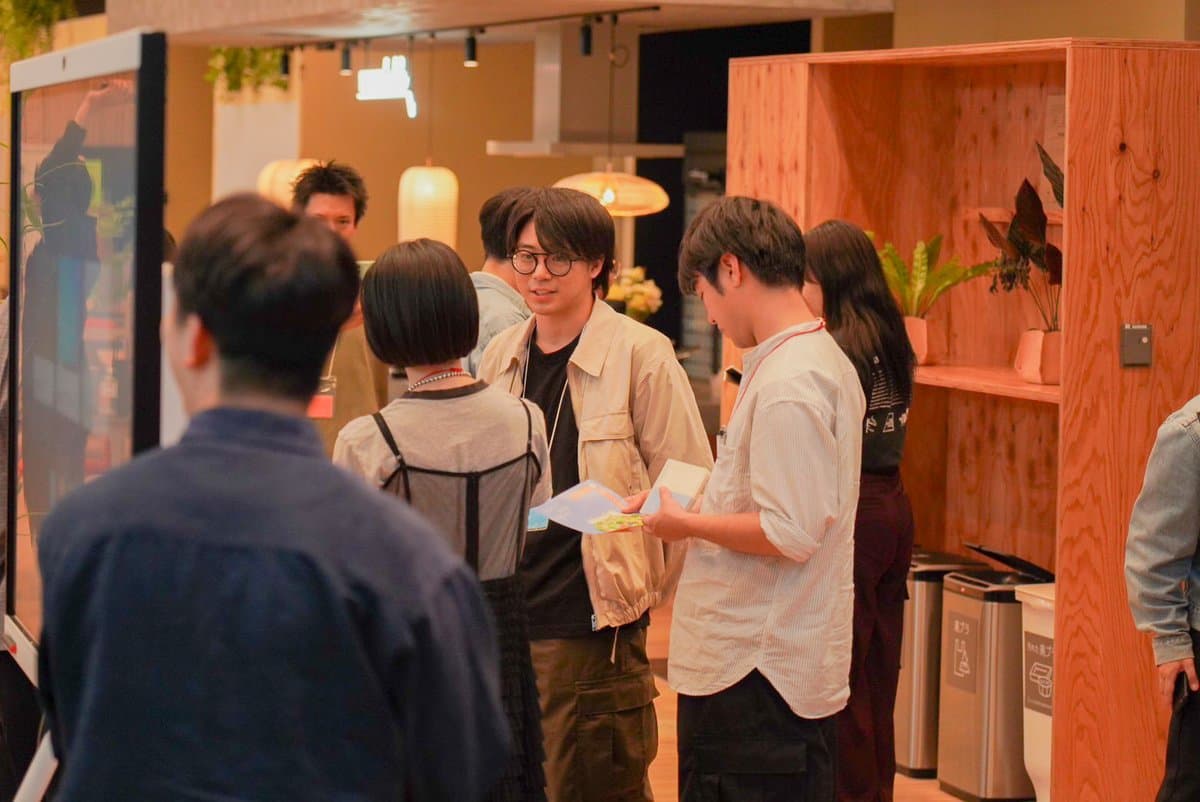
FIG.4
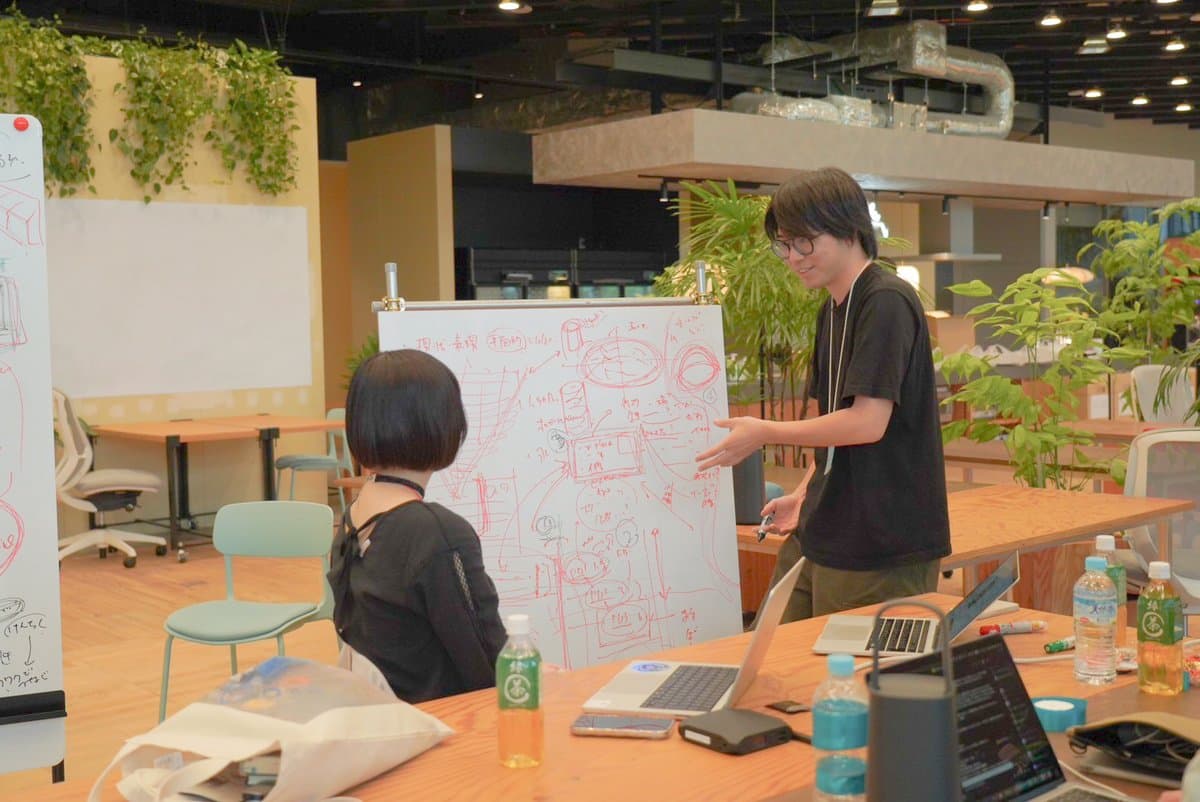
FIG.5
—Whether during the sessions or at the lodging, it was impressive to see everyone talking so much and going through a process of trial and error. First off, now that these two long days are over, how did it go?
(faatto・Mr. Sakagawa) We really went way beyond our limits over those two days (laughs). We had to put into words and fully convey ideas that we’d previously just shared casually among our own group. On top of that, we had to ensure others understood us and felt a connection. It really hit home just how much effort is required to “communicate with society,” and honestly, I hit a major wall on the first day. But by taking the feedback from the organizers into account, I feel like I’ve gradually been able to view things more objectively—to see how my ideas might be understood by complete strangers who know nothing about them. From here on out, we need to build a stronger logical framework so we can explain the value of our practices in a logical way.
──You worked late into the night, reworking the slides right up until the last minute, didn’t you? Did you gain any concrete insights that will help you moving forward?
(Mr. Sakagawa) During the first day’s session, I couldn’t convey my feelings the way I wanted to, so that night the two of us rewrote the presentation and prepared frantically. On the second day, we included our mentors’ names on the slides and appealed, “Please pair us with you!” As a result, we were able to secure two opportunities to take on challenges. We still don’t know how things will turn out, but for now, we intend to give it our all and make these opportunities a success.
The program has reached its halfway point, and each project is finally gaining concrete momentum. The journey ahead won’t be one I take alone—it will involve collaboration with various partners. I wonder just how far the ideas I’ve developed so far will hold up in society. I hope you won’t get swept away by the currents of society, but instead aim for the farthest horizons.
Credit
Related Works
2025.05.03.