INC-3rd Term Class Report #5

FIG.1
I’m Kagami, an ASIBA Student Supporter! As a member of the organizing team, I’ll be sharing updates on the program and highlights from our third cohort.
The ASIBA Creative Incubation Program, now in its third cohort, is designed for individuals aged 30 and under working in creative fields. It fosters “creative entrepreneurship that moves back and forth between inquiry and practice” and aims to foster social impact.On June 7, we held Day 5 of the program at the International Design Liaison Center in Roppongi, Tokyo. (The third cohort of the ASIBA Incubation Program is sponsored by the Japan Institute of Design Promotion, which organizes the Good Design Award and other initiatives.)
The incubation program has now entered its second half. With each session, I can keenly sense the passion and intensity of each participant growing stronger. Some teams seized opportunities at the previous BEYOND CAMP and have begun making steady progress. Others, meanwhile, have revisited their projects based on feedback and started steering in new directions. While they will never be completely free of doubts, it seems that each participant is moving forward step by step with confidence.
— It’s been two weeks since BEYOND CAMP. Have there been any changes or progress in your projects?
(“O” by Kazufumi Sano) I’ve really deepened my own thinking about the methods for bringing this project to the public. During BEYOND CAMP, when I was asked, “Is what you’re trying to do art? Or entertainment?” I was at a loss for words.But as I talked with my team members afterward, I realized that there isn’t just one way to approach this. At the root of this project is my own small curiosity: “I want to view the world in multiple layers.” I’ve come to feel positively about using methods suited to each situation to express that curiosity and eagerly connect it to society.
──What goals have you set for DAY 5 today?
(Sano) We’re about to enter a phase where we’ll be rolling up our sleeves and moving full steam ahead with preparations for the DEMO DAY demonstration. But before that, I have a fundamental question: What exactly should we be doing for this demonstration? Once we’ve decided on what we want to do and how we’ll express it, how should we measure its impact? Today, I’d like to share these specific concerns with our mentors and other team members.
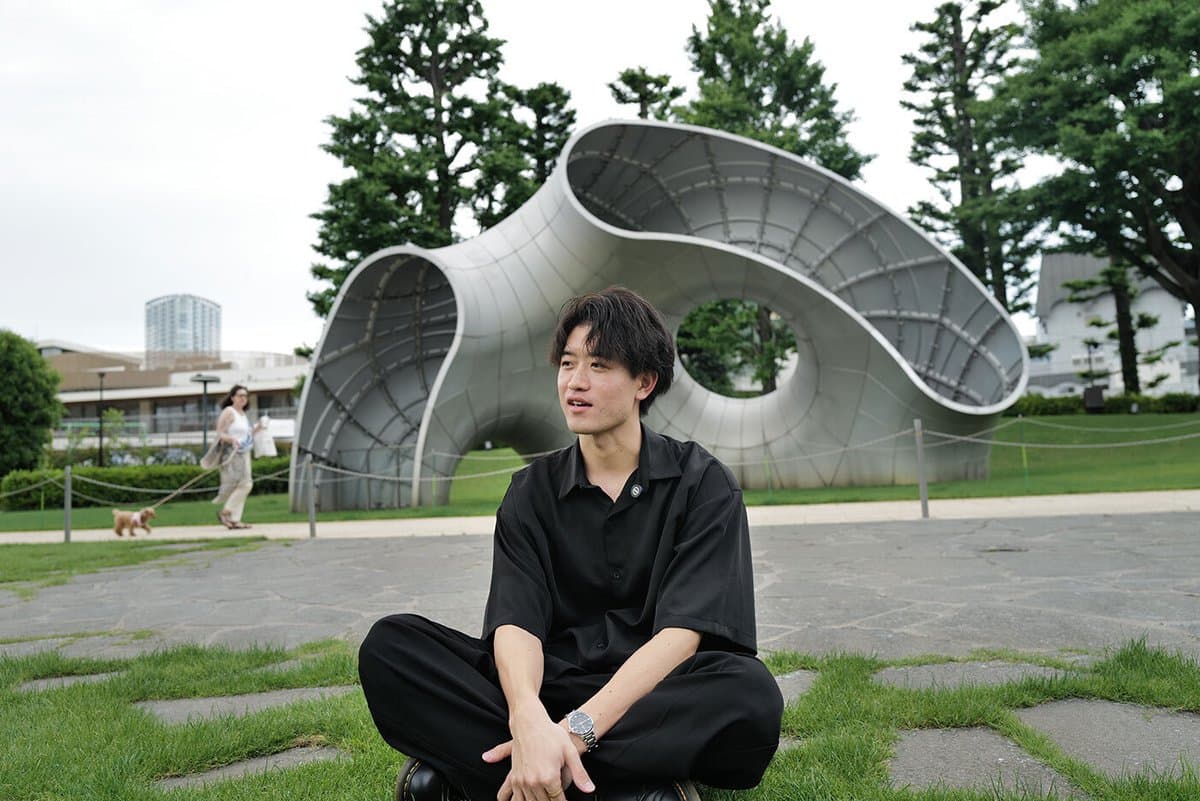
FIG.2
This time, we welcomed Yu Kato, CEO of dot-hzm, Inc., as our guest speaker. The theme of the lecture was “Bringing Ideas to Life.” Mr. Kato is a “maker” who has been continuously creating new products using digital fabrication and machine learning since his student days. He shared that he used to feel reluctant about actually making things. Nevertheless, he spoke to the participants about the importance of getting hands-on and bringing ideas to life.
“Getting your hands dirty is hard work, and it’s often not very cool. But the act of bringing something to life is the best proof that you’re serious. Showing others a single prototype conveys your passion more effectively than saying ‘I’m motivated’ 100 times.”
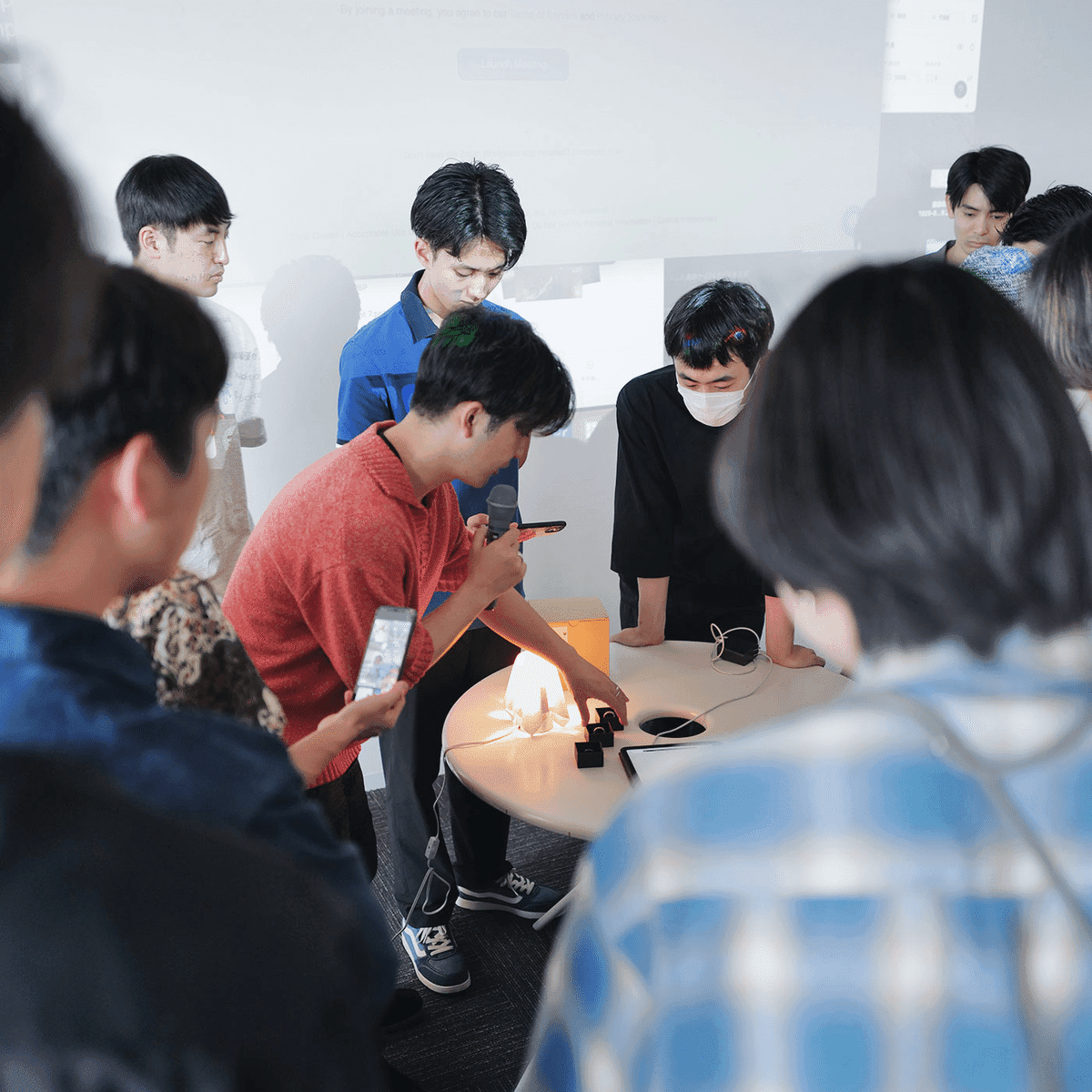
FIG.3
Furthermore, by actually bringing works or projects to life, you can sometimes discover opportunities and limitations that wouldn’t have become apparent if you’d only kept them as concepts in your head. The act of bringing something to life holds great value in terms of gaining a broader perspective as quickly as possible.
“I don’t think many people will continue this project for the rest of their lives. You should bring it to life as soon as possible to determine whether this project is a good fit for you and whether you can truly commit to it with passion.”
Moving forward, each project will have more opportunities to be seen by the outside world, such as through pitches and DEMO WEEK. From here on out, we need to pick up the pace and, above all, focus on building and testing.

FIG.4
This mentoring session allocated a generous 50 minutes per team. Specific consultations and advice flew back and forth regarding the projects’ future, covering topics such as how to use development grants and how to present at DEMO WEEK.
Watching the participants during the mentoring sessions, I could really feel how the “intensity” of their time had clearly changed compared to a month ago. It was impressive to see that not a single person was passive; everyone was striving to make the most of the mentoring time, no matter how small.
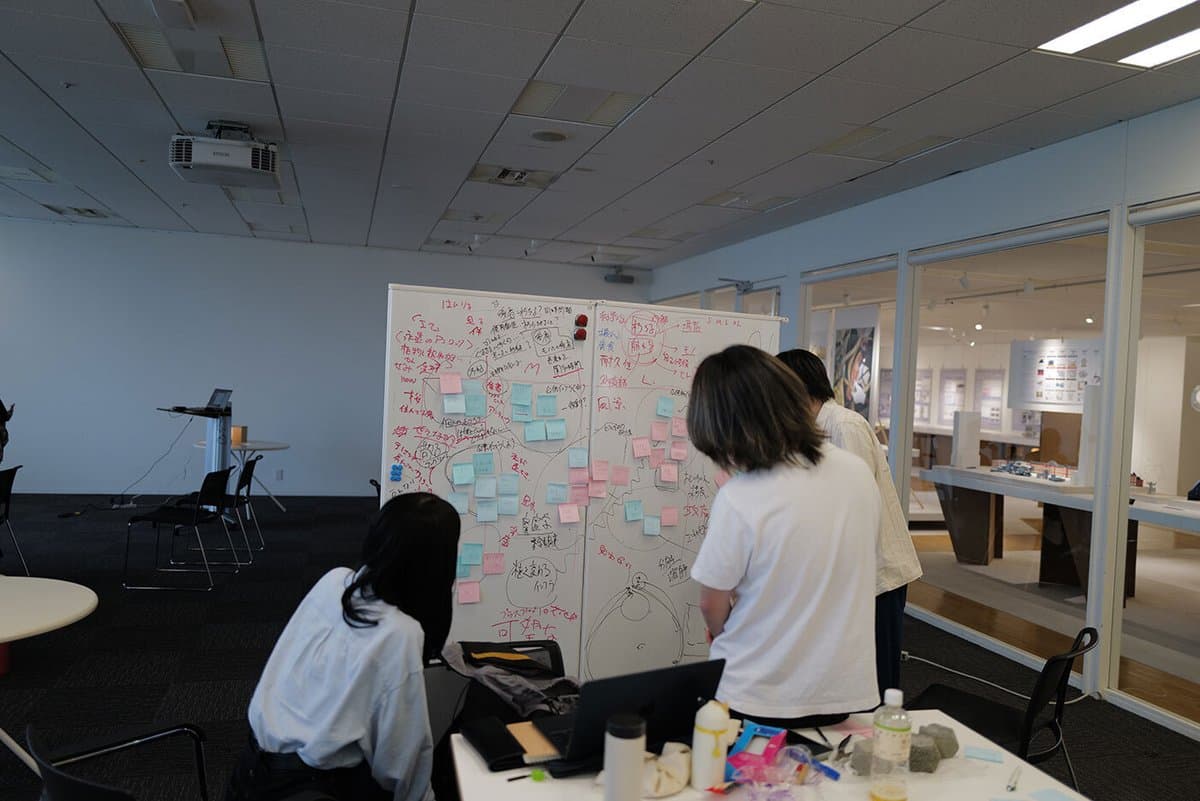
FIG.5
The enthusiasm and dedication of each participant are evident just from observing the progress made over the two weeks since the BEYOND Conference. From here on out, each project will continue to take shape. And what kind of results will each individual’s efforts yield? We’re looking forward more than ever to seeing what the third cohort will accomplish!
Credit
Related Works

[Class Report] ASIBA Third Term Begins! Day 1 'Overlooking the Continent' | ASIBA
INC-3rd Term Class Report #1
REPORT
2025.05.03.