INC-3rd Term Secretariat Interview #2
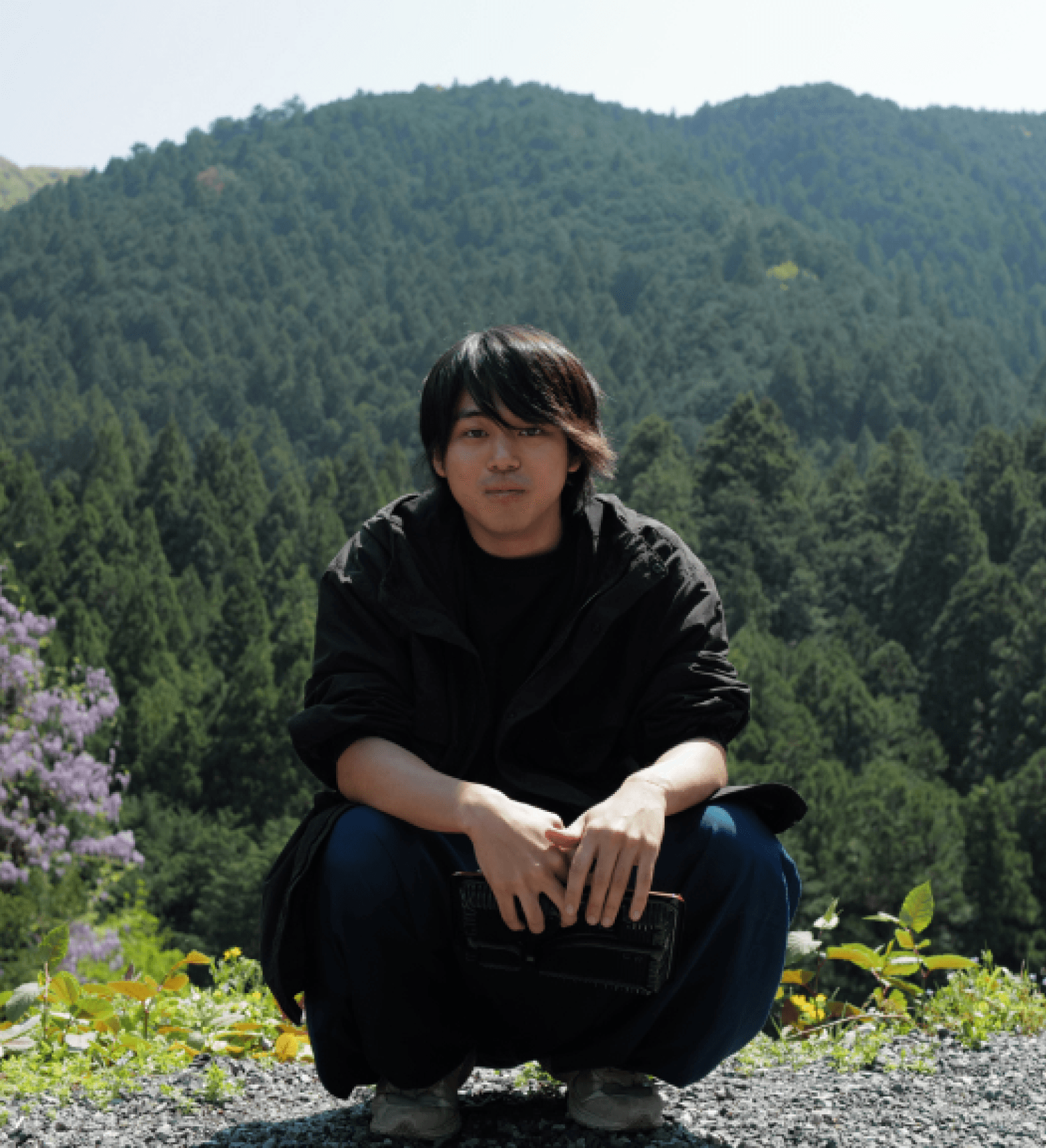
FIG.1
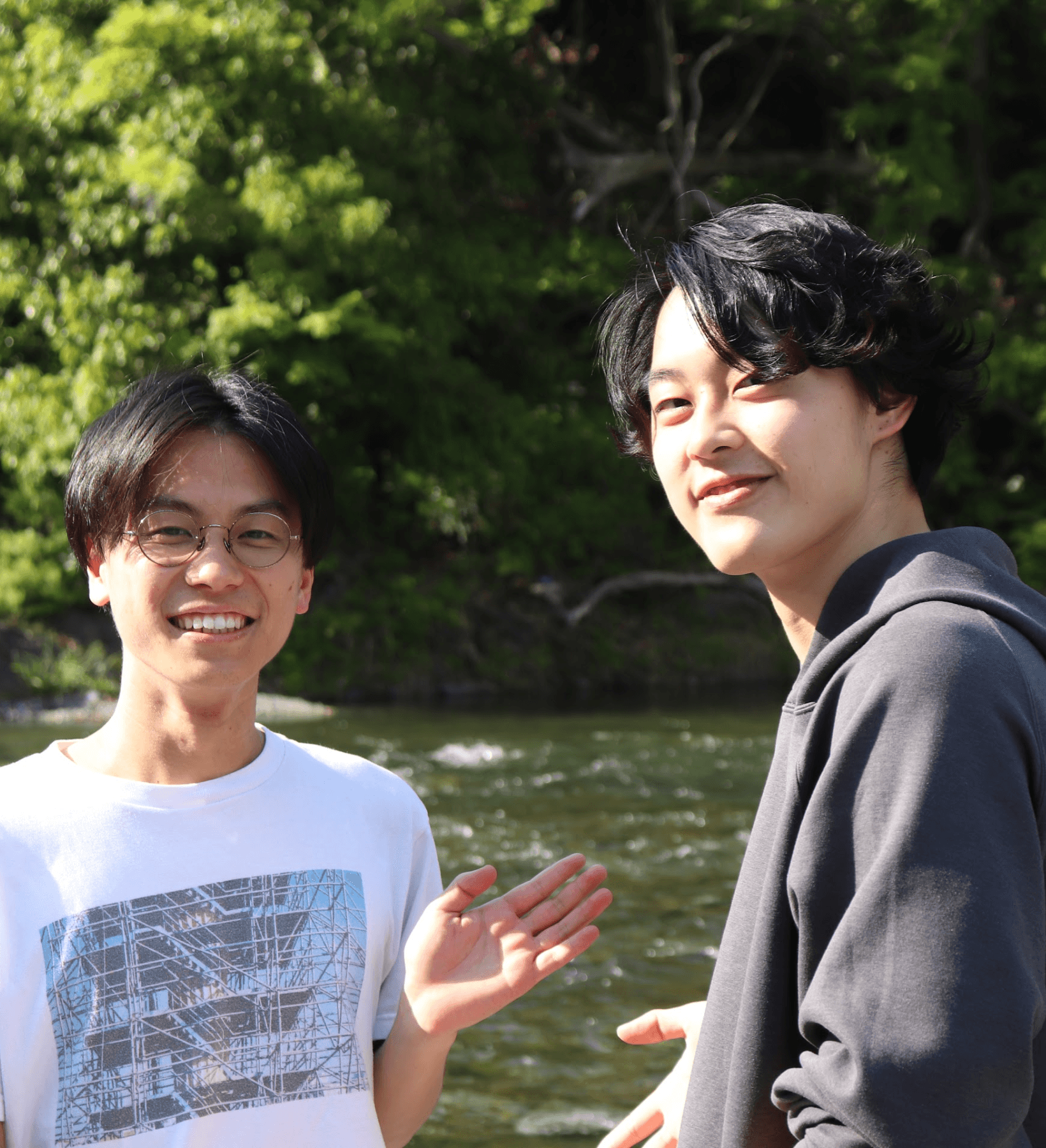
I’m Kakuda, an ASIBA student supporter.For this interview, we spoke with Masaki Morihara, who has served as co-representative since the founding of the General Incorporated Association ASIBA and leads the organization alongside Representative Nihei. We delved deeply into Mr. Morihara’s communication skills—for which he is known for his inclusiveness—the lessons he learned from his student days, and the philosophy that underlies ASIBA.
── Thank you for joining us today. Mr. Morihara, you’re known for your inclusiveness—is there anything in particular you keep in mind when communicating with other members? Also, do you have a personal motto when interacting with people?
Morihara: I’m not really one for drawing lines based on age, so I make a point of speaking on an equal footing with both my seniors and juniors. I want the people in my community and those around me to take the initiative to learn something from me, and conversely, I want to learn from them as well. I believe that kind of relationship is the most rewarding.No matter who it is, everyone has something unique about them—like their own values—and I enjoy getting to know those things. Plus, since I love working with people, I prefer teamwork to working alone.
── That’s a wonderful way of thinking. I heard you were in a sports club during your school days—why do you think you stopped being so conscious of age even in that kind of environment?
Morihara: I’ve been playing soccer since elementary school, and we were strong enough to compete at the national level. Back then, there was a rule that the seniors had to do all the menial tasks—which isn’t a common way of thinking in sports clubs, is it? My coach at the time believed that if there was a master-servant relationship between seniors and juniors, that arrogant attitude would gradually seep into our play.It was more like, “Work for the sake of your juniors—that’s part of being a professional.” In fact, the team was at its strongest when we played that way. From that experience, I learned that to be a true professional, it’s not enough to just do what you want; you also have to create a comfortable environment for the people you’re working with. In any case, in the creative world, independence—taking responsibility for your own ideas—is highly valued, and since I spent my college years in that kind of environment, I don’t really worry about differences in ability. My stance is that you should just judge people based on whether they’re giving it their all.
── That makes a lot of sense. When I look at the feedback you give to the third-year students on a daily basis, I get the sense that a core message is to not just focus on your own environment, but to also improve the environment around you—and that stems from your own personal lesson that doing so ultimately leads to better performance.
Morihara: I believe that creating great work and personal growth go hand in hand. I don’t think we’re in an era where having just the right skills is enough.Just as singers who are only good at singing aren’t in demand anymore, what’s increasingly valued is one’s character and philosophy—how you view society, how you perform in front of staff, and the attitude with which you interact with them. All of that is now considered a form of creativity.This isn’t an era where you can get away with just creating your own work, and if you keep doing that, you’ll eventually hit a ceiling in the world of creation. That’s precisely why I emphasize the importance of greetings and proper etiquette—not just to the third-generation members, but to the management team as well. I don’t think people talk much about manners these days. While the mainstream trend is to avoid interfering too much in others’ lives, I feel it’s something we need to deliberately address, which is why I bring it up.
── I don’t think that’s the case at all; I’m sure everyone recognizes it as loving discipline. Where does that source of selfless love come from?
Morihara: I think it varies from person to person, but for me, it stems from my desire to spare others the unnecessary hardships I experienced in my own past. Even if someone has talent, they can’t prove it unless they actually create something tangible—and yet, there are so many obstacles to overcome before they can even get to that point. For example, money, space, or time.I’ve gone through a lot of that myself, so I’ve spent a lot of time figuring out how to create as much as possible while navigating those constraints. However, looking back now, I think I probably didn’t need to go through all that hardship. It would have been fine to just go to college normally and lead a quiet life focused solely on getting good grades, but given my personality, that just wasn’t an option. So, I often clashed with people and even skipped classes.I lost some things because of that, but above all, managing my finances was incredibly difficult. I strongly feel that I don’t want others to go through similar experiences or hardships, and I don’t want that cycle to be repeated. As I mentioned briefly earlier, in today’s world, there’s hardly any time to truly connect with people, is there?Even among school teachers, I think there are very few who genuinely want to change someone’s life for the better or make it better, and I suppose there aren’t many friends who do that either. I think this structure is pretty distorted—it’s become normal not to speak up, and people tend to blame their circumstances for everything and look for ways out.I believe it’s important to give it your all and see it through in that environment at least once. The experience of truly engaging with someone and breaking through—even while struggling—is surely important. Of course, it’s best to avoid power harassment and unnecessary hardships. However, I think we need to work on honing our creativity in a healthy way and truly expanding our capacity as human beings.
FIG.2
— I think trust is key when you’re truly engaging with others in that way. Do you have any thoughts on that?
Morihara: If you don’t trust people, you can’t trust the organization either. On a larger scale, isn’t the strained relationship between nations also the result of a lack of mutual trust?I feel that if we don’t properly cultivate the process of understanding others through debate as a form of intellectual growth, things will head in the wrong direction. So I speak my mind when I need to, and I reprimand people when necessary. The same goes for myself.
── That sounds just like something you’d say, Mr. Morihara. Here’s a slightly related question: I get the impression that you place great importance on courtesy, compassion, and connections. Do you keep those values in mind when running ASIBA’s incubation program?
Morihara: You mention it and it hits me—you’re right, I might actually be a really compassionate person (laughs). How should I put this? People can’t take on challenges unless they have a foundation that ensures things will work out in the end, right? Like having a place to come back to, or an environment where someone will lend a helping hand when you want to try something.I don’t think there are that many people who have that kind of environment, or who have sufficient social capital or relational capital. Looking back on my own life, I’ve been saved by those connections. When I was starting from scratch and hadn’t created anything yet, there were about three mentors who listened to my ideas and took me under their wing. When I was struggling because I didn’t have a job—even though I wasn’t even looking for one—they introduced me to work opportunities.If I hadn’t been saved by those mentors, I certainly wouldn’t have grown as much as I have. That’s precisely why—in the spirit of giving back and passing on the favor—I want this to be that kind of place for the third cohort of the Incubation Program.
── It’s clear that your own experiences have shaped your mindset. That’s probably why you’ve been able to remain an active participant all this time. Compared to the early days, have there been any changes in relationships, particularly among the management team?
Morihara: As we’ve worked together, we’ve come to understand each other’s strengths and weaknesses, as well as what we want to do and what we don’t want to do. We sometimes argue because of this, but I think that’s a sign of a healthy dynamic.Rather than being an organization driven by one person’s strong will, we’re an organization that grows through the synergy of everyone involved. While I’m aware of the limitations of this approach, I also feel that it’s precisely because of this that we’ve been able to scale our business to this size in such a short period of time.
── The fact that you’ve all continued to work with the same level of passion might be one of the reasons ASIBA has grown this large. By the way, how did you first meet Mr. Nihei and Mr. Takano, who are now part of the management team?
Morihara: I’d been involved with startups since back then, which was particularly rare among architecture students. I was thinking about how I could somehow put that experience to use.At one point, there was a sort of joint research lab between Waseda University and the University of Tokyo, and that’s where I met Nihei. At the time, I talked to Nihei about whether we could bridge the gaps between fields that are currently fragmented, such as architectural design and general design.We decided to turn that idea into something concrete, so we gathered acquaintances and friends—like Takano and Sudo—and launched the first cohort of ASIBA. About two months after we came together, we started talking about trying an incubation program. We really got started right away.
── It’s as if it were destined—specialists from various fields have come together.
Morihara: That’s right. To be honest, I never imagined I’d be doing something like this myself, though back then I did have a vague desire to start a startup.It’s difficult to go independent in architectural design, and aside from running my own business and actively pursuing design projects, I just couldn’t find a way to channel all that excess passion I had. I was looking for a place to channel that energy, and it just so happened that incubation was the answer—which allowed us to approach incubation strategically from that point on.
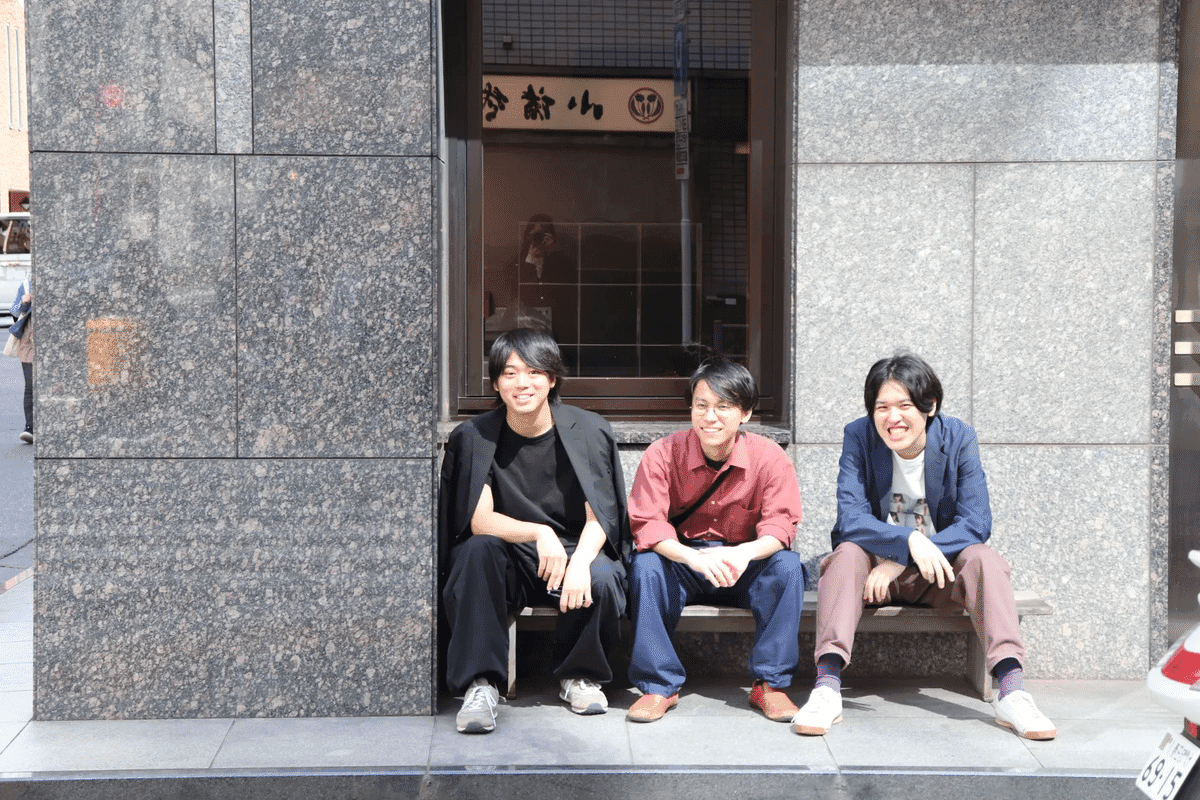
FIG.3
— That’s a truly inspiring way of life. I’d like to move on to the next question. You’re very active in external relations and seem to be quite prominent in the public eye. When do you feel a sense of pride in ASIBA while talking with people outside the company?
Morihara: It’s when we receive projects that are almost too big to handle. I’m really happy when the other party’s expectations are—in a good way—way too high. It makes me happy to realize that they’re the kind of people who’ll casually throw that kind of expectation our way, as if to say, “ASIBA can handle this, right?”I think people place requests based on the brand image they have of ASIBA as an entity and the level of expectation they hold for us. But when they ask us to take on something that even seems beyond our capabilities, I realize we must be making a really strong impression. The moment we receive a project like that is when I’m happiest—and it really fires me up. I don’t think there’s such a thing as a “big” or “small” project. Whether the budget is 100,000, 5 million, or 50 million, I don’t compromise on the intensity of the design thinking I apply to the project—I just think the scale is different. That said, the output is often so excessive that I get scolded quite a bit.I end up creating about 200 pages of proposals, so people often ask me, “Isn’t that a bit excessive?” But I don’t think it’s excessive at all.In any line of work, projects can lead to new opportunities in a chain reaction, or clients might come to recognize that “you can do different kinds of things, too.” So, I value an approach to my work where I paint a grand vision, view things with a touch of imagination, and yet remain firmly grounded in reality.
── Within ASIBA’s management, you’re highly regarded for your incredibly fast turnaround on input and output. Is there anything in particular you’re conscious of in that regard?
Morihara: Various mentors have always told me to keep refining my “form”—the way I perform—so that I can give 100%, 120%, or even 150% at any time. It’s like they’re saying, “You absolutely must always have a form that lets you hit a home run.”When it comes to creative mode, I have a ton of personal rules regarding the environmental and mental conditions that allow me to maximize my output. I can’t come up with ideas unless I’m constantly exposed to different inputs or meeting new people; no matter how much time I spend at my desk, my ability to think on the fly starts to fade. Similarly, I feel like my mind dries up if I don’t keep moving around and producing output. It feels like I’ve conditioned my mind to generate ideas by repeating this cycle.
── Don’t you ever get physically exhausted?
Morihara: Yeah, I do—pushing past my limits. Obviously, when I get tired, I make sure to get a good night’s sleep. I’m actually pretty physically fit, so I can keep going—which is a bit of a problem in itself (laughs).
── Do you have any thoughts on this incubation program?
Morihara: I find this one particularly interesting. There are artists, creators, and architects here. What strikes me is that, as I take on various projects, not all of them are strictly architectural commissions. We’re increasingly faced with challenges that can’t be solved—or even understood—without cutting across architecture, design, and artistic thinking.I feel like we’re at a major turning point in history, and that’s precisely why we deliberately chose not to limit ourselves to architecture this time. I believe that if we rely solely on architectural thinking to address the issues I’m currently grappling with, the world won’t get any better—and in that sense, I’m very proud as an organization that we were able to make that decision. Of course, the complexity has increased, and there are times when we don’t really understand each other’s perspectives.But because our ways of thinking differ, it serves as a positive stimulus, and seeing the kind of mutual dynamics that emerge from this, I’m glad we made that decision this time. Also, I think the gender balance is better this time around than it was in the first and second cohorts. The entrepreneurial world inevitably has a rough-and-tumble image, but I wanted to explore whether we could create an image that breaks away from that—and I wanted to turn that into our brand identity—so I asked Sone and Sudo to create the key visuals for this round.The students drawn to that design turned out to be those with creative potential, and I’m proud that this was a successful example of rebranding in a positive sense.
── I have a personal question regarding cross-disciplinary collaboration, which is also the theme of this project: Do you believe that architecture, design, and art should be inherently cross-disciplinary, or are you incorporating them simply because they represent cutting-edge trends of the times?
Morihara: I believe they’ve always been interdisciplinary. Fundamentally, culture isn’t inherently divided; I think it was separated simply because doing so sometimes leads to greater precision.ASIBA and incubation are places where new things happen, aren’t they? We had to create the conditions for that, and among those conditions, the idea that we should deliberately step outside existing frameworks was quite high on the list. Otherwise, we’d remain bound by architectural thinking, architectural outputs, and architectural expression.Every field has its own stylistic conventions, and transcending them inevitably requires a great deal of energy. When there are diverse people involved, as in this project, everyone tries to grasp the essence of those conventions, which causes things to become very unstable. It’s almost as if the very definition of “style” disappears. That’s why everyone gets lost. However, I was very conscious of how that confusion increased complexity, creating unexpected connections between various points—like a kind of random number generator.
FIG.4
— Thank you. My next question is based on something from your Note, Mr. Morihara. You wrote, “I want to direct my anger at the things in society that deserve it.” Are your activities at ASIBA a kind of process for further clarifying that desire?
Morihara: I’d like to start by talking about the desire to create. There are two types of creative drive—or rather, driving forces—which I call “positive energy” and “negative energy.” Positive energy stems from something like pure curiosity, while negative energy comes from things like the difficulties of life or indignation. I have a very strong sense of negative energy.Given my exposure to free speech, critical discourse, and political activism, I strongly feel that what I’m doing—running this startup—is very much part of my activism.Based on my own experiences, I’m extremely sensitive to the absurdity of situations where people are at a disadvantage simply because of their position, and I’m the type of person whose heart is moved by various social movements. I believe that the process of generating this negative energy is, in a sense, a kind of startup in itself. At its core, I think it’s both a form of artistic activity and a form of activism.
── Mr. Morihara, you’ve demonstrated leadership alongside Mr. Nihei and helped steer ASIBA forward. Do you have your own theory of leadership—or an ideal image of a leader?
Morihara: I’ve found myself in positions where I had to take on a leadership role several times. The first time was in high school. I was in a role similar to that of a designer, directing the process of what we were creating. The second time was when I was working at an international NPO; at that time, everyone except me was older. There were 40 staff members in the secretariat, and every single one of them was older than me.I was serving as the executive director there, but since I was only twenty, I couldn’t actually do any of the work—ha ha. However, while I was intellectually capable of thinking about abstract concepts and strategic direction—which is what I focused on—I felt frustrated that I couldn’t handle the day-to-day tasks and was just daydreaming without being able to bring my ideas to life. Even though I was in a leadership role, I was half-baked and never quite up to the task.At ASIBA, while I’m focusing on the management side, my ideal is to also take a leadership role on the shop floor and in the manufacturing side. That’s because if I lose touch with how the workers feel, or if I stop understanding their perspective or how things are made, I won’t be able to make good decisions for the organization as a whole. At the same time, though, I also think it’s not good to get too deeply involved on the shop floor.I believe I should maintain a balance—keeping one foot out while keeping the other in, or limiting my involvement to about 20 percent. Also, since I grew up playing soccer, I feel I absolutely must score every time I receive a pass. If I can’t consistently do that, I feel my performance is meaningless. I think it comes down to whether or not I can truly take responsibility.
── Do you have an ideal image of a leader in mind?
Moriwara: Brian Chesky, the co-founder of Airbnb. I respect him so much that I’ve read everything he’s written. He started out as a designer, and as a designer, he studied business theory, business strategy, and how to scale an organization—constantly honing his skills along the way. I still use him as my benchmark to this day. In terms of anime, I like Freylen from *Freylen: The Funeral March*. I like that she isn’t goal-oriented; adventure is woven into her daily life of exploration, and through those adventures, she discovers herself and the world—and she’s overwhelmingly strong. That really blows me away.
── Thank you. What do you consider to be “ASIBA-ism,” Mr. Morihara?
Morihara: Adventure, I suppose. Also, curiosity and compassion.
── Could you elaborate on that?
Morihara: First of all, I think being adventurous is incredibly important. That’s because I believe it’s not just important for us to be adventurous—it’s important for the industry as a whole to be adventurous. I want us to be the ones taking the biggest risks and tackling the most difficult challenges. That’s exactly why I think we work as a team.As for inquiry, this ties into what Freiren said—I see it as something that goes beyond just wanting to get rich or fulfill some dream.The word “hope” is very exploratory, isn’t it? It’s something we seek and pursue even though we don’t know what it is, and the imagination and dedication required to uncover what we don’t yet understand are incredibly important—I think that’s very much in the ASIBA spirit.When faced with something that isn’t yet defined, teamwork is absolutely essential to make it a reality—it’s something we all have to solve together. That’s why mutual consideration, emotional connection, the spirit of giving back, and the bonds of fate are what I believe make for a very strong community. Without them, the ship would sink—so right now, I think these three words best represent ASIBA.
── In what ways do you think the quality of ASIBA as a community is ensured?
I think it comes down to setting clear, appropriate expectations for people and continuing to believe in their underlying potential. People often tell me not to trust others too much, but I feel it’s about continuing to believe that, in their own way, they’ll figure it out, change, or take action. After all, people don’t do things if no one expects them to, do they?I think people can give their best because they feel others believe they can do it; if they don’t feel that way, they can’t create anything—and I don’t think they’ll even try. So, I believe that having expectations and believing in what comes from them are incredibly important within the ASIBA community.
FIG.5
── Finally, could you write a “A-I-U-E-O” essay using “ASIBA”?
Morihara: If you want to try something new, don’t mope around—let’s raise the vibes! 🔥
── Thank you very much!
Credit
Related Works
Related Texts
Creators Forge a Space of Solidarity to Challenge the World Together
STATEMENT
2026.07.31.