INC-3rd Term Secretariat Interview #1
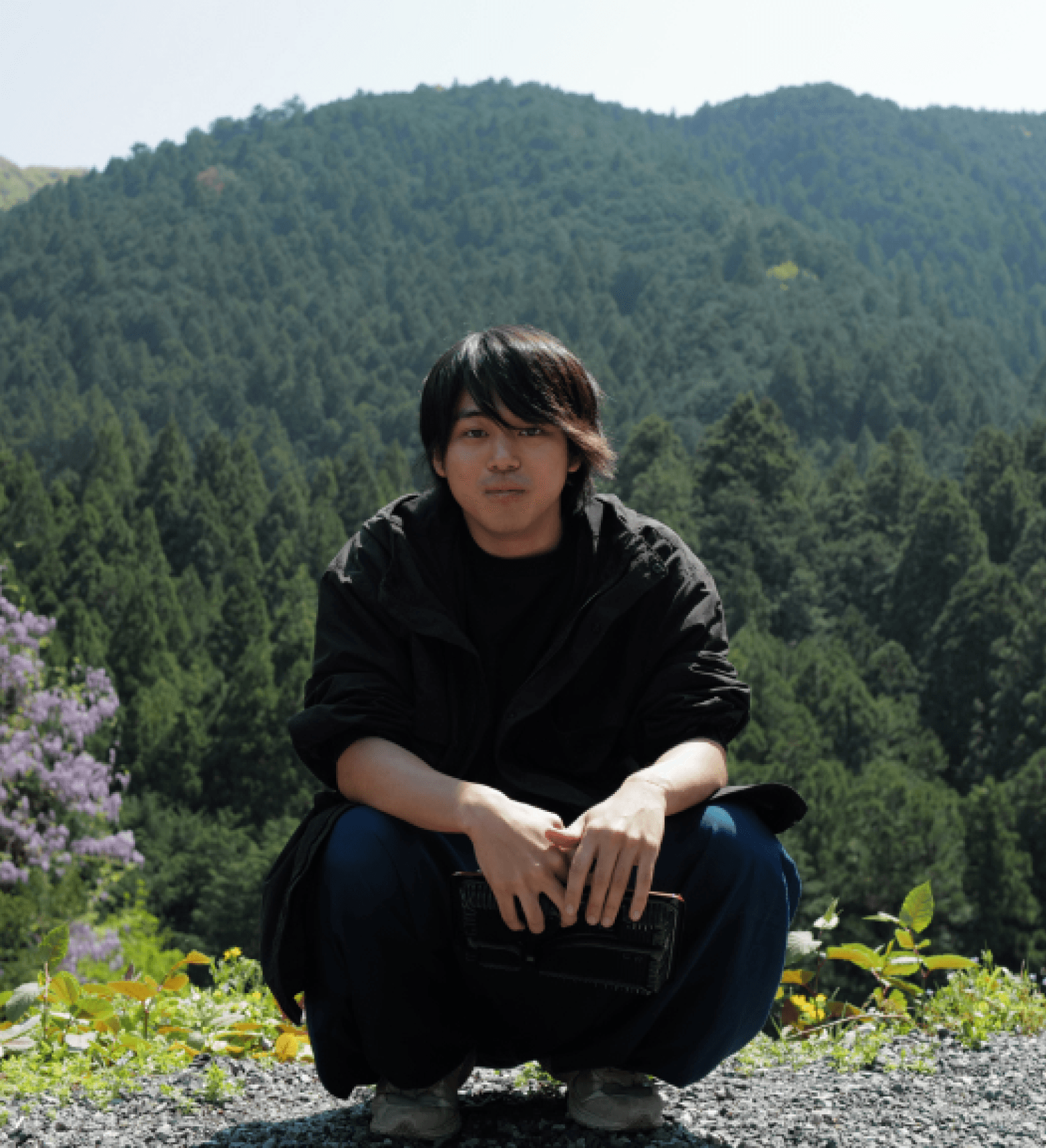
FIG.1
I’m Kakuda, an ASIBA student supporter. In this interview, we spoke with Motoaki Usui, a member of ASIBA’s second cohort who serves as the Content Team Director on the management team for the third cohort. We take a closer look at the philosophy of Mr. Usui, who is responsible for content creation and UX design for the incubation program.
── Mr. Usui, you’re in charge of UX design and have made significant contributions to content creation for the incubation program. As someone on the program’s organizing side, what is your guiding principle when creating content?
Usui: What I’m careful about is clearly distinguishing between what we should restrict and what we shouldn’t. I believe that ASIBA, at its core, should be a community where people can realize what they want to do and the future they envision.We must not stifle participants’ potential or their opportunities for self-expression. That’s why I believe it’s important to leave room for flexibility rather than dictating everything from our side. Even when designing the UX, while I want participants to understand our intentions, I frame things as questions to avoid being too pushy.
Rather than saying, “Do this,” I try to ask questions like, “Here are these options—which one will you choose?” The goal is for participants to become the kind of people ASIBA aims to foster. My top priority when designing the program is ensuring that each person feels satisfied, achieves what they want to do and the future they envision, and can see what lies ahead after completing the ASIBA program.
── I see. So you place great importance on leaving room for flexibility. I think one of ASIBA’s key characteristics is that you don’t prioritize titles or backgrounds when selecting mentors—is there a specific reason behind that?
Usui: That’s a very good question. It’s something we debated quite a bit internally before making a decision. In the second cohort, we invited people in their 30s and 40s who were running well-established businesses. However, when we look back at ASIBA’s origins, I believe the core is still about “what you want to do”—that sense of personal purpose.And our sensibilities are shaped by the times we live in. We had a hypothesis that when we’re in our 20s or 25 years old, and we’re interacting with someone 10 years our senior, differences in the era we’ve experienced and our goals often lead to a disconnect.
That’s why we’re focusing on people who are close in age to us—or perhaps a little older—but who are doing what they truly want to do. By having such individuals serve as mentors, our goal for this third term is to reduce biases and align our perspectives.Rather than choosing people who are senior to us, we’re selecting mentors who are our peers working hard—or who are a little further along on the same path.
── So that was the background. Amid internal discussions, what was the biggest reason you ultimately decided to welcome peers who are working hard as mentors?
Usui: I think the most important thing is that our core values remain at the center—and that we don’t compromise them. To make the most of that, I believe we need people we can talk to on an equal footing—mentors who are still developing and pushing forward themselves, creating an atmosphere where we can say, “Let’s climb this mountain together.” I think it’s best if we can reflect on our experiences together.
There’s certainly a lot to gain from experienced people in their 30s and 40s, and you might receive a wide range of feedback. But if you ask whether that’s necessary in the early stages—or when things haven’t solidified yet—I don’t think it necessarily is.During the second cohort, precisely because we strongly emphasized commercialization and social implementation, there were many “entrepreneur-like” people—but that approach didn’t work for everyone. It resonated with some and not with others; I don’t think it’s a matter of who’s at fault, but rather a question of the phase we were in.
FIG.2
— Since you touched on the differences from Cohort 2, let me ask a follow-up question. What is the biggest difference in content compared to INC Cohort 2?
I think the biggest difference is that it’s no longer limited to Usui Architecture. In the first and second cohorts, we focused our incubation efforts within the framework of architecture students, but we’ve now expanded that to include fields like art and design. As a result, we’ve realized that the ways of thinking and the range of possible outputs are completely different.I think this is a perspective that even we on the organizing side lacked, so it’s a major factor for the Phase 3 participants and a significant challenge for us as well. There’s a lot for us to learn. I feel that’s the biggest difference and the greatest challenge.
── Now that you’ve expanded into the fields of art and design, how has that affected the content? As you’re designing the program, Mr. Usui, do you have any specific ideas about the kinds of differences you’d like to bring out?
Usui: As we’ve been exploring those differences, in the first and second sessions, we structured the content by focusing on how to design the process of thinking itself.However, precisely because we’re a group of architects putting this together, there was a strong architectural bias in some areas, and we realized early on that this didn’t resonate with quite a few people. So, we came to the conclusion that setting a clear goal might be more important than just unraveling the issues, and we changed our approach.
Even though our members created plenty of self-reflection worksheets, there was a significant split between those who used them and those who didn’t. We’re still feeling our way through what works best in this regard, but we’re making adjustments and learning through trial and error as we go.
── What do you mean by an “architectural way of thinking”?
Usui: Hmm (laughs). Well, I don’t really have a “textbook” approach to architecture to begin with. When deciding on a concept, sometimes I’ll start by writing things down or moving things around, proposing ideas, and proceeding exploratively while saying, “That’s not it, this isn’t it either.” Other times, I’ll just jot down everything I think is needed all at once and build it up by rearranging those elements.There are probably many attempts where people first put things into form or words, exhaust all possibilities, and then try to find the right direction. It might just be my circle, but I feel like it’s quite common to have a theme, decide on a concept, and then structure everything so that it can be explained entirely through that single theme or central axis.
── Everyone participating in this INC event comes from the fields of architecture, art, and design. Isn’t it quite a challenge to create content while taking all three of those fields into account?
Usui: I think that while the ways of expressing it may vary, it’s often possible to systematize where someone is in the process or where they’re getting stuck—whether it’s “I’m struggling to delve deeper into my own ideas,” “I don’t know how to produce an output,” or “I tried putting it into action, but I’ve forgotten why I did it this way.” Even though the fields are different, I don’t think the differences are that significant.Of course, the sequence of steps may differ, but rather than categorizing by fields like art or architectural design, I try to categorize based on which phase participants are stuck in. When we take a holistic view, I’m conscious of identifying what the top priority should be or what elements might be beneficial for the project as a whole, and then setting that as the goal.
── Thank you. Now, on to the next question. This might be a bit challenging, but at this INC event, the doors are wide open not only to architecture but also to art and design. As a space where the respective ideologies—ways of thinking and conceptual approaches—intersect, what kind of environment do you think INC should be for the participants?
Usui: I think there are things we can only discuss precisely because of our different perspectives, so I believe it would be best if we could openly share those ideas with one another. I’m quite conscious of the concept of community; even though we each have our own projects, I firmly believe there’s definite value in coming together. As I work on my own project, I try to make time to exchange ideas with others or engage in dialogue.It’s precisely because we don’t set the agenda that we can make discoveries and gain new perspectives. Since it’s quite tough to keep going with a project while believing in yourself, I hope this space can also serve as a place where we support one another. A major aspect of it might be having peers who are fully committed to what they want to do.
── I can relate to that. Even just observing the conversations within the ASIBA management team, I get the sense that it’s a group that places great importance on dialogue. How do you think that culture was fostered?
I think the presence of our CEO, Mr. Nihei, plays a major role. I joined two years after ASIBA was founded, so I don’t know what it was like back then. But I suspect the fundamental reason is that Mr. Nihei believes there’s value in the convictions people hold, and he genuinely enjoys learning about them. I think it’s precisely because we have someone like that as our CEO that we’re committed to prioritizing that aspect.
During the second term, Mr. Nihei told us things like, “Share more of your thoughts,” or “It’s totally fine to just talk about your travels.”He has this mindset that inspiration might come not just from projects, but from things like, “I saw this,” or “Let’s make sure to share this kind of thing, too.” And he’s the one who puts that into practice the most—and I think it’s precisely because the person at the top of the community is doing it that everyone else feels it’s okay for them to do the same.
FIG.3
— That’s definitely true. When designing content, there’s been a consistent emphasis on not letting your personal intentions overshadow the content—but do you, Mr. Usui, have any personal convictions or intentions of your own?
Usui: There’s something I realized from my own experience with incubation. I completely understand the frustration that comes when the focus shifts too much toward entrepreneurs—like when new terminology and information flood in and things get confusing. Because I’ve had that feeling myself—thinking, “If I’d been able to sort that out back then, we might have made a bit more progress”—I believe the timing of what you do is actually quite important.
Holding the retreat during the first half of this program was also a first-time endeavor for us, but based on interviews with various people—and my own conviction that this was the right timing—I ultimately decided to go ahead with it.To be honest, there were tons of concerns about how tough it would be. People even mentioned that it would be a real strain operationally, but I felt there was real value in doing it at this specific time, so I clearly told everyone, “We’ll figure it out.”I don’t want us to ever say, “We won’t do it because it’s too much work for us.” After all, the most important thing is that participants can grow and do what they want to do. So even if it’s tough, if I believe it’s necessary, I want to find a way to make it happen. I’m consciously trying not to draw the line there—or rather, I make a point of not doing it.
── I think the “we’ll make it happen” spirit of everyone at ASIBA is truly wonderful—but where does it come from?
Usui: I wonder where it comes from? (laughs) I’m not sure, but in architecture, for example, you build something, get it critiqued, receive feedback from a professor, and then adjust your work based on what they say—so I think there’s a strong bias toward evaluation-based judgment. Of course, I understand that there are people who think that’s a good thing.But as for ASIBA, I think we just don’t want to crush people who are doing what they want to do. Or rather, I think we’re the kind of people who find that interesting.
Maybe they see “giving form to something” as a way to express their own thoughts or do what they want to do?Precisely because that’s the fundamental driving force, I don’t want it to end with people saying, “I had something I wanted to do, but I couldn’t do anything.” I think it’s something that can only be conveyed once it’s given tangible form and shown to others, and I feel it’s a waste to just organize your thoughts in your head and call it a day. That’s why I believe there’s value—and a sense of responsibility—in guiding students all the way to a visible form, to the final output.
── That’s interesting. This topic leads into my next question. I think content is the most significant element in shaping the essence of ASIBA—what do you think “ASIBA-ism” is, Mr. Usui?
Usui: Hmm, what is it, I wonder? Isn’t it just that I think the people who are doing what they want to do are the most interesting?
── Does that mean not worrying about how others see you?
Usui: It might not be entirely irrelevant, but I don’t think that’s the central focus.
── However, when it comes to implementing things in society, I think there are inevitably situations where you have to be mindful of external evaluations in order to meet external needs. What are your thoughts on that?
Usui: It’s not a matter of saying, “Since I can’t do what I want to do, I’ll go in the direction where I can.” What I want to do comes first, and then I figure out how to make it happen or how to convey it effectively. In other words, what I want to do is in the background, and I create the front-end to communicate that.You create a language to communicate with, and you speak through it—but what you really want to do isn’t there; it’s hidden behind it. It’s like gathering the necessary pieces—words, stories, and the social context—to achieve what you truly want.
I think there are a lot of “social issue-solving businesses” these days, but I don’t think it’s good to have “solving social issues” as the primary goal. If you solve one issue, isn’t that the end of it? I believe that for every problem you eliminate, another one pops up. If you approach it with the mindset of “we’ve solved the problem,” a different form of the issue will just emerge, and you’ll end up constantly playing catch-up.I suppose I’m thinking, “Doesn’t that mean society hasn’t really changed much?” That’s precisely why I believe that by acting on what I want to say—by bringing new perspectives and fresh ideas to the table—and by sharing them, I might indirectly create a new starting point for change.I think he’s using all these various ideas—this “future of passing things along”—as a foundation, viewing the current state, where everything is piled up and piling up, as a potential starting point for opening up society.
── After a short break, we’ll now move on to questions from my supervisor, Mr. Aino. How have your personal values and creative approach changed through your involvement with ASIBA? If there were any particularly memorable conversations, please share those as well.
Usui: Hmm, I think the second term of ASIBA had the biggest impact. I participated in the second term of ASIBA during my senior year of undergraduate studies, and up until my junior year, I was the type who really worked hard in class.I took classes, wrote reports, and did lab work diligently to build a solid foundation, and I joined an architecture club on campus—I was mostly doing my best within the scope of what was within my reach.However, around the time I started doing architectural design and receiving critiques, I began seriously wondering, “What do I really want to do?” Once I started thinking about that, I realized I needed to step outside my current community, so I decided to join ASIBA. Additionally, I joined because I thought that by taking on a challenge through the second cohort, something within me would change.
Once I joined ASIBA, I was constantly told to “get your hands dirty.” That didn’t mean trying to solve problems from behind a desk; it meant actually getting out there—going out to gather the necessary information, negotiating with people, and “giving things a try” in the real world.I interpreted it as meaning, “Step outside your comfort zone and try something new,” and because I immersed myself in that environment for three months, I experienced a lot of changes.I went from doing research and seeking advice only within my immediate circle to taking the initiative to send out appointment requests and seek out necessary information from different communities. Learning that I couldn’t move forward unless I stepped out of my comfort zone had a huge impact on my attitude and values. However, if you don’t make a conscious effort to maintain it, you’ll slip back—that’s the tricky part.
── I see. That’s interesting. I think you’re the ideal kind of participant. People tend to become passive when they join a program and assume they’re entitled to what’s given to them, but I think it’s a great attitude to be able to consider the creator’s intentions, like you do, Mr. Usui.
Usui: Well, I didn’t understand any of it at first, either.They told me right off the bat to conduct interviews. They said, “Go conduct five interviews,” and at the time, I honestly wondered, “Why am I doing this?” With that thought in mind, I started conducting the interviews, and after about two months, I realized, “Oh, that’s what those interviews were all about.”I feel like it was precisely because I went through that process that I came to understand the significance of tackling each step one by one. But now that I’m on the side of conveying that knowledge, I realize it’s even more difficult. It’s only because I went through that process so thoroughly that I understood the point of doing it, but it wouldn’t be right to just impose what I’ve learned on others, and even if I explained it to the third-year students, they probably wouldn’t just say, “Okay, I get it.”
── I see. Do you think that way precisely because there were aspects that differed from the participant profile we envisioned when designing the content, or aspects that exceeded our expectations?
Usui: I definitely think that’s the case.We had certain challenges in mind for the incubation participants, as well as the concepts and taglines we’d established, but when we actually got started, I found myself thinking, “Huh, this isn’t as much about architecture as I thought it would be.” Even though the designs for the first and second sessions were already complete before the program began, we had to rethink everything because it didn’t match our expectations.
We took the pre-program assignments everyone had submitted, laid out all their portfolios in Figma, and—almost like profiling—mapped out exactly which phase each participant was in. Based on that, we scrutinized the content and made comprehensive revisions, adjusting everything to account for what might be needed moving forward.In the end, after we were done and took another look, there were even times when I thought, “Maybe the version before the revisions was better?” (laughs) While I realized how incredibly difficult it was, I decided during the retreat that I wanted to rebuild the program from scratch moving forward.
── Wasn’t it physically and mentally draining to have to rebuild everything from scratch?
Usui: It definitely was grueling (laughs). They were so different from me that I couldn’t figure them out even after profiling them, so I actually asked Mr. Kakuta for help.
── You were really backed into a corner back then, weren’t you, Usui? (laughs)
Usui: Exactly, exactly—it felt like a set of nesting dolls where the contents were different every time (laughs). In the end, it was like I’d even lost sight of those nesting dolls themselves.
FIG.4
── For my next question, I’d like to hear a bit more about your personal views on society. Do you personally feel any anger or dissatisfaction toward society? Also, are there any grievances that you think ASIBA could help resolve? And why do you think ASIBA can resolve them?
Usui: Hmm, I don’t really have that kind of anger—the kind where you’re like, “This is just impossible!?” I do think there are times when I feel, “Wouldn’t it be better if things were this way?”As for my personal stance—and this is partly influenced by my upbringing—I strongly believe in the concept of “passing on kindness” rather than simply “returning it.” It’s not about repaying a favor, but about passing that kindness on to future generations and those who come after me, with the belief that it will eventually come full circle and return to me.I have a very strong sense of passing the baton on to others. In our complex society, there are quite a few times when I think that if our generation—those of us in our 20s and 30s—doesn’t work hard, future generations will face hardships.
For example, in elementary school education, there’s a lot of talk about incorporating things like the SDGs or programming—but isn’t that curriculum designed with an eye toward the future, anticipating the need for certain types of talent?But education shouldn’t really be like that in the first place. I think it’s crucial for children in elementary school or kindergarten to be exposed to a wide variety of things, and since I see that stage as a time for them to discover what they want to do and what they love, I feel a strong sense of unease when the curriculum restricts that.I know that simply pointing out this discomfort won’t solve anything, but I do feel that we have to find a way to pass the baton forward.
That’s exactly why I think there’s so much to learn from places like ASIBA—from their goal of connecting with society and their unwavering determination to keep moving forward. I really relate to that mindset and approach—the desire to blaze a new trail because of some dissatisfaction or anxiety with the existing architecture world or the paths that architecture students typically follow.It’s not so much that I want to become part of that world myself, but rather that I’m most drawn to the determination to give shape to those ideas—and that’s why I’m at ASIBA. Of course, I don’t want to be a burden on ASIBA forever, so I’d like to start exploring my own path eventually. But for now, I still feel I’m in a phase where I need to absorb as much as I can, so I’m staying here.
── I also have many reservations about existing educational curricula, so I really resonated with what you said.
FIG.5
── Next, a slightly casual question: What do you like about ASIBA? What do you think are its strengths that other organizations don’t have?
Usui: Strengths, you say? I think one of our strengths is that we have a space where people can share their concerns—even those unrelated to projects or purely personal matters. I haven’t been part of many other organizations, so I can’t say for sure, but I think the level of activity on Discord and the volume of communication here are exceptionally high.
── As a director, are there any points you’re careful about when communicating with others?
Usui: I try as much as possible to avoid situations where only one person is in the loop. That said, there are times when it’s actually faster for me to handle things on my own—like during training camps—and I do want to align everyone’s understanding in those situations. But then, because we have to coordinate, it can take time, and sometimes the content ends up getting delayed a bit. It’s something I’m still learning as I go.This is my first time directing a project over such a long period—three months—and I haven’t quite grasped yet how far ahead I need to plan. Things I thought would be fine if we got this far might seem like we’re providing information too late from the participants’ perspective, so finding that balance is really difficult.That’s something I’ve only come to realize because of all the experience I’ve had so far, and it’s also something I feel I need to take seriously because I’ve probably heard a lot of feedback about it.
── Well then, finally… please share a message for everyone reading this article who’s participating in the “A-I-U-E-O” essay contest at “A-Shi-Ba”!!
Usui: Oh man, oh man (laughs). Let’s see...
(3 minutes of thinking)
Usui: A: “What do you want to do, anyway?” S: “I guess I’ll support you since I have no choice.” Ba: “I’m giving it my all, so go for it! 🔥” How about something like that?
── That’s hilarious. Thank you so much for the interview today!!!
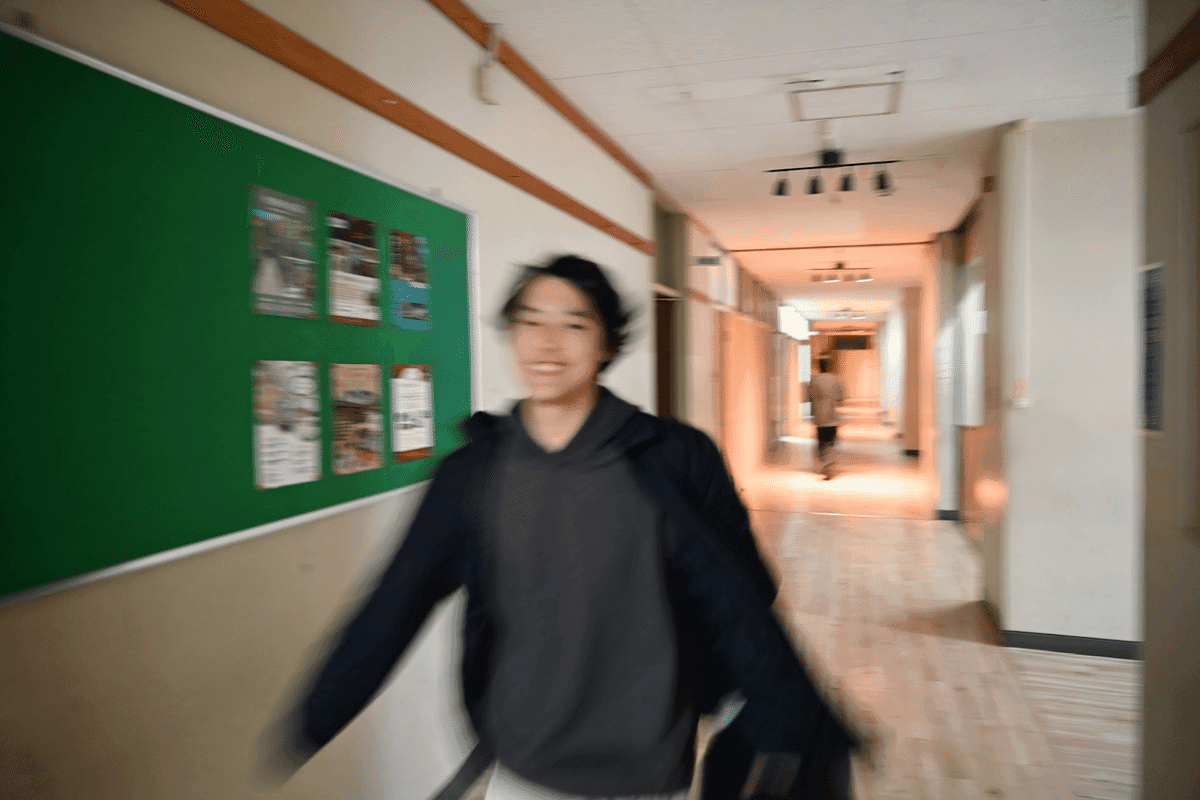
FIG.6
Bonus Column: Later
, they contacted me to say they’d come up with a new “Ashiba” essay. A: You’ve got something you want to do, don’t you? S: I know it—I see right through you. Ba: Don’t make fun of me!
Credit
Related Works
Related Texts
Creators Forge a Space of Solidarity to Challenge the World Together
STATEMENT
2026.07.31.