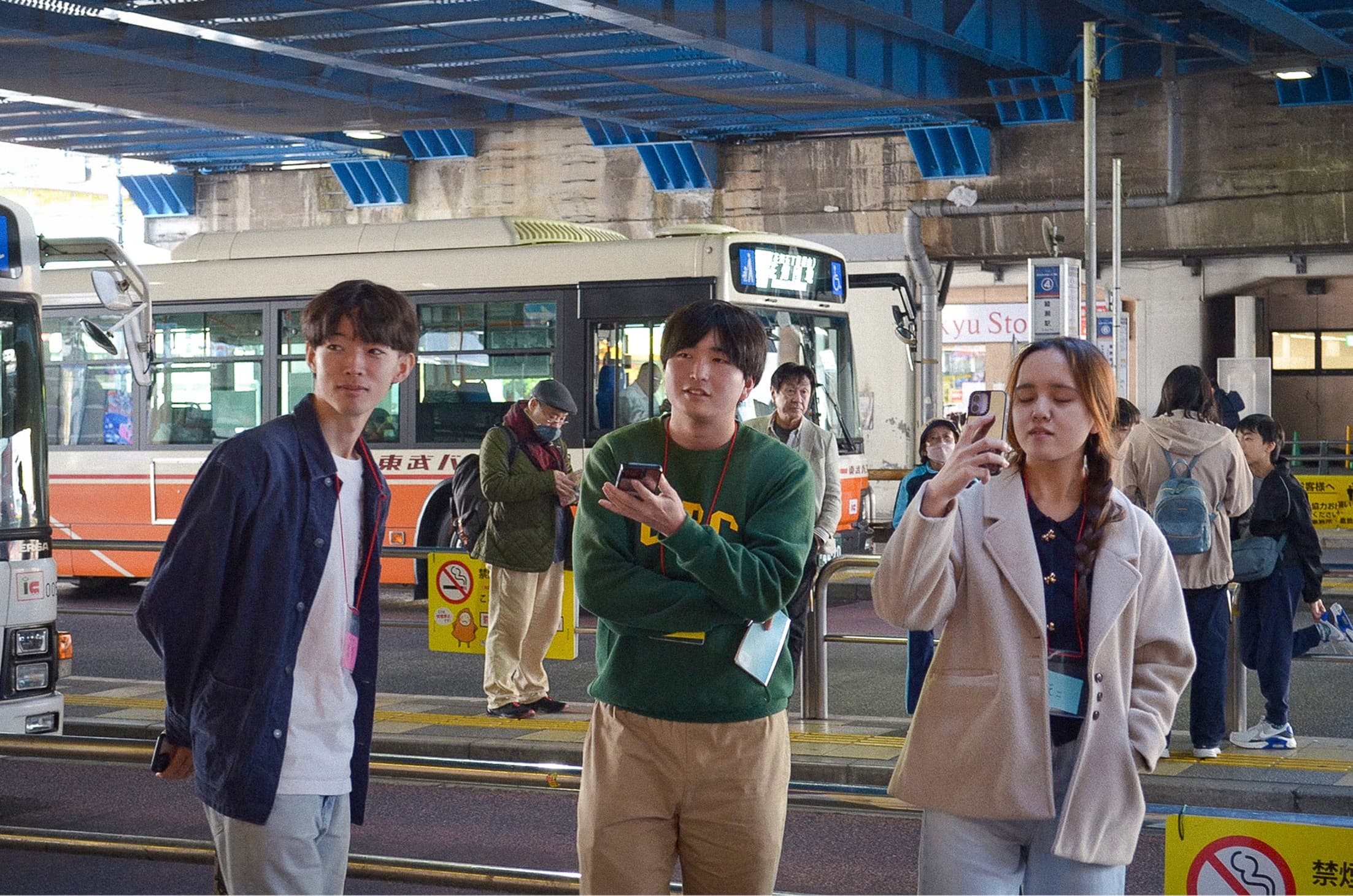
Generative AI Social Experiment #2
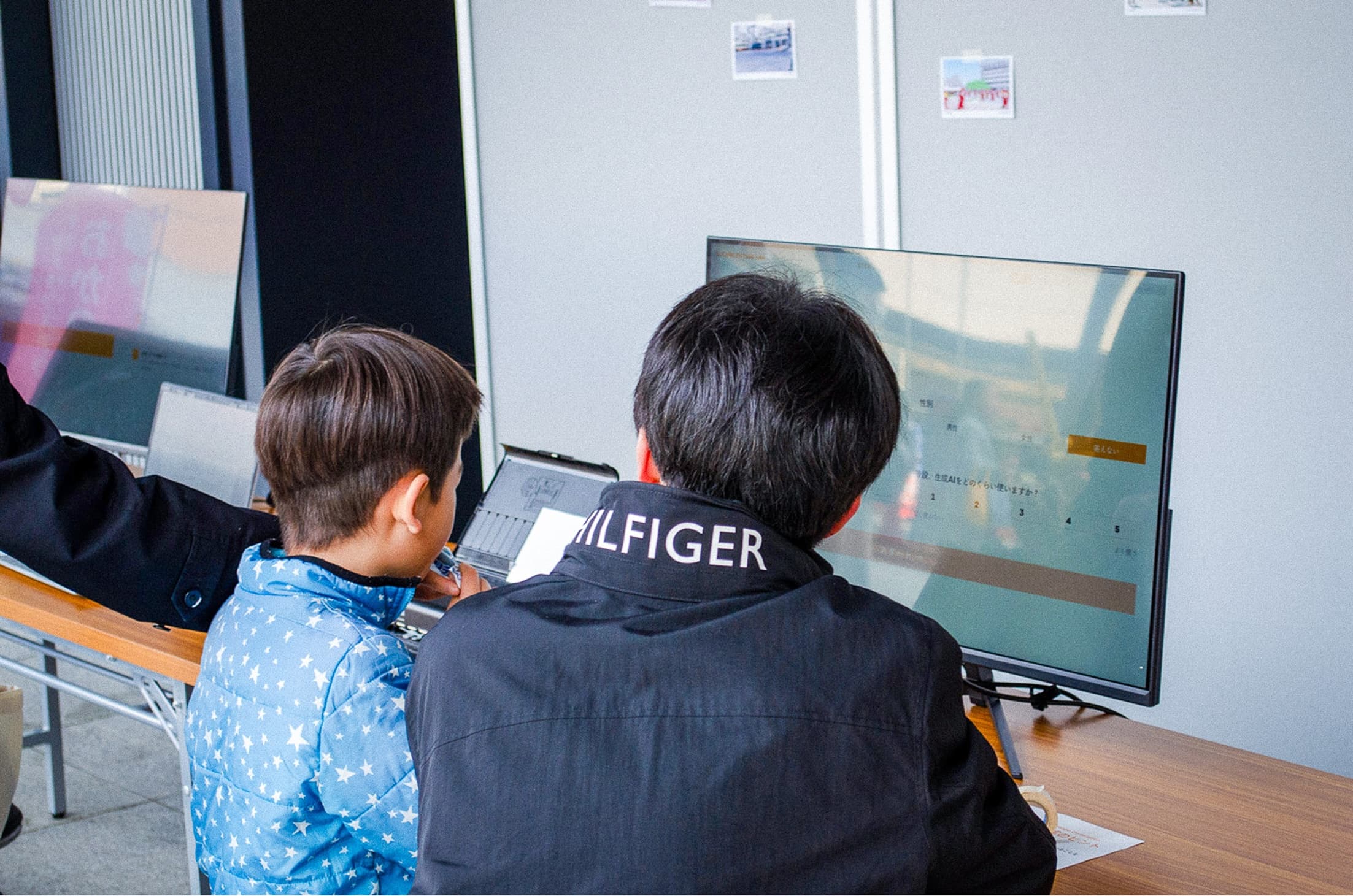
FIG.1
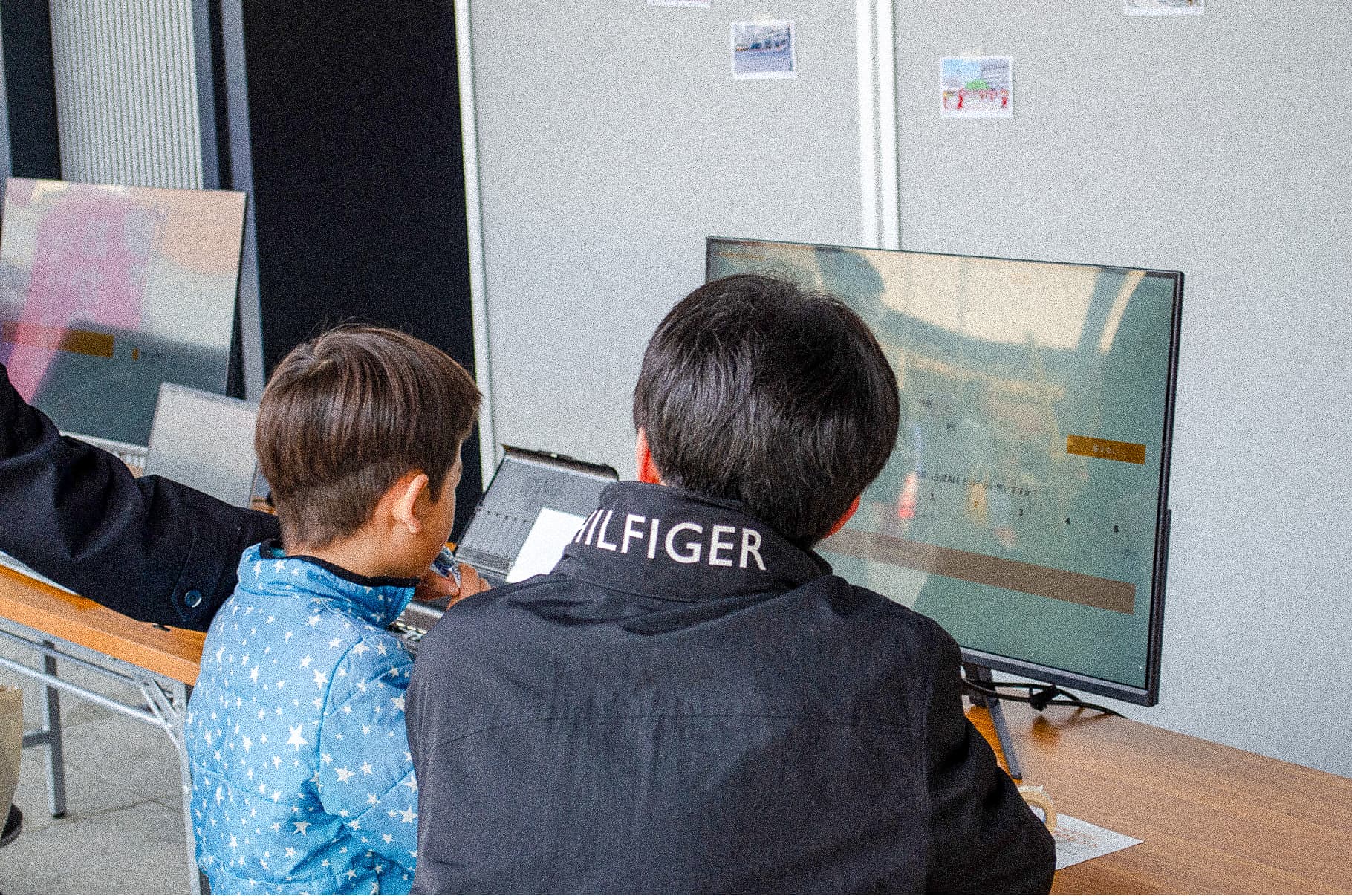
On Saturday, March 28, we conducted a social experiment on the first floor of Nakano South Terra, facing the Nakano Station South Exit Plaza, to envision the future of the plaza using image-generating AI.With the establishment of the Nakano Station Area Platform and other initiatives, momentum for community development around Nakano Station is growing. As expansion and improvement work is underway at the South Exit Plaza, the goal of this event was to gather a wide range of opinions from residents on how the plaza should be utilized in the future.
This social experiment was held in conjunction with the “Okano-ue Festival” at the South Exit Plaza and “Hilltop Plaza,” as well as the “Everyone’s New School Year Support Stage! Tokyo Nakano Show 2026” at the North Exit Plaza.
This social experiment was organized with the goal of broadly gathering citizens’ opinions on future uses for the South Exit Plaza. In the area surrounding Nakano Station, an area platform was established in March, and opinions are being collected through various community development organizations. However, the number of people who actually voice their opinions in discussions and planning is inevitably limited.Precisely because the station plaza is a public space with high foot traffic, it is essential to gather opinions from a diverse range of people—including students, elderly residents living alone, and foreign residents—who have previously found it difficult to participate in community development activities.
Furthermore, even if we were to hold a so-called community development workshop indoors, while we might gather requests aimed at addressing current dissatisfactions with the plaza, it would be difficult to generate ideas that inspire people to say, “That sounds fun!” or “I’d like to try that!”In this social experiment, we aimed to effectively gather opinions along the lines of “This would be fun!” by using images as a starting point to brainstorm and expand ideas, while simultaneously using AI to generate even more appealing images.
For this social experiment, we developed a proprietary web app called “NAKANO FUTURE LAB.” The social experiment was conducted by having participants interact with this web app.
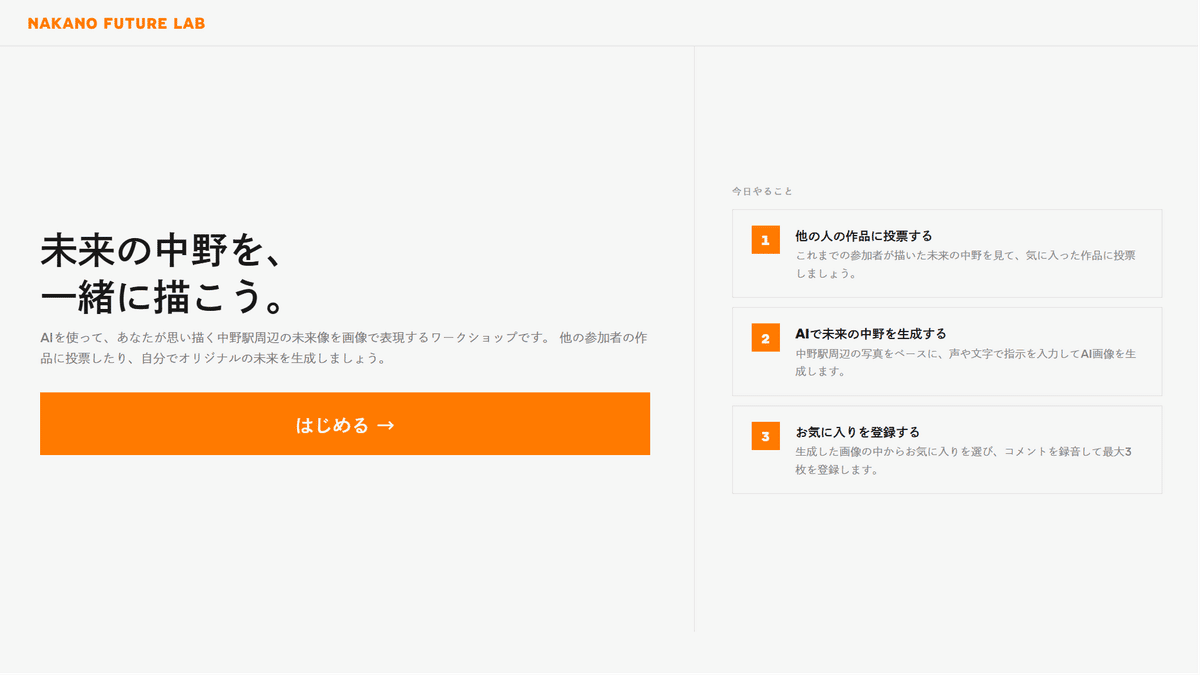
FIG.2
First, participants were asked to complete a brief survey. We asked about their age group, gender, relationship to Nakano (e.g., resident or employee), and frequency of use of generative AI.
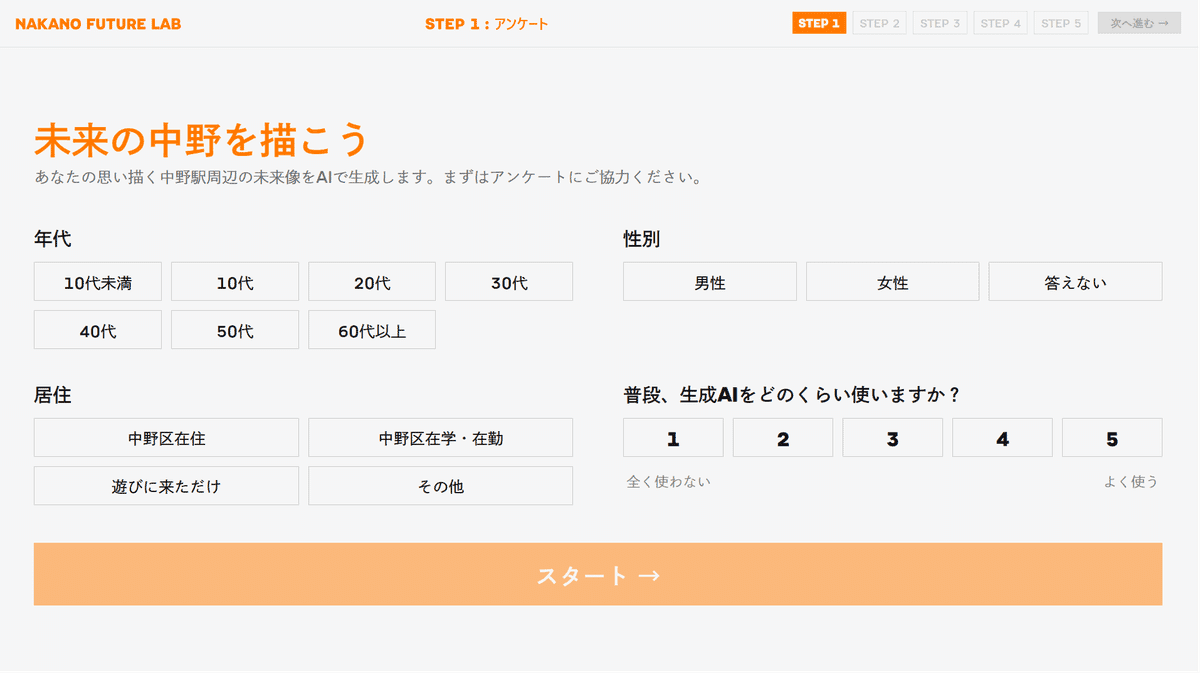
FIG.3
Next, participants vote on images generated by others. While viewing images generated earlier using the app, they select up to two that they like and record what they like about each one. The recorded audio is transcribed on the spot, allowing them to cast their vote.
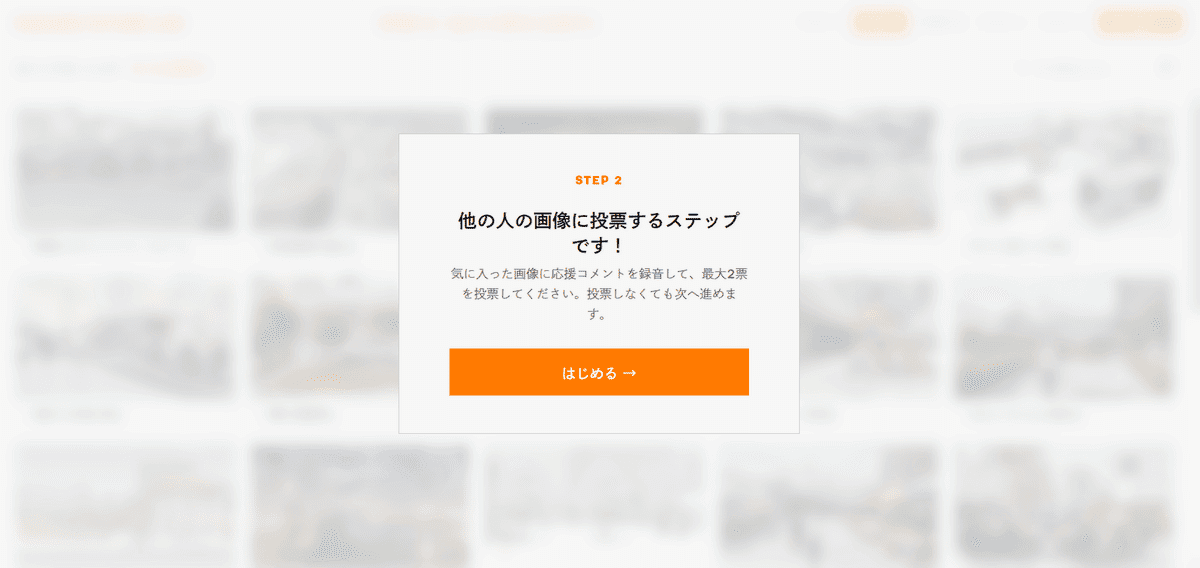
FIG.4
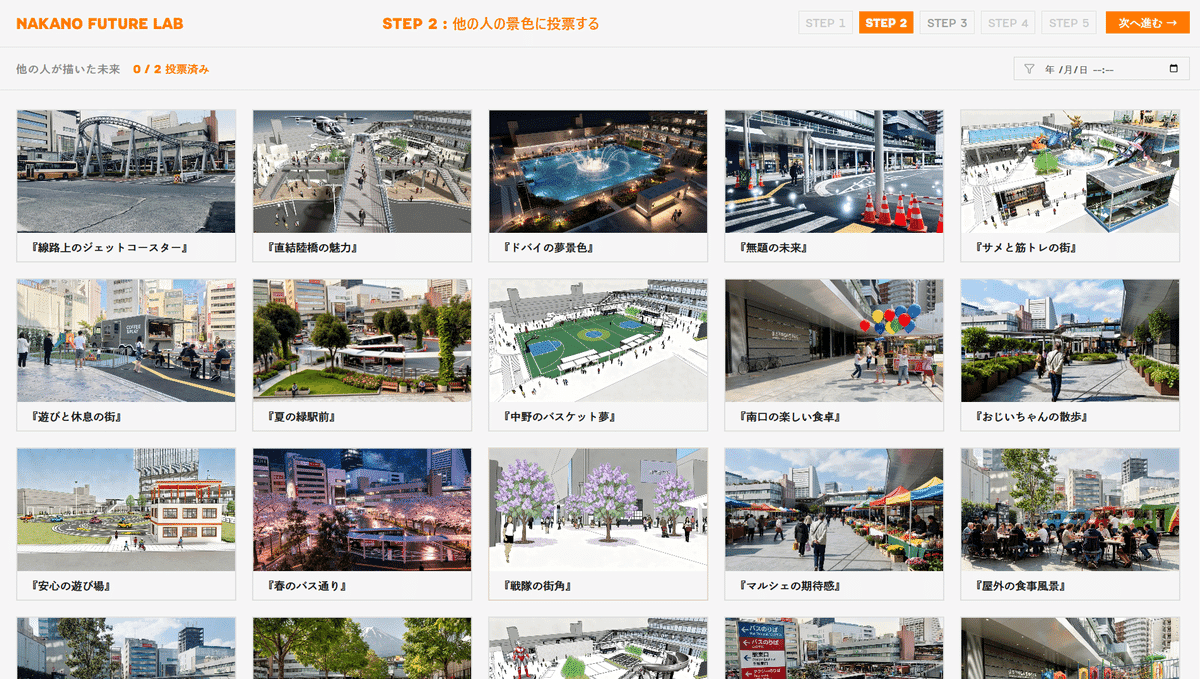
FIG.5
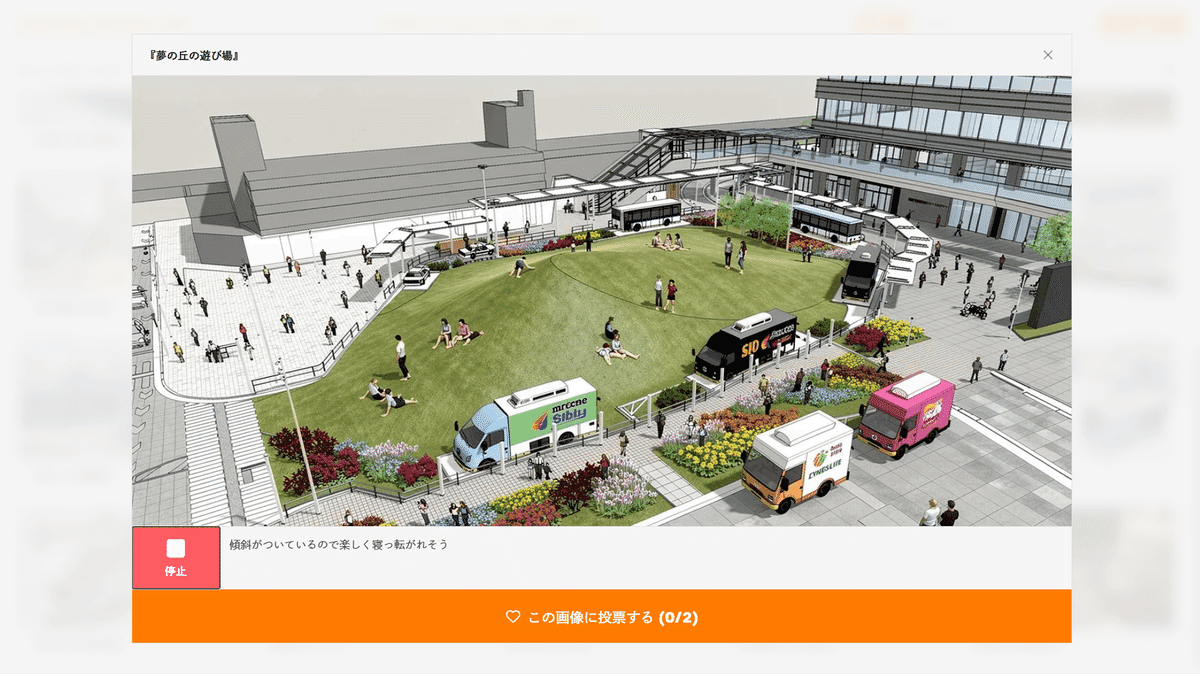
FIG.6
Rather than simply casting a vote, we aimed to gather more detailed and meaningful feedback by having participants vote while providing brief comments via voice input.Voting at the beginning also serves to spark the imagination. It can be a bit difficult to immediately express, through image generation, what you’d like to try or how you’d like things to be at the South Exit Plaza. However, by viewing images generated by others while voting, participants can form a vision of “what I would do if it were me” before moving on to the next step—this was the intent behind the design.
Furthermore, to ensure participation from as wide a range of people as possible—including seniors and young children—we designed the app to be usable exclusively via voice input, without the need for typing. In fact, on the day of the event, many seniors and children were able to enjoy using the app.It was impressive to see how even those unfamiliar with digital technology were able to express their thoughts naturally, simply by speaking into the app as if they were having a casual conversation.
Now we’ll move on to the main topic: image generation. On the generation screen, users select one source image from the left and enter a prompt via voice input, similar to the voting process in Section 2-2. Pressing the “Generate” button produces the image.
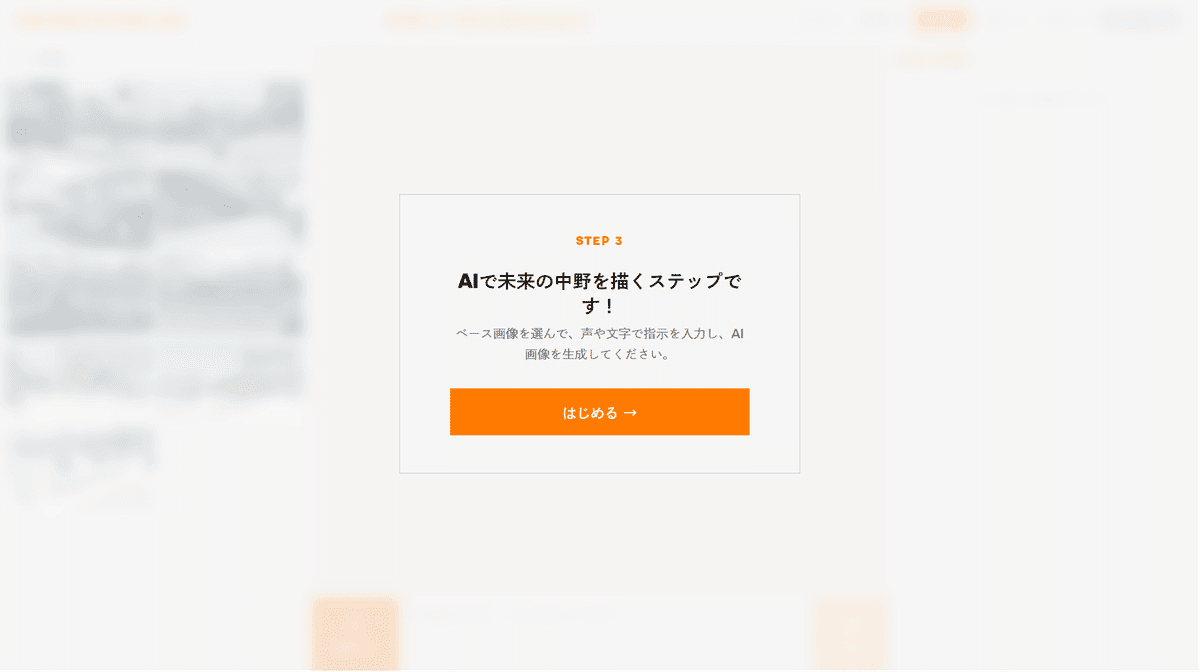
FIG.7
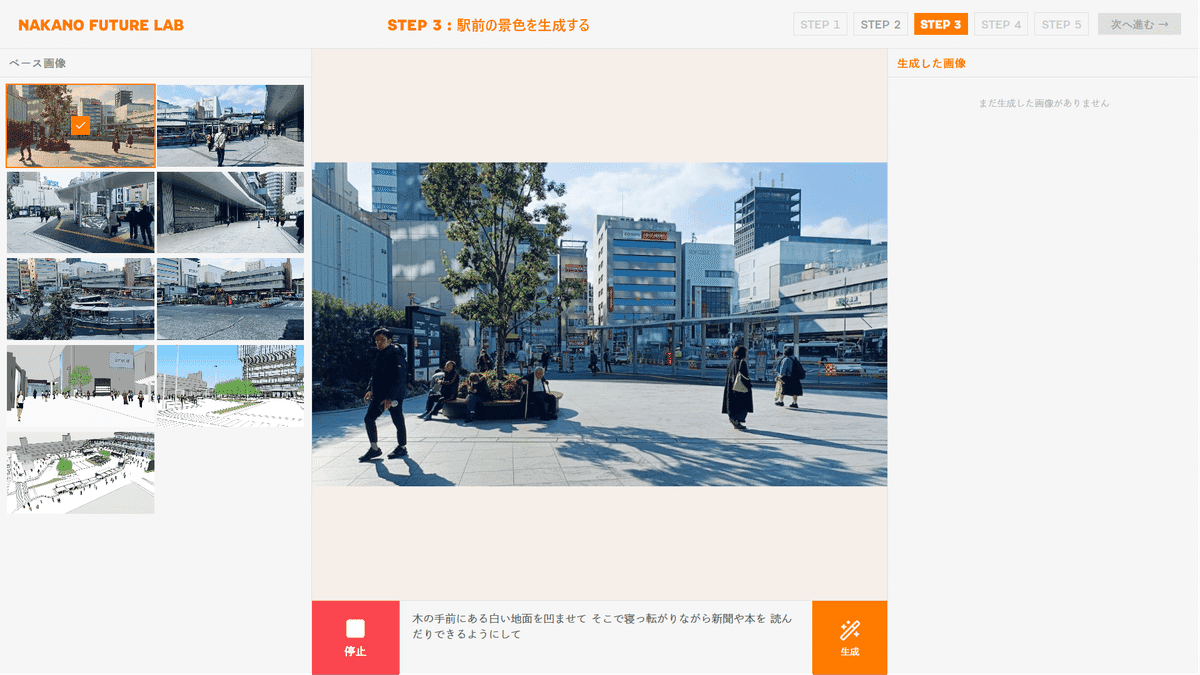
FIG.8
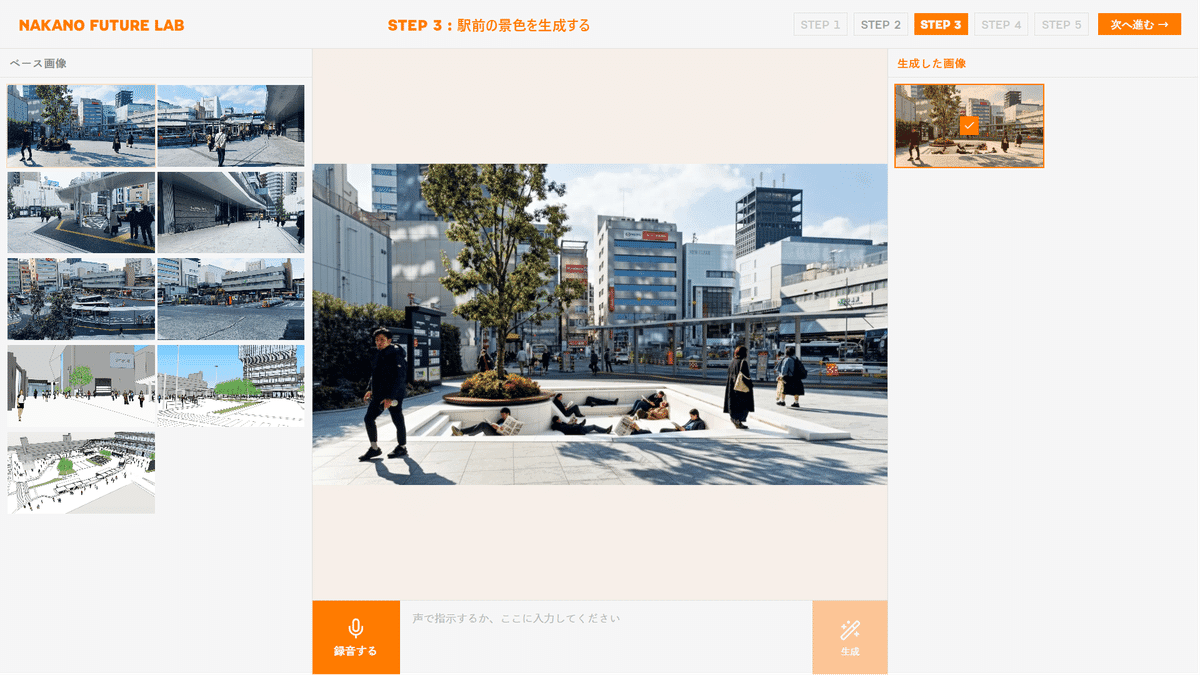
FIG.9
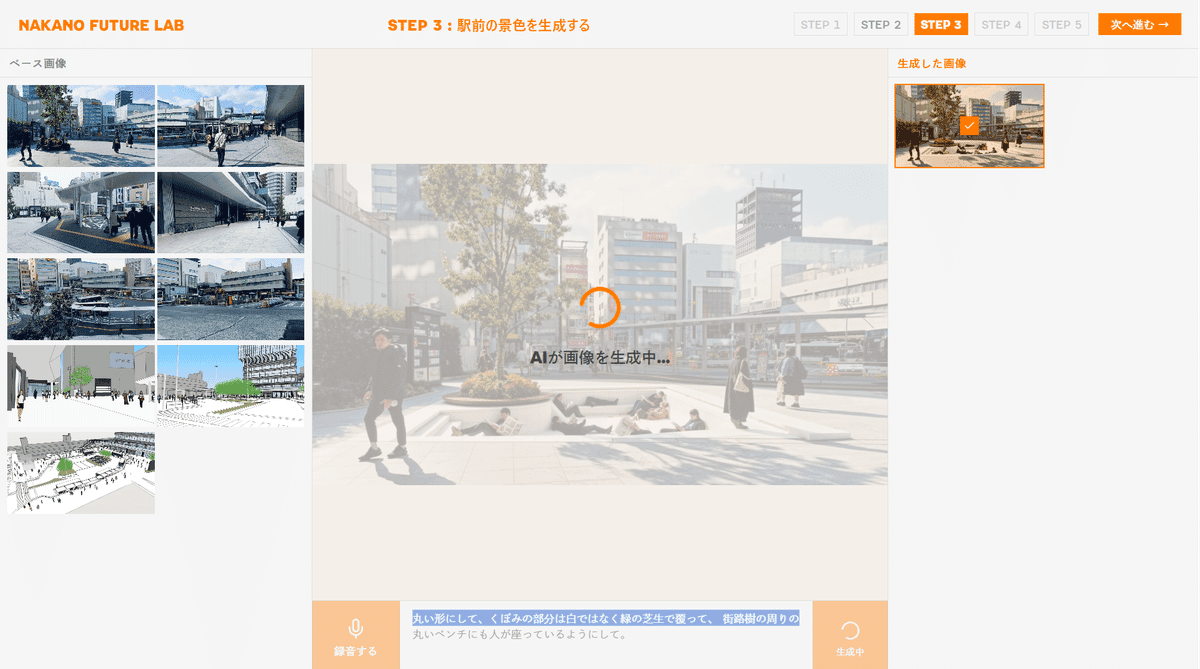
FIG.10
The generated image will appear on the left. If you select the generated image, you can use it as a base to create further updates. You can also select a source image from the left to regenerate the image.
We’ve included nine source images to allow you to choose from a variety of scenes. We’ve selected six actual photographs and three model images of the South Exit Plaza after its expansion and renovation, provided by the ward. Not only are the locations different for each image, but we’ve also made it possible to generate images from both eye-level and bird’s-eye views.
Originally, ASIBA and NESS (ASIBA PROJECT LABEL, a project team exploring new ways to shape cities using image-generating AI) recognized the potential of image-generating AI in its ability to produce images where the unique character of a city blends together fluidly, using LoRA, a fine-tuning feature for image-generating AI.However, since the South Exit Plaza is a space distinct from the “essence of Nakano,” we deliberately chose not to use LoRA this time and instead focused on the ability to “generate a wealth of ideas using images.” Specifically, we aimed to uncover deeper insights by minimizing the time required to generate each image as much as possible and designing the system to allow for continuous updates to the generated images.
Once a satisfactory image is generated, users can select and save up to three of their favorite images. By using voice input to explain what they like about the image, the AI will create a title for it and save the image.
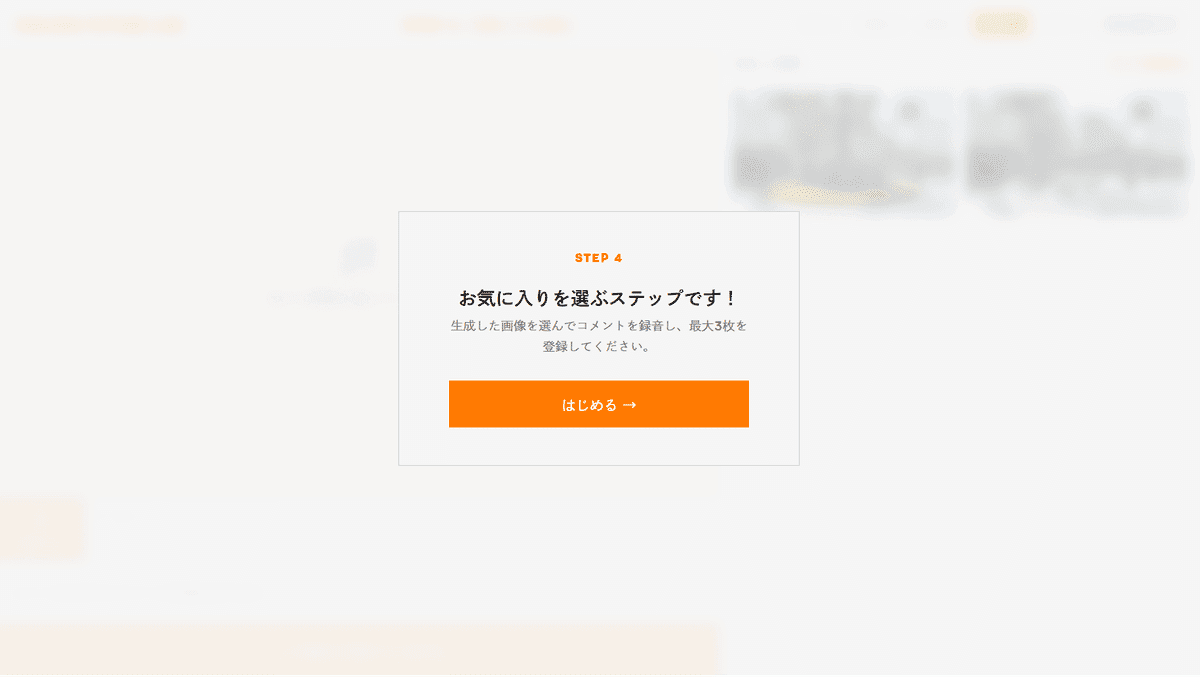
FIG.11
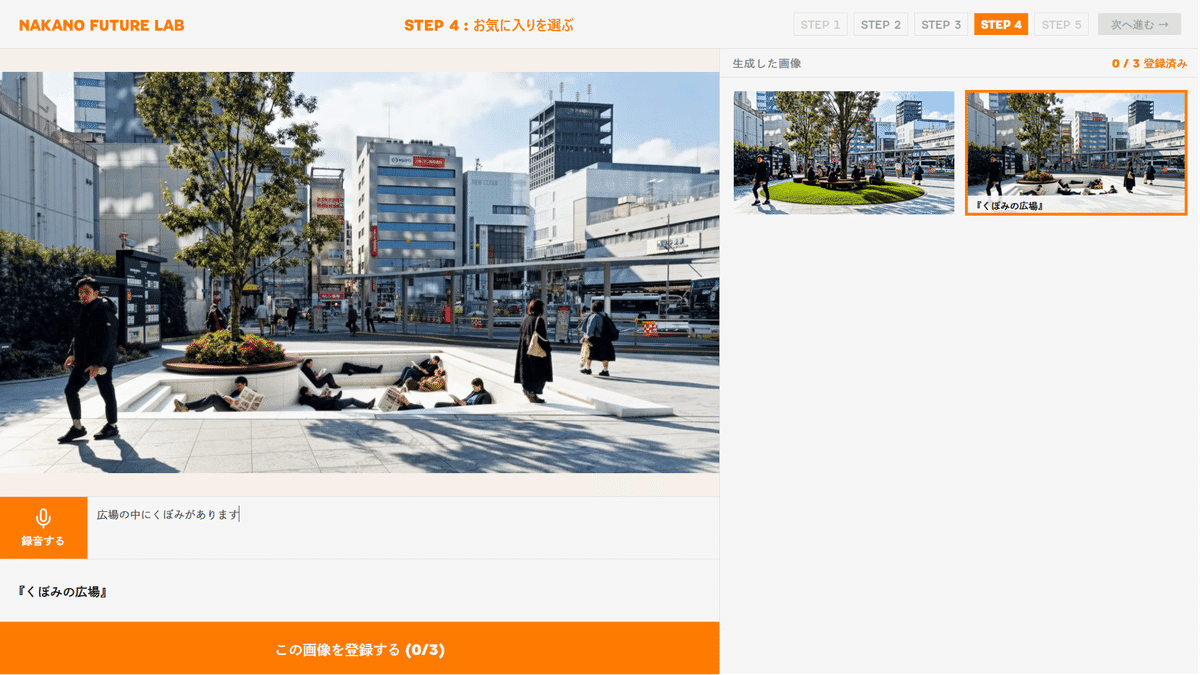
FIG.12
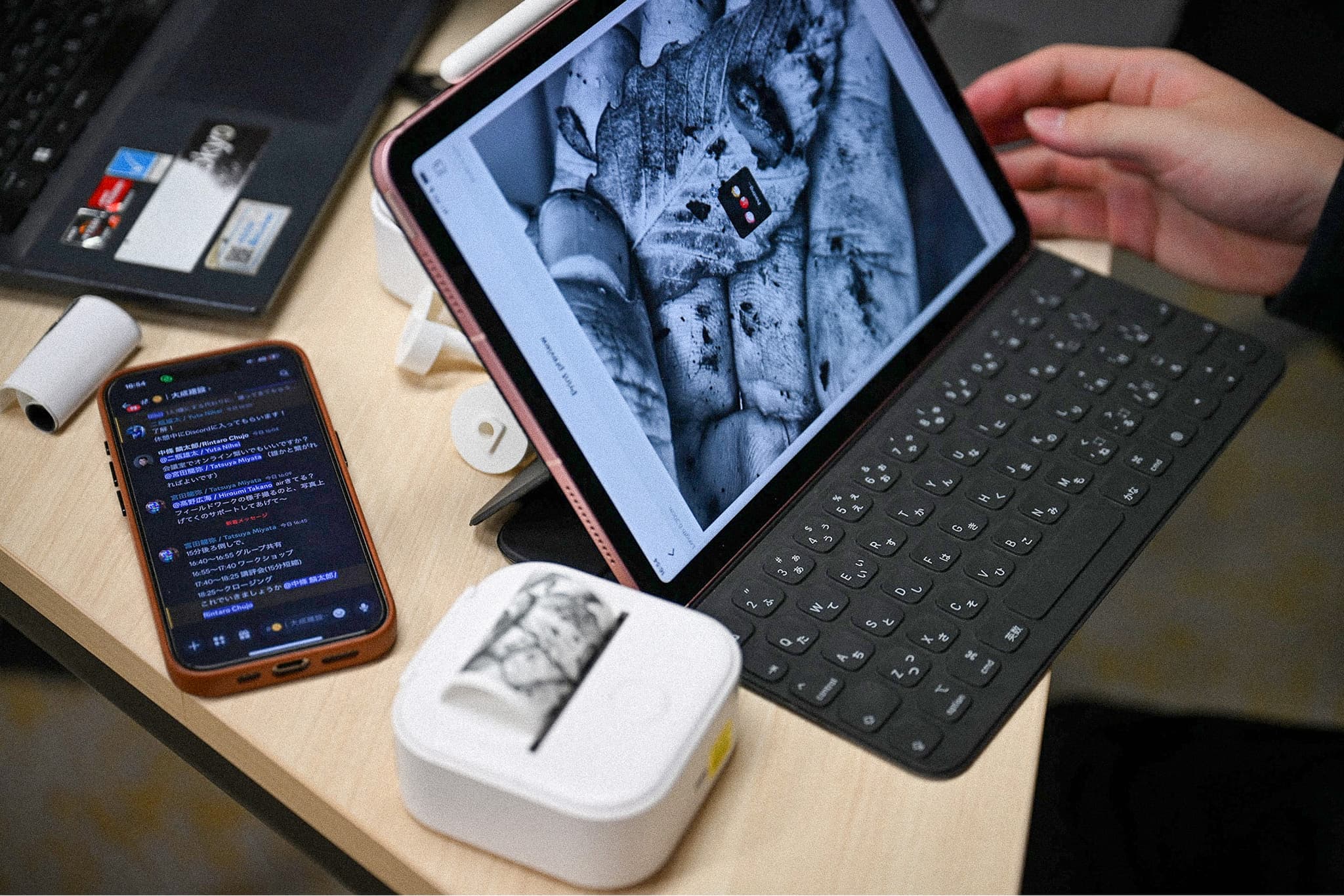
Finally, we printed the generated images on L-size photo paper right there on the spot and presented them as gifts. The children, in particular, were delighted to receive the photos as gifts.
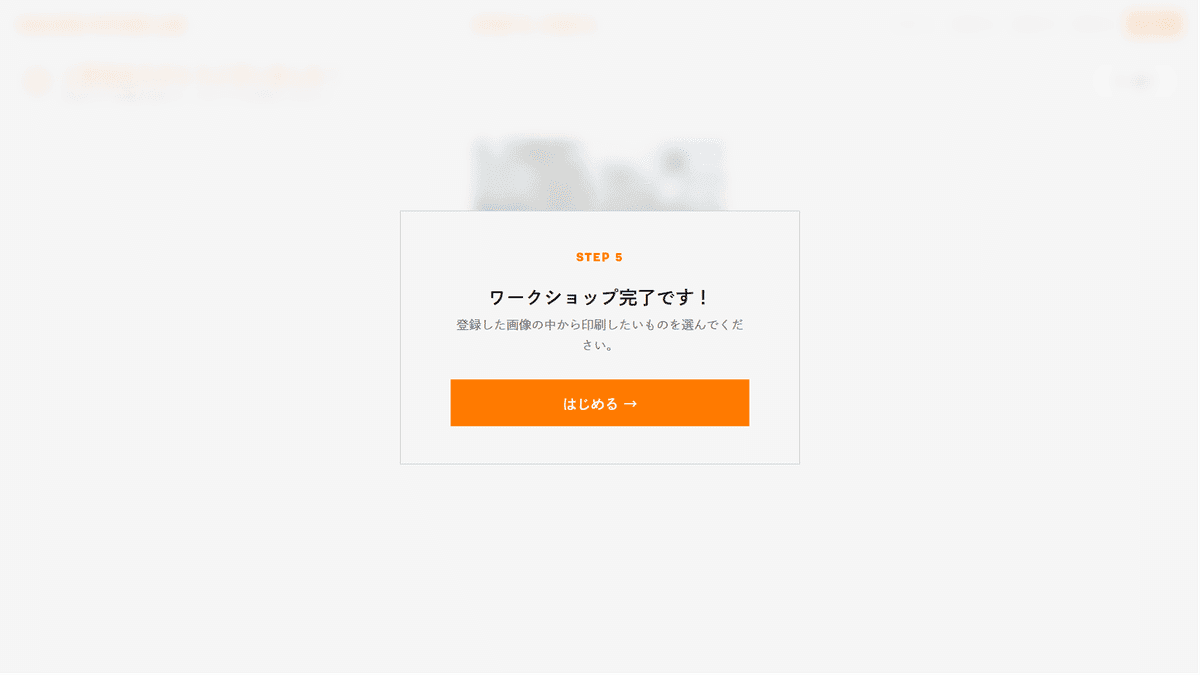
FIG.13
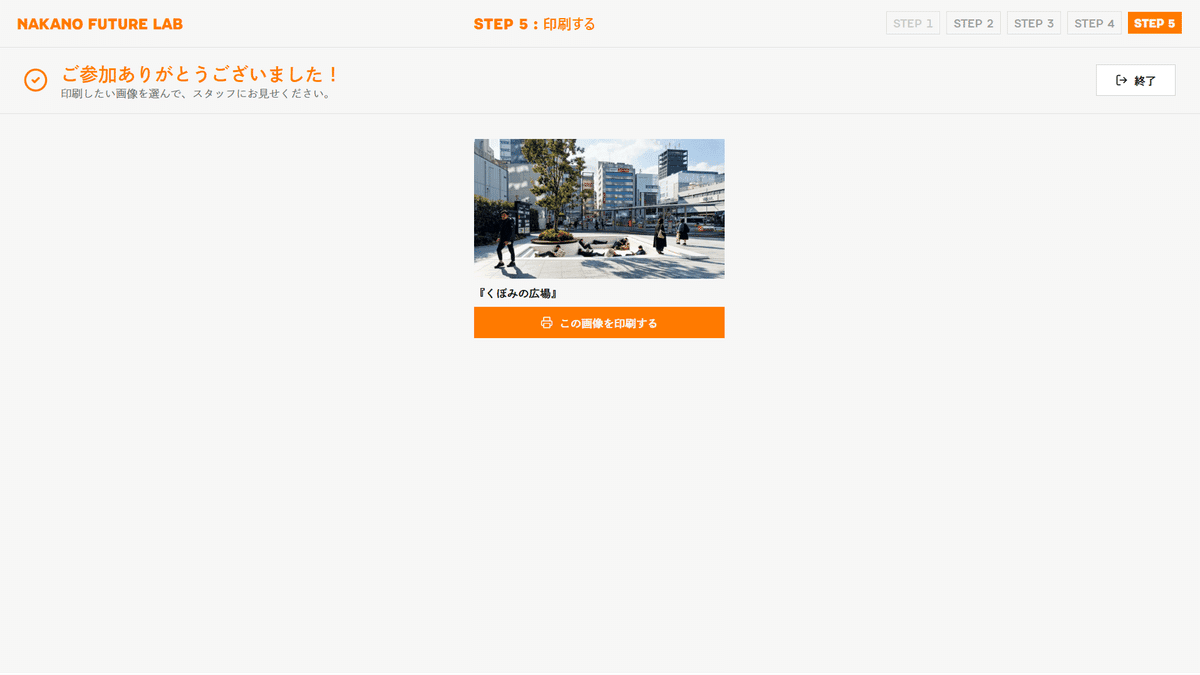
FIG.14
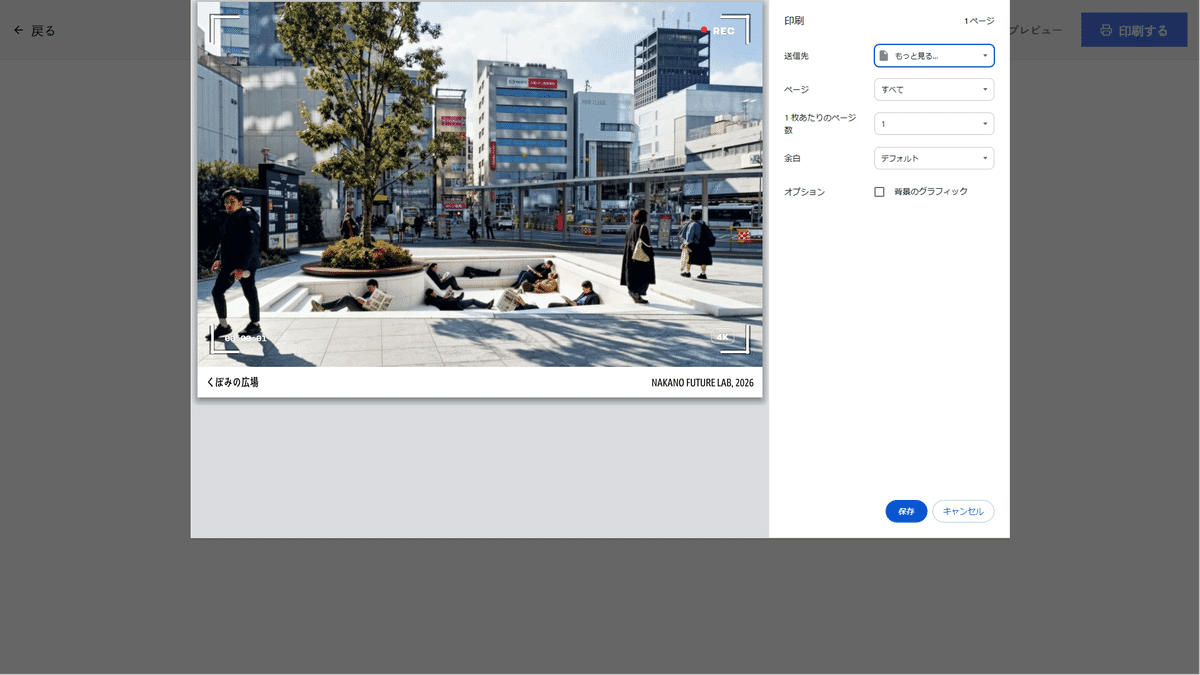
FIG.15
A total of 38 people participated on the day of the event, and 142 images were generated.
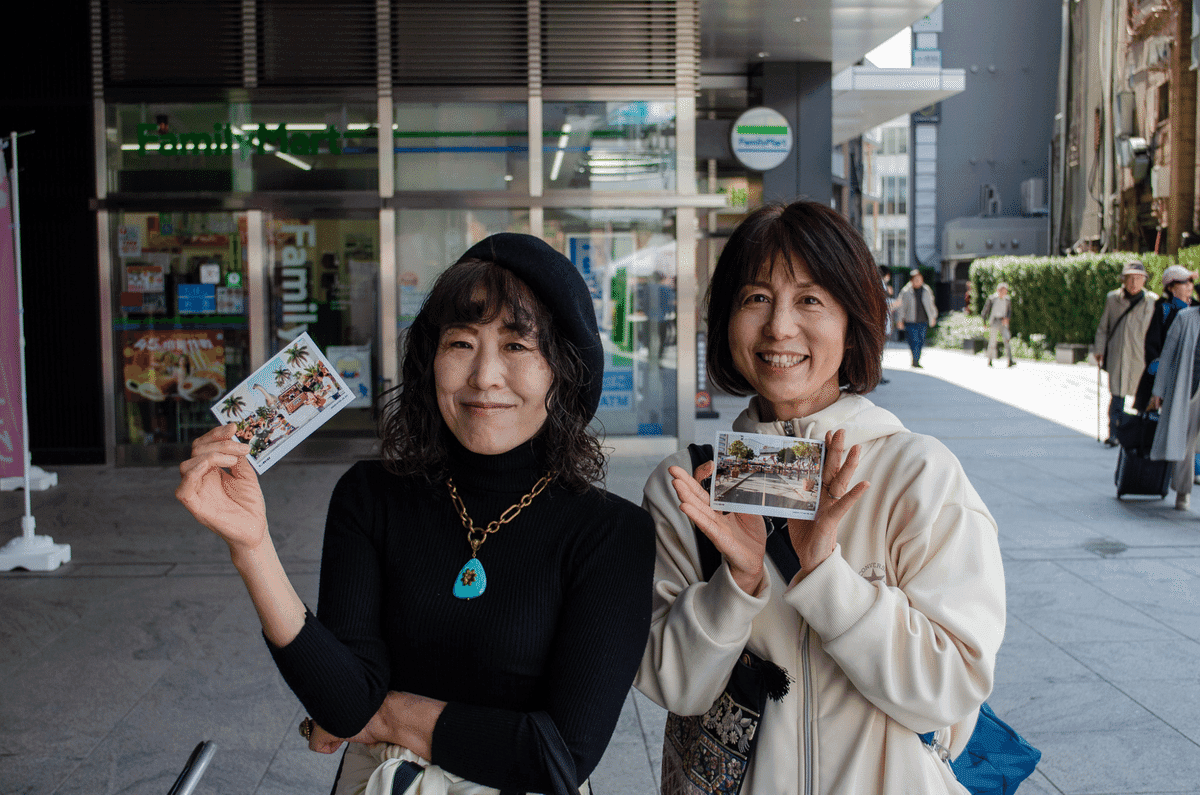
FIG.16
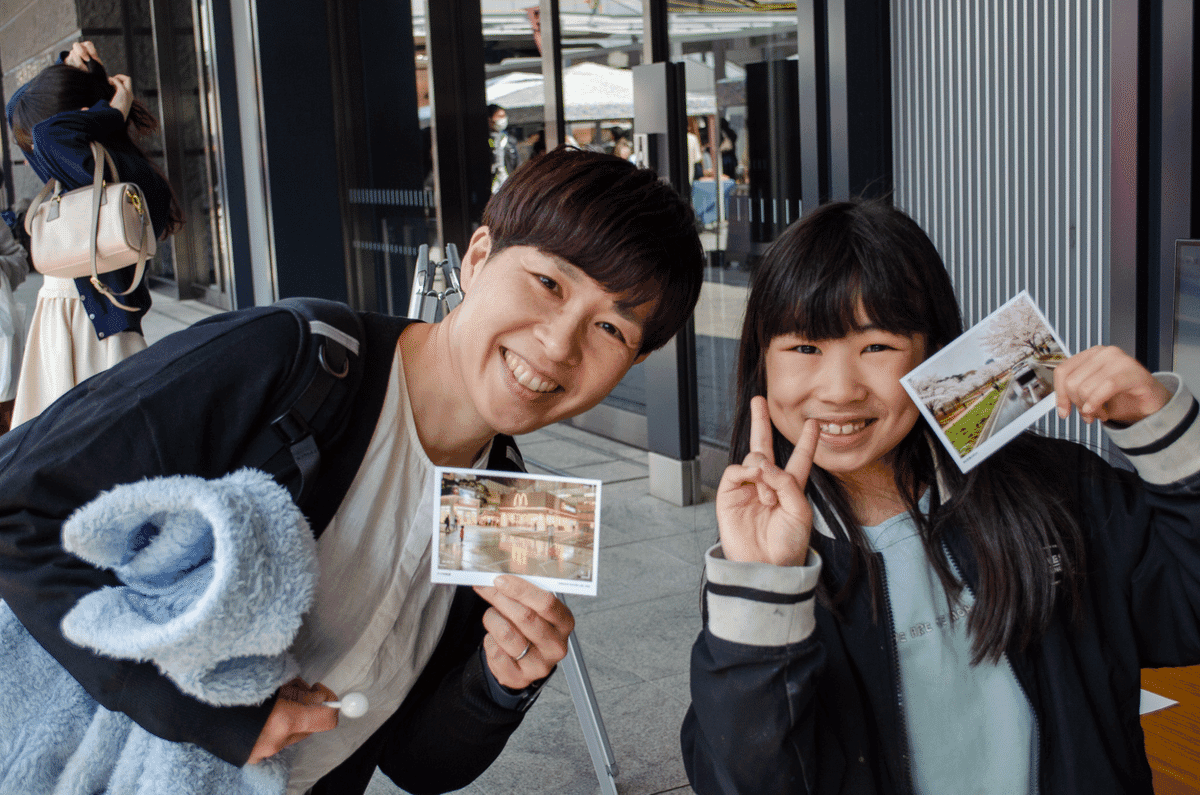
FIG.17
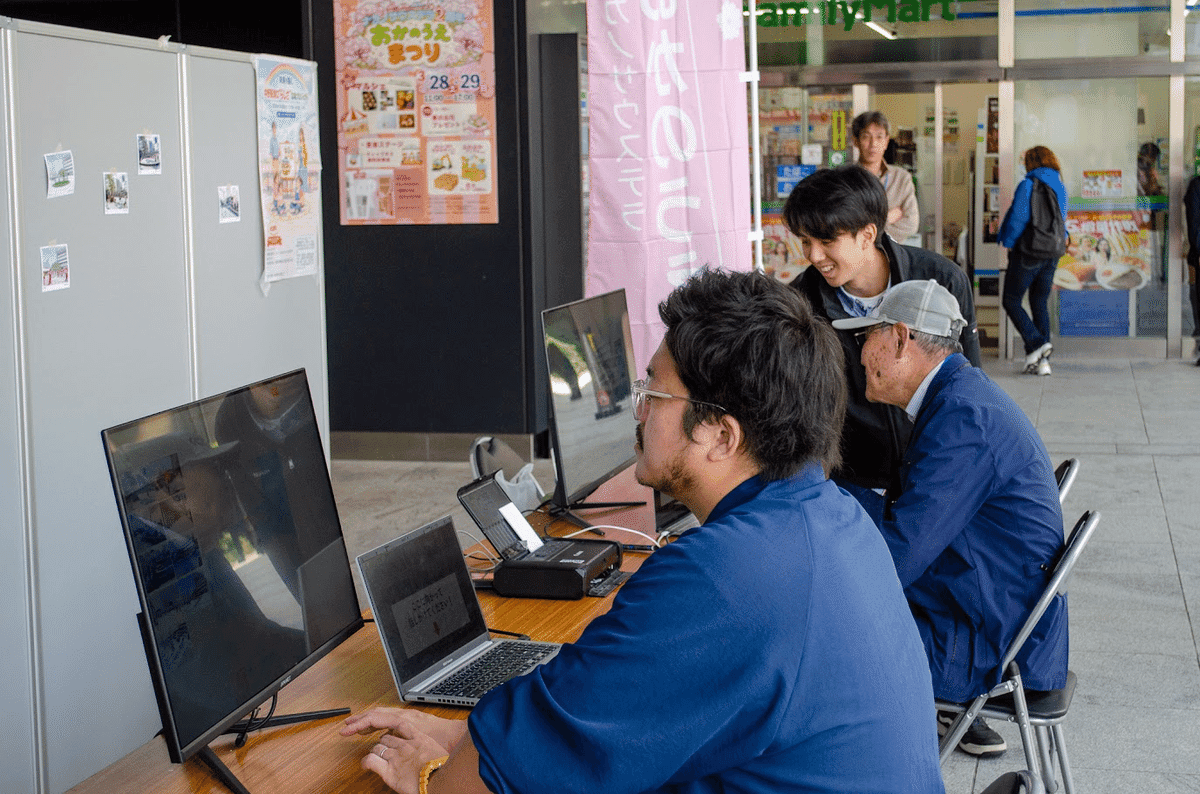
FIG.18
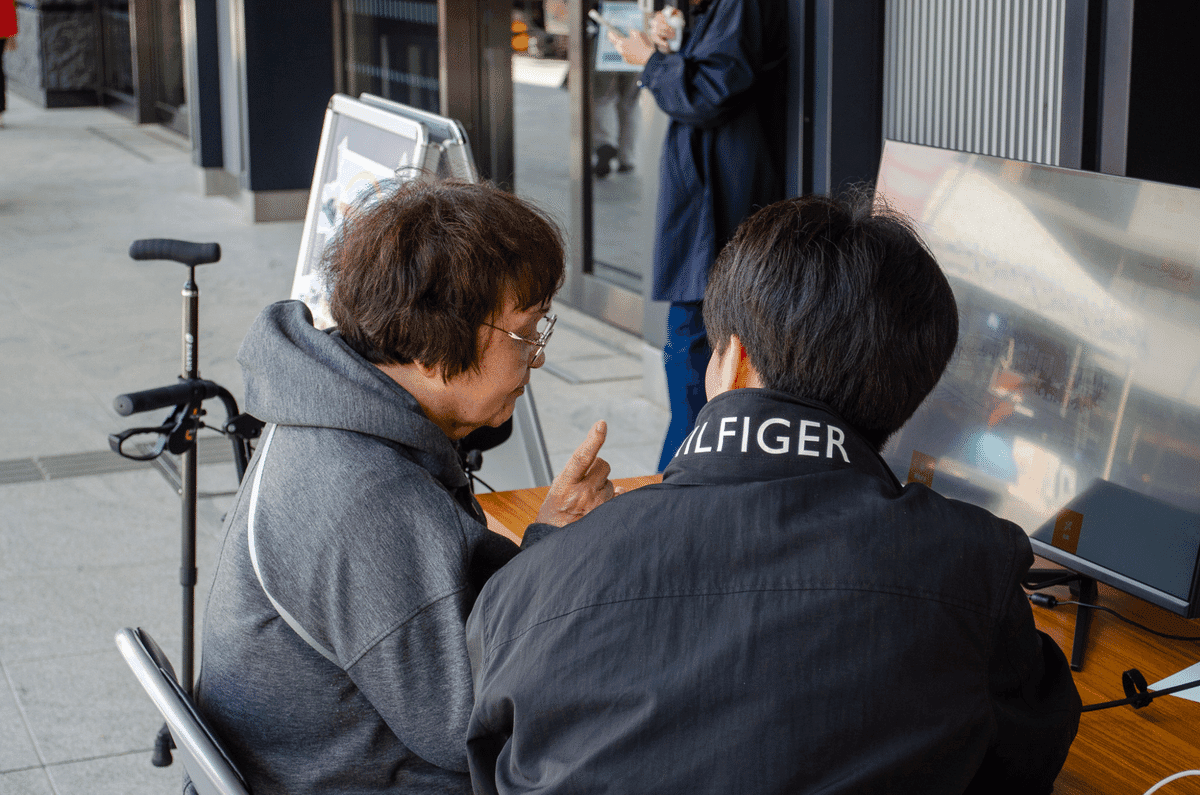
FIG.19
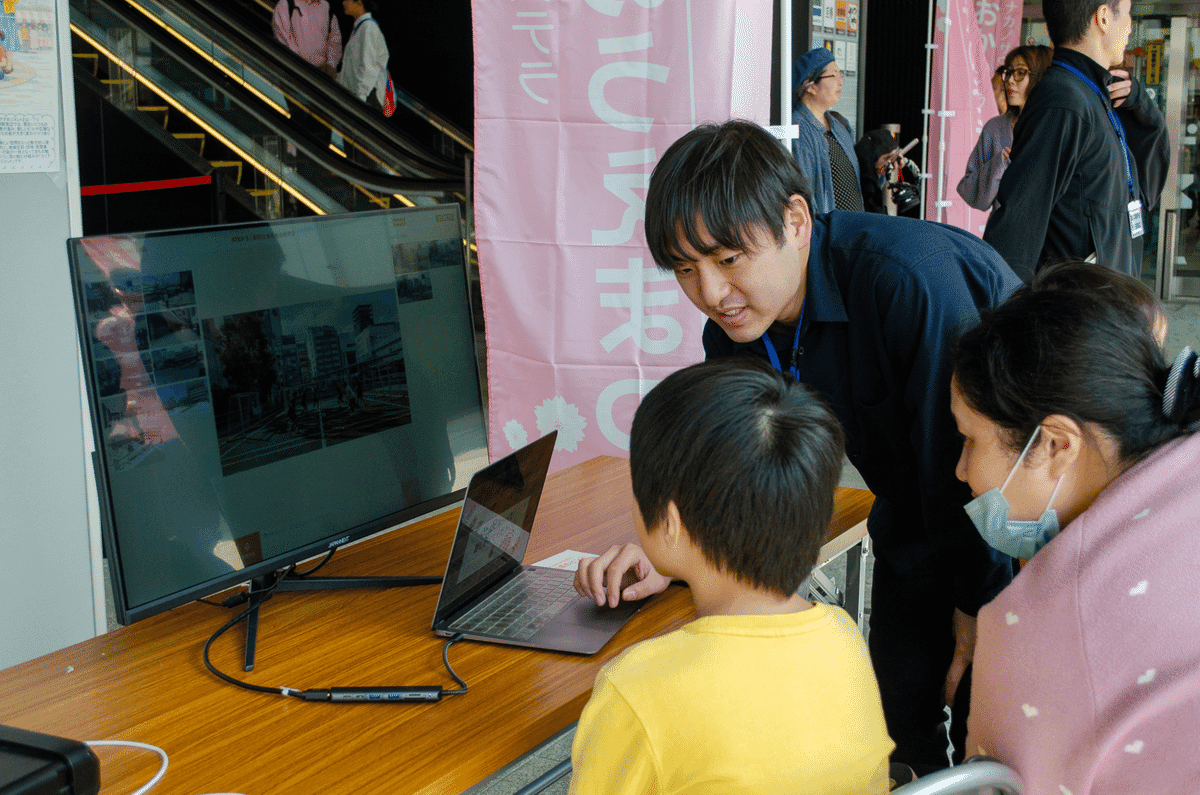
FIG.20
While the under-10 age group was particularly large with 12 participants, we had attendees from a very wide range of age groups. It was also impressive to see such a broad spectrum of connections to Nakano: 18 participants lived in Nakano, 6 both lived and worked there, and 16 were simply visiting.Regarding the frequency of AI use, the average was 2.5, and we were able to welcome participants ranging from those who use AI regularly to those who never use it at all.
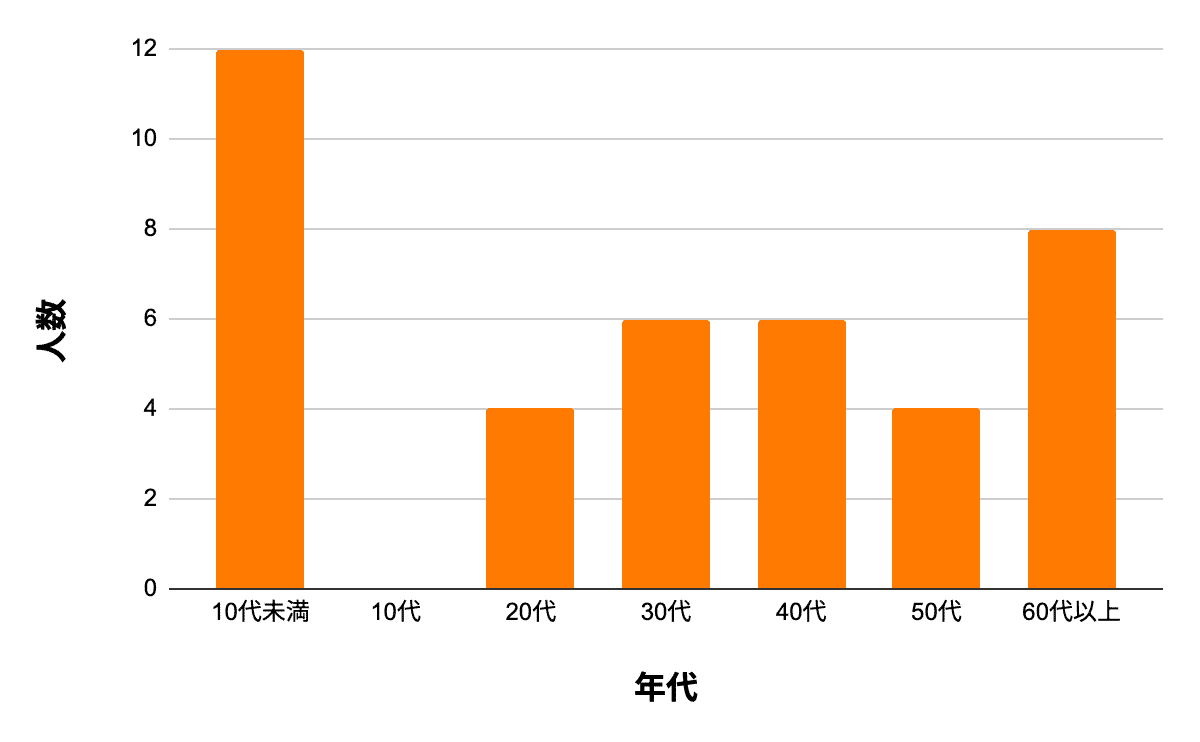
FIG.21
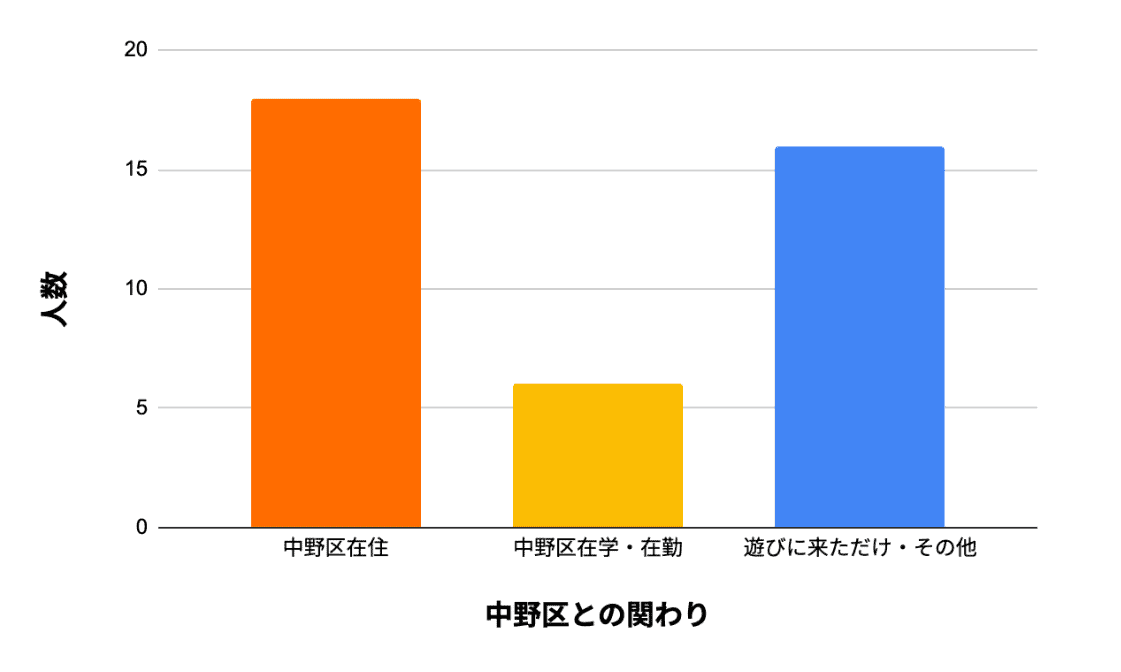
FIG.22
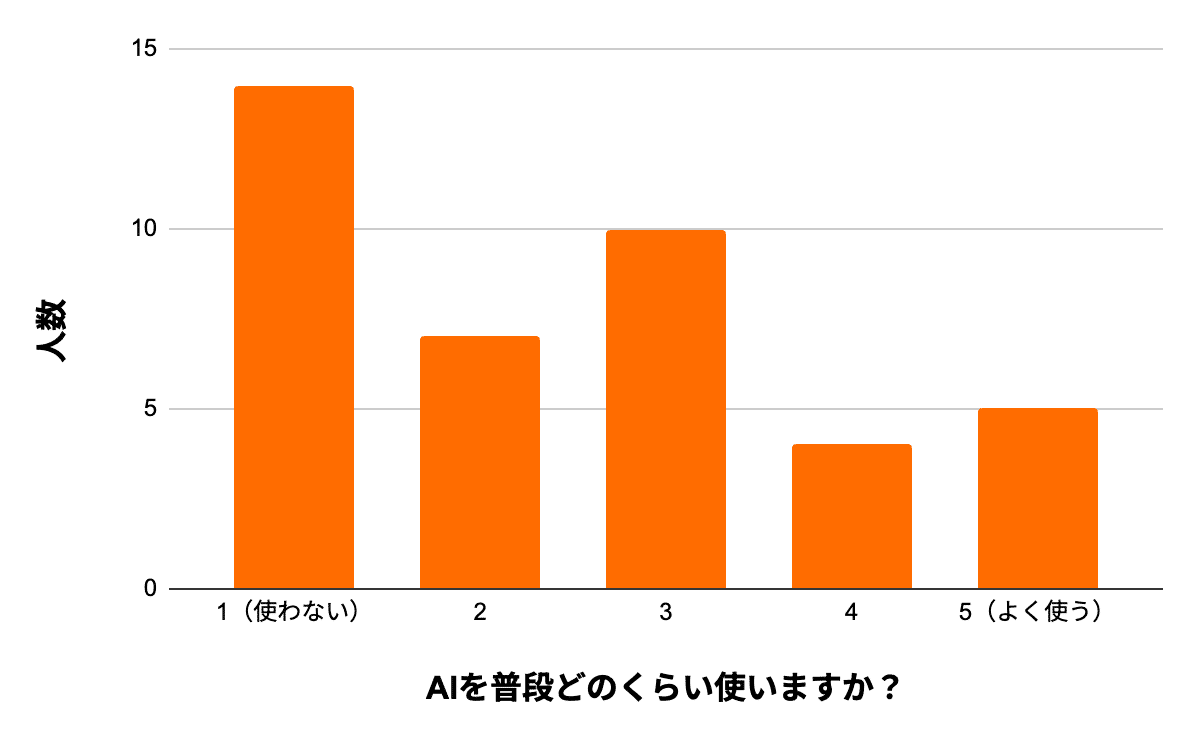
FIG.23
Green / Flowers / Trees
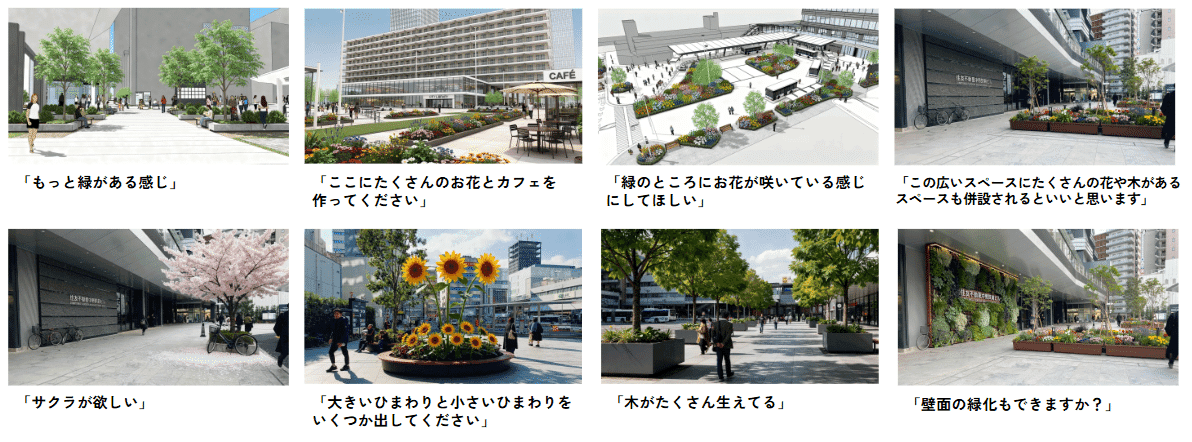
FIG.24
Related to markets, food stalls, and food trucks
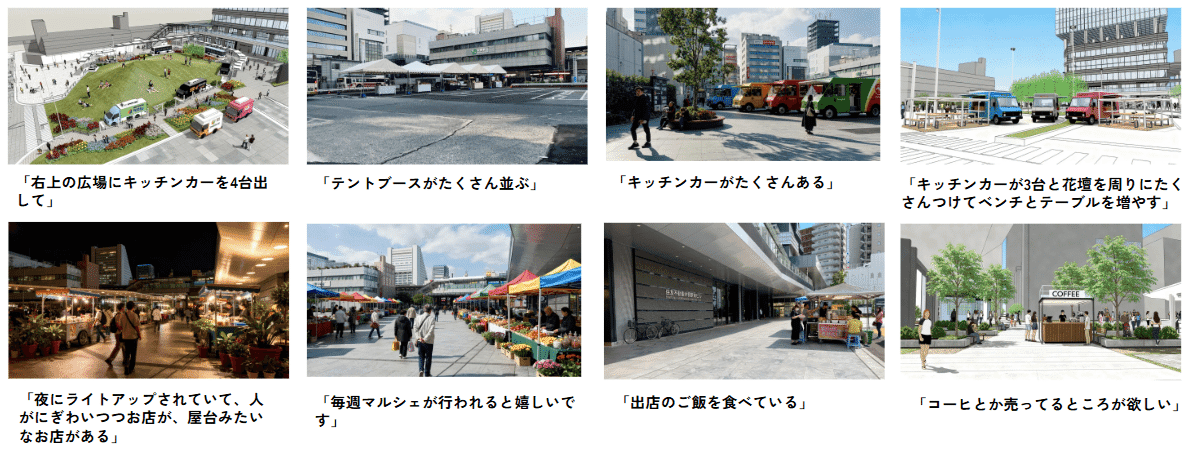
FIG.25
Sports / Playgrounds / Race Tracks / Pools
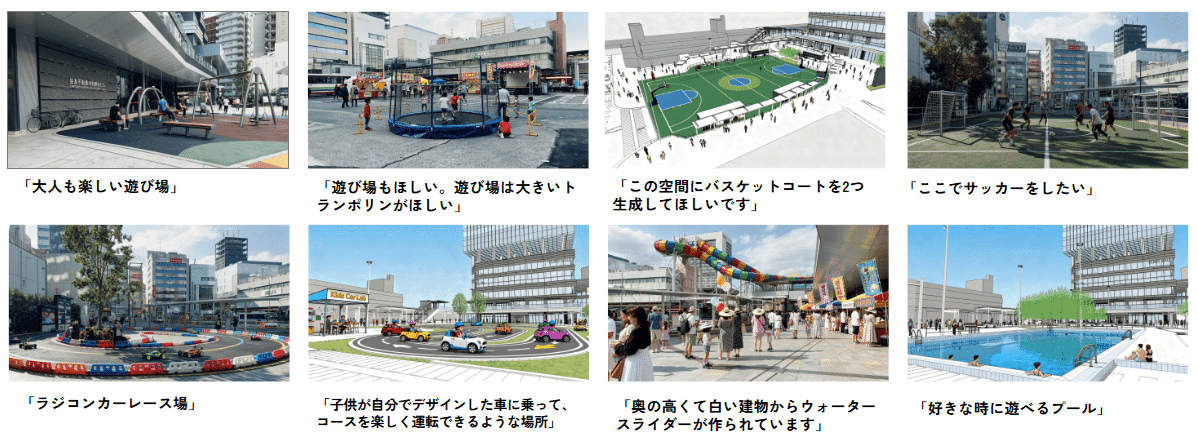
FIG.26
The top-ranked results included “Unusual Red,” “Bustling Live Music Venue,” “Spring Bus Route,” “Super Sentai Street Corner,” “Expanding Playground,” and “The Appeal of the Directly Connected Pedestrian Bridge.” However, since the images generated early on inevitably tended to rank higher, this was insufficient for gathering a representative range of opinions.
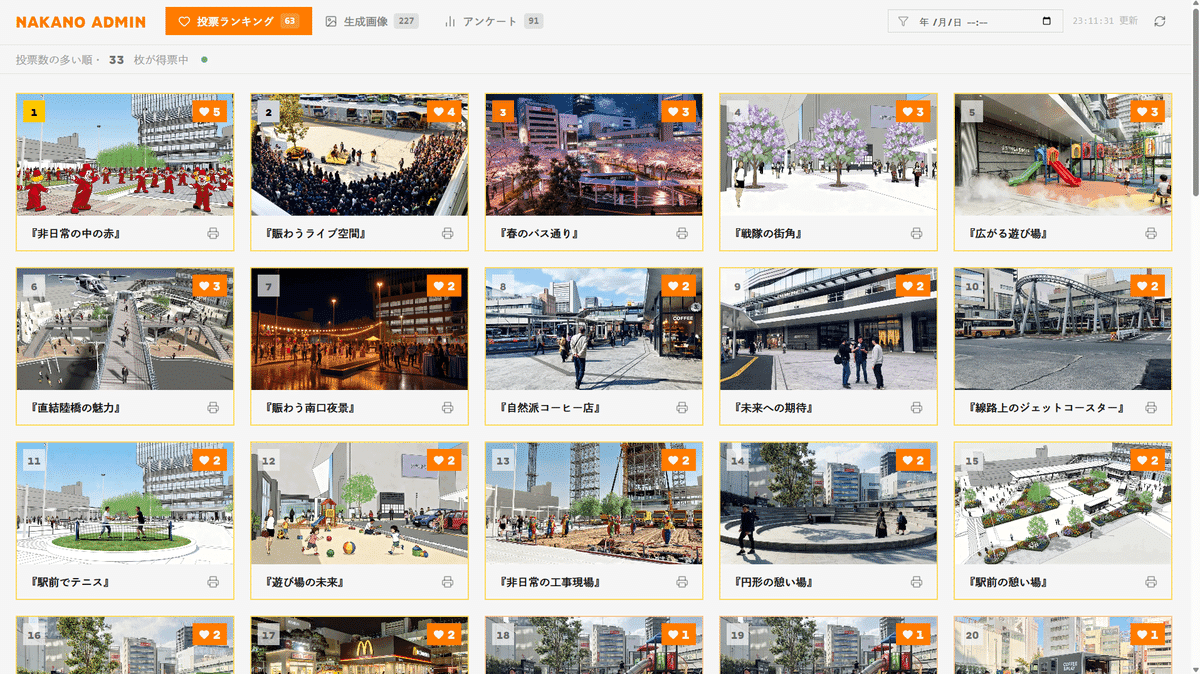
FIG.27
Keywords Appearing in Prompts
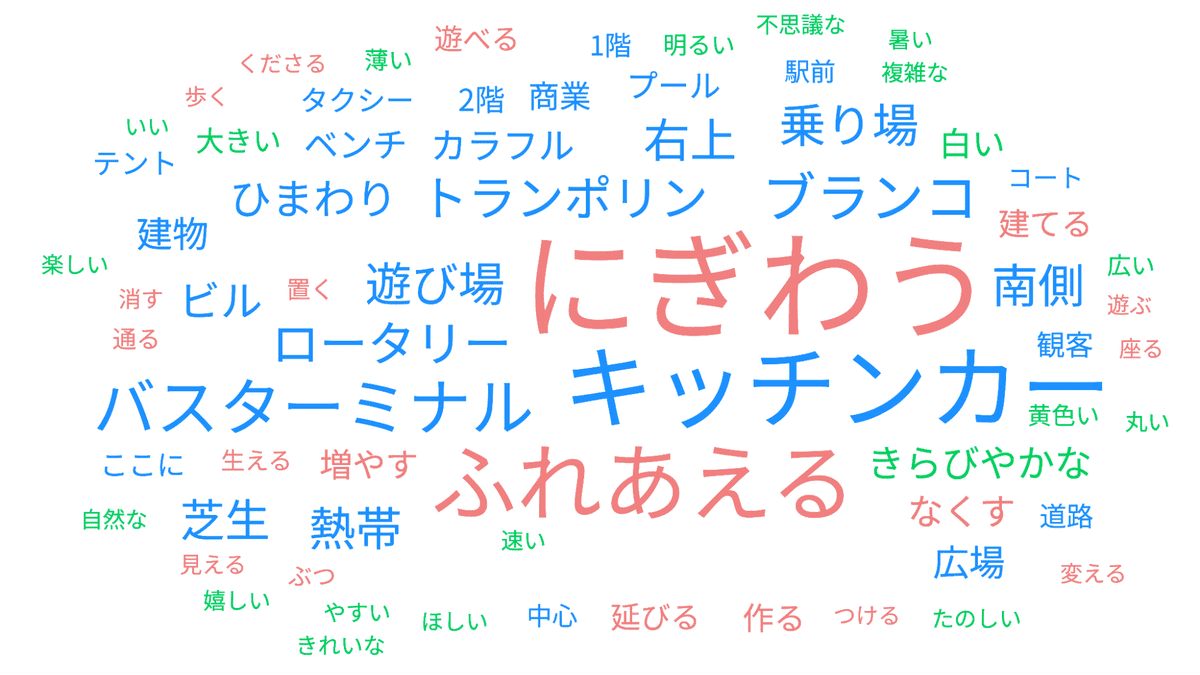
FIG.28
Keywords appearing in image descriptions
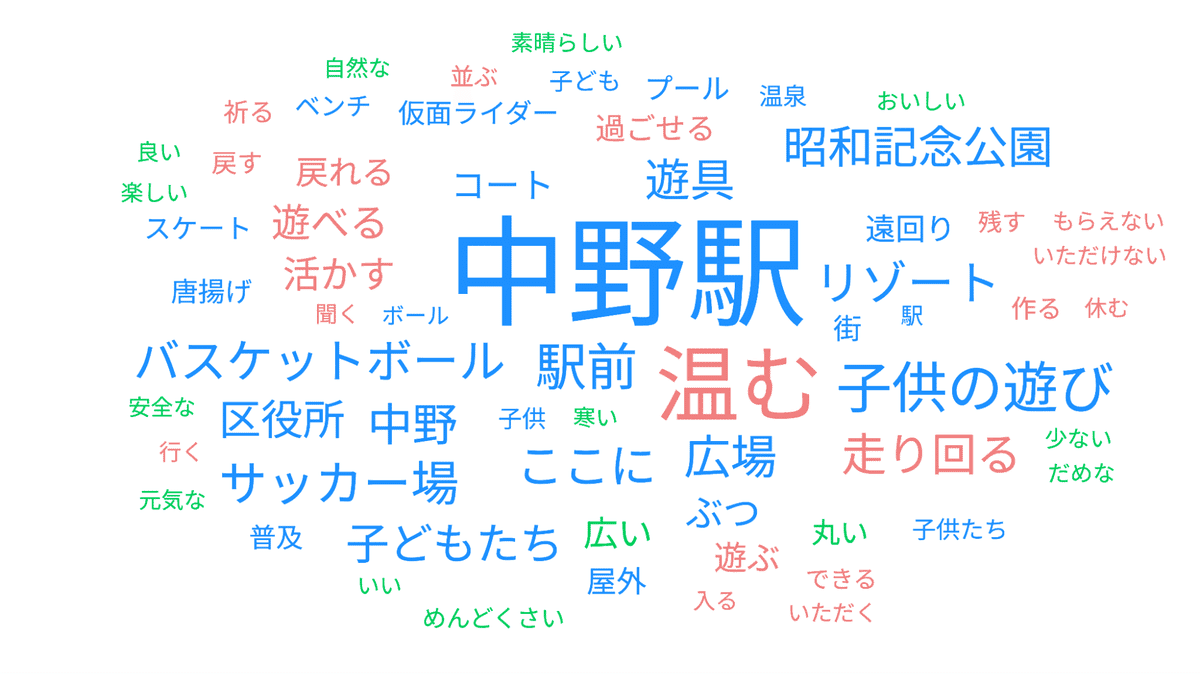
FIG.29
Among those in their 20s and older, there were many requests for nature-related elements such as “greenery,” “flowers,” and “trees.” Additionally, participants who live or work in the area expressed interest in “markets,” “food stalls,” and “food trucks,” showing a tendency to seek spaces where many people can gather—such as “lively atmospheres” and “crowded places”—rather than simply places to eat.Children under 10 frequently mentioned activities such as “playgrounds,” “race tracks,” and “pools.”
Jump and Slide
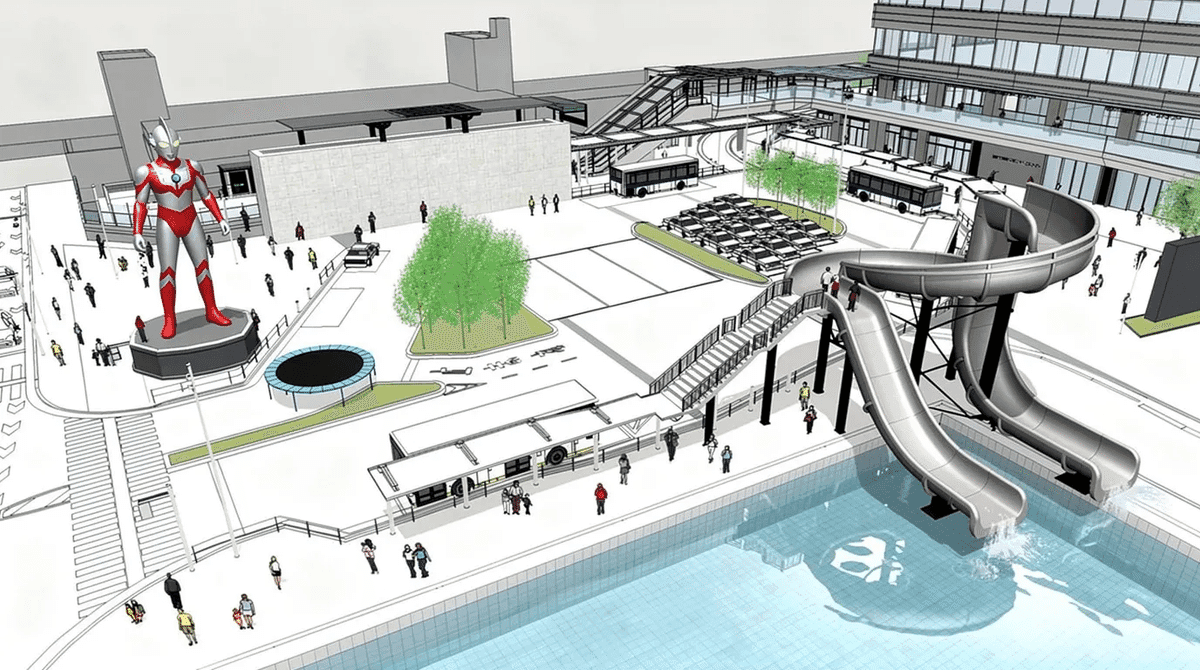
FIG.30
Yume-no-Oka Playground
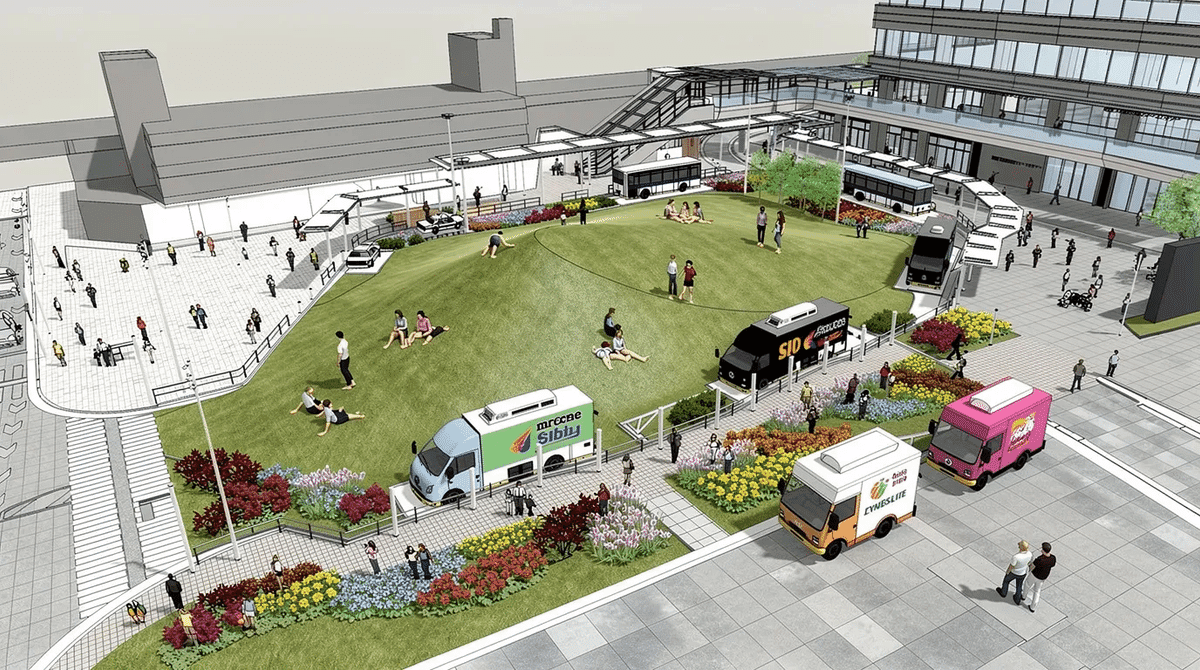
FIG.31
Cheers from a Live Performance
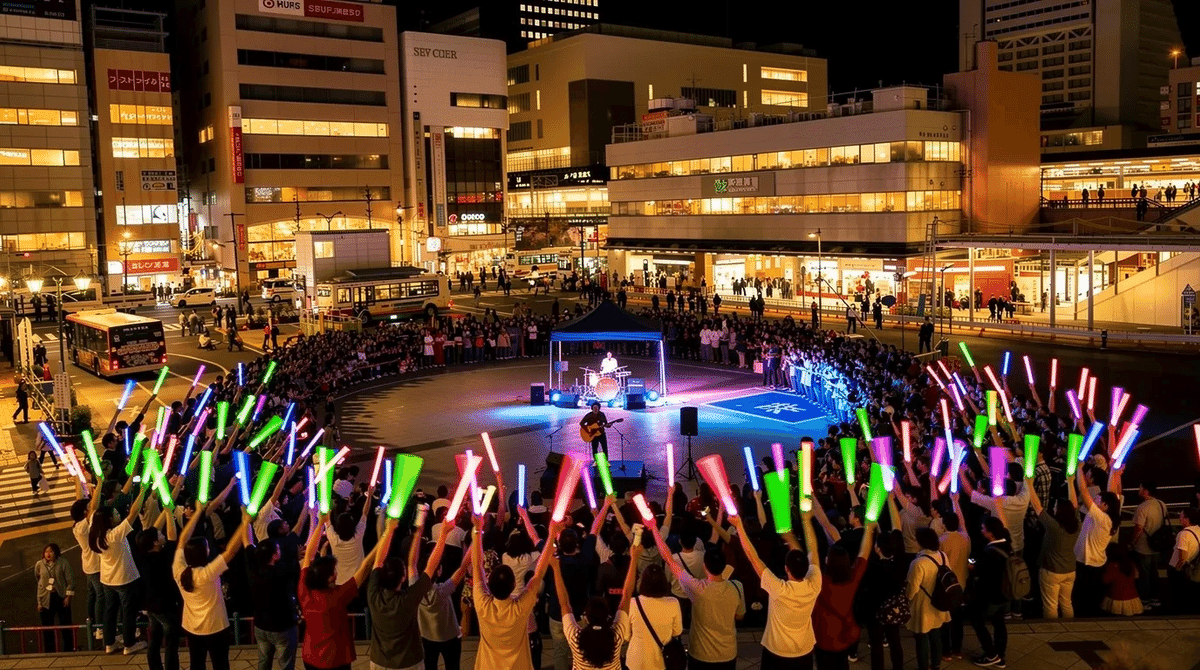
FIG.32
The Future of Sun Plaza
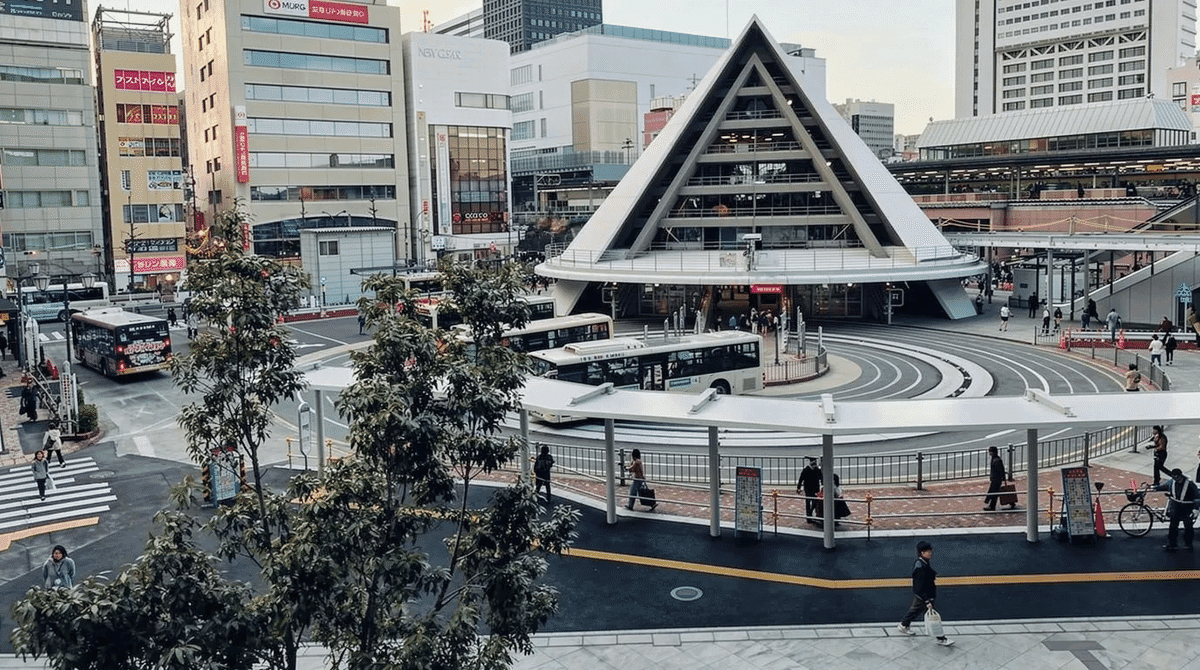
FIG.33
The appeal of the direct-access footbridge
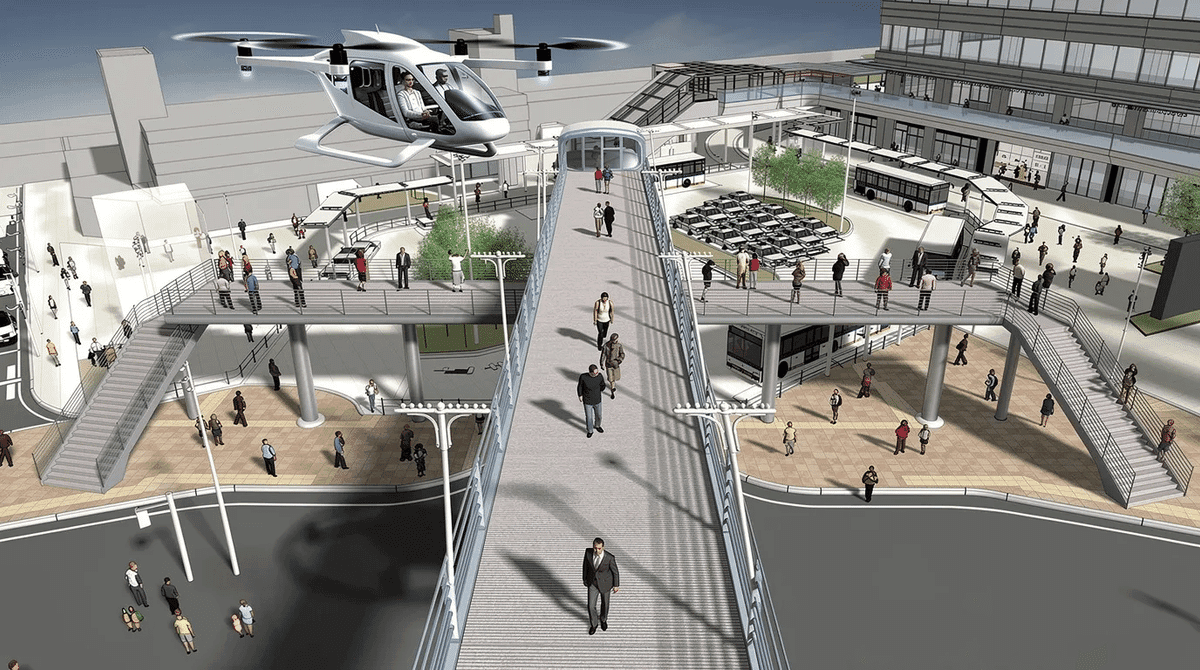
FIG.34
The RC Car GR Event Was a Huge Success
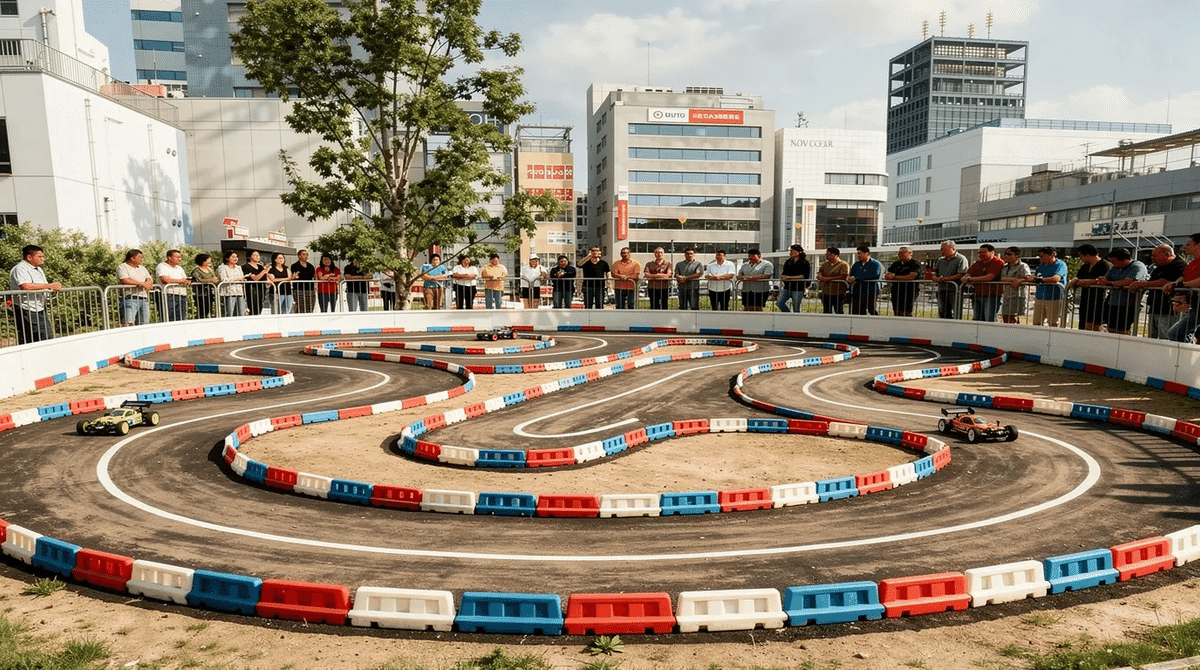
FIG.35
The Town of Sharks and Weight Training
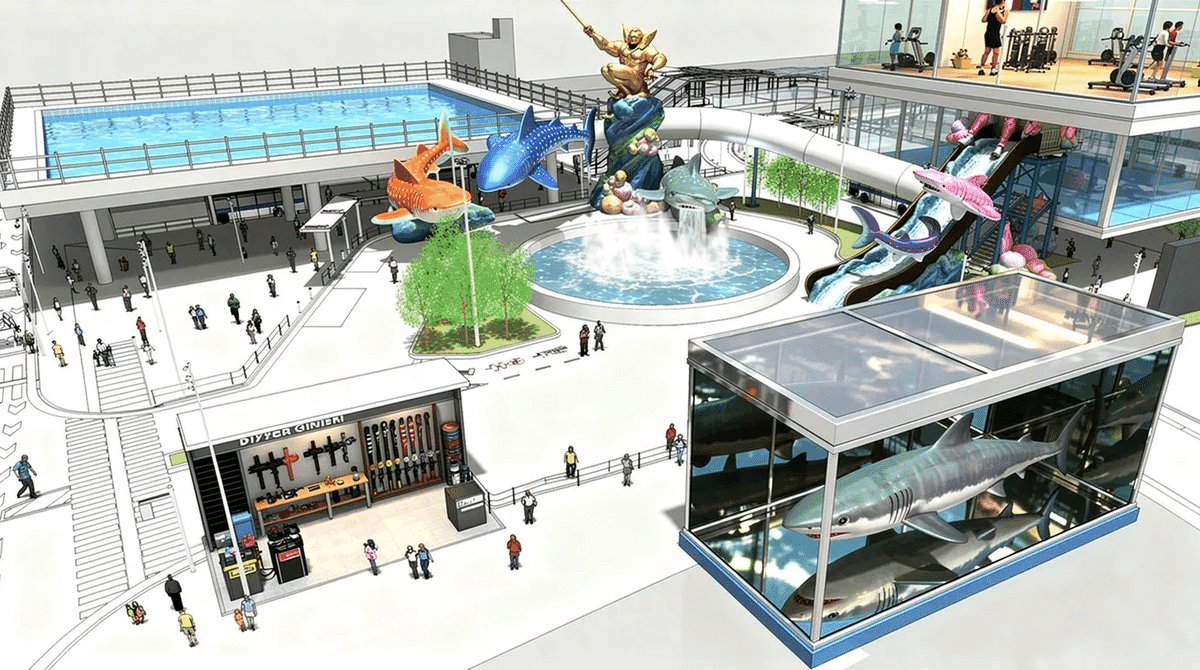
FIG.36
Expanding Playgrounds
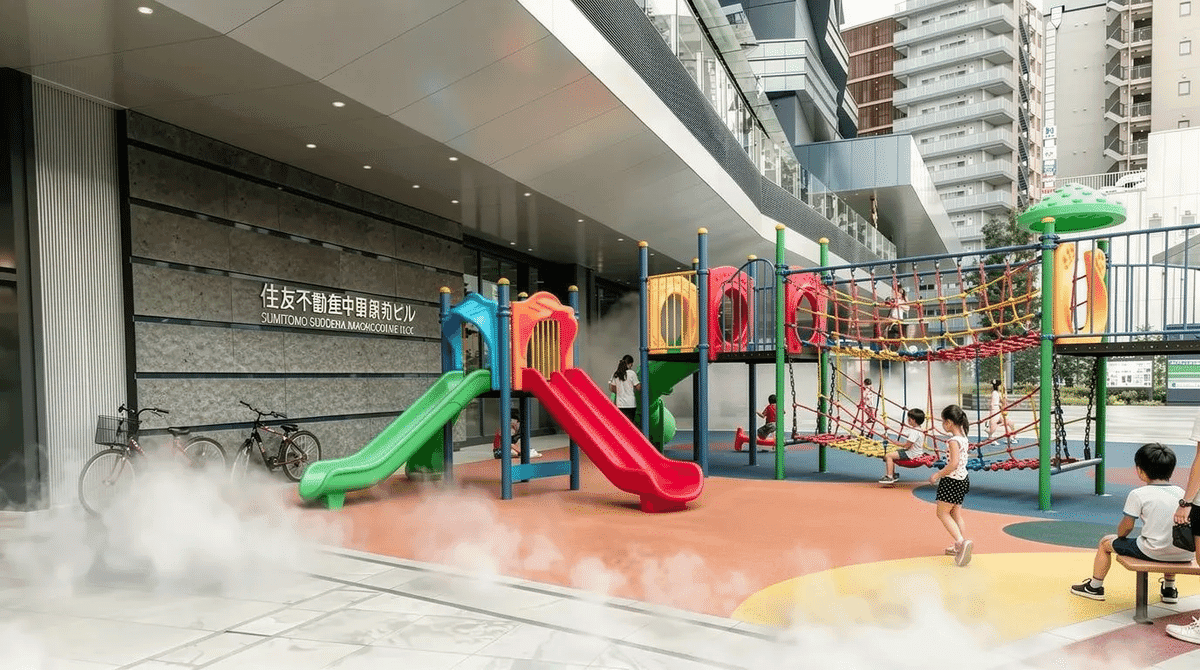
FIG.37
This was the first time ASIBA participated in an event in the form of a social experiment. Compared to workshops, we found it particularly appealing to engage in conversation with people who aren’t typically interested in urban issues and to think together about the future of the city. We will continue to promote various projects, including the NESS Project, and envision alternative ways of building cities.
Event Overview Date & Time | Saturday, March 28
, 2026, 11:00 a.m.–4:00 p.m. Venue |
Nakano Station South Exit Plaza (1st Floor, Nakano South Terra)
Organizer | ASIBA (General Incorporated Association) In Cooperation with | Nakano
Ward, Nakano Station Area Urban Development Division
What is the Design of AI that Draws Out Human Creativity?
Tokyo Futurescape Studio Special Interview
INTERVIEW
2025.06.08.