Following Up with INC-2nd Term Alumni #2
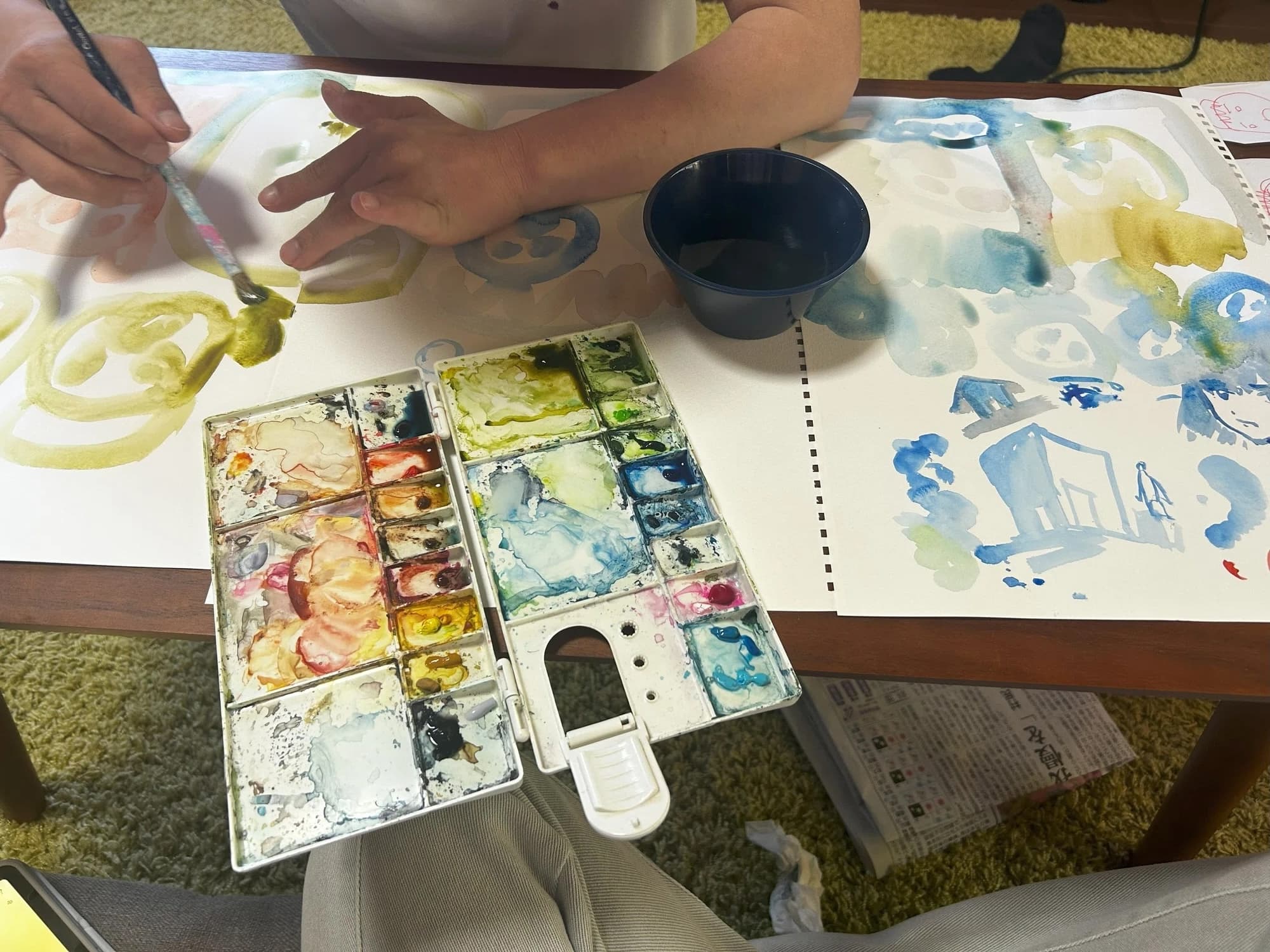
FIG.1
This series explores the “journeys” of young creative entrepreneurs shaping a new future in the fields of architecture, urban planning, and design—examining the driving forces behind their work to date, the challenges they’ve faced, and how they’ve overcome them to transform these experiences into successful projects.For the second installment, we spoke with Shiori Kitabayashi, a representative of the “Enoniwa” project and a member of ASIBA’s second incubation cohort. (Interviewer: Michihiro Abe)
Shiori Kitabayashi. Born in 2001.Originally from Matsumoto City, Nagano Prefecture. Architecture student and illustrator. Drawing has been her favorite activity since childhood, and she studied architecture to bring the scenes she envisioned to life. Witnessing her younger brother, who has Down syndrome, become isolated from society, she began to want to find various ways to connect with others through art, leading her to branch out into the field of social welfare.
──What kind of app is “Enoniwa,” which you’re leading as its representative?
“Enoniwa” is a drawing tool that allows users to draw together with people with intellectual disabilities. When you launch the app, the stroke patterns drawn by another person are played back. Using those as a guide, you can follow the lines, trace over them, or add to them… The two strokes naturally interact, giving rise to unexpected drawings.Our goal was to facilitate communication with people with disabilities through drawing.
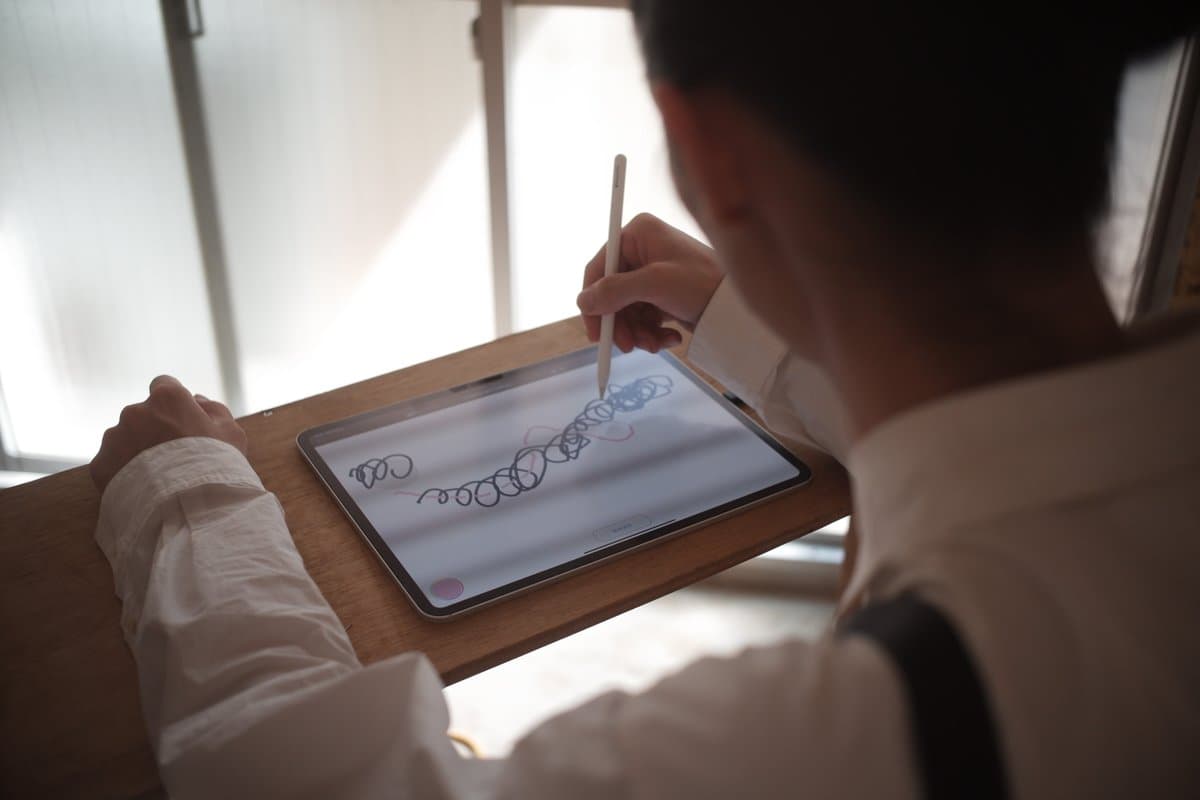
FIG.2
──I’d like to ask about the activities you’ve been involved in leading up to this project.
First, let me introduce myself: I’ll be graduating from the graduate school at Tokyo University of Science in March 2025, and starting in April, I’ll begin working at an architectural design firm. I’m also active as an illustrator, creating artwork for music videos and other projects.

FIG.3
What sparked my interest in relationships with people with disabilities was my younger brother, who has Down syndrome. Having someone with an intellectual disability close to me piqued my interest in the field of disability welfare, and I even visited the special education school my brother attends. At that time, I got the impression that facilities for people with disabilities were rather closed-off environments.My brother has an outgoing personality and loves talking to all kinds of people, but at the facility he attended, he had few opportunities to interact with people from outside. Hearing him say, “I want to meet more people,” I came to believe there should be spaces where people with disabilities and the local community could connect, so for my undergraduate thesis project, I worked on designing a facility for people with disabilities.
So, how could we best connect these facilities to the community? That’s when I turned my attention to art. Activities at facilities for people with disabilities often involve creative pursuits such as drawing, crafts, singing, and dancing. I sought to use art—which is part of daily life for people with disabilities—to break down the barriers between people with intellectual disabilities and society.
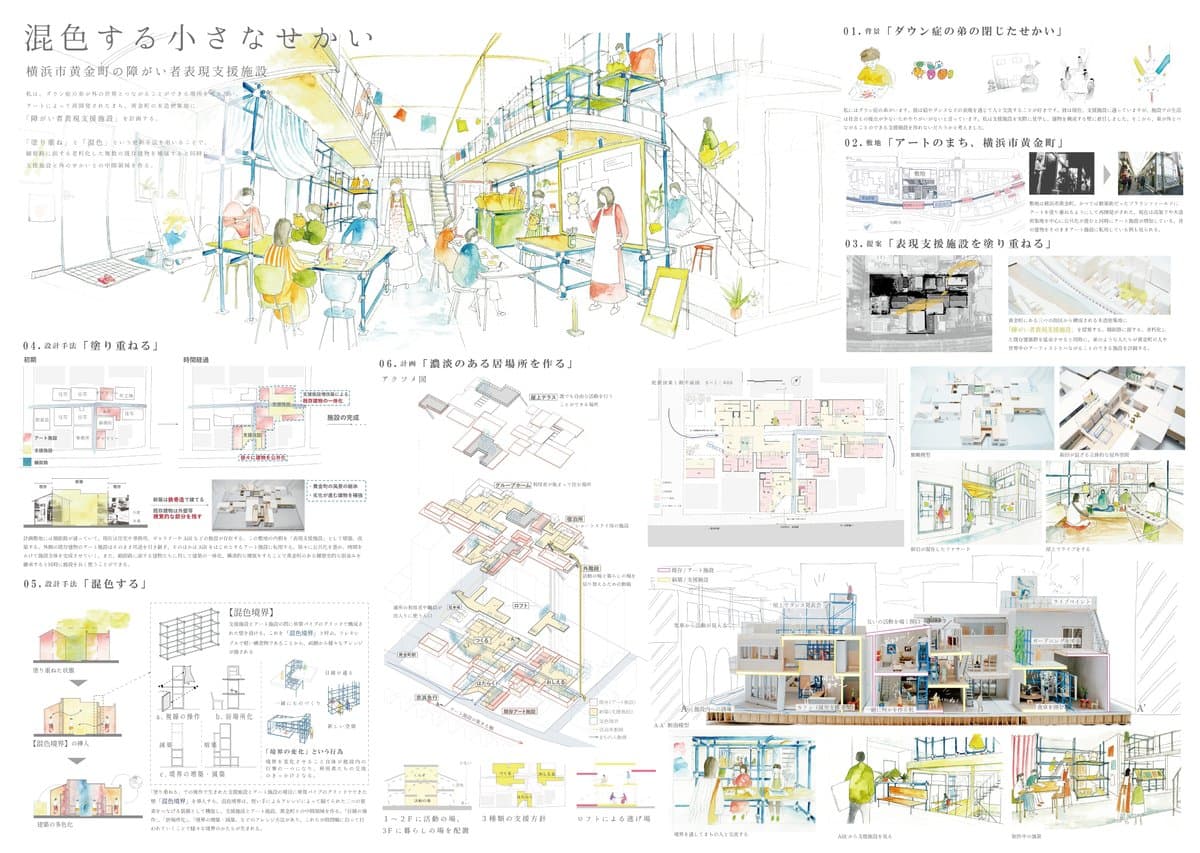
FIG.4
──Was there anything you felt or discovered while working on your graduation project?
My graduation project succeeded in giving tangible form to the idea of solving challenges in disability welfare through architecture, but one thing stuck with me. It was a comment made during the review session: “It looks good because it’s a project, but it wouldn’t work out like this in reality.” I found myself wondering, “So what would actually happen if this were implemented in society?”
──How did the Enoniwa project progress?
At first, driven by the determination to “make this graduation project a reality!” I joined ASIBA’s incubation program.Right after the program began, while conducting interviews at facilities for people with disabilities and other locations, I learned that “because local residents don’t understand the activities taking place inside the facilities or the kinds of people living there, we receive complaints or face opposition to the construction of facilities for people with disabilities.” I realized that conflicts arise simply because people don’t know one another.
So we thought, “If we could just get to know each other better, that would be the solution,” and proposed to the staff at the facility for people with disabilities that we wanted to “create a space where they could interact with local residents.” However, we didn’t get a very positive response—their reply was something like, “It would be nice to have a place to interact, but…” which made it clear that this wasn’t something they truly wanted deep down.The same approach I’d taken for my graduation project simply didn’t work.
So I changed course: I stopped designing the space and broadened my perspective to find a better approach. But I couldn’t come up with any good ideas. One day, while I was struggling to find a direction, my younger brother and I ended up drawing together.We began drawing freely on the same sheet of paper—I’d draw a circle, and my brother would add a face; conversely, I’d color in areas he’d drawn, or imitate his brushstrokes—and we moved our brushes in perfect harmony.That’s when I realized, “Even though we aren’t speaking, our brushes are communicating with each other on the paper.” I thought, “This is it!” Inspired by this experience with my younger brother, Enoniwa ultimately took the form of an app designed to facilitate communication with people with disabilities through drawing.
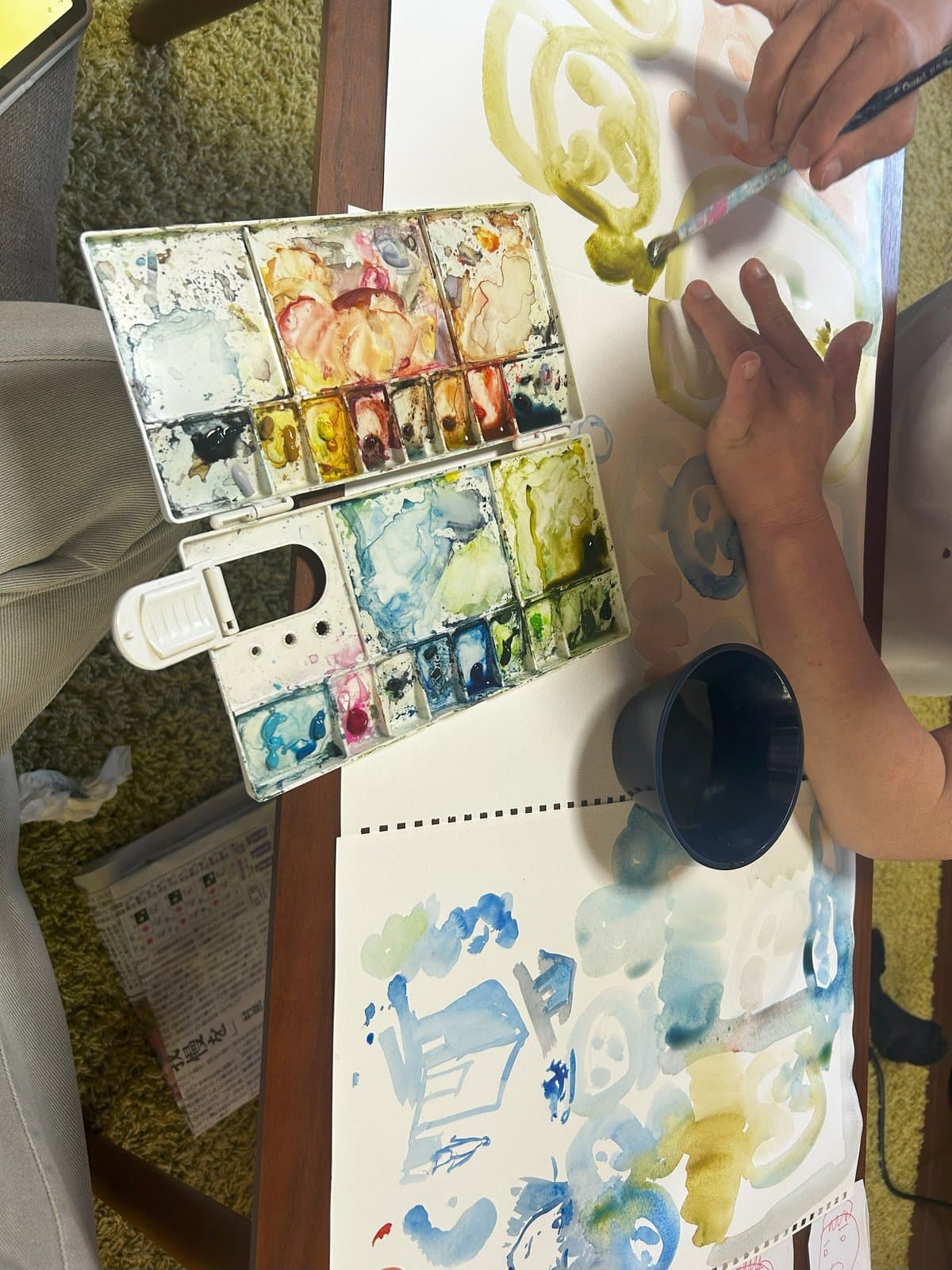
FIG.5
──So it all started with your experience drawing with your younger brother. Why did you ultimately decide to create an app that records and replays brushstrokes?
The reason we didn’t make it an event where people with disabilities draw together is due to the nature of their disabilities. For example, if we were to say, “We’ll hold this event regularly,” it would force them into a structured routine—like gathering here at a specific time at a set frequency—which can be a burden for people with disabilities. That’s why we digitized their brushstrokes.The key point is that we saved details down to the speed of the brushstrokes and the pauses between them. This allows us to focus on the person’s feelings and state of mind while drawing—for instance, noticing “They’re in a hurry” when the strokes are fast, or “They’re thinking” when there’s a pause.
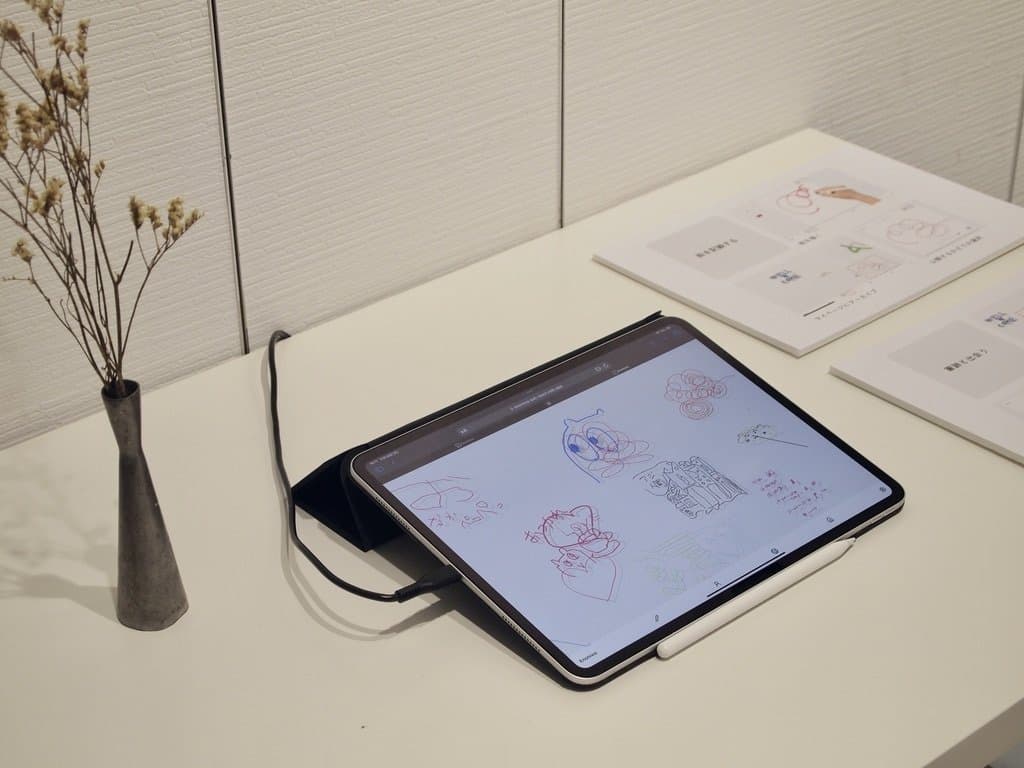
FIG.6
──Finally, could you tell us about the future you envision, Mr. Kitabayashi?
While discrimination against people with disabilities has decreased in recent years, I believe there’s still a tendency to be overly considerate of them. While it’s necessary for us to be considerate of one another, being treated with excessive consideration can also lead to a state of unease.People with disabilities rarely experience moments where they can be on an equal footing with others, like friends. The beauty of Enoniwa is that it allows for equal communication through drawing, and I hope such moments become more common in everyday life.
We used to operate under the framework of “people with disabilities and the rest of us,” but I’ve now realized there’s no need for that distinction. I want to develop this into a communication tool where anyone can record their handwriting and anyone can draw together.
Participating from a Single Screw: The Engaging Power of the Street Workshop 'Architecture Stall' | Interview #1 Yutaka Enomoto | ASIBA
Following Up with INC-2nd Term Alumni #1
INTERVIEW
2025.04.04.