Following Up with INC-2nd Term Alumni #4
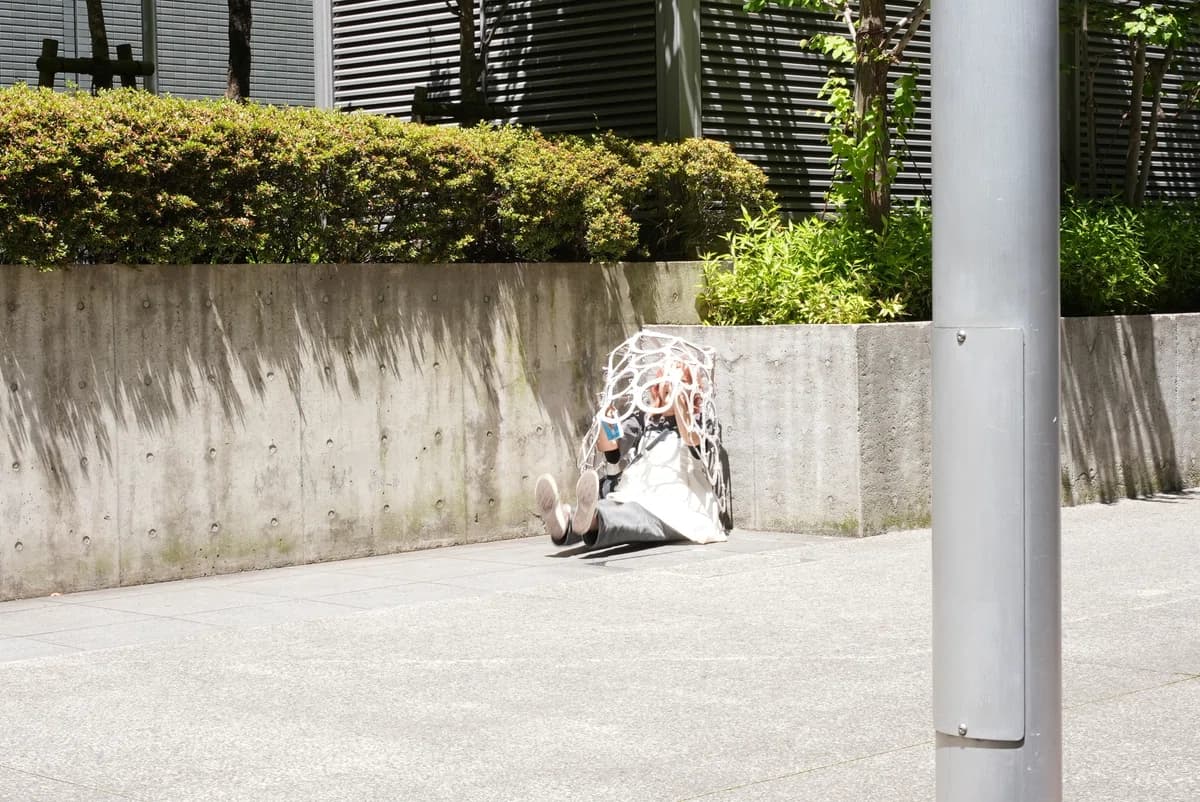
FIG.1
This series explores the “journeys” of young creative entrepreneurs who are shaping a new future in the fields of architecture, urban planning, and design. In this fourth installment, we spoke with Yuna Nakagawa, a master’s student at Kogakuin University Graduate School and the representative of “Nitchinock!,” a project that creates “places to linger without a specific purpose” in the community.(Interviewer: Michihiro Abe)
Yuna Nakagawa.
Born in 2000.Born and raised in Kanagawa. She studied performing arts such as classical ballet and theater from a young age and began studying architecture upon entering university. As she commuted almost daily to the metropolis of Shinjuku, Tokyo, she began to question the dullness and emptiness of urban spaces. She then launched the “Nichi Knock!” project based on her graduation thesis.
──First, I’d like to ask you about this project with the unique name, “Nichi Knock!”
It’s a project aimed at creating small, hidden, cozy nooks and crannies (niches/knocks) within the city—spaces that serve as “sanctuaries,” like secret hideouts, where people can retreat and just zone out.
──Why did you feel that such spaces are needed—or should exist—in the city?
Modern cities are full of “places with a specific purpose,” aren’t they? Offices, commercial facilities, roads—even public squares—are bound by laws, regulations, and development requirements, and are forced to serve some kind of “purpose.” This tendency is particularly strong in Japan compared to other countries. European cities have plenty of public spaces like squares, but I feel like Japan lacks them. I felt this particularly strongly while working on my senior thesis project during my fourth year of undergraduate studies. I commuted daily to my university in Shinjuku, and I noticed there were no places in Shinjuku where I could just relax and let my mind wander. The city lacked any breathing room, and it felt suffocating.
So for my graduation project, I decided to scatter relaxing spots—like secret hideouts—throughout the city. I envisioned small, treehouse-like spaces set behind the giant billboards of electronics retailers, on building rooftops, and in back alleys.
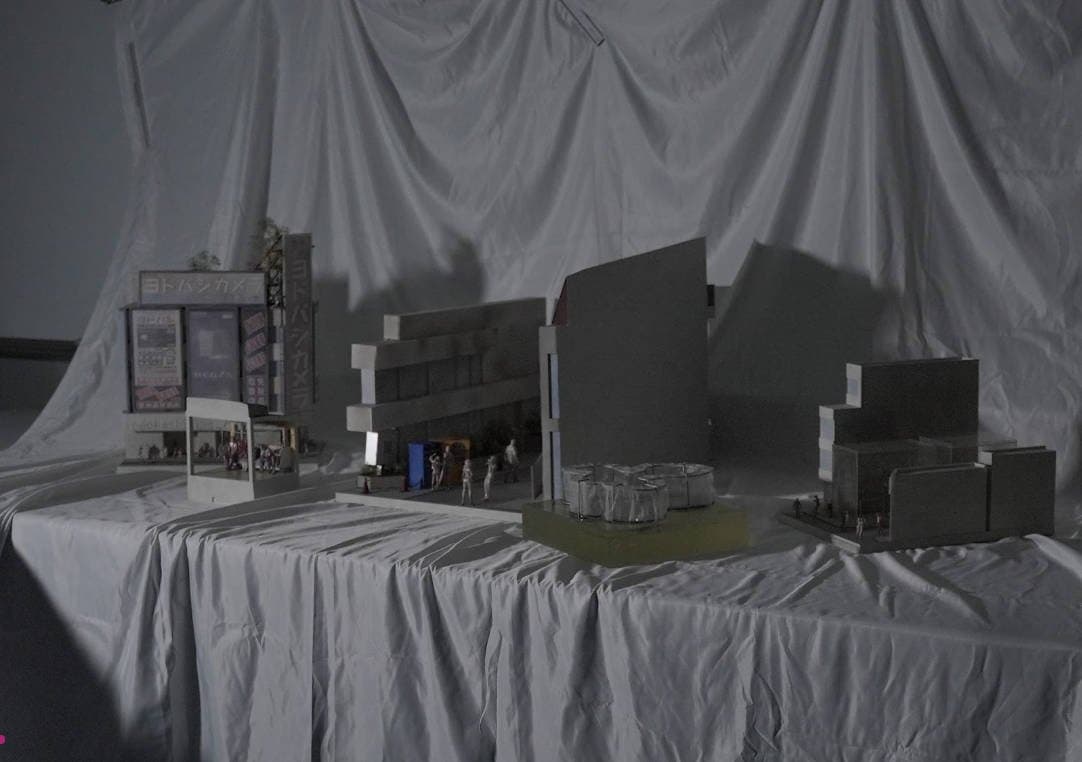
FIG.2
—Why did you decide to create “secret bases” rather than simply providing relaxing spaces or street furniture?
It all started with an encounter with an illegally dumped sofa. On the way from my home to the nearest station, there’s a small vacant lot overgrown with weeds and plants, and one day, a tattered two-seater sofa appeared there.It had been casually dumped at the base of a tree, and the area around it was overgrown with branches, vines, and leaves, but it looked like a space where you’d want to lounge around and soak up the sun at lunchtime. I felt it resembled the secret bases I used to build as a child. So, I decided to create a secret base for my graduation project.
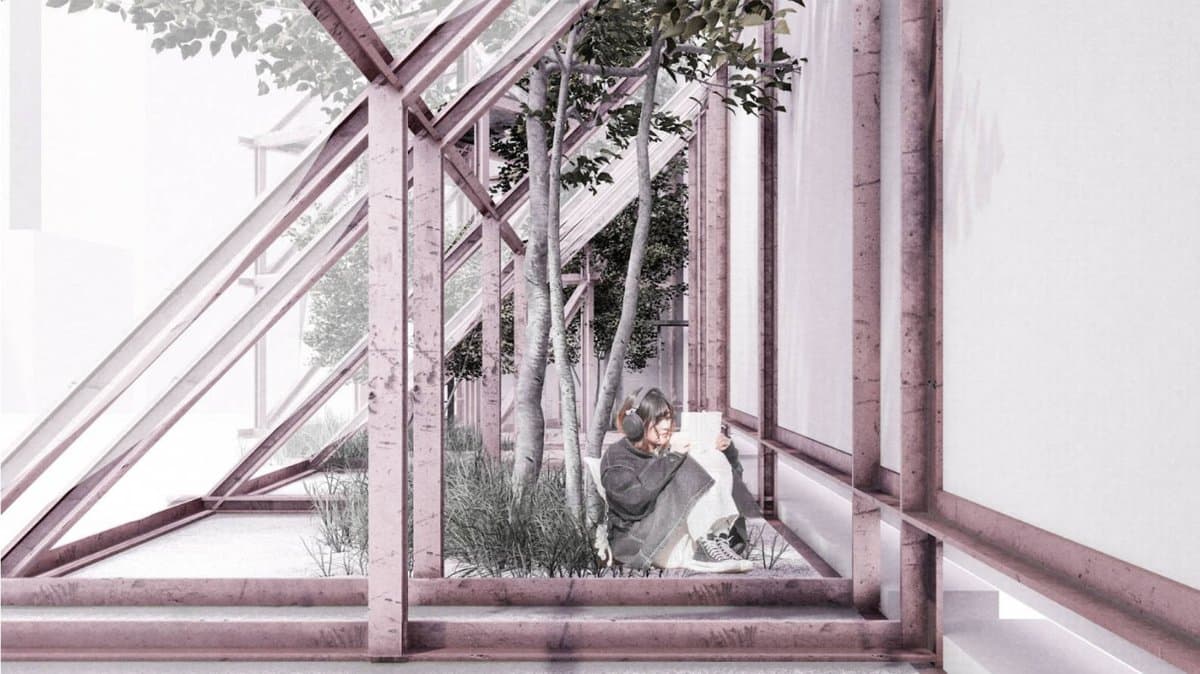
FIG.3
──I see. So you tried to bring that graduation project to life through this project.
Yes. I was very conscious of the idea of “building it for real” as I worked on my graduation project. That’s because, while many graduation projects propose “addressing a grand social issue by designing a large building to solve it,” I had my doubts about whether that would actually solve the problem.
Conceptually, I was also committed to keeping the scale “less than architecture”—I made a point of designing on a scale that felt achievable with enough effort. However, due to time and budget constraints, I couldn’t build it to actual size during my graduation project, which left me with some regrets.That’s why I joined ASIBA’s incubation program, which aims to help bring projects to life. However, I soon faced the reality of just how difficult it is to actually realize an architectural project.
──What kinds of challenges did you face?
When we considered large-scale construction and the use of rooftops, numerous challenges arose one after another—such as coordinating with building owners, complying with the Building Standards Act, and securing funding. Consequently, we explored strategies for collaborating with building owners and organizations responsible for area management.The idea was that by creating a “secret base” in places that are normally off-limits or hard to access—as a way to revitalize the area and the building—we might be able to draw people in.
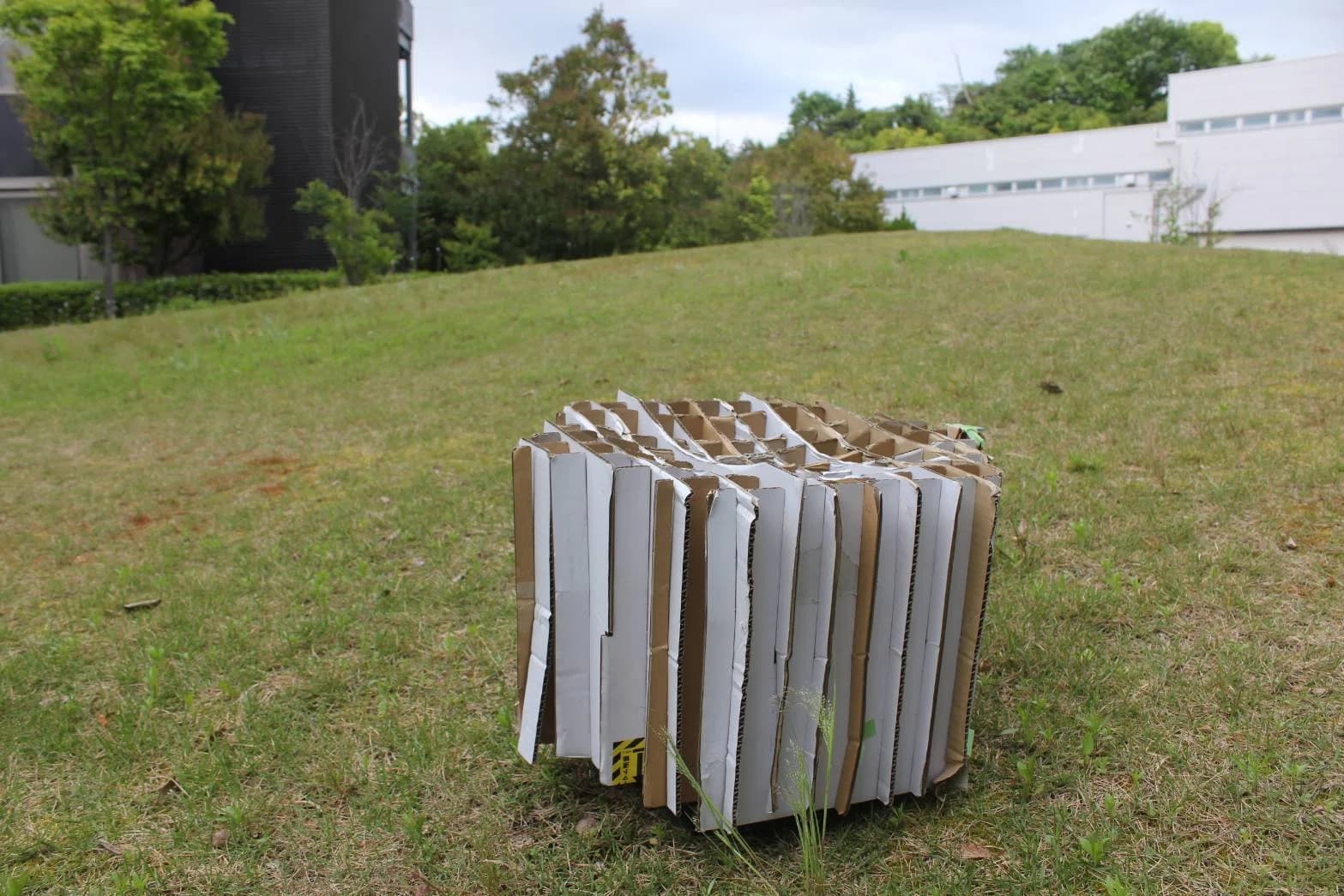
I felt there was potential there, but in the end, I decided against it. The reason was that I saw the risk of this secret base being consumed merely as content—in other words, becoming a “space that exists solely for its own sake.” That’s different from the kind of space I originally wanted to create. Ultimately, the project scaled down to something as small as a costume.
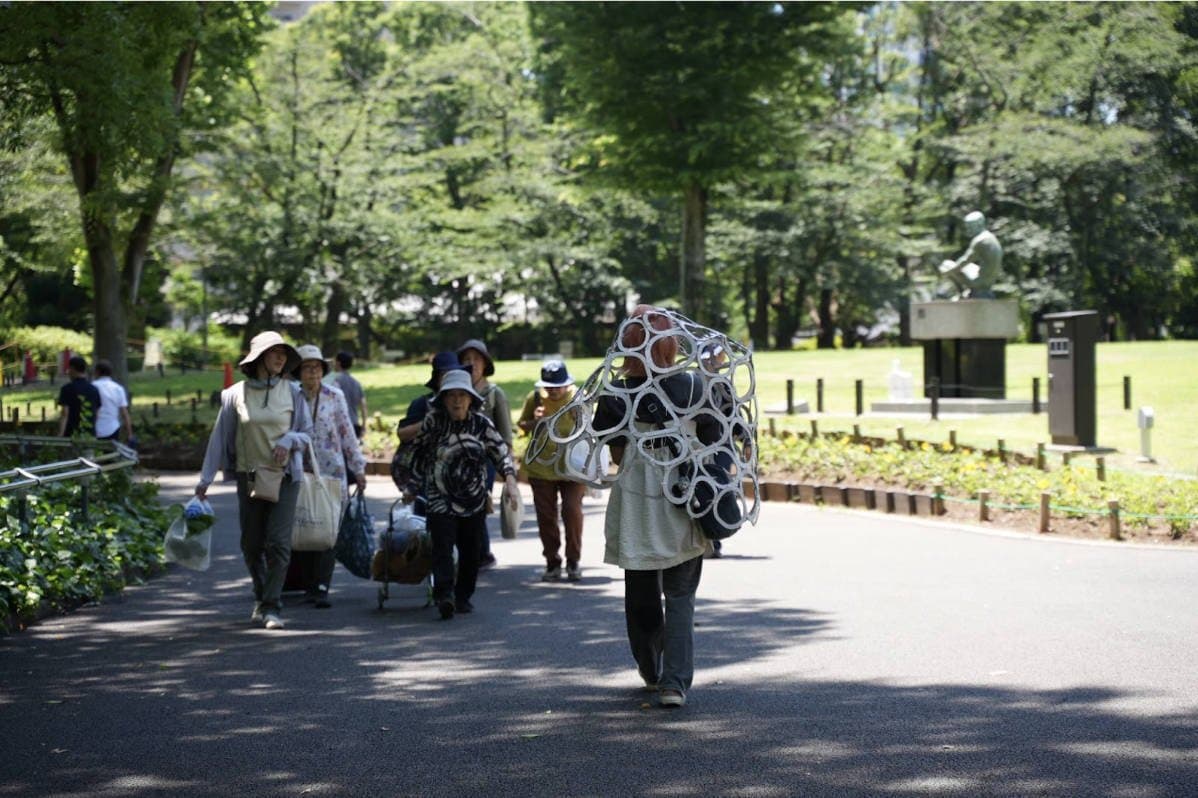
FIG.4
──How are you proceeding with the project now that the program has ended?
I’m not currently moving forward with developing it into a product as is, but in my graduate school lab, people suggested it might be an interesting method for urban research, so I’m planning to explore it further and make it the topic of my master’s thesis.I’m expanding on these ideas by participating in poster sessions at an annual academic conference held with universities in the Philippines, Taiwan, and Vietnam to gather feedback, as well as by using it as a theme for my third-year seminar.
──So your practical work is tied to your research. Finally, could you tell us about the future city you envision?
I think the ideal is a city where people can use the streets freely. Last year, I visited Southeast Asian countries like Vietnam and the Philippines, and I was struck by how many people spent their time on the streets. They’d place sofas—the kind you’d find on a beach—on the road in front of their homes and just sit there daydreaming, or they’d stand around chatting with neighbors while having a drink. The sight of them using the city so freely is etched in my memory. In Japan, roads are seen as nothing more than “spaces for getting around,” aren’t they? Instead, I think the ideal city is one that allows for a variety of uses—a city with that kind of flexibility.
Participating from a Single Screw: The Engaging Power of the Street Workshop 'Architecture Stall' | Interview #1 Yutaka Enomoto | ASIBA
Following Up with INC-2nd Term Alumni #1
INTERVIEW
2025.04.04.