Living Lens Report #2
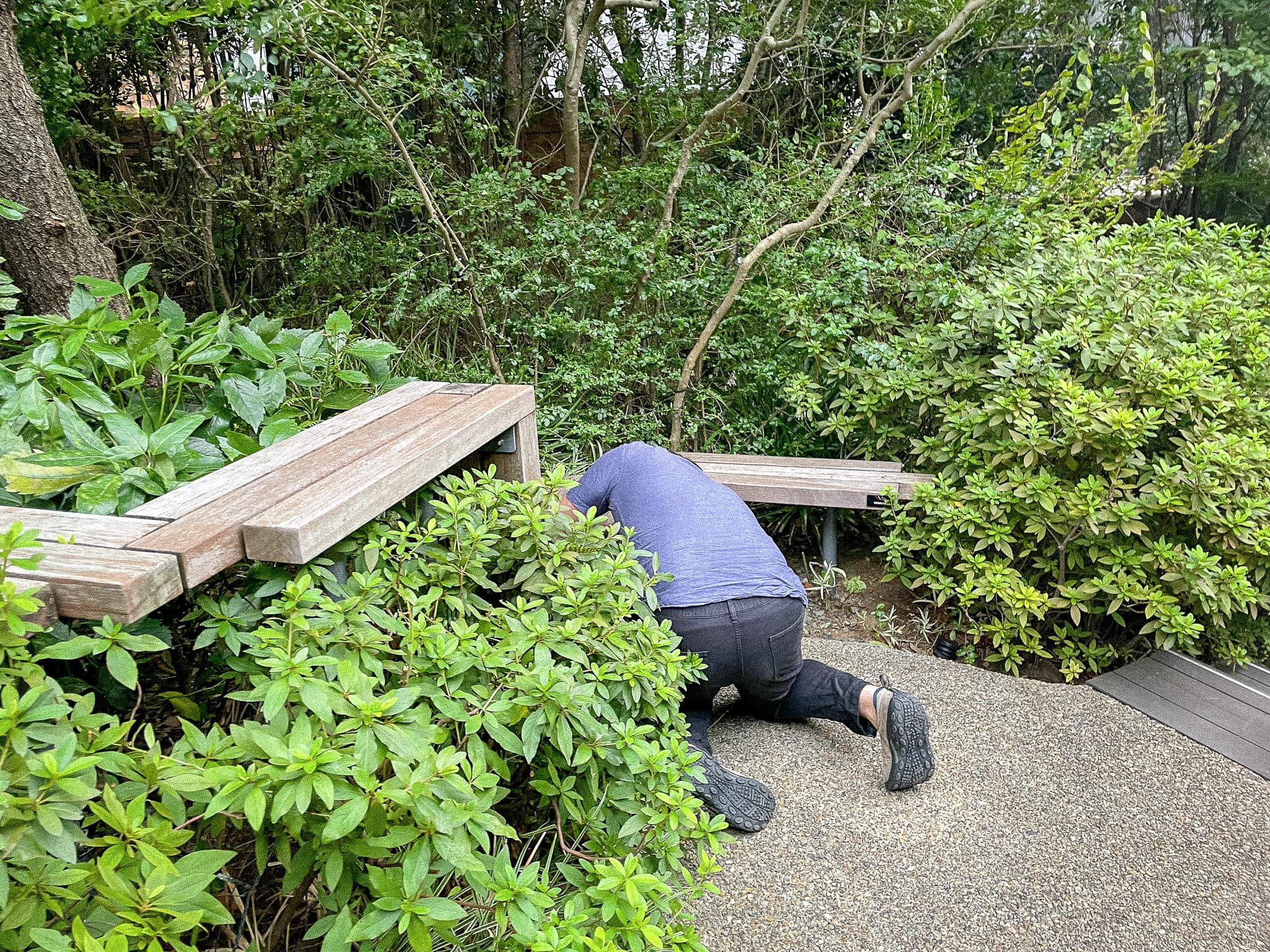
FIG.1
The General Incorporated Association ASIBA (Representative Director: Yuta Nihei) is co-hosting a four-part series titled “Introduction to Urban Design from the Perspective of Living Things” in collaboration with Nippon Steel & Kowa Real Estate Co., Ltd. and Taisei Corporation.This article reports on Session #2, which was held on Friday, September 28, from 3:00 PM to 6:00 PM.
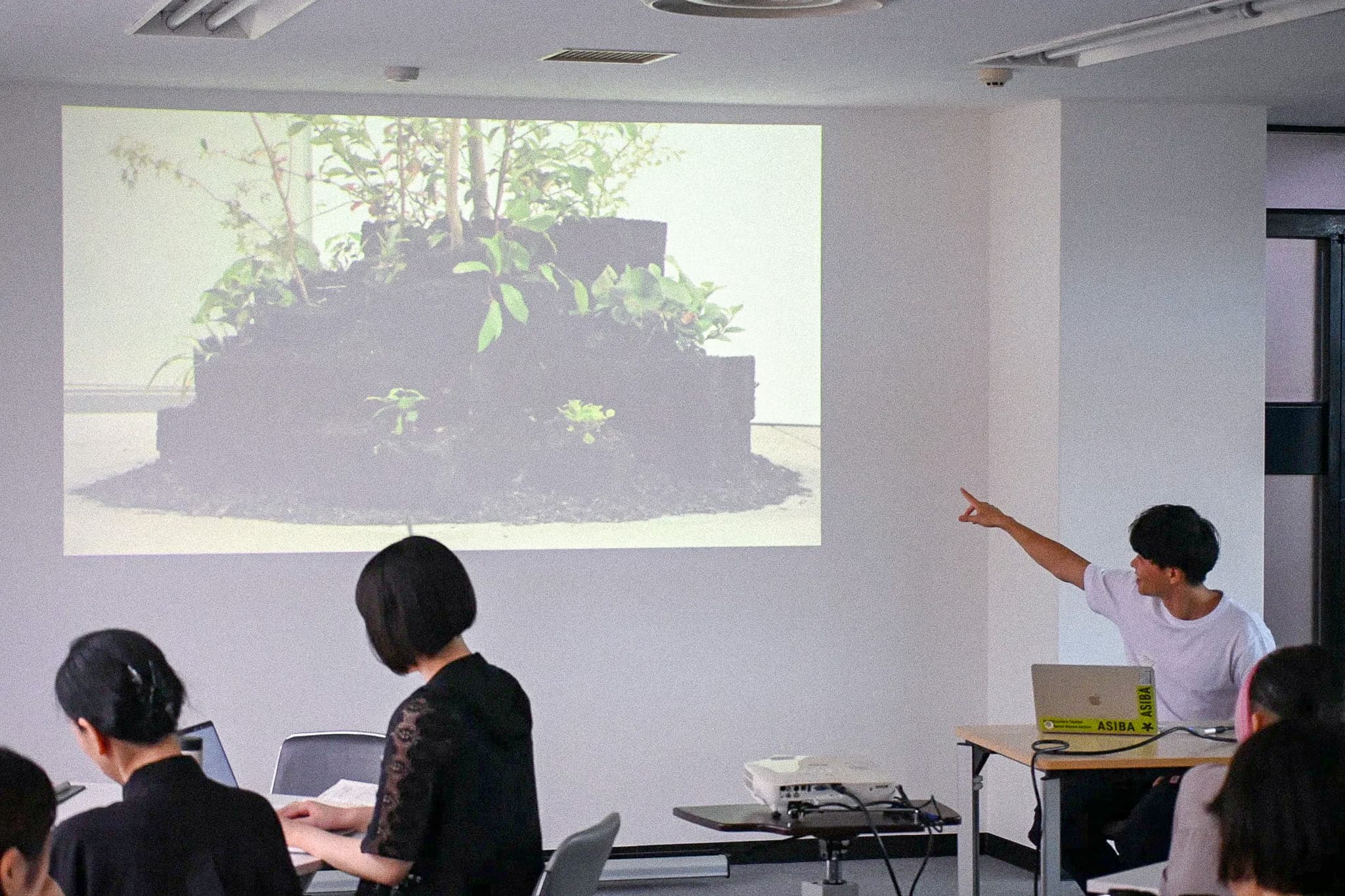
First, we welcomed Kosuke Katano, who conducted biological research at the MIT Media Lab and has been involved in desert restoration and urban ecosystem assessment, and who currently works as part of the landscape architecture unit veig. He spoke about landscape design theory, drawing on his own practical examples.
Mr. Katano began by emphasizing the importance of understanding one’s own role, given the multitude of stakeholders involved in the design of buildings and landscapes. He explained that, in his own work, he has provided advice from an ecological perspective on the impact of landscape development on ecosystems and on appropriate design approaches.However, even when researchers are involved, it is not easy to establish a system that allows each stakeholder to fulfill their appropriate role—for example, it is too late to seek advice only after the basic design phase is complete. For this reason, he says it is important—even for designers—to understand the decision-making process from start to finish, as well as project management.
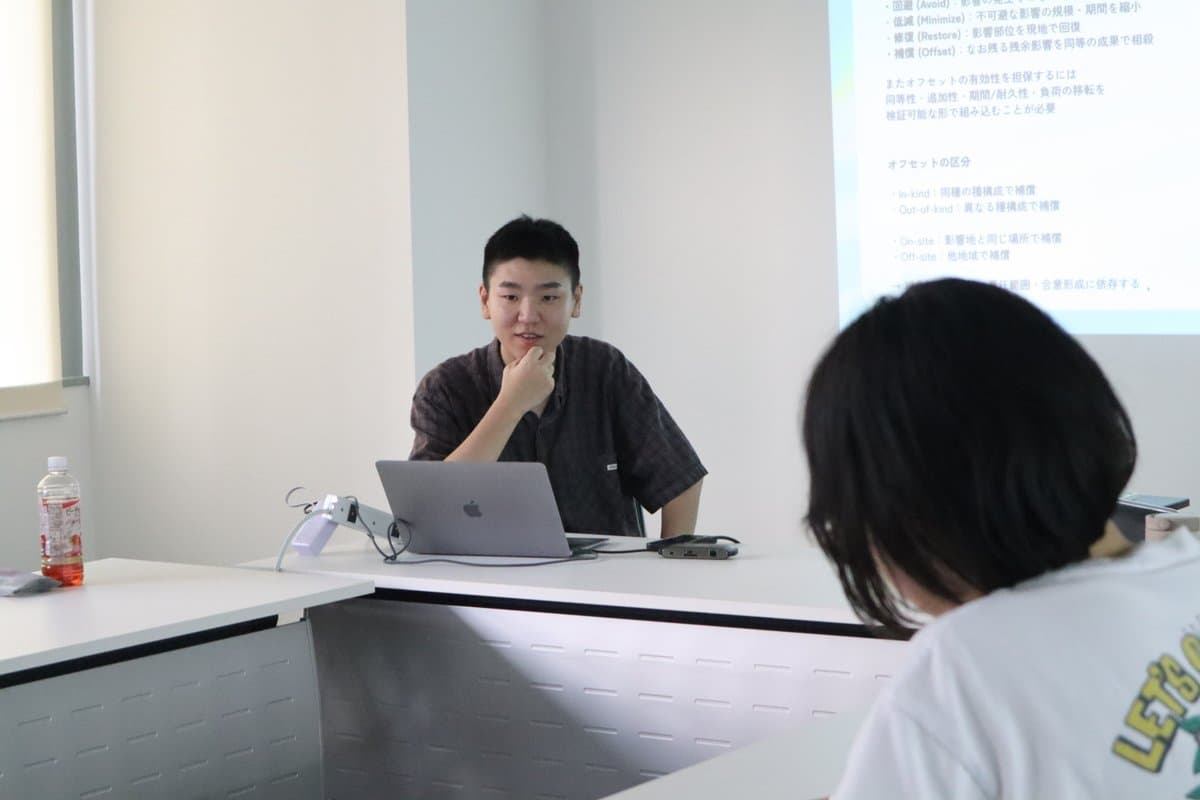
FIG.2
He also notes that it is essential not only to understand each party’s role but also to objectively assess—based on factors such as budget and site conditions—the extent to which ecological benefits can be achieved, depending on the project’s scale. Unlike large-scale developments, small- and medium-scale projects often have limited resources for rigorous ecological work or lack a framework for evaluating it; attempting to incorporate ecological considerations indiscriminately risks exacerbating greenwashing.In such cases, it may actually be more sincere to focus instead on aspects such as design, symbolism, and comfort.
He also touched on the concept of mitigation (restoration) and discussed the inherent difficulty of defining, in the first place, what constitutes a truly positive ecological outcome. In recent years, there has been a growing tendency to view the restoration of ecosystems lost to development as a moral imperative, and there is increasing talk of “offsets”—compensating for the environmental impact caused in urban areas by taking action in other regions.However, what criteria are used to determine what constitutes “restoring” the impact on an ecosystem? Even if trees are planted in another region, the impact on the urban ecosystem is irreversible. That said, it is hardly realistic to restore the ecosystem to its pre-modern state, when no humans lived there at all. Concepts such as “In-Kind” versus “Out-of-Kind” (compensation with the same species composition versus compensation with a different species composition) and “On-site” versus “Off-site” (compensation at the same location as the impacted area versus compensation in another region) significantly alter the actual methods and extent of “restoration.” Given these facts, how should we combine different methods during the design phase and build consensus? Moving forward, a design process that integrates academic perspectives will be essential.
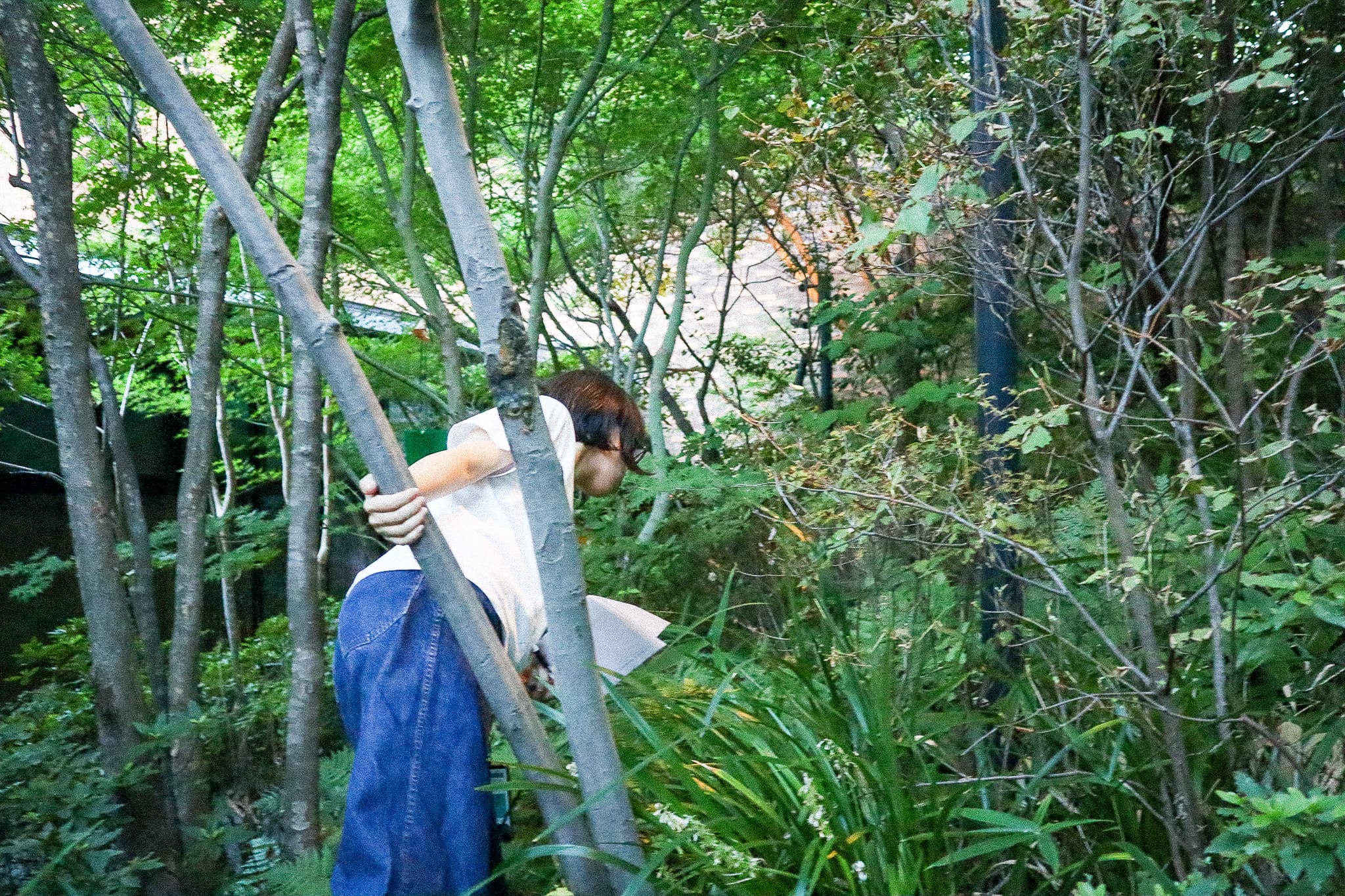
Following up on the first session, we once again conducted fieldwork focused on the greenway at Akasaka Intercity Air. The goal of this second fieldwork session was for participants to independently propose questions to address in future sessions, such as “Where might we identify issues?” and “What perspectives on the site might be interesting?” To achieve this, participants were asked to establish their own perspectives and formulate unique questions.
In fact, participants came up with various insights based on their own perspectives, such as, “Could we consider the impact on the ecosystem by focusing on the wind created by the site’s layout and plantings?” and “What benefits does the environment under the benches provide for living creatures?”
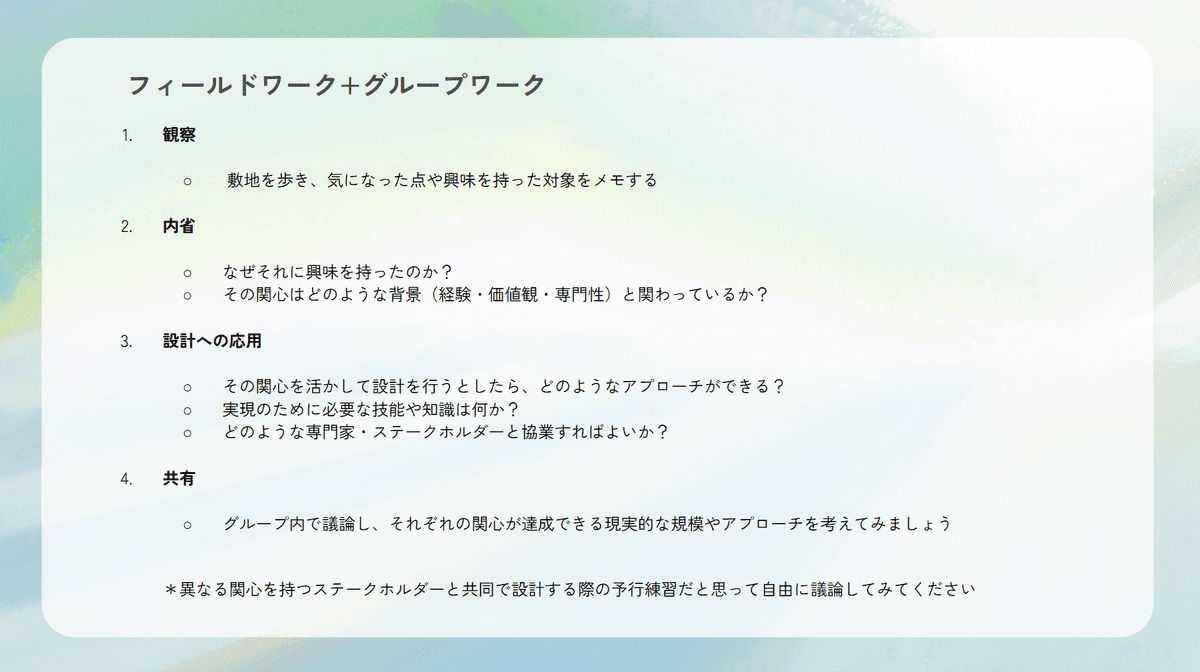
FIG.3
In the second half of the session, we were treated to a lecture by Mr. Taga of BIOME Co., Ltd., which operates Japan’s largest biodiversity data platform.
There are reportedly more than 5 million species of living organisms in the world, with a market value estimated at 3,800 trillion yen; they support every service we enjoy, from daily life to industry. However, even now that “Nature Positive” has become a widely discussed concept, he noted that biodiversity conservation still faces the following challenges: ① Most initiatives, such as top-down policies, are large-scale, leaving individuals unsure of what they can do personally. The barriers to getting involved are high, and it’s difficult to feel a tangible connection to the issue. ② Surveying biodiversity is highly complex, and quantifying it is difficult. Consequently, there are no appropriate metrics to measure its value. Due to the lack of data, efforts to assign value to biodiversity have stalled, and the current economic system has created a structure where destroying the natural environment actually generates profit.Therefore, the goal is to bring biodiversity into the business arena, promote it in tandem with business, and—more importantly—make this a fun, bottom-up process. The wildlife collection app BIOME—which allows users to “find, record, and share wildlife”—was born from this very concept.
BIOME currently has approximately 1.2 million users, and the cumulative number of species discovered through the app reportedly exceeds 10 million. Not only is the volume of data enormous, but it was also collected relatively recently, making it a truly unique data infrastructure in Japan. BIOME has sought to create value by visualizing one of Japan’s largest biological datasets in a way that makes it interpretable. However, when it comes to landscape design projects that utilize this data, concerns such as the following often arise:
As discussed in the mitigation section of Mr. Katano’s earlier lecture, any human intervention in nature has the potential to cause irreversible and complex changes, which made me reflect on the danger of relying solely on simple KPIs.
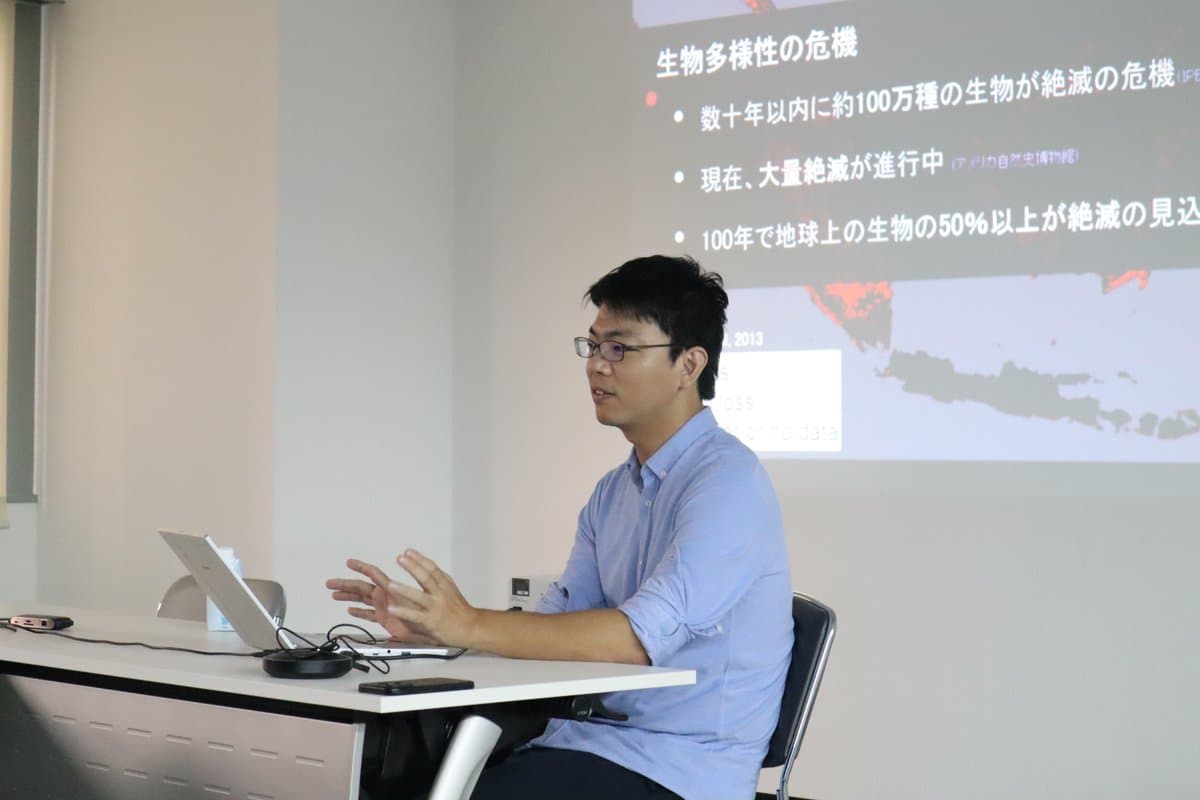
FIG.4
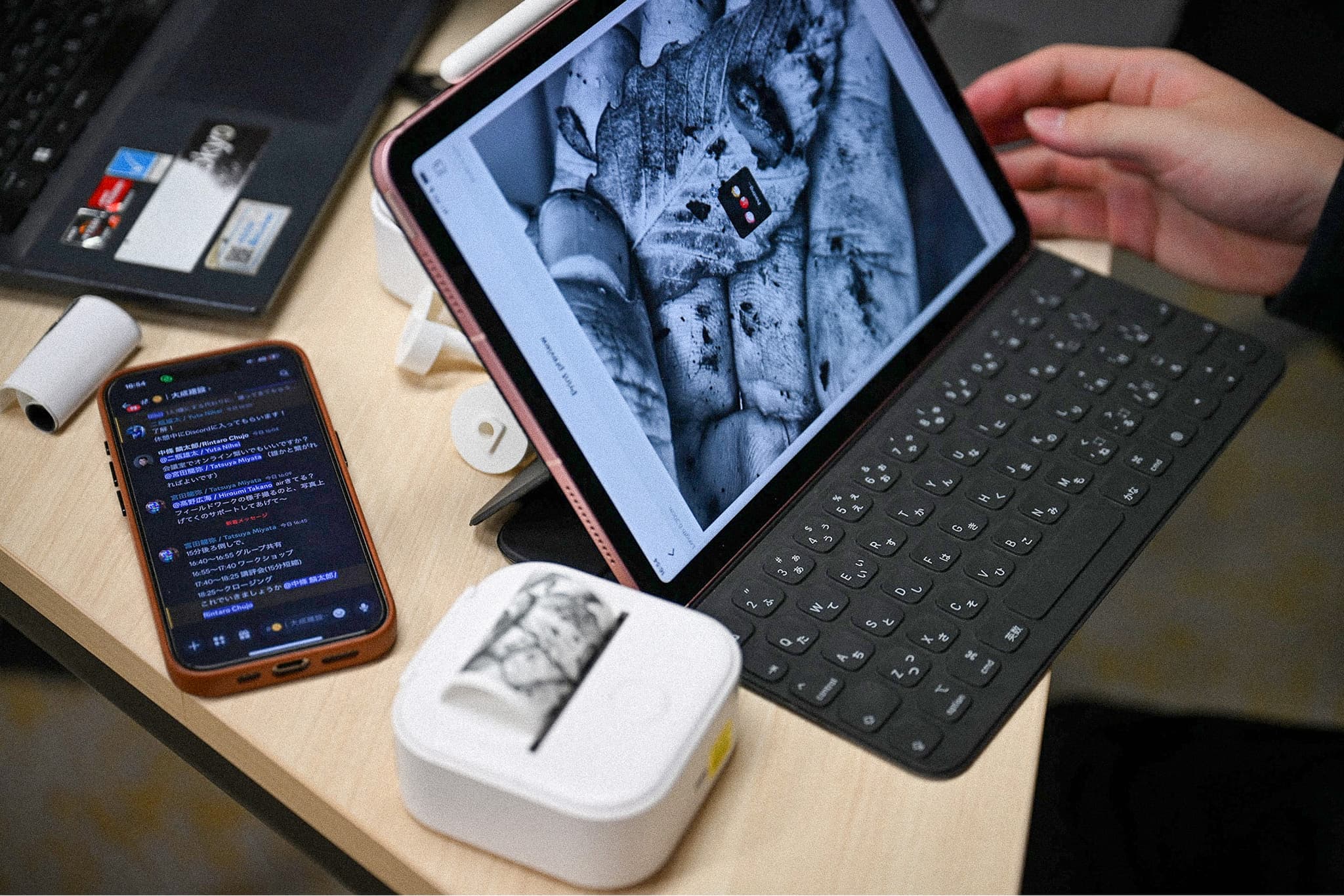
It seems that throughout Mr. Katano’s lecture on biomes, the complexity of how humans manage ecosystems and the difficulties of intervening in them were consistently discussed. Therefore, as a warm-up exercise for “designing cities from the perspective of living organisms,” we held a discussion on the following topic.
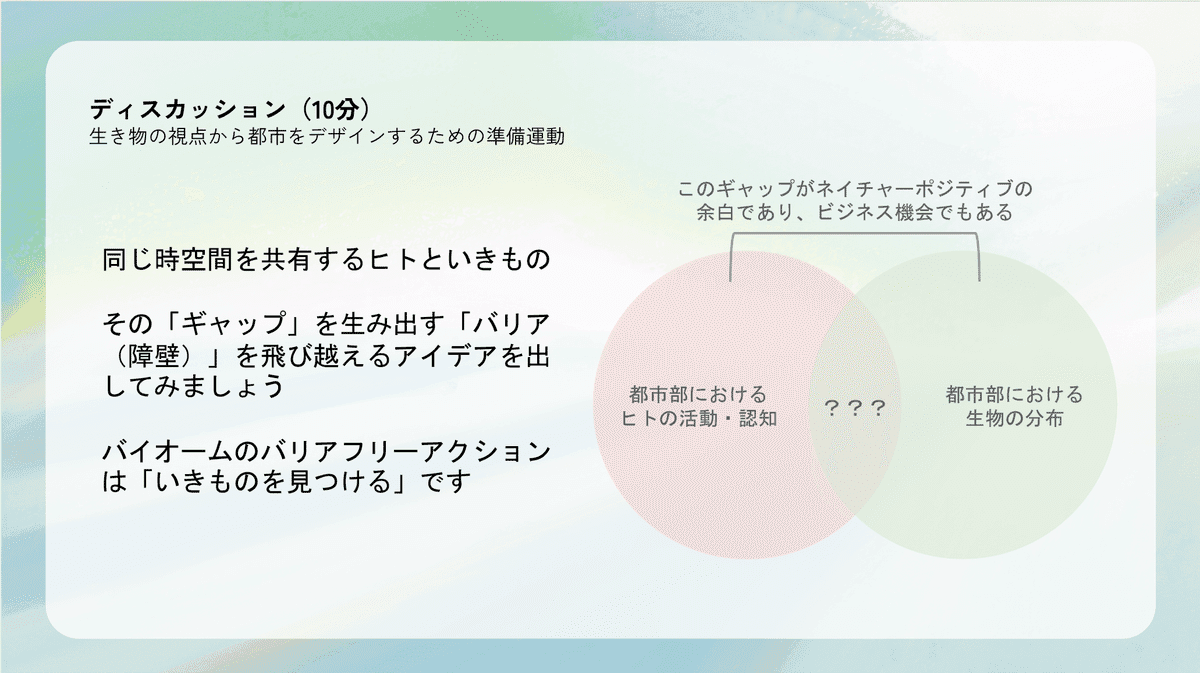
FIG.5
In the remaining third and fourth sessions, we will move on to full-scale research and design, with the goal of producing concrete proposals.
#3 October 9, 3:00 PM–6:00 PM Collecting Data / Quick Prototyping | Gathering data and new insights to rapidly validate ideas
#4 October 22, 3:00 PM–6:00 PM Advancement | Developing the insights gained and connecting them to concrete designs
We’ll begin by updating our understanding through a “living organism perspective,” using that as a springboard to generate new concepts and designs, while also relying on quantitative and objective methods to enhance the practical effectiveness of implementing these ideas in the city. In this program, guided by leading experts from various fields, you’ll experience a design process focused on biodiversity and inclusivity over the course of a four-part series.
Report on the First Session: Introduction to Urban Design from the Perspective of Living Creatures - Kickoff
Living Lens Report #1
REPORT
2025.09.15.