Towards Creative Entrepreneurship
Opening a new space of practice where creativity meets entrepreneurship
Can creativity move society? That question was the axis of “Towards Creative Entrepreneurship,” a one-day conference co-hosted by ASIBA and @Kamata. How can practices in architecture, design, and art be connected to areas that economic rationality alone can't reach? Built around three sessions — “designing an environment for continuous making,” “how to move a society that won't move,” and “envisioning a new creative ecosystem” — the conference gathered practitioners from different positions, including designers, urbanists, architects, venture capitalists, and think tanks, to spend a full day questioning the possibilities and methods of creative entrepreneurship.

FIG.1 © Tamao Nishiyama
Can Creativity Drive Social Change?
We explored the concept of “Creative Entrepreneurship” from different perspectives. Session 1 focused on the practices of designers who design their own creative environments outside the realm of client work.Session 2 featured practitioners working in areas—such as public administration, community development, and civic participation—that are structurally resistant to change, discussing how they confront this “inertia.” Session 3 examined the design of financial models and ecosystems aimed at liberating creative endeavors from economic rationality.
The idea of “redistribution” repeatedly emerged during the discussions. The “redistribution of care” mentioned by Mr. Ishikawa refers to the potential for corporate employees to reconnect with their communities as citizens. Mr. Kurimoto noted that simply changing how subsidies are used can alter who they reach and, in turn, shift the course of society.Mr. Okada’s term “editing money ” reframes the very act of intervening in the structures that support creative practice as a creative act in itself.
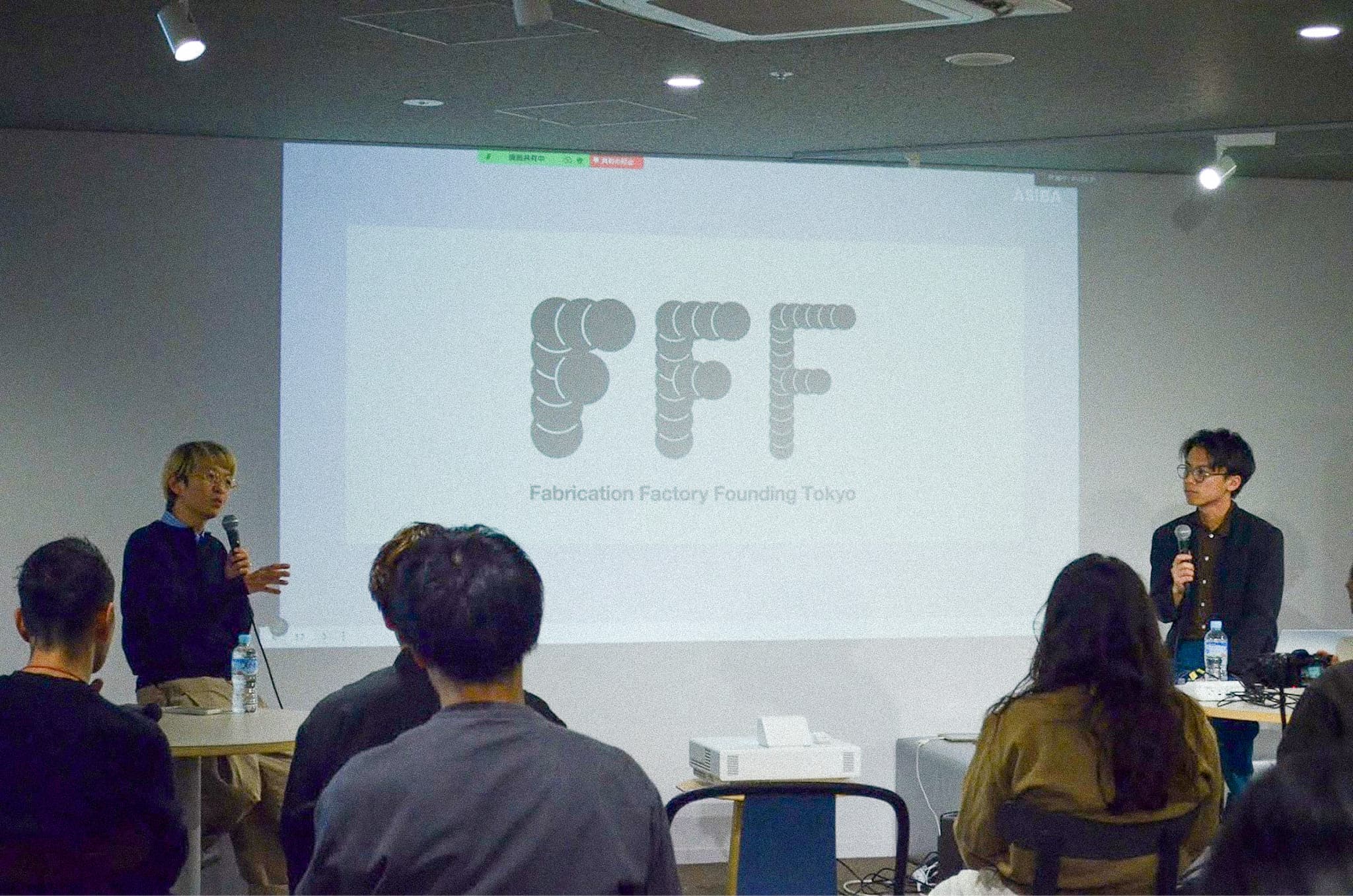
FIG.2
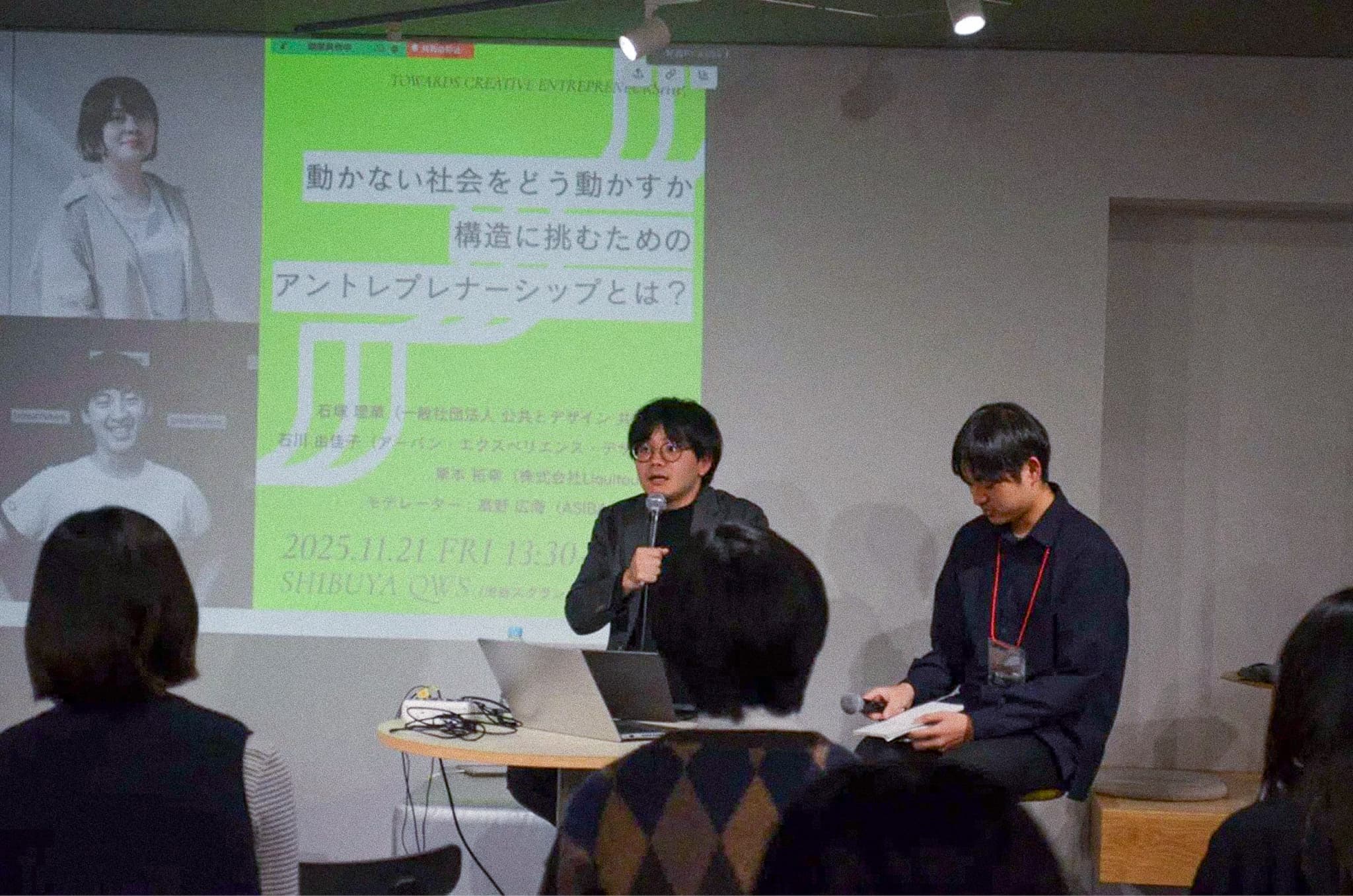
FIG.3
In addition, several speakers used the term “North Star.” Rather than fixing a goal from the outset, the idea is to share the direction you’re heading with stakeholders and nurture those relationships themselves. Mr. Ishizuka’s remark—that “many projects have a ‘let’s enjoy a stroll ’ kind of vibe”—sincerely reflects his trust in this approach.Underlying the entire day’s discussion was the recognition that, in order to deliver creativity to society, it is just as important—if not more so—to intervene in the structures that support the creative process as it is to create the work itself.
This conference was an experiment to test ASIBA’s core concept of “Creative Entrepreneurship” against an external audience. Precisely because we are at the stage of “writing words where nothing exists and then trying to erect an image,” there was significance in inviting practitioners from diverse perspectives to the same venue and engaging in discussion while maintaining those differences.
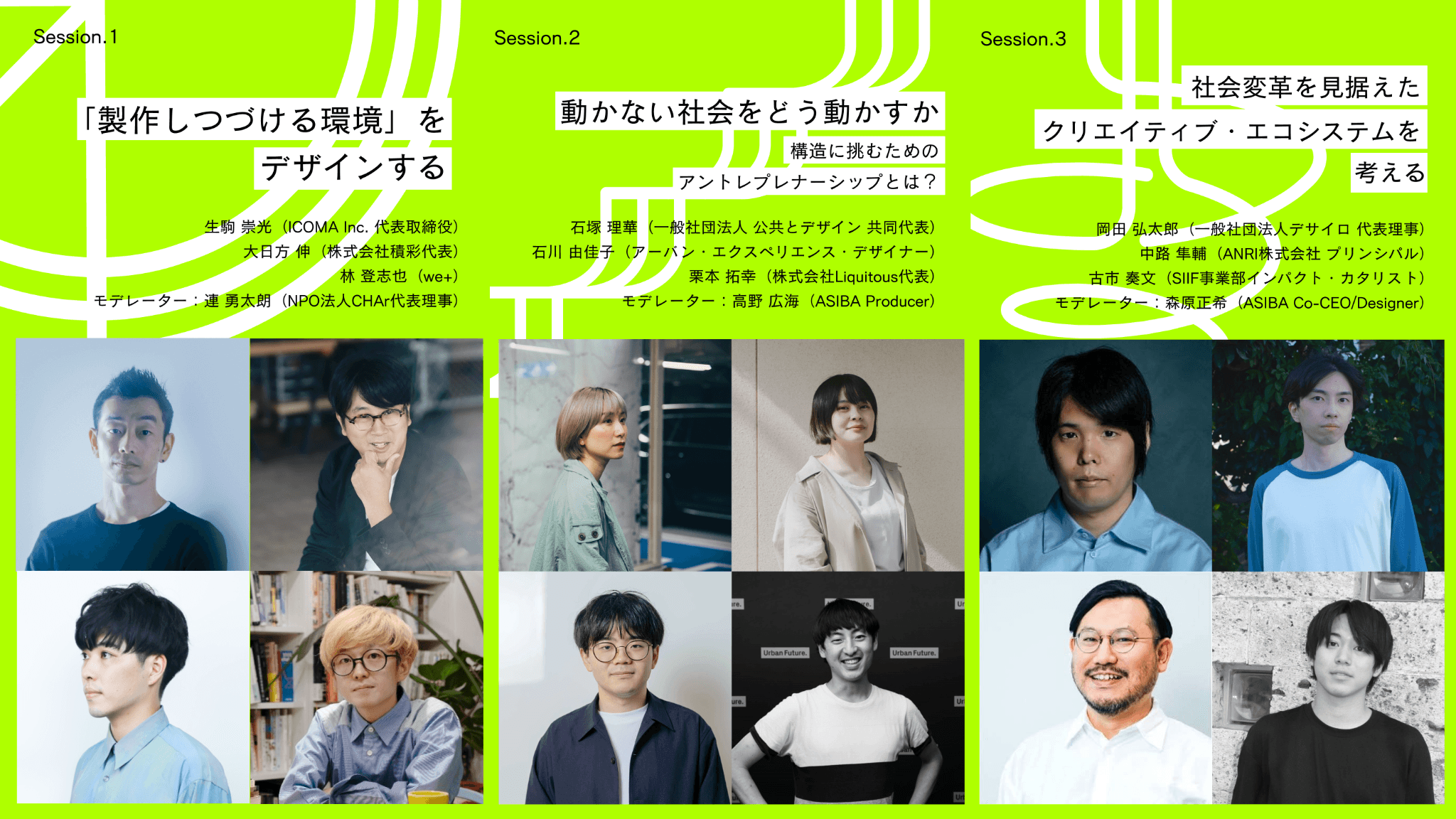
FIG.4
Session 1 | Designing an “Environment for Continuous Creation”
In a capitalist society, it is becoming increasingly difficult to pursue experimental expression and creativity through client work alone. Through the practices of designers who launch their own businesses and systems to design “environments for continuous creation,” we explored the environment in which contemporary creators can actively create, as well as new models for such environments.
Guests: Takamitsu Ikoma (Representative Director, ICOMA Inc.), Shin Ohnikata (CEO/Designer, Sekisai), Toshiya Hayashi (Designer/Creative Director, we+)
Moderator: Yutaro Ren (Architect / Director, @Kamata)
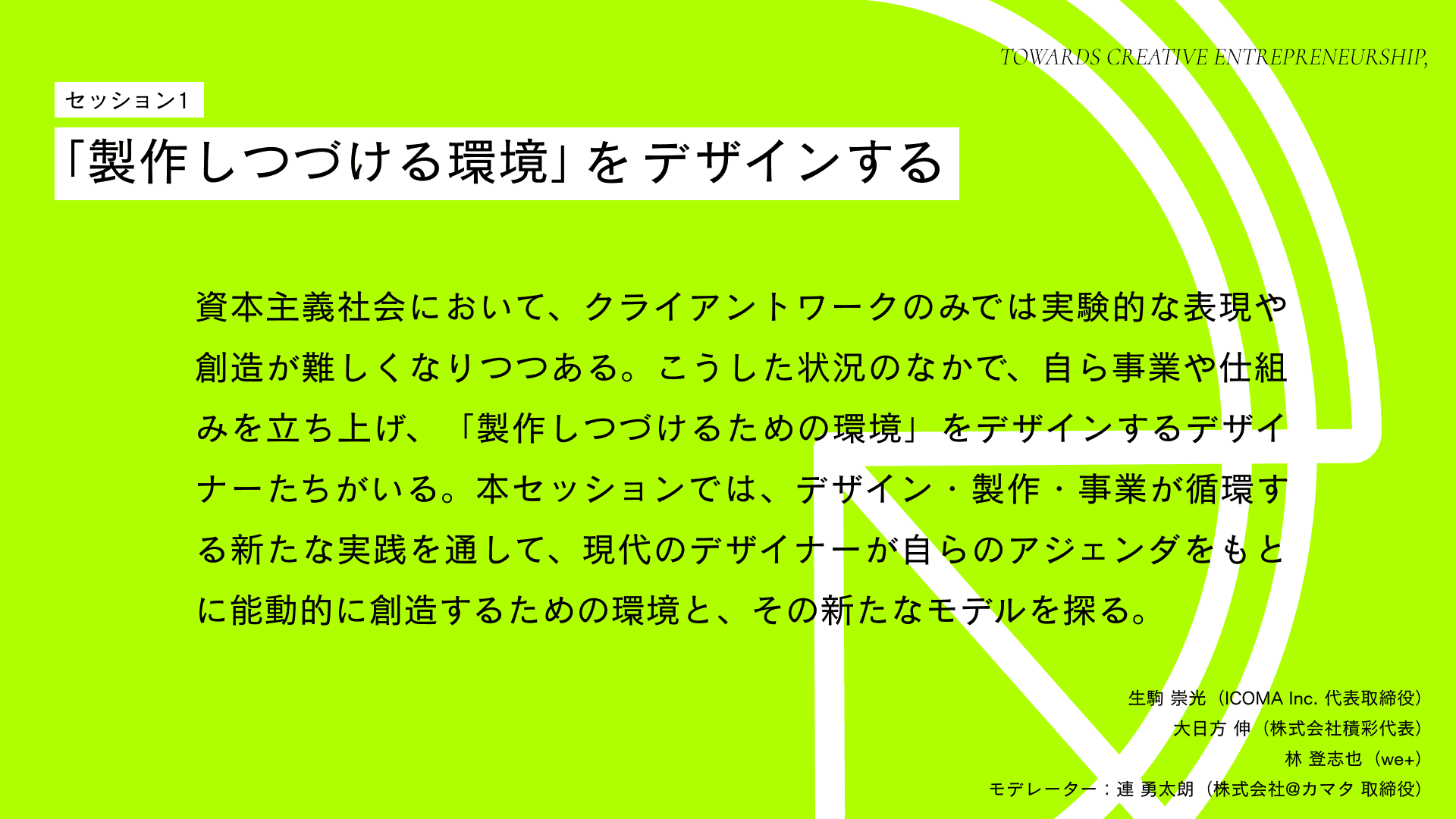
FIG.5
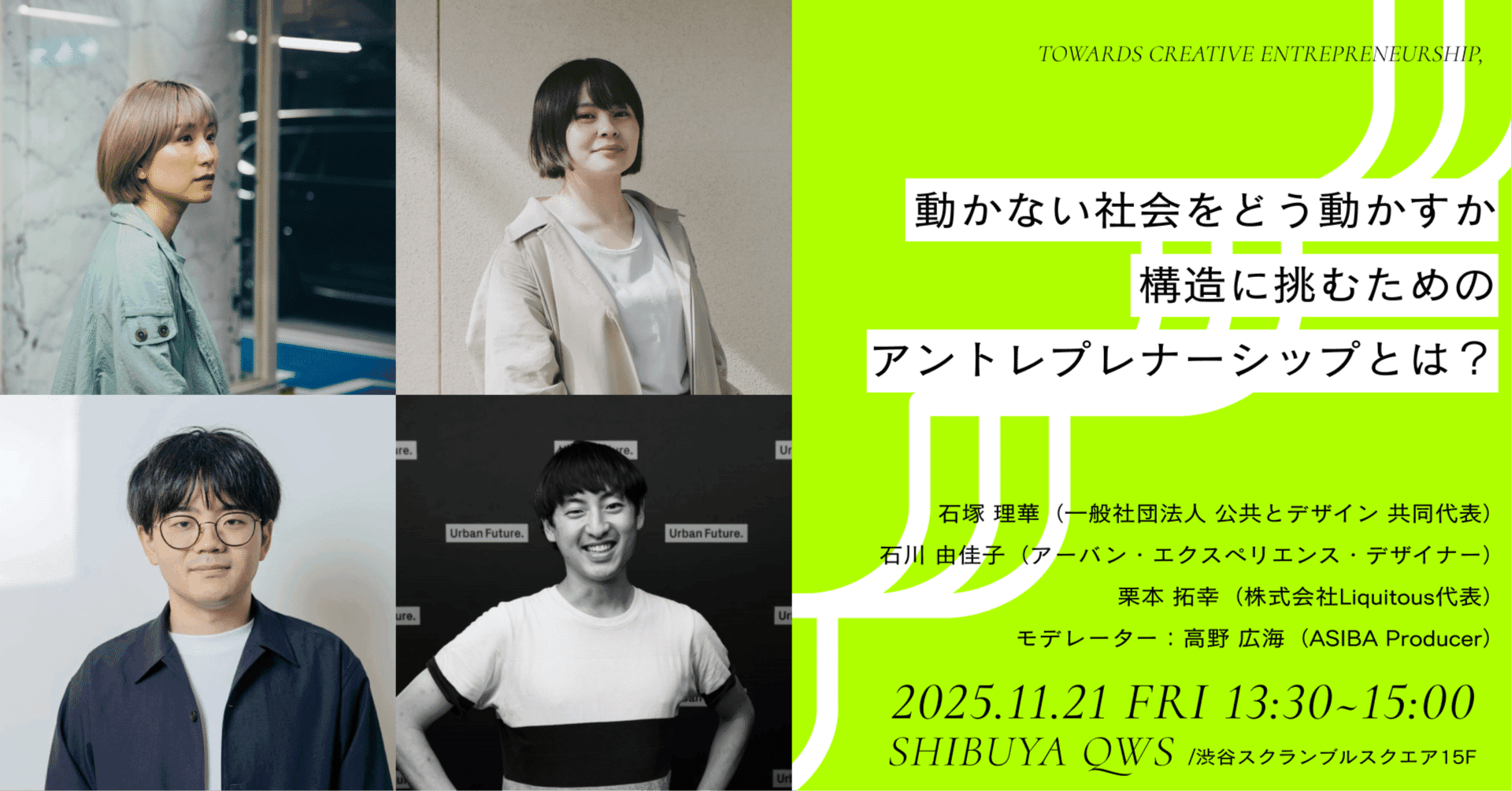
Session 2 | How to Move a Stagnant Society — What Is Entrepreneurship for Challenging Structures?
Areas such as public administration, citizen participation, and community development involve the intersection of multiple systems, organizations, and relationships, and do not change easily. Nevertheless, precisely because these areas are so closely tied to daily life, there is a need for the will and methods to drive change within them.
Guests: Rika Ishizuka (Co-Representative, Public and Design), Yukako Ishikawa (Co-Representative Director, for Cities), Takuyuki Kurimoto (Representative, Liquitous)
Moderator: Hiromi Takano (ASIBA Producer)
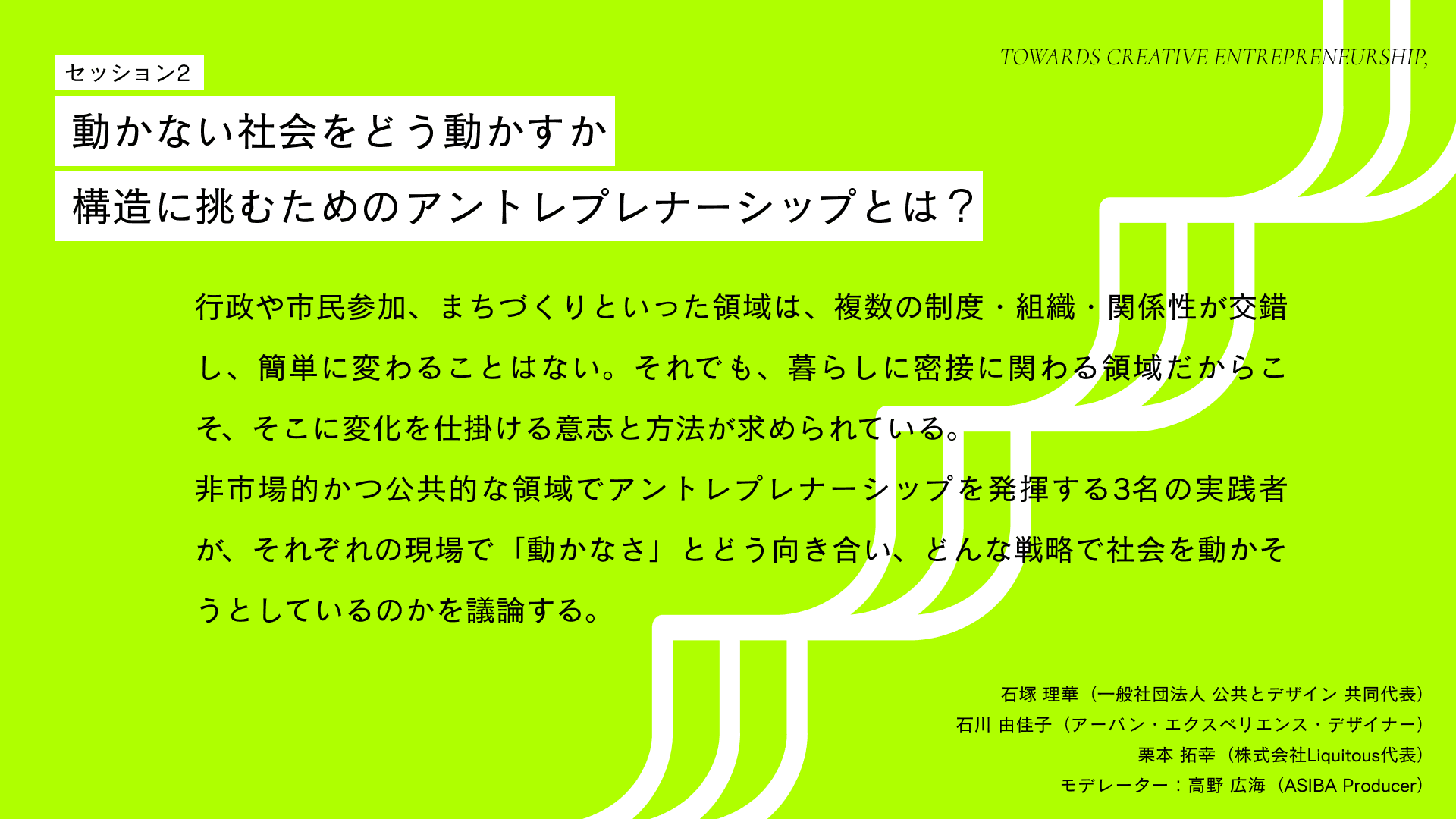
FIG.6
Session 3 | Envisioning a New Creative Ecosystem with an Eye Toward Social Transformation
Many of the challenges facing modern society are vague and highly uncertain, making it difficult to resolve them through traditional market principles alone. We explored the form of a new ecosystem designed to liberate the potential of the “creative and aesthetic vision of the future” inherent in fields such as architecture, design, and art from the constraints of economic rationality.
Guests: Kotaro Okada (Representative Director, Desiro), Shunsuke Nakaji (Principal, ANRI), Kanabumi Furuichi (Impact Catalyst, SIIF)
Moderator: Masaki Morihara (Co-CEO, ASIBA)
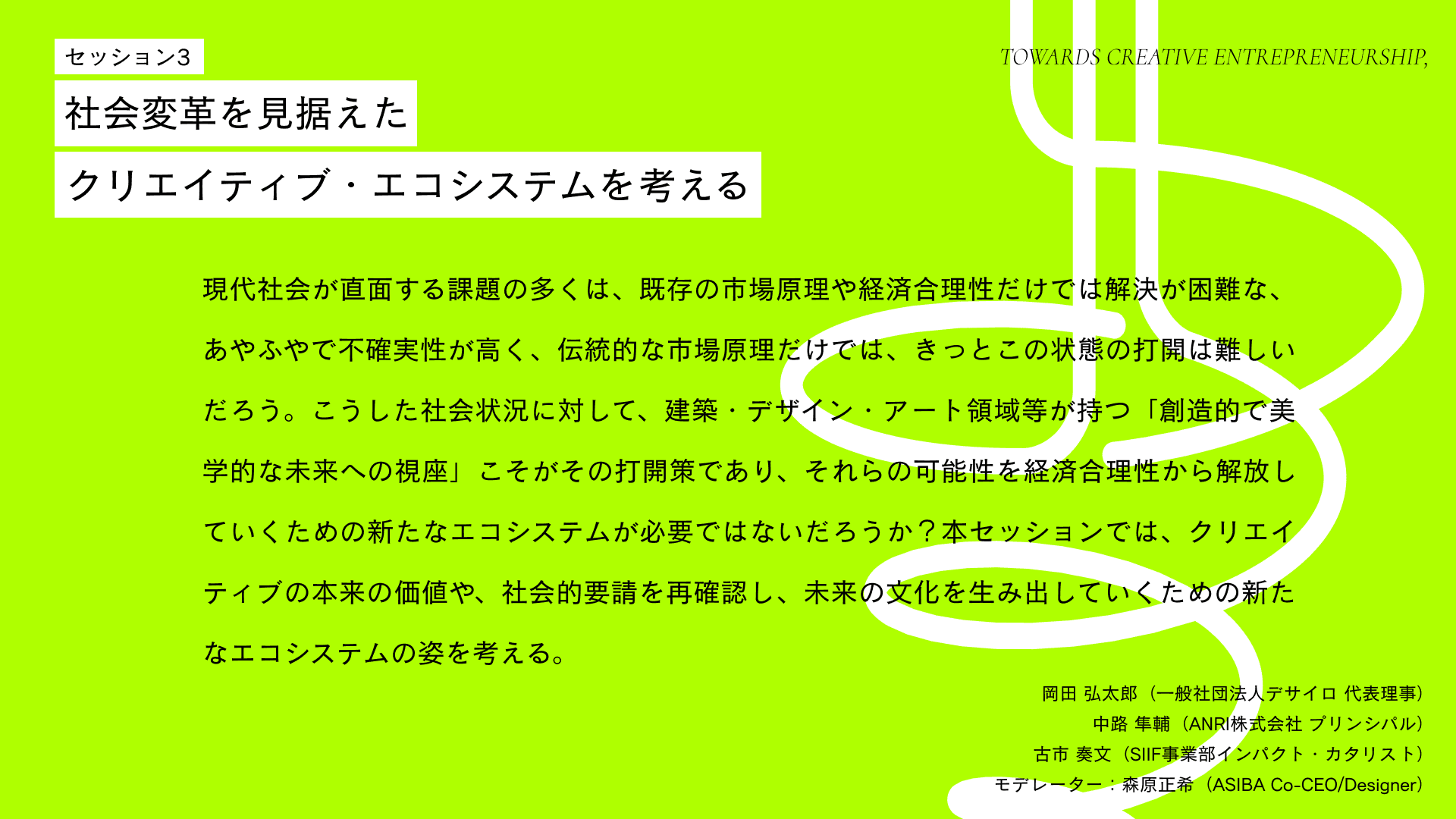
FIG.7
RELATED WORKS

RELATED TEXTS
ASIBA rebrands as a "Creative Ecosystem for Practice and Research"
ASIBA Rebranding 2026
ANNOUNCEMENT
2026.10.21.
How to Move an Inactive Society: Entrepreneurship to Challenge Structures
CREEN Conference Special Session #1
DIALOGUE
2025.12.26.
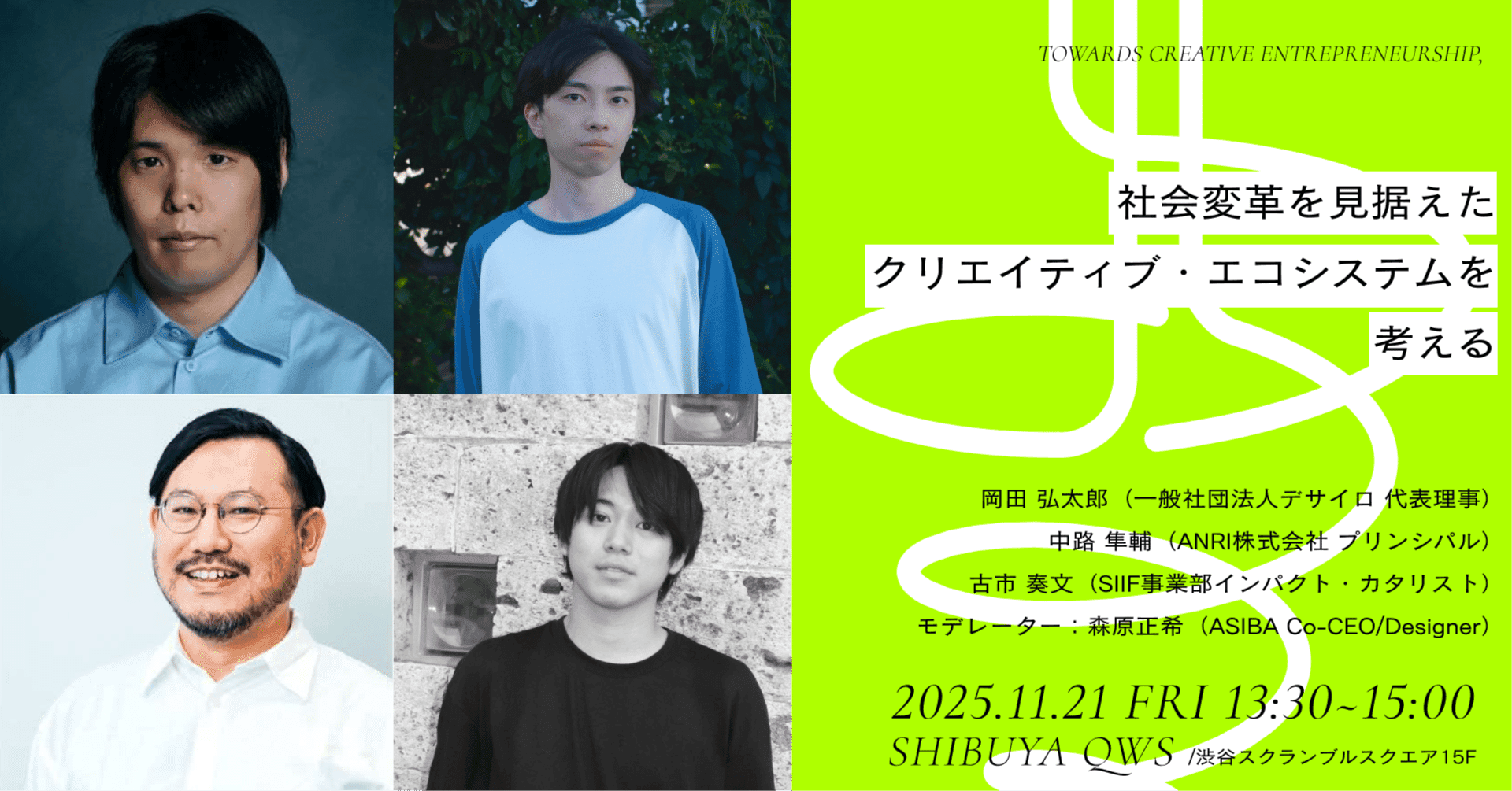
Special Session: Considering a New Creative Ecosystem in Light of Social Change
CREEN Conference Special Session #2
DIALOGUE
2025.12.26.
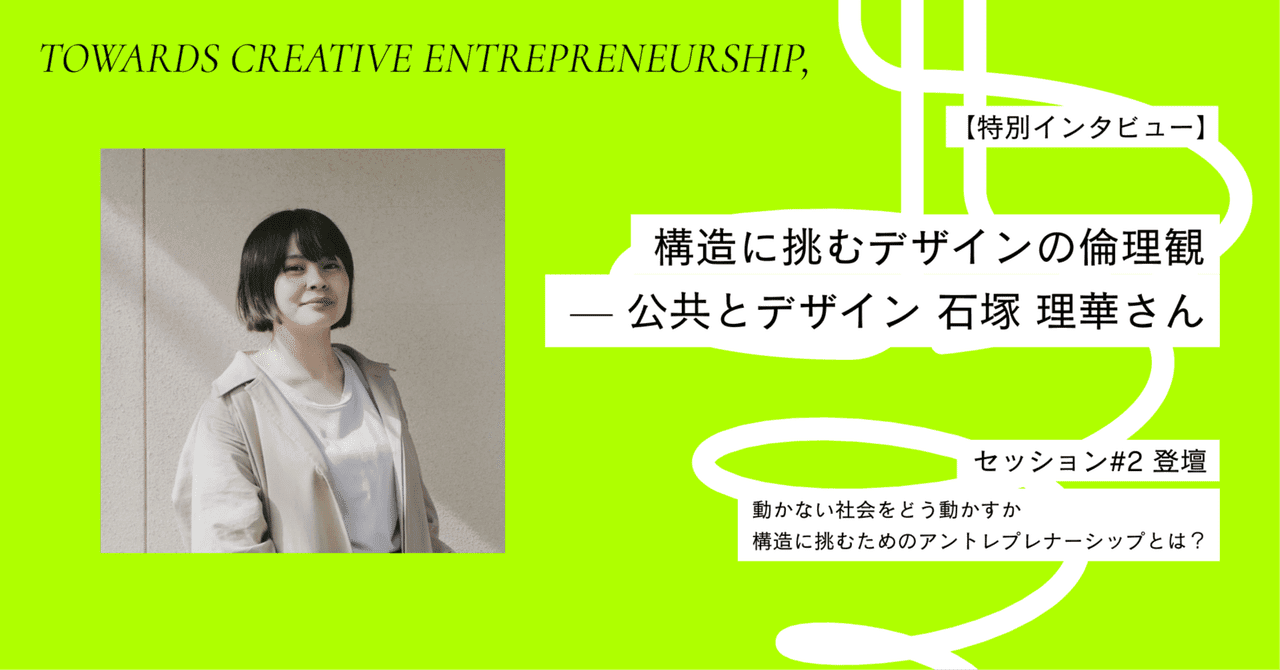
Special Interview: The Ethics of Design Challenging Structures - Public and Design with Rika Ishizuka
CREEN Conference Special Interview #5
INTERVIEW
2025.11.18.
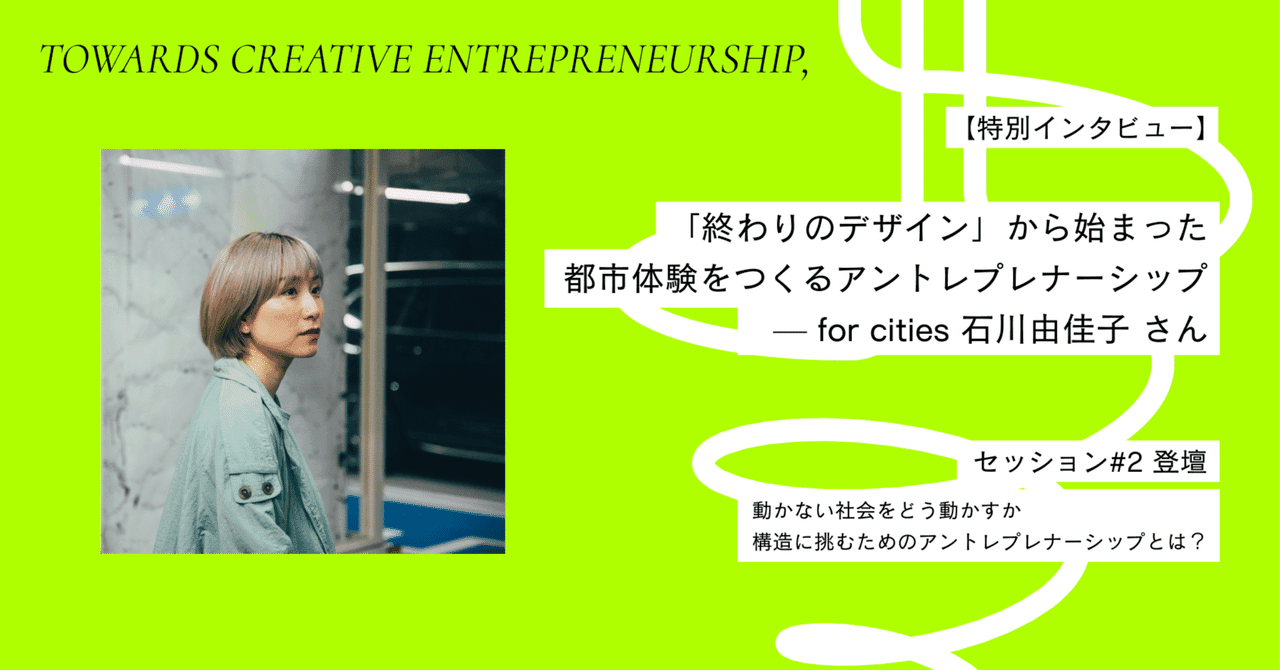
Special Interview: Entrepreneurship in Urban Experience Design Starting from 'Designing the End' — Yukako Ishikawa from for Cities
CREEN Conference Special Interview #4
INTERVIEW
2025.11.16.
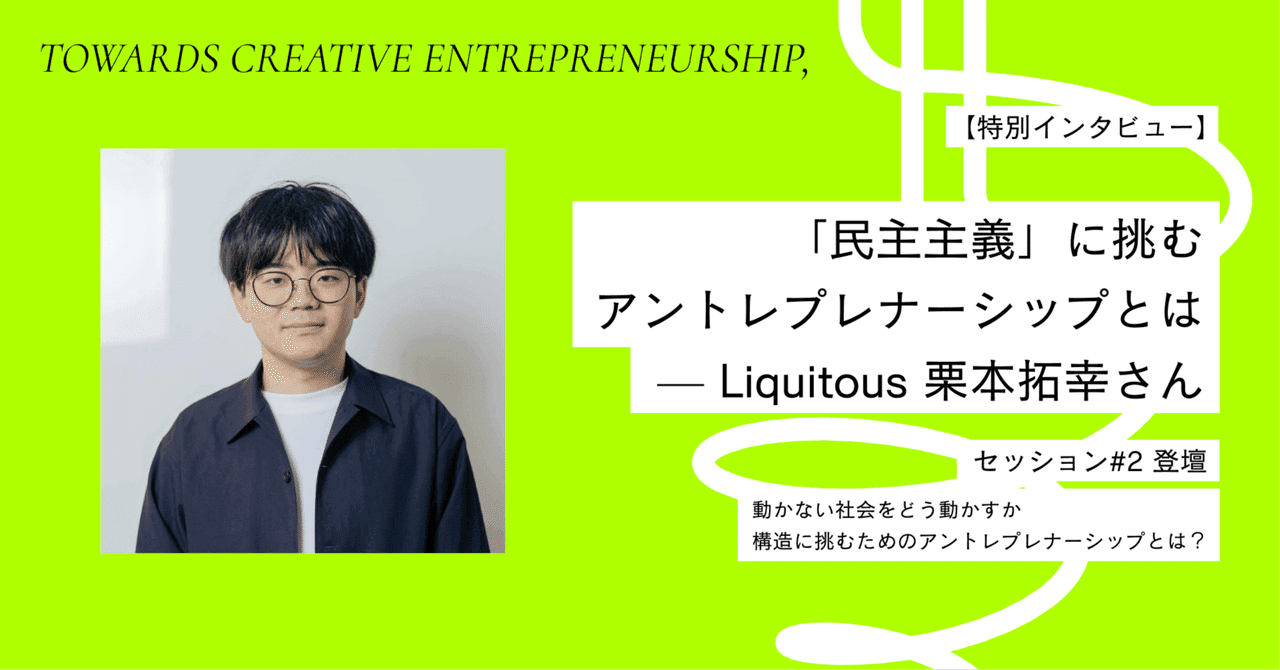
Special Interview: What is Entrepreneurship Challenging Democracy? - Takayuki Kurimoto from Liquitous
CREEN Conference Special Interview #3
INTERVIEW
2025.11.14.
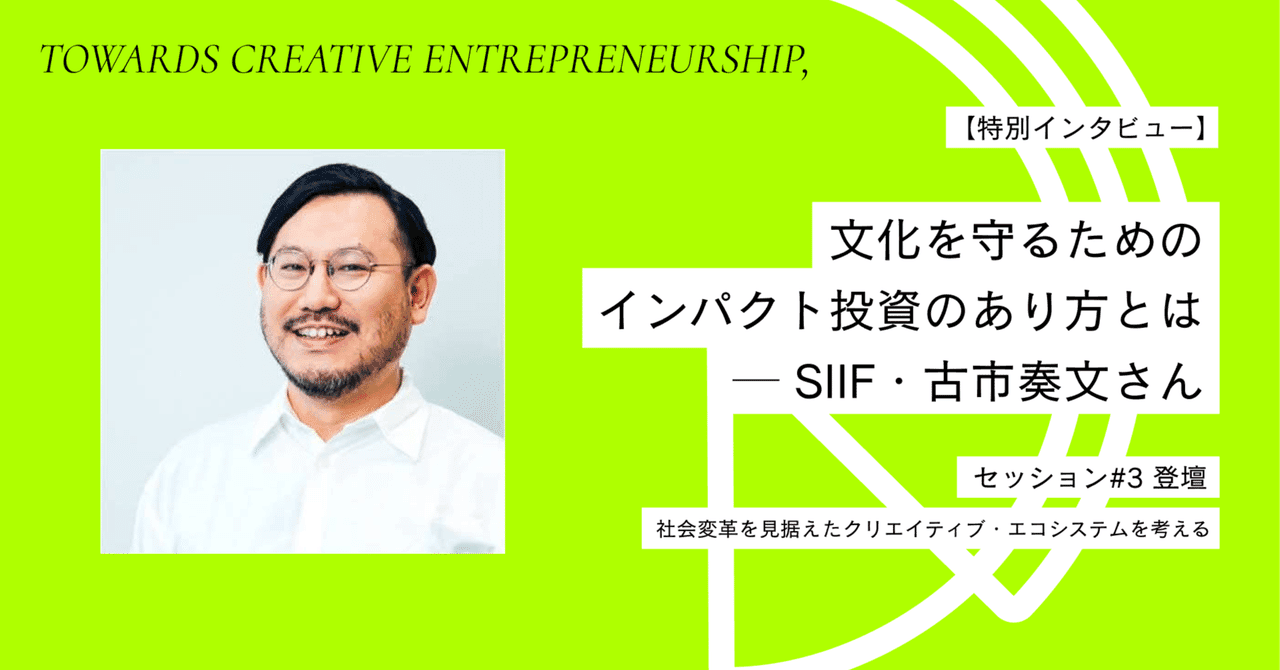
Special Interview: How to Approach Impact Investment to Preserve Culture - Kanefumi Furuichi from SIIF
CREEN Conference Special Interview #2
INTERVIEW
2025.11.07.
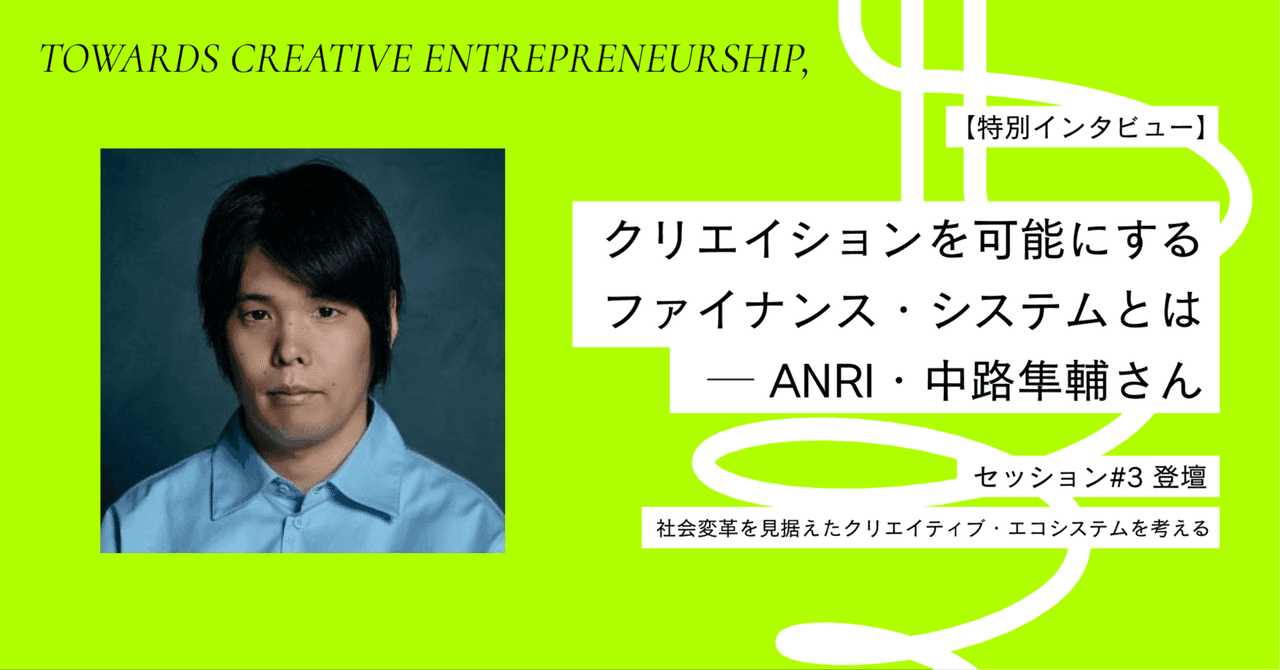
Special Interview: What is the Finance System that Enables Creation? - Shunsuke Nakaji from ANRI
CREEN Conference Special Interview #1
INTERVIEW
2025.11.07.

@Kamata Inc. and ASIBA Begin a New Partnership to Build an Ecosystem for Nurturing Entrepreneurs and Accelerating Social Implementation in Architecture, Design, and Art
2025.09.29.
CREDIT
inhouse
collaborator
external


