Public Partner Dialogue #1
FIG.1
Through the “Takashimadaira Upcycle Project”—a collaboration between ASIBA, the Takashimadaira Community Development Promotion Division of Itabashi Ward, and ReLink LLC (ASIBA PROJECT LABEL)—ASIBA is implementing various initiatives aimed at circulating the materials from Takashima Seventh Elementary School, which is scheduled for demolition, along with the memories they hold, within the local community.
In this candid discussion, members of the Takashimadaira Community Development Promotion Division (Takamachi Division), Eiso Honda of ReLink, and Hiromi Takano of ASIBA will talk openly about the collaborative efforts that have been underway for approximately half a year and the vision for the future of Takashimadaira that has emerged from these initiatives. (Text by Rigo Kagami)
Takano: It was over a year ago that I first spoke with Itabashi Ward officials. I introduced our project to the division responsible for digital transformation (DX) in urban planning and community development, and they attended several of ASIBA’s community events afterward. Then, about half a year later, they suddenly approached me and said, “You had a project focused on reuse, didn’t you?”
From there, the “Takashimadaira Upcycling Project” was launched, with ASIBA serving as the bridge between the Takamachi Division and ReLink. Could you tell us how it all began?
Mr. Komiyama: The Takashimadaira Community Development Promotion Division was established with the mission of advancing a chain reaction of urban regeneration in the Takashimadaira area. The demolition of Takashima Seventh Elementary School marked the beginning of this effort, so to speak. When we considered what the Takashimadaira Division should focus on, we felt that in future community development, we needed to take on the challenge of the concept of upcycling.However, at that time, even though we used the term “upcycling,” we lacked the expertise and were struggling to figure out how to approach it. That’s when Mr. Honda from ReLink came to us and presented a proposal based on the perspective of “memory, materials, and community building”—and it felt as though we finally saw the path forward.
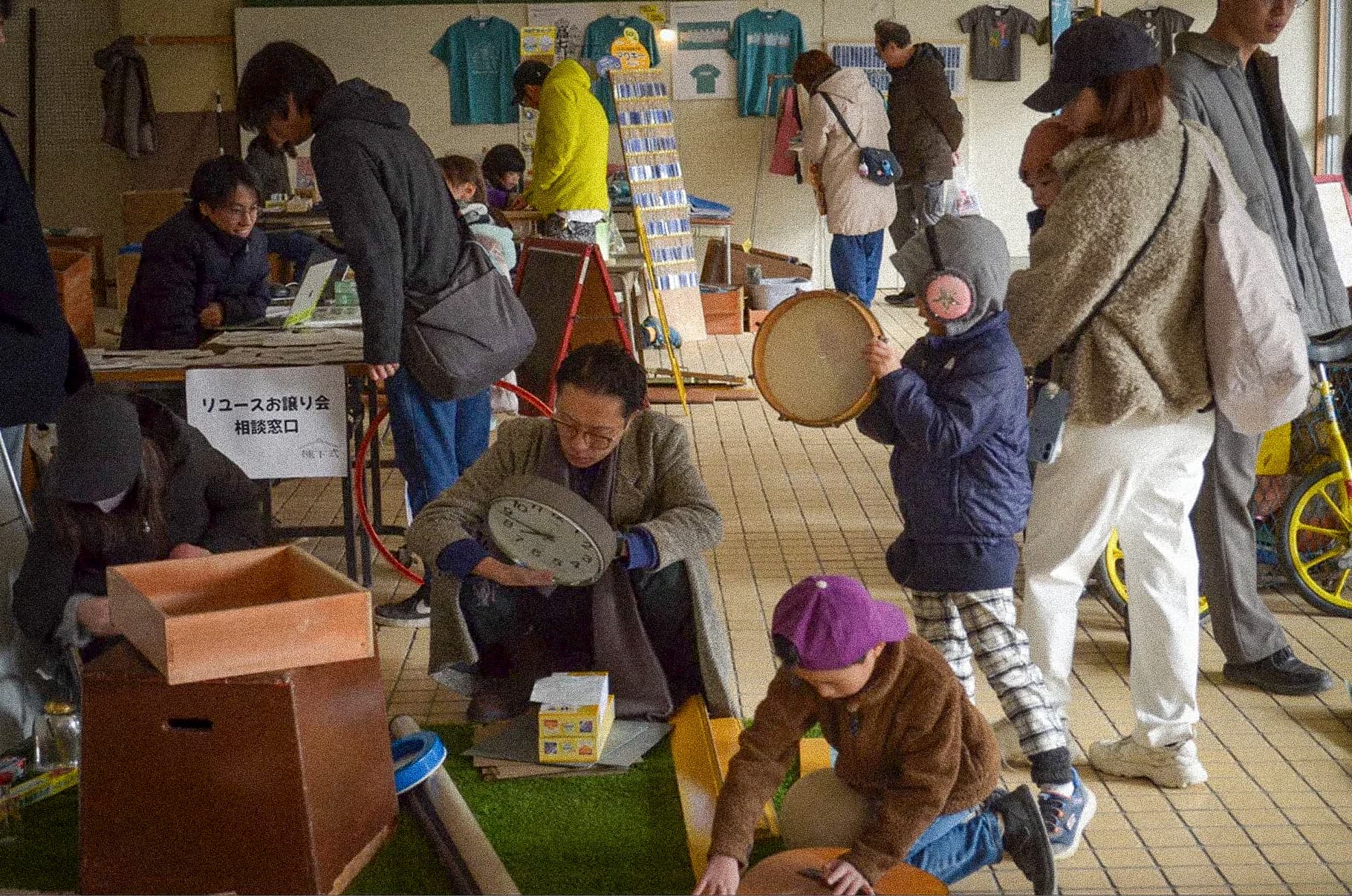
At the recent “Pass-It-On Event,” so many people gathered that I could actually feel those words taking shape before my eyes. I believe that space could never have been created without the collaboration of ASIBA and ReLink.
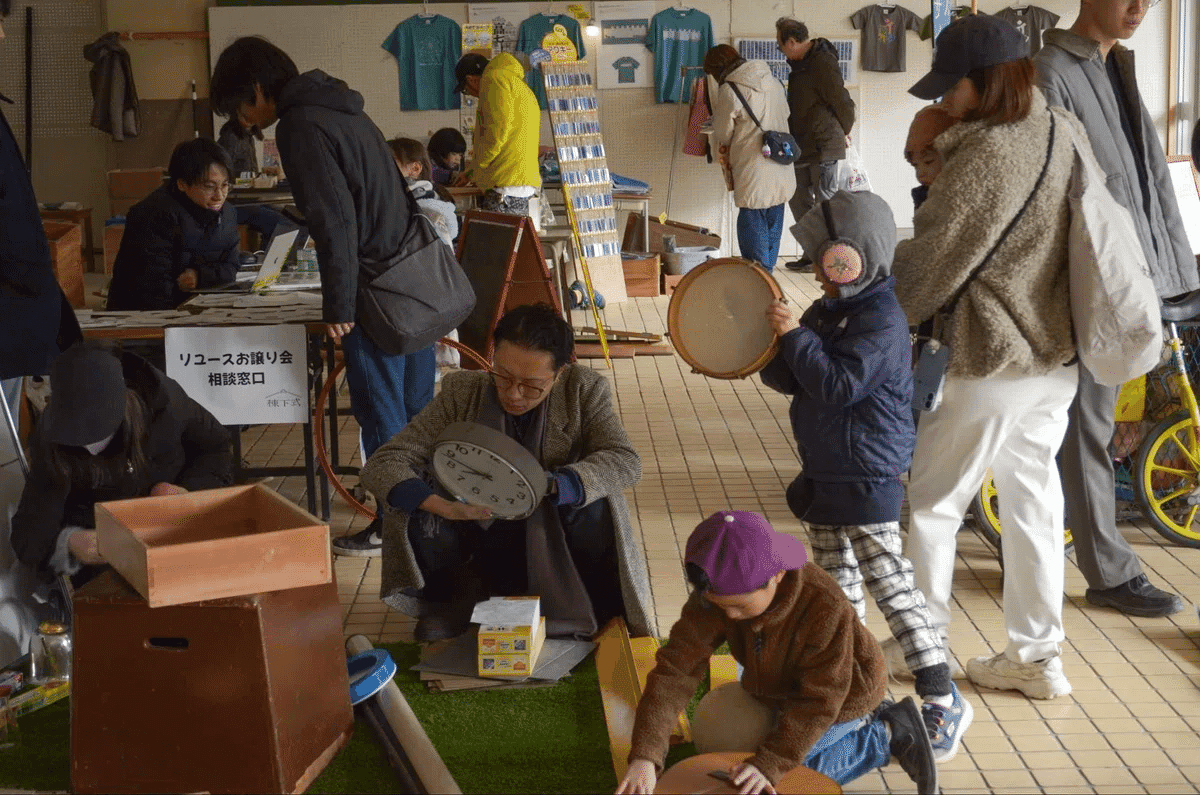
FIG.2
FIG.3
Mr. Honda: Through my work with ReLink and my research at the university, I’ve long been thinking about how to ensure that building materials don’t simply disappear when a building reaches the end of its useful life. However, I felt there was a challenge in the emotional aspect—specifically, that while it’s technically possible, people often lack the motivation to actually take action.
So, I thought that if we focused on public facilities—places deeply intertwined with local life and cherished by many people—we might be able to overcome that hurdle. It was with that hope that I began participating in this project. Now that we’ve
actually put it into practice, I’m truly amazed, above all, that so many people gather every time.Whether it’s the demolition workshops or the give-away events, the fact that so many people gather with just a little notice makes me feel that this is a wonderful environment unique to Takashimadaira.
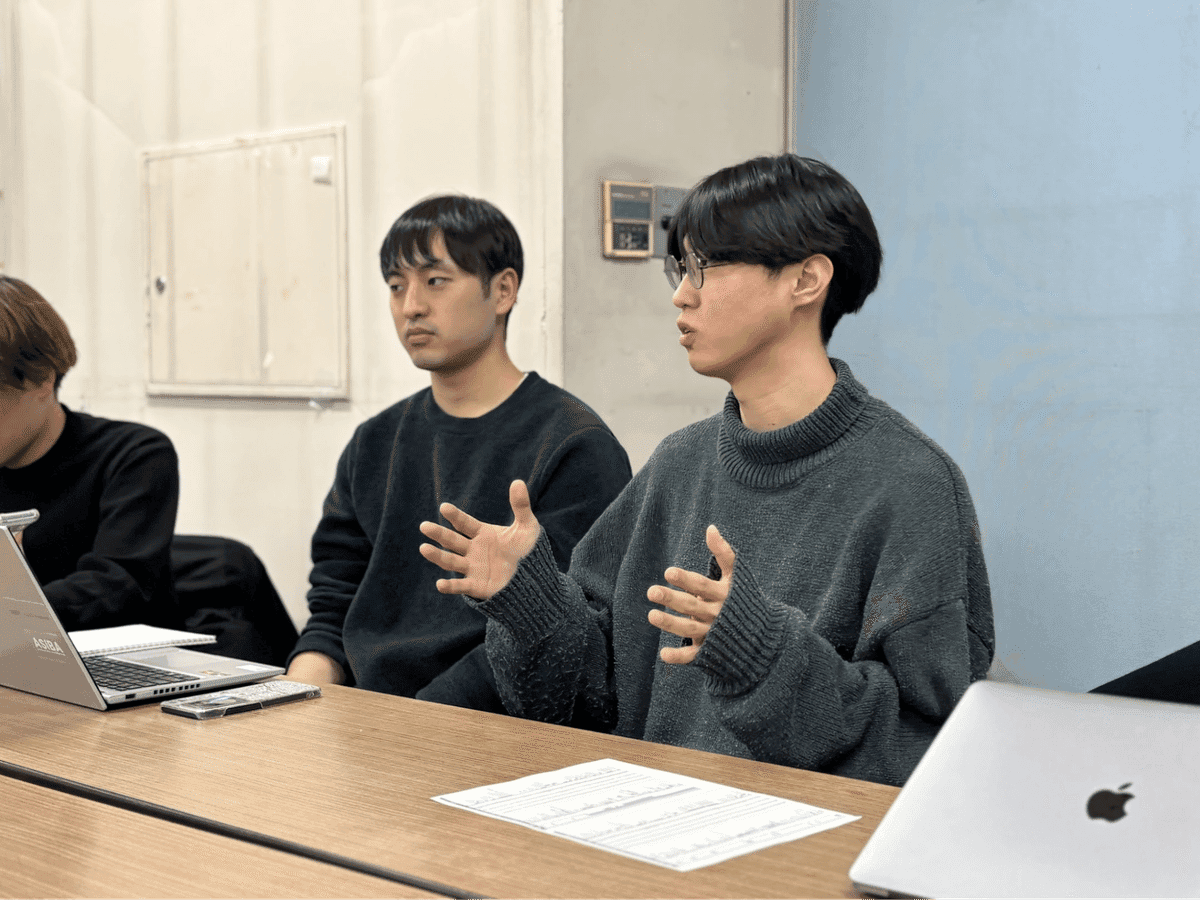
FIG.4
Mr. Komiyama: The Takamachi Division is a team within Itabashi Ward that aims to take on cutting-edge challenges, but on our own, we have limits in both the breadth of our expertise and the number of staff members. We work together with
various partners, thinking as we go and building as we go. Personally, I find it incredibly stimulating that we’re able to tackle projects in this way—a style that differs from traditional approaches to public administration.
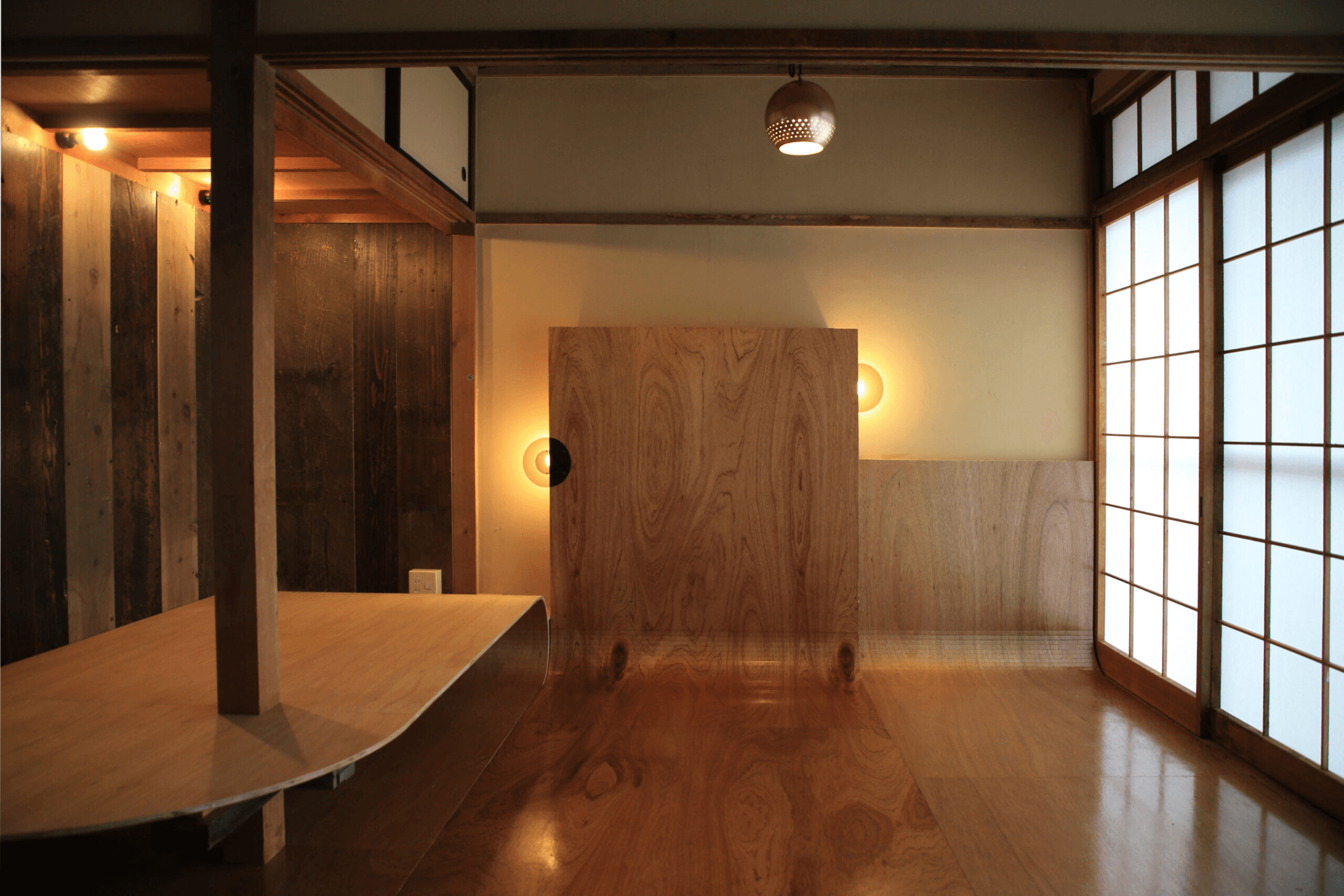
Mr. Inoue: Every day, I’m keenly aware of just how important it is to take the first step, even when you don’t have all the answers. The “Mune-shita-style” initiative we’ve been developing over the past year also emerged by chance—from our interactions with external partners through UDCTak and the requests of local residents—back when we were initially struggling to decide what to do.
Takashimadaira is, in some ways, a microcosm of the challenges facing Japan, so I’m truly grateful that not only are various people within the community actively working with passion, but also that people from outside the area are coming here to take on their own challenges.
Mr. Honda: ReLink has traditionally focused on “things,” but this time, through the items from the elementary school, I believe we’ve been able to create a new space where people of different generations and backgrounds can engage with one another.
Although the elementary school will be closing, local residents and outsiders like me are thinking about the future together, and new relationships are forming that didn’t exist before. I hope we can create a cycle within Takashimadaira where endings and beginnings aren’t severed, but rather where we foster new relationships and build a bridge to the future.
Mr. Komiyama: To be honest, I never imagined that so many people would come to the December giveaway event and take items home. Even items that, viewed simply as “things,” might make you wonder, “Do we really need this?”—I think the event was such a success precisely because of the story behind them: that they were used at the elementary school that’s about to close.
A community isn’t something you can simply create just by saying you will. And I believe—not just when it comes to upcycling—that people are moved by stories. That’s precisely why I feel it’s crucial for future community-building to cherish each and every one of these stories.
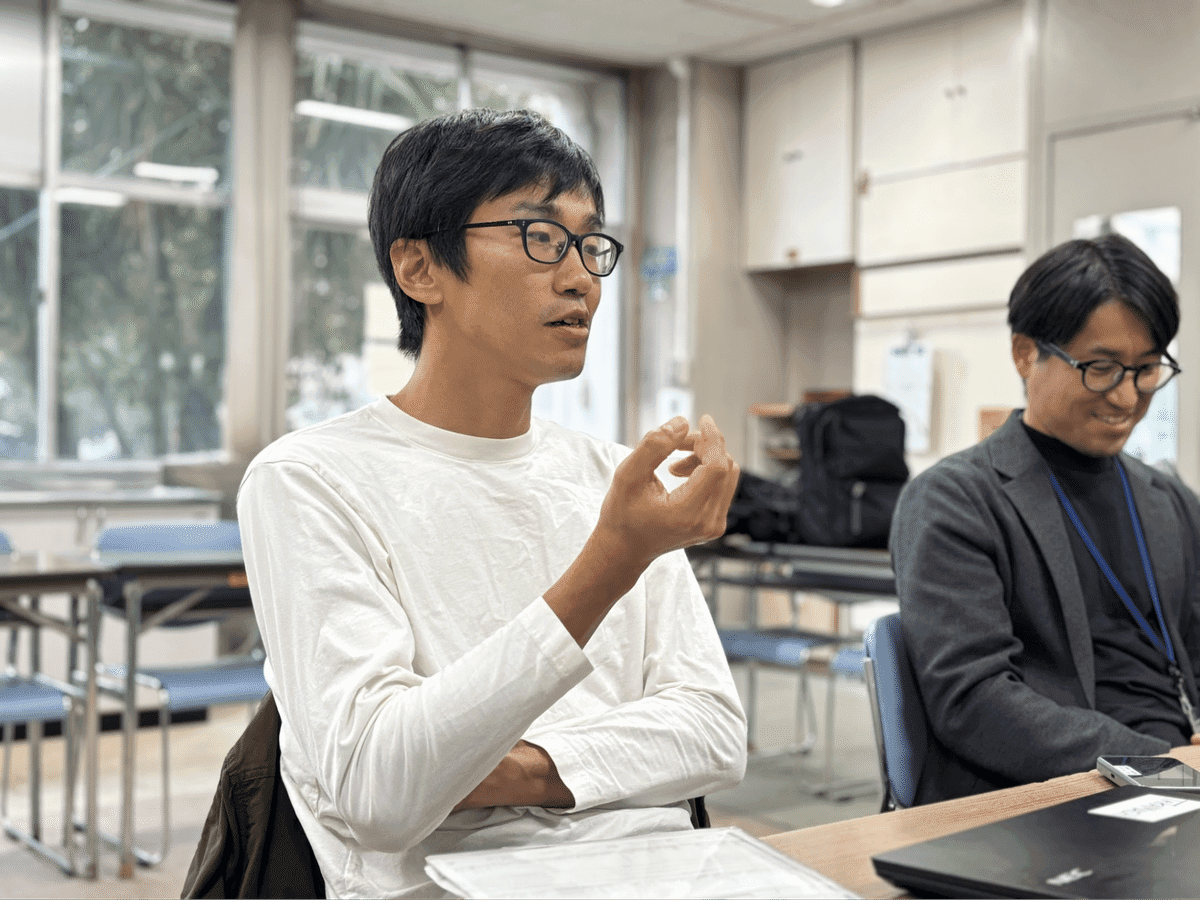
FIG.5
Takano: What kind of future do you want to create for Takashimadaira?
Mr. Oshima: Taking the building-completion ceremony as a starting point, we were able to move forward with our activities alongside groups like ASIBA and ReLink, which are engaged in pioneering initiatives.
I hope to see projects and startups led by young people emerge from Takashimadaira as well, and for the Takamachi Division to support them and help them grow.I hope to realize a future where new initiatives continue to emerge from within the community as soon as possible.
Mr. Inoue: When discussing community development, people often talk about “enhancing well-being,” but what constitutes well-being differs slightly for each individual.People who live, work, and study in Takashimadaira—I think it would be wonderful if we could use various means to create an environment where every single person who feels a connection to this community can think, “Takashimadaira is a great place.”
Mr. Asahara: That might mean increasing the number of ways for people to feel a personal connection to the town. For me, it’s “Takamachi Midori”; for ReLink, it’s upcycling. It would be wonderful if more people became involved with the town through these various approaches, leading to new activities springing up everywhere.

たかまちみどり|板橋区公式ホームページ
板橋区公式ホームページ
Takano: So, is that to say the Takamachi Division is connecting the initiatives that are gradually emerging in this way?
Mr. Inoue: Ha ha!
Mr. Oshima: What’s with that reaction? (laughs)
Mr. Inoue: No, I’m actually really happy to hear you say that (laughs). I hope we can continue to do that in the future.
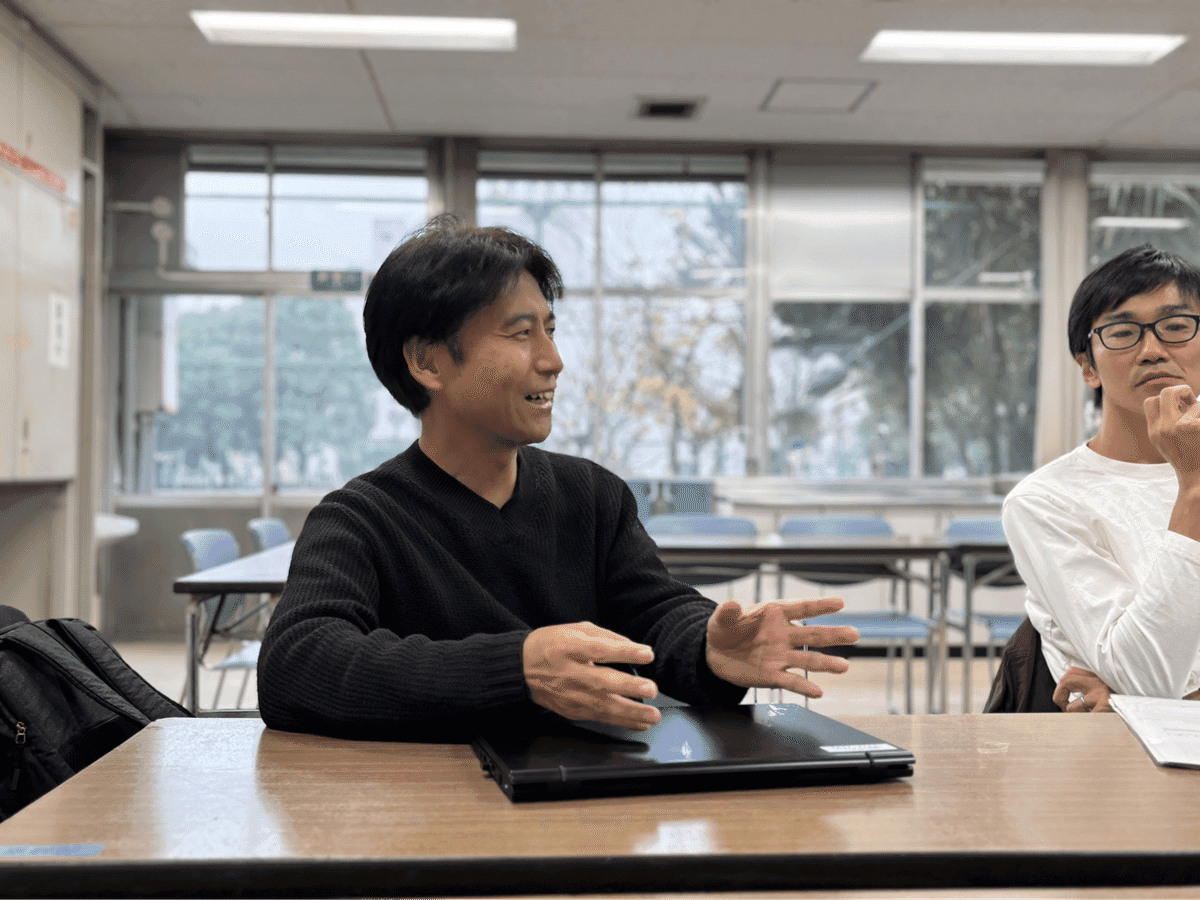
FIG.6
Komiyama: Redevelopment is about to get into full swing, but I really don’t want it to turn into a run-of-the-mill town where people just say, “Oh, so this is what it’s like.”Even if there aren’t any famous landmarks or specific items people feel compelled to buy, I hope it becomes a town where people just feel like visiting or spending time here.
Over the past six months, working with the teams at ASIBA and ReLink on the theme of upcycling, I feel we’ve been able to carry out initiatives that no one has done before. I hope we can continue to launch many more initiatives like these in the future.
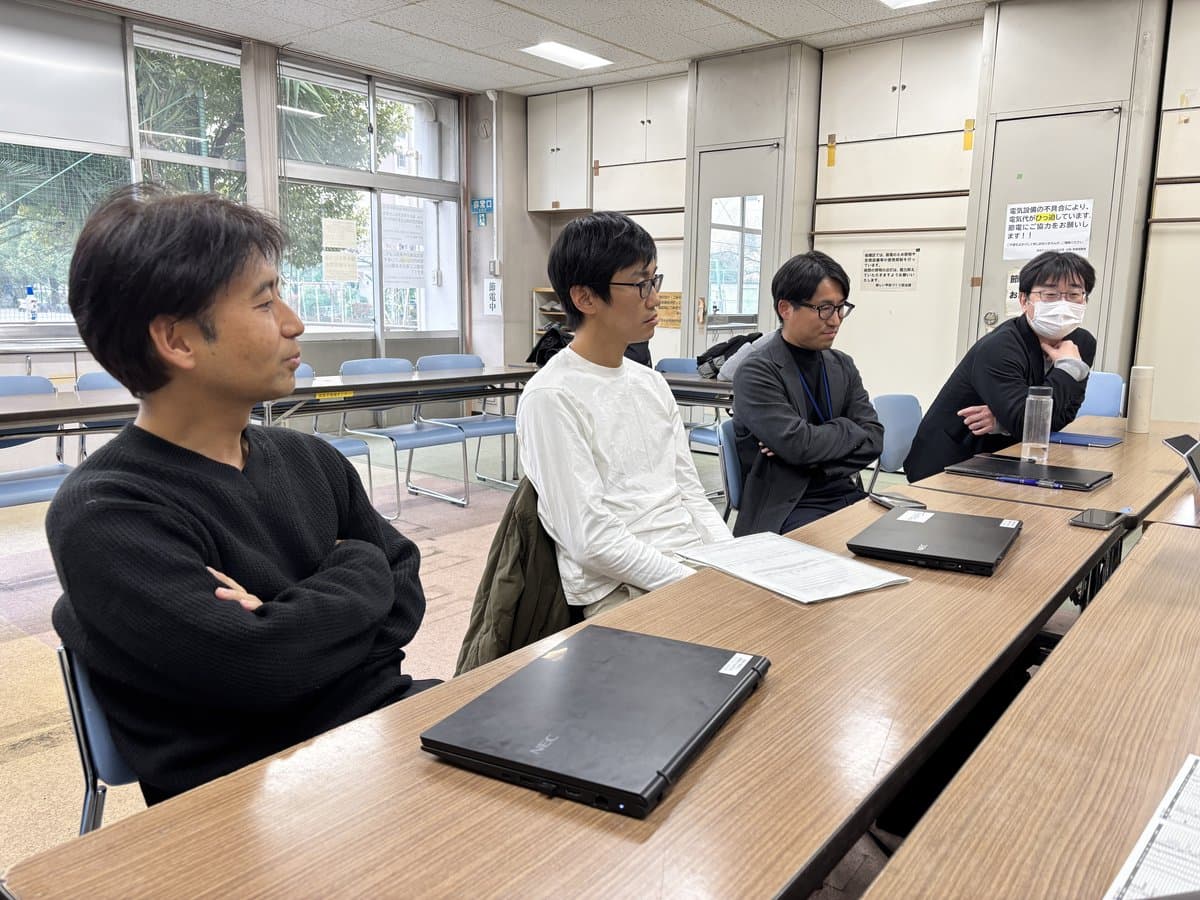
FIG.7
Credit
Related Texts
Design That Starts by Unraveling Buildings|ReLink
Following Up on ASIBA's 1st Cohort #4
INTERVIEW
2024.02.26.
Reuse is not the goal: The Circular Design as Relationship Design Pursued by Takenaka Corporation, ReLink, and ASIBA
Partner Dialogue #3
DIALOGUE
2025.12.05.
Connecting Memories of a School Awaiting Demolition Through Art — Kaichiku Teiryujo @ Takashima Seventh Elementary School
Kaichiku Teiryujo: The Finale
REPORT
2026.03.30.

Turning Demolition into a Beginning, Not an End — Announcing Kaichiku Teiryujo @ Takashimadaira Round 2
Kaichiku Teiryujo Round 2 Announced
ANNOUNCEMENT
2026.06.09.
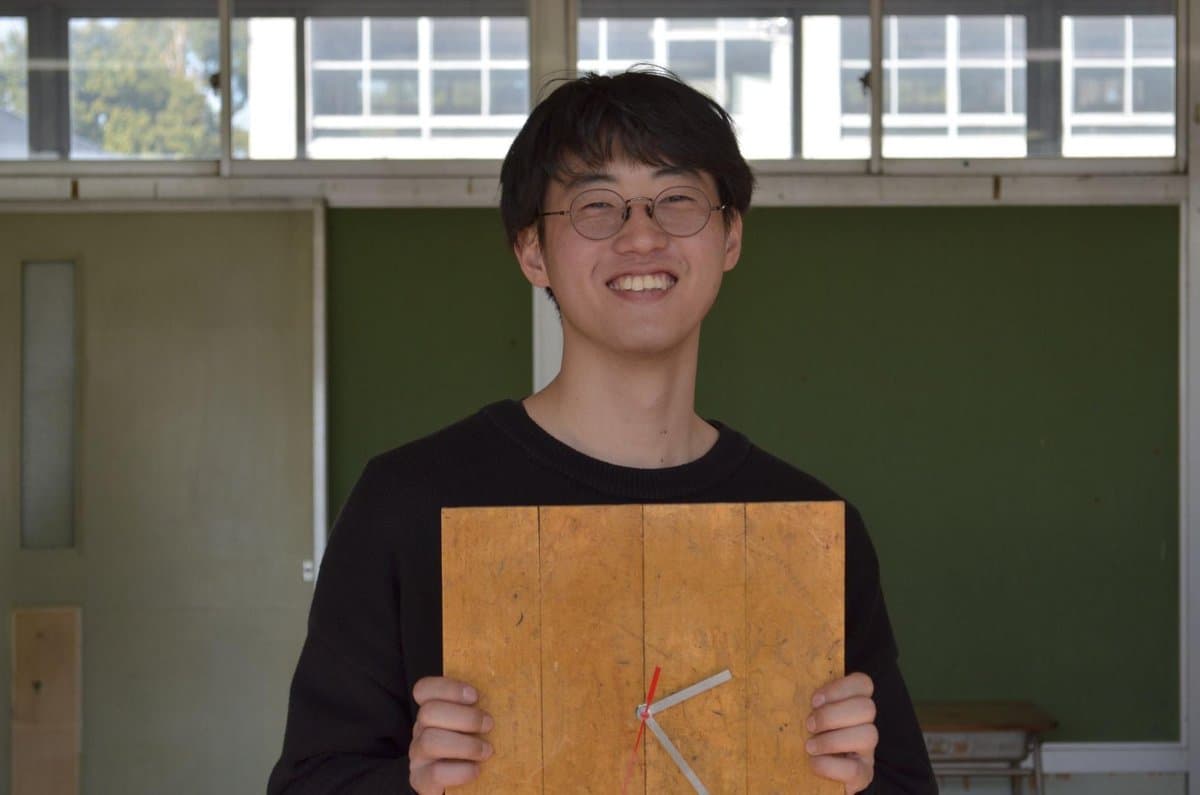
The Discomfort Seen Through Kaichiku — A Platform Connecting Materials via Reuse
本多栄亮
ESSAY
2026.07.01.
Itabashi Ward, ReLink, and ASIBA Collaborate to Launch the Takashimadaira Upcycle Project!
Kaichiku Teiryujo Launch Announcement
2025.08.19.
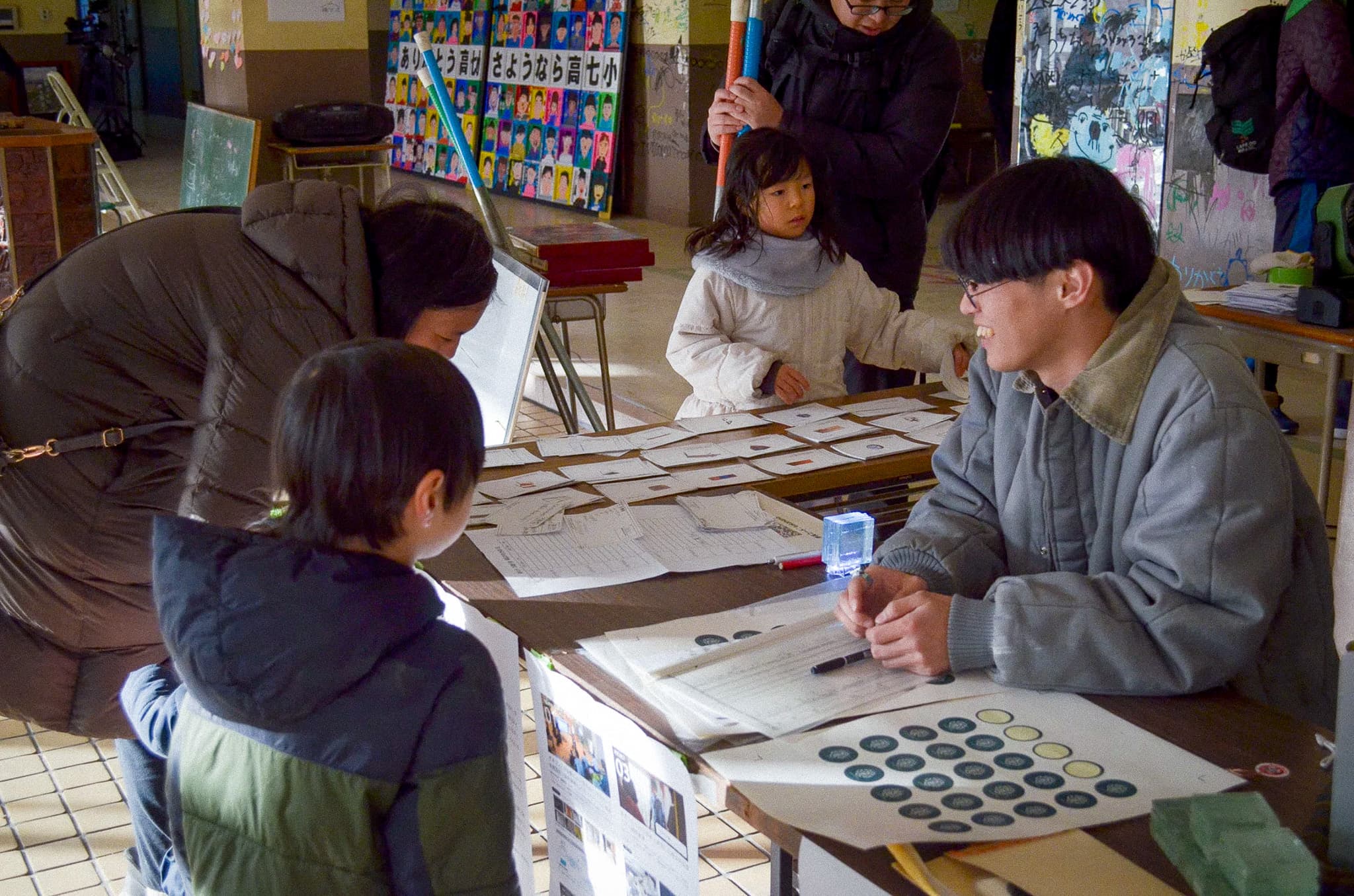
Workshop on Utilizing Demolition Materials at Former Takashima Seventh Elementary School
Kaichiku Teiryujo Event Report #1
2025.10.31.
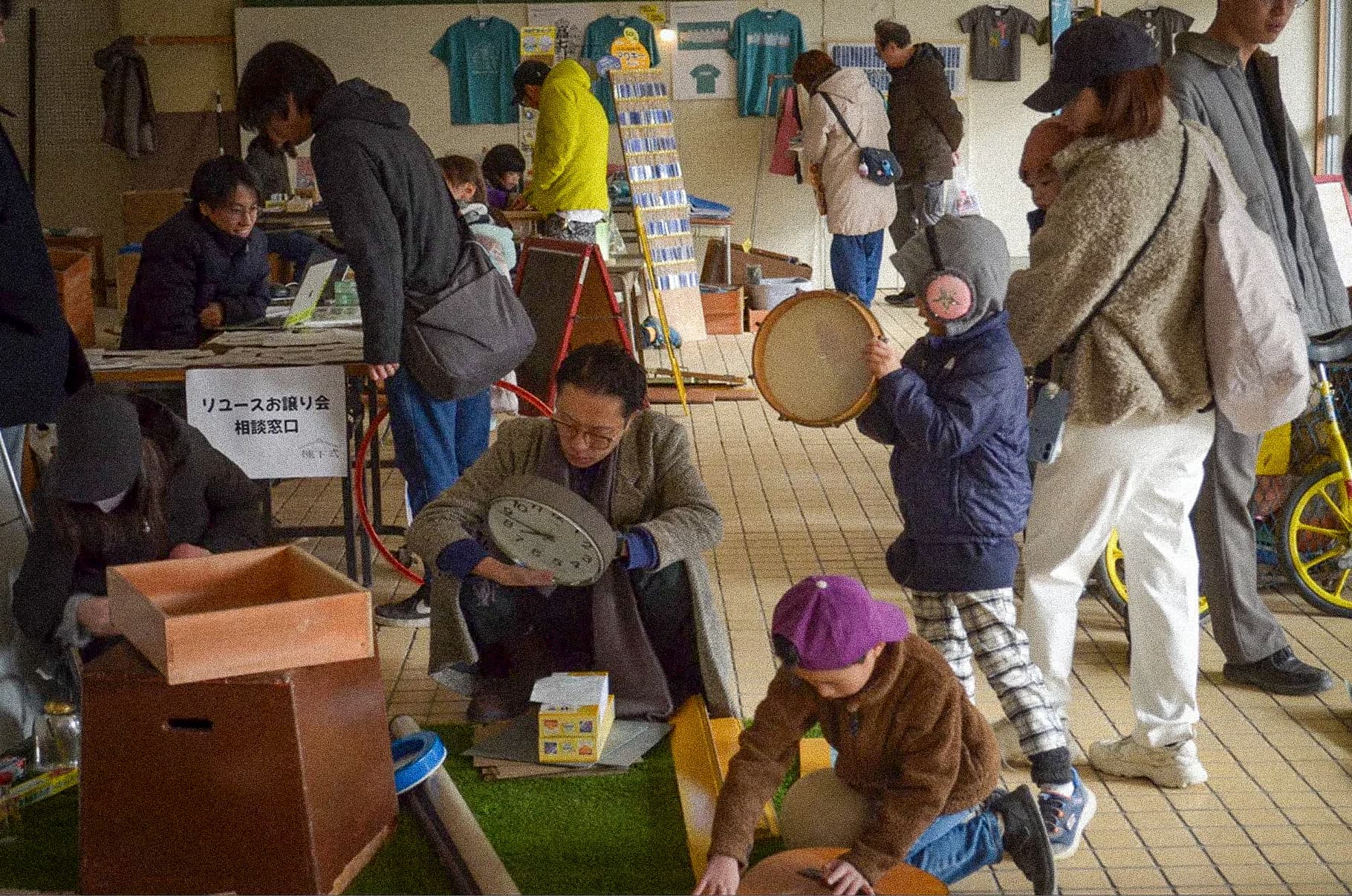
Passing on Memories: The 4th Foundation Laying Ceremony of the Old Takashima Seventh Elementary School
Kaichiku Teiryujo Report #2
2026.01.07.

Memories Residing in an Elementary School Facing Demolition - The Fourth Phase of the Takashima Seventh Elementary School Farewell Ceremony
Kaichiku Teiryujo Report #3
2026.01.25.