INC-1st Class Report #3

FIG.1
“ASIBA” (Architecture Studio for Impact Based Action) is a two-month incubation program specializing in urban architecture and aimed at architecture students. It is planned and operated by a group of volunteer architecture students from the University of Tokyo and Waseda University (Representative: Yuta Nihei, first-year master’s student in the Department of Architecture at the University of Tokyo).
Amid the pleasant, clear autumn weather typical of October, the third week of classes for the ASIBA Studio took place. Once again, we invited a highly distinguished guest lecturer from outside the university to speak about the process of commercialization and potential solutions, as well as to provide stimulating feedback on each participant’s presentation.
The guest lecturer was Urara Takase, founder and CEO of Omotete, Inc. While pursuing her doctoral degree at the University of Tokyo, Urara launched a business aimed at expanding the availability of feminine hygiene products in public spaces such as train stations and commercial facilities.Seeking to alleviate the inconvenience of a period starting unexpectedly while out and about, and with the goal of improving “women’s mobility,” Urara began her venture by relying on friends and supporters to conduct surveys and interviews.Her process—getting out into the field to investigate customer frustrations and grievances, identifying challenges, and testing hypotheses—mirrors exactly what we are doing now as we work toward commercializing our own business. Despite her cheerful manner of speaking, her overwhelming drive and ability to get things done surely inspired everyone who attended her lecture.
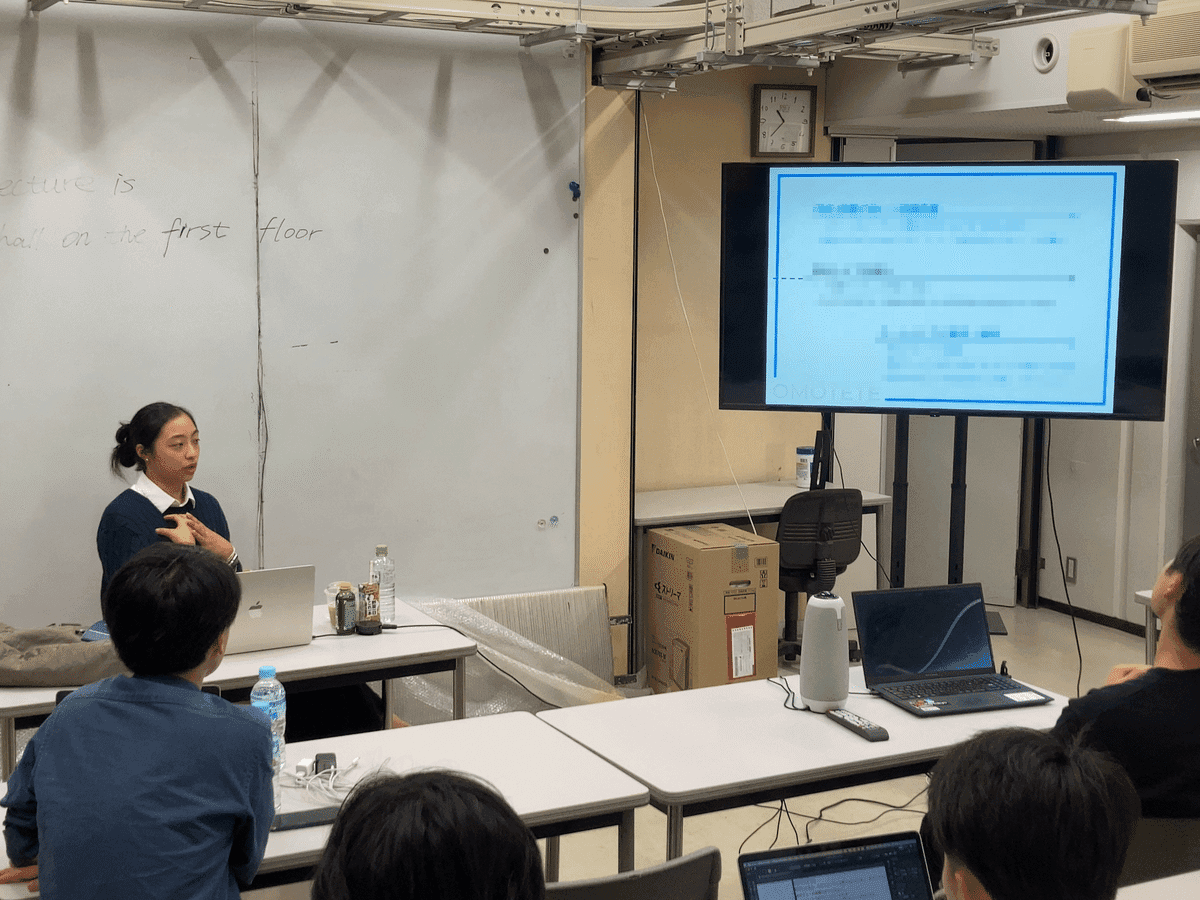
FIG.2
The key to business success is simply to start with the small things that are feasible right now. In the early stages, Urara herself placed boxes for free distribution at her high school—where she had connections—and listened intently to the high school students’ opinions. By continuously testing hypotheses about challenges based on customer feedback, the business gradually expanded.No matter how good an idea you have, the solution can only be found by listening to the voices on the ground.
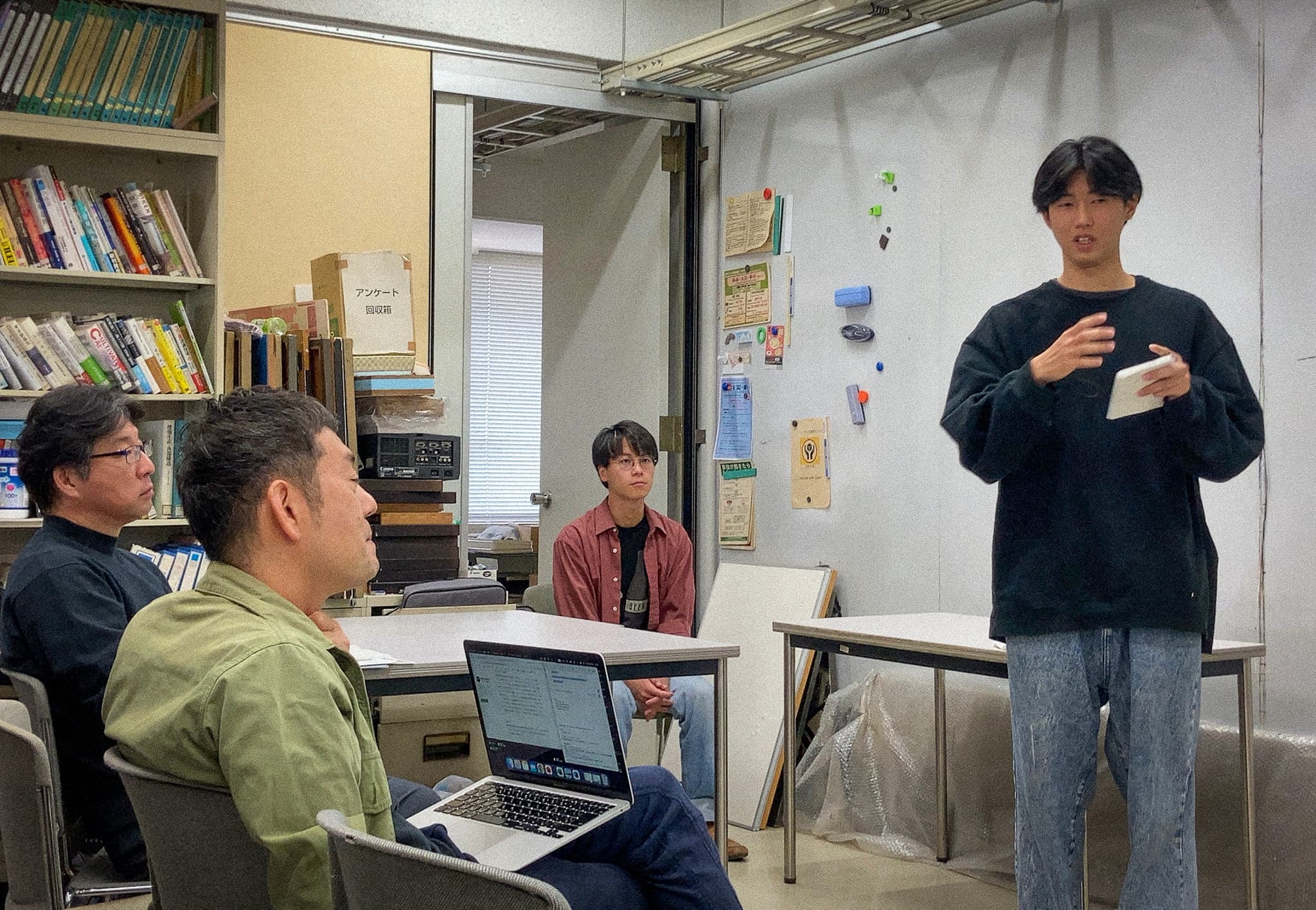
Next, under the theme of “Testing Problem Hypotheses,” all 10 groups of participants gave presentations. Participants were asked to first clarify their vision of the “future” and the “current reality” in relation to it, and then conduct specific “testing.”Participants arranged their own appointments with companies and customers relevant to their individual themes to conduct interviews. While hypothesis validation is still ongoing, it was evident through these interviews that each participant’s ideas were gradually taking shape, bringing them closer to real-world implementation.
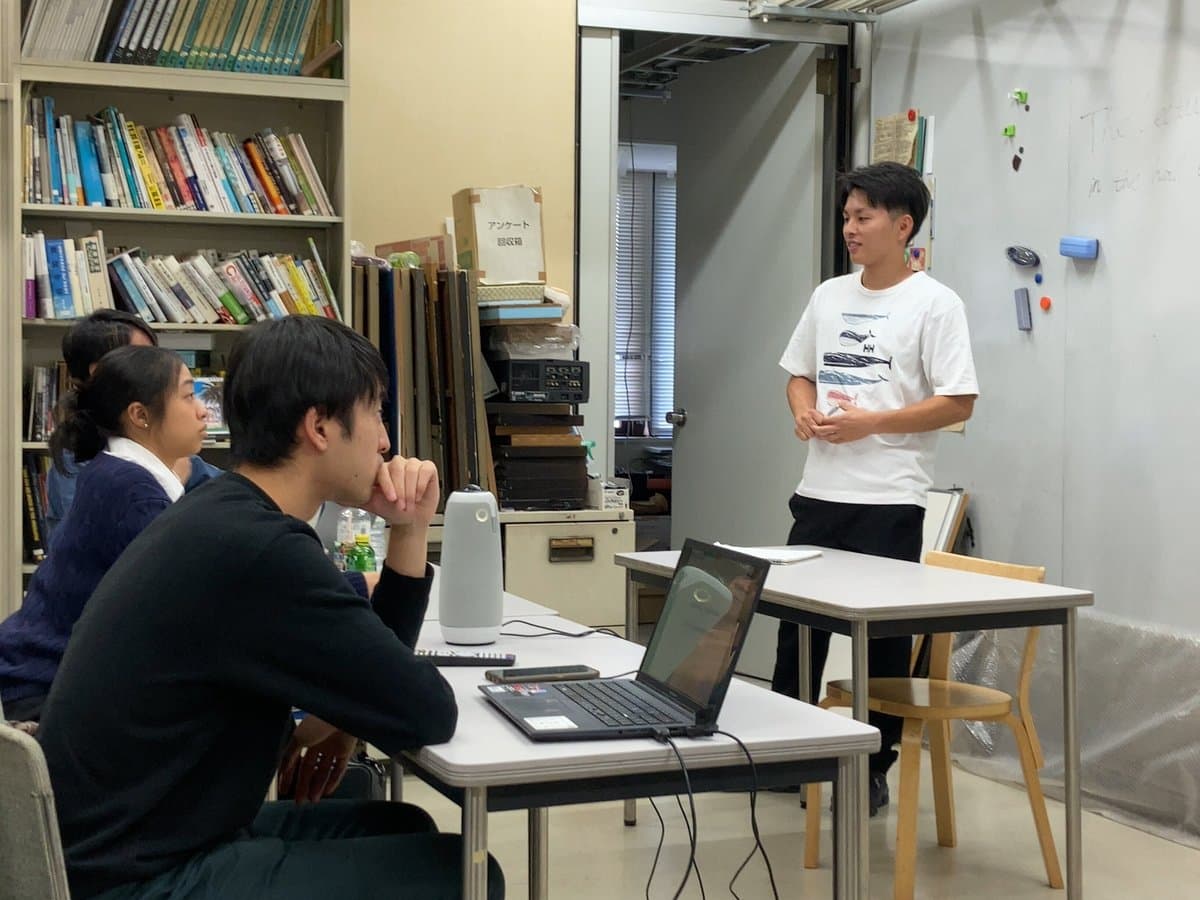
FIG.3
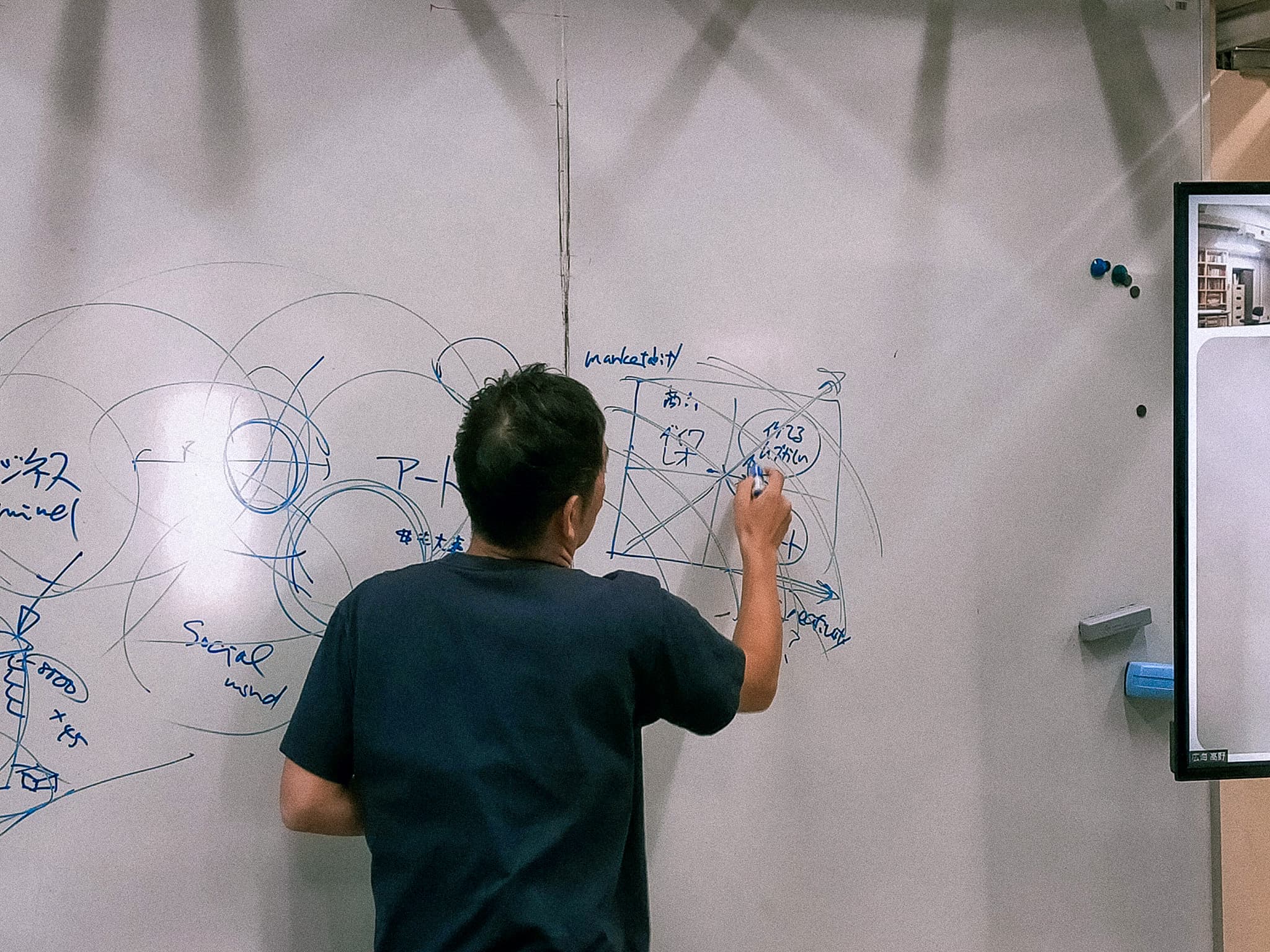
Finally, we invited Mr. Yoshifumi Okamoto, who supports the creation of new business ventures within companies, to conduct an open mentoring session for interested participants. During his feedback, Mr. Okamoto—who has deep market knowledge—shared candid and thought-provoking insights, advising us to “focus single-mindedly on the customer.”For us students, who have limited real-world experience, there are few opportunities as educational as this. Mr. Okamoto particularly emphasized the importance of giving shape to ideas early on and creating “prototypes.” Especially for those of us with a background in architecture, getting our hands dirty is likely more in line with our nature than overthinking—he helped us reaffirm this fact and gave us the push we needed.I truly realized the importance of not letting ideas remain mere theoretical concepts, but instead actively bringing them to life—and then flexibly adapting them as we go.
Credit
Related Works
Related Texts
INC-1st Class Report #1
REPORT
2023.10.09.