INC-1st Class Report Special Edition

FIG.1
“ASIBA” (Architecture Studio for Impact Based Action) is a two-month incubation program specializing in urban architecture and aimed at architecture students. It is planned and operated by a group of volunteer architecture students from the University of Tokyo and Waseda University (Representative: Yuta Nihei, first-year master’s student in the Department of Architecture at the University of Tokyo).
This class report is a special edition. In addition to the regular studio sessions held every Saturday, we were given opportunities for pitch practice and sketching on weekdays as well. We had very productive sessions with the 3×3 Lab Future team at Mitsubishi Estate on November 8 and 15, and with Hiroki Akiyoshi of VUILD on November 17.Thank you very much for taking the time to meet with us despite your busy schedules!
3×3 Lab Future is a “third place” where business professionals gather, operated by the “Ecotzeria Association,” which aims to create better communities and solve social issues. Located in Otemachi, the heart of Tokyo, it supports creative exchanges that foster innovation. On this occasion, they kindly lent us their facilities for two weeks for ASIBA. Through pitches to their employees, we were able to refine each of our proposals.
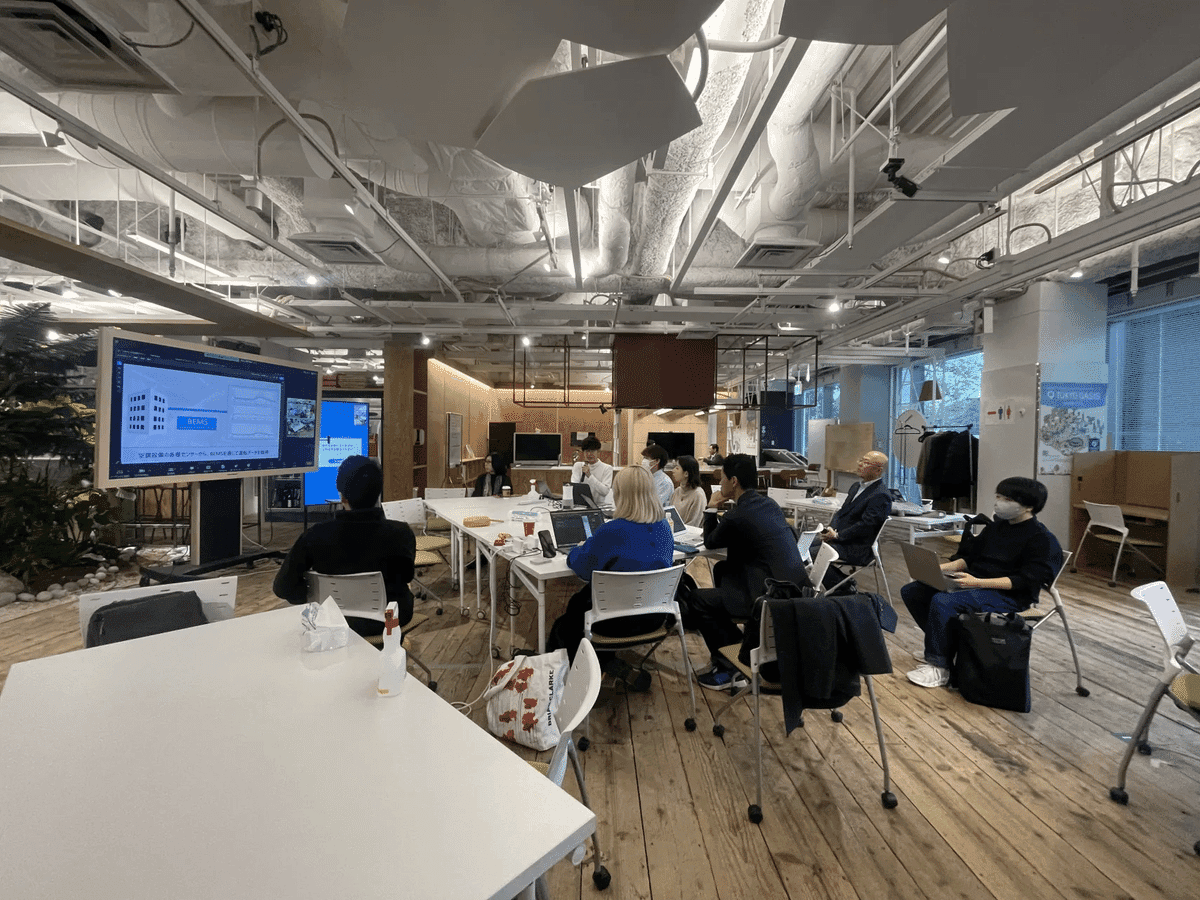
FIG.2
The biggest difference from the pitches we’ve held at ASIBA so far is that members of the general public—people who aren’t familiar with our activities—were also listening to our presentations.Receiving candid feedback on our pitches from business professionals who happened to be there is a wonderful form of interaction unique to 3×3Lab Future. There, wonderful “encounters” naturally occurred where we, as students, and adults actively contributing to society through their businesses shared a common vision and deepened our understanding of the projects together.
Through this pitch, the challenge of how to communicate clearly to people from different backgrounds has become increasingly apparent.Our audience consists of adults who know nothing about our project—people with different fields of expertise and varying interests. For example, even when proposing ideas related to equipment, if we suddenly present system diagrams or technical jargon, people outside that field won’t be willing to listen. To help an audience with such different backgrounds understand our content, we need to take a “leap” that we hadn’t considered before.
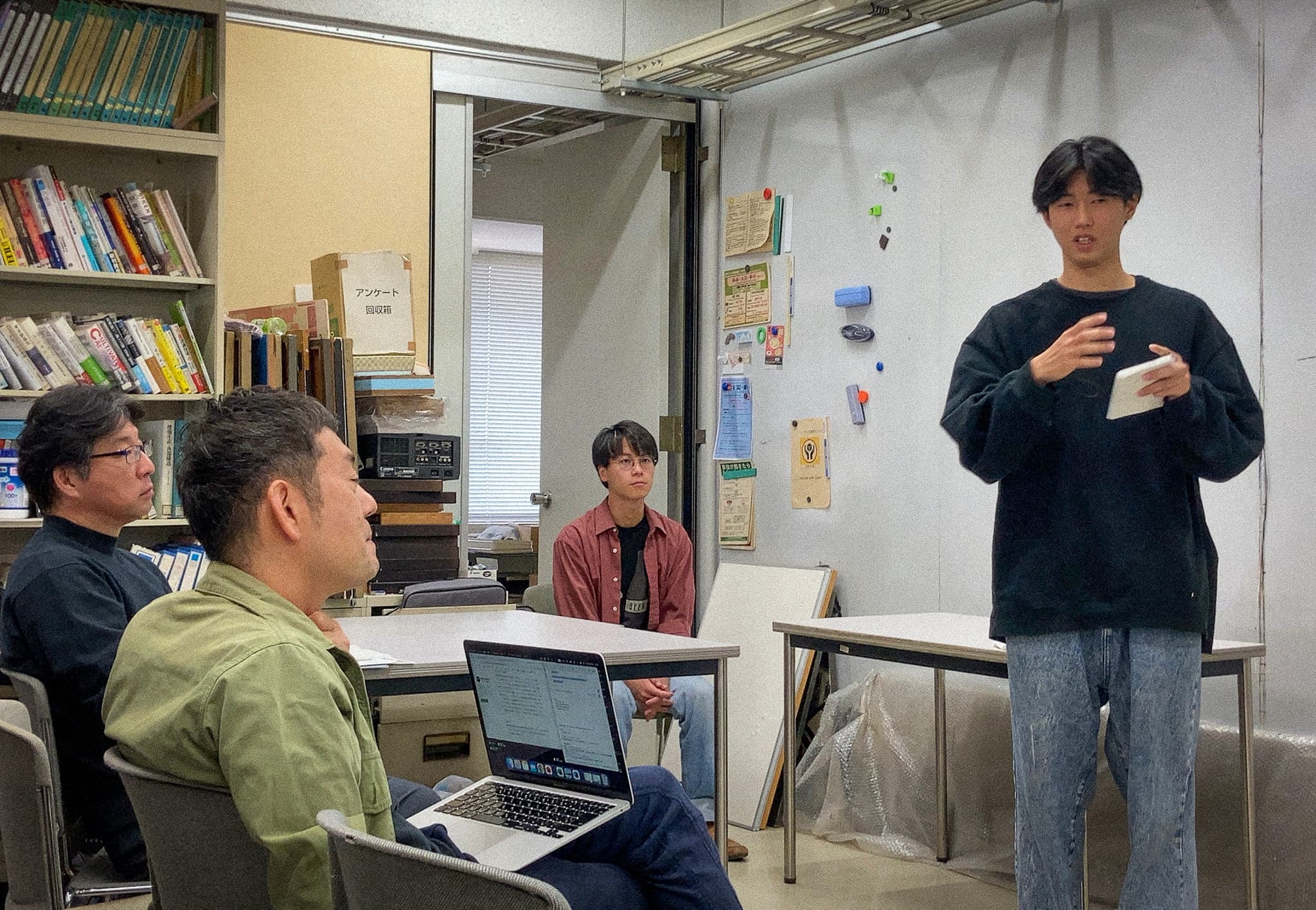
We also held an “esquisse” session with Mr. Akiyoshi from VUILD. VUILD is a startup in architecture and manufacturing that leverages digital technology to work with wood. They pursue the creation of new products and architecture made possible by the Shopbot wood-cutting machine, as well as the democratization of creative processes and design. For this session, we borrowed a classroom at the University of Tokyo’s Hongo Campus, and during the one-and-a-half-hour sketching session, we received plenty of candid feedback.
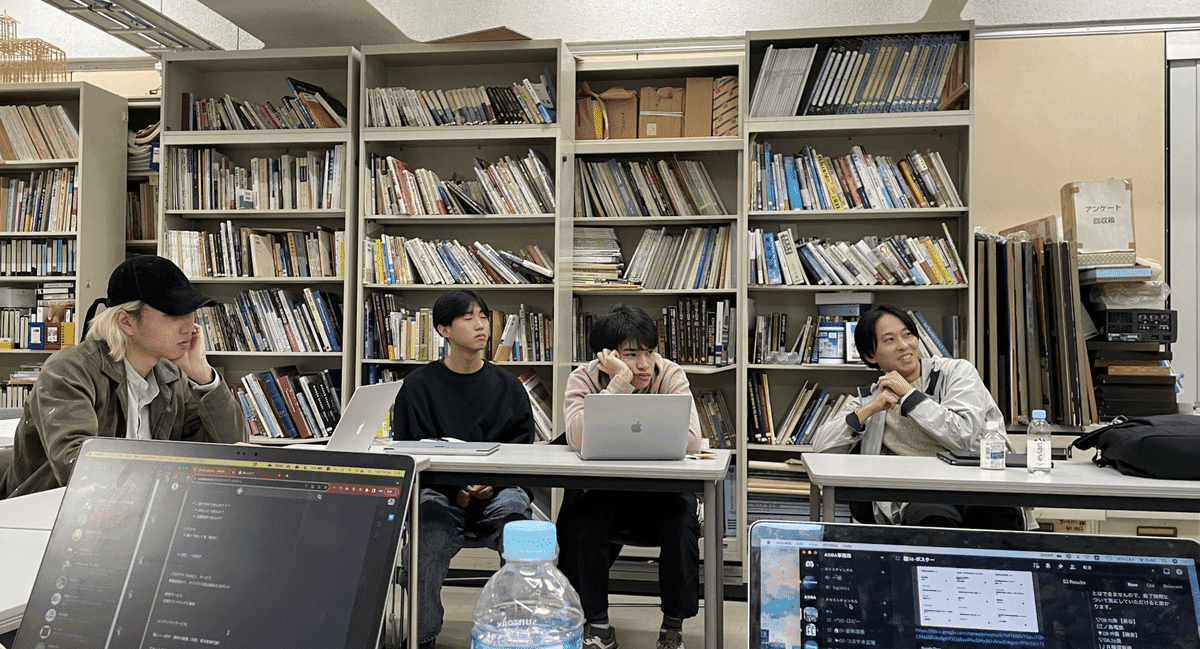
FIG.3
With just one week left until the final pitch, our task was to determine exactly what to present and how to present it. It was too late to significantly refine the proposal itself, so we spent the week focusing on how to showcase the materials we had developed up to that point.
One of Mr. Akiyoshi’s comments was that we had not yet reached the stage of hypothesis testing. Although ASIBA had emphasized hypothesis testing from the very beginning, it seems our efforts were still insufficient. There are two types of hypotheses: problem hypotheses and solution hypotheses. For problem hypotheses—which involve identifying the challenges within a given industry or market—the stakeholder interviews we’d prioritized throughout the eight-week program proved effective.However, regarding solution hypotheses—which concern the value delivered by the proposed solution—most teams had insufficient validation due to a lack of field testing. If you can’t demonstrate how effective your proposal is, it won’t resonate with customers. And without identifying the actual problems on the ground, you can’t refine your proposal.
So, how can we make an under-validated proposal compelling during a pitch? The strategy Mr. Akiyoshi suggested was to highlight the person behind the proposal. By bringing to the forefront what they love, why they’re passionate about it, and what background led them to make this proposal, we showcase their enthusiasm and potential.The most important thing for us to reach the implementation stage is tenacity. Aiming for a pitch that makes people think, “If we leave this to them, it’ll work out!” we added pages highlighting experience, dreams, and passion to each team’s presentation slides.
Credit
Related Works